Rita will talk about how she has found brand thinking not just fundamental to successful businesses of all shapes, sizes and stages, but also how you can apply it to yourself to ensure that you are as valued and influential as you can be. She will:
Tickets are priced at £50+VAT for BCI members and £75+VAT for non-members which includes a buffet lunch so there’ll be plenty of opportunity to catch up with old friends and make some new connections too.
If you’d like to join the BCI network, read all about becoming a BCI member here.
As a high-profile business leader, acclaimed brand guru and sustainability champion, Rita is able to inspire organisations of all kinds to find new ways to succeed in an uncertain world.
She has been called ‘Brand guru’ by the Financial Times and ‘The doyenne of branding’ by Campaign magazine. Retail Week commented that she is ‘A fabulous ambassador for business’. Alongside her board chairing and non-executive roles, Rita is a writer, keynote speaker, conference chair & practitioner on all aspects of brands, branding and business leadership.
Her career has included being a Vice Chair and Strategy Director at Saatchi & Saatchi, as London CEO and Chair at the global brand consultancy Interbrand and as co-founder of BrandCap. She is now a portfolio chair and non-executive director on the board of businesses including John Lewis Partnership, Nationwide Building Society and Ascential plc. Previous boards have included ASOS, Dixons Retail plc, Emap, Bupa and Populus Group. Her non-profit boards have included WWF (Worldwide Fund for Nature), the UK Sustainable Development Commission and Green Alliance. She was recently appointed Chair at Forum for the Future, the leading international sustainability organisation. In the 2014 New Year’s Honours List, Rita was awarded a CBE for services to the creative industries.
Rita is a regular columnist and media commentator, as well as author of ‘The Future of Brands’ and two editions of The Economist book ‘Brands and Branding’. Her new book on leadership ‘Love your imposter’ was launched by Kogan Page in September 2020.
Confidence among agency owners about the future of their businesses has reached the highest level since 2017.
That’s the finding of The Wow Company’s 2022 BenchPress reports, the largest survey of independent agency owners in the UK.
Since 2012, the study has tracked how confident agency owners feel about the year ahead by giving a rating out of 100. Above 50, owners feel confident and below 50, they expect this year to be worse than last year. Confidence has now reached an average rating of 74.
“2021 was the year that agencies bounced back,” writes The Wow Company co-founder Peter Czapp in the report.
After the challenges of the COVID-19 pandemic, the confidence was driven by an increase in turnover with 84% of £1m+ agencies growing fee income in 2021, up from 49% in 2020.
More than half of agency owners increased their earnings when compared to last year and at 53%, the percentage of agency owners earning more than £100,000 per year is at the highest level ever.
The report looked at client work and how agencies charge clients. It found that agencies that work with international clients grow quicker, are more profitable, and their owners earn more.
The findings also showed that winning deals worth in excess of £50,000 is more likely to see agencies performing in the top 25% by earnings and profitability, and agencies that had between 41-60% of fee income on retainer saw the biggest growth in their fee income last year.
The BenchPress report also examined how agencies deal with sustainability and the social and environmental impact that they have.
It found that larger agencies were more likely to invest in impact with 77% of £1m+ businesses spending some profit on positive environmental or social impact compared to 62% of agencies under £1m.
An overall 24% of agencies invest 1-5% of net profit on social and environmental impact, 9% spend 6-10% and a significant 2% dedicate more than 10%.
When it comes to specific initiatives, 71% of large agencies make charitable donations, 48% give time for free to work for charities, 41% are taking active steps to be net zero and 28% plant trees to offset the carbon they produce.
For smaller agencies, the figures are 52%, 47%, 24% and 17%.
Such actions have a direct result on business performance. Those agencies that participate in social and environmental impact initiatives grew quicker, made more profit and earned more last year than those that didn’t, the study revealed.
[Read advice on business as a force for good and how to become a B Corp here]
Despite the positives, the report highlighted several stumbling blocks for agencies including recruitment.
[Sign up for an online event on how to attract and retain the best talent for your business]
Peter Czapp said:
“Recruitment is as hard as it’s ever been and is now the number one challenge facing £1m+ agencies. As you’ll see from our recruitment and retention benchmarks released later this year, not enough is being done to tackle this challenge.
“67% of agencies don’t have a conscious strategy to deliver a great candidate experience, and 81% don’t measure team engagement often enough. That’s a lot of agencies with room to improve.
“Meanwhile, smaller agency owners are struggling to spend enough time working ON their business, rather than in it. The demands of dealing with a pandemic meant they needed to roll up their sleeves and get stuck in. Many are now struggling to step out of the day-to-day.”
The full BenchPress reports are jam-packed with lots more data plus advice on overcoming the key challenges and how to boost your agency. Download the reports here.
PR expert Jessica Morgan has been a Bristol Creative Industries member since 2016 when she founded Carnsight Communications. She speaks to Dan Martin about her business journey, the importance of flexible working, how BCI has benefitted the business and her tips for getting your story in the press.
“Around 20 years ago, I started working in advertising in London. After a few agency mergers, I ended up working at Proximity which is an amazing agency. However, I had come from a small, incredibly creative ad shop, and now I was at a big agency. I was at a transition point in my career and the PR consultancy that used to work for Craig Jones, the niche boutique agency I was at, approached me and asked if I was interested in doing some PR instead.
“I was told about 50% of the job would be similar to advertising because it’s still about building relationships, communicating and getting messages out there, and 50% would be totally different. My CEO at the time said it would be another string to my bow and so I made the leap.
“I joined an agency called Pumpkin, a specialist in agency PR, in 2009. I was there until 2015 when prompted by my daughter being about to go to school, my husband and I thought that after 15 fantastic years in London, we wanted something different. We didn’t necessarily want our children to grow up in London and we’re both from villages. Cornwall, where I’m from, was calling me, and my husband’s from Kent. We compromised with the Bristol area. I studied at the University of Bristol and I absolutely loved it. It was great to move back.
“In 2016, I started working for myself. I was on maternity leave and had my first client who I worked with during evenings and weekends. Early on a brand specialist suggested I think about a brand name rather just going under my own name. I settled on Carnsight Communications. ‘Carnsight’ was the name of the house in Cornwall where I grew up.”
“One of the biggest challenges was that it was just me. I knew early on that I wanted to work with other people but when cashflow is tight at the start, you can’t employ a second person. I had to find ways to work with others, be that client meetings, co-working or networking, so I had people around me to bounce ideas off.
“Another challenge was doing everything myself. I did get an accountant to help set up the business, but everything else was me. That was something I had to learn to balance well. How much time do I spend pitching to journalists or updating my website?
“In terms of finding clients, I’ve been lucky with my network. I had my contacts from London and and I knew some people in the west. However, I still needed to know more people and networks like Bristol Creative Industries have been very useful. Someone suggested early on that I join Bristol Media [the former name for Bristol Creative Industries]. It wasn’t expensive to set up my profile. I very quickly had people reaching out to me after seeing my profile and four became clients. It was really helpful.”
“It started with me thinking that I wanted to create a business I’d really like to work for. Ever since I’ve had children, I’ve worked four days a week. It’s really important to work hard, but I feel my team is probably more productive because we do fewer hours. My ambition is for everyone in my team to work three or four days a week or whatever suits them and the business. If they work four days, they are paid for full time work.
“The nine to five, Monday to Friday is a construct. It’s something that has evolved. If we were going to start again, would we still work it like that? Or would we be flexible and fit in more outside passions and time off? I feel I can offer people something that’s more suited to the work/life blend. I don’t talk about work/life balance. We don’t just work and then stop and do home life. During the day, we do things like take a personal call or go to a doctor’s appointment.
“This approach has enabled me to work with a variety of people. For example, I’ve worked with an amazing consultant who could only give two days a week for a certain amount of time and that was absolutely fine. I’ve also worked with MA students who need to do a certain amount of work and a certain amount of study. That has worked really well too.
“My approach has opened up the talent pool to more people and set the tone for the business.”
“Relationships in PR work best when there’s mutual respect between the client and the agency. I’ve said ‘no’ to people because I felt they were not the right type of client for us. I strongly believe that if they don’t buy into us and our approach from the start, they’re probably not going to be satisfied at the end.
“This needs to be a sustainable business that people are delighted with the service from and that people enjoy working for. Lots of places don’t get that balance right, so I wanted to create it.”
[Self-publishing content on the BCI website is a member benefit. Find out more here.]
“Posting wherever your target audience or peers can read your commentary is really valuable. Also, the content doesn’t just sit there; BCI actively uses it by posting it on Twitter and LinkedIn and sending it out via newsletters. It’s a great way to get your message shared.
“I’ve also attended Bristol Creative Industries events, such as the member lunches, and met really interesting people. It’s nice to feel connected to other local creative businesses, especially during recent times when we haven’t been able to meet face-to face. It’s a good way to keep tapped into what’s going on. It’s a great community.”
“You need to think about why you’re doing it. Why are you doing PR and what do you want to say? I think people often start with the fact they want to communicate without stripping it back and thinking about what they actually want to say.
“We start off new clients with a ‘three lens messaging session’. We get all the key messages written down and ensure that we know exactly what we’re saying, it’s clear and there’s a story behind what the client wants to say.
“Make sure you’re already in the process of communicating that story through any channel available whether that’s free social media or other content.
“Before doing PR, get yourself ready. For example, are you happy with the copy on your website? You need to be ready to face the outside world and take enquiries before you send your first press release.
“It doesn’t start with a press release, it starts with talking about yourself and your story and what’s different about you.”
“We always assess if a story is newsworthy. For example, a new website isn’t very interesting or particularly newsworthy, but the fact that you’re rebranding and relaunching could be more interesting. I often see stories I think are lazy and are what the agency desperately wants to say rather than something that’s interesting for the outside world and what journalists want to write about.
“I still hear all the time about the scattergun approach where people send press releases to everyone on a massive media list. All that does is give PR a bad reputation and make journalists cross. You need to research which journalists could be interested in your message, whether they are still at the publication and if they are the right person to contact.
“I also think people often don’t treat each PR push as an opportunity to communicate broadly. They might have a story that’s great for local media but that’s all they do. However, people are often doing brilliant things that could be of interest to the national media. You need to think wider. It’s very easy to get into the habit of just communicating with the same group of people every time.”
Fancy joining Jessica Morgan as a Bristol Creative Industries member? Benefit from industry expertise, training, leads, curated news, kudos and more. Sign up here.
The B Corp Certification is a powerful way to build trust and value for your organisation. Being a B Corp means that you are honestly committed to creating real environmental and societal benefits.
Andy Hawkins from Business on Purpose joined us for a recent event to explain how and why you should become a B Corp. He was joined by Bristol Creative Industries members Ryan Webb from Ryan Webb Consultancy and Nick Dean ADLIB who are at different stages of the B Corp process. Dan Martin summarises the advice.
B Corporations, known as B Corps, are businesses that balance purpose and profit. They sit in the middle of the three Ps: people, profit and purpose. “They all have one single unifying goal; they want to use their business as a force for good,” Andy said.
The B Corp certification process is very thorough with businesses assessed for their impact on their workers, customers, suppliers, community, and the environment.
As explained on the B Corp website, a company’s entire social and environmental performance is measured. “From supply chain and input materials to charitable giving and employee benefits, B Corp Certification verifies that a business is meeting high standards of social and environmental performance, transparency, and accountability.”
There are currently over 4,700 companies around the world that are B Corps. They operate in 155 industries and are based in 78 countries. You can find all B Corps in this directory.
Several BCI members are B Corps include ADLIB and Skylark Media which announced it has been certified this month.
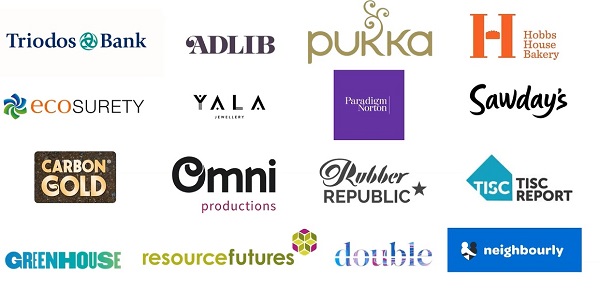
Here are some other Bristol-based B Corp businesses:
“There is frankly nothing to stop anyone saying on their website that they are absolutely amazing”, Andy said, “but when you see ‘B Corp’ you know the company and its claims have been externally verified.
“Being a B Corp means that you need to be publicly transparent so you have to put out a report every year that says what you have been doing.
“There is also a legal change to your company articles at Companies House. You go from saying ‘we are a company and we’re in business to solely make a profit’ to ‘we are in business to make a profit, but we’ll also make decisions through the lens of people and planet’. That legal change is hugely important.”
Supporting people and the planet is the obvious and major reason, but there are several other business benefits too, including:
People want to work for and buy from a purposeful company.
“Being a B Corp helps you to attract better staff and those who share your vision, values and purpose”, Andy said. “It will also help you retain staff. We’ve heard a number of anecdotes from people who’ve been approached by non-B Corp businesses offering them a few thousand pounds more pay but they’ve decided against it because they would rather stay with a B Corp that shares their purpose.”
It can help if you’re seeking funding or investment.
“For an investment company or venture capital investor, backing a B Corp means a huge part of their due diligence is already done,” Andy said. “It reduces the onboarding, and de-risks the investment.”
It can help grow your brand.
A 2021 survey of B Corp businesses in the UK found they had average growth of 25%, compared to just 5% for all businesses.
To be certified as a B Corp you are assessed on six areas:
You are scored points in each of the areas and to be certified as a B Corp you need to score at least 80 points. Andy aims to get his clients to score at least 85 points so there is “a little bit of wiggle room as once you go through the audit process, you might be marked down on a couple of questions”.
To assess your own company you can use the B Impact Assessment tool.
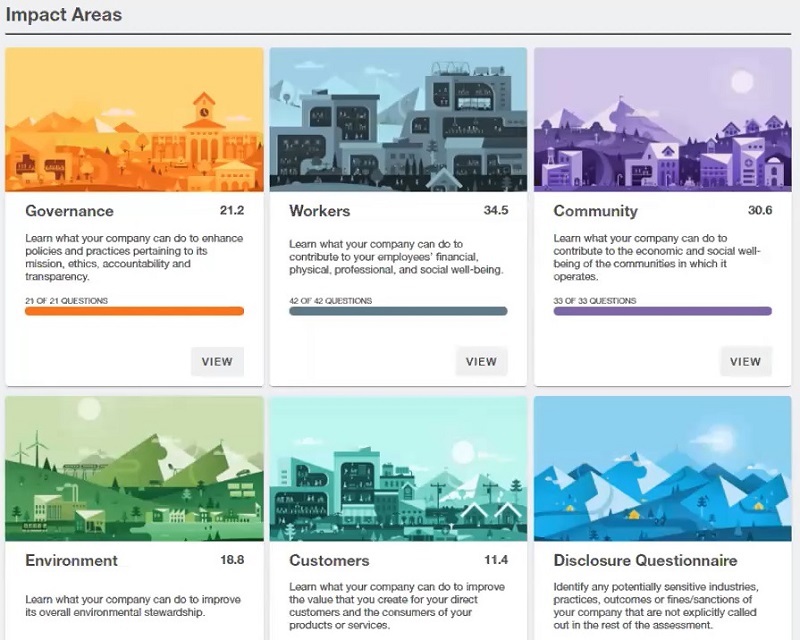
Andy said the B Corp assessment can be “a bit of a forest to navigate” with between 150 and 200 questions to answer, but there is support out there such as that provided by his company, Business on Purpose.
Even if your score is well below 80, the assessment is a useful exercise as it highlights how ethical your business really is and what you can do to improve.
The assessment is free to use but once you submit it, you pay a one off submission fee of £250 (+VAT).
You application will then be audited to check if you meet the requirements and the 80 points minimum score.
Once certified, you pay an annual fee which is calculated based on your company’s total revenue. The minimum is £1,000 for businesses turning over up to £149,000.
Ryan Webb started his conversion optimisation business in July 2021. He is currently a ‘Pending B Corp‘, the status for young start-ups, which shows how new, one-person companies can get involved in the B Corp process.
“There are a whole bunch of policies, processes, measuring energy use etc, that you’ve got to have in place as a B Corp,” Ryan said. “The advantage of having that for any well run organisation is great, but going through it is a great sense check that you’ve got them in place for the right reasons. Getting started ASAP is the best way to approach it. Just get stuck into it.”
“Another key part of the B Corp approach is that it helps to understand what’s going on in your supply chain, both from a client and a supplier perspective.
“I’ve been pleasantly surprised about the positive impact of some of my suppliers, such as accounting software firm Xero. I’m now much more committed to using Xero, more than just because it is a useful accountancy platform but because they are also making an effort to do some good for the world as well.
“Understanding that supply chain is becoming increasingly important from a procurement perspective too. For me as an individual wanting to work with some bigger organisations, the accreditation of B Corp demonstrates that I’ve gone through that process and my supply chain has been rigorously checked as well.”
Bristol recruitment company ADLIB became a B Corp in 2019. Managing director Nick Dean shared some of his lessons from going through the certification process:
“We became carbon positive. Many people are very afraid of that and can’t get their heads around it. I would say don’t worry as there is lots of help out there. There are organisations such as Ecologi or Spherics that will work with you and implement systems to analyse your carbon use and help you offset it effectively.
“Becoming a B Corp was a big component in ADLIB becoming 100% employee owned. If you are considering your future exit model and if you are authentically driven by what B Corp stands for, employee ownership is a very good vehicle to achieving it. B Corp love it. You get around 32 points which is a considerable amount of your worker score. Employees love it and and for you personally, you’ll love the tax benefits!
“Employee ownership has played a huge part in helping us attract purpose driven employees. For businesses bringing in B Corp retrospectively, you might go through a level where some people get it and some people don’t. It might take a few years until everybody is 100% behind you, but it is incredibly worth it. Three years in, every one of our employees authentically care about people and the planet because they’ve been hired in or have gone through the journey with us for that reason. It has built an incredible belonging and culture in the business that helps to drive the business’ performance.
“We have massively increased our out costs, but that’s not a negative. We do a huge amount of charitable giving, we do match donations, we sponsor the Grassroot Activators Programme in Bristol, we’ve significant increased our maternity leave, we’ve put a significant bonus in place. That has all driven a far higher performance. The level of employee we’ve been able to attract has helped to drive the performance. We’re in the best position that we’ve ever been. You can see it come through in the people who we’re attracting and who are staying with the business for a long time.”
You can read ADLIB’s full B Corp impact report here.
If you’re a BCI member and you’re a B Corp, let Dan know.
Inequalities in the UK arts and cultural sector have been exacerbated by the coronavirus pandemic and lessons must be urgently learnt, a new report has claimed.
In what is described as one of the world’s largest investigations into the impact of COVID-19 on the cultural industries, the Centre for Cultural Value said “the impact of the pandemic has aggravated and accelerated existing inequalities and longer term trends across the arts and cultural sector”.
The report found that the impact on the sector’s workforce was not experienced evenly with individuals already under-represented more likely to leave cultural jobs in 2020. Younger workers, women and people from ethnically diverse backgrounds were among the hardest hit in terms of lost work and income.
Freelancers also suffered significantly, the report found. They constituted 62% of the core-creative workforce before the pandemic and only 52% by the end of 2020.
Researchers acknowledged that the Cultural Recovery Fund was crucial for ensuring the survival of cultural organisations, but they were critical of the funding for not reaching all affected freelancers, despite them making up the majority of the arts and cultural workforce.
“Perhaps the most significant finding from our study is…that we need to better understand the vital role that freelancers play in the cultural industries,” the report said.
“Our research has highlighted the need to identify freelance cultural workers in a much more robust and nuanced way so that we can map the sector more accurately and appreciate its complex infrastructure.”
Such an approach, it said, would ensure freelancers do not fall between the gaps in emergency support during any future crisis.
The pandemic saw a huge increase in digital content as cultural organisations that were forced to close turned to the internet to share performances and art collections.
This made content cheaper and more accessible but the report found it failed to significantly diversify audiences with roughly the same type of people engaging with cultural content as before the pandemic.
A digital approach did transform the experiences of many people with an established interest in the arts though, especially disabled audiences and older people living away from major urban centres.
The pandemic also made organisations rethink the way they engage with local communities by communicating through social media when closed and continuing a hybrid approach after reopening. It paid off for some with increased footfall from the immediate area and more spending per head at certain venues.
The crisis also highlighted the key role culture plays in the UK economy. “The importance of the cultural and creative sectors to animate and stimulate night-time economies and town and city centre high streets was keenly felt, and cultural investment was made a key priority for the first round of ‘Levelling Up’ funds and in many locally led recovery plans,” the report said.
In addition, schools and community groups benefitted from the shift by museums, galleries and theatres to local engagement and social media initiatives such as the #CultureInQuarantine and #MuseumAtHome campaigns attracted thousands of people. “In general, audiences were most drawn to content that privileged empathy, intimacy, community, locality and nature,” the study found.
Another positive was the value of culture for wellbeing. The majority of audiences believed digital culture had a positive effect on their mood and managing anxiety, while most people who increased their digital engagement during lockdown intend to continue doing so.
The report said these developments show that digital is worth investing in for cultural organisations. However, to have a positive impact and reach diverse audiences, it advised that online content must be “embedded in a long-term strategy of audience and school engagement”.
The research said networks played a key role in supporting the cultural sector through the crisis. Organisations came together to find solidarity, co-discover new ways of working, find new business models and lobby policymakers for additional support.
Networks can build long-term resilience, the study added, but it warned “there is a real risk that this effective mode of working, which briefly united what is traditionally a fragmented sector, might disappear post-pandemic without targeted support”.
The report warned that the UK’s cultural sector is “at an inflection point and facing imminent burnout alongside significant skills and workforce gaps”. As a result, “regenerative modes of working” need to be “urgently” adopted, it said.
“This approach would carve out time for all of the positive initiatives that we witnessed across the cultural sector during the pandemic: revisioning and restrategising, professional and network development, reflection and evaluation, play and innovation.
“But regenerative models involve sacrifices: less producing and production, less product and income, less hidden labour and overworking, less solipsism and introspection. This vision can only be realised if the cultural sector keeps working together as a joined-up ecosystem and doesn’t rupture at the seams.”
We’re the membership network uniting Bristol and Bath’s creative industries behind a common cause, driven by the belief that we can achieve more collectively than alone. Join as a member and benefit from industry expertise, training, leads, curated news, kudos and more.
The West of England Combined Authority (WECA) has unveiled a new document which highlights why the west is the go-to place for investment in the creative industries.
Launched by Metro Mayor Dan Norris, the ‘Cultural Plan‘ showcases the region’s art and cultural businesses alongside details of how WECA intends to support creativity across the West of England.
“The West of England is an incredibly vibrant, diverse and creative region,” the plan says. “It includes the two thriving cities of Bristol and Bath along with divergent towns and communities.
“The region is recognised as a national and international cultural and tourist hot spot, with a vibrant mix of urban, rural and coastal areas providing an exceptionally diverse cultural ecology.
“But the West of England is also one of the country’s economic success stories. It is the most productive city region in England outside London, with a breadth of innovative businesses and a highly skilled workforce.
“With economic links to Wales, the Midlands, London and the South West, ensuring a strong economy recovery in the West of England will help to drive a wider national recovery.”
The plan outlines some of the incredible statistics which highlight the breadth of the creative industries in our region.
The sector has around 7,000 businesses which employ 50,000 people and contribute almost £2bn to the regional economy.
The West of England is home to the UK’s third largest TV sector with 445 production companies including Bristol Creative Industries members Aardman Animations, Troy TV, Woven Films and JonesMillbank.
Many major TV shows have also been filmed in Bristol and Bath. They include Stephen Merchant’s The Outlaws and Netflix’s Bridgerton.
Several have been filmed The Bottle Yard studios which recently announced a £12m expansion.
Around 800 million people each month watch digital content produced in Bristol and Bath.
The West of England also has the UK’s most productive technology sector and a fast growing games industry with examples such as the chart topping Game Plague Inc created by Bristol agency Ndemic Creations.
WECA says its vision is to “create a region which is an international exemplar of the power of culture to transform and enrich lives, places and businesses”. That vision has four areas of focus:
“The creativity of every child and young person in the region should be given space to flourish; and that emergent talent should be given every means to succeed,” the plan says.
WECA says it will ensure culture is included across the curriculum and “develop inclusive, ambitious and effective skills pipelines for culture in the region and beyond”.
Proposed initiatives include cultural sector school twinning, cultural curriculum exemplars and targeted cultural and creative careers support.
Bristol Creative Industries is also committed to diversity in the creative industries. When we revealed the new BCI board of directors last January, we said: “The diversity of Bristol’s creative industries is something we are immensely proud of, but we also recognised the need for our board to better reflect that diversity. We need individuals who can bring different perspectives and experiences and help us widen our reach across the city. That will help us to future proof the organisation and better support our members.”
Steps we have taken so far include launching The Talent Network which gives 17 to 21 year-olds the opportunity to network with creative employers in Bristol and Bath.
“We will prioritise recovery from the impact of Covid-19, but also focus on the need to thrive and prosper in the period ahead,” the plan says.
WECA’s proposed initiatives include a freelancer transition, an industry leading accelerator programme and a targeted inward investment campaign.
Bristol Creative Industries’ member directory is a brilliant showcase of the creative industries innovation in the region.
“Investment in culture drives productivity and employment and contributes to the regeneration of areas and revitalisation of our high streets. It helps to bring communities together – opening up new perspectives, encouraging participation in civic life,” the plan says.
WECA says it will “place culture at the centre of placemaking, community-making and regeneration strategies with proposed initiatives including a Cultural Infrastructure Toolkit and Charter, an immersive digital experience, working with partners to create a coherent and compelling narrative for the West of England and a “regional mega-event”.
“Culture is an essential part of a life well lived. Arts and culturebased interventions offer new and surprising ways to promote the health and wellbeing of communities and to help them flourish and grow. Participation in culture is a fundamental human right, as outlined in Article 27 of the Universal Declaration of Human Rights,” the plan says.
WECA says it will “ensure that all residents and visitors can access culture and cultural activities for their own wellbeing, development, and enrichment” with proposed initiatives including an arts and homelessness civic plan, widening access to culture including targeting specific barriers for groups and communities, disabled access support and supporting libraries to deliver cultural experiences.
“In the coming years I am determined we do much more than just survive, but to go on and really thrive – to build back even better and progress far further. I want to ensure more local people than ever before have the opportunities to achieve their full potential and make sure as many people as possible know about the amazing things we do here. Above all, I want to put our truly great West of England region even more firmly on the map for national and international success.”
We’re the membership network uniting Bristol and Bath’s creative industries behind a common cause, driven by the belief that we can achieve more collectively than alone. Join as a member and benefit from industry expertise, training, leads, curated news, kudos and more.
Cultural Plan cover image credit: Artist Luke Jerram’s temporary installation, In Memoriam, on Weston-super-Mare beach, September 2021 © Mark Gray
We’re thrilled to be welcoming back Steve Chapman for our first face to face Keynote in over 2 years!
9 wonky projects interspersed with thoughts on creativity and the human condition (featuring a bingo machine)
Pioneering therapist Laura Perls once said that every patient needs their own new form of therapy. Steve thinks the same is true of creativity.
In this unusual talk Steve aims to give no answers, no tools and no formula in order to invite the audience to do the important work and consider what are their own unique creative philosophies and practices that allow their creative spirit to flourish. The bingo machine will decide what stories Steve tells so this is a talk that can never be done more than once so it will be a unique, entertaining and enlightening experience.
Steve’s talk will be held on Thursday 24th March at Origin Workspace, 40 Berkeley Square (BS8 1HP) and will begin at 1pm, with networking from 12.30pm.
About Steve
Steve Chapman (aka stevexoh) is an artist, writer and speaker interested in creativity and the human condition. He has spoken around the world on the subject of human creativity and worked with a plethora of individuals and companies to help them nurture their innate creative spirit.
As an artist, Steve has sold his work across 5 continents, exhibited alongside the likes of David Shrigley and Pablo Picasso and held two successful solo exhibitions in the UK in 2021. He is at his best when he is not quite sure what he is doing.
Website: www.canscorpionssmoke.com
Instagram: www.instagram.com/stevexoh
Twitter: www.twitter.com/stevexoh
Tickets
Tickets are priced at £30+VAT for BCI members and £45+VAT for non-members. Please click here to book your place!
Piers Tincknell, co-founder of WordPress and WooCommerce specialists Atomic Smash, is one of Bristol Creative Industries’ longest standing members. He joined in 2010 when his business was him and his co-founder David Darke. The company is now a team of 17.
Dan Martin spoke to Piers about his business journey and how BCI has played a key role in his success.
“My business partner David and I graduated from university with a digital arts degree. We had an assignment to come up with a hypothetical business that we might be able to run. Our idea was a podcasting network. We found that we worked really well together and when we graduated, we decided to set up our own actual business. We gave it three months. If we didn’t get any work or ran out of money, we’d get a proper job!
“We moved to Bristol but had no clients. We rented some desk space in Spike Island and immediately picked up work from other business people there. We were the only people in the space doing any form of web service so it was a rich source of collaboration. We did logo design, built websites, video editing, sound editing and 3D modelling. We did anything digital that people wanted us to do. We really got stuck in!
“A few years in we met someone who suggested we build our websites on WordPress as it was up and coming. We tried a few content management systems and decided WordPress was the one to use after a business adviser said that we needed to settle on a niche to be successful. It was also then that we hired our first employee.
“We posted a job ad on the Bristol Creative Industries job board. We received some applications and made a choice from those we interviewed. That person is still with us today.
“When you’re running a small business, it’s easy to hire the wrong person. Either you’re not going to pay enough money so you get somebody who’s too hard to manage and you need to upskill them so you can’t spend time on the high value work or you end up with somebody who’s not the right cultural fit.
“My advice around is to not panic hire. Don’t wait until you desperately need somebody to start the process of finding the right person. The longer the interview process and the more time you get to spend with somebody, the more likely you’re going to gel and find the right person. It will feel like a gamble because it’s a new fixed overhead, but if you need to think if the business is going in the right direction and you are going to have enough money in, say, six months time, let’s start the process as soon as possible.
“Doing it through Bristol Creative Industries is good too because you can keep recruitment costs down and I think it’s a more natural way of hiring. I totally see the room for recruiters when you’re a scale-up, but when you’re in your early stages and you’re all about building a good relationship with somebody, then doing it yourself can be so much better.”
“We never overtly set out our culture, but the culture we’ve ended up with is definitely a reflection of me and David as we are closely aligned. Our values are the same and that has been amplified into the business.
“Part of our company culture is learning and self development. We weren’t afraid to take on lots of different tasks at the beginning as we just wanted to learn and get stuck in. That has stuck with us and it’s something we encourage everyone in the business to do. Working in technology, you can’t sit still. You need to keep learning. That’s something we got from our university course. There was some software we studied in our first year that was obsolete by the final year!
“As your business grows, it’s really hard to hold onto your culture. I think at the beginning you just attract people who are similar to you. As you are working so closely together, often in the same room, you have to be really aligned to move forwards. When there’s 20 of you, it’s easy for everyone’s values to not quite align but you muddle through. Once you get to a certain size, the business owner needs to be much more overt about communicating their values internally and that messaging needs to be consistent.”
“We got lots of advice from other people at the start of our business journey. The top three tips were get some business insurance, find a mentor and join Bristol Creative Industries to meet new people.
“I’ve met loads of people through Bristol Creative Industries. In the early days, it was a way to get talking to a new contact if we were both members of BCI. It’s a great icebreaker. I’ve also been to lots of networking events over the years and attended programmes and other training.
“At the start when we didn’t have much money, membership was more of a commitment but we still saw the value in it. We enjoyed being able to connect with other business owners and realised Bristol Creative Industries was the best way to do that. As we’ve got bigger and we’ve become more self propelling, we want to give back. The money you give to BCI is about building Bristol as a community and promoting Bristol. We like that BCI is investing in the creative industries. It is so important for us so we want to do as much as we can to help promote it.”
“I think it’s more competitive than ever in the digital agency space. That’s a really big challenge.
“Talent is another one. It’s great that Bristol is growing in popularity and there are lots of big technology companies coming here, but they are hoovering up lots of good developers and designers. As a small business, we can’t compete on salary so we try and compete on other things that are important to people.
“It’s nice having such a great spread of clients because people often come to work for us to be able to get access to those clients. [Atomic Smash’s clients including Spike Island, Bristol Ideas and Bristol Pride]. That wasn’t an intentional, strategic thinking thing, it was just just a natural thing that happened.
“We also communicate the flexibility that we offer and let people know that if they come and work for us, their destiny is in their own hands. We encourage self-starters and if they’ve got ideas, they can run with them. If people are motivated and they want to take on a side project or they want to get a bit more involved in a particular area, they can.
“We also understand that employees are humans with complex lives. We’re flexible around things like taking 30 minutes in the middle of the afternoon to do the school run. My business partner and I have just got down to four days a week. I’ve got a son now so I’m balancing working and parenting. That is open to everyone. Our working week is a shorter than many other businesses as we contract people for 35 hours a week. If they want to condense it into four days, they are more than welcome to do so.”
“The best thing is the collaboration. That has enabled us to grow. We’ve done projects where we’ve worked directly with another agency. They’ve done some design work, and then we’ve done the implementation or vice versa. That has been of been one of the keys to our success.
“Bristol does collaboration really well, which is shown by the amount of people I’ve met through Bristol Creative Industries.
“The Bristol business culture is laid back. That’s great but it does mean that businesses are not always as good as those in other cities at self-promotion. If you look at it from the outside, it can seem like Bristol is not as hungry as cities like Manchester and London.”
“If we had set the business up in 2010 in our bedrooms and not in a workspace, there’s no way we would have met the people who gave us work at the start. Try and set up your new business in a hub or a workspace where there’s other people on the same journey and you’ve got mentors and advisers on hand.
“Find the best people if you’re going to take on staff. If they cost you a bit more, then it’s definitely worth it, and once they’re on board, look after them.
“Finally, I say enjoy the journey! It’s pretty up and down and it doesn’t end, so you’ve got to enjoy it as you go.”
Fancy joining Piers Tincknell as a Bristol Creative Industries member? Benefit from industry expertise, training, leads, curated news, kudos and more. Sign up here.
Your company’s growth depends on your ability to sell and get new customers through the door quickly. But many of us recoil from the thought, let alone action, of selling, networking and prospecting for new business.
Louisa Clarke, partner at The Caffeine Partnership and co-author of Catalyst: Using Personal Chemistry to Convert Contacts Into Contracts, joined us for a keynote event to demystify the science and art of business development and to provide practical advice on how to catalyse relationships that will win you new clients. Bristol Creative Industries editor Dan Martin summarises her brilliant tips.
We all know the cheesy theories and tactics that many so-called experts share when talking about business development. For Louisa, all that management speak makes prospecting for new business sound “academic and joyless”, when it’s actually simply about people and human relationships.
Louisa’s book relates business development to a catalyst, a process to make a chemical reaction happen more quickly, without changing the catalyst itself.
She believes the job of business development “is to be a person whose enthusiasm and energy causes others to be more friendly, enthusiastic and energetic in response”.
When two people share a special connection, they develop a rapport. The person then develops an impulse to feel a need to see that person again. “Business development is about catalysing relationships, creating connections between human beings that change fortunes,” Louisa explained.
“Business development is really just about staying in touch with people and being helpful in a conscious, methodical way”, Louisa said.
To find those people in the first place is where networking comes in.
But the thought of networking, selling and prospecting for new business fills many people with dread. They feel “entrapped and pressurised”, Louisa said, and even if they do form new contacts, “they struggle to turn them into something more commercial because how do you go from contract to contract without losing your soul?”
The danger is you fall into the trap of becoming a professional networker, Louisa warned. We all know at least one of them. The person who makes it all about them, who when talking to you scans the room for someone more interesting, who never follows up and who never says thankyou if you help them.”
So how can you avoid being one of those people and become an effective networker? Here are Louisa’s tips.
If you have that fear of networking, you have to get over it because you have to get out there. The first step is showing up.
You need to be wherever your potential clients are, be it conferences, events, trade show dinners or even the queue at an airport.
Louisa challenged attendees to force themselves to say ‘yes’ to every invitation they get in a month and force themselves to show up.
Most people have a fear of rejection which, Louisa said, stops us from making the first move so we stick with what and who we know.
“But think about the first time you met your best friend, your life partner, your long standing client; all the best relationships start with someone being brave enough to make the first move and someone else reacting positively to the person who had that courage.”
Louisa continued: “When we ask about someone’s journey or the weather or what someone’s work is, what we’re really saying is ‘I’m friendly. Are you friendly?’, Or ‘can I get on with you?’ But it’s too weird to actually say that. So ‘what do you do?’ remains our stock phrase.
“And it’s not what we say in reply that matters, but how we say it. We introduce ourselves so many times in the world of work, no wonder we can often sound bored about it. But the person opposite is hearing this for the first time. Make it interesting for them to hear.”
When someone asks you ‘what do you do?’, think about how you can answer it in an interesting way. Louisa gave the examples of the team at the Caffeine Partnership who say “we help impatient leaders grow their businesses and brands fast” and an executive coach who describes her work as “holding the mirror in front of clients until they start to really see themselves”.
Louisa said that many people forget the golden rule: “Networking is about acting with the aim of advancing someone else’s agenda, not your own.”
She added: “The currency of effective networking is not personal or corporate greed, but generosity. When you are networking, there’s zero pressure on you to make a sale or close a deal. In fact, if you rush to sell and close the deal too soon in the relationship, you’ll find it counterproductive. Networking is about getting to know people and being helpful to them so that when they need you, you are there.”
Louisa shared an example: “I met a stranger at a dinner. We bonded over both being working mums and the conversation turned to a project she was struggling with. It was in the area of employee engagement which is one of our specialties. My radar was on and it sounded like something we could help with.
“I then deployed one of my favourite new business questions: ‘Would it be helpful if….?’. ‘Would it be helpful if I sent you some examples of similar projects we’ve done?’, ‘sent you a book on the subject that my colleague wrote?’, ‘took a look at your brief and suggested how we could help?’ I didn’t try to sell, I just tried to help.”
Meet fellow creatives at the BCI Walk & Talk outdoor networking event on 4 March. Book now.
In these uncertain times, investing heavily in just a handful of key relationships is the wrong approach, Louisa said. Instead, cast your net as wide as possible.
Louisa related a story of someone she met at an event where a colleague was delivering a speech. The woman said she knew the ‘Alan Sugar of Barbados’ and thought The Caffeine Partnership could help him. It sounded too good to be true but three months later, she got back in touch to set up a meeting. It led to a six month project that netted almost $1m in fees and four trips to Barbados.
That example shows you should never close the door on someone who wants to work with you, however far-fetched the opportunity may seem. You never know where it might lead, even to a beach in the tropics.
Talking to strangers when there’s no deal to be done or meeting to secure is much easier. That’s why you should take the pressure off yourself when prospecting for new business. If someone tells you what they do and you jump straight in with a sales pitch, you’ll come across as self interested, obvious that you’re after something and that you have selfish motives.
“Treat every new acquaintance as a chance to practice your ability to build rapport rapidly,” Louisa said. “Don’t sell but help. What is it that you do that could be helpful to that person? Invest the effort in practising not because you’re manipulative, but because you’re in the business of making contacts and might be potentially of use to them.
“The more contacts you make, the better you’ll become at making them. The more people will want your help and the easier it will be to get even more people to see you as a useful contact.”
Louisa said the best model for business developers to adopt is diligent farmers.
“They work consistently, they never slack, they shepherd their flock and steer them from danger. They invest care and attention on each and every one of their charges. Their interests are best served by serving others’ interests brilliantly and when the time comes, they reap the benefits.
“The simple secret to their success is that they create a relationship with their prospects that builds cumulatively over time, that by the time the potential buyer becomes an actual buyer, it’s a foregone conclusion that they will buy from the diligent farmer.”
Like farming, business is a long game. Too often, people only turn the new business tap on when the need for new revenue is urgent. “But if you are a diligent farmer, you will have a constant stream of potential clients who are not just in the market to buy now but are predisposed to buy from you because they’ve been looked after by you.”
“One of the secrets of high performance is consistency,” Louisa said. “All top performers, whether they’re comedians, Olympians, artists or CEOs, are more consistent than the rest of us. They show up to do the work whether they feel like it or not, they don’t procrastinate and they don’t make excuses. They just do it.”
This can be explained by what has become known as The Seinfeld Strategy.
It’s the story of a young American comedian at the start of his career who met global superstar comedian Jerry Seinfeld. He asked him for advice on how he could improve. Seinfeld replied that the way to be a better comic is to create better jokes. The way to create better jokes is to write every day. He asked the young comedian to get a big wall planner with a year on one page. With a big red pen, write a big red cross over the day. After a few days you’ll have a chain. Keep going and the chain grows longer every day. You’ll like seeing the chain especially when you get a few weeks under your belt. Your only job is to not break the chain.
“Notice that nothing was said about results,” Louisa said. “Nothing was said about the quality of the work. All that matters is not breaking the chain.” Consistency and developing a behaviour is the key to success.
According to a study by UCL published in the European Journal of Social Psychology, it takes 66 days for new behaviour to become automatic.
“In that spirit, start your prospecting activity with a 60 day plan,” Louisa advised. “This is less about filling in an activity for every single day but more about keeping yourself accountable for a set period. New business prospecting isn’t something you can turn off and on like a switch. It should be a constant stream of day to day activity.”
Network with fellow Bristol Creative Industries members at the BCI Walk & Talk outdoor event on 4 March. Don your walking boots and meet fellow creatives while enjoying the beautiful countryside around Bristol. Register here
As we approach a new year, Bristol Creative Industries editor Dan Martin looks back at 2021.
It has been another very challenging year for business. We started 2021 with the pandemic continuing to take hold and we sadly end it with COVID-19 still very much dominating the headlines.
As restrictions eased over the summer and we saw a welcome return to in-person meetings and events, we were hopeful of a return to business as usual in 2022. However, Omicron looks set to have put paid to that with new restrictions very much on the cards in the new year, if not sooner.
But if there’s one thing we know about creative industries businesses in our region, it’s your resilience and creativity!
We’ve seen so much innovation over the past 12 months and we are delighted to see increases across all our membership categories as businesses looked to the network to boost knowledge and form new collaborations.
Our total membership is up 50% over the year with business membership seeing a 26% increase. In addition, individual membership has risen 20% and our student membership has grown by 123%.
Chris Thurling, chair of Bristol Creative Industries, said: “Despite the immense challenges of the pandemic, the year at Bristol Creative Industries has included many positives.
“The situation has encouraged more businesses to see the value of connecting, networking and collaborating. It’s great to see an increase in our membership, our events remaining very popular and the growth of many member businesses. At times throughout the year, our jobs board has featured more jobs than ever before!
“The prognosis for the creative industries in the region is a healthy one. In many ways, lockdown has liberated the creative industries from the south east. Many have realised that to build a successful business, you don’t need to be in the centre of London.
“People still want to be near a strong ecosystem and Bristol and Bath have got the combination of factors needed to be competing as alternative locations for creatives.”
The year kicked off with a big announcement as we revealed the new BCI board of directors. They are Julz Davis, Marissa Lewis-Peart, Heather Wright, Gail Caig and Dr. Susan McMillan.
As we said in January: “The diversity of Bristol’s creative industries is something we are immensely proud of, but we also recognised the need for our board to better reflect that diversity. We need individuals who can bring different perspectives and experiences and help us widen our reach across the city. That will help us to future proof the organisation and better support our members.
“We are extremely grateful to the stellar line-up of individuals who have joined our board. With their incredible expertise, they will help us build stronger connections with creative businesses, government organisations and individuals in all corners of the city.”
Talent and diversity remained a strong theme throughout the year and a focus of our efforts to support our members.
It’s a subject we discussed with Heather Wright, the BCI board director who spent 22 years at Aardman, during an in-depth interview in July.
She said: “You get a better quality of idea when you have lots of different windows on the world in front of you. Everybody comes with a different window and a different viewpoint. The more ideas you have in the room from different places the better.
“That’s the problem with the Westminster bubble; they talk to people like themselves all the time. The only way to break out of the bubble is to go further and have a greater diversity of ideas. That comes from a greater diversity of people including ethnic diversity as well as age, people who are less able bodied etc. It’s all about having people with something different to bring which is not the usual employing people in your image which is often the worst thing you can do.”
In September, we launched The Talent Network which gives 17 to 21 year-olds the opportunity to network with creative employers in Bristol and Bath.
The first event allowed young people to find out what skills creative employers are looking for – now and in the future – and to ask the questions they’ve always wanted to ask such as ‘how do I get a job in TV?’, ‘What skills should I focus on?’ and ‘How can I turn gaming into a career?’.
Chris Thurling, BCI chair, said: “A common challenge for our members is the struggle to hire a workforce with the right skills. There are, however, lots of young people with the skills needed but they don’t know the pathways in.
“BCI is there to do the things agencies can’t do on their own and by adding our unique capabilities, we can help tackle the challenge of connecting talent to businesses. We have already started with initiatives like the Talent Network but it is just the start of many things to come.”
We had a busy events programme this year including our monthly virtual members’ lunches where we love catching up with lots of you.
We’ve also had many workshops and keynote events. Big thanks to all the experts for sharing their expertise.
January:
BCI board member Marissa Lewis-Peart led a student networking event and Kit Altin led an online workshop on writing the perfect creative brief.
February:
David C. Baker, described by the New York Times as “the expert’s expert”, joined us from the US for a brilliant keynote event covering how creative businesses can write the perfect positioning statement. We’ve summarised his tips here.
March:
Social media expert Drew Benvie told us all about the app that everyone was talking about, Clubhouse. Read a summary of his tips here.
Digital agency mentor Janusz Stabik began a series of three workshops explaining the strategy needed to run an efficient and effective agency. Read Janusz’s blog post on how to attract better quality agency clients in three easy steps and download his free strategic growth planner for digital agencies.
Lawyer Rebecca Steer from Steer & Co delivered a Brexit and Covid-19 legal update. Find the latest legal news and advice on Rebecca’s blog.
Katie Scotland began a series of four workshops to help attendees use their strengths to feel more confident, have more impact, build better relationships & create more inspiring ways of working with others.
April:
Paul Feldwick worked at the legendary creative agency Boase Massimi Pollitt for over 30 years. His latest book, Why Does the Pedlar Sing?, examines what creativity really means in advertising. He joined us to share some of his insights. Read a summary here.
May:
The team at Tonic Creative Business Partners shared perspectives on what makes great content.
June:
Kit Altin returned for a workshop on how to be more persuasive, and Tom Evans, co-founder of strategy, design and communication agency BEHAVIOUR, shared advice on presenting creative work.
August:
We held our first in-person event for many months as a group of BCI members joined us to discuss funding for creative businesses. Attendees said it would be useful if we could provide regular updates on the finance schemes that are available for creative companies in the south west and beyond. As a response, we published this post and we’re keeping it updated.
September:
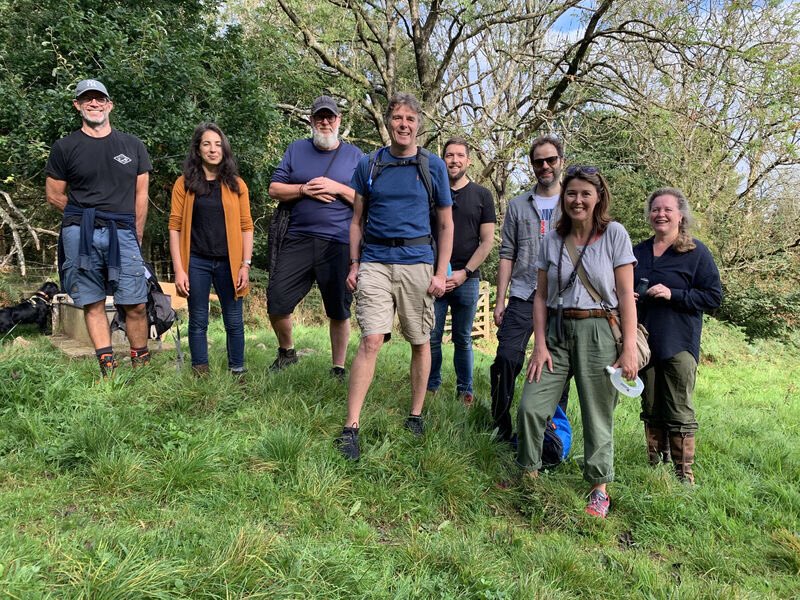
We ran a networking event with a difference as a group of members donned their walking boots to explore the beautiful Mendips. The feedback was very positive and we are planning to run another Walk & Talk event with Outside next spring.
Andy Nairn, who has been named the UK’s number one brand strategist for the past three years, joined us for a fascinating and entertaining event. In his new book, he explains how the history of marketing and advertising is full of brands that stumbled across great ideas by accident or turned misfortunes into huge successes. During the event, Andy highlighted examples and outlined the lessons for creative companies. We summarised his insights here.
Consultant Mette Davis-Garratt and Morag Ofili from Kiltered began a brilliant five-part series to help people make sense of what diversity and inclusion means for their business, why it matters, and how to turn the conversation into action.
October:
With the aim of giving 17 to 21 year-olds the opportunity to network with creative employers in Bristol, we launched a new collaborative initiative called The Talent Network. We teamed up with education provider boomsatsuma for the first event and gave young people the chance to find out what skills creative employers are looking for and to ask the questions they’ve always wanted to ask.
If you’re a creative industries employer and would like to get involved in The Talent Network, please contact [email protected].
Anne Thistleton, who has spent over 20 years as a marketing practitioner in the field of mind science, joined us from South Africa for an online event where she shared fascinating insights about how understanding the way the human mind works can help creatives build more effective campaigns. Here’s a summary of her brilliant advice.
One of the benefits of Bristol Creative Industries membership is publishing your own content on our website. We love reading your news!
BCI members have won plenty of awards this year including Unfold, Mr B & Friends and Launch.
Other reasons to celebrate included Atomic Smash becoming a WordPress VIP Silver Agency Partner, the opening of Gather Round’s second co-working space in Bristol and Gravitywell being named among the top app developers in Bristol.
Congratulations to you all!
We’ve seen some fabulous innovation by BCI members for great causes in 2021. Here are some examples:
We love behind the scenes peeks at our members’ businesses and this post is one of our favourites. It’s the story of how digital designer Mayumi Kurosawa has overcome incredible odds to get to where she is today – a much-loved member of the Proctor + Stevenson team.
Bristol is home to some of the best arts organisations in the UK and we were delighted to welcome two of them – art gallery Royal West of England Academy and concert hall St George’s Bristol – as members in 2021.
BCI members have also shared some brilliant business advice in 2021. Here are the 20 most popular posts.
You can read all the news, advice and updates from BCI members here.
Looking at wider happenings for the creative industries in Bristol and Bath, 2021 has been a huge year for film and TV production in the region.
In a very popular article, The Guardian said: “TV crews are falling over each other to film drama in ‘Bristolywood'”, with a 225% rise in production on pre-pandemic levels. There were four major drama productions under way in Bristol in 2019/20. That grew to 13 during the first quarter of 2020/21 and since January this year, 15 high-end TV dramas have been filmed in the city.
Among the high profile shows calling Bristol their home are The Outlaws, the comedy thriller from local boy Stephen Merchant, and BBC legal drama Showtrial.
Forget James Bond, here’s the red carpet event of the year. Premiere of my new show The Outlaws last night – and proud to hold it in my hometown of Bristol. #theoutlaws pic.twitter.com/YCmlFWhF3d
— Stephen Merchant (@StephenMerchant) October 5, 2021
Bath has also been popular with production companies including being transformed into a winter wonderland in the middle of autumn for the new Willy Wonka movie with Timothée Chalamet.
Animation is a big deal in the region too, thanks to the likes of Bristol Creative Industries member Aardman, which has recently launched Robin Robin on Netflix.
Speaking of Netflix, the streaming giant organised a special event in Bath’s Assembly Rooms in November to celebrate the success of its productions made in the South West. The location for the event is featured in global hit Bridgerton.
As the film below shows, the UK economy has been boosted by over £132m over the last two years as a result of Netflix productions created in the South West of England.
You are currently viewing a placeholder content from YouTube. To access the actual content, click the button below. Please note that doing so will share data with third-party providers.
In other broadcast events this year, Channel 4, which opened a creative base in Bristol in 2020, delivered its evening news programme from Bristol Beacon on 10 September. It was part of the Black to Front project, a day of programming featuring Black presenters, actors, writers and experts, contributors, and programme-makers. The one hour news broadcast featured a wide-ranging discussion on contested heritage, Black Lives Matter and Bristol mayor Marvin Rees on what has happened since the toppling of the Edward Colston statue.
Publishing its “blueprint for the future”, the BBC said it will expand its BBC Studios base in Bristol. BCI chair Chris Thurling said: “Spreading investment more evenly across the UK is the right thing to do, and I welcome the BBC’s explicit commitment to Bristol.”
The creative industries education sector continued to grow in 2021 with the breadth of courses on offer to the next generation demonstrated by this guide we published in October to further and higher education in Bristol and Bath.
BCI member bootsatsuma has done some great things this year including an innovative street poster exhibition showcasing the work of some of its brilliant students.
Access Creative College resurrected Bristol’s iconic Bierkeller as an events and education space. The venue previously welcomed some of the biggest names in music to its stage, including Nirvana, The Stone Roses and Arctic Monkeys.
Despite what has been another hugely challenging year for the arts, you could still get your cultural fix in Bristol and Bath with artists and others adapting to the need for safe and outdoor events.
Street art festival Upfest was cancelled again but more than 75 murals were created on the walls of south Bristol for locals and visitors to explore during their own personal walking tours.
Bristol artist Luke Jerram, who has achieved international success, brought his stunning In Memoriam installation to the city’s College Green in October. It was created from over 100 flags, made from NHS hospital bed sheets as a memorial to losses during the COVID-19 pandemic and in tribute to the NHS, health and social care staff and volunteers who have given so much to so many.

Luke Jerram’s spectacular Museum of the Moon, a suspended model of the moon measuring seven metres in diameter, went on show in Bristol Cathedral in August and is displayed in Bath Abbey until Christmas Eve.
As the COP26 conference took place in October, an art piece was installed in Pulteney Weir in Bath to highlight the climate change emergency. Sinking House is a red 5.5m by 3.5m house semi-submerged in the water.

The brilliant Love Bristol campaign continued with the painting of socially distanced hearts which were perfect for sitting with your household or group of six to enjoy takeaways from nearby businesses in the spring sunshine.
The festive edition of the campaign is Christmas Adventures, a trail of illuminated lyrics from classic Christmas songs.
Royal West of England Academy launched a multi-million pound renovation project with pop-up exhibitions in other venues around the city so people can still enjoy the art.
We end the year with uncertainty. As a new variant of coronavirus takes hold, it’s possible we will see in the new year with more restrictions. It may not be a full lockdown but we’re likely to return to Zoom calls, takeaway eating and quieter streets.
There is much to look forward to though. We have been so impressed by the continued resilience and innovation of our region’s creative businesses in 2021 which stands us in good stead for the future.
BCI is here to support and we urge you to take part in our super important survey so we can shape our future support and advocate to the government what the region’s creative economy needs.
As we wish you all a fabulous Christmas and brilliant new year, we’ll close with the words of Alli, our membership manager, from her interview in September:
“We help members to learn, grow, and connect. It’s through connecting that people learn and grow. We are a community of people who have a common interest of working in or being interested in the creative industries in Bristol and the surrounding area. We’re the central hub that brings everyone together.”
You need to load content from reCAPTCHA to submit the form. Please note that doing so will share data with third-party providers.
More Information