Bristol Creative Industries is supporting jfdi with the 8th annual jfdi/Opinium New Business Barometer. This report is an absolute necessity for anyone who has a focus on building their agency’s new business as it will arm you with valuable insights and industry-wide stats to benchmark your performance.
When it comes to new business, there are lots of opinions, but not enough data. As proud partners of the jfdi/Opinium New Business Barometer, we want to change that.
If you’re an agency owner, managing director or part of your agency’s senior management team, please take a few minutes to complete the survey and you’ll receive a copy of the unique report as soon as it’s available in the new year.
In return, as well as the free report, you’ll:
jfdi help agencies grow by winning new business. The team are privileged to have worked with over 1000 agencies – both large and small and across marketing disciplines. The one thing they all have in common is their ambition to grow. For these bold and ambitious agencies, jfdi offer a mix of strategy, creativity and action that works in the real world not just in workshops and away-days.
The creatives industries is one of eight sectors of focus in the government’s vision for its new industrial strategy.
Publishing a green paper and launching a public consultation, the government said the strategy’s aim is to “drive long-term growth in key sectors that is sustainable, resilient and distributed across the country”.
In their foreward, chancellor Rachel Reeves and business secretary Jonathan Reynolds say:
“There is rapid change in the global economy, and the case for governments to roll up their sleeves and shape markets rather than step back in the face of these challenges is stronger than ever. To capture the growth the UK so desperately needs, we need a modern industrial strategy to share in the next decade’s growth opportunities.
“This industrial strategy will provide a launchpad for businesses. It provides the firm foundation for investment that businesses have told us they need. This government believes it is our role to provide the certainty that inspires confidence, allowing businesses to plan not just for the next year, but for the next 10 years and beyond.”
The eight sectors the government will focus on are:
Summarising the UK’s creative industries, the green paper says:
“The UK’s creative industries are world-leading, showcasing the best of its creativity and culture to the world. According to UN Trade and Development, the UK is the third largest creative services exporter behind the US and Ireland, worth $87 billion in 2022. Globally, 1 in 10 songs streamed are from the UK.
“The UK is a global centre for screen production, with £4.23 billion in production spend in 2023, of which 78% was from inward investment. According to the Creative Industries Policy and Evidence Centre, the creative industries accounted for 67% of the UK’s digital exports in 2021.
“The sector is expected to grow worldwide, creating further growth opportunities. The sector is highly innovative, attracting significant inward investment and producing goods and services that are world renowned. PwC estimates that the global entertainment and media sector will grow to $3.4 trillion by 2028. Half of global trade is expected to be digital by 2050.
“To enable growth in the sector, the government will leverage UK creative industries’ global comparative advantages by unlocking private investment, boosting exports, and developing its highly skilled workforce. The government needs to ensure that the UK sector remains globally competitive as a home for world class talent while maximising access to important markets to tour and collaborate.
“The sector plays an important role in driving growth across regions and nations, through creative clusters and corridors across the country that spread opportunity and prosperity in communities, as well as driving growth by enhancing access to skills, spillovers, and knowledge sharing.”
Skills is a key area of focus for the government, with the green paper saying “the UK has a skills mismatch greater than many peer economies, with 10% of businesses reporting at least one skill shortage vacancy”.
It said the skills needs of employers vary according to their sector and geography, with one example given being the creative industries sector needing workers with skills in digital, design and data.
A key focus at Bristol Creative Industries is boosting workforce diversity in creative businesses and helping to grow the talent pipeline for our members through initiatives such as our groundbreaking Bristol Creative Industries Internship Programme with social enterprise Babbasa and Bristol-based agencies.
A core objective of the government’s industrial strategy is “unleashing the full potential of our cities and regions by attracting investment and creating the best environment for businesses in them to thrive”.
The green paper highlights areas where focused clusters already exist and have potential for growth. One of those mentioned is digital industries in Bristol.
The government is running a public consultation on the industrial strategy until 24 November.
We are interested to hear ideas for how the Bristol Creative Industries community think the creative sector should feature in the final industrial strategy. Send your ideas to Dan Martin.
Ahead of the 2024 general election, several BCI members told us how they would like to see the new government supporting creative businesses. Here are some of the responses:
“The creative industry faces two significant challenges: attracting and retaining skilled talent and securing financial support to facilitate investment and growth in a challenging economic environment.
“Many creative businesses are small and agile, enabling them to deliver results with minimal resources. However, for these businesses to reach their full potential, the next government must acknowledge the creative sector’s value and contribution to the UK economy and provide tangible support.
“That means offering tax incentives to small businesses and startups, increasing access to loans and grants – and not just for R&D – expanding and supporting creative apprenticeship programmes, and providing business support programmes specifically tailored for small and creative businesses.
“Finally, we need greater market visibility and opportunities to access national and international trade.”
Catherine Frankpitt, Strike Communications
“To continue building the creative sector, further focus needs to be placed on education, advocacy, and innovation, ensuring the sector not only survives but thrives in a rapidly changing world.
“Education is where it begins. The government must recruit and keep inspirational teachers who can inspire and cultivate the future generation of creative individuals. Quality educators play a crucial role in motivating students and equipping them with the necessary skills to excel in creative industries.
“It’s also crucial to advocate for the creative industry and change outdated perspectives to promote diverse career paths. Traditional career guidance often emphasises professions like policing or accounting, while overlooking the numerous opportunities available in creative industries. It’s important to shift this discussion in educational institutions, as well as with parents and the community, whilst showcasing success stories and the economic potential of creative careers.
“Innovation is at the heart of the UK’s creative accomplishments. For instance, consider Sir Tim Berners-Lee’s creation of the World Wide Web or the iconic design of the Mini car. These examples illustrate the UK’s leadership in problem-solving and generating new ideas. To continue this momentum, the government needs to provide support to creative start-ups, allocate funds for arts research and development, and promote collaborations between businesses and creative professionals.
“So, let’s remember what we’re good at as a nation, continue to nurture it, and constantly innovative, to remain at the global forefront of creativity.”
Ryan Wills, Taxi Studio
“The UK represents vast untapped potential for creative businesses. For young people, entry into the industry remains something of a closed shop, achieved via well-trodden paths. Any efforts to broaden these pathways are largely driven by charities or pro bono work by smaller businesses. So we’re undoubtedly missing out on millions of incredibly talented people, and they’re missing out on what could be exceptional careers.
“The incoming government should invest meaningfully in giving the next generation more exposure to what our industry can offer, and easier access to financial and professional support that would make a creative career a viable option for all, regardless of background. Then let’s see what we could achieve!”
Ailsa Billington, Proctor + Stevenson
“We are strong advocates that the next government must focus on digital skills education to help prepare our future creative industry workforce. We see investment in digital and AI education, skills, initiatives and training will be crucial for businesses like ours, so we can recruit exceptional talent for the future.
“We believe the next government must also foster collaborations between educational institutions and industry, to help bridge skills gaps and by investing in these, the government can empower and future proof the creative sector to help drive economic growth.”
Tom Vaughton, Varn
Bristol Creative Industries is delighted to be sponsoring Creative Day at Bristol Technology Festival 2024 alongside BCI members Aer Studios and MyWorld.
Now in its sixth year and organised by techSPARK, Bristol Technology Festival is the UK’s largest regional technology festival.
It celebrates the awesome people, innovation, community and thriving tech scene in the city. We are excited to be involved and representing Bristol’s brilliant creative industries.
Each day of the festival from 7-11 October is themed. Thursday 10 October is Creative Day.
Here the brilliant free events to attend on Creative Day:
SXSW UK is being hosted WHERE?
MyWorld, 9.30 – 11am
…we all know it should have been here, right? Join us as we unlock the untapped potential of creative tech in the region and realise what it takes to position ourselves as rightful global leaders.
Fuelled by barista coffee and brunch, this interactive workshop invites participants to collaborate with key community figures and industry bodies to define what creative technology means to our community and chart a path forward.
Panel: Setting the future vision of creative technology in the South West
Motion, 12.45 – 2pm
Join us for an engaging and interactive panel discussion that will dive into the future of creative technology in our region. Building on the insights from our morning workshop, our panel of industry experts will discuss the untapped potential of our sector and work together to define a shared vision for the future.
Meet the panel:
MyWorld Creative Tech Showcase
Motion, 2 – 5pm
Join us and immerse yourself as we explore emerging technology innovations and trends, such as AI, immersive, gaming, sound and how they are going to continue to transform creative industries. The event showcases the technology that has been researched and developed through MyWorld.
The Sheds studio tours
MyWorld, 9am – 5pm
Book a tour to look around MyWorld’s state of the art facilities at The Sheds and experience some of the innovative technical research being developed in the spaces.
Tom Harber, Bristol Creative Industries board director and Aer Studios managing director, said:
“We see our involvement in Bristol Technology Festival as a meaningful step towards driving deeper collaboration with the tech sector and a stronger relationship with key organisation including techSPARK and MyWorld.
“Creative Day at Bristol Technology Festival provides a platform for Bristol Creative Industries to discuss the creative industries’ role in driving innovation in the region and will bring valuable insight for our members, as well as opportunities for cross-sector collaboration.”
If you’re new to Bristol Creative Industries, here’s a bit about us.
Founded in 2005 as Bristol Media, we’re a community interest company that supports the creative sector to learn, grow and connect.
Driven by the common belief that we can do more collectively that alone, we’re about prosperity for creative businesses and that means attracting new talent and new customers.
In Bristol and across the region we:
We are supporting Bristol Technology Festival to foster greater collaboration across the sectors and create opportunities for insight and connections for our members.
To maximise the benefits of tthe Bristol Creative Industries network, support our work and help the region’s creative sector thrive, you can join as a member.
Look out for representatives of Bristol Creative Industries at Bristol Technology Festival events.
The government has started a review of the cirruculum to ensure creative subjects are part of education, Lisa Nandy said.
Speaking at the Labour Party Conference in Liverpool, the culture secretary criticised the previous Conservative administration for not supporting arts and culture, and said the new government will “reignite the imagination of the next generation because a complete education is a creative education”.
With education secretary Bridget Phillipson, she said she has launched “a review of the curriculum to put arts, sports and music back at the heart of our schools and communities where it belongs”.
The government will also, Nandy said, launch a review of Arts Council England to “ensure arts for everyone, everywhere because we will never accept that culture is just for the privileged few, to be hoarded in a few corners of the country, and we will never accept there is a trade off between excellence and access”.
Other focuses outlined by the culture secretary included “making the TV industry far more representative of the country”, working with mayors and councils to grow creative sectors such as tourism, film, and gaming, and shortly launching the BBC charter review “to ensure the BBC survives and thrives well into the latter half of this century”.
In his conference speech, Keir Starmer also referenced creativity, saying:
“Everyone deserves the chance to be touched by art. Everyone deserves access to moments that light up their lives.
“And every child deserves the chance to study the creative subjects that widen their horizons, provide skills employers do value, and prepares them for the future, the jobs and the world that they will inherit.”
The creative industries were also discussed in other parts of the conference, including in a pavilion run by Creative UK.
One panel focused on improving working class access to the creative industries, following research released earlier this year which found that in film, TV, video, radio and photography just 8.4% of people identify as being from a working-class background.
On the panel was Line of Duty actress Vicky McClure who said:
“If it wasn’t for the likes of Jed Mercurio [Line of Duty writer] and Shane Meadows [This Is England writer], working class lads from Birmingham and Uttoxeter, I wouldn’t be here.”
The panel discussed the need for funding to be targeted at underrepresented groups wanting to enter the creative industries. Watch a recording of the event here.
A key focus at Bristol Creative Industries is boosting workforce diversity in creative businesses and helping to grow the talent pipeline for our members.
As well as our groundbreaking Bristol Creative Industries Internship Programme with social enterprise Babbasa and Bristol-based agencies, we provide opportunities for members and have committed to an annual programme of round tables with key post 16 education providers in the region including colleges, academies and universities.
Our aim is to promote creative careers to staff and career advisers, drive applications to our internship programme and explore how we can promote the creative industries to students already studying.
By joining the Bristol Creative Industries Talent Programme as a partner, you’ll help to fund all of our activities that support underrepresented groups entering the creative industries. Your support is vital to ensure we have a healthy and diverse talent pipeline.
For more details, contact Alli Nicholas, BCI membership and operations manager, at [email protected], or Lis Anderson, BCI co-chair, at [email protected]
Social media expert and Bristol Creative Industries member Luan Wise recently delivered a series of BCI events focused on practical insights for using LinkedIn to make connections, boost your business and find work. The first was tips on optimising your LinkedIn profile.
Dan Martin summarises her brilliant advice.
—-
LinkedIn is one of the oldest social media networks having launched in 2003. It now has over one billion members in 200 countries and regions worldwide.
LinkedIn’s mission is to “connect the world’s professionals to make them more productive and successful”, with the vision of “creating economic opportunity for every member of the global workforce”.
Luan advises asking yourself the following questions to ensure your LinkedIn profile is relevant and beneficial to what you are trying to achieve.
What will you be using LinkedIn for?
Who do you want to find your profile on LinkedIn?
How do you help solve their problems?
What keywords will they search for to find you?
Who would you like to be in your network on LinkedIn?
What do you want to be known for within your network?
Luan says that while there’s lots you can do with a free account, there are many useful benefits of paid accounts. Before upgrading to a paid account, think about whether the features will benefit you enough to justify the cost. LinkedIn offers a one month trial.
As a Premium Business user (currently £49.99 a month or £359.88 a year), the benefits are:
Luan advises to consider your privacy settings on LinkedIn and who you’re sharing your content with. Go to the visibility section to check your settings
One section you can switch off is allowing your network to see all your contacts. Luan says:
“Leaving it switched on would be like walking into a room and leaving all of my data assets, my connections, my business cards on the table. I don’t want everyone to see so I switch it off.
“I would suggest that you switch yours off, but if you’re looking at someone else’s profile, and you’re in a sales, or business development mindset, there’s nothing stopping you having a look if they haven’t adjusted that setting.”
Your LinkedIn headline appears on your profile and every time you post, so make it count! Luan says:
“By default it will be the job title and company name taken from the ‘experience’ section of your profile. But job titles can sometimes can be a bit vague, and company names don’t always communicate what you do, so add a descriptor.
“For example, if you’re freelance and offer a multitude of skills, you could change your headline to say ‘I help these types of clients by doing this.’
“Have a look around LinkedIn, and see what other people have done with their headlines. Think about making a good first impression, what will appear in search results and what will appear alongside everything you do on LinkedIn.”
The ‘experience’ section of your profile is the CV-like section of your profile, “but unless you are job seeking”, Luan says, “reframe it to be a description of your role and responsibilities and how you can help the person that you want to be viewing your profile.” She adds:
“I would also encourage you to include a small paragraph describing the organisation you work for. If you’re part of a team, all your colleagues should use the same paragraph. Tell people what your company does, its size, its client portfolio etc, so people immediately understand what you do and how you can help.
“You will naturally include keywords that people are searching for. You can also add assets such as website links, videos, PDFs etc.”
In the ‘skills’ section, which allows you to get endorsements for your skills from other people, Luan instead has switched endorsements off and uses it a place to showcase current skills that people are searching for:
“I see the skills section as a set of forward facing keywords. I don’t include all the skills that I’ve developed throughout my career, because there things that I don’t want to do anymore and services that I don’t want to offer. There are also skills, such as AI, that I’m starting to develop and want to be found for over the next 12 months.
“As I’m keeping the skills section up to date, my personal thoughts are that it would take a lot of work to get endorsements and I think there are ways that I can show evidence of my work, my credibility and my skills elsewhere on my profile.
“So my advice is use the skills section, but think about your organisation, the services you offer and your personal skills. You can allocate them to other sections of your profile as well, such as the ‘about’ and ‘experience’ sections. I personally don’t do this but if you’re job seeking or starting out in a new business and want to show more evidence, you might want to showcase them in other sections.”
Testimonials about you from real people are a powerful way to showcase your skills. These appear in the ‘recommendations’ section of your LinkedIn profile. Luan says:
“Recommendations add credibility, endorsement, and social proof to your profile. Ask your peers, colleagues, and clients for recommendations. Go for quality and substance over lots of people saying that you’re great.
“Think about who you want to be named on your profile, and what they can say about you to add to your story.”
Luan says the ‘about’ section is a brilliant place to bring everything together, tell your story and explain why people should connect or work with you.
“This isn’t a CV-style personal statement. I want to see your career story. I want your highlights. I want to know what you’ve done and who you’ve done it for. If you can name drop, then name drop. Tell me what you’re doing now. At the end, put a call to action.
“You will naturally include keywords, and you can keep it up to date to reflect why you are using LinkedIn at any given point. I change my ‘about’ section often, depending on what I’m looking for and what I’m working on.”
In summary, Luan’s key tips for creating a great LinkedIn profile are:
You can connect with Luan Wise on LinkedIn here, follow Bristol Creative Industries here and join our LinkedIn group here.
Werkshop Weekender (formerly known as Werkhouse) is finally back! This year they’re changing it up, and the torch for hosting has been passed on to Halo.
The weekend, where future designers, copywriters, and strategists are given the chance to connect with the industry and get a taste for agency life first hand through a real brief, is happening in Bristol on 16th and 17th November 2024.
Breaking down barriers
As Halo takes over the mantle, they are continuing to dial up the focus on diversity and inclusion. The weekend is open to anyone over 18, no matter their previous experience or education, and all applications are being judged blind.
“We know that university isn’t accessible, or even the right route, for everyone but yet there’s still such a heavy onus on having a degree when trying to move into the Creative Sector. We don’t think this should be the case. Creativity is open to everyone, and always should be, no matter where you are in life or what you’ve been (or are going) through. “ ~ Bryony Greenwood, People & Studio Coordinator at Halo
Werkshop Weekender brings together professionals from some of the best studios in Bristol and Bath, with curious individuals looking to enter the creative industries. Participants are divided into squads to tackle a real life brief from a client in the charity sector, developing ideas and communicating their concepts, with the support of assigned team leaders and on hand professionals.
Studios that so far have signed on for the weekend are:
How to apply
Applications open on 2nd September and close on 1st October, but if you for any reason need more time to finish, please contact Halo at [email protected] and they’ll do what they can to accommodate you.
The Werkshop Weekender team has made it clear; the weekend isn’t for those with experience. It’s for those with an interest in communications, design, and commercial creativity. They aren’t looking for professionals, they’re looking for those with a curious attitude and drive, who want to gain insight into agency life.
“If you’re passionate, if you have ideas, if you’re curious, we want to hear from you. Good ideas come from every aspect of life, and the experiences and the way people perceive life right from day one are what forms rounded ideas. We know life isn’t linear, and your journey into the creative space may not be either (mine wasn’t), so if you have even an inkling to apply, please do!” ~ Bryony Greenwood, People & Studio Coordinator at Halo
Go to the Werkshop Weekender website to find out more and to access the application when it opens.
We want to take a moment to acknowledge that many of our members may feel vulnerable as a result of the distressing events which have happened in our community recently.
The riots and disorder remind us of the work that must be done to create a truly inclusive and equitable society.
However, the large crowds who gathered on Wednesday to protest against the violence show us what can be achieved when the city and our communities pull together in true Bristol spirit.
As a membership organisation, we would like to signpost to groups and resources that can help to support the safety and wellbeing of those impacted.
If you have your own recommendations, please share them in the comments so that others can benefit too.
Let’s continue to support one another and stand together as a united sector.
Stay safe and take care.
Race Equality Matters has shared some ways you can ensure safety and support for ethnically diverse colleagues.
Stand Against Racism & Inequality has resources on its website explaining what you can do if you encounter or witness a hate crime. You can report a hate crime here.
On 26 August, Bristol Creative Industries internships programme manager Clare Leczycki joined other people from the creative and culture sectors for a walk from Bath to Bristol.
The walk was an act of togetherness and to raise money for Hope Not Hate and SARI (Stand Against Racism & Inequality). Over £4,800 has been raised and you can still donate here.
View this post on Instagram
Sir Peter Bazalgette is one of the most influential figures in the UK’s creative industries.
As the former chairman of Endemol UK and creative director of Endemol Group Worldwide, he was responsible for some of the most successful and recognisable television shows of the past 25 years, including Big Brother, Ready Steady Cook, Ground Force and Changing Rooms.
Sir Peter, who was also chairman of Arts Council England and non-executive chairman of ITV, was recently appointed as the new chancellor of the University of the West of England (UWE Bristol).
In an interview with Dan Martin, he discusses his career, the support needed from the new government to grow the UK’s creative industries, how to improve the sector’s diversity, and why he has taken on the role of UWE Bristol’s new chancellor.
For an extra insight, read to the end to discover Sir Peter’s favourite TV show of all time!
Sir Peter Bazalgette officially took up his role as chancellor of UWE Bristol at the university’s graduation ceremonies in July, which were held for the first time at Bristol Beacon following a new partnership between the two organisations.
“Until 1955, there was only the BBC, and until 1982, there was only the BBC and ITV. Then there was Channel Four, and then Channel Five came along in the 90s. So even by the 1990s, there were very few channels. Sky Television and Virgin weren’t there at that point, but subscription TV came along when they arrived.
“Fast forward to recently and when I was chairing ITV, we launched ITV X and to be listed we had to negotiate with more than 30 platforms.
“In terms of production, that has changed a lot too. We used to just have public service media putting money into television production, but now we’ve got Netflix alone spending more than a billion in the UK, not to mention Apple, Amazon, Disney and so on.
“It’s changed massively, and people are consuming their TV when they want and how they want.”
“As much as documentaries are wonderful things, try to have a repeat series, whether it’s factual or fictional, but one that can be repeated and can come back again because that gives you certainty and turnover.
“You should also have a range of clients among both the streamers and the public service media.”
“None of us ever know the night before a show goes out for the first time whether it’s going to be a complete flop or a big hit.
“Big Brother had already become a massive phenomenon in Germany, Spain and Holland before it came to the UK, but not every format works in every country. For example, Survivor has never really taken off in the UK, but it has been a hit in America since the 1990s.
“When Big Brother launched, it was like trying to ride a bucking bronco. It got bigger and bigger. It was on the front page of every newspaper every day, and we had the press on our doorsteps.
“In most of the early Big Brother houses in other countries, the key talking points were two housemates getting amorous with each other. But true to form in Britain, we instead had a class struggle, with working class Craig defeating middle class Nick, who became known as Nasty Nick. Lots of people couldn’t believe we hadn’t set the whole thing up, but we had no idea any of that was going to happen, none at all.”
“It was massively controversial wherever it was broadcast. People thought it was exploitative and invasive, but actually it was interesting in that it had a transsexual woman, a gay man, someone who suffered from Tourette syndrome, and all sorts of extraordinary people who at the time were demonised. But they won because people saw their lovely character shining through, and so it did have a positive element.
“It was also an example of early fusion technology because it was on TV as an edited programme, it was on the internet, people watched it live, and you could vote on the telephone. It represented a convergence of media, and it was part of the process of the generation, who today on their mobile phones shoot and edit videos, becoming media literate. They used to watch the live transmission, and then watch the edited programme, before complaining we hadn’t put certain bits in, or we’d been unfair to certain characters.
“They then realised that the programme was an edited piece that was entirely subjective and what the director thought the story was. There was a big element of the viewer developing media literacy which was groundbreaking.”
“The creative industries, as they say on The X Factor, have been on a journey. We were the first country in the world in 1997 to define an industrial sector called the creative industries, but we then had to catch up because we didn’t have any data about our GVA, our employment etc. In time we had the Creative Industries Council, and we then established an advocacy body that is now called Creative UK, but in many ways, Britain is still playing catch up with the creative industries. With the new government, I hope that the journey and process will continue.
“The creative industries are 6% of the UK’s GVA, but we get 1% of public investment. Clearly that is not aligned with the creative industries as a priority sector for growth which we have been told is the case by both the former Conservative government and the Labour Party.
“Private investment is currently not good enough. The British Business Bank, which encourages investment in small and medium sized enterprises, is not really attuned to the way the creative industries run, the way small creative businesses work, and the criteria by which they have to be judged and invested in. We need to make progress on public and private investment.
“We also need to make progress on research and development tax credit definitions. The UK has a narrow definition of R&D, which is different to the one in other countries in Europe which includes the creative industries so creative businesses can claim tax credits for the innovation that they carry out.
“We need a more flexible apprenticeship scheme because small companies find it difficult to use the apprenticeship levy.”
“The creative industries are naturally and organically arranged into clusters. When I made a proposal for public investment in clusters in 2017, which was enacted in 2018 in the creative industries sector deal, it was going with the flow of where clusters typically are. For example, there’s the fantastic screen cluster in Bristol, an advertising cluster in Manchester, fashion in Leeds and games in Dundee. All of those things were happening organically and I suggested that we got behind it.
“The investment was £56m in nine creative clusters and each of them had an anchor partner of a university which could feed the value of applied research into local SMEs. It was fantastically successful over five years. It was matched by about £260m from industry and other sources. It’s a very good example of how you use small amounts of public money to generate growth and investment. It connected applied research with more than 2,500 SMEs, and created lots of new jobs, products and services.
“We found it incredibly difficult to get clusters two funded, despite the extraordinary success story which underlines my point about public investment not being aligned with the national policy to grow the creative industries.
“In the end, we did get it funded, but it still depends on UK Research and Innovation honouring the commitment in the next Spending Review, which has to be agreed by the new government.
“That’s another example of how Britain has not caught up with the creative sector, and isn’t backing it in the way that we are organised.”
“We need to do a lot better in this area. If we claim that the creative industries is not just an economic powerhouse, but a social and cultural powerhouse, and that what we produce, our music, theatre, films, TV, books and so on, touches the pulse of the nation, then it has to represent the whole nation and all of the communities. It can only do that if all of them find easy career pathways.
“One of the key things to do is defining better career pathways, which was set out in the former government’s creative industries sector vision last year. When I work with Speakers for Schools, the charity set up by Robert Peston, and speak to first year sixth form students, I ask them ‘what’s your favourite music?’, ‘what’s your favourite fashion?, ‘what’s your favourite film?, ‘what’s your favourite TV show?, ‘what games do you play?’. It always leads to a big discussion about who has the best taste.
“I then ask them to tell me about the jobs that all of those products represent and there’s dead silence. As an industry, we have not defined the career pathways properly. If we do, we’ll have a much more diverse sector.
“We also need much better outreach. When I was deputy chair of the National Film and Television School, we greatly increased the money we put into finding people of talent from all communities, such as having bursary funds dedicated to Black and Asian people. These are the sorts of things you can do to make a difference, but we have a way to go.”
🤝 This morning at #UWEGraduation Sir Peter Bazalgette was presented as the new chancellor of UWE Bristol – succeeding Sir Ian Carruthers OBE who has performed the role with distinction for the past 13 years 👏
Welcome, Sir Peter! pic.twitter.com/K6DSUZ5D5u
— UWE Bristol (@UWEBristol) July 18, 2024
“The role higher and further education plays in training, inspiring and producing the next generation of talent in the creative sector is critical.
“The particular thing that interested me about UWE is that the creative industries is one of the key areas in which they specialise.
“Activities that impress me about UWE include The Foundry which encourages collaboration, new ideas and development of technical knowledge. I also like the fact that they have a student ventures centre which encourages graduates to set up businesses, I like the university enterprise zone, and I like that more than 50% of graduates tend to work in the surrounding area after they’ve graduated. This is a very good statistic, and shows the contribution that UWE is making to Bristol and its surroundings.
“Finally, as a TV producer and chair of the Arts Council, I visited the city many times and I love what Bristol has already and its potential for growth.”
“Antiques Roadshow. I can’t get enough of it!
“I love the combination of the personal histories and regional histories that are linked to an object. You learn so much about history, and individual stories of brilliant heroism. There’s also the arts and culture, the wonderful locations they visit and the element of greed when it’s revealed what the item is worth. It’s the perfect TV show. I wish I’d invented it myself.”
With the 2024 general election taking place on 4 July, members of Bristol Creative Industries share what they would like to see for the sector from the next government.
We also outline the specific promises for the creative industries included in political parties’ general election manifestos.
“Everyone is quick to support the creative industries and our contribution in theory, but it’s the delivery of that support in practice that matters. Support means access to funding – proper grants, that actually give companies what’s needed to innovate and accelerate. It’s also about making that funding fully accessible to all.
“It’s been interesting to read the different parties’ approaches to small business in their manifestos (and the lack of focus on it, in some). I like the idea of the FSB’s Small Business Act, particularly measures like making HMRC as helpful as possible, and penalising late paying companies, which can have a devastating impact on smaller firms. Overall, I’m optimistic for change.”
Jessica Morgan, Carnsight Communications
“We’d like to see greater collaboration between the government and educational institutions to develop curriculums tailored to the evolving needs of the PR industry, especially around adopting AI in PR practices.
“We see a real commitment from UK businesses in ESG initiatives and we think the next government should encourage sustainable practices further through incentives for green initiatives and sustainable business operations.
“Lastly, we’d like to see the implementation of economic policies that foster a stable and growing economy, open financial markets, and provide capital to drive innovation after a prolonged period of uncertainty and upheaval.”
Laura Lear, AMBITIOUS
“The creative industry faces two significant challenges: attracting and retaining skilled talent and securing financial support to facilitate investment and growth in a challenging economic environment.
“Many creative businesses are small and agile, enabling them to deliver results with minimal resources. However, for these businesses to reach their full potential, the next government must acknowledge the creative sector’s value and contribution to the UK economy and provide tangible support.
“That means offering tax incentives to small businesses and startups, increasing access to loans and grants – and not just for R&D – expanding and supporting creative apprenticeship programmes, and providing business support programmes specifically tailored for small and creative businesses.
“Finally, we need greater market visibility and opportunities to access national and international trade.”
Catherine Frankpitt, Strike Communications
“Creative businesses are heavily dependent on eduction. Recruitment is not easy and neither is it easy for freelancers and employees to keep their skills current. We need really solid education right from pre-school to continuing professional development.
“The National Education Service proposal in the Labour manifestos of 2017 and 2019 would have worked very well for creative businesses. Unfortunately it doesn’t appear in the 2024 manifesto.”
Adam Nieman, Real World Visuals
“There is a huge gap or opportunity to support creative business owners with better business management training, e.g. mini MBAs for small creative service firms. Most agencies are lead by creatives or technicians, without a grounding in leadership, management, finance, business strategy, marketing etc. and most “get stuck”. Mini MBA type programs, similar to the Goldman Sachs offer and perhaps provided through university business schools would help agency founders to get basics right, to save years of plateauing and enable them to focus on growth rather fire fighting.”
Janusz Stabik, digital agency mentor
“The arts have recently been diminished within education and the national curriculum, so support should be focused around embracing and building back creativity and arts within schools for the next generation of designers and creatives.”
Paul Ellis, Oakwood
“When will any government make 30 day payment terms mandatory across businesses? It would bring a level of certainty of cash flow for creatives across the sector and reduce the amount of wasted time chasing paperwork.”
Neil Sims, Oakwood
“I would like to see a change in pay reporting from businesses to help tackle the gender pay gap. The government states that businesses over 250 people must publish their pay scales, but 98% of the design industry employ less than 50 people. Changing this pay reporting to include smaller businesses will help close the gap, along with other incentives that can help tackle gender pay inequality.”
Alison Harvey, Oakwood
“It was disheartening to read in The Guardian that design and technology could potentially be removed from the national curriculum within four years. This stark possibility underscores the urgent need for immediate government action to support and promote the creative industries.
“To continue building the creative sector, further focus needs to be placed on education, advocacy, and innovation, ensuring the sector not only survives but thrives in a rapidly changing world.
“Education is where it begins. The government must recruit and keep inspirational teachers who can inspire and cultivate the future generation of creative individuals. Quality educators play a crucial role in motivating students and equipping them with the necessary skills to excel in creative industries.
“It’s also crucial to advocate for the creative industry and change outdated perspectives to promote diverse career paths. Traditional career guidance often emphasises professions like policing or accounting, while overlooking the numerous opportunities available in creative industries. It’s important to shift this discussion in educational institutions, as well as with parents and the community, whilst showcasing success stories and the economic potential of creative careers.
“Innovation is at the heart of the UK’s creative accomplishments. For instance, consider Sir Tim Berners-Lee’s creation of the World Wide Web or the iconic design of the Mini car. These examples illustrate the UK’s leadership in problem-solving and generating new ideas. To continue this momentum, the government needs to provide support to creative start-ups, allocate funds for arts research and development, and promote collaborations between businesses and creative professionals.
“So, let’s remember what we’re good at as a nation, continue to nurture it, and constantly innovative, to remain at the global forefront of creativity.”
Ryan Wills, Taxi Studio
“As a specialist SEO agency, we are seeing such transformation with AI powered search and recognise the impact this will have on our clients. We are focused on building our AI innovation expertise and investing in our agency team and talent, so that we are constantly ahead of the curve.
“We are strong advocates that the next government must focus on digital skills education to help prepare our future creative industry workforce. We see investment in digital and AI education, skills, initiatives and training will be crucial for businesses like ours, so we can recruit exceptional talent for the future.
“We believe the next government must also foster collaborations between educational institutions and industry, to help bridge skills gaps and by investing in these, the government can empower and future proof the creative sector to help drive economic growth.”
Tom Vaughton, Varn
“The next government’s priorities should be on building confidence in the economy to support stability and growth, holding businesses to higher social and environmental standards, and supporting arts and creative education to nurture future talent and innovation.
“I also can’t help but mention that being more collaborative, open and friendly with Europe will bring in more opportunities for work and market access, which would be a big win for the creative sector.”
Ed Garrett, The Discourse
“We would like to see an updated approach to skills and training, that includes apprenticeships and skills bootcamps which are better suited to industry’s needs and the types of (self/contract) employment that make up so much of our workforce.
“The current inability of freelancers to access quality extended CPD through apprenticeships is a big barrier to those wishing to upskill and take on new clients & responsibilities.
“We also feel that there is a space for new training solutions that support people with some experience to gain enough skills to be be fully employable. Skills bootcamps are a partial solution but there is a big gap between 60 hours worth of skills training and 12-24 months of an apprenticeship. A mid-way offer that facilitates, for example, a graduate in one discipline to move into another related (e.g. music tech to events technician) one would unlock a huge amount of potential.”
Nick Young-Wolfe, MUTI Live
“The UK represents vast untapped potential for creative businesses. For young people, entry into the industry remains something of a closed shop, achieved via well-trodden paths. Any efforts to broaden these pathways are largely driven by charities or pro bono work by smaller businesses. So we’re undoubtedly missing out on millions of incredibly talented people, and they’re missing out on what could be exceptional careers.
“The incoming government should invest meaningfully in giving the next generation more exposure to what our industry can offer, and easier access to financial and professional support that would make a creative career a viable option for all, regardless of background. Then let’s see what we could achieve!”
Ailsa Billington, Proctor + Stevenson
“The critical area where creative businesses, specifically SMEs, are likely to fall down in the next few years is around developing the digital and emerging tech skills to remain competitive and current. I’m hoping that the new government not only extends its investment of funding for the SME creative community to upskill their teams, but also facilitates better collaborations between business and academia to ensure future training options are both fit for purpose and accessible to businesses of all sizes.”
Lucy McKerron, Purplefish
“Businesses have faced so much disruption and uncertainty in recent years that stability wouldn’t go amiss.
“That’s why, above all else, I’d like to see focus from the next government. I hope this fosters sustainable growth and effective planning, instead of short-term fixes.
“Establishing a supportive environment for green technology, renewable energy, affordable housing, education, and skills is crucial. Running across this is an urgent need to provide sustainable funding for local authorities which stand on the brink of financial collapse.
“These are not ethereal things distant from people’s lives, even if they may not be headline grabbers in themselves. They affect how we live, work and learn.
“Addressing them takes long-term planning. That’s why focus, and purpose, matters. Without it, progress becomes more difficult.”
Ben Lowndes, Distinctive Communications
“Recognise and recompense the creative industries for the contribution to the UK economy and wellbeing. Appoint a secretary of state for culture, media and sport who has worked in business. Provide vital finance for the running of smaller galleries, theatres, museums and music venues. Explore innovative funding models for reducing ticket prices, i.e. an ‘entertainment tax’ for Google, Netflix, energy suppliers etc.
“Reduce bureaucracy for funding applications and encourage collaboration versus competition for industry bodies. Urgently work with business and implement policy to critically improve career access for under-represented groups. Acknowledge that the foundation of the industry is freelancers and review their tax treatment.”
Rachel Lane, Ladbroke Gnomes
“Making Tax Digital (MTD) has been a massive cloud over our heads for about a decade now and we are still not ready for it. I’d like to see more understanding for the creative industries in regards to keeping the threshold at £50,000 turnover before MTD for income tax is compulsory. Creative business owners are not ready, and some don’t even know about it enough to apply everything that comes with it successfully. If it is voluntary, more will come on board without any major issues. It is all about how it is handled rather than enforcing. Make it voluntary or give them more time to provide funded training.”
Yarka Krajickova, Action Your Accounts
Andy Clarke, Huho Consulting
Here are policies specific to the creative industries included in political parties’ general election manifestos:
– “deliver a dedicated flexible coordination service so that everyone who wants to work in the film, TV, gaming and music sectors can work on live productions whilst benefiting from at least 12 months of secure training”.
– ensure creative sector tax incentives “remain competitive”.
– ensure creators are “properly protected and remunerated for their work, whilst also making the most of the opportunities of artificial intelligence (AI) and its applications for creativity in the future”.
– launch a review of England’s nighttime economy, “looking at how to reverse the decline in pubs and clubs and how to make our towns and cities great places to go out”.
– the Conservative Party says “the BBC should represent the perspectives of the entire nation with diversity of thought, accuracy and impartiality as its guiding principles. The party says it “will carefully consider the findings of the Funding Review ahead of the next Royal Charter and ensure it upholds these principles”, and also “introduce a new complaints process for the BBC so the BBC does not mark its own homework”.
Labour’s general election manifesto refers to its ‘plan for the arts, culture and creative industries‘ which it published in March 2024:
– “find the right balance between fostering innovation in AI while ensuring protection for creators and the ongoing viability of the creative industries”.
– make sure that a freelance career in the arts remains a viable prospect through a “New Deal for Working People”.
– seek arrangements with the EU to facilitate easier touring and cultural exchange
– support creative SMEs, and prevent the loss of local cultural spaces through “Space to Create”, “the first national cultural infrastructure map”.
– support arts and cultural organisations “which will enable growth in the wider creative industries by making sure there are pathways from grassroots art and culture to creative careers and support the broadening of audiences”.
– collaborate with the sector, the Creative Industries Council, Arts Councils and other public funders to “create a finance models to attract more funding from different sources into arts organisations”.
– “work constructively to make sure the BBC and our other public service broadcasters can carry on investing in the companies that create distinctive creative output which is exported across the world; and to continue informing, educating and entertaining people across the country for generations to come.”
– launch a review of Arts Council England to consider how best to position the organisation for the next decade.
– introduce the National Music Education Network as a ‘landing point’ for parents, carers and teachers.
– support the museums and galleries sector to make more, high-quality images available for free, and “to bring incredible art and artefacts into communities”.
– tackle ticket touting by capping resale prices and giving the Competition and Markets Authority powers to regulate resale platforms.
– create a National Data Library “to bring together existing research programmes and help deliver data-driven public services…whilst maintaining strong safeguards and ensuring all of the public benefit”.
– support the development of the artificial intelligence sector and remove planning barriers to new datacentres.
– “protect the BBC, S4C, BBC Alba and Channel 4 as independent, publicly owned, public service broadcasters.”
– “promote creative skills, address the barriers to finance faced by small businesses, and support modern and flexible patent, copyright and licensing rules.”
– “negotiate free and simple short-term travel arrangements for UK artists to perform in the EU, and European artists to perform in the UK.”
– establish creative enterprise zones across the UK to grow and regenerate cultural output.
– appoint a dedicated minister of state for tourism and hospitality.
– maintain free access to national museums and galleries.
– apply to participate fully in Creative Europe to improve funding.
– require at least 80% of on-demand TV content to be subtitled, 10% audiodescribed and 5% signed.
– “support independent, Leveson-compliant regulation to ensure privacy, quality, diversity and choice in both print and online media, and proceed with part two of the Leveson Inquiry.”
– pass a “anti-SLAPP law” to “provide robust protection for free speech, whistleblowers and media scrutiny against Strategic Lawsuits Against Public Participation (SLAPP).
– “support the BBC both to provide impartial news and information, and to take a leading role in increasing media literacy and educating all generations in tackling” the impact of fake news.
– implementing the Competition and Markets Authority’s recommendations to crack down on illegal ticket resale.
– “create a clear, workable and well-resourced cross-sectoral regulatory framework for artificial intelligence that promotes innovation while creating certainty for AI users, developers and investors”.
– negotiate the UK’s participation in the Trade and Technology Council with the US and the EU “so we can play a leading role in global AI regulation”.
– invest an extra £5bn over five years for local government spending on arts and culture.
– VAT axed on tickets for local theatre, cultural events and hospitality.
– visa-free access to the EU for UK musicians.
– “implement the 2012 Leveson Report recommendations on cleaning up the media and reinstate the second part of the review.”
– help the night-time economy through a review of planning regulations and giving local authorities the powers to ensure there is space for cultural life.
– push for rules on media to be tightened so that no individual or company owns more than 20% of a media market.
– new grants to encourage the growth of local news publishers.
– introduce a Digital Bill of Rights that “establishes the UK as a leading voice on standards for the rule of law and democracy in digital spaces”.
“push for a precautionary regulatory approach to the harms and risk of artificial intelligence”, and “align the UK approach with European countries, UNESCO and global efforts to support a coordinated response to future risks of AI”.
– “insist on the protection of the intellectual property of artists, writers and musicians and other creators, ensure that AI does not erode the value of human creativity and ensure workers’ rights and interests are respected when AI leads to significant changes in working conditions”
We are delighted to announce the eight young people who have been selected for the second round of the Bristol Creative Industries Internship Programme, in partnership with Babbasa and eight creative businesses from the BCI membership community.
Launched with a successful pilot in 2023, the programme is aimed at young people aged 18-30 from under-represented backgrounds, wanting to gain more insight and real experience in the creative industries.
A long-term skills shortage and a lack of workforce diversity are two of the biggest challenges facing the creative industries. The internship initiative, part of BCI’s wider Talent Programme, is designed to help tackle those issues and create more inclusive workplaces.
For the second year of the scheme, another eight brilliant agencies from the Bristol Creative Industries member community have stepped up to provide paid placements for the interns over six months.
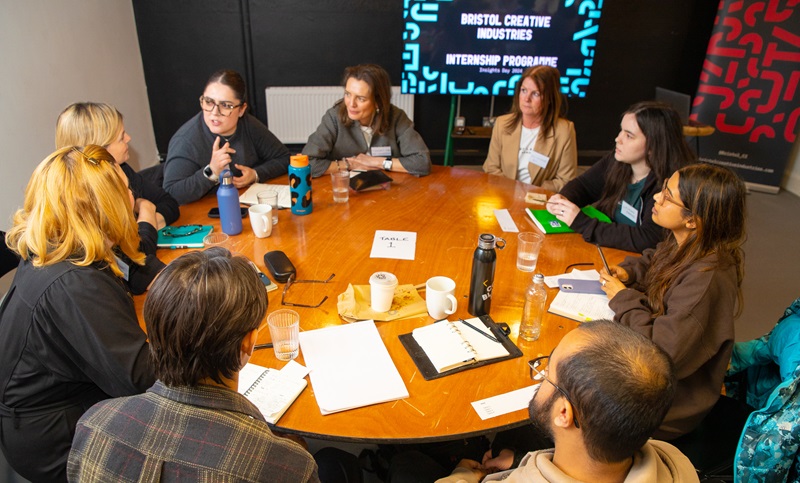
Clare Leczycki, Bristol Creative Industries Internship Programme manager, explains the process for selecting this year’s cohort:
“Our aim was to make the application process as accessible and open as possible, to give the candidates different scenarios to share their skills and personality. To apply, candidates could share a short video, audio or written piece to illustrate why they were interested in participating in the programme and what they hoped to gain from it. We had over 60 applications for eight placements so it shows there is a lot of interest from young people wanting to work in the creative sector.
“Once applications closed, we held an insights day at the brilliant Gather Round workspace in St Paul’s, Bristol. This was a chance for the host agencies to meet the potential candidates, pitch their internship offers and share more about the nature of their business. We also ran an informal Q&A session for everyone to learn more about each other and the different job roles available in the agency world.
“From here, we shortlisted candidates for the formal interview stage during which we explored each young person’s skills and areas of interest to help us with the selection process. Having a two-part interview process allowed us to see the candidates in a variety of settings and learn more about them, which also helped with the matching process.
“Working in partnership with the team at Babbasa is a key part of our recruitment process. The organisation supports young people from underrepresented groups who are looking to pursue their professional ambitions, by providing them with employment support, such as mentoring, CV writing and interview preparation, to help them achieve their aspirations.
“The Bristol Creative Industries Internship Programme, in partnership with the OurCity2030 Pathway into Creative & Tech, is an innovative example of how creative businesses can come together to offer opportunities to young people from ethnic minority and low income households.
“We would like to thank our interview panel Daniel Palmer, Marissa Lewis-Peart and Alli Nicholas for taking the time to meet all of the candidates. This was no small task. Their energy and insights were integral in making the selection process as smooth and effective as possible.
“In order to prepare for this year’s cohort, we have spent the last three months onboarding the host businesses with a variety of training sessions including equity, diversity and inclusion training from Babbasa, mental health training from Bianca Jones at Empower Develop People, and neurodiversity training from Devon Lowndes at Self Agency.
“Ensuring the workplaces are ready to welcome a young person and provide a meaningful placement is a key priority for our programme. Agency life can be pretty hectic and fast-paced, so taking time to consider the experience (onboarding/offboarding, bespoke work plan, mentorship and feedback) is integral to our internship offer. The eight interns have landed roles in content creation, marketing, press and PR, graphic design and strategy.
“The programme brings huge benefits to everyone taking part. We aim to provide the interns with a positive and enriching work placement, while the BCI team and host businesses have the opportunity to learn from the young people. Having different perspectives in the room brings fresh energy, innovation and new ideas.
“It’s a challenging time for many businesses so we are extremely grateful that the participating agencies are willing to invest time and money to support the next generation of creative talent from under-represented backgrounds.”
The agencies and Bristol Creative Industries members participating in the programme are:
Thanks also to Oakwood, Sunhouse Creative and Aer Studios for sponsoring the programme, and to Boomsatsuma and Gather Round as our venue sponsors.
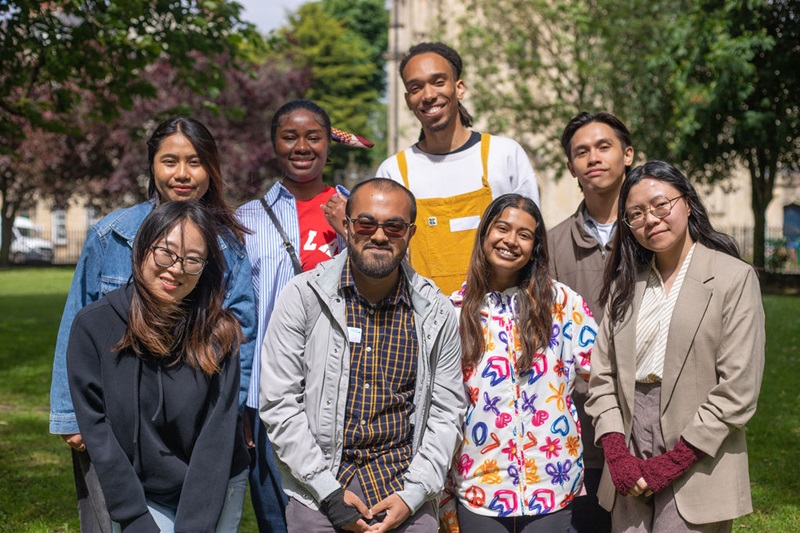
The interns taking part in the 2024 programme are:
Read bios for the interns here.
Some of the interns explain what they hope to get out of the programme:
Kaden Gardner:
“Marketing and PR is an area of work that I have been interested in for a while, and is becoming more important with video work in recent years. I hope to gain some knowledge within this career path, and hopefully advance my videography skills as well.”
Inaz Hussain:
“I want to make more connections in the industry and learn about how the whole creative development process in order to establish myself as a multidisciplinary artist. I would love to establish a company or space to help bridge the gap for people to break into the creative industry without the barriers I faced.”
Wheri Dumuje:
“I hope to become a designer who helps everyone have equal access to the same services and throw light through research on areas that are often overlooked.”
Elma Hossain:
“I hope to become more confident in the skills I excel at, what roles interest me and build a solid network of people who have similar interests and goals as me. I’m also looking forward to making good friends and enjoying a great experience!”
Fyonh Bui:
“I hope to gain valuable skills and knowledge, become a reliable professional, inspire and guide junior designers in the future.”
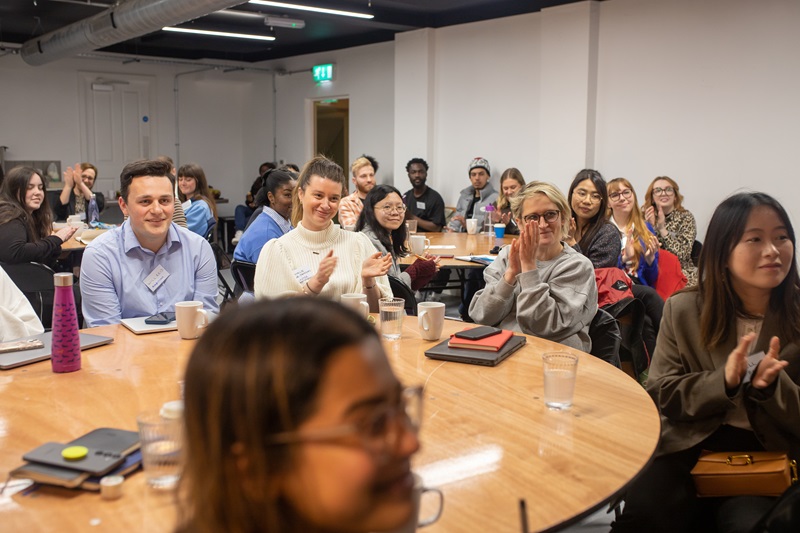
Representatives of the host businesses explain why they are taking part in the programme:
Liam Britnell, Ambitious PR:
“We are excited and proud to be one of the agencies participating in this year’s BCI Internship Programme. We saw last from last year’s cohort the impact that the placements had, and the opportunities it offered to some amazing talent from across the city, so we knew we had to be part of it this time around. We are very much looking forward to welcoming our first placement to the Ambitious PR office.”
Chloe Cottle-Watkins, Armadillo:
“The BCI Internship Programme was a great experience for Armadillo last year. We hired two of the interns from the programme on a permanent basis, and they’ve both been excellent additions to our team.
“We absolutely recognise the benefits that having a diverse workforce has, not only on our business but on the creative industry and community as a whole. We’re proud to play even a small part in helping work towards that.
“Having met some of this year’s interns already, we can see so much potential waiting to be uncovered, and we’re really excited to witness the successes that will no doubt come out of this cohort.”
Alex Rife, The Collaborators:
“The Collaborators has always been about people first, so it’s natural that we want to help nurture young talent. We have a (borrowed) saying that “none of us is as smart as all of us”, so we’re excited to bring different perspectives into our business.
“We’re so grateful to Bristol Creative Industries and Babbasa for helping us to do this in a way that’s about driving real change in the wider creative industry, rather than feeling like a one-off tokenistic gesture. We’re delighted to be part of the programme and looking forward to getting to know this year’s cohort better.”
Abi Sargant, Taxi Studios:
“We are thrilled to be taking part in this year’s Bristol Creative Industries Internship Programme, helping to shape a brighter future for the creative industries.
“We are looking forward to supporting our interns and nurturing their talent, all while gaining valuable insights and growing from the experience ourselves!”
Image credit: Big thanks to Sham Ahmed for capturing the brilliant images used in this post. Follow @shamphat on Instagram.
You need to load content from reCAPTCHA to submit the form. Please note that doing so will share data with third-party providers.
More Information