Creative production company JonesMillbank and film studio Nine Tree Studios have rebranded as BLANKET™, bringing their offerings together under a single, unified identity.
The rebrand marks a significant milestone for the Bristol-based agency as it enters its 15th year, reflecting both their evolution and a growing demand for integrated production, studio, and equipment rental services.
“We found that studio clients didn’t realise we offered production or kit rental, and many of our production prospects didn’t know we had a studio,” said Russell Jones, Founder & EP. “The separation no longer made sense – it was time to bring everything together along with a complete refresh.”
The new brand, BLANKET™, reflects the agency’s holistic offering across film production, studio hire, and equipment rental, while positioning the agency more clearly within the wider creative and production landscape.
“We wanted something confident, distinctive, and easy to engage with,” said Rob French, Creative Director. “BLANKET is human, tactile and approachable, but also strong and flexible – something that reflects how we’ve always worked and where we’re going.”
The rebrand also signals a shift in how the agency operates. As projects have grown in scale, BLANKET™ has increasingly collaborated with freelance specialists and production partners, including supporting international production companies filming in the UK.
“Collaboration is already a much bigger part of our creative process,” said Adam Millbank, Founder & EP. “Whether it’s larger productions or studio dry hire, we’re working with a wider network of talented crew – from camera operators and gaffers to HMU, catering and runners. That’s only going to increase with the new brand and as the studio continues to become more established.”
BLANKET™ will continue to operate from its Bristol studio, serving clients across the UK and Europe, with a focus on commercial film production and studio-based work.
***
BLANKET™ is a Bristol-based film production company, film studio, and kit rental house. Founded in 2011, the company works with brands and agencies across the UK and Europe including Dyson, Freixenet, DHL, Oxfam, Pukka and Vax.
www.weareblanket.com
+44(0)117 3706 372
[email protected]
Becoming a member of Bristol Creative Industries brings many benefits. We regularly add new opportunities so here is a guide to the latest benefits you can enjoy by signing up. This post is regularly updated.
Join Bristol Creative Industries here.
Showcase your best work and attract new clients with a company profile in the Bristol Creative Industries member directory. The directory receives lots of visits every month from people looking for services from creative businesses.
Got some business advice or news to share? As a Bristol Creative Industries member you can self-publish content on our website and it will automatically appear on your member profile. We upgrade great content to the newsfeed and homepage, while four posts by members are included in our monthly email newsletter.
To get an idea of the content topics that do well, here are the top 30 most popular posts by members in 2025.
Bristol Creative Industries member Jessica Morgan from Carnsight Communications discussed the benefits of posting content in this interview.
The Bristol Creative Industries jobs board attracts thousands of job hunters every month. Business members can post unlimited free job adverts, saving you on average £3,500 per candidate.
Piers Tincknell, co-founder of Atomic Smash, is one of BCI’s longest serving members and he told us in a member profile interview how he regularly uses the jobs board to recruit new employees.
BCI’s monthly members’ lunches are a perfect opportunity for members to catch up with fellow members and the BCI team.
Everyone has a slot of up to three minutes to tell the others a little about who they are and what they do and share any news and/or challenges. You don’t need to fill the full three minutes. We usually find some common themes emerge to discuss over the course of the session. It’s all very informal with no need to stand up and present slides.
The events are free to attend for members, take place at The Square Club in Bristol and include a free buffet lunch.
Check the events section of details of the next lunches.
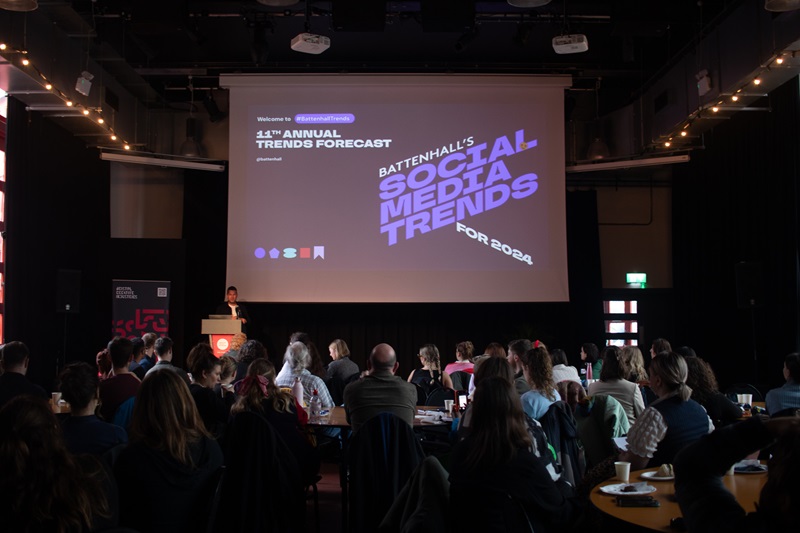
Our flagship keynote events and workshops feature world class speakers sharing their expertise. It’s a unique opportunity to access valuable insights for growing your business. Bristol Creative Industries members receive a ticket discount.
An example of a keynote event is the brilliant annual presentation on social media trends delivered by Drew Benvie, founder of global social media consultancy Battenhall.
Our regular freelancer networking drinks events in Bristol are free with a free drink for members. It takes place several times during the year. Freelancer drinks still to come this year are on 23 June, 8 September and 10 November. Book for 23 June here and 8 September here. Registation for 10 November will open later in the year.
Keen an eye on the events section for the latest events. You can also sign up to the monthly BCI Bulletin to be notified of events.
Big thanks to everyone who joined us at @SquareClifton last night for the Bristol Creative Industries freelancer networking drinks ☀️ 🍷
Sign up to the BCI Bulletin to be notified of new events: https://t.co/5WgBWPoN1C#BristolCreativeIndustries #Bristol #freelancers pic.twitter.com/1BvT60KZFp
— Bristol Creative Industries (@Bristol_CI) June 21, 2023
Wake Up Call is a member exclusive live webinar that takes place every other Friday at 8.30-9am. The content is delivered by members for members.
Attending the free event gives you access to valuable insights from your fellow members and if you host a Wake Up Call, you can share your expertise and attract potential new clients.
See details for upcoming Wake Up Call events in our events section.
If you’re a BCI member and you’d like to deliver a presentation on a topic of your choice during a Wake Up Call, email Dan Martin.
The Bristol Creative Industries LinkedIn group has more than 11,000 members and is one of the biggest creative sector focused groups on the platform.
Anyone can join the group but posting promotional content, events, jobs (that appear on the BCI site) etc is for BCI members only. See the group rules in the group description for more details.
Research shows that diverse teams are more creative problem solvers, bringing fresh perspectives to solutions, against the echo-chamber effect that results when people in a business come from too-similar backgrounds. With a strong focus on diversity and inclusion, employees feel valued and that they belong.
To help Bristol Creative Industries members achieve this, we have partnered with The Hobbs Consultancy to provide on demand equity, diversity and inclusion (ED&I) e-learning.
The CPD certified online course consists of modules to help you bring about positive change in your business, understand the key challenges in the way for different groups, and explore your own biases and how to overcome them.
The training modules take an in-depth look at different diversity and inclusion topics: race, disability, LGBTQ+, neurodiversity, gender (split into female leadership, masculinity, gender identity), age and social mobility in the workplace.
The price of the training for BCI members is £120+VAT. All profits will be ploughed back into our youth engagement activity.
To access this brilliant training opportunity, log into your Bristol Creative Industries account and click on the ‘members’ training’ section.
We host regular roundtables for agency leaders to discuss strategic challenges. These events are vital for us to hear from the member community about the key issues you are facing and how we can help. A roundtable on funding led to us creating this popular and regularly updated guide to the latest finance on offer to creative businesses.
If you are interested in getting involved with future roundtables, email Alli Nicholas.
We regularly deliver other special member benefits. A people strategy surgery on 15 May with HR expert Richard Roberts is currently available.
To stay updated on the latest benefits, sign up to the monthly BCI Bulletin.
Reductions on co-working spaces, meeting rooms, hotel accommodation, a recruitment strategy review and a coffee subscription are just some of the many discounts and offers we’ve negotiated for members.
Join Bristol Creative Industries here.
If you have any questions about membership, email Alli Nicholas
The University of the West of England (UWE Bristol) contributed an estimated £547 million to the local economy and supported nearly 9,000 jobs in the West of England in the academic year 2023/24.
According to the newly released economic impact report by Oxford Economics, UWE Bristol – the largest university in the South West – also had a significant impact on the national economy, creating an ecosystem that contributed over £1 billion in the academic year 2023/24, while sustaining over 15,000 jobs across the UK and generating £242 million in tax revenues.
As well as quantifying the university’s economic footprint, the report also analysed its contribution to innovation, research & development – and, critically, its societal impact.
The university attracts students from areas with socio-economic challenges, helping to tackle a key driver of economic inequality. In 2023/24, 29% of students came from the top 30% most-deprived areas of England and 3% come from among the top 10% most-deprived1.
Many of UWE Bristol’s graduates go on to work in socially impactful roles helping to address staff shortages in the sector. Over a quarter of the graduates who found employment in the UK in 2023 took on roles such as paramedics, care workers, social workers and nurses.
The second-largest cohort of UWE Bristol graduates in that year went on to work in the professional, scientific and technical services sector – an increasingly important part of the West of England economy and one of the fastest-growing sectors nationally.
These graduate’s skills are supported by the university’s internationally recognised research, with 76% of research output classified as ‘World Leading’ or ‘Internationally Excellent’ according to the Research Excellence Framework. It is estimated that UWE Bristol’s research & development in the academic year 2023/24 will generate a productivity benefit equivalent to £5.2 million across the UK by 2040.
The skills graduates acquire at university enable them to create new business ventures, often in sectors with high productivity and higher levels of innovation. This is supported by UWE Bristol’s University Enterprise Zone (UEZ), which provides innovative tech start-ups and businesses with high quality space and facilities.
Facilities at the UEZ include the innovation centre, Future Space, which offers high-spec labs, private offices, and technical workshops. According to its Annual Impact Report 2024–25, since 2016, Future Space has supported 148 companies, generating over £35 million in GVA (Gross Value Added) and facilitating over 600 new jobs.
Since 2018, UWE Bristol has also contributed to over 400 new jobs through its Scale up 4 Growth (S4G) partnership with NatWest. S4G is a grant funding programme offering £400,000 of grant funding, as well as practical support, to help small and medium‑sized enterprises (SMEs) in the region to grow.
Professor Sir Steve West, vice-chancellor, president and CEO, UWE Bristol said: “The research by Oxford Economics has shown not only the sizable contribution UWE Bristol’s staff and students make to the local and national economy, but also the breadth of our societal impact too. We’re really proud to be based within the West of England and the report cements UWE Bristol’s position as an important anchor institution, contributing broad economic, social, and civic impact – a role we take seriously.
“At the heart of this is our students, who bring vital skills to the region for local employers, particularly those in health and social care. Our enterprise ethos, embedded across programmes and our campuses, is supporting regional productivity by nurturing start-ups and spin-outs at Future Space, alongside world class research collaborations.”
Image cedit: Drone Motion and Hyphensocial
Why translation?
You’re an account manager at a Bristol PR & marketing agency, and in this week’s meeting, you heard the client say they’re looking for someone to handle their content in multiple languages, to target new markets. It looks like there’s space for you to pitch additional services… And avoid being replaced by a big flashy London agency with the word “global” written in all caps all over its website. The thing is, you’ve never done multilingual projects before.
Where?
So, it’s 10am, you’re looking at the analytics for your tech start-up website, and here comes that nagging feeling again: numbers for visitors on your product pages show growing interest from outside the UK, but it doesn’t convert into international sales. Could it be because your website is (British) English-only? What markets and languages could you pick for localization? Where could you exhibit at an international trade show?
How?
Or you’re working on bringing higher numbers to your cultural attraction. Industry intelligence, including that report you paid for, is all about potential for growth with international tourists. But how to reach them? Which part of your website to translate? Could you offer foreign-language audio tours? What about advertising?
Seeing through the fog
With so many questions and the ensuing confusion, too often valuable opportunities are left untapped. But translation need not remain The Great Unknown. Even a simple chat to explore where and how it applies to your business can bring useful clarity.
Thinking big
At a recent Bristol Creative Industries Members’ Lunch, the conversation turned to Bristol and the South West having the wealth of talent to become a top-tier player in their own right, not just playing second fiddle to London, and how BCI and its members can work to make this ambition a reality.
Looking far
I want to help with this. With the diversity of fields and backgrounds within BCI, I see many scenarios where thinking international can be a source of new business, better clients and brighter prospects for fellow members (agencies or freelancers), whether that means bringing the world to our region or exporting our products, services, and talent abroad.
So, I’m offering BCI members a free 1-hour consult on how the international and translation angle can play out their business. Get in touch for that clarity-bringing chat!
If you’re already clear about reaching beyond English to French-speaking audiences, get in touch too, for a quote for your French translation project.
Abstract: This article examines Nandipha Mntambo’s pieces, ‘Umfanekiso wesibuko’ (Mirror image) and ‘Titfunti emkhatsini wetfu’ (The shadows between us) in particular, and her use of cowhide through Bhabha’s concept of Third Space Thinking. I also use Salomé’s understanding of femininity to form a deeper understanding of the female corporeal figures present in her work. Bhabha’s Third Space Thinking is a space where binaries dissolve and expand into new perceptions and draws parallels between Salomé’s description of the fluid, limitless and ineffable nature of femininity. I investigate societal beliefs surrounding female body hair through Kristeva’s understanding of abjection, being the discomfort that arises from the instability of the boundary between the internal and external. Mntambo’s work combines human/animal, masculine/feminine, self/other, and attraction/repulsion. and therefore, sits in ‘The beyond’ that Bhabha defines as the liminal space between binaries. The sculptures create a sensory and conceptual space that destabilises Western binary logic and creates a third space where the human, animal and feminine converge. This invites the viewer to engage in the transformative experience of third space thinking that could reshape how we perceive our surroundings and ourselves.
Nandipha Mntambo is a South African artist, born in Mbabane, Swaziland in 1982 (‘Nandipha Mntambo – Zeitz MOCAA’, 2017), who completed a Fine Art MA at the Michaelis School of Fine Art, University of Cape Town, in 2007 (‘NANDIPHA MNTAMBO | Biography | Everard Read London’, 7 November). Mntambo explores themes of the female body through sculpture, photography, mixed materials, and video. This essay will examine how Mntambo’s practice can be understood through Homi Bhabha’s concept of third space thinking (Kalua, 2009) and Salomé’s understanding of femininity. Within Third Space Thinking, Bhabha describes ‘the beyond’ as the liminal space where fixed binary oppositions dissolve, allowing new meanings to emerge through the interaction of conflicting elements. Mntambo allows the binaries of masculine/feminine, attraction/repulsion, life/death, and self/other to coexist and interact within
her work. This encourages the viewer to confront and contemplate the discomfort of merging these dualities.
While focusing on her pieces ‘Umfanekiso wesibuko’ (Mirror image) and ‘Titfunti emkhatsini wetfu’ (The shadows between us), I will discuss the female experience within the human, the animal and the feminine. The term ‘Human’ refers biologically to Homo sapiens and to the cultural position that conceptualises humans through exceptionalism, meaning they are separate and superior to all other entities on Earth (Holden and Fennell, 2017, pp. 19). Humans technically fall under the animal category, and so the inclusion of both terms in my title
highlights a culturally enforced separation that puts animals in the ‘other than human’ category, a distinction critiqued in philosophical discourse (Haraway, 2008). The ‘feminine’ refers to cultural and psychological associations historically attached to women. I examine these by looking at body hair and the taboo surrounding it. I will psychoanalyse the term using Lou Andreas-Salomé as my key point of reference, who suggests femininity enters the realm of creativity, embodiment and fluidity. By immersing ourselves in Mntambo’s sculptural forms and her words surrounding them, we engage with the collaboration of our perspectives and hers, thus, entering what Bhabha calls ‘the beyond’ (Simba and Davids, 2020). Her work becomes a visual manifestation of ‘the beyond’, a space of tension and transformation.
Mntambo has repeatedly expressed her dislike for being known solely as a South African artist. She points out that art made by people of colour is often assumed to be influenced by colonialism and politics (Ecclestone, 2012). This generalises people of colour’s individual experiences and groups them into a collective one. This stunts the viewer’s understanding of the artist’s work by limiting areas that the artist could be exploring. She says ‘My work was never meant to be a direct exploration of the African Female body. I just happen to be African and female and use my body in my art-making process’ (Mntambo, 2007). Therefore, while I acknowledge that her identity as an African female may be part of her work, I focus my analysis on visual cues and the conceptual framework to avoid reductionist interpretations. I also acknowledge that, as a white female, my perception of Mntambo’s work is shaped by my own positionality and cultural context. I hope that, considering Mntambo’s stance on how she wishes her work to be received, this will not limit my analysis, as I am looking beyond racial frameworks.
Figure 1.
https://dailyartfair.com/exhibition/1843/nandipha-mntambo-andrehn-schiptjenko
Mntambo, ‘Umfanekiso wesibuko’ – ‘Mirror image’ (2013)
Figure 2.
https://dailyartfair.com/exhibition/1843/nandipha-mntambo-andrehn-schiptjenko
Mntambo, ‘Titfunti emkhatsini wetfu’ – ‘The shadows between us’ (2013)
Figure 3.
https://dailyartfair.com/exhibition/1843/nandipha-mntambo-andrehn-schiptjenko
Mntambo, Titfunti emkhatsini wetfu – The shadows between us (2013)
To Navigate the concept of ‘the beyond’ and how it differs from typical Western thinking, we must first acknowledge how our thinking has been shaped. Throughout Western society, because of Aristotelian philosophy, our way of thinking is based on ‘the law of identity, which states that A is A, the law of contradiction (A is not non-A), and the law of the excluded middle (A cannot be A and non-A, neither A nor non-A)’ (Fromm, 1995). In other words, ‘it is impossible for the same thing at the same time to belong and not to belong to the same thing and in the same respect’. This has been engraved in Western thinking and has become an unconscious habit to assume that saying ‘X is A and not A’ is wrong.
Positive paradoxical thinking, prevalent in Taoism (or Daoism) and Bhabha’s ‘Third Space Thinking’, states that X can be A and Non-A at the same time. In Taoism, a Chinese philosophy and religion, the world is full of overlapping opposites. Taoism is a way believed to free ourselves from the limiting structures of our thinking patterns shaped by ‘the law of identity’ as the Western language blinds us from areas that sit in the between (or ‘the beyond’. “There is a limit to what language can do, and that limit of language is paradoxical”(Tanaka 2004, 191).
Bhabha’s ‘third space thinking’ reflects these beliefs and, in doing so, rejects compartmentalised or binary constructions of cultural views. This thinking becomes political, aiming to involve opposing beliefs and systems in open and productive dialogue.
Mntambo first started using cowhide during her fourth year at the Michaelis School of Fine Art at the University of Cape Town (Ecclestone, 2012). She initially intended to study forensic pathology, so she has an interest in the corporeal, DNA, hair, and bodily fluids. She is also intrigued by how movement is illustrated in classical sculptures made from such hard materials (Moret, 2013).
The spark of her attraction towards cowhide came from a dream involving cows.
She was then trained by a taxidermist who assisted her with formulating the chemicals needed to tan and harden the skin. Before the skin is hardened, Mntambo moulds it into her desired shape. She sources the cowhide ethically from abattoirs and tanneries where the animals are already being slaughtered for consumption (‘Nandipha Mntambo: Creating mirror images of the human body | Design Indaba, 2025). She takes what is left behind and gives it another life.
In Figure 1, Mntambo has sculpted cowhide into the shape of two women on all fours. Being physically below the audience’s eye line, the figures become a symbol of submission. It is also a position associated with the inferior, the dominated, and therefore, the female (Hooks, 2014). It can also have sexual connotations.
The discussion of female sexuality is based on a language of phallomorphism (Irigaray, 1985). The vagina is an object of absence, missing the penis, or a penis turned in on itself, and its only purpose is that of pleasuring a penis. The vagina becomes the embodiment of the male gaze – a void in which men can fill with projective fantasies (Salomé, 2002), Fantasies that are often unattainable and unrealistic. In this way, the female created in a man’s thoughts does not exist. The projections they force upon us are fragments of a false reality. ‘In his attempts to understand woman, man comes only upon his own fantasies’ (Mazin, 2025). We become a prop on the stage of a man’s imaginary play. This narrative has become subconscious for most, meaning that writers, including women, use language that further pushes it into reality. Because of this, women’s desire belongs to and relies on men. This is perfectly depicted in Mntambo’s sculptures. The absence of bodily substance inside the skin of the feminine figure, in this context, represents the lack of identity and focus on eternal appearances in the male gaze. It also illustrates how women often lose a sense of identity and individuality to conform to male desires (Hernando, 2017), as Mntambo removed the internal body from the skin, ripping it from
its mind. This is emphasised by the feminine sculpture being displayed in front of an audience, in a nude and vulnerable state, only existing to be looked at.
‘Not knowing what she wants, ready for anything, asking for more, so long as he will take her as his object when he seeks his own pleasure. Thus, she will not say what she herself wants: moreover, she does not know or no longer knows what she wants’ (Irigaray, 1985).
This quote describes the diminished sense of desire shaped by the expectation of women to be passive objects without pleasure or agency. The differentiation between enjoyment and validation is blurred. Our desire is defined and manipulated by our environment before we know what desire feels like (Lina, 2025). Endless conditioning steals the joy from a sacred act of pleasure, connection and creation. Sexuality can become a means of connection with their untamed, undomesticated selves and reclaim a sense of freedom as it is rooted in a biological force shared across animal life. The all-fours position, while having sexual connotations, can also refer to animals. ‘Sex is a subset of nature. Sex is the natural in man’ (Paglia, 1990). Yet women are shamed and scrutinised for expressing their sexuality, while men are praised for it (Farvid & Braun, 2006). Have too much sex and we are sluts, and have too little and we are frigid. Wear too few clothes and we are asking for it, but wear too many and we become invisible. Display just the right amount of subtle and restrained sexuality to get their attention, without appearing as though we want it. The key expectation is that women must want male attention. After all, their attention is essential to feeling whole, because without being seen through the male gaze, we don’t exist at all (Salomé, 2002).
The combination of the sexuality of these sculptures and the use of cowhide creates a tension between attraction and repulsion. The positions and visibility of the arched back, all fours position, and visible glutes, alluding to the figure being nude, would seem to appeal to the male gaze. However, the skin being covered in hair would do the opposite (Smelik, 2015).
‘What functions psychologically as the abject – as an ultimate object of disgust – figures socially as a taboo’ (Smelik, 2015).
The response of disgust to female body hair, a societal taboo, sits in the abject. The ‘abject’ is defined by Julia Kristeva as a feeling caused by an unstable boundary between the inside and outside of the body (1982). Body hair is a visible boundary between the internal and the external, as it is both inside the skin at the root and outside the skin. This means it also sits in ‘the beyond’ as it is positioned between boundaries between the internal/external,
human/animal and masculine/feminine. Therefore, our abjection towards body hair reflects our desire for a strict boundary between these binaries. I believe abjection is the manifestation of our psychological need to define and categorise all of existence. Our extreme rejection of natural bodily objects and fluids signifies humans’ fear of the undefined, and therefore of ‘the beyond’.
The female cowhide sculptures encapsulate all the causes of abjection to body hair. The bodily sculpture is shaped into a human form but made of non-human material. So, the visual cues suggest it is a human covered in hair. Body hair is often perceived as unclean due to its association with sweat and the pubic region (Smelik, 2015). Additionally, it blurs the boundary between men and women due to societal acceptance of men’s body hair and the male hormone naturally producing more of it. It also threatens our cultural separation from animals, especially the ones we developed from. These aspects are all exaggerated in Mntambo’s material choices. The abjection we experience towards the body is heightened because of this.
Mntambo’s tedious process of scraping the cowhide of fat, chemically preserving it and physically manipulating its shape into a desired form mirrors the manipulation of females and their bodies in today’s society (Gaard, 1993). The ‘hairless body’ has become the ideal beauty standard because it further separates men and women, human and animal, and represses the power of female sexuality (Smelik, 2015). Hairlessness in the pubic region has meant that the
visibility of the vagina and all its ‘complexity’ has risen. ‘The absence of hair thus reveals the vulva entirely, turning it into a simultaneously vulnerable and sexual site/sight.’ In Freud’s view,
the vagina is the absence of a penis, making it ‘the horror of nothing to see’ (Freud 1955 [1922]): 273). Contemporary male reactions to the body were assessed by Gaillard and Windish (2012), and they concluded that the hairy female body ‘both fascinates and terrifies, attracts and repulses’. So, her sculptures are the embodiment of the contradictions within societal beauty standards.
The bodies are doubled in both installations, making the concept of the self and the other prominent (Andréhn-Schiptjenko, 2025). These can be linked to her earlier work:
Figure 4.
Mntambo, ‘Narcisuss’ (2009)
Figure 4 is an interpretation of the ‘myth of Narcissus’, a story of a man who becomes infatuated with and dies beside his own reflection, thus having a flower named after him. It is a prominent and rich means of inspiration within Western literature and art.
Lou Andreas-Salomé is a psychoanalytic writer who explored areas of religion, philosophy and gender theory (‘Lou Andreas-Salomé: A Brief Biography, 2024). For Salomé, the environment in which Narcissus’ desire arose is significant. The cause of Narcissus seeing himself is water
reflecting an image back to him. Water, being an essential element that gives life to nature, becomes the vessel that connects him with nature. Salomé refers to this reflection as ‘the mirror of nature’ where he is seeing himself as within, and the same as, nature. He saw ‘himself as all’ (. Thus, to Salomé, narcissism was a ‘maniacal condition of love towards oneself and towards the surrounding world’ (‘The Femme Fatale – Lou Andreas-Salomé – European Journal of Psychoanalysis’, 2002).
The binaries of self and other are combined in the myth of Narcissus and, therefore, in Salomé’s view, within Mntambo’s painting and sculptures. The self and the other become merged as the other, in the mirror of nature, becomes the self. The confines of the selfhood inside the body are expanded and dissolved into its surroundings.
Figure 2 shows two figures that, given gender norms, can be assumed to be female because they appear to be wearing dresses. The cowhide is folded and pleated in a way that suggests the figures’ dresses are blowing in different directions, as if mirroring one another. They are suspended above the ground, making the viewer gaze upward. This gives the figures a physical position of authority and power. The side view (Figure 3) reveals that the front of the body is missing, as if being cut in half to reveal nothing inside. The title of the artwork, ‘The Shadows Between Us’, implies a relationship between the two sculptures, bringing attention to the space and emptiness separating them. The sculptures have been placed in front of a window, filling the hollow space with light and the front of the sculptures with darkness. The sculptures, therefore, appear to be shadows themselves. The sculptures are life-like, making them more human and intimate. Instinct, when looking at figures, is to allocate emotion and identity.
However, the head and hands not being present take away the individualisation of the figures. Your focus is directed towards the physicality of the bodily form and its tactile surface.
In Mntambo’s Narcissus piece, she sees her reflection in the water and, metaphorically, sees her inner psyche. Because of the natural environment in which she appears, you can infer that she is also connecting with and seeing herself within nature. She is sitting in ‘the beyond’, that is, the inescapable overlap of the human and non-human.
Salomé’s interpretation sees narcissism and creativity as one and the same. To be able to mirror and replicate one’s own being is an action that requires a knowing of oneself. She explains that this capability is limited to one’s gender. For a female, Salome believes, the
creative psyche has less desire to look externally for a muse and finds one internally. She has more access to her inner self for inspiration. She believes that this is caused by women’s connection to the maternal ground of being, it being less ruptured than men’s, as they have a uterus. ‘Ground of being’ refers to the original form of self and the core layer of experience that identity grows from. Salomé believes that women are better connected to this core because they are better connected to their origin – the mother (‘Jane Feldman: Lou Andreas-Salomé’, 2025). The mother creates. It makes sense, then, that women have a greater sense of inner creativity if we are biologically designed to create and have a stronger connection to the creator within ourselves.
‘Our deepest entry into ourselves, a thousandfold solitude. But it is as if this individuated solitude were surrounded by a thousand gleaming mirrors and thus appeared expanded, being vaulted into an all-embracing world.’ (‘Jane Feldman: Lou Andreas-Salomé’, 2025).
Within Salomé’s interpretations, women are without boundaries. Women, as we are without boundaries – limitless, we are fluid, ever-expanding entities. We are spacious, singing flesh, objectless and ineffable. The emptiness that sits within Mntambo’s paintings is symbolic of the infinite mirrors that exist within the woman’s universe.
As previously stated, the Western language is seen as limiting our capability to navigate the beyond that lies between the lines of words. Salomé suggests that women, because we are without boundaries, our language ‘does not contain, it carries; it does not hold back, it makes possible.’ It is ‘the language of a thousand tongues which knows neither enclosure nor death.’ We speak the language of ‘the beyond’.
Mntambo’s sculpture blurs the boundaries between self/other, internal/external, human/nature through the concepts of narcissism in her ‘Narcissus’ piece, which bleed into the pieces ‘Umfanekiso wesibuko’ (Mirror image) and ‘Titfunti emkhatsini wetfu’ (The shadows between us). It is emphasised in ‘Umfanekiso wesibuko’ (Mirror image) because, as its title states, the sculptures are mirroring one another and become each other’s reflections. She encapsulates Salomé’s beliefs involving femininity and its inherent connection with nature through female corporeality, its anima material. Mntambo is therefore exploring ecofeminist perspectives (Gaard, 1993). We are within Earth but simultaneously discontinuous with it (Bataille, 1987, pp. 1-9). Women and Mother Earth both go under exploitation and domination because of overlapping traits – like being maternal, unpredictable, wild, loud, fluctuating, creative – that are
seen to need controlling (Gaard, 1993, pp. 1–12). The space that sits ominously inside Mntambo’s corporeal sculptures symbolises women’s limitlessness and simultaneously represents the empty void that men see within women. Men project the ‘femme fatale’ into that empty void. The emptiness that is seen within the feminine causes women to be seen as non-existent without the male gaze imposed onto them.
Cowhide is an unusual and almost impossible material to use in sculpture. Being a temporary medium, it will eventually rot and disintegrate. Its ephemerality is exaggerated by the pungent smell of dead animals that fills the gallery space. ‘They don’t smell like leather, they smell like a cow’ (Du Preez, 2010). This smell reminds the audience of the reality of how these sculptures came to exist. Not only are they conceptual shells of a female body, but they are also what is left of an animal’s life. The sensuous experience forces the audience into a space haunted by the presence of animals and women, symbolically present but physically missing. Inside ‘the beyond’ of these sculptures, life and death are at play. The sensual experience is a reminder of the material’s temporality because of its aliveness. The position of all fours conforms with the male fantasy but distinctly opposes it through abjection caused by body hair. The smell signifies decomposition and life decaying, which juxtaposes the lifeless objectivity of the male gaze. The uncanny combination illustrates that the male gaze is solely a fantasy and can never materialise into reality.
Mntambo’s cowhide sculptures reveal how the human, the animal, and the feminine can no longer be sustained as separate or stable categories. Through Umfanekiso wesibuko and Titfunti emkhatsini wetfu, Mntambo creates a space of unsettling but necessary conversations between conflicting elements where the viewer can experience a form of third space thinking. The work demonstrates how femininity, humans and non-humans are interrelated by overlapping layers of cultural projection, abjection and desire, all rooted in a need for the human brain to categorise its senses and ultimately gain control by defining the undefinable.
Mntambo’s art is a place where the undefinable flourishes. The empty interiors and sensuous materials embody an alternate form of existence that resists confinement. Salomé’s understanding of femininity resists boundaries by describing it as boundless, expansive and connected with nature, which is illuminated by the hollow bodies in Mntambo’s work. Kristeva explains that the discomfort that emerges when the boundaries between human and animal are dissolved is abjection. By integrating binaries into a shared space, Mntambo’s practice challenges the Western insistence on fixed identity and categorisation. She challenges the
audience to resist this and embrace the ambiguity and mystery of ‘the beyond’ without defining it. Ultimately, her work opens up a liminal zone of new meaning and transformation created through converging the feminine, the human and the non-human, resulting in new ways of seeing and understanding the body.
At The Square Club, we’re more than just a members’ club – we’re a hub for Bristol’s creative community. In partnership with Bristol Creative Industries, we’re delighted to offer BCI members discounted membership at just £30 a month.
Members join a unique community of creative professionals, with The Square being a space for fresh ideas, discussion, and collaboration. Alongside a vibrant events programme and dining scene, it’s a dynamic environment for working, socialising, and networking.
Our spaces include a boutique lounge, the Square Kitchen restaurant, the Lower Deck Cocktail Bar, and a hidden city-centre terrace – perfect for focusing, hosting meetings, or catching up with fellow creatives.
You may already know us from BCI’s monthly Members Lunch or Freelancers Networking Evening, where Bristol’s creative community gathers to connect and collaborate.
But don’t just take our word for it. Here’s what BCI member, Mark Beavan of That Little Agency, had to say:
“I became a member of the Square Club as it offered an alternative working environment to home or the office. The warm, casual and welcoming environment is perfect to facilitate a number of different approaches to work – whether that is the need for focus, collaboration, or creative thinking. It is quickly becoming a meeting post for creative, media and agency professionals, with a weekly, monthly and annual calendar of interesting and engaging events aimed at this audience. The team are fantastic and always looking at ways to add more value to this community. In particular, Sophie plays a central role in fantastically managing this demanding group of professionals.”
Membership also includes reciprocal access to over forty clubs worldwide (including six in London), two complimentary hotel nights, access to over twenty events a month, and a network of like-minded creatives. Whether you need a space to focus, meet clients, or spark new ideas, The Square has you covered.
See it for yourself. Book a tour or apply for membership today by emailing [email protected], and discover why Bristol’s creatives are choosing The Square Club.
If you’re planning a summer event in Bristol, this is your sign to make it unforgettable—without stretching your budget. This August, Watershed is offering an exclusive 40% off event space hire, giving you the perfect opportunity to host something special in one of the city’s most iconic harbourside venues.
Set right on Bristol’s vibrant waterfront, Watershed blends creative energy with stunning views. Whether you’re organising a corporate gathering, workshop, private screening, or celebration, the venue offers a unique atmosphere that’s both professional and inspiring.
From flexible event spaces to cinema screens, Watershed provides a setting that can adapt to your vision—whether that’s formal, relaxed, or somewhere in between.
Here’s everything included in this limited-time deal:
40% off all Waterside Event Spaces
Available throughout August 2026
Valid at any time of day
Includes Standard Screen and AV setup
Cinema hire included before 14:00
The offer applies only to August 2026 bookings
Not valid for events in July or September
Catering and Hybrid AV packages are available as add-ons at an additional cost
Whether you’re planning something professional or personal, this offer works for a wide range of events:
Team away days & meetings
Networking events & presentations
Creative workshops & panels
Private screenings & film events
Summer parties & celebrations
With built-in AV and flexible layouts, you can focus on your event content while the venue takes care of the essentials.
📍 Watershed, 1 Canon’s Road, Bristol, BS1 5TX
🕘 Access hours: 09:00 – 23:00 (unless otherwise stated)
Situated in the heart of Bristol’s harbourside, Watershed is easily accessible and surrounded by great spots for pre- or post-event drinks and dining.
Summer dates book quickly—especially with an offer like this. If you’ve been thinking about hosting an event, now’s the perfect time to secure your space at a significantly reduced rate.
📩 Enquire now: [email protected]
Bring your ideas to life this August at Watershed—where great events meet a great location.
March is B Corp Month, which celebrates businesses that have achieved certified B Corporation status, a measure of high standards of social and environmental performance, transparency, and accountability.
Our region has many B Corps. In fact, a report in 2023 said Bristol is home to the most B Corps of any UK city outside of London.
To mark B Corp Month 2026, we’ve updated our showcase of B Corps in the Bristol Creative Industries community. Read about inspiring businesses below, with their tips for how to become a certified B Corporation.
“My biggest piece of advice for businesses considering B Corp certification? Just start! The process may seem intense at first, but once you take that first step, it all becomes much more manageable. The B Impact Assessment gives you a clear benchmark, and it’s quicker to work through than you might think. More importantly, see it as a journey. Every step you take is a step towards becoming a better business for both people and the planet. By simply starting, you’re already making a positive impact!”
Tom Locke, Noughts & Ones (BCI member profile | B Corp profile)
“To become a successful B Corp focus on embedding sustainability deeply within your company culture. Start by clearly assessing your environmental impact. For example, Atomic Smash made a big step by transitioning a majority of clients’ hosting to providers that solely use renewable energy and prioritising greener digital practices. Regularly evaluate your performance through the B Impact Assessment, ensuring continuous improvement. By transparently integrating these purposeful practices into daily operations and clearly communicating your efforts, your business can successfully attain B Corp status and inspire positive change.”
David Darke, Atomic Smash (BCI profile | B Corp profile)
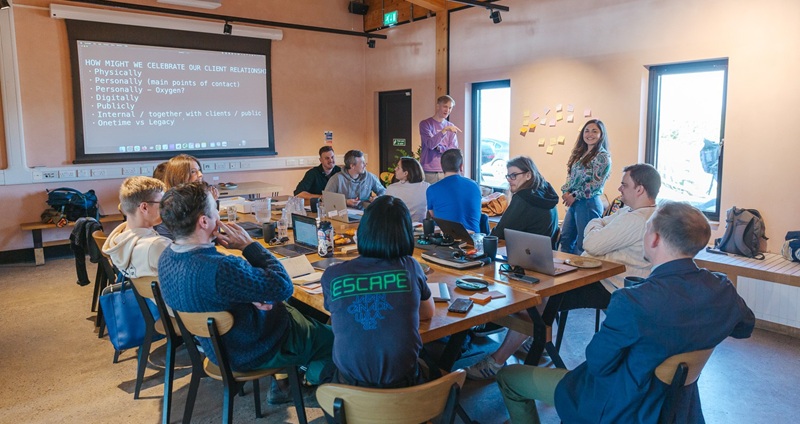
“One of the key tips about becoming a B Corp is that you don’t just become one and tick it off your list. Achieving B Corp certification is just the start of the journey. It’s about a wholehearted commitment from the top to the bottom of your organisation to do better business. It affects everything – from Articles of Association and company mission, to choice of suppliers, clients, company policies and so on. No business is perfect, but the B Corp assessment criteria help to set priorities and objectives towards meaningful change so that people and planet are considered equally alongside profit. It’s a huge commitment, but for us, there’s no other way to do business.”
Alex Ririe, The Collaborators (BCI profile | B Corp profile)
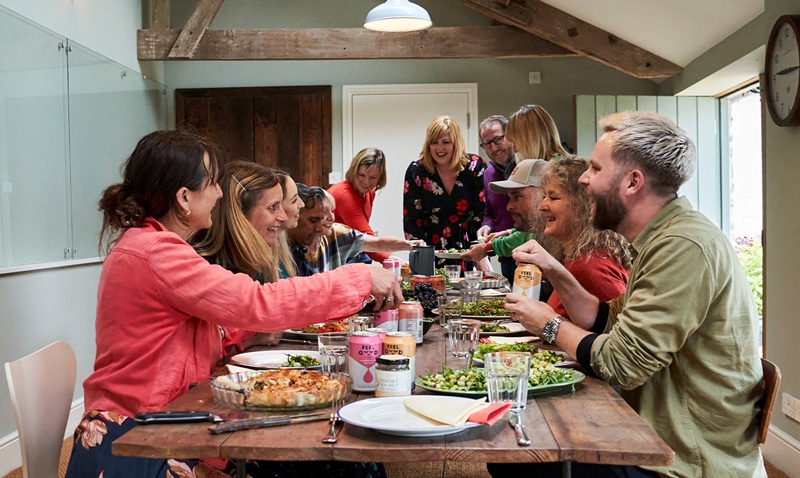
“Halo was one of the first 1,000 businesses in the UK to become a certified B Corp.
“Becoming a B Corp challenges you to focus on areas often overlooked and helps focus your business into a force for good. There is a lot to do, so I’d say start small—review suppliers, refine policies, and engage employees by letting them choose causes they’re passionate about. Keep it on the leadership agenda, talk and learn from other B Corps.
“The process is about continuous improvement, ensuring accountability and impact. Going green doesn’t mean an overhaul; think local, reduce waste, and measure your footprint- we plant a tree for every invoice we raise. The biggest tip? Just get going.”
Nina Edmonds, Halo (BCI profile | B Corp profile)
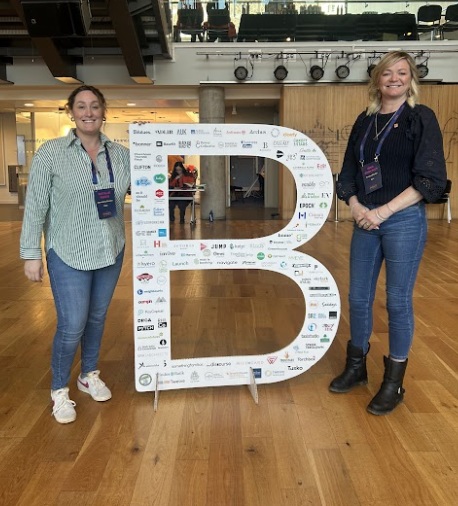
“Our mission is to shape an industry where paid media done the right way delivers client success whilst contributing to stronger communities and a healthier planet.
“This clearly aligns with the B Corp values and the accreditation has helped us focus on how we can expand our purpose.
“We had a mentor, Business on Purpose founder Andy Hawkins, to guide us through the process, which was very helpful. The B Corp community is a valuable one in which working collaboratively is at its core. If you are not sure whether to proceed with the accreditation, feel free to reach out to us (or any other friendly B Corp) and we’ll be happy to answer any questions.”
Toby Parkins, Flight Feather (BCI profile | B Corp profile)
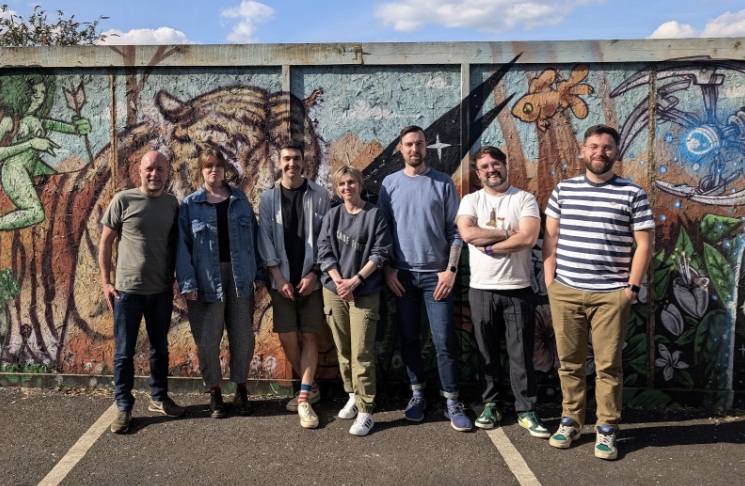
“Our mission is to create work that has a positive impact on people and planet, so becoming a B Corp felt like a natural step.
“Our tip is to really make sure that your people are on board with what you’re trying to achieve. B Corp certification isn’t something that a couple of people within the organisation can be solely responsible for. It’s down to everyone playing an active role – from committing to volunteering days to understanding what reproductive policies look like in our agency.
“We take regular opportunities to share what we’re working towards and invite feedback from teams across the business, which is so far proving successful.”
Sarah Dennis, Aer Studios (BCI profile | B Corp profile)
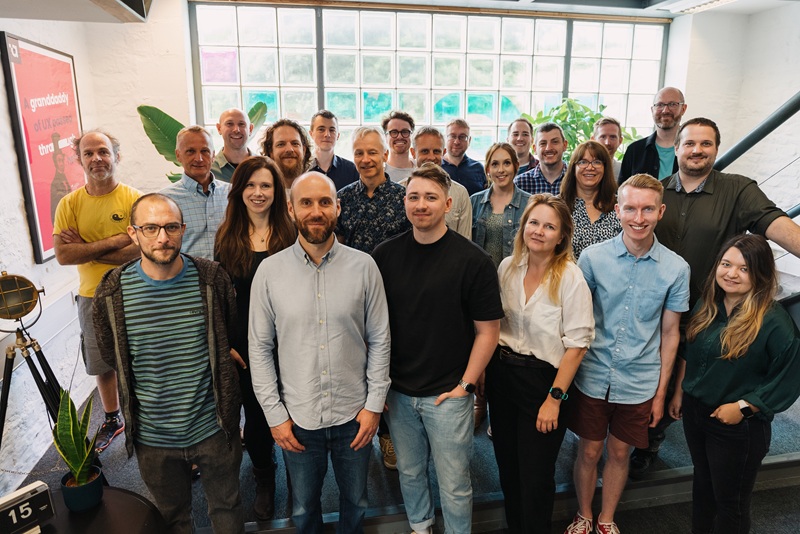
“Becoming a B Corp isn’t just about ticking boxes; it’s about weaving purpose into your business’s DNA. It starts with a genuine commitment to people, clients, the community, and the planet. Prioritise ethical practices, transparency, and accountability.
“Continuous improvement is key; small, meaningful changes create a lasting impact. Use your business as a force for good, challenge the status quo, and resist pressures that push against positive change. The journey to certification is a mindset shift, not just a process. When you do it for the right reasons, everything else falls into place.”
Josh Harrison, Taxi Studio (BCI profile | B Corp profile)
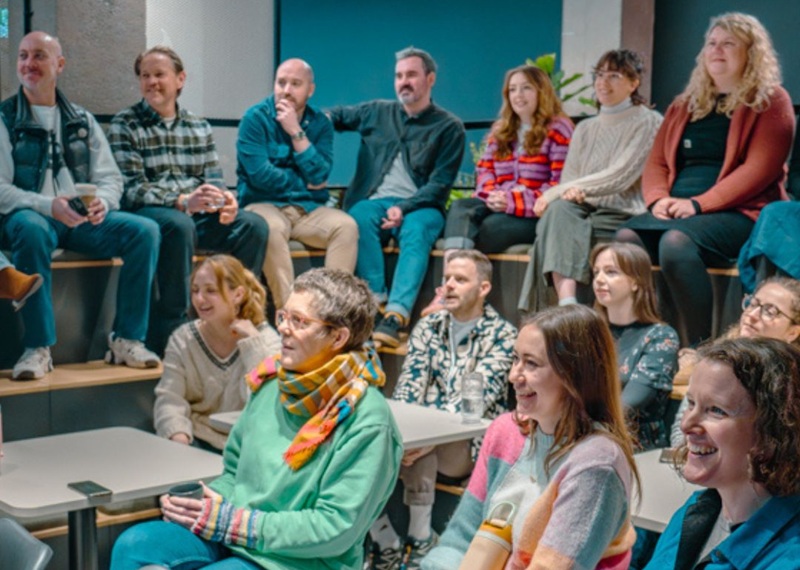
“First and foremost, you have to truly want to do it. When Something Familiar began our B Corp journey, it was because we wanted to wear our values on our sleeve and embed good practices from the start – ensuring our business grows in alignment with our principles.
“The process is rigorous and constantly evolving, but that’s the point. We started by being honest about where we were, then committed to change, growth, and improvement. It’s not just about policies, it’s about embedding impact into every decision.
“The benefits are super clear too, we’ve forged stronger relationships, engaged teams, and built long-term sustainability. If you’re considering starting your journey, the B Corp community is incredibly open and supportive, ready to guide you along the way.”
Rich Williams, Something Familiar (BCI profile | B Corp profile)
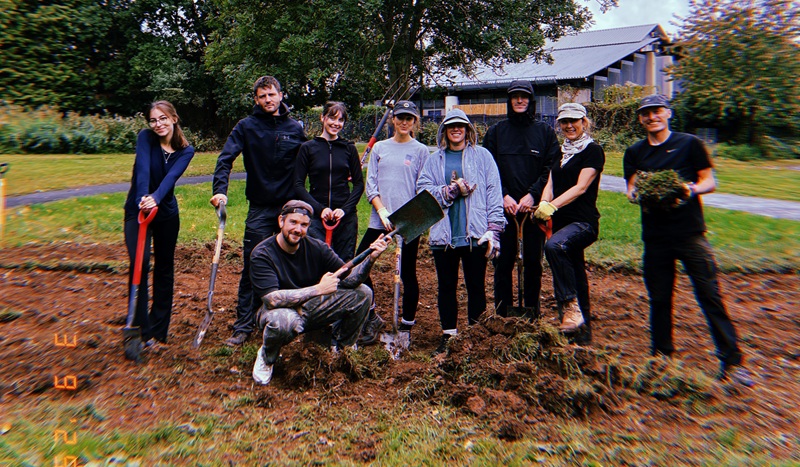
“Becoming a B Corp isn’t just about earning the certification, it’s about committing to continuous improvement in how your business operates. By embedding its principles into your company culture, you will ensure your team understands and embraces the commitment.
“From producing an annual impact report to recertifying every three years, B Corp principles should be woven into the fabric of your business, not forgotten once the plaque is on the wall. Tracking progress and gathering evidence are key to this. At our company, we hold a monthly B Corp team lunch to review each pillar and share updates. Certification isn’t the finish line–it’s the start of an ongoing journey to balance profit with purpose and drive meaningful impact.”
Lucy McKerron, Purplefish PR (BCI profile | B Corp profile)
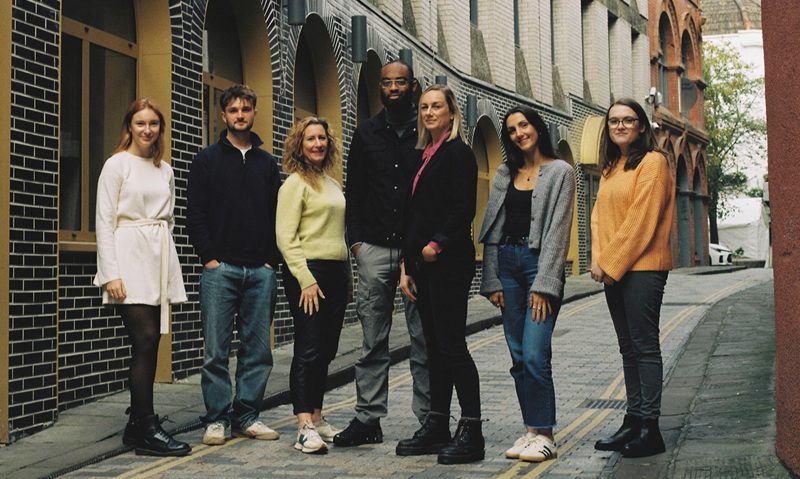
“Give yourself plenty of time. Use the Impact Assessment questions to inform and guide your company policies and business practices before deciding to go for certification, so that the core values of B Corp are already embedded into your culture.
“Learn from others who have been through it but if you can, engage a consultant. We were guided through the process by Byen which made the whole experience very enjoyable.
“Be thorough and meticulous. Continually record and build your evidence to simplify the submission stage.
“Look for easy wins – small changes can have a big impact.
“If you have been honest and evidenced everything, you can be confident of your score when you submit.”
Alexia Mihranian, Osborne Pike (BCI profile | B Corp profile)
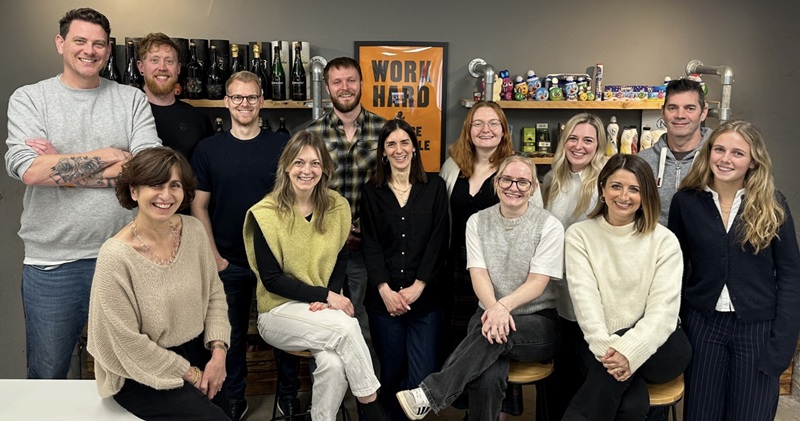
Be authentic
You should become a B Corp because you believe in the philosophy, not because it’ll benefit you, so do it for the right reasons and focus on initiatives that make a real difference to your team, your community and the world around you.
Focus on the Three Ps
People, Purpose and Planet are the cornerstones of being a B Corp. Get those right then in turn it will benefit your Profit.
Build B Corp into your culture
It takes time and energy to live your B Corp values. Embed purposeful initiatives into your company culture and objectives to stay focused and on track.
Make friends
It’s easier (and more impactful) to make a difference if you do so with others! Find your local B Corp community and make partnerships with like-minded businesses around you.
Be adaptable
What it means to be a B Corp changes with the times, so be adaptable to new landscapes within society and the planet as a whole.
Amy Stobie, AgencyUK (BCI profile | B Corp profile)
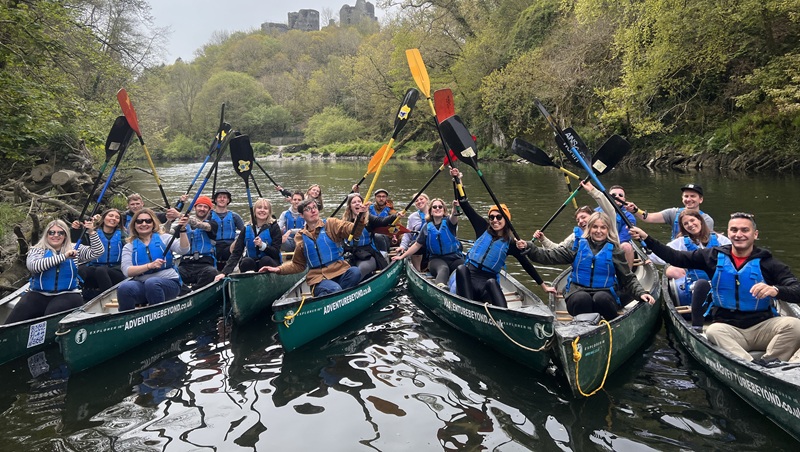
“The best way to become a B Corp is by not taking it as a set of requirements, but genuinely using them as principles to guide yourself as a business.
“Especially with the upcoming changes, becoming certified is a lot harder if you consider it as the minimum bar to jump. By thinking genuinely about the impact you can and want to make that aligns with who you are as a business it’s far easier to get everyone on board and embed B Corp into your culture, which in turn, makes the accreditation easier too.”
Alistair Paul, Bright (BCI profile | B Corp profile)
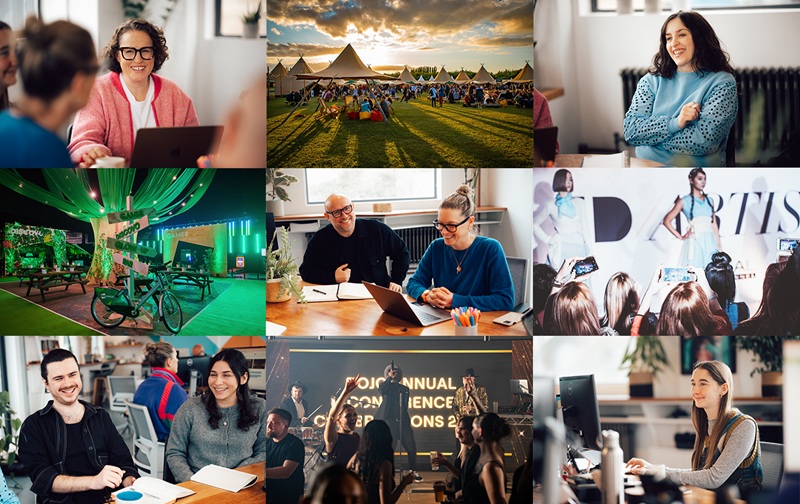
“We started our B Corp journey in 2018 and certified in 2019.
“The more we heard about it the more aligned we felt with it and that it gave us a framework to work towards and ultimately the recognition that we were running the company in the right way.
“The key thing is identifying where you feel as a company you can make a meaningful difference across the five core areas assessed. It’s important everyone has a voice and that you are all working towards the same goals you want to achieve.”
Steve Kay, ADLIB (BCI profile | B Corp profile)
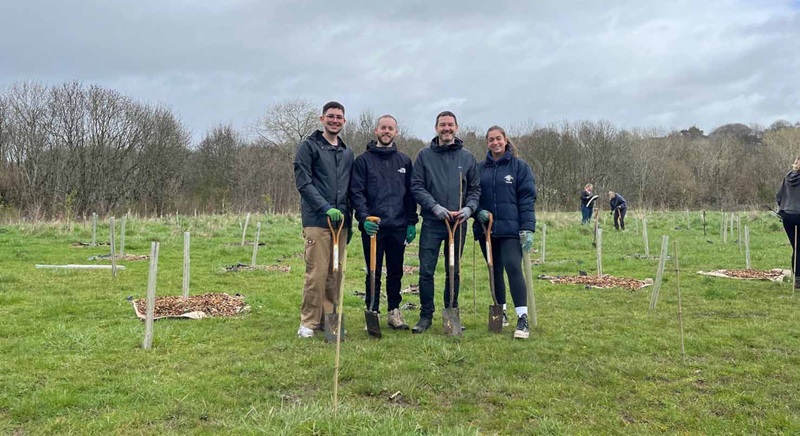
“I’d suggest working through the Business Impact Assessment one section at a time. And take your time. Chip away at tasks little and often to make steady progress. Try to set aside dedicated time each week to move forward.
“Share the workload with your team, so you don’t feel overwhelmed. It’s also important that the process feels authentic. Ideally, you’ll find that many of the policies, procedures, or at least values, are already in place in your company. So going B Corp feels natural and genuine, like the next step in your journey.”
Jess Evans, Shaped By (BCI profile | B Corp profile)
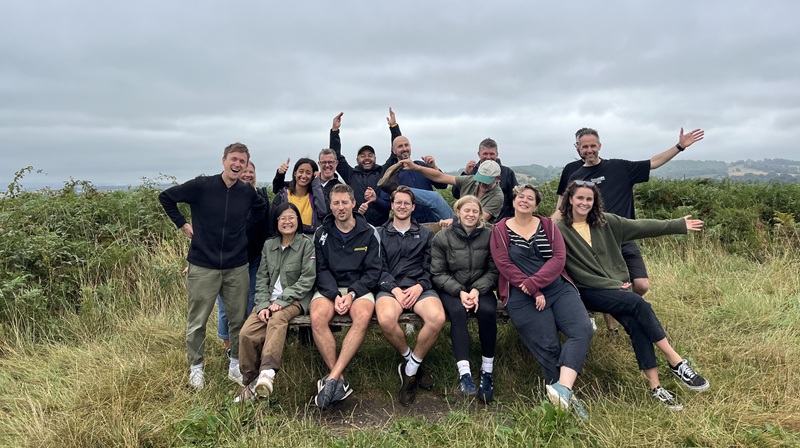
“Becoming a B Corp is a transformative journey that reshapes your business around core values centred on people, planet and purpose. At ORCA, these principles have always guided our work, and certification has only strengthened our commitment.
“This process impacts every part of your business, so involve your entire team from the start. Define clear roles and responsibilities to ensure that everyone contributes to the initiatives that drive sustainable change. Embedding these values into daily operations is key, and tapping into the B Corp community for insights and best practices provides invaluable support, reinforcing your mission and driving continuous growth.”
Mila Embury, ORCA (BCI profile | B Corp profile)
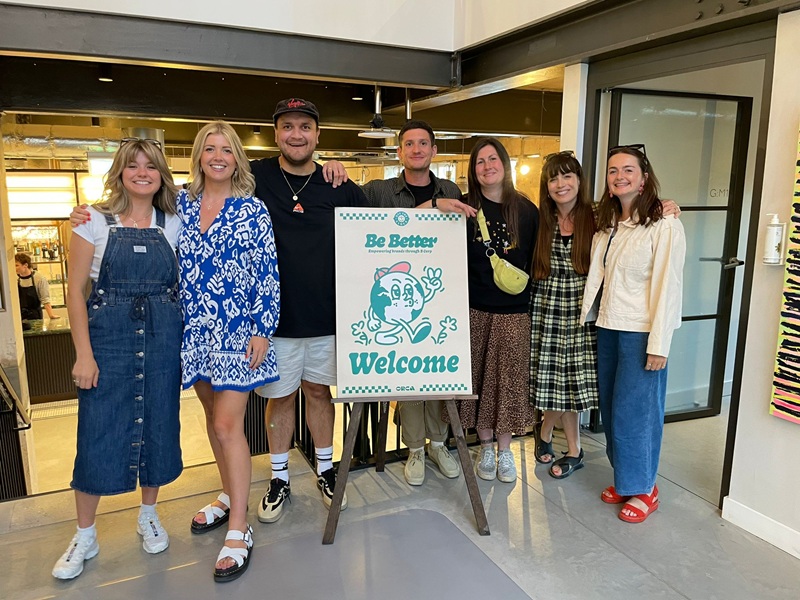
“Get support and carve out time:
“In terms of the application itself, we found some of the questions quite jargon-heavy. So we found it really useful to work with someone who had been through the process who could clarify what sort of information the question needed as a response.
“Having support from an external party also kept us accountable for hitting deadlines around filling in the application. We set aside one day a week during the application process.
“Involve your team:
“It’s impossible for one or two people to do everything. We found that involving the team helped to share some of the responsibilities, as well as adding an element of team-building and fun to the process.”
Karen Pearce, Loom Digital (BCI profile | B Corp profile)
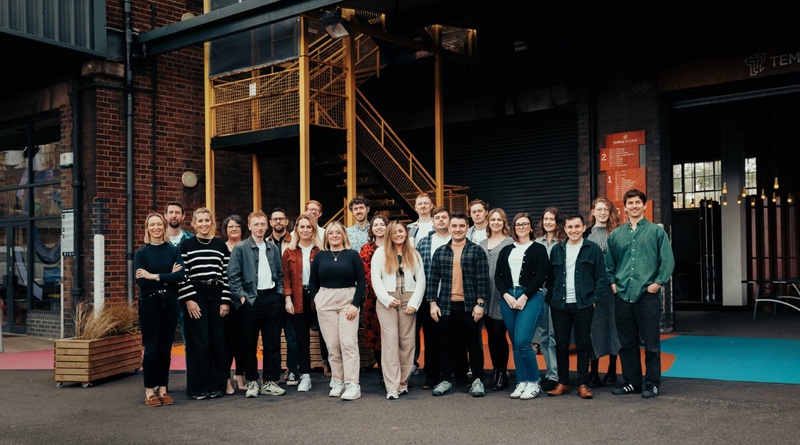
“Becoming a B Corp is just the beginning. Since certification, we’ve partnered with local B Corps to amplify our collective impact.
“We’ve focused on reducing energy consumption by installing new windows. Volunteering with charities like Bristol Zoo Project and St Peter’s Hospice has engaged our team and connected us more deeply to the local community.
“The quickest win? Switching to eco-friendly alternatives like CoCo+ for business travel and Ecosia, the greenest search engine on the planet. It’s the small, habitual changes that make a lasting difference in creating a more sustainable future.”
Lottie Pratt, saintnicks (BCI profile | B Corp profile)
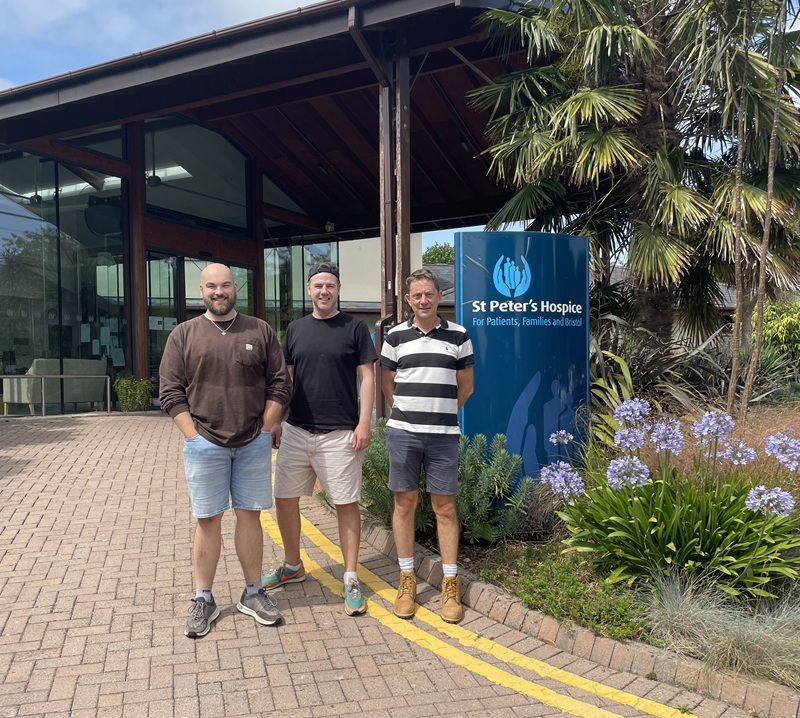
“Being a B Corp is a commitment to ongoing positive change rather than a one-time achievement, a journey rather than a destination to tick off.
“What’s worked for us has been small but regular sustainable changes: changes that can be more easily embedded into business processes, adopted by everyone in the business and built on each year.
“Certification is truly a team endeavour but, practically, it helps to have one project leader to coordinate stakeholders and drive progress.”
Belle Farman, Sunhouse Creative (BCI profile | B Corp profile)
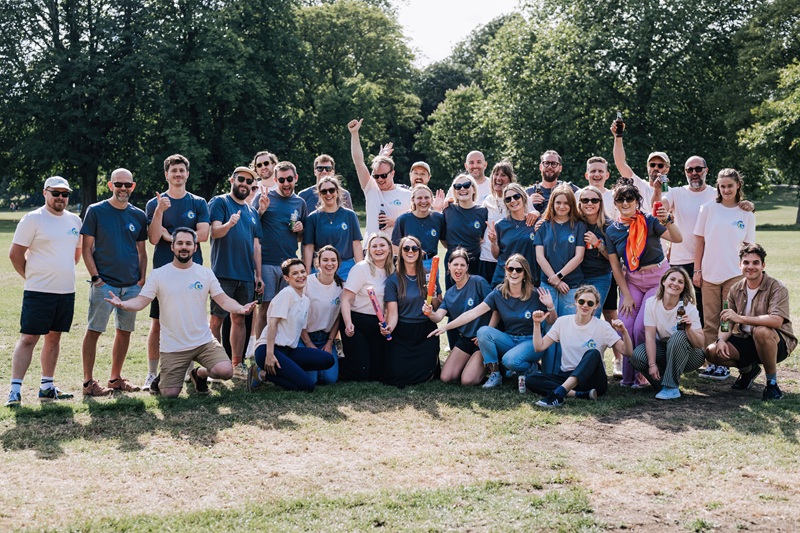
“For us the best advice we can give on how to successfully become a B Corp is simply to do it for the right reasons. If the B Corp set up is right for the values and direction of your business then it’s a no brainer. If however it’s primary use is that of a tool for sales, then reconsider. We’ve noted many controversial and immoral uses of the B logo by organisations hoping it’s a route to easy wins.
“The process of certification was a wonderful and thorough thing for us. It helped us ask questions of ourselves we wouldn’t have normally, set our business on a course for the foreseeable, and helped our team unite under clear and positive values. So our advice would be to enjoy the process with an open and honest mind. Even without certification you will take value from the process.”
Adam Millbank, JonesMillbank (BCI profile | B Corp profile)
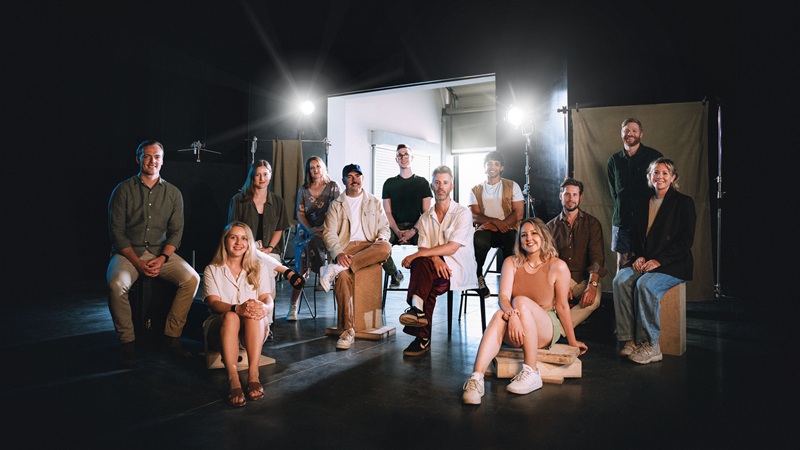
“Becoming a B Corp back in 2022 was a real turning point for us at Skylark. The B Impact Assessment helped us dig into what we were already doing well and where we needed to step up – across governance, team, environment and community.
“My advice? Don’t wait until everything’s perfect – just get started. The Impact Assessment is famously a journey, and with good reason. You’re interrogating every facet of your business.
“In uncertain times, when businesses face economic pressures and competing priorities, it’s easy to let purpose take a back seat. But it’s exactly when people, planet, and integrity are at risk that we need values-led leadership the most.”
Nina Postans, Skylark Media (BCI profile | B Corp profile)
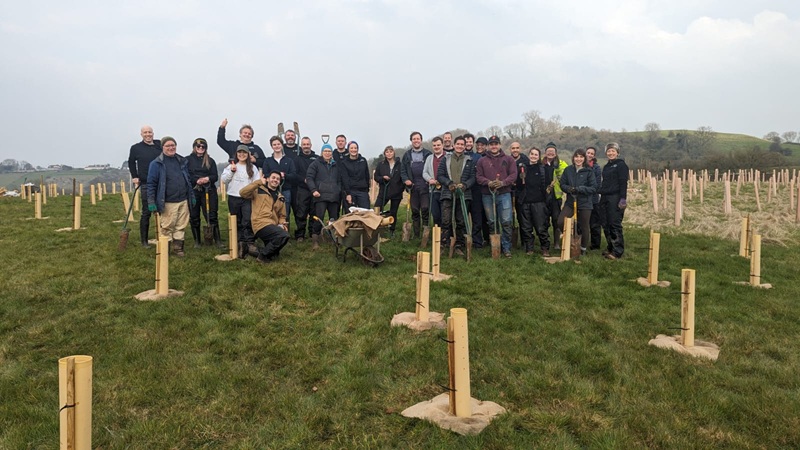
“Involve your team right from the start of your B Corp journey as you can’t do it alone.
“We needed to establish what was important to us and creating a culture where everyone is heard and can contribute means your B Corp statement is authentic and owned.
“We also would recommend being transparent, while creativity can be a force for good we also needed to be upfront with the sectors that we work in that can be playing catch up as they navigate change in sustainability.”
Ruth Clarke, Six (BCI profile | B Corp profile)
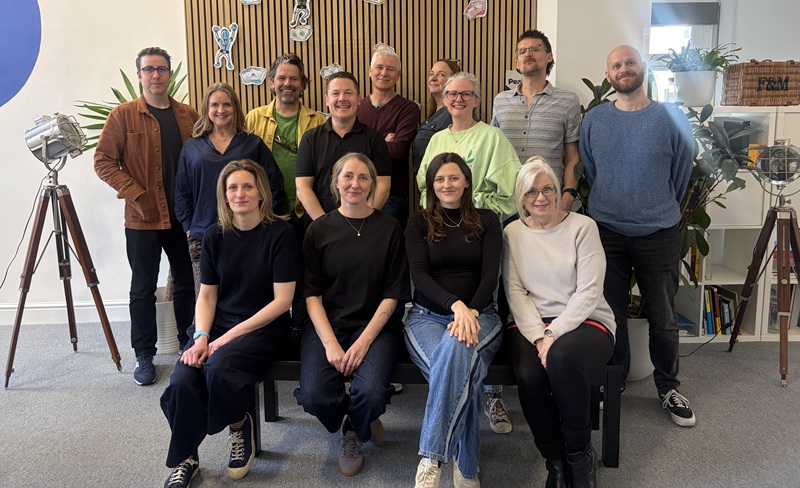
“Becoming a B Corp has been a hugely positive step for us, and something we’d absolutely encourage other creative businesses to explore.
“If you’re thinking about it, start with the Impact Assessment. Treat it as a diagnostic tool first – you’ll probably discover that you’re already doing a lot of positive things for your team, community and the environment, but simply haven’t captured or measured them yet.
“Our second tip is to focus on the areas where creative businesses naturally have influence: how you support your people and community, and the environmental impact of your operations.
“Finally, remember that B Corp is about continuous improvement. Certification is just the starting point – the real value comes from using the framework to keep strengthening your impact as you work towards recertification.”
Ricardo Martins, Epoch (BCI profile | B Corp profile)
“Becoming a B Corp was a natural step for us at S&B Originals. For 20+ years we’d built the business around doing the right thing, not just environmentally but for our team and wider community. B Corp gives us a framework to measure and improve that.
“My advice? If you’re thinking about going for it, chances are you’re already doing a lot right so don’t be daunted. Ask for help and chat to others who have been on that journey. And if it feels like too much, start small, become a Living Wage employer, get involved in your local community. The B Corp badge is great, but working ethically is what matters most.”
Sara Strickland, S&B Originals (BCI profile | B Corp profile)

“Becoming B Corp Certified is vital for any business wanting to shout about their environmental or social credentials. Without this mark of trust and authenticity, you risk ‘talking the talk’ but not ‘walking the walk’.
“Being B Corp Certified means understanding and evidencing what you do (in fine detail), as well as understanding how you can improve, not to mention being honest and transparent about it.
“If you’re considering the B Corp journey, amazing! It has been invaluable for our business in so many ways. My best piece of advice would be to work with a B Leader to help guide you through the process as it is both lengthy and detailed. Be prepared to look at every corner of your business under a microscope, embrace that challenge and reap the multitude of benefits later.
Simon Winter, Winter Design (BCI profile | B Corp profile)
“My first ‘tip’ would be to recognise that becoming a B Corp starts with the right mindset. It’s definitely not about ticking boxes and filling-in forms (although there is a fair bit of that!). It’s all about looking at how your business really works – how you treat people, how you make decisions, the impact you’re having on the world around you. Once you start thinking like that, the assessment becomes much more interesting (possibly even enjoyable?).
“You’ll discover things you’re already doing well, and start finding ideas for doing things even better. Absolutely get the whole team involved, be open and honest, and keep good evidence as you go. The real reward isn’t just the certification. It’s building a better, more inclusive and more thoughtful business along the way.”
Phil Robinson, Proctor + Stevenson (BCI profile | B Corp profile)
“The biggest tip I’d give to any business considering B Corp is to treat it as a framework for improvement. From working on your own certification and speaking to clients who have through the process, the businesses that get the most value are those that are honest about where they are now and use the assessment to prioritise meaningful change. B Corp gives you structure, language and accountability, but it works best if it’s embedded into how decisions are made day to day.”
Elli Robinson, AMBITIOUS (BCI profile | B Corp profile)
“Our biggest tip for becoming a B Corp is to treat each pillar of the B Impact Assessment as its own project. Breaking the process into manageable chunks makes it far less overwhelming and helps you stay focused. Remember, everything must be backed by evidence, so transparency is key from the start.
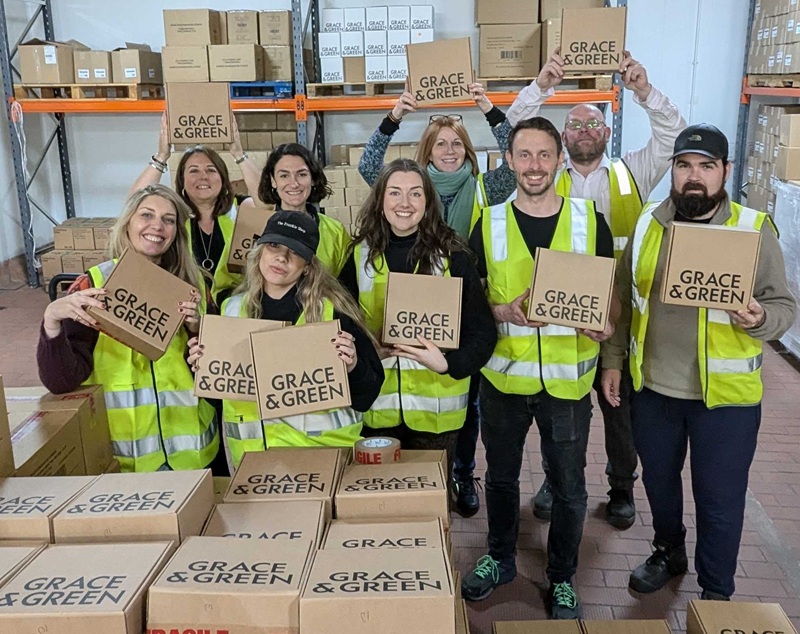
“At its core, B Corp is about putting structure behind your intentions. It’s about committing to continuous improvement and using your business as a force for good. For us, that’s included everything from strengthening our policies to volunteering initiatives and driving measurable impact for people and the planet. It’s an ongoing commitment to do better and keep challenging ourselves to raise the bar.”
Andrea Jonat, Grace & Green (BCI profile | B Corps profile)
“Becoming a B Corp as a digital agency starts with aligning your mission, operations, and impact. Begin by understanding the B Impact Assessment and benchmarking your current practices. Strengthen governance by embedding purpose into your legal structure. Improve employee wellbeing, diversity, and professional development. Audit your environmental footprint—optimize energy use, hosting, and remote work policies. We engaged Andy Hawkins at Business On Purpose to demystify the Impact Assessment and guide us through the process; this proved invaluable.”
Pete Williams, Gibe Digital (BCI profile | B Corp profile)
The creative industries account for almost a 10th of UK firms classified as having ‘high-growth potential’, and, in exciting news for our region, a lot of those businesses are in Bristol and the south west.
The report by the Creative Industries Policy and Evidence Centre (Creative PEC) and Beauhurst found there are almost 6,000 high-growth potential firms (HGPFs) operating across the creative industries. This is 9.7% of the UK’s total HGPFs and it compares to 5.1% and 2.4% respectively in life sciences and advanced manufacturing.
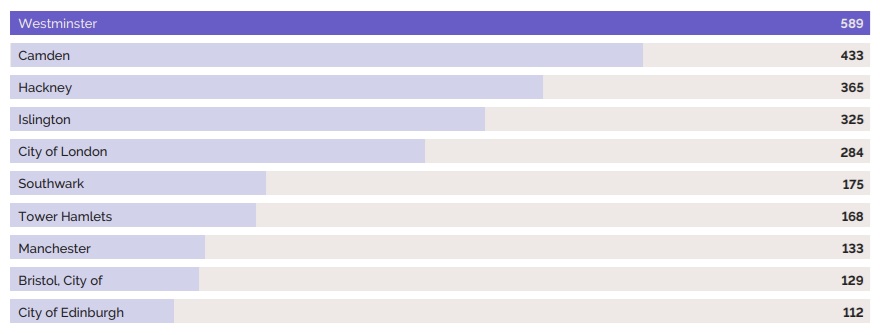
While London accounts for half of creative industries HGPFs with 2,942 firms, the report said other regions are home to significant numbers including 362 in the south west and, when looking at the top local authorities by number of creative industries HGPFs, Bristol is in 9th place with 129.
Over two-thirds (3,981) of creative industries HGPFs operate in application software, with significant numbers too working in marketing, branding and advertising, films and TV and video games.
The report said the figures show there is “huge untapped investment potential” for the UK’s creative industries, which currently face many challenges when it comes to funding.
The number of equity deals for creative industries HGPFs fell by 16.5% between 2021 and 2024, compared to drops of 6% for life sciences, 14% for advanced manufacturing HGPFs and 30.6% for the economy as a whole.
Creative PEC estimated there’s an equity gap of up to as much as £1.4 billion in potentially unmet demand in the creative industries.
Creative businesses also face structural challenges in relation to debt finance, the report said. They are more generally are more likely to have asset bases that are made up of intellectual property, brands and other forms of intangible capital which banks and lenders are less likely to accept as collateral.
This is shown by data which found that only 4% of creative industries HGPFs have secured debt finance compared with 6.1% and 6.2% of life sciences and advanced manufacturing HGPFs respectively.
The report highlighted Bristol Creative Industries member Watershed, which operates an independent cinema and supports creative technology, film, and media projects, as an example of how funding can work for the creative industries.
It said Watershed has received multiple grants from Arts Council England and Innovate UK, including £2.3 million grant from the Arts Council’s Grants for the Arts in 2022.
Its most recent Innovate UK grant was £1.2m in 2021 to support the MyWorld programme, led by the University of Bristol, which develops R&D infrastructure and new talent for immersive media in the Bristol and Bath region.
Additionally, MyWorld, also a Bristol Creative Industries member, is backed by a £30 million UKRI Strength in Places Fund award, which the report said illustrates how place-based UKRI funding and Innovate UK project grants specifically often work together.
Hasan Bakhshi, director of Creative PEC and report co-author, said:
“There are somewhere between 260,000 and 270,000 firms in the UK’s creative industries but not all of them have the same growth potential. Our research estimates that within this population are a vital group of almost 6,000 businesses that have especially high-growth potential.
“Given the UK’s well-known strengths in IT, it won’t be surprising to investors that the majority of these firms operate in software, but less well known will be that as many as 30% of creative industries high-growth potential firms working in software work in sub-sectors like advertising, films and TV, video content and video games too.
“This suggests that investors may identify significant new investment opportunities if they include the creative industries within the scope of their prospecting activities. Growth-focused policymakers for their part should consider the needs of high-growth potential creative industries firms in their regions.”
Baroness Shriti Vadera, co-chair of the Creative Industries Council, said:
“This research fills a critical gap in the evidence base, making clear that there are substantial untapped investment opportunities in the UK’s high-growth creative industries – across a wide range, from advertising, films and TV to video games and software.”
Tom Adeyoola, executive chair of Innovate UK, added:
“This is an important report as we aim to drive economic growth and ensure a thriving creative industries sector. This helps us understand who and where the high potential businesses are, the conditions for success and how to target the interventions needed to drive our breakthrough ideas to global greatness.”
For the latest available funding for creative businesses, read our guide.
Find lots of great creative industries businesses in our member directory.
Pictured L-R: Julia Gray – Principal and Chief Executive Officer of City of Bristol College, Helen Godwin – Mayor of the West of England, The Rt Hon Dame Diana Johnson DBE MP and Karin Smyth – MP for Bristol South
On Monday, City of Bristol College’s Principal and Chief Executive Officer, Julia Gray, attended the Prime Minister’s Opportunities for All: A National Apprenticeship Week Reception at 10 Downing Street.
Also in attendance were Jacqui Smith, Skills Minister, Ollie de Botton, the Prime Minister’s expert adviser on Education and Skills who has previously visited City of Bristol College, apprentices, employers and children from schools who are interested in apprenticeships.
The Prime Minister, Keir Starmer, attended the event and spoke to apprentices and influencers who use their platforms to promote career paths.
The event celebrated the crucial role that apprenticeships play in creating good jobs, supporting various industries and strengthening communities across the UK.
The reception, help as part of National Apprenticeship Week, highlighted the growing national recognition of apprentices as key contributors to the UK’s economic future.
A press release published by the Government last week sees the Prime Minister vow to “unlock opportunities for young people across the country”.
The Government is set to pilot a university clearance-style system where “near miss” applicants who aren’t successful in securing their first choice of apprenticeship will be re-directed to similar opportunities in their area.
Delivered in partnership with employers and Mayoral Strategic Authorities, this pilot will test how young people can be re-directed to other suitable employers and apprenticeships often found on their doorstep if they were unsuccessful in their initial applications.
An online platform will bring together information on apprenticeships in one place for young people, many of whom are keen to explore the apprenticeship route but don’t know exactly where to start.
The platform will include new data showing actual earnings and details of how apprentices have progressed after completing their training, helping young people to compare options and understand which apprenticeships lead to lasting careers.
This will mean that employers, particularly small and medium-sized businesses will gain access to a stronger pipeline of motivated young talent; helping to close the skills gap.
Prime Minister Keir Starmer, said: “Apprenticeships give young people real experience, real prospects, and a real route into good careers.
“But for too long young people have been held back from the opportunities they need to get on in life because of outdated assumptions about how to make it into a successful career.
“We’re unlocking opportunities for young people across the country by making it easier and faster to get the skills that matter, so more young people can build a secure life for themselves.”
For information regarding how City of Bristol College can support both apprentices and employers, simply click here.
You need to load content from reCAPTCHA to submit the form. Please note that doing so will share data with third-party providers.
More Information