We are delighted to announce that new directors have been appointed to the Bristol Creative Industries board.
The five individuals will deliver additional strength and depth to the board which will hugely benefit Bristol Creative Industries, our members and the wider creative sector in the south west.
They bring a host of skills and experience including digital marketing, film production, CRM, data analysis, website marketing and creative industry education.
As we said in our new year message at the start of 2024, driving value for Bristol Creative Industries members is our top priority, and we remain committed to creating opportunities for our community to learn, connect and grow their businesses.
To continue with this mission, we have key focuses that the new board directors will help us deliver thanks to their excellent expertise and contacts. They will contribute directly to:
Our priorities also include the BCI Talent Programme which supports the next generation of diverse talent in the creative industries and is currently open for sponsorship opportunities.
The appointment of the five new board directors follows Lis Anderson and Heather Wright becoming co-chairs of BCI.
Heather Wright, co-chair of Bristol Creative Industries, said:
“We are delighted to welcome these uniquely talented, inspirational and hardworking industry leaders who have stepped up for BCI and for our sector. They will strengthen our team and make it possible for us to achieve our ambitions for members.”
Joining Lis Anderson, Heather Wright, Gail Caig, Marissa Lewis-Peart, Julian Davis and Steven Coombe on the Bristol Creative Industries board are:

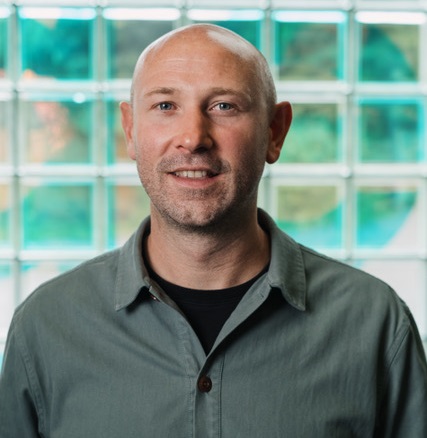
Adam Millbank brings over 16 years of commercial film production experience, serving as a founding director of B Corp registered companies JonesMillbank and Nine Tree Studios.
With his roots in documentary filmmaking, Adam has honed a talent for uncovering the essence of stories, establishing profound connections with his subjects. While he remains a practitioner, he also dedicates significant time to nurturing relationships with agencies and brands, earning him a reputation as a trusted partner in the industry.
Adam now collaborates with globally recognised brands, leveraging his expertise to drive innovative projects.
He maintains a keen interest in the intersection of education and creativity, aiming to foster greater connectivity within the Bristol creative industries around film and video and create a space for collaboration through Nine Tree Studios.
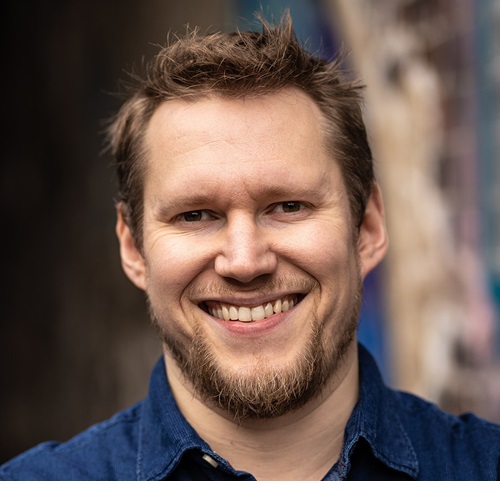
Tom Harber is an experienced creative agency leader specialising in digital experiences and creative technology solutions.
Tom has held leadership positions in industry leading creative agencies across both the UK and Australia that have be recognised at prestigious awards including Cannes Lions, BIMA and The Effies. Tom eventually landed back in the South West to head up creative technology studio, Aer Studios.
Proudly B Corp Certified, Tom and his team have been ranked in the top 100 best workplaces in the UK and have recently been appointed to the BBC UX Design roster as the only agency representing the South West region.
Tom’s passion is in creating meaningful digital experiences that have a positive impact on people and planet. He believes that bringing the creative and technology sectors closer together can have a huge benefit to the South West.

Tom Bowden-Green‘s experience combines senior consultancy (10+ years) and academic leadership (10+ years), designing and delivering training to support business development and career growth in marketing. His current focus is on bringing together regional and academic expertise to support business growth within the creative industries.
Tom studied his PhD at the Digital Behaviour Lab at University of Bath School of Management. His research and teaching now focuses on applying psychology to creative processes.
His recent work at Bristol Business School includes investigating behaviour change with Bristol City Council, researching the Bristol brand with Visit West, and understanding the effectiveness of social media advertising.
Tom created and led the MSc Digital Marketing at UWE Bristol and led several successful Digital Marketing Bootcamps. He co-hosts the The Digital Behaviour Podcast.
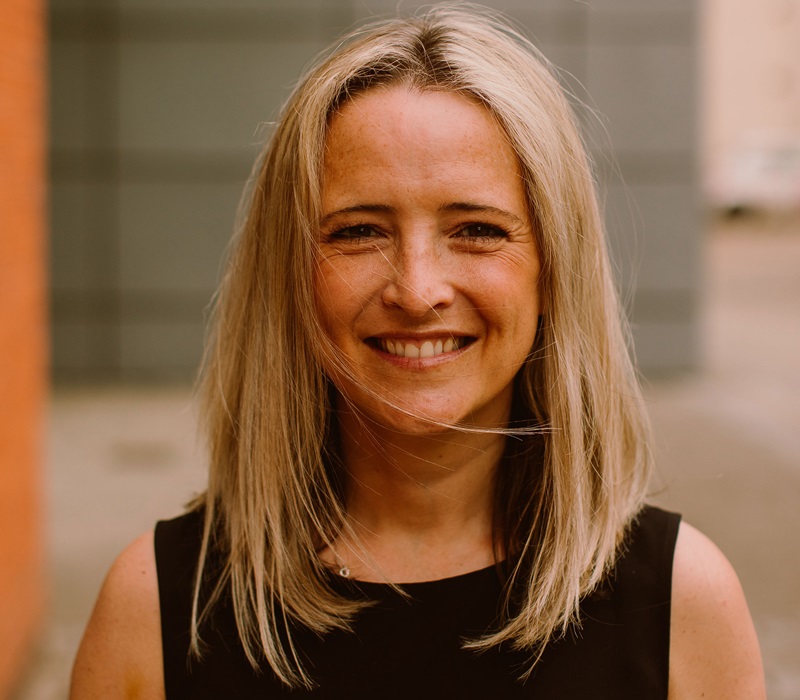
David Darke is the co-founder and operations director of Atomic Smash, a website performance agency based in Bristol, specialising in optimising WordPress, WooCommerce and Shopify.
Since its inception in 2010, Atomic Smash has prided itself on a caring team culture, emphasising continuous learning, creativity, and problem-solving. In this role, he has been recognised for kindness in leadership by being nominated as a Kindness Leadership Leading Light.
David’s approach to business reflects a deep understanding of the web’s potential to transform how companies and individuals communicate and conduct business.
Kate Sikora is the co-founder and managing partner of Noble Performs, a digital performance marketing agency based in Bristol renowned for helping organisations achieve remarkable results.
Highly commended as the IOD Director of the Year 2023 and serving as a Taan European Governor, Kate is committed to driving excellence and innovation in the digital marketing landscape.
Beyond her professional endeavours, Kate finds joy in family life, practicing yoga, and exploring new culinary creations in the kitchen.
At a Bristol Creative Industries keynote event in March, we were joined by Drew Benvie, founder of global social media agency Battenhall. He shared insights from the company’s 11th annual social media trends reports. In this post, Dan Martin summarises Drew’s brilliant talk.
When it comes to social media, Drew knows his stuff. At the age of seven, he taught himself how to code on an Amstrad CPC 464, and in 2006 he was the first to coin the term ‘social media’ on Wikipedia. Drew founded Battenhall in 2013 and now employs 120 people in the UK and overseas.
Opening his talk, he said:
“There are more places than ever to commit your time and your advertising money, so it’s important you know where to invest. You could stick to a few but the average person in the UK is active on six social networks. In India, it’s 10. If you’re trying to reach your target audience, you have to do more than ever before to really stand out.”
Social media is ubiquitous. Eight out of 10 people who use social media do so actively. Brits spend 75% of our working day looking at a screen of some sort, with teens spending around 5.3 hours a day on social.
But over the last year, Drew said, various things have happened, such as “the implosion of Twitter” following Elon Musk’s purchase of the platform, “that has made me feel that safety on social media is an important thing”.
“Social media is now toxic to many, whether it’s the stuff that we see that should be taken down, or the actions from one user to another that are allowed unfettered on social media.”
A million posts are removed by Meta every day, Drew said, while TikTok employs 40,000 people to moderate content.
Amid all this, social media owners are appearing in front of regulators around the world, as governments look to bring in new legislation that regulates social media.
So what does this mean for brands? Drew’s advice is:
“AI (artificial intelligence) is one of the most unstoppable forces,” Drew said.
See below for what ChatGPT created when he asked it to show a vision of Bristol in the future!
AI in action from @drewb in @Bristol_CI keynote.
“ChatGPT, show me a vision of Bristol in the future.”@brunelsbridge still going strong! @battenhall #Bristol #Battenhalltrends pic.twitter.com/r6E000jO4X
— Dan Martin (@Dan_Martin) March 12, 2024
AI helps to speed up creativity”, and you should think of it as “your brainstorm buddy”, Drew advised.
You can already use AI features on social media platforms to create or improve content, but Drew said “there is an important balance between making something authentic because it is created by a human and harnessing the power of AI to speed things up when you need to”.
He continued:
“I’m an advocate of using AI to augment what you do, not replace it. Get it to do the stuff that you shouldn’t really spend time doing.”
Drew said consider AI as your “brainstorm buddy”. He recommended experimenting with AI tools, such as ChatGPT and Google Gemini, and see which work best for you. Remember that AI isn’t just for generating content, you can also use it for tasks like analysing data.
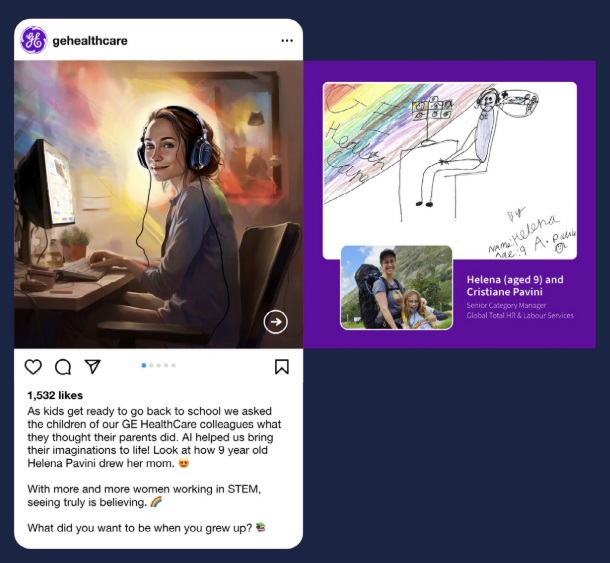
As an example of AI in action with creative content, Drew shared a campaign using AI that Battenhall delivered for a client.
The children of employees at General Electric were asked to draw what they thought their parents did for a job. Battenhall then used AI to create images based on the drawings that were used for social media posts.
On LinkedIn, the content delivered the top-performing post for the whole quarter, more than doubling the benchmark engagement rate for the quarter. In addition, the campaign contributed to a 12% increase in the number of new followers (month on month).
Drew warned that brands should also be aware of the ethical, regulatory and legal issues around AI such as who owns the content you produce using the technology.
The fallout from Elon Musk buying Twitter led to an exodus of users signing up for other social media platforms. Many people switched to Mastodon, the open source social network, and Meta launched Threads, an app linked to Instagram which became the fastest to reach 100 million followers.
“There are 35 social networks with over 100 million active users [see some of them on page 7 of the ‘Life after Twitter’ report] and endless niche communities. That is my biggest learning from what has happened to Twitter. Niche is now good. It’s ok to be small.”
The biggest beneficiary of “the carnage at Twitter”, Drew said, is LinkedIn. It reported a 41% increase in volume of content between 2021 and 2023.
Drew’s tips and insights for LinkedIn are:
But the most important tip for choosing where to engage on social media, is pay attention to your audience and where they hang out. There’s no one size fits all.
“Be really analytical. Figure out what your audience does, where they spend their time, what trends they follow.”
“TikTok calls itself an entertainment platform, not a social network, and it’s a places other social media platform are trying to emulate.”
Drew said TikTok has shown to brands the power of being entertaining. “I think every brand in 2024 has the ability to be more entertaining.”
“Any brand can do anything on social media. People expect a brand to be a person, to have a voice. The unhinged, entertaining and educational stream of content coming through on platforms like TikTok is creating opportunities for even the most boring brands to be entertaining, informative and educational.”
Drew said the three ways brands can be entertaining are:
One example of an entertaining brand that is “completely unhinged” is Duolingo on TikTok. “My kids want to spend their pocket money on learning languages on Duolingo beause the owl is so engaging.”
For an example of good educational content, Drew recommended Channel 4 on Threads.
“What makes social media content work is engagement, sentiment uptick, and visibility for people that are hard to reach. Entertaining content achieves on all those fronts.
“Think about how you can tell stories and answer questions. People want to learn new things. Think about the niches users might want to know about that are linked to your brand. Even with something a bit more corporate, there’s a story to tell and an audience looking for answers. Consider various different channels to reach your target audience.
“To create content that’s right for you, think about your brand personality. Place yourself in your audience’s shoes, and don’t be afraid to either stay in your lane and do one thing well, or branch out and try lots of different things. Social media is all about experimenting. Post things. Delete them. Start a channel. Let it go. That’s all fine.”
Drew said that the fatigue that many people have with influencers and the creation of content about something they are paid to say is good has helped bring about a creator culture:
“There are more people creating more things with more creativity on more platforms more often. Creators provide opportunities for any brand because your niche is out there somewhere.
“A creator’s goal is to produce high quality, authentic content. For that, they want to work with brands. If you find the right ones, they are usually cheaper to work with than influencers, you can do more meaningful projects with them, and they tend to be more authentic.
“A creator might have a smaller audience than an influencer but they often can do more with less. They also might not ask for money if there’s some other type of value exchange such as early access to a new product.”
Instagram and YouTube are the most popular platforms for creators, but delve into any channel and you’ll likely find a vibrant creator culture, Drew said.
Other networks to explore include spontaneous photo sharing app BeReal, communication platform Discord and livestreaming community Twitch. Private communities, such as Facebook and WhatsApp groups, are another format worth looking at.
To stay updated on future Bristol Creative Industries keynote events, sign up for our newsletter.
A key focus at Bristol Creative Industries is boosting workforce diversity in creative businesses and helping to grow the talent pipeline for our members.
Our report, A creative force to be reckoned with: Unleashing the power of Bristol’s creative industries, found that accessing talent with the right skillsets was the biggest challenge facing more than a third of creative businesses in the south west.
It also showed that increasing diversity and inclusion was a significant priority for six in 10 creative firms, but 21% admitted they were struggling to recruit talent from diverse backgrounds, and 48% wanted more help finding diverse employees from underrepresented groups.
In this post, we outline the initiatives in the Bristol Creative Industries Talent Programme which is focused on tackling those challenges.
If you’re not yet a BCI member, join here to take advantage of the member exclusive initiatives.
Research shows that diverse teams are more creative problem solvers, bringing fresh perspectives to solutions, against the echo-chamber effect that results when people in a business come from too-similar backgrounds. With a strong focus on diversity and inclusion, employees feel valued and that they belong.
To help Bristol Creative Industries members achieve this, we have partnered with The Hobbs Consultancy to provide on demand equity, diversity and inclusion (ED&I) e-learning.
The CPD certified online course consists of modules to help you bring about positive change in your business, understand the key challenges in the way for different groups, and explore your own biases and how to overcome them.
The training modules take an in-depth look at different diversity and inclusion topics: race, disability, LGBTQ+, neurodiversity, gender (split into female leadership, masculinity, gender identity), age and social mobility in the workplace.
The price of the training for BCI members is £120+VAT. All profits will be ploughed back into our youth engagement activity.
To access this brilliant training opportunity, log into your Bristol Creative Industries account and click on the ‘members’ training’ section.
We have formed a new partnership with UWE Bristol to support Bristol’s thriving creative businesses and provide enhanced careers opportunities to students entering the industry.
The partnership has been designed to offer insight and career opportunities to thousands studying courses rooted in the creative industries, including marketing, events, filmmaking, photography, media and communications.
It also aims to benefit BCI members, by developing a network of trained students who will make up the future workforce within the region and are ready to enter the industry.
We have committed to an annual programme of round tables with key post 16 education providers in the region including colleges, academies and universities.
Our aim is to promote creative careers to staff and career advisers, drive applications to our internship programme and explore how we can promote the creative industries to students already studying.
We also have this regularly updated guide to creative industries-related further and higher education courses in Bristol and Bath to make young people more aware of their options.
We have to start engagement at school by raising the profile of the creative sector to a wider and more diverse audience. To do this, we regularly bring together creative business members and future talent through mentoring.
Among the initiatives are a partnership with The Early Careers Foundation (ECF), a social mobility charity that works with young people from low-income backgrounds to ensure that talent and hard work are what determine their career success, not background.
Through its mentoring programme, ECF pairs employees from partner organisations with 16-18-year-olds for monthly hour-long mentoring sessions. In 2024, BCI members signed up as mentors and supported young people in building their confidence, developing their employability skills and offering invaluable professional guidance.
We were also delighted to take part in the 2024 Discover! Creative Careers Week, an industry-led initiative designed to provide young people aged 11-18, from England, with encounters and experiences of the creative industries through in-school, workplace and online opportunities.
In partnership with Speakers for Schools, several Bristol Creative Industries members provided virtual work experience sessions covering PR, marketing, advertising, film, TV and more. Find out what happened here.
Look out for the latest mentoring opportunities on our blog and in the BCI Bulletin newsletter.
Bristol Creative Industries is thrilled to launch a partnership with The Early Careers Foundation (ECF), a social mobility charity that works with young people from low-income backgrounds across the country, to ensure that talent and hard work are what determine their career success, not background.
Social inequality is a huge problem in the UK, with family wealth at birth (not IQ, race, or gender) still the most accurate predictor of future financial success. The Early Careers Foundation is committed to ensuring that talent, not background, is what determines a young person’s career success.
One of the Foundation’s initiatives is its Mentoring Programme, which pairs employees from corporate partner organisations with 16-18-year-olds from the organisation’s school partners for monthly hour-long mentoring sessions.
Thanks to this new partnership, we’re thrilled that Bristol Creative Industries members can volunteer to be a mentor to one of these high potential young people using the Foundation’s expertly designed resources to support building their confidence, developing their employability skills and offering invaluable professional guidance.
The Foundation does the leg work – covering the cost of your enhanced DBS check, running comprehensive training sessions and providing expertly designed resources to structure each session – so that the only ‘eligibility’ criteria is that you are enthusiastic, happy to share learnings from your own professional experience and crucially, committed to at least 10 months of mentoring sessions.
Mentor applications open on 2 April and close on 1 August. You can get started TODAY. Read through the ECF Mentor Prospectus Flyer (2024-25) and apply directly through this link (this can also be found at the bottom of the prospectus).
Please note that you need to be a Bristol Creative Industries member to take advantage of this exciting opportunity. If you’re not a member, join today.
Chancellor Jeremy Hunt delivered the government’s 2024 Spring Budget on 6 March. Here’s a round-up of measures and announcements relevant to businesses in the creative industries.
During his Budget speech, Jeremy Hunt referenced the creative industries. He said:
“We have become Europe’s largest film and TV production centre with Idris Elba, Keira Knightley and Orlando Bloom all filming their latest productions here.
“Studio space in the UK has doubled in the last three years. At the current rate of expansion, we will be second only to Hollywood globally by the end of 2025.”
In the full Budget document, the government said it is:
“…committed to the success of creative industries, a sector that contributed £125 billion in gross value added (GVA) in 2022 and employs 2.4 million people across the UK.
“In June 2023, the government published the [creative industries] sector vision setting out ambitions to grow the sector by a further £50 billion in GVA and support an additional 1 million jobs.”
The Budget included several announcements specific to the creative industries:
A new UK independent film tax credit (IFTC) will be introduced at a rate of 53% on qualifying film production expenditure. It will be available for films with budgets under £15m that meet the requirements of a new British Film Institute (BFI) test.
Films will need to meet at least one of the following conditions:
Productions will be able to make claims from 1 April 2025 if the film started principal photography from 1 April 2024.
Jay Hunt, BFI chair, said:
“The government’s new tax credit is a game changer for UK filmmakers, creating jobs and ensuring great Britsh stories continue to be told. By introducing the uplifted rate, the prime minister and the chancellor are fuelling the growth of the wider screen sector that contributes billions to the UK economy.”
Ben Roberts, BFI chief executive, added:
“This is a dramatic moment for UK film, and the most significant policy intervention since the 1990s. The positive impact will be felt across our industry, and through all the new films that audiences will get to enjoy.
The films we make are vital to our culture expression and creativity – they reflect a diverse and global Britain, and build careers – and we’re grateful to government, the DCMS, the industry and our friends at Pact for working together to realise this historic initiative.”
Following a consultation at Autumn Statement 2023, the credit rate for visual effects costs in film and high-end TV will be rise by 5% to 39% from April 2025. The 80% cap will be removed for qualifying expenditure for visual effects costs.
A 40% reduction on gross business rates will be provided to eligible film studios in England until 2034. The government said the relief will be implemented “as soon as possible” with bills backdated to 1 April 2024.
From 1 April 2025, the rates of theatre tax relief (TTR), orchestra tax relief (OTR) and museums and galleries exhibitions tax relief (MGETR) will be permanently set at 40% (for non-touring productions) and 45% for touring productions.
Funding of £26.4m will be provided to upgrade the National Theatre’s stages and infrastructure.
The following are announcements not specific to the creative industries but are of interest to businesses in the sector.
Freelancers make up a third of the creative industries so this measure is very relevant to the sector.
From 6 April 2024, the main rate of Class 4 National Insurance Contributions (NICs) for the self-employed will be reduced from 9% to 6%.
The government claimed that combined with the abolition of the requirement to pay Class 2 NICs announced in the 2023 Autumn Statement, the measure will save an average self-employed person on £28,000 around £650 a year.
From 6 April 2024, the main rate of employee NICs will be cut by 2p from 10% to 8%.
The government claimed that combined with the 2p cut announced at Autumn Statement 2023, the measure will save the average worker on £35,400 over £900 a year.
The level at which businesses must register for valued added tax (VAT) will increase from £85,000 to £90,000 from 1 April 2024. The government said around 28,000 businesses will benefit in 2024-25 from no longer being VAT registered.
The deregistration threshold, at which businesses can deregister from VAT, will increase from £83,000 to £88,000.
The government’s Recovery Loan Scheme, which launched in 2021 to support businesses to recover from the impact of the COVID-19 pandemic, will be extended to 31 March 2026. It will be renamed the Growth Guarantee Scheme.
The government guarantees to the lender up of 70% of funding provided to businesses through the scheme. Loans of up to £2m are available for businesses in Great Britain turning over up to £45m. For Northern Ireland businesses, the maximum loan is £1m.
Full expensing allows companies to claim 100% capital allowances on qualifying plant and machinery investments. In the 2024 Budget, the government said it will publish draft legislation and seek to extend the scheme to assets for leasing “when fiscal conditions allow”.
To celebrate World Book Day, we aked members of the Bristol Creative Industries LinkedIn group to share their favourite books for creative businesses and entrepreneurs.
We’ve included links for Amazon but why not support local shops and buy from a independent Bristol book store? There are great lists of Bristol indie bookshops here and here.
I highly recommend Time to Think by Nancy Kline. It taught me a lot about the value of listening and giving others positive space to develop their own thinking.
Heather Wright, Bristol Creative Industries co-chair and founder of Springboard Creative
reminder of the beauty and importance of any creative endeavour in life
How to be Everything. A useful insight into wearing many hats and making all the hats into a career which works for you.
Laura Gemmell, founder of Taught by Humans
Feel The Fear And Do It Anyway by Susan Jeffers is great for the procrastinators amongst us, and I quote The Secret by Rhonda Byrne pretty much on a daily basis! I’m a big believer in the power of a positive mental attitude.
Alli Nicholas, Bristol Creative Industries membership and operations manager
Thinking Fast and Slow by Danny Kahneman (or, if you’re short of time, either Predictably Irrational by Dan Ariely, or Nudge by Richard H. Thaler and Cass R Sunstein.
For me, effective creative work should be based on an understanding of how the audience thinks. Kahneman’s book really opened my eyes to a whole new way of understanding customer behaviour, i.e. the importance of psychology.
Tom Bowden-Green, Bristol Business School (see Tom’s BCI profile here)
7 Habits of Highly Effective People is a roadmap for life.
Andy Clarke, DT Consult
Survival Skills for Freelancers by Sarah Townsend. A great book covering every aspect of freelancing that you can think of and more! Love all the comments from real freelancers that are included too acknowledging that different freelancers have different experiences, likes and dislikes and that’s OK.
I also like The Freelance Introvert because it gives me hope when I have regular wobbles about whether I’m confident enough to make a freelance writing business work.
Helen Savage, Blog Write (see Helen’s BCI profile here)
I was recently at the Arnolfini and came across my current read in their bookshop. Creative Hustle is a real gem for those curious about blazing your own path whilst making work that matters. Highly recommended. Enjoy!
Julian Davis, Curiosity UnLtd and Bristol Creative Industries board director
If you haven’t already, read Steal Like an Artist by Austin Kleon. It celebrates creativity with total honesty about how it “happens”. Short, punchy and simple. That’s always good in my book!
Christophe Stourton, Catalysm (see Christophe’s BCI profile here)
I always have a book on the go. In the last year, the best read was Utopia for Realists: And How We Can Get There.
Chris Voss’ book, Never Split the Difference: Negotiating as if Your Life Depended on It, was probably the most useful.
Ben Lowndes, Distinctive Communications (see Ben’s BCI profile here)
The Artist’s Way: A Spiritual Path to Higher Creativity. A game changer for enlightening the creative flow, especially for people who are suffering any form of creative block.
Danie Stinchcombe, Gather Round (see Gather Round’s BCI profile here)
In my experience, we creatives are generally a quiet bunch. That can cause problems for freelancers in particular who generate most of our business from our connections. So many hate the idea of networking, but know it has to be done. It’s why I wrote Meet, Greet and Prosper, a short practical booklet about how to meet people at networking events.
When you analyse where most of your business comes from, it’s invariable by recommendation and introductions. Traditionally, new clients just seem to come from no where, but it can happen a lot more when you know how. That’s what my book, Rapid Result Referrals, focusses on. It explains in simple language how to discreetly let everyone in your network know you’re on the lookout for new clients.
Roy Sheppard, conference facilitator and founder of FreelancerSupport.online. (see Roy’s BCI profile here)
The government’s 2024 Spring Budget takes place on 6 March. Bristol Creative Industries members share what they would like to see in chancellor Jeremy Hunt’s speech for creative businesses.
“One thing we’re not looking for from the spring budget is a handout. After many conversations and hearing discussions at industry events, I don’t believe most businesses want this either. I set Distinctive up about three months before the not-so-mini budget in 2022. That single event made trading harder for our clients and us, deterred investment and had real life impacts on our colleagues.
“Given this context, another tax cut won’t touch the sides. What I’d like to see from the spring budget, first and foremost, is firm commitment to supporting things vital for sustainable economic growth and enabling us to plan effectively. Whether you call the state we’re in a ‘technical’ recession or not, that’s clearly not happening yet.
“If the economy is to stand a chance of growing sustainably, it needs investment in sectors like green technology, renewable energy, affordable housing, skills, and education. We also need a sustainable funding settlement for local authorities who are on the brink of financial collapse. Handouts grab the headlines, but they won’t address these fundamentals.
“It’s going to take more than one budget to change things for the better. But the government has a crucial opportunity with this budget to set a positive path, for an innovative, resilient creative sector and the broader economy.
“Progress will be harder without this.”
Ben Lowndes, Distinctive Communications
View Distinctive Communications’ profile here
“As with many businesses in the South West, recruiting exceptional talent is a key priority for Varn, so investments in digital skills training programs are crucial going forward. We are focused on the impact of artificial intelligence (AI), innovation and how search marketing will be evolving, so I hope to see initiatives from the government around education and investment to recognise that we are in an era of constant change.
“Allocating resources to establish AI-focused programs in schools and universities will help prepare our future creative and digital workforce. I’d love to see initiatives and apprenticeships tailored to AI and technology fields, in order to incentivise students to pursue learning in these critical areas.”
Tom Vaughton, Varn
View Varn’s profile here
Relevant post: How Bristol Creative Industries members are using AI
“While the past few years have been an incredibly exciting time for the creative sector in Bristol, we are currently grappling with navigating emerging technologies, rising costs, and increased competition.
“I’m hoping for more grant provision for evolving businesses to invest in team training and development, specifically in use of AI, automation and new tech. This is critical to helping Bristol retain its innovative creative reputation on a national and international stage, while helping to continue to attract and retain talent in the city.”
Lucy McKerron, Purplefish
View Purplefish’s BCI profile here
“Working within the digital space, we’re always striving to innovate, particularly to bridge the gap between tech and physical, providing people with new and personalised experiences. As tech evolves at pace, the creative industries within the South West must have access to the new techniques, new languages and innovations needed to ensure they remain relevant.
“Our hope for the Spring Budget is that there will be further investment into supporting access to that tech, not just for those already working in the industry, but also ensuring inclusive access to the critical emerging talent coming into the sector.”
Alex Saxon, Tiny Spark
View Tiny Spark’s BCI profile here
“It would be great to see a clear and strategic plan for the creative industries, notably arts and culture, that supports investment in skills and infrastructure. There needs to be a multifaceted approach across funding, facilities, business development and planning to nourish a thriving local arts and culture ecosystem. This requires collaboration across government agencies and community stakeholders.
‘The government’s creative industries sector vision published in June 2023 needs proper goals and funding if it is not to become an empty promise like Like Build Back Better and Levelling Up.
“At this stage in an election year however, it’s probably too late. The budget will inevitably focus on tax incentives to meet the expectations of traditional conservative voters.”
Catherine Frankpitt, Strike Communications
View Strike Communication’s profile here
“I would love to see a centralised portal of financial support available for the UK creative sector. Huge pots of money exist, all managed by separate entities – from Innovate UK to Arts Council England and Digital Catapult.
“We’re creatives at heart, not financiers or MBA holders, and it can be challenging enough to find them, check eligibility, and see what they’re able to fund – and that’s before you’ve even started the application.”
Russell Jones, JonesMillbank
View Jones Millbank’s profile here
Relevant post: Guide to funding for creative businesses in the West of England
“We believe that AI has amazing potential as a complementary tool for the creative industries. We have seen the hype around this technology soften at the start of 2024 – primarily because people are realising that it takes time and effort to learn how to get good results. This is why training is such a vital part of realising the full value of AI.
“We think a fund to support recruitment and training of early careers talent into creative services, targeted on increasing digital/AI skills, would help ensure that the UK’s creative sector remains world leading and provide a valuable avenue for younger generations to acquire the skills they’ll need to navigate a digital future.”
Colm Hebblethwaite, Stratton Craig
View Stratton Craig’s BCI profile here
“With ESG and sustainability a key focus for many of our clients, we’d like to see the government put in place measures which will support and incentivise investment in net zero, particularly for smaller businesses who are facing financial constraints.
We’d also like to see research and development tax breaks prioritising sustainability-focused industries, such as renewable energy, mobility and facilitating the circular economy. With the right investment these sectors can be the growth engine of the UK; and Bristol is already leading in many of these areas. The budget is an opportunity unleash more of this potential.”
Katy Barney, AMBITIOUS
View AMBITIOUS’ BCI profile here
Relevant post: Which ESG platform is right for me?
“We’re officially in recession, but the truth is that we’ve been feeling the effects of a difficult economy for a long time, as smaller business owners as well as consumers.
“What I don’t want to hear in the budget discussion is how many “tough decisions” have been taken. As business owners, we understand tough decisions and take them most days! There are over 5 million businesses like mine which are often called the “backbone” of the economy, so we need to be respected, understood and supported. I don’t want to be used as a political pawn.
“I’d like some policies aimed at helping us to grow. Moves like an increase in corporation tax and a decrease in dividend allowance will affect the smaller business community disproportionately. When I get together with fellow small business owners, there’s a strong sense of support. I’d like to see that sense coming through from the government and wider business community.
“The consistently late payers that put small businesses under pressure are the large corporates, in my experience. I would certainly like a clamp down on late paying, which can be crippling.”
Jessica Morgan, Carnsight Communications
View Carnsight Communications’ BCI profile here
Relevant post: Tips for running a small business by Bristol Creative Industries members
The human touch has returned as a top prospecting priority due to digital lead generation marketing automation overload, a major new survey of UK new business and agency leaders has revealed.
The seventh annual UK New Business Barometer by specialist new business consultancy jfdi and strategic insight agency Opinium found that 88% of respondents used management connections to prospect, with 44% citing this a top strategy.
Another 68% said they asked clients for referrals and 67% formed alliances and partnerships. The report said the change is likely driven by email overload and an explosion of pushed content in an over-supplied agency market.
Camilla Honey, CEO at jfdi, said:
“In our challenging new business market, competitive edge is everything and it’s interesting to see the human touch is overriding overwhelming digitally-based automated approaches. AI watch out!”
The survey, which included responses by several Bristol Creative Industries members, also found that ideas that deliver, are practical and affordable are winning pitches. Ir revealed that in the current difficult economic environment, the proportion of respondents saying they commonly win projects because of ideas that are deliverable, practical and affordable rose eight points to 33%.
Another trend highlighted by the study was that only around 50% of the ideas and recommendations presented in pitches are executed, which jfdi said confirmed winning pitches requires more than answering the brief.
When asked about the reasons for winning pitches, 73% said relevant and expertise was important, a figure that was 6% up on last year. Another 69% said it was due to good chemistry.
For unsuccessful pitches, more than two fifths (43%) of respondents reported client withdrawal of budget as the most common reason for not winning a pitch. This was up up 10% on the 2023 study despite having been broadly stable for the past six years.
Other reasons include “rarely given a reason” (41%), “economic uncertainty”, (33%); “ideas not deemed affordable” (20%), and “agencies failed to demonstrate relevant expertise/capability” (18%).
The cost of losing pitches escalates exponentially by size of agency, the study revealed, with every agency spends more annually on losing pitches than they do on winning ones.
The report showed small agencies are spending on average £86,000, medium agencies spending £350,000, and large agencies are spending £1.4m on losing pitches.
“This shows how a marginal gain in conversion can feed down to the bottom line with more budget available to spend elsewhere in the business,” the study said.
The study warned of a “ticking stress bomb”, with 70% of new business practitioners reporting their role becoming more stressful over the last 12 months. The report said “this worrying trend signals the need to ensure mental health welfare and wellbeing in this space”.
Josh Glendinning, research director and partner at Opinium, said:
“The New Business Barometer’s unparalleled insight shows how the pressures of a tough economic environment are cascading through the marketing industry. Clients are demanding more than ever during the pitch process but finding it more difficult to provide concrete assurances to agencies that work will be commissioned.”
Additional findings in the report included:
For a full summary of the report, email [email protected]
Don’t lose sight of your new business pipeline
10 top tips for getting the pitch over the line
How to prospect for new business without losing your soul
How creative businesses can write the perfect positioning statement
Mental health in the workplace: Why we need a culture change
Podcast: Wellbeing tips for small agency owners
Mental health for agency owners
Calling Bristol creative businesses! There’s still time to join the second round of the Bristol Creative Industries Internship Programme.
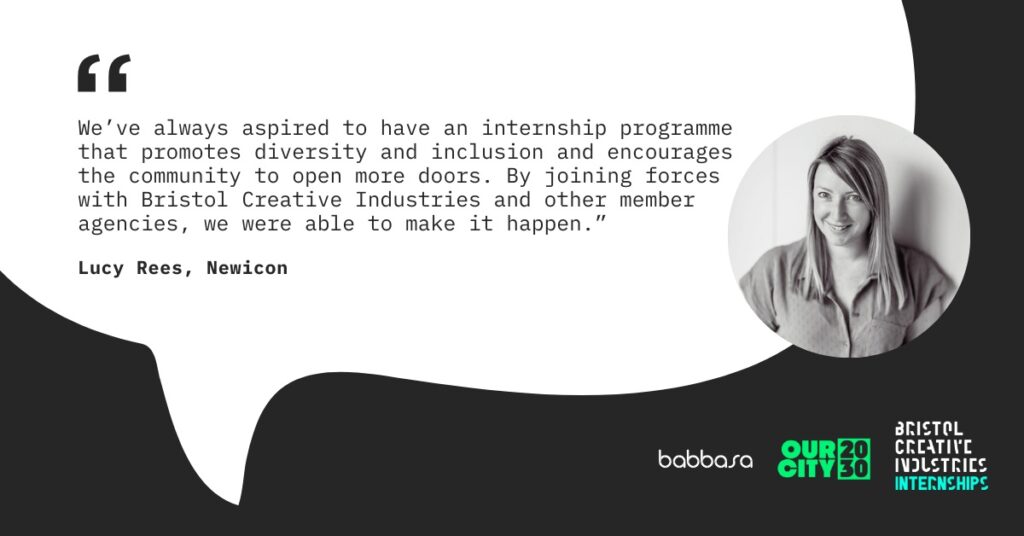
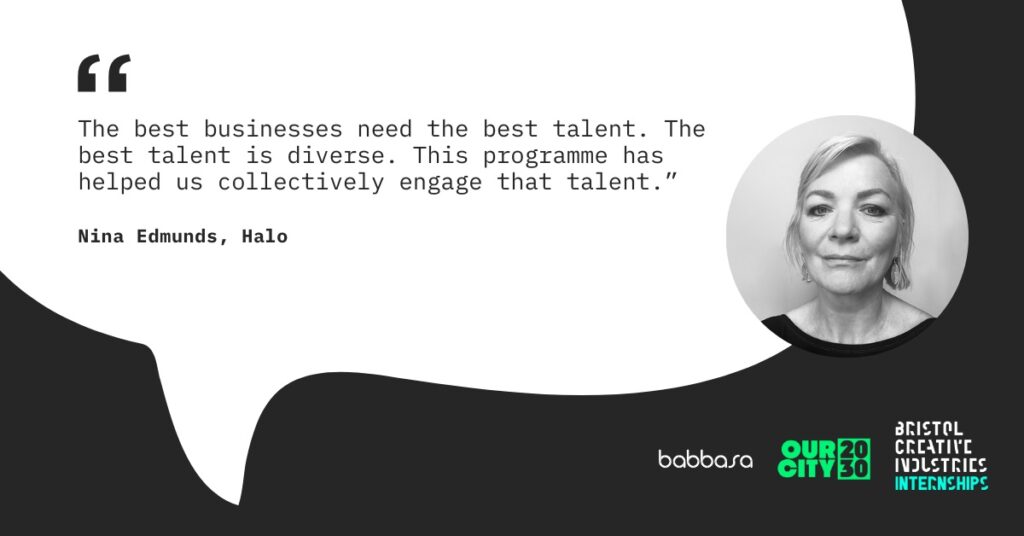
In partnership with Babbasa as part of the OurCity2030 Pathway into Creative & Tech, the scheme is a stellar example of how BCI members can come together to fund and deliver a complex programme of internships and training to support some of the region’s most underrepresented young people.
After a successful pilot in 2023 with 14 brilliant agencies, we are now looking for more creative businesses to join our mission. They will support the second cohort of interns during the next phase of this innovative project.
Participating businesses pay a one-off fee which covers:
✅ Onboarding to the programme including guidance and templates around internship structure/workplan.
✅ ED&I, mental health and neurodiversity training with a focus on working with young people from underrepresented groups.
✅ HR support and mentoring from BCI’s dedicated internship programme manager Clare Leczycki.
✅ Recruitment and employment of two interns over six months.
✅ Visit the Bristol Creative Industries Internship Programme page here.
✅ Join an online information event with Clare Leczycki and some 2023 participants on 1 February at 11am. Register here.
✅ Email Bristol Creative Industries membership manager Alli Nicholas on [email protected]
The deadline for signing up to the 2024 programme is 19 February.
As 2024 begins, Bristol Creative Industries co-chairs Lis Anderson and Heather Wright set out their vision and plans for the next 12 months.
Our unwavering commitment to driving value for Bristol Creative Industries members remains our top priority. We will persist in creating opportunities for our community to learn, connect and grow their businesses. Simultaneously we are dedicated to amplifying our influence within the city and nationally advocating for the views and the needs of our local creative industries.
The highly successful programme of in-person keynote events from industry figures will continue to be a catalyst for inspiring new thinking and encouraging reflection and evolution for business growth.
We encourage leaders to bring their wider teams to these events, which may otherwise be out of reach for smaller organisations. We also aim to diversify our line-up of speakers to represent the broader spectrum of creative industries.
Freelancers constantly say how much they love the networking events and the freelancer drinks at the Square Club in Bristol have grown from strength to strength. We’ll be running more of these events in 2024 on 6 February, 23 April, 11 June, 10 September and 19 November.
Member lunches, recognised for fostering valuable real-world partnerships, will continue due to the positive feedback and opportunities they generate.
There are ongoing opportunities for learning for all Bristol Creative Industries members and their teams through the events calendar. This includes access to Wake Up Call webinars (bi-weekly live webinars with a library of recorded webinars to be launched later this year), a new equality, diversity and inclusion (ED&I) training programme and free legal advice surgeries.
Building on the success of the Bristol Creative Industries Internship Programme pilot in 2023, we’re leveraging the insights gained to make it even better this year year, with enhanced experiences and outcomes for both interns and employers.
We have started recruitment for member businesses to take part in the 2024 programme and we continue to collaborate closely with Babbasa to help us reach young creative interns from underrepresented backgrounds in our city.
2024 will also see BCI working more closely with education providers across the region to grow the creative talent pipeline for our members. We’ll be raising awareness of career opportunities in our sector, facilitating mentorships and feeding into course materials.
As we continue to grow, we’re keen to attract new members from the film and TV industry. With strategic partnerships formed with Bottleyard Studios and Bristol Film Office, we aim to connect our members with the many new opportunities arising from the many high end TV productions coming to the city.
To achieve our ambitious goals, we’re actively seeking new Board members. Find full details here as we look to welcome individuals who share our passion for Bristol’s creative industries.
We wish you all a very happy New Year and look forward to supporting and celebrating creative businesses throughout 2024 and beyond.
To stay updated with all Bristol Creative Industries activities and member opportunities, make sure you’re signed up to the monthly BCI Bulletin.
If you’re not yet a Bristol Creative Industries member, join here. We’d love to welcome you in 2024.
You need to load content from reCAPTCHA to submit the form. Please note that doing so will share data with third-party providers.
More Information