Bristol-based digital design and development agency, Unfold celebrated success on 14th October 2021, taking home the title of “Best Digital Design” at The SPARKies 2021. This was awarded for the transformational work they completed for their clients Sherpr.
The SPARKies is one of the year’s most hotly anticipated tech awards ceremonies in the South West. Since Managing Director, Harry Cobbold won ‘FutureSPARK’ back in 2019, Unfold has been nominated for several other categories (including ‘Tech Leader of the Year’ this year). The ceremony was held at The Showroom on Bath Road and was joint hosted by the TechSpark team and comedian Stephen Bailey (who had everyone in stitches).
Sherpr came to Unfold with two problems;
Unfold built a custom web app, admin portal and marketing site for Sherpr in just 10 weeks. This completely transformed their business. As well as automating all of the time-intensive back office tasks, Unfold also created an editable CMS through which the Sherpr team could update and manage their products without constant developer support.
As well as immediate savings in overheads, Sherpr were also able to process far more clients with their new reliable and automated booking system.
Following the work Unfold completed for them, Sherpr achieved their first ever 6-figure month and hit an annual run-rate of £1.2m.
“From beginning to end, the team at Unfold have been great to work with. Communication has been easy and any changes we needed to make during the build process were welcomed and perfectly executed.” – Andy Watson, CEO of Sherpr
Read more in-depth info on exactly how Unfold helped Sherpr achieve this remarkable step-change in their full case study.
If you have a project or digital platform you’d like advice on, please don’t hesitate to get in touch with the Unfold team.
Gather Round’s second co-working space is now open at 15-16 Brunswick Square, St Pauls.
Purposefully designed for creatives by creatives, the new space supports up to 90 creative professionals; inspiring creative thinkers and doers to connect, collaborate and thrive.
Gather Round is a growing family of soulful, creative workspaces, designed to foster a positive community of like-minded creative people through an open and supportive culture. Gather Round’s flagship workspace, at the Cigar Factory, Southville, opened its doors in 2018 and has since become a hub for creative minds.
The newly renovated grade II listed building in Brunswick Square, St Pauls, looks to build upon their success and expand the creative network across Bristol. The new site will house freelancers, self-employed and micro-businesses, from the surrounding areas of St Pauls, Montpelier, Easton, St. George, Kingsdown, and beyond.
Nestled in the heart of the vibrant St Pauls, the neighbourhood is renowned for its heritage and cultural significance, as well as thriving community spirit. Founders Ben Steers and Jason Smith hope to mirror this ethos within Gather Round’s doors.
“Good culture comes from great people. We’re conscious about the kind of people and businesses that share our spaces; we look for ambitious individuals and companies that share our values of creativity, community, culture, character, kindness and integrity. – Jason Smith, Co-Founder of Gather Round.
The Georgian terrace has been carefully considered to work for the diverse needs of the creative community. It boasts flexible areas with fixed and casual desks, a private 5-6 person studio, meeting rooms, hang-out areas, communal kitchen tables and quiet areas for thinking. It also has a dedicated public event space with room for 50-60 person events.
Membership options are flexible and transparent, with no hidden extras or nasty surprises. Whilst none of the memberships have lengthy tie ins, signing up to a co-working space can feel daunting. This is why – for a limited time only, they’re offering the chance to check out the new space for yourself with a free day pass. Click here to get your free pass.
JonesMillbank, Bristol-based video production company, have been appointed by VisitBritain/VisitEngland to their marketing production services framework.
The multi-supplier framework is made of 190 creatives across 8 lots spanning disciplines such as research, photography, editing, casting, styling, illustration and copywriting.
JonesMillbank are one of 15 suppliers appointed as video production professionals, requiring a proven experience of managing small to large scale video briefs that require a detailed level of planning, casting, producing and production.
The framework will be an enabler of VisitBritain/VisitEngland’s strategy to “make tourism one of the most successful and productive sectors for the UK economy.”
“Like many video production companies we’re passionate about travel and tourism, not just because it’s a privilege to travel with our work, but because of the real impact and influence our films can have on destinations and their audiences” said Russell Jones, Co-Founder at JonesMillbank.
“We already travel across the UK with our work – we’ve literally filmed in all four corners – and so to be appointed by VisitBritain/VisitEngland as one of a select few video production companies is a fantastic opportunity to show off what the UK has to offer to a global audience, particularly as a rebound following COVID-19.”
Running for an initial period of 1-4 years, the framework will be accessed by VisitBritain/VisitEngland staff and partners, and follows JonesMillbank’s work with VisitBristol and other independent travel brands.
***
JonesMillbank are a passionate full-service video production company
They work exclusively in-house with a talented team of multi-disciplined creatives, all the while telling authentic stories long before it was cool for a range of clients such as University of Bristol, Battersea, The Royal Mint and IDLES.
jonesmillbank.com
01173706372
[email protected]
Partnerships with TVPlayer and NetGem build momentum for Go See TV innovative interactive tech for content creators, streaming platforms and ad networks
LOS ANGELES – SEPTEMBER 1 – Go See TV’s mission to revolutionise the way consumers engage with and view content on television and mobile devices has taken leaps forward through recent partnerships with global platform providers including major connected TV platforms such as TVPlayer and NetGem, the company announced today.
Content creators, streaming platforms and advertising networks are using GSTV’s interactive technology to increase viewer engagement and accelerate revenue over streaming devices. In an increasingly mobile-first world, GSTV makes it easy for partners to have multi-screen e-commerce interactivity across platforms including Free Ad Supported Television, IPTV, OTT, streaming networks and social content platforms.
“We are lifelong content creators, so we’re sensitive to the challenges of maintaining creative integrity while leveraging modern monetisation and content consumption opportunities,” said CEO David Greener. “GSTV and our proprietary iCON technology transforms how brand, platform and syndication partners distribute and monetise content.”
Greener noted that GSTV has closed recent deals with major platforms including TVPlayer and NetGem reaching more than 20 million active devices. GSTV has also inked agreements with a growing list of content creators and brands such as The Film Detective, Lonestar and Sportsgrid.
Go See TV is in discussions with dozens of content creators and additional global platforms and anticipates launching 10-plus channels by Q3 2021 and expects to surpass 50 million active devices by the end of 2021.
Greener says the company’s growth and momentum comes from the growing market interest in the iCON platform, which provides a one-stop-shop to manage, distribute and monetise your content.
ENDS
About Go See TV
Go See TV (GSTV) is revolutionising the ways in which audiences engage with and consume content. Harnessing the power of storytelling in more ways than one, Go See TV offers creators, brands, platforms and agencies new revenue and monetisation opportunities while delivering a seamless and highly interactive experience for viewers across multiple devices. Our interactive platform is built for today and tomorrow’s streaming universe and multiscreen consumers. We transform traditional TV advertising into engaging content and mobile-ready e-commerce activity across Free Ad Supported Television, IPTV, OTT, streaming networks and social content platforms.
Join us on Thursday 21st October for a lunchtime Keynote with marketing veteran Anne Thistleton.
We all know that our mind governs the way we see, understand and interact with the world. But until recently we didn’t know how we actually processed all of the incoming data to make sense of the world. Instead, we learned to accept the fact that sometimes we made useful connections and sometimes not.
With the invention of brain scanners in the 1980s and their extensive use for that past several decades, experts have now gained insight into how our mind truly works, how we process information and how we make decisions. Consequently, new marketing concepts from Neuroscience, Behavioural Economics, Neuromarketing, etc. are becoming plentiful. And books, articles, videos, talks, blogs, even neuromarketing consulting and research companies abound. But very few are explaining the basics in simple terms, and very few are clear on the implications for us. What should I do tomorrow to apply this new knowledge to deliver better impact and results for my clients?
Tickets are priced at £30+VAT for BCI members and £45+VAT for non-members.
Anne Thistleton is the Founding Partner of LIGHT Consulting and has spent over twenty years as a Marketing Practitioner in the field of Mind Science. While leading strategy for The Coca-Cola Company in South Africa, she pioneered this work to first re-vitalise relationships (and the business) in the South Africa townships then to provide the foundation to the Open Happiness campaign. Since then, she has worked across the world and across industries, developing specific marketing-focused Mind Science applications, and then testing and improving them with multi-national companies, advertising agencies, foundations, even political parties.
Over the years, Anne has worked with many of the world’s leading cognitive psychologists, neuroscientists and behavioural economists all focused on what does it mean to marketers and creatives, and how can we apply it now. By using her expansive marketing experience, she has been able to identify and make practical the most relevant and valuable aspects of Mind Science for consumer and B2B marketers.
Book your ticket to the event with Anne Thistleton here.
ADLIB certified as a B Corp in September 2019. As we approach our 2nd anniversary, it has become abundantly clear that certifying is the start of the journey. A starting point from which to measure, guide and improve.
As a B Corp Ambassador, and the person that introduces B Corp to each of ADLIB’s new starters, I’m continually reminded of the complexity and breadth by which a business and its stakeholder group are measured. There isn’t a light switch you flick on and become a B Corp, it’s a living and breathing thing which fundamentally comes down to considering each and every stakeholder that comes into contact with your business and the planet we live on. If that care is authentic, the rest will fall into place through good practice, impact measurement and using business as a force for good.
We’re immensely proud of being one of the first recruitment businesses to achieve B Corp certification. From conversations with several CEOs / MDs of well-respected digital and technology recruitment firms over the past 12 months, we should be seeing more certifications imminently, a very positive move for the industry.
Becoming a B Corp has also positively progressed our client proposition, we’re fortunate to work with an ever-growing portfolio of purpose driven organisations, with which we share underlying beliefs in personal and life values. We’re also proud to have turned away clients from the defence and gambling sectors.
It’s our belief that B Corp should become a normal part of every company’s everyday business. We know that an inclusive workplace brings engagement, and creating an environment of involvement, respect, and collaboration ultimately drives more business value. This has proven itself beyond words for ADLIB as we stand here today readying for recertification in 2022.
This article was originally published on the ADLIB Blog.
For almost a decade, Alli Nicholas has been at the heart of the Bristol Creative Industries community as our membership manager. Dan Martin had a chat with Alli about her role, the benefits of membership, how to make the most of being a member and more.
“I spent 20 years in recruitment, the last 10 of which were with Bristol recruiter Liz Gadd. She ran a business called Goddard Gadd which I helped her set up. She sold and exited the business and I stayed. I then set up my own recruitment agency which in the end wasn’t for me.
“I used to recruit for Fraser Bradshaw, who at the time was the MD of McCann but has since set up saintnicks. We stayed in touch after I left Goddard Gadd. He was also CEO of Bristol Media (the former name of Bristol Creative Industries) and I was chatting to him one day and he said he needed somebody to encourage members to renew and keep on top of the admin side of things. I did that for 10 hours a week to start with, it increased to 20 hours and then became a full-time job. That was nine years ago.”
“I’ve always officially been the membership manager and that is very much about looking after the needs of the members, going out to find new members and talking to them about the organisation. But we are a very small team so I also get involved in everything else including organising and promoting events, dealing with logistics and helping with the content on the website and social media. Many people might look at the website and get the impression that there’s a big team of people behind it but we are a small team and we work in a very agile way.
“No two days are the same. That’s what makes it really enjoyable. I absolutely love what I do. I’m hugely passionate about BCI and what it stands for. Our members are from such a broad range of creative industries so I never get bored. One minute I can be talking to the likes of Aardman about what they’re doing and the next it’s a freelance member with the seed of an idea who is thinking about setting up a business. They’re poles apart but each is exciting in their own way.”
“If you’re asking me to pick my favourite member, that’s like picking my favourite child! Everybody’s doing great things in their own special way.
“Back in 2016, we ran a 10th anniversary event. We produced a book and asked members to submit the projects they were most proud of. I remember flicking through the book and thinking “I can’t believe this amazing work is coming out of Bristol”. Things like the Waitrose carrier bags at the time were designed by an agency in Bristol and the branding for the Royal Mint was designed by a company in the city.
“If I had to mention a few examples of our brilliant members though, one is Seeker Digital, a company named 25th in Deloitte’s Fast 50, which showcases the fastest-growing technology companies in the UK. I was told about them, got in touch and they became a member. It’s great to have a company like that as part of the community.
“Over the last few years, we’ve seen a lot of members focused on sustainability which is an important and very topical issue. One of them is Enviral, a comms agency that helps ethical brands get into the spotlight.
“What is particularly pleasing is when you see somebody who signs up as a freelance or start-up member and then goes through a journey of growth. A company that has done that is Atomic Smash. When they first joined it was just co-founders David Darke and Piers Tincknell. Now they’re a team of around 16 people and they have moved through the membership levels. It has been great to watch them grow.”
“I think first and foremost, we’re a connector. We say we help members to learn, grow, and connect. Connect is the key word here though because it’s through connecting that people learn and grow.
“We connect people on lots of different levels. It includes our jobs board where we connect job seekers to opportunities and businesses to new talent. We connect people through peer to peer networking at events where they can share their challenges. We connect businesses to one another for collaboration and also connect businesses to brands and agencies looking for their services
“We are a community of people who have a common interest of either working in or being interested in the creative industries in Bristol and surrounding area. We’re the central hub that brings everyone together.”
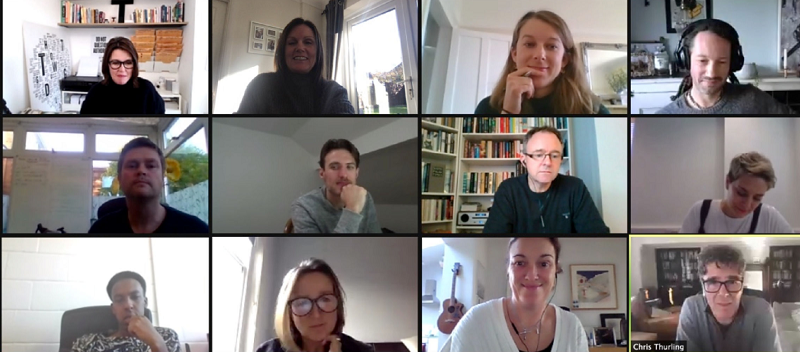
“As soon as lockdown hit, we recognised the need to connect people so that they didn’t feel completely isolated. We launched a Pay It Forward campaign and encouraged members, and some non-members, to step up and offer support and guidance. We had a regularly updated blog post with offers of free help including mentoring, coaching and tips on how to manage cashflow.
“We also did a number of virtual events throughout lockdown. We had never done virtual events before so having to suddenly put on online events was a steep learning curve for us. But actually, it worked really well and they were very popular.
“We did lots of COVID-19 crisis management workshops including how to deal with clients who were reneging on their contracts, the government financial support that was available and tips on how to manage staff remotely and deal with the furlough process. We also did a preparing for recovery seminar, which was so popular that we ended up running it three times.
“People had varied challenges but we were essentially all in the same boat and navigating the same storm so we were keen to help members.”
“There are lots of different drivers for why people decide to join Bristol Creative Industries. For many people, it’s the jobs advertising on our jobs board. As a member, you get unlimited free job advertising on what is the go-to board for creative industry roles in the South West.
“There are also company branding and profiling raising opportunities with the ability to create a profile on the website and appear in the Bristol Creative Industries member directory. It is used by lots of brands looking for the services that our members offer.
“As a member, you can self-publish content on the website as often as you like. That content sits on your own profile and we promote the best posts to the homepage and main news feed and share some on our social media channels and monthly newsletter. If you’re doing some work that you’re particularly proud of, you have great client case studies or you have some thought leadership or business advice, it can all go on the website. Share quality content and we’re much more likely to promote it!
“Our business members have free access to the Engine Shed co-working space in Bristol which is a really valuable benefit. It provides a space away from the regular office or home. As a BCI member, you can use the business lounge and sign in up to two guests at a time. It’s a great space and a real hive of activity. You’re guaranteed to meet like-minded people there.
“We have a programme of events throughout the year and members receive a discount on tickets or free attendance at member exclusive events. It includes networking, training workshops, inspirational keynotes and peer to peer roundtables. Going forward, we’ll have a blended approach to events; some of them will be face to face and some will be online.
“Finally, members can access lots of other perks such as hotel, restaurant, meeting room and away day discounts.”
“Get involved! Like with anything in life, the more you put in, the more you get out. If you pay your membership fee and don’t populate your profile, you might not get the attention you’re looking for. But if you do populate your profile, you’re much more likely to make connections and generate leads. Make your profile stand out and show how you are an appealing organisation or individual to work with.
“Come to events and you will absolutely meet people there who could potentially end up working for you, give you a lead or share best practice. Our Members’ Lunch events have always been one of my favourite events as you see those light bulb moments when someone is talking about what they do and for someone else the cogs start turning and they think ‘this person can help me’.
“Join, be active, engage on social media, keep the conversation going, make connections and you will absolutely see a return on investment for your membership fee.”
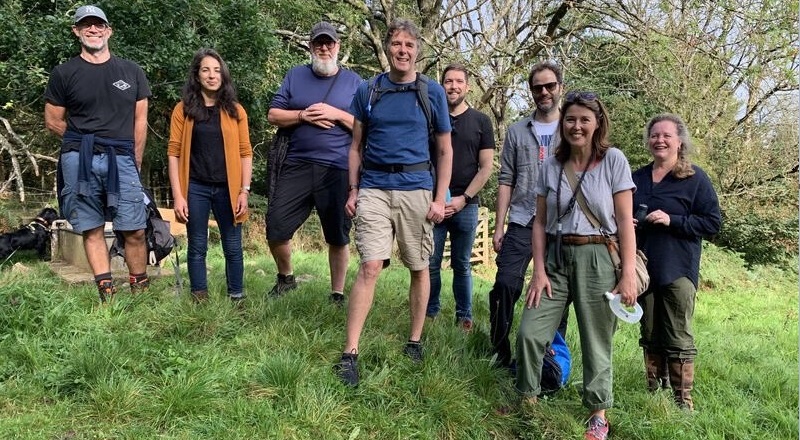
“Last Friday we had our inaugural BCI Walk and Talk, which is a member-exclusive outdoor networking event and a three hour walk in the beautiful Mendips countryside. It went really well and we plan to hold it regularly.
“We’ll continue to run our Members’ Lunch events monthly. They will stay on Zoom for the time being but we hope in the not too distant future we’ll get back to doing them face to face. The next Members’ Lunch is on 14 October.
“On 22 September, we have the first in a series of five diversity and inclusion (D&I) workshops. It’s a subject everyone is talking about but lots of people aren’t sure where to start. The workshops, delivered by Morag Ofili and Mette Davis, look at the business case for D&I and how to embed it into your business’ vision, mission and values. You’ll end the series by writing an actual plan that you can implement straight away.
“We’ve got a keynote on 30 September with Andy Nairn, who has been voted by Campaign as the UK’s number one brand strategist for the last three years. We’re really excited to have him talking to us about his new book, Go Luck Yourself, which discusses the role that luck plays in building brands.
“Finally, we’re putting the finishing touches to October’s keynote with Anne Thistleton, an experienced TED talker who talks about the role the mind and psychology play in marketing decisions. Keep an eye on the events section for details.
“We’re always keen to hear from members so if you have ideas for event subjects we should cover or speakers we should invite, get in touch and we’ll do our best to make it happen!”
Not a member? Join today! Fees start at just £4.50 a month or £45 a year.
Atomic Smash is pleased to announce the sponsorship of a desk space at Spike Island Workspace – the same co-working space where Piers Tincknell and David Darke, co-founders of Atomic Smash, first set up shop as WordPress and WooCommerce specialists over a decade ago.
Atomic Smash will cover the full desk space costs for 12 months so that the recipients can concentrate on developing their business, with the option – but no obligation – to continue as users in Spike Island Workspace after the sponsorship ends.
Spike Island Workspace is the perfect location for emerging or micro-businesses who are ready to develop and establish themselves further. Working from the space expands your connections and opportunities for growth, as you join a dynamic and diverse community of artists and creative businesses.
This sponsorship is aimed at:
The sponsorship is open to all creatives who would benefit from the opportunity and we welcome and encourage applications from people of all backgrounds.
Through your application, you will be able to tell us how this opportunity could make a significant difference to your future. Please also describe any access requirements you may have within your application.
Recently refurbished, Spike Island Workspace is located close to Bristol harbourside and in a busy building offering art exhibitions, artists’ studios, offices, production facilities and a café. Find out more about the space.
Monday 18th October 2021: Application closing date
Monday 25th and Tuesday 26th October 2021: Interview dates
Friday 29th October 2021: Spike Island Workspace visit
Monday 8th November 2021: Sponsorship start date
Friday 4th November 2022: Sponsorship end date
Would you benefit from this opportunity? Apply here!
In our previous blog, we explored a joint report from LinkedIn and the B2B Institute, ‘5 principles of Growth in B2B Marketing’ to find out how businesses make their purchasing decisions.
In the second part of this series, we’re exploring the case for brand memorability – or mental availability – and why you should consider a route to B2B fame.
Expanding your customer base
Acquiring new customers is expensive.
Many B2B companies believe increasing loyalty is the most profitable way to grow their businesses. Others focus on acquisition strategies, targeting new key accounts they want to penetrate.
The jointly commissioned report ‘5 Principles of Growth in B2B Marketing’ by LinkedIn and the B2B Institute shows that campaigns which talk to both new and existing customers – also known as reach strategies – are the most effective.
In fact, the report’s data reveals that those relying on a loyalty strategy alone showed a zero-success rate. Loyalty tends to be a side-effect of market share, and brands with a high penetration tend to have better loyalty rates.
Please see original article for picture: https://www.proctors.co.uk/knowledge-hub/b2b-marketing-masterclass-part-2
So that’s the science behind B2B decision making. But is it rational or emotional? The answer, according to psychologists, is that we’re all human. and our thought processes follow the same basic patterns.
One of these is our tendency to use mental shortcuts to reach a decision. NobelPrize winner, Daniel Kahneman, famously put it this way:
“Human beings are to independent thinking as cats are to swimming. They can do it, but they prefer not to. The brain is largely a machine for jumping to conclusions.”
Essentially, when presented with choices, or asked a question, we usually prefer to select the answer which comes to mind easiest. You may have experienced this yourself when put on the spot. Psychologists call this ‘mental availability’.
For brands, ‘mental availability’ has two levels.
The first level is awareness.
Your brand will have lodged in your customers’ memories, and they’ll recognise your name.
However, awareness will only get you so far, and the most you can expect is to be shortlisted from the long list of potential choices. To reach the top of your customer’s mental availability, your brand will need to level up.
The second level is fame.
Take IBM, for example.
Everyone knows their name, and I probably don’t need to remind you of their famous line: Nobody got fired for hiring IBM. This single creative line was repeated over and over again, forming an emotional connection that made it easy to make the choice. Long after they campaigned it, we still remember it, talk about it, share it.
And here’s the data which proves the point.
Please see original article for picture: https://www.proctors.co.uk/knowledge-hub/b2b-marketing-masterclass-part-2
Success isn’t a contest between lead generation and brand in B2B marketing. We can see that winning B2B companies apply both in their marketing mix. But if your Sales Director still isn’t convinced by the data, perhaps this story will help.
You’ve successfully launched your lead generation campaign. In fact, it’s been so successful that your sales team have followed up with an excellent meeting with Key Prospect Biz. Your salespeople do a great job of pitching the benefits of what you offer, and your brand makes it to the Key Prospect Biz’s shortlisting stage.
But now, your salespeople have left, and things go quiet. Key Prospect Biz’s decision goes to committee, and you’re not in the room to influence the conversation.
It’s been a while since your guys’ presentation, and human memory is short. This isn’t the final stage, but you know it’s more than likely they’ll use the easiest route to jump to their conclusions. This is where brand awareness will likely drive their mental availability and get you on the shortlist. Great news!
Now it’s a three-horse race. You’re each invited to pitch to a panel of C-suite decision-makers and the influencers who got you this far.
There may be an upstart challenger brand in the running for comparison, but the other two will be recognised brand names.
Now no-one doubts your abilities to work the room as a great salesperson. But it’s a fair bet that the famous brand amongst the pack will already have had an impact on the C-suite. In fact, they’ve probably already jumped to a conclusion before you enter the room.
So, which of the three would you rather be?
Ah yes, your Sales Director says, but our ABM campaigns have made sure that everyone in the room knows who we are and what we stand for.
True. ABM is by far the most effective B2B sales activation tool in your armoury, and a good campaign will have got you this far. But it won’t have made you famous.
Fame takes time to grow. The famous brand will have been imprinted in the minds of those executives consistently over and over again. Talked about with colleagues. Acknowledged as leaders in their sector. Collectively famous for what makes them great.
It will have made them the first name that springs to mind.
Your sales director still doesn’t buy it? OK, here’s a final question for them. Why is it that when successful salespeople move jobs, they’re usually tempted to work for bigger brands to advance their career?
If you’re still not getting anywhere, maybe it’s time you thought about moving jobs to a bigger brand yourself! (Only kidding.)
If you’d like to talk about supercharging your brand strategy with the latest industry data, or to discuss your creative marketing requirements, get in touch with us today at [email protected].
Heather Wright is an executive producer and creative industries consultant with 30 years of experience. She spent 22 of those years at iconic animation studio and Bristol Creative Industries member Aardman Animations.
In 2020 Heather left the company that has given us legendary characters like Wallace and Gromit and Shaun the Sheep to launch Springboard Creative. She also joined the Bristol Creative Industries board.
Dan Martin speaks to Heather about her career, the storytelling and employee culture lessons other businesses can learn from Aardman, what she is up to now and why is supporting the work of BCI.
“The 1980s and 90s was an extraordinary time to be working at advertising agencies. They made you feel like anything was possible. I worked at Saatchi and Saatchi which had the slogan “nothing is impossible”. Although that was sometimes frustrating to try and deliver to, it did mean you were always looking for a creative solution to make something happen. It wasn’t just acceptable to say “this can’t be done”. I also worked for Chiat Day and their slogan was “good enough is not enough”.
“It made me realise that if you have the confidence to know that there could be a way around a problem, you just need to find the right questions, understand the motivation or think about the other person’s point of view and what makes them tick. I learned a lot about creativity, both artistically and in business, during that time.”
“They advertised for someone to run their commercials team. I thought “animation, that sounds good because I know nothing about it so if they want someone to stay after six o’clock and do some animation problem solving, they won’t ask me. But I do know a lot about what Aardman should be doing in the advertising world!
“I applied for the job and got it. I grew as the company grew. My whole experience was growing from that starting point to becoming an executive producer and working on a breadth of different activities. I was instrumental in setting up their computer animation team, I ran their immersive team for AR and VR games and I worked on a big Wallace and Gromit concert at the Royal Albert Hall.
“From not knowing about animation, I soon learned lots and I very quickly became an absolute devotee of the art form. I was lucky to be surrounded by other people who also absolutely loved it and because it is a world leader in animation, the calibre of people who came to work there was always high. You were constantly surrounded by great creative thinkers, problem solvers and technicians. Everybody grew together; that idea of a rising tide lifts all boats.
“Aardman is very good at making sure everyone feels involved in all the parts of the company. If there’s a new show being worked on, it is shared with the whole company. There were issues around secrecy but in the end, we decided we just needed to trust people because it is in all employees’ best interests for the ideas to be kept confidential.
“During a big project, we were aware that employees’ families weren’t seeing them for months on end, so getting friends and relatives involved was crucial to maintaining the wellbeing of all the staff in the studio. When a big movie was finished, there would be a friends and family tour day, and after the production was released, we would take over all the screens at Vue Cribbs Causeway.
“The business also encourages everyone to come up with creative ideas, not just the creative departments. I know of a couple of ideas thought up by somebody in the finance team.”
“Employee ownership was a vehicle that allowed Peter Lord and David Sproxton [the founders of Aaardman] to step out of the day-to-day running of the business and to ensure its independence. It could very easily have been bought by a big channel or network and have just become part of somebody’s balance sheet. Independence has always been a strong tenet of what the company is about; the ability to make their own shows, make their own decisions and to run it as they want to. When Pete and Dave decided to take a step back, employee ownership worked well because the company had always been about everybody contributing.
“It’s not a super easy ride becoming an employee owned trust, but I encourage any company that’s thinking about it to consider it very seriously. Everyone becomes a partner and there is a change in the culture because it makes people feel like they really do have ownership and they really do have a say. We set up a staff council for employees to be involved with strategic decisions and to have input on how things were done. It was much more than somewhere for people to go if they had a complaint.
“Companies that have that kind of approach with values that everybody should share in the success are proven to be more successful businesses.”
“Nobody wants a yes man on board and everybody wants an intelligent conversation. All you can do is be your authentic self, know that your product is good, believe that your product is good and be able to explain why it is good.
“Work with the client as a team and be open to their ideas as much as you expect them to be open to yours. Build a very strong collaborative working relationship with a shared vision. I always made sure that the vision of the people inside Aardman and the vision of the client were going in the same direction. The path to get there may be rocky and can take different turns at different times from either side, but that’s ok as long as everyone is heading in the same direction and knows where they want to get to.
“Create cohesion, build true working relationships and be fun to work with.
“The other tip I would advise is if a big brand wants to work with you but you don’t think you can properly answer the brief because of time or money, say so and don’t take it on. If you do, you’ll end up doing a bad or half hearted job and not delivering something you’re proud of. The client will be disappointed in you and never come back to work with you.”
“They believe in quality of craft, excellence and humour. They believe in themselves and the stories are told from a very British point of view because that’s who they are. They don’t pretend to be American; it’s always about authentic storytelling,
“They also focus strongly on independence and collaboration. Those are the kind of things that attract people. It’s always about the quality of the craft, the quality of the thinking and the quality of the ideas.”
“It took me about two years to make the decision. The company was going through a change and I was starting to have ideas. I thought to myself “have I got anything else in me other than working for Aardman for the rest of my life?” I had an idea and I just needed to find out if it would work.
“I’m still friends with them all at Aardman and I’m proud to be associated with the company.”
“The main thing I am working on is an animation app called Magic Fox. It enables children to make animated personalised, real time movies of their own. It’s about developing creativity in five to seven-year-olds. I’m working with two partners and we’re currently seeking seed funding.
“I also still get involved in exec producing and I’m working on a couple of really big projects that I can’t tell you about right now! The other string to my bow is working with Innovate UK Edge, who support small creative businesses to get started with their strategy.
“I love helping people to fulfil their potential and that’s what all of my endeavours are about.”
“The government has realised that the creative industries is a huge earner for UK PLC. The trouble is they haven’t really known how to invest in it because unlike most other industries where you end up with huge companies, most of the creative industries are small or micro businesses. The idea of how you actually support innovation in the creative industries is something that they are continuing to grapple with.
“Innovate UK Edge recently ran the new Creative Industries Fund which provided a small amount of start-up money. It’s very unusual to have such a broad funding competition that appeals to lots of people.
“That particular scheme is now closed but knowing Innovate UK Edge and the way they work, if lots of people applied and they got some good projects out of it, they will run it again. They will also run a scale up programme of some sort because they want to progress people from start-ups to scaling up to a growth phase and being investable. That proves that the innovation works.
“If you can kind of get into the system, they will support you through all phases of growth. Their ears are open right now and want to know how best they can do it. They are absolutely looking to have conversations with small and micro businesses in Bristol and the south west about what innovation means to them. It’s a unique time to get involved.”
Find out more about Innovate UK Edge here. You can also follow Innovate UK Edge South West on Twitter.
“The pandemic has been a disaster for performing arts venues in particular but I think the government has realised that there is huge value in culture due to the impact of having lots of places closed.
“People gain emotional intelligence and learn about how to be in the world through storytelling. The creative industries bring meaning to the world, whereas science and technology bring facts. The question is how do you quantify what that meaning and understanding is? Is it through storytelling, different types of apps, watching something on your phone etc? They are sometimes intangible ideas that are hard to grasp hold of, but that’s what people in the creative industries do; they make the intangible tangible.”
“The creative industries rely on freelancers and small businesses. Anything we can do to encourage people to start their own business will lead to success for the whole of the creative industries and the UK. I’m absolutely in favour of those kinds of measures.”
Read more about the report here.
“I’ve always been really interested in the Bristol creative scene. At Aardman although we believed in supporting Bristol, most of our customers weren’t Bristol based but I was always interested in what was going on it the city and went to events like First Friday at the Watershed.
“I could see cities like Manchester and Leeds getting ahead but Bristol has a huge amount to offer. I’m really keen to support Bristol to become a stronger creative industries hub than it already is. It needs to punch above its weight and I want to be part of making that happen. Bristol Creative Industries is a vehicle to galvanise us as a city and make sure that we have a strong ecosystem that supports each other to reach out beyond our city.”
“It absolutely needs to happen. You get a better quality of idea when you have lots of different windows on the world in front of you. Everybody comes with a different window and a different viewpoint. The more ideas you have in the room from different places the better. That’s the problem with the Westminster bubble; they talk to people like themselves all the time. The only way to break out of the bubble is to go further and have a greater diversity of ideas. That comes from a greater diversity of people including ethnic diversity as well as age, people who are less able bodied etc. It’s all about having people with something different to bring which is not the usual employing people in your image which is often the worst thing you can do.
“It will take time. Nobody wants to get a job just because of their ethnicity or age; they want to get a job because they are the best person to do it. It requires grassroots support from the industry. The creative industries wants to do it, but they sometimes struggle to know how to do it. That’s another area where Bristol Creative Industries can help by endorsing programmes that are working and advising on how you go about creating a more diverse workforce.
“We’ve got such a diversity of people in Bristol and the wider region. We have the opportunity to test some of the ideas and prove that they work.”
“Start with a character. Think about how they would do a particular thing, what type of issues that kind of person would have, who are their friends and where do they live. You will come up with a much stronger story that way than saying, for example, “wouldn’t it be great if our mobile phones could all talk to each other on the table.” That’s an idea but it isn’t that interesting. But what about a tiny little character that has a big nose who’s really good at sniffing out unusual smells or situations. Maybe he’s frightened so he hides a lot. Or maybe he just gets really huge so how does he deal with what happens to him. Starting from the point of view of a character is much better than starting from a plot or a set of circumstances.
“Tell stories that you know, understand and are authentic to you. There are universal truths such as love, hate, anger and jealousy that everybody in the world, no matter where they live, understand. Apply those to your own set of circumstances and those values will still come across. It will make the story interesting for everyone because they will recognise the love, hate, jealousy and anger, but they will see it set in the context that makes sense for the storyteller. If you start to tell stories from a place that you don’t really understand, that’s always going to be much harder.”
Not yet part of the Bristol Creative Industries member community? Join today.
You need to load content from reCAPTCHA to submit the form. Please note that doing so will share data with third-party providers.
More Information