The West of England is one of six priority regions to benefit from the government’s £150 million Creative Places Growth Fund. The West of England Mayoral Combined Authority will receive £25m of the funding to support the region’s creative industries.
For three years from April 2026, the funding will focus on four themes. The three priority sectors are screen, createch and music but other areas of the creative industries will be supported too.
Plans being discussed at the moment are as follows:
For full details watch this video:
You are currently viewing a placeholder content from YouTube. To access the actual content, click the button below. Please note that doing so will share data with third-party providers.
West of England Mayoral Combined Authority is running several events so people from the creative industries across the region can share their views on the plan for the fund and other ideas. The events kicked off with UWE Bristol‘s Bristol and Bath Screen Summit.
Helen Godwin, mayor of the West of England, opened the event and said:
“The Creative Places Growth Fund is a real vote of confidence, and the West of England Combined Authority is putting on a series of sessions with different parts of the sector over the coming weeks and months to help shape how we invest.
“The team are really keen that it is an inclusive exercise, and that we hear from the people who are doing all the amazing work, so we know what we need to do and how we best spend the money.
“We do of course have some ideas. The fund will invest to drive growth, innovation and global competitiveness across our creative industries. We think that the funding should include targeted business growth programmes such as international trade and investment initiatives to expand our global reach.
“The fund can also provide creative businesses and freelancers with access to diverse types of finance and support for businesses to adopt new technologies and to innovate even further.
“Sector specific development could include the establishment of a new screen development body, a regional production fund and a music development programme.
“Alongside these initiatives, the fund can address skills gaps and deliver large scale events to boost regional profile and the visitor economy.
“The money should also upskill workers, and it also should be used to attract more private investment to boost production here.
“We believe that if we work together, we can strengthen the west’s position as a world leading creative hub, but it can only happen with you at the heart of it. We are here to support, to help, to steer where necessary, but it must come from within the sector. I’m so excited to work with you all.”
Events have taken place in Bristol, Bath and Weston-super-Mare.
There’s an upcoming online event for South Gloucestershire businesses on Tuesday 2 December at 3pm. You can register here.
You can also submit feedback about the fund here.
To stay updated on the Creative Places Growth Fund, sign up to the mailing list.
Chancellor Rachel Reeves delivered the much anticipated 2025 Budget on 26 November.
Making announcements that included £26 billion of tax rises, Reeves said she was “asking everyone to make a contribution”, although she wanted to “ensure the wealthiest contribute the most”.
Following months of speculation over what the speech would include, Budget day itself was a chaotic one as key details were revealed before the chancellor spoke in Parliament due to the Office of Budget Responsibility accidentally publishing their economic and fiscal forecast early.
Read below for the measures of interest to creative businesses and comment on this LinkedIn post with your views on the Budget.
The mentions of the creative industries in the Budget speech and the full Budget document were:
The Budget confirmed the allocation of £150 million Creative Places Growth Fund for six priority regions including the West of England. Each region is being provided with £25 million to support the creative industries.
Find details for the plan for the funding in the West of England and how you can contribute to the discussion around how the money should be spent here.
In the 2024 Spring Budget, the government announced that eligible film studios in England will receive a 40% reduction on their gross business rates bills until 2034. The 2025 Budget said this relief will continue at the current level.
Discussing the new National Wealth Fund, the Budget said it has £27.8 billion in “public capital available to invest in a range of capital-intensive projects, businesses and assets” which “will support the delivery of the wider modern industrial strategy, including in defence, life sciences, and creative industries”.
The British Business Bank (BBB) has published its five-year strategic plan for its increased financial capacity of £25.6 billion. It includes support for “promising businesses” in the government’s modern industrial strategy eight priority sectors (IS-8) to scale.
Creative industries is one of the priority sectors as outlined in the creative industries sector plan.
The BBB will also deliver 85,000 new Start Up Loans, commit £150m to Community Development Finance Institutions to support underserved groups, increase regional investment and support the development of regional science and innovation clusters and new regional angel networks.
As previous announced government investment in R&D will grow to £22.6 billion by 2029-30. UK Research and Innovation (UKRI) will direct £9 billion over four years to IS-8 sectors, including £4.5 billion for innovative UK companies in those sectors.
Firstly, Innovate UK will launch a new £130 million Growth Catalyst programme, offering grants and tailored support to frontier companies that have already attracted investment. UKRI’s £500 million R&D Missions Accelerator programme will launch challenges to drive economic benefit from the UK’s cultural assets and to cut construction costs for public infrastructure by 10%.
Arts and cultural businesses will be interested in the announcement that mayors in England will be given new powers to introduce a visitor levy on overnight visitor accommodation in their area. It will fund further investment in growth locally, including the visitor economy. The government is consulting on the levy.
Helen Godwin, mayor of the West of England, said:
“Residents and visitors alike know how special our part of the world is, from our people to our culture to our nature. Tourism is now worth a record £2.7 billion to the West’s economy, which is a key industry for our new Growth Strategy over the coming decade.
“These new powers are a real vote of confidence in our region taking more control of our future. Proceeds from an overnight visitor levy, that people from across the West are used to paying on holiday ourselves, have the potential to support and enhance the sector’s businesses and workers – including with better transport options.”
The government will provide £5 million to state-funded secondary schools in England in 2026-27 to increase book supplies.
The following are announcements not specific to the creative industries but are of interest to businesses and freelancers in the sector.
The freezing of income tax and National Insurance personal thresholds, which was due to end in 2028, will be extended to 2031. This will bring more people into higher tax brackets over time.
The ordinary and upper rates of tax on dividend income will increase by 2 percentage points from April 2026. The dividend additional rate will not change.
The tax rate on savings and rental income will also increase by 2 percentage points across all bands from April 2027.
From 1 April 2026, the National Living Wage for over-21s will increase by 4.1% to £12.71 per hour, the National Minimum Wage for 18-20 year olds will increase by 8.5% to £10.85 per hour and the rate for 16-17 year olds and apprentices will increase by 6.0% to £8.00 per hour.
The accommodation offset will increase by 4.1% to £11.10 per day.
The 5p cut in fuel duty on petrol and diesel will be extended until September 2026. It will then gradually return to March 2022 levels by March 2027.
A 3p per mile charge for electric car drivers will apply from April 2028.
Plug-in hybrid vehicles will be charged 1.5p per-mile.
Capital gains tax relief on business sales made to employee ownership trusts will be cut from 100% to 50%.
National Insurance will be charged on salary-sacrifice pension contributions above an annual £2,000 threshold from April 2029.
The new tax will apply to properties worth more than £2 million. It will be £2,500 for properties worth £2m to £2.5m and up to £7,500 for homes worth £5m.
Training for apprentices under-25 will be made free for small and medium-sized businesses.
Funding of £820 million will provide a guaranteed six-month paid work placement for every eligible 18-to 21 year old who has been on Universal Credit and looking for work for 18 months.
There will be permanently lower tax rates for over 750,000 retail, hospitality and leisure (RHL) properities. The RHL multipliers will be 5p below their national equivalents, making the small business RHL multiplier 38.2p and the standard RHL multiplier 43p in 2026-27.
It will be funded by a new higher rate on properties with a rateable value of £500,000 and above. The government said this includes the warehouses used by online giants such as Amazon.
From 1 April 2026, business rates bills in England will be updated to reflect changes in property values since the last revaluation in 2023. The government said half of ratepayers will see no bill increases, including 23% seeing their bills go down. For those seeing bill increases there will be a support package worth £4.3 billion over the next three years.
The VCT and EIS company investment limit will be increased to £10 million, and £20 million for Knowledge Intensive Companies (KICs). It will also increase the lifetime company investment limit to £24 million, and £40 million for KICs.
EMI will be expanded, with the company share option limit increasing from £3m to £6m, the employee limit increasing from 250 to 500, the lifecycle limit increasing from 10 to 15 years and the gross asset tests increasing to £120 million.
The government has launched a consultation to gather views and evidence on tax policy support for investment in high-growth UK companies.
From 6 April 2027, the annual ISA cash limit will be cut from £20,000 to £12,000. The aim is to encourage more people to invest in stocks and shares ISAs
Savers over the age of 65 will continue to be able to save up to £20,000 in a cash ISA each year.
Top image by Simon Dawson / No 10 Downing Street
Bristol’s legendary Slapstick Festival celebrates its 22nd year with an all-star lineup.
Inaugural ‘GOLDEN BAZ’ Award in honour of Barry Cryer to be presented to Armando Iannucci, reuniting stars of In The Loop and The Thick of It
World Premiere of Bob Cryer’s short film, Joke
Wednesday 4 – Sunday 8th February 2026
Fans of comedy and silent film will have plenty to choose from at the 2026 Slapstick Festival. The beloved festival, now in its 22nd year, has become a key event in Bristol’s cultural calendar, with its eclectic lineup of new, classic and silent comedies, as well as stars of stage, screen and the music world gathering to celebrate cinematic magic and merriment.
The cast of The Thick of It and In The Loop will reunite in honour of writer-director Amando Iannucci, who will be the first recipient of the Golden Baz Writers Award during a special event where he will look back at his remarkable career as a writer, director and broadcaster – exploring his inspirations and creative process. Created to honour the enduring comic legacy of Barry Cryer, the Golden Baz celebrates comedy writers whose work reflects his values: wit, warmth, originality and a deep commitment to the craft of making people laugh.
Continuing the tribute to Barry Cryer, Slapstick also features the World Premiere of Joke, directed by his son Bob Cryer. Bringing 10 of his gags to life as a sketch film, Joke includes Dame Judi Dench, Sir Stephen Fry, Alison Steadman, Harry Hill, Rebecca Front, Les Dennis and Miles Jupp (amongst others!) in the cast.
Satire is a theme of this year’s festival, which also features a rare live discussion with Alexei Sayle revisiting his groundbreaking 1980s television series Alexei Sayle’s Stuff. In conversation with Robin Ince, Alexei will reflect on the chaotic creativity behind a show that redefined British TV comedy with its fearless mix of surreal sketches, biting satire and political edge. Nearly forty years since it first exploded onto BBC2, Stuff remains as bold, subversive and brilliantly funny as ever.
‘In curating this programme, my aim has been to remind us why comedy, and laughter, matter. At a time when public discourse can feel increasingly brittle and polarised, satire allows us to explore difficult questions without retreating into anger or fear. Laughter disarms. It connects us. It opens a space for empathy and self-reflection where accusation and defensiveness might otherwise reign.
~ Chris Daniels, Festival Director
Celebrating 20 years of his creation on the small screen, Lee Mack will be explaining how Not Going Out evolved from stand-up beginnings to a multi-award-winning series loved by millions. In this exclusive anniversary event, Lee will look back at two decades of Not Going Out: from its pilot episode to record-breaking longevity as the BBC’s longest-running sitcom. Expect a lively on-stage conversation packed with quips, warmth and Lee’s trademark quickfire humour, interwoven with classic clips, outtakes and behind-the-scenes stories.
Slapstick nurtures the audiences of tomorrow and this year families will love Andy Day’s Cracking Brass Comedy Show, with timeless classics from Laurel & Hardy and Bristol’s own Wallace & Gromit accompanied by the 30 piece City of Bristol Brass Band for a cracking afternoon of fun. Lovers of musicals will appreciate Sing! – the animated tale of theatre koala Buster Moon, who stages the world’s greatest singing competition to save his beloved playhouse. Sing! celebrates courage, creativity and the joy of performance with a few delightful nods to silent-era legend Buster Keaton, who inspired Buster Moon’s name and the film’s spectacular fish-tank sequence.
Acknowledging the contribution of women to early cinema is a strand of films including The Flapper – the first use of this word in a film title. The Roaring Twenties were a new age for women, who bobbed their hair, shortened their skirts, danced, drank and smoked and discovered a world of previously forbidden freedoms. Long before Clara Bow or Louise Brooks made the flapper a global icon, screen star Olive Thomas defined the look, attitude and energy of the modern young woman on screen in this story of a small town girl moving to an elite finishing school.
Famous faces include Lee Mack, Alexei Sayle, Armando Iannucci, Chris Addison, Robin Ince, Lucy Porter, Shazia Mirza, Rick Wakeman; with more events and surprise guests still to be announced, there’s something for everyone at this year’s Slapstick Festival, a comedy cornucopia. See you in the front row.
We want you to get ahead in new business in 2026, and on the front-foot with the latest data and best practice insights for what winning looks like in agencies like yours.
We’re a proud partner of the ninth annual jfdi/Opinium New Business Barometer, an industry report that gives you the numbers you need to measure and benchmark your agency’s new business performance.
Why take part?
✅ First eyes on the results
Everyone who completes the survey will be invited to a preview of the results when published early in the new year. And subject to the final number of Bristol Creative Industries members taking part, we will organise a members-only event, where we’ll unveil the Barometer findings alongside actionable insights to help you win in 2026.
✅ Your personal benchmarking dashboard
You will be given the opportunity to join a beta test and gain access to a personalised dashboard, showing your agency’s new business performance compared to other agencies and highlighting where you can hone your strategies.
✅ Access to segmented reports
Subject to sample sizes, the plan is to cut additional reports by specialism and size.
You’ll get a laser-focused, drill-down view, an invaluable game-changer for driving your growth strategy in 2026.
If you want to benefit from this competitive advantage, take part in the ninth annual jfdi/Opinium New Business Barometer at https://survey.opiniumresearch.com/XMIy9Y?smpl=19
The government’s 2025 Autumn Budget takes place on 26 November.
Bristol Creative Industries members share what they would like to see in chancellor Rachel Reeves’ speech for creative businesses.
“It’s a tough market right now for creative businesses. We’re an economy of SMEs and micro-enterprises so support that encourages both business start up and scale is critical to our sector growth.
“While it’s encouraging to see central government championing the creative industries, we need that ambition to translate into tangible support. Support, simplification, and incentives for growth are what we’d like to see. That means easier access to enhanced funding, grants and investment, particularly for digital transformation and innovation, alongside tax strategies and initiatives that will create impact including practical help to make hiring entry-level talent affordable and accessible.
“The creative economy is ready to grow, we need support to help us do just that.”
Lis Anderson, co-chair of Bristol Creative Industries
“As the Autumn Budget approaches, creative business leaders must make the case for real investment in young talent. Our industry runs on innovation, but too many aspiring creatives are shut out by lack of access, training, and opportunity.
“Government support for employers to offer paid placements, mentorship, and creative facilities would unlock a wave of energy and ideas our sector urgently needs, and provide the foundations of a solid growth strategy. Investing in the next generation strengthens our talent pipeline, fuels diversity, and keeps the UK’s creative industries globally competitive.”
Mustafa Mirreh, Tell ’em Mo
“Rachel Reeves should be bold. It would be a good start to give the UK’s creative industries a leg up by doubling the Discover Creative Careers programme to £6 million, getting 100,000 disadvantaged kids into apprenticeships and setting up hubs in places like the North East and Midlands to close the jobs gap with London.
“A freelancer package, sorting out IR35, chucking in a £500 startup credit, easing late payment hassles, and a £10 million AI upskilling pot could tackle the skills shortage and calm 60% of creatives worried about job losses. That’d really spark inclusive growth!”
Jayne Caple, Vivid Imagination
“I’d like to see better support for creative businesses, especially when it comes to upskilling and investing in training. Improved R&D and innovation tax reliefs (with proper guidance on how to access them) would go a long way, as would targeted funding and incentives for skills development.
“With the big AI wave reshaping how we all work, it’s crucial that the UK government keeps backing the creative sector and helps it stay at the forefront of innovation.”
Rob Morrisby, Jambi Digital
“If the government is serious about fuelling the UK’s creative growth, it can’t keep treating podcasting as a hobby. The UK podcast and audio industry is now worth £5 billion annually – one of the fastest-growing in the creative economy – and a vital export channel for British storytelling.
“A targeted tax relief and global IP fund would turn that momentum into measurable economic impact, giving independent creators and production studios the same investment confidence enjoyed by film and TV. This isn’t a hand-out; it’s a high-return strategy. With the right fiscal framework, podcasting could become the UK’s next world-class creative export”.
Matt Allen, It Starts With a Podcast
“There’s some truth to that, but it also highlights an issue with discourse surrounding these big-ticket fiscal events.
“Will Rachel Reeves break a tax pledge? Who will the winners and losers be? This is interesting for those in the business of news and politics, but my issue is that it misses a bigger point.
“We have a government with a huge majority, elected on a mandate to change things. They have an opportunity to overhaul an economy that’s visibly and palpably failed too many people for too long – especially outside London and the South East. This is the backdrop for so many of the problems facing us today.
“My hope for the Budget is that we start to see the government’s vision for the country and understand how it plans to get us there. I would start by putting more resource with town and city leaders and getting Treasury officials out of London more often to better understand what places need to thrive and see where their policies over the last 40 years have failed.
“Creating the conditions for businesses and their teams to thrive should be top of any government’s growth agenda. Affordable homes, training and transport that works should all feature in some way.
“This would also add some meat onto the bones of the government’s slogan of ‘change’ and justify any tax rises that seem certain to happen. Polls suggest many people would pay more for public services that work. The challenge for the government is to join the dots between the measures and the outcomes they want. Whatever measure grabs the headlines, I hope we get more of a sense of what ‘change’ really means.”
Ben Lowndes, Distinctive Communications
“The UK’s creative industries thrive on talent, but nurturing that talent takes investment. I’d like to see the Autumn Budget prioritise easily accessible funding for apprenticeships and professional development, especially for independent agencies who want to bring in the best new people but are faced with complex (or costly) schemes.
“We also need sustained support for diversity, equity and inclusion initiatives that make creative careers possible for people from all backgrounds, not just those who can afford to take unpaid opportunities.
“Finally, a commitment to regional investment beyond London would unlock creative potential – and economic growth – across every part of the country.”
Ailsa Billington, Proctor and Stevenson
“Last year the creative industry was highlighted as a “key sector for economic growth”. This year I’d like to see the government go further. Creativity is an essential part of our economy, and we need stronger confidence, particularly in our region.
“Agencies like ours do more than “make things look good”. We craft world-class brand stories, shape digital experiences, and deliver campaigns that drive exports, growth, and innovation across the UK.
“Yet SMEs like ours are constantly squeezed. Rising costs, AI and immersive technologies are transforming how we work, and without targeted support and innovation agencies risk being left behind.
“The Autumn Budget is a chance to see more funding in that pace, and I’d like to see more opportunities with procurement to smaller agencies, and any business support via tax reliefs would be hugely welcome!”
Ruth Clarke, Six
“Employers shouldered the biggest tax rises in the October 2024 Budget, felt through the increase in employers NICs. Whilst Rachel Reeves has given herself very few tax levers to pull for the November 2025 Budget without breaking her manifesto pledge, I think it’s unlikely that further tax will be put on employers.
“Taxing businesses will only create more uncertainty. The creative sector needs a Budget that will bring back confidence in the UK economy.”
Karen Pearce, Loom Digital
“I feel like the Autumn Budget has been a long time coming – partly because it’s later than usual but partly because I’ve read so much about what may or may not happen. Most of it gloomy. But I’m waiting for the facts.
“I’m expecting changes to tax thresholds, but we’ll see what detail there is around that. I’m also expecting national minimum wage increases, but as a Living Wage Employer we’re well set up for them. I am encouraged by the recent measures announced to tackle late payments, which are a big problem for small businesses.”
Jessica Morgan, Carnsight Communications
“We saw business rates rise by over 30% overnight in the last review just a couple of years ago. With another review due next April — and no clarity from the Valuation Office, I’m deeply concerned. In uncertain times, the last thing businesses need is complete unpredictability.
“There’s talk of favourable changes for smaller high street properties being funded by higher rates on larger properties, but its just a mess. The entire business rates system needs rethinking. I hope a national review is on the agenda this autumn in time to give some clarity ahead of April.”
Jason Smith, Gather Round and Fiasco
“As a small, independent, creative business leader, I’m looking to the Budget for reassurance that skills funding will work for businesses of my size and nature. SME access to funds for AI and digital upskilling is critical in helping us maintain pace with some of the larger creative players.
“I would also welcome harder enforcement on late payments as cashflow has become increasingly challenging with rising business costs since the last Budget. Do this and agencies like ours in Bristol will have the support to continue our growth journeys, contributing to the wider creative offering within the South West.”
Lucy McKerron, Purplefish
“We hope the Autumn Budget recognises the vital role of the creative industries in driving economic growth and innovation. AI offers incredible potential for agencies like ours, and with the right support, such as relief on AI investment, we could combine technology and human imagination in even more powerful ways.
“Incentives for content creation would further unlock bold ideas and new jobs across the UK’s creative economy. Ultimately, a Budget that treats creativity not as a luxury, but as a catalyst for progress, would be a powerful statement of intent.”
Kit Worrall, Team Eleven
“TV sets (and mobile phone and routers) are all coming with a big NPU (neural processing unit) inside which will allow the device itself to modify the content while the user watches. You can be in EastEnders for example!
“This creates massive new opportunities for UK creatives to lead, but to do it requires investment in tech as well as the creative industry.
“The tech to do this is created in the UK (we are one of those tech companies) but generally tech is ignored by the creative industry.
“This is not expensive cloud based AI. This is Edge-based AI running in the device, at no cost to the broadcaster. So far only the American and Chinese hyperscalers are taking advantage of this UK tech!”
Trevor Neal, RedSquid AI-TV
Look out for a guide to what the Autumn Budget 2025 means for the creative industries after the speech on 26 November.
A guide to the government’s creative industries sector plan
A guide to the government’s digital and technologies sector plan
Government names West of England as priority area for creative industries
We are delighted to be a co-creator of BTF+, the Bristol Festival of Tech, Creativity and Culture, taking place in Bristol on 6-11 October.
It’s a bold expansion of Bristol Technology Festival, an event from techSPARK which first took place in 2019. With creativity and culture added to technology, it’s a huge celebration of all three in a city that specalises in all of them.
For our part of BTF+ we are delighted to announce BCI House, a dedicated hub where creative, media and tech come together for four days of events. Workshops, talks, panel discussions and networking will spark collaboration and amplify the festival experience.
BCI House is open from 6-9 October at Unit 11, TCN Temple Studios, Temple Campus, Lower Approach Road, Bristol, BS1 6QA. Please note this is a different venue to the one we originally announced.
Tom Harber, founder of Aer Studios and Bristol Creative Industries board member, said:
“It’s finally here, and we couldn’t be more excited. Bristol Creative Industries is proud to play our part in bringing the city’s first festival of creativity, technology and culture to our members and the wider community.
“Our involvement marks a key milestone in our growing partnership with TechSPARK, as we work together to unite Bristol’s creative and tech sectors in meaningful ways.
“BCI House will be a vibrant hub at BTF+, hosting dedicated panels, keynotes and exhibits that showcase the power and potential of the creative tech scene in the region. It will be a place for our members, collaborators and the wider community to connect, share ideas and be inspired.”
Heather Wright, co-chair of Bristol Creative Industries, said:
“The convergence of creative and tech has now become embedded in many areas of business as we all strive for user friendly, AI driven tools, not only to improve our internal processes but also in the products and services we sell to clients.
“BCI House is the melting pot where we will look at how this works in practice and what the future looks like. We’re excited to swing open the doors of this new event programme to our members as well as looking forward to welcoming new connections.”
There are five BCI events at BCI House plus events staged by our fellow BTF+ creator and BCI member MyWorld.
The BCI events are as follows. Click on the links for booking details.
7 October, 9.30am – 11am: Roundtable – Harnessing AI for creativity and impact
An invite only event led by Jules Love and Emma Wharton Love from BCI member Spark AI
7 October, 1.30 – 2.30pm: Aardman – 50 years of tech and tradition
With Peter Lord, the co-founder of the legendary company and BCI member Aardman.
More details
8 October, 9.30 – 10.30am: Mindset shift – A journey from agency leadership to tech start-up
Dominic Mills, co-founder of Bristol-based experiences marketplace and BCI member Yuup, in conversation with Tom Harber.
More details
8 October, 1.30-2.30pm: A peek behind the curtain – What it takes to succeed at some of the world’s most creative companies
Ex-Apple creative director Sam Oliver in conversation with Laura Lear, managing director of PR led communications agency and BCI member AMBITIOUS.
More details
8 October, 5pm – 6pm: BCI House Happy Hour networking drinks
Sponsored by BCI members Aer Studios and Noble Digital Performance.
More details
MyWorld events will take place at BCI House on 6-9 October covering areas including immersive technologies, skills and training, and animation. See the BTF+ schedule for full details.
We can’t wait to see you at BCI House!
There’s loads of great stuff taking place at BTF+. Other highlights include:
The BTF+ Summit is a five day event with premium sessions featuring national-level speakers and exclusive networking opportunities designed to inspire and connect the tech, creative and cultural community.
The Summit is one of the few paid elements at BTF+, but BCI members can take advantage of a 25% discount on tickets. Email [email protected] for your exclusive code.
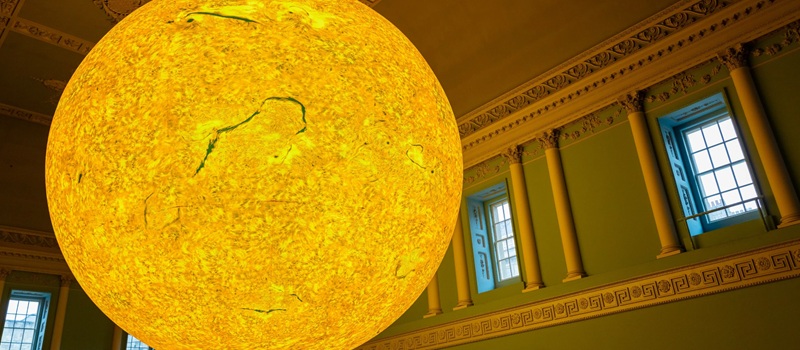
Step inside the sun at Bristol Cathedral on 6-8 October with Helios, a stunning illuminated sculpture by Bristol-based artist Luke Jerram.
Measuring seven metres in diameter, this breathtaking installation features detailed imagery of the sun’s surface, allowing visitors to explore sunspots, filaments, and solar flares safely. There’s also a specially created surround sound composition by Duncan Speakman and Sarah Anderson.
The total number of jobs in the UK’s creative industries fell in 2024 compared to the year before, new government figures has revealed.
Employment data from the Department for Culture, Media and Sport (DCMS) showed there were 2,409,000 creative sector jobs in the year to December 2024, down from 2,419,000 in 2023. In the 11 years prior to 2023, the sector saw successive annual job increases.
The decline in 2024 was driven by a fall in employed roles which fell to 1,713,000, down from 1,744,000 in 2023. In contrast, the number of roles for self-employed individuals and freelancers increased last year to 696,000, up from 675,000 the year before.
Within sub-sectors of the creative industries, music, performing, and visual arts experienced growth, with the total number of jobs increasing from 288,000 in 2023 to 312,000 in 2024.
The avertising and marketing sub-sector also saw a growth in total jobs, rising to 262,000 from 253,000 in 2023. Freelancers in that sector also rose, from 55,000 to 61,000.
Jobs in the film, TV and music sector increased from 208,000 in 2023 t0 214,000 in 2024, although freelancer roles fell from 80,000 to 75,000.
Publishing saw a sharp decline with total jobs falling to 166,000 in 2024, from 217,000 in 2023.
In the cultural sector, total jobs increased 666,000 from 700,000, although self-employed roles fell from 330,000 to 319,000.
Demographic data for the creative industries showed 17% jobs were disabled people, and 37.4% were female workers at 37.4%.
Ethnicity figures showed 82.7% of jobs were held by people from the white ethnic group, 9.9% from the Asian or Asian British ethnic group, 2.8% from the black, African, Caribbean or black British ethnic group, 2.3% from the mixed or multiple ethnic group and 2.3% from other ethnic groups.
In the cultural sector, the following applied:
Of the 2,409,000 jobs in the creative industries, 7.3% (178,000) were located in the South West. This is an increase on the 169,000 south west jobs in 2023.
London still dominates the sector though, with the capital home to 30.4% of creative industries jobs. The second biggest region was the South East with 16.4%.
See the full creative industries employment data here.
Freelancers have long been a significant proportion of the creative and cultural sectors, representing around a third of all workers and more than double that in the overall economy.
In the creative industries sector plan released in June, the government committed to appointing a “freelancer champion” to advocate for freelancers.
Earlier this month, Creative UK published a paper outlining a vision for the freelancer champion role.
The key ask was the launch of formal and structured inquiries into the major systemic barriers freelancers face, such as unfair pay, lack of employment protection and late payment. It also called for:
The creative industries are facing a rapidly shifting employment landscape driven by technological innovation and evolving generational expectations. Businesses that adapt to these changes will thrive; those that don’t risk falling behind.
At an event in the Bristol office of Bristol Creative Industries member RWK Goodman on 11 September, Alice Macleod, a specialist in human behaviour and social science, will deliver a dynamic and thought-provoking session on how shifting societal norms and AI are remoulding work environments and workflows.
Tailored specifically for professionals across creative disciplines, this session will unpack the latest workplace trends, explore how AI is reshaping roles and processes and offer concrete strategies to stay ahead.
You’ll also hear from Marissa Lewis-Peart, BCI board member and senior UX designer at Tesco, and Katie Green from Western Training Provider Network (WTPN) in an exciting fireside chat, where we will be exploring driving ambition and progression, from an employee and national business perspective.
Register for the event here.
Webinar: How to make better career decisions
Landscape for freelancers in 2025
Bristol Creative Industries jobs board
Post a job on the Bristol Creative Industries jobs board
Happy World Entrepreneurs’ Day!
The UK has experienced profound economic change over recent years which has brought challenges and new opportunities to the creative sector. As a result, many individuals have set out on the freelance and small business path for the first time.
Reasons include redundancies following the pandemic, new working relationships with employers through increased remote working and a desire to achieve a better work/life balance.
Whatever the reason to go it alone, Bristol Creative Industries (BCI) is here to give freelancers, startups and small business owners the perfect platform to share skills and build connections.
There are many benefits of a Bristol Creative Industries individual and freelancers membership. See what some members have to say below.
To meet fellow freelancers and companies that employ them, join our freelancer networking drinks on 9 September at the Square Club in Bristol. It’s free including a complimentary drink if you’re a member.
Heather Wright, co-chair of Bristol Creative Industries, said:
“The trend in the creative sector is to have small and agile agencies relying on a bank of specialist freelance talent. We have seen the freelance sector grow year on year in the last decade.
“The benefits are that, here in Bristol, we have a huge pool of freelancers covering a spectrum of creative disciplines, from coding, filmmaking, music composition, animation, illustration, copywriting to recording and directing podcasts, to name just a few. Name a niche creative service you need for your business and, chances are, there will be someone to help right here on your doorstep.
“And these freelancers and startups are key to Bristol’s vibrant creative community; it means small businesses can use a wide range of professional creative talent. Freelancers are providing the resource of a conglomerate for the SME and Bristol Creative Industries can really help with these connections.
“All individual, freelance and startup members get a profile in our online member directory where you can showcase your work. Freelancers can also take advantage of discounted tickets to BCI events, plus the opportunity to self-publish content on our newsfeed. And don’t forget the membership perks, including restaurant offers and money off business support. The real value however is in the business connections you can make.
“But don’t take my word for it, here are a few comments from our members on their experiences.”
“I’ve been a member of Bristol Creative Industries for a good number of years now. I joined mainly to be included in the directory, for which I think the cost as an individual is very affordable. It makes absolute sense to be listed in a directory where clients search for creatives, outside of their own sector or network.
“In terms of other benefits of membership, I have attended various events and they have been very good. These include evening drinks meet-ups and the members’ lunch.
“I’d say that as a creative freelancer in any field, joining BCI is a great thing to do if you have the chance. Additionally, the team at BCI have always been very friendly and supportive!”
“When I worked in an agency, we used the BCI member directory to find the best regional talent. I always felt that I could trust the freelancers we found there – they had an added credibility, took their specialism seriously, and added value to projects. So when I started out as a freelance copywriter I knew I had to be listed as a member myself!
“The events are also really insightful and enjoyable – members’ lunch, sketchnoting workshop, and the ‘simple tips, smart ideas’ talk with Erica Wolfe-Murray to name a few. Plus, still to this day it’s a lovely feeling to receive an email that starts with: ‘Hi Lara, I found your details via Bristol Creative Industries and…’.
“What would I say to freelancers thinking of joining BCI? To quote one of my favourite taglines: Just do it.”
“I joined Bristol Creative Industries many years ago looking for a list of potential new clients. In my first year I got two new clients, one a national charity. Every year I regularly get new jobs via the website and these mostly turn into long term relationships. I now work with many of the major agencies in Bristol who are also members and actively involved with BCI. The work I generate covers my BCI freelance membership costs so joining was a no-brainer.”
“I initially joined Bristol Creative Industries as a way to network and get to know other creatives in the Bristol area. Regular members’ lunches allow members to meet, providing a friendly, informal opportunity to connect. The team running BCI are passionate about helping to support the creative community; always friendly, and they have been a great help in connecting my business with potential creative partners and business contacts.
“I believe just being part of BCI has provided my animation studio with additional credibility.
“Overall, Bristol Creative Industries is extremely well run, positive and a joy to be a part of; the membership offers amazing value for money.”
“Within two weeks of signing up I had my first enquiry from a new client”
“I regularly get contacted by new clients thanks to my listing in BCI’s member directory. Freelance membership is great value for money!”
If you’re a freelancer or startup business owner and want to raise your profile to get the work you want, find out more about a individual and freelancers membership to Bristol Creative Industries
You have the option of paying a one-off annual fee of £45+VAT or a rolling subscription of £4.50+VAT per month. What are you waiting for? Sign up today and be a real part of Bristol’s creative network.
To meet fellow freelancers and companies that employ them, join our freelancer networking drinks on 9 September at the Square Club in Bristol. It’s free including a complimentary drink if you’re a member.
A groundbreaking new festival is set to transform Bristol into an international beacon for technology, creativity and culture this October.
Taking place from from 6-11 October 2025 in and around Bristol’s Old City, BTF+ will offer an accessible and impactful experience for founders, technologists, creatives, investors and culture-makers.
The festival, curated by techSPARK in collaboration with Bristol Creative Industries and MyWorld plus headline partner Ghyston, will feature bold keynotes and panels alongside breakthrough tech demonstrations in several venues. They range from the prestigious Bristol Beacon and Bristol Old Vic to more intimate locations.
Attendees will experience cutting-edge tech showcases, immersive performances, live music and future-facing learning opportunities. Businesses involved will be able to speak, raise their profile and connect with potential partners and investors.
Inspired by legendary festivals like South by Southwest in Austin, BTF+, an evolution of the much-loved Bristol Technology Festival, is designed for start-ups, scale-ups, creators, storytellers, founders, technologists and anyone with curiosity about what’s next.
Whether attendees work in film or fintech, programming or performance, strategy or software, the festival provides a platform to grow businesses, launch ideas, discover emerging trends and help shape the future of their industries.
All profits from the festival will be reinvested into supporting local talent, start-ups and communities. It has been created with inclusivity and accessibility at its heart, through low-cost tickets and many free events to ensure broad participation reflecting Bristol’s spirit.
BTF+ is being brought to the South West with the intention of further cementing the region’s reputation as one of the most exciting and innovative not just in the UK, but in Europe. The event will look to drive growth, investment, and job creation across the region, emulating the impact seen from SXSW in Austin, Texas.
The compact city setting allows people and ideas to move freely, encouraging discovery and purposeful connections. Days will feature talks and workshops from regional talent across tech, creativity and culture, alongside national-level speakers sharing inspiration and insights. As evening falls, music and networking events will provide opportunities for attendees to connect, share experiences and celebrate together.
Confirmed speakers so far include:
Ben Shorrock, co-founder of BTF+, said:
“BTF+ represents an exciting evolution for Bristol’s tech and creative communities. This festival embodies everything that makes our city and wider region special – the collision of technology, creativity and culture in a place that excels at all three.
“The event will be a platform where breakthrough innovations meet artistic expression, where established corporations can connect with emerging talent, and where the brightest minds come together to build the future.”
For our involvement in BTF+, we’ll be running an exciting two days of events on 7 and 8 October, with some high profile and inspiring speakers from across the creative industries. Look out for announcements over the coming weeks.
Early bird tickets for the BFT+ Summit which takes place on 6-10 October, and tickets to free events during the festival are available now. Find out more here.
Bristol’s culture sector generated £892.9m in economic impact in 2023/24.
The figure was revealed by Bristol City Council’s first culture impact survey, which said the findings demonstrate the vital role culture plays in the city’s development and growth.
Part of the impact was £122.4m in social value (benefits to wellbeing, education, employment, and environmental sustainability).
Other findings were:
The council said the data will be used to support the development of a new cultural strategy and action plan for Bristol, and provide organisations with individual impact data to support funding bids, partnerships and long-term sustainability.
Helen Godwin, mayor of the West of England, said:
“I promised to work with the government and invest in the West. To have our creative industries recognised with this funding is a real vote of confidence in our region. People are drawn here from all over the world, whether it’s for our balloons and street art or the city so historic that UNESCO listed it twice. Creativity in the West knows few limits – or equals.
“Culture is part of who we are, whether it’s Oscar-collecting Aardman Animations or treble-winning Bath Rugby. It’s also a big part of the West of England’s economy, and it’s growing. Now we can invest in the future through the industrial strategy: helping businesses to grow, bringing through the next generation of creatives, and driving economic growth.”
As part of the government’s industrial strategy and creative industries sector plan, the West of England gets a share of £150m to support creative organisations and businesses.
Philip Walker, head of culture at Bristol City Council, said:
“The findings of this first culture impact survey highlight what many of us in the sector have long known – Bristol’s cultural offer is rich, diverse, and deeply embedded in the life of our city. From grassroots initiatives to world-class institutions, culture is a vital part of how we live, connect, and grow.
“This impact is only possible through the strength of our partnerships – between artists, organisations, communities, funders, our regional partners and the public sector. Together, we are building a cultural ecosystem that not only drives economic value but also fosters inclusion, wellbeing, and pride across Bristol and the wider region.”
We are proud to have several cultural businesses and organisations as Bristol Creative Industries members. They include:
Design West | Watershed | Bristol Beacon | Curzon Cinema & Arts | St George’s Bristol | Bristol Cathedral | We The Curious | Tobacco Factory Theatres | The Bakehouse Factory | Aardman Animations | Wake The Tiger
Culture will also be part of BTF+, The Bristol Festival of Tech, Creativity & Culture, on 6-11 October. Led by Techspark, Bristol Creative Industries and MyWorld, the week-long festival will celebrate technology, creativity and culture with a huge programme of events. Find out more here.
Culture is vital to our region. Let’s keep supporting it.
You need to load content from reCAPTCHA to submit the form. Please note that doing so will share data with third-party providers.
More Information