What Bristol Creative Industries members want to see for creative businesses from new prime minister Andy Burnham
Andy Burnham is the UK’s new prime minister. We asked Bristol Creative Industries members (and some of the BCI team) to tell us what measures they think he should focus on to support creative businesses. Here’s what they said.
—
The prime minister has a real opportunity to put the creative industries at the heart of the UK’s growth and influence strategy. The sector is not only an economic success story, generating jobs, exports and innovation, but one of our greatest sources of soft power. From film and television to advertising, design and digital content, British creativity shapes perceptions of the UK around the world. Yet many businesses and freelancers are struggling and need support to thrive, not just survive. For Bristol and the South West, continued investment in skills, talent and creative clusters will be essential to maintaining the UK’s global competitive edge.”
James Hirst, Bristol Creative Industries managing director
—
“It’s encouraging to see technical and vocational pathways being given the spotlight, alongside traditional academic routes in the prime minister’s pledge. For the creative industries, this shift will only succeed if employers are at the heart of the solution. Young people need meaningful exposure to the world of work from an earlier age, alongside opportunities to build practical skills, confidence & professional networks.
Creative businesses are ready to play their part. As employers and not educational institutions they can’t be expected to fund the entire journey from education to employment. Our sector is made up of micro businesses with limited capacity (resource and funds) to provide the workplace-ready skills that need to be embedded much earlier in education.
If we want to reduce youth unemployment and unlock talent, we need sustained investment in employer partnerships, work experience, apprenticeships and careers education that reflects the breadth of opportunities our sector offers. Stronger collaboration between education and industry will make it easier for businesses to employ, develop & retain the next generation of creative talent.”
Lis Anderson, AMBITIOUS and Bristol Creative Industries co-chair
—
“The UK doesn’t have a creativity problem, it has a confidence problem. We produce world-class designers, filmmakers and agencies, then make it feel like they’re committing tax fraud for trying to make a profit. The creative industries aren’t asking for special treatment, they’re asking for fewer own goals. Stop moving the goalposts every Budget, pay suppliers on time, invest in skills that actually match where the industry’s going, especially AI, and back businesses that export British creativity around the world. We don’t need another campaign telling us the creative industries are brilliant. We know. We need a government that treats them like an investment, not a nice-to-have.”
Oli Garnett, Something Familiar
—
“The creative industries are predominantly made up of freelancers, sole traders, and micro-businesses, yet many funding programmes require a minimum number of employees, excluding a large proportion of the sector. If government aims to stimulate growth in the creative economy, grant criteria should better reflect the sector’s structure. Eligibility should be assessed using alternative measures of business viability and commitment, such as years of trading, project track record, turnover, client portfolio, or professional references. A more inclusive approach would enable talented creative businesses to access support, drive innovation, and contribute more fully to economic growth.”
Keily Elvin, UWE Bristol
—
“The biggest challenge facing the creative industries isn’t AI, it’s the psychological impact of change. Every business leader is asking how they embrace new technology whilst bringing their people with them. The UK’s creativity has never been in doubt; our opportunity is to combine it with productivity, confidence and modern leadership. Government should focus as much on helping businesses develop the skills and leadership needed to navigate this transition as it does on the technology itself. That’s how we’ll build a creative sector that remains globally competitive.”
Jay Neale, Synergist
—
“Prime minister Andy Burnham’s commitment to using public procurement to back British industry is a fantastic moment for our region. Bristol’s creative sector is bursting with world-class talent, from design and digital to screen and strategy. And this unambiguous mandate grants the West of England Combined Authority the opportunity to support our creative ecosystem to drive growth. It means WECA can tangibly support by procuring local creative services, ensuring public investment directly energises our regional economy. By backing local talent, WECA can accelerate innovation, retain vital skills and build a thriving, sustainable future together with our creative community.”
Mo Morgan, Lumino
—
“For the first time in what feels like forever, we seem to have a prime minister who understands that creativity is not just a nice-to-have, but a vital part of Britain’s growth, both economically and culturally.
“We need to restore creative education, invest in talent beyond London and help independent agencies, studios and freelancers truly flourish.
“Most importantly, our government needs to protect the value of human creativity as the robots AI develops, with clear rules and guidance on consent, copyright, and compensation. Because otherwise, what’s the point?
“Britain has never lacked creative talent. But it has lacked a government willing to value it, protect it, and help it thrive.”
Tim Miness, Osborne Pike
—
“The UK is full of ambitious businesses like ours ready to invest, hire and grow. But it’s not about wanting handouts – it’s about confidence, clarity and creating fair conditions for businesses to succeed.
“The creative industries as a collective are one of the UK’s greatest strengths, and Andy Burnham has an opportunity to champion innovation and make support for entrepreneurship a priority. If we can create an environment where great ideas and tech can thrive, there’s every reason to feel optimistic about what comes next for businesses like ours.”
Ruth Clarke, Six
—
“I’d like to see a shift in how government thinks about the creative industries. They’re often treated as a sector in their own right, rather than an enabler of growth for every other sector.
“Here in Bristol, engineering, technology and professional services businesses rely on creative expertise to attract and engage talent, bring new products to market and communicate complicated ideas more effectively.
“Government should recognise that connection and make it easier for businesses to invest in creative services. Backing the creative industries helps the wider economy grow.”
Eoin Rodgers, DNA
—
“Andy Burnham has pledged to lead a “pro-business” government, and for us as a proudly independent agency, that should mean less red tape for small businesses.
“Rethink business rates to unleash growth for independents; better access to apprenticeships and training to grow the skills pool; better governmental support for parental leave to ensure talent retention and allow us to support and grow our brilliant team.
“We’re a female run business with nearly 80% female staff and it’s vital to us that our team never have to choose between building their career or building a family.”
Imogen Judd, Team Eleven
—
“As a copywriter, I would like to see more regulation and education around AI use. For too many businesses, the temptation is to cut corners and generate something cheaply, rather than paying a professional.
“However, AI cannot replicate the lived human experience and imagination a copywriter provides.
“Strange phrases, generic writing, mistakes, hallucinations… those are the price of your free “copy”. If people could be educated on this or made to disclose where copy has been generated by AI, we would hopefully see a faster return of creative copy to the industry.
“AI may produce, but only humans can create.”
Jonny Watts, Team Eleven
—
“The government must legislate to meaningfully penalise and deter against intellectual property crimes and infringements. IP ignorance and unregulated AI are destroying culture and society. Musicians hear songs scraped and vocals cloned. Illustrators see images copied and sold. Models see faces altered and unrecorded poses staged. Performers learn that movements, likenesses and voices have been fed into AI datasets. No permission, payment, or punishment. Elsewhere, non-artists watch equally helplessly as AI generates their exact likenesses from prompts, while others are nudified and into turned into indecent and illegal images. What kind of British prime minister allows this?”
Chas Rowe, voiceover artist
—
“The UK’s creative industries are a world-leading success story, but maintaining that position requires long-term investment in people, innovation and infrastructure. Government should focus on developing clear career pathways, investing in technical and vocational skills, and making our industry more accessible to young people from all backgrounds. Support for apprenticeships, investment in sustainable technologies, and policies that encourage business confidence and capital investment will help companies continue to innovate and compete globally.
“The UK has an outstanding reputation for delivering world-class live events, entertainment and sport. With the right support, we can strengthen that reputation, create high-quality jobs and drive economic growth across the country.”
Alastair Currie, SLX
—
“I would like to see greater grants and bursaries for emerging artists, writers, musicians and performers as they create their first works or seek publication, representation or funding.
“Creative subjects deserve equal status alongside STEM in our schools, with greater support for creative and neurodivergent young people whose talents often flourish through the arts and humanities.
“We should also invest in creative hubs in towns and cities in the same way that STEM/AI hubs have been championed and funded, support small creative businesses and freelancers, and strengthen protections for intellectual property so that artists and creators are not disadvantaged by artificial intelligence.
“The UK has demonstrated through elite sport that long-term investment in talent, facilities and pathways delivers world-leading success. It is time to apply the same strategic ambition to our creative industries.”
Miriam Brown, Mulberry Brown Communications
—
“The prime minister has spoken about creating good growth in every postcode and giving businesses a stronger voice. I hope that commitment extends to the UK’s micro-businesses. Small creative agencies like ours may only employ a handful of people, but collectively we’re a significant driver of innovation, skilled employment, and economic growth. PR alone contributes £7.1 billion to the UK economy and supports more than 95,000 jobs. If the government truly wants to create growth, then supporting small businesses to invest and plan with confidence has to be part of that agenda.”
Karis Copp, Karis Copp Media
—
“As an immigrant, when applying for new and exciting roles, I’m more often than not faced with administrative hurdles rather than a lack of talent. Visas, sponsorship, minimum salary thresholds, minimum term of stay in the country, ineligibility—it’s hurdle after hurdle for roles that I genuinely think I can fare well at if given the chance.
“Under Andy Burnham’s government, I would really like to see a community built on equal opportunities, where merit and talent are of foremost importance. Where a person’s true worth is judged based on their passions, skills and offerings rather than their nationality and immigration status.”
Karen Johnson, Bristol24/7
—
“The creative industries is a key sector in the south west and they are growing. They provide exports and employment, and promote and build the UK’s brand globally. In the south west the creative industries should come together and form an alliance to promote the sector in the region. Much work was done on this previously, and was making an impact before being throttled by government cuts in 2012. Across Europe the south west consistently punched above its weight. It can do so again with minimal targeted and strategic support, run by sector representatives from the region. There is a model, it just needs to be revived.”
—
“I’m very keen to see the new government put turbo boosters under devolution. Andy Burnham’s diagnosis that Britain is too centralised chimes with ours. It’s refreshing to hear this perspective from someone who’s led a city region coming from Downing Street. If it doesn’t happen now, when will it ever?
“The prize on offer for places like the West of England could positively impact local businesses and people who work for us: affordable connections to work, better training and skills opportunities and strong, sustainable local growth.
“Bristol is well placed to benefit from this opportunity. It has good leadership, an engaged business community and great people.
“If the city gets it right, it could be a game changer. I’m hopeful that we can”
Ben Lowndes, Distinctive Communications
—
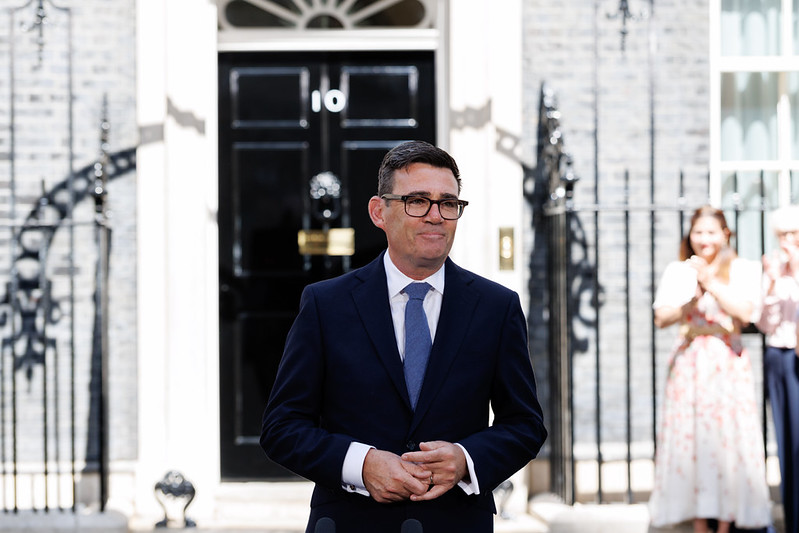
Top image by Lauren Hurley / No 10 Downing Street

Bristol Creative Industries is the membership network that supports the region's creative sector to learn, grow and connect, driven by the common belief that we can achieve more collectively than alone.
You need to load content from reCAPTCHA to submit the form. Please note that doing so will share data with third-party providers.
More Information