Running a small creative business in Bristol isn’t easy right now. Rising costs, new regulations, and the challenge of keeping talented people motivated make employee benefits feel like a juggling act.
Cutting perks might save money short-term — but in a city full of creative talent, it can backfire fast. Done right, benefits are one of the smartest ways to show your team they’re valued.
Here’s what’s making life tricky: National Insurance is up to 15% on salaries over £5,000, the minimum wage has jumped to £12.21/hr, and sick pay reforms from day one could add millions in costs to SMEs nationwide. No wonder some are thinking about trimming benefits — but smarter moves exist.
Many Bristol SMEs are getting creative that save money for both the business and employees. Upskilling is also a big focus — giving people growth opportunities without constantly hiring externally.
A Howden/YouGov survey found 77% of SMEs plan to revamp benefits in 2025. Local creative businesses are taking smart approaches:
Salary exchange: underused but could save thousands and boost pensions.
Wellbeing on a budget: “wellbeing hours” or mental health apps instead of expensive PMI.
Flexible benefits: gym memberships, extra leave, or lifestyle perks tailored to staff.
Learning and growth: upskilling staff in AI, UX, or sustainability keeps teams engaged.
Case in point: Studio 45, a Bristol design studio, did a quick benefits audit. They found unused perks, introduced salary exchange, and refocused on flexible benefits employees actually wanted. Result? £18,000 saved, benefits uptake jumped to 85%, and staff morale soared.
The takeaway? Small changes, smart choices, and listening to your team can make benefits both affordable and effective. In Bristol’s creative sector, showing your people they’re valued might just be your best perk yet.
..and the best bit? Un:fade Consulting undertakes a free benefits audit for members. Have a look in the Members’ area.
The total number of jobs in the UK’s creative industries fell in 2024 compared to the year before, new government figures has revealed.
Employment data from the Department for Culture, Media and Sport (DCMS) showed there were 2,409,000 creative sector jobs in the year to December 2024, down from 2,419,000 in 2023. In the 11 years prior to 2023, the sector saw successive annual job increases.
The decline in 2024 was driven by a fall in employed roles which fell to 1,713,000, down from 1,744,000 in 2023. In contrast, the number of roles for self-employed individuals and freelancers increased last year to 696,000, up from 675,000 the year before.
Within sub-sectors of the creative industries, music, performing, and visual arts experienced growth, with the total number of jobs increasing from 288,000 in 2023 to 312,000 in 2024.
The avertising and marketing sub-sector also saw a growth in total jobs, rising to 262,000 from 253,000 in 2023. Freelancers in that sector also rose, from 55,000 to 61,000.
Jobs in the film, TV and music sector increased from 208,000 in 2023 t0 214,000 in 2024, although freelancer roles fell from 80,000 to 75,000.
Publishing saw a sharp decline with total jobs falling to 166,000 in 2024, from 217,000 in 2023.
In the cultural sector, total jobs increased 666,000 from 700,000, although self-employed roles fell from 330,000 to 319,000.
Demographic data for the creative industries showed 17% jobs were disabled people, and 37.4% were female workers at 37.4%.
Ethnicity figures showed 82.7% of jobs were held by people from the white ethnic group, 9.9% from the Asian or Asian British ethnic group, 2.8% from the black, African, Caribbean or black British ethnic group, 2.3% from the mixed or multiple ethnic group and 2.3% from other ethnic groups.
In the cultural sector, the following applied:
Of the 2,409,000 jobs in the creative industries, 7.3% (178,000) were located in the South West. This is an increase on the 169,000 south west jobs in 2023.
London still dominates the sector though, with the capital home to 30.4% of creative industries jobs. The second biggest region was the South East with 16.4%.
See the full creative industries employment data here.
Freelancers have long been a significant proportion of the creative and cultural sectors, representing around a third of all workers and more than double that in the overall economy.
In the creative industries sector plan released in June, the government committed to appointing a “freelancer champion” to advocate for freelancers.
Earlier this month, Creative UK published a paper outlining a vision for the freelancer champion role.
The key ask was the launch of formal and structured inquiries into the major systemic barriers freelancers face, such as unfair pay, lack of employment protection and late payment. It also called for:
The creative industries are facing a rapidly shifting employment landscape driven by technological innovation and evolving generational expectations. Businesses that adapt to these changes will thrive; those that don’t risk falling behind.
At an event in the Bristol office of Bristol Creative Industries member RWK Goodman on 11 September, Alice Macleod, a specialist in human behaviour and social science, will deliver a dynamic and thought-provoking session on how shifting societal norms and AI are remoulding work environments and workflows.
Tailored specifically for professionals across creative disciplines, this session will unpack the latest workplace trends, explore how AI is reshaping roles and processes and offer concrete strategies to stay ahead.
You’ll also hear from Marissa Lewis-Peart, BCI board member and senior UX designer at Tesco, and Katie Green from Western Training Provider Network (WTPN) in an exciting fireside chat, where we will be exploring driving ambition and progression, from an employee and national business perspective.
Register for the event here.
Webinar: How to make better career decisions
Landscape for freelancers in 2025
Bristol Creative Industries jobs board
Post a job on the Bristol Creative Industries jobs board
Introducing Eden Sinclair, UX Designer & Research Lead at the RSPCA! Eden ensures intuitive digital experiences for animal lovers, crafting impactful solutions that inspire action and promote animal welfare. Eden’s dedication shines through, leveraging the support of over 200 volunteers to conduct user research. ‘Designing for good’ has exposed Eden to the immense passion and drive in the charity sector, enriching design with inclusivity for all users.
The purpose of our ‘Design For Good’ content series is to shine a light on how creative innovation can be a driver for positive change. We feature those that are making it happen, those with grand potential. Businesses and individuals that are shaking up their sector and finding ways to do things better, for social or environmental good.
Can you please introduce yourself and tell us what your role is at your organisation?
My name is Eden, and I’m a UX Designer and UX Research Lead at the RSPCA. In my work life, I’m responsible for ensuring that all of our digital platforms, including websites and mobile applications, are intuitive, user-friendly, and meet all of the needs of our very diverse audience base! I work hard to create digital experiences that inspire action and promote animal welfare.
My work involves understanding user behaviours and needs through research and analysis, using wireframing and prototyping to create impactful solutions that encourage really meaningful and lasting engagement with our charity. I also spend a lot of time collaborating with teams across the RSPCA as a whole to ensure our digital platforms are not only user-friendly but also promote empathy, education, and action for creating a better world for animals.
Can you tell us a bit more about the work your organisation does, and how the UX teams support this?
The RSPCA is the world’s oldest and largest animal welfare charity, and we focus on rescuing, rehabilitating, and rehoming or releasing animals across England and Wales. We’re also campaigning around animal welfare laws, effecting change for animals in laboratories, improving farm animal welfare, educating young people and adults, and providing scientifically backed advice and information to support this.
The UX team, comprising three designers (including myself) and a UX manager, focuses on improving our digital offerings: the main RSPCA website, the RSPCA Education site, the politics site, and new and exciting projects. As a unit, we work closely with the public to ensure that our designs are user-centric and that our UX is tailored to not only encourage people to donate to support us, but also improve animal welfare themselves.
Can you share some challenges or barriers you had to overcome whilst working in a charity and ‘designing for good’?
I’d say that resource is the biggest challenge that I’ve faced. My last company was in the Technology sector, and so resource was never an issue due to very large budgets. However, working at the RSPCA, it’s imperative that we keep costs as low as possible to maximise the number of animals we can help. This is especially evident when attempting to complete user research, as usually a company would pay for research participants, but we have to rely on the generosity of the public.
Thankfully, the public are incredibly generous, and we have over 200 wonderful volunteers who help us test our designs every week. We couldn’t do it without them, and it’s heartwarming to see the commitment to animal welfare.
What has been the key thing you’ve learned about ‘designing for good’ and your target audience specifically?
I think the key thing that I’ve taken away from designing for good has been the incredible passion and drive in the charity sector, not only from the target audience, but also my colleagues at the RSPCA. It’s a fantastic and rewarding place to work.
My target audience is incredibly diverse, but they all share a common love and concern for animals. Whether they are long-time supporters of the RSPCA, or children being introduced to animal welfare for the first time, the passion for animals and kindness is clear.
One of the most rewarding things about working in the charity sector is getting to experience this first-hand. I get to work rather closely with our audience, through research, testing and interviews, and it is incredible to see how deeply people care, and how our supporters are making such a positive impact.
What’s more, the diversity in our target audience really enriches the work that we do for the RSPCA and challenges us to make our designs accessible and inclusive for all. Irrespective of physical or cognitive abilities, embracing the diverse nature of our users allows us to create a more meaningful experience for everyone.
I think the passion and commitment of our audience really drives us to continuously innovate, iterate and improve our designs. It’s amazing to work alongside and for people that are making such a tangible difference to the lives of animals.
This article originally appeared on the ADLIB Blog.
We’re delighted to announce that Future Leap Consultancy has secured funding from the West of England Mayoral Combined Authority to deliver two cohorts of our acclaimed Skills Bootcamp on Sustainability in Business—a co-funded opportunity for professionals across the region to gain practical, actionable sustainability skills.
This initiative is part of the UK Government’s Skills for Life programme and contributes to the £11.3 million investment aimed at boosting skills across the West of England. It’s a powerful endorsement of the role sustainability plays in shaping resilient, future-ready businesses—and a recognition of Future Leap’s expertise in delivering high-impact training.
The Skills Bootcamp is a 10-week programme designed to help professionals integrate sustainability into their day jobs. Whether you’re in HR, marketing, finance, operations or procurement, this course equips you with:
All delivered by Future Leap’s network of expert consultants and changemakers.
We’ve already worked with teams at Pieminister, Lexus, Inside Travel Group, Priority Express, Gilcrest Manufacturing, Kelpi, Solutions for the Planet and Novotel—supporting them to embed sustainability into their operations and culture.
This Skills Bootcamp is ideal for:
We’re enrolling for two upcoming cohorts:
The programme is:
Eligibility is open to those employed or self-employed in Bristol, Bath, North or North East Somerset, or South Gloucestershire.
“I’m a complete beginner and have found the sustainability space so overwhelming! This bootcamp has given me a real grounding in all the different topics, themes and nuances and having it broken down this way has been really helpful.”
— Becky, Starling Bank
“Despite having worked in this space for over 10 years, there’s always more to learn and it can be really hard to think differently about challenges you’ve known about for a really long time. It’s been great having people from different backgrounds and companies to hear their view and we’ve had some really interesting discussions.”
— Jen, Solutions for the Planet
These testimonials reflect the programme’s ability to support both newcomers and seasoned professionals in deepening their impact.
By registering your interest, a member of our team will be in touch to:
Spaces are limited and demand is high—don’t miss out.
Standard benefits packages won’t cut it for Gen Z. Here’s how they’re raising the bar and what you can do to meet it.
In simple terms, the generation that won’t settle for more of the same. Gen Z is here and they’re changing the game.
Born between 1997 and 2012, they’ve grown up digital, purpose-driven, and ready to challenge how work works. By the end of 2025, they’ll make up 24% of the global workforce and here’s the thing: standard benefits packages aren’t cutting it anymore.
If you want to attract, engage, and retain Gen Z talent, you’ll need a benefits experience that feels as personal, digital, and values led as they are. So, what Makes Gen Z Different (And Why It Matters for Your Benefits Strategy)?
Firstly, Gen Z grew up with smartphones, social feeds, and instant everything. So, when they join your workforce, they expect the same seamless experience from your benefits. 91% of Gen Z say a company’s tech influences whether they want to work there, (according to deskbird). They expect business tools to be as intuitive as TikTok and as mobile-friendly as their banking apps. If any benefits platform feels clunky or old-school? You’ll lose them before they’ve even logged in.
Secondly, they care Deeply About Purpose. For Gen Z, work isn’t just a job. It’s a platform for impact. 74% say purpose at work matters more than their pay cheque, according to SHRM. And it’s not just talk, where 50% have turned down work that clashes with their personal values, according to SHRM and 44% have rejected employers with negative environmental or social impact, says ACCP. If your benefits don’t reflect your social and environmental commitments, you’re missing a massive engagement driver.
Thirdly they value Flexibility Over Hierarchy. Gen Z doesn’t measure success by hours logged. They care about outcomes and flexibility. 77% would choose more flexibility over faster promotion, according to Innovative Human Capital. They expect to work when and where they perform best, whether that’s fully remote, hybrid, or something in between.
Finally, there is the rise of flexible, personalised benefits. Forget cookie-cutter packages. Gen Z expects choice such as workplace flexibility, like remote work and compressed schedules, mental health support including teletherapy and wellness apps, financial wellbeing, such as student loan repayment and financial coaching.
Looking at that lens, mental health is non-negotiable. Gen Z has made one thing clear: mental health is essential, not optional. Only 15% rate their mental health as “excellent”, and 40% report feeling stressed or anxious most of the time, according to Handshake and Deloitte. What’s expected and what is out there? Dedicated mental health days, digital-first EAPs with real usage, and wellness tech, like meditation apps and digital resilience tools. In simple terms, ignoring mental health isn’t just risky—it’s a missed business opportunity.
It’s tough out there, however there are many creative ways to find money with employee benefits (if you do not salary sacrifice your pension…why not?). Focus them in a new and creative way. It will pay off when employees feel their benefits reflect their real-life needs, they stay longer and engage more deeply.
We talk a lot about leadership pipelines, talent retention, and gender equity at work. But one of the biggest moments of risk in a woman’s career isn’t when she hits a glass ceiling. It’s when she goes on maternity leave.
Despite decades of progress, research shows that up to 74,000 women in the UK lose their jobs each year due to pregnancy or maternity-related discrimination¹. Nearly half of mothers report negative experiences at work related to pregnancy, maternity leave or returning—and 1 in 5 leave their jobs as a result². And for those who do return? Over 80% say it negatively impacts their confidence, mental health or both³.
These numbers tell a clear story: we are underestimating the scale and complexity of the transition to motherhood. And we are under-resourcing women through it.
That’s where maternity coaching steps in—and why it’s far more than a “nice to have.”
Maternity coaching provides structured, professional support before, during, and after parental leave. It holds space for the emotional, identity, and logistical challenges of becoming a parent while managing a career.
Common coaching themes include:
Planning for leave and managing handovers
Navigating identity shifts and loss of confidence
Returning to work and re-establishing role clarity
Rebalancing domestic responsibilities
Reconnecting with ambition and long-term goals
But coaching isn’t just about performance—it’s also about wellbeing. And that brings us to something that still isn’t talked about enough: maternal mental health.
In my article for Maternal Mental Health Week, I reflected on how easily new mums downplay how they’re feeling.
The six-week postnatal check isn’t enough. Many mothers never say out loud that they’re not okay. Postnatal depression, anxiety, rage, or the long tail of sleep deprivation can linger well beyond maternity leave—and often bubble up again during the return to work.
That’s the missing link: Maternal mental health doesn’t stop when maternity leave ends. For many women, returning to work—often exhausted and unsure of themselves—is just as vulnerable a period. And yet, the expectation to “bounce back” is enormous.
Coaching can’t replace clinical care, but it plays a vital complementary role. It provides space to process the emotional load, build confidence, and plan realistically. And for many, it’s the first time they’ve been asked: “How are you really doing?”
As someone with ADHD, I know how difficult it is to manage the chaos of early motherhood. Executive dysfunction, mental load, and disrupted routines can overwhelm even the most high-functioning professionals. When structure disappears, so can confidence.
For neurodivergent mothers, maternity coaching provides scaffolding. It helps build systems, protect energy, and move forward with clarity—even when everything feels uncertain.
In coaching sessions, I often ask: “What would be the impact of not preparing before maternity leave or return?”
The answers are sobering:
Loss of identity
Lack of confidence
Conflict at work or home
Anxiety over visibility and career progression
The silent question: “Can I still be the ambitious person I was now that I’m also a parent?”
The coaching process brings clarity, strategy, and self-compassion. It helps new parents stay anchored to what matters most, even when the external world is shifting.
If you’re serious about retention, inclusion, and wellbeing, start here. Maternity coaching isn’t a “perk.” It’s a strategic, inclusive intervention that helps people return to work stronger, not smaller.
Support doesn’t have to mean fixing every problem. Sometimes it just means saying, “We see you. And we’re with you.”
Here’s a prompt I often use with clients: “What do you want life to look like in five years and what needs to happen now to make that future possible?”
It’s easy to live in the short term when you’re exhausted. But your long-term goals, values and ambitions deserve space too.
Pause. Reflect. And know that support is out there, coaching included.
A final note: I’ve been using the brilliant maternity coaching framework developed by Frances Cushway, a comprehensive, compassionate and practical model that supports every stage of the transition to working parenthood. It’s been a powerful tool in my work, especially when combined with an ADHD lens.
If you’re curious about how this framework can support neurodivergent parents—or want to learn more about the pilot I’m currently running, you can find more details here.
Footnotes
Pregnant Then Screwed & HR Magazine (2024): 74,000 women lose their jobs due to pregnancy/maternity discrimination annually
EHRC and TUC Research: 1 in 5 women leave their job due to pregnancy and maternity discrimination
Working Families Annual Report (2023): 84% of women face challenges returning to work; 30% receive no employer support
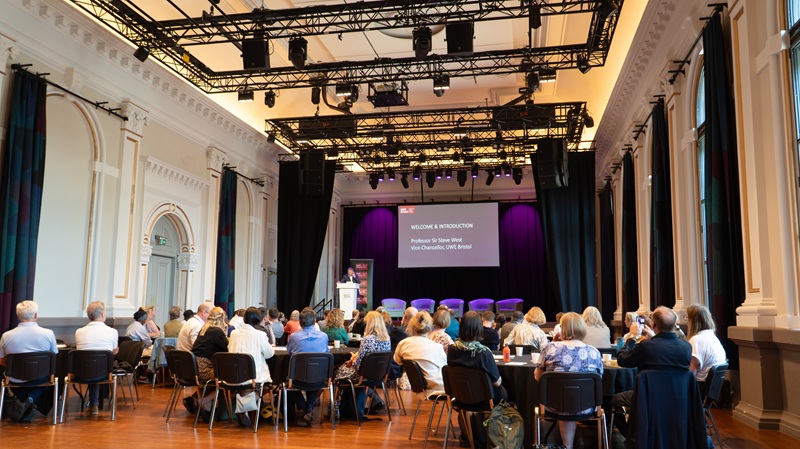
Bristol Creative Industries was delighted to be part of the Culture and Creative Industries Summit organised by the University of the West of England at Bristol Beacon. The event brought together people from cultural and creative businesses and organisations from across the region to discuss the government’s UK creative sector plan which will be published soon.
Officials from Department for Culture, Media and Sport (DCMS) and Sir Peter Bazalgette, co-chair of the Creative Industries Council which advises the government, set the scene including outlining how the West of England is one of the government’s priority areas for the creative industries.
A panel (Ben Shorrock from techSPARK, Charlotte Geeves from Bristol Old Vic, Fiona Matthews from Super Culture, and Nimesh Joshi from ITV News West Country, chaired by Annabel Smith from Centre for Progressive Policy) then discussed the key issues, before, grouped into tables, delegates discussed ideas for strengthening the economy in the west.
The conversations have been summarised into the brilliant list of ideas below. It has been shared with DCMS and West of England Combined Mayoral Authority.
Regional Production Fund and screen agency: Establish a dedicated fund and agency to match creative funding levels in other UK nations. Functions include soft money support, local employment stimulation, retention of post-production services, and enabling regional intellectual property (IP) ownership.
Addressing funding gaps: Ensure long-term, strategic investment to overcome inconsistencies and short-termism in current funding models.
Public-private partnerships: Promote and expand collaborative investment models, taking cues from Creative Wales. Encourage cross-sector funding initiatives.
Bristol Music Fund: Introduce a regionally managed fund sourced from a small percentage of ticket sales to bolster the music sector.
Creative tech investment: Develop a sustainable, large-scale funding pipeline for creative technology ventures beyond the pilot stage.
Cross-sector collaboration: Encourage stronger relationships among creative organisations, universities, local governments, and adjacent sectors.
Higher education partnerships: Foster collaborative projects between higher education institutions and the creative industries, overcoming resistance to commercial partnerships.
Shared data strategy: Develop coordinated, standardised data collection and impact measurement across the sector.
Creative cluster hub: Create a physical and strategic hub to promote connectivity, knowledge-sharing, and sector resilience.
Creative education reform: Advocate for more modular, skills-based learning at further and higher education levels, with links to primary/secondary outcomes.
Freelancer support: Fund paid development and training opportunities to support freelance creatives.
Film/TV entry pathways: Clarify and promote inclusive, sustainable pathways into screen industries.
Talent retention: Tackle affordability and infrastructure issues to retain local talent.
Place-based storytelling: Highlight regional strengths such as the BBC Natural History Unit, social innovation legacy, and cultural diversity.
Unified regional narrative: Promote a cohesive story across urban, coastal, and rural areas to avoid intra-regional competition.
Valuing creative process: Emphasise the importance of creative processes and R&D alongside final products.
Global positioning: Market the region internationally as a cultural hub with strong geopolitical and creative links.
Creative innovation culture: Elevate visibility of values-driven, socially-conscious innovation. Align with broader innovation strategies.
Creative health: Support initiatives at the intersection of arts, health, and policy for societal benefit.
Cultural placemaking: Embed creatives in city planning and infrastructure development.
Creative tech coordination: Improve storytelling, infrastructure, and investment strategies to scale regional creative tech.
Sustained leadership: Build consistent leadership in both civic and business sectors to guide long-term cultural strategy.
Regional coalitions: Establish strategic alliances across key geographic hubs like Bristol, Cardiff, and Cheltenham.
Devolved powers: Advocate for devolved powers in cultural development to local and combined authorities.
Civic engagement: Pilot a Citizen’s Assembly for Culture as a model for inclusive, democratic cultural strategy-making.
Funding complexity: Simplify access to funding, reduce reporting burdens, and diversify beyond dominant bodies like Arts Council England (ACE).
Inclusion gaps: Prioritise equity-focused strategies to support underrepresented groups.
Leadership fatigue: Address burnout and recruitment issues within the creative sector.
Infrastructure deficits: Invest in new and upgraded venues, studios, and support spaces.
The cost-of-living crisis in the UK is still hitting both businesses and their employees hard. As operational costs rise and consumers tighten their belts, businesses face the dual challenge of maintaining profitability while ensuring their staff are adequately compensated.
The key is to empower your employees. In the midst of the escalating cost-of-living crisis, new research reveals a stark reality: One example…87% of hospitality workers’ mental health is worsening because of financial concerns, exacerbating an already challenging situation. With wages stagnating and essential expenses on the rise, workers face mounting challenges, including housing and food insecurity, limiting their ability to save and thrive. According to recent studies, nearly 60% of workers struggle with financial stress, with over 40% citing it as a major concern affecting their overall wellbeing.
Amidst these challenges, one pioneering solution that has emerged is Earned Wage Access, which revolutionises the traditional pay cycle by providing instant access to earned wages, empowering employees to navigate their financial obligations with newfound flexibility and control.
By eliminating the need to wait for payday, new employee benefits providers enable workers to address immediate expenses without resorting to high-interest loans, thereby alleviating financial stress and promoting overall wellbeing.
Recent user surveys conducted by one industry provider underscore this impact, with 92% feeling more in control of their money thanks to Earned Wage Access and 88% being more likely to stay working at their current employer when this benefit is offered.
Another key solution is supporting workers with financial wellbeing benefits and education to reduce financial stress and help them better manage their finances.
These can take many forms such as personalised educational resources, financial coaching, money management tools, employee discounts, and flexible pay options, among other things.
PwC revealed that financially stressed employees are 5 times more likely to be distracted at work, highlighting the potential productivity gains for employers. By investing in these programs, hospitality companies can therefore enhance both employee wellbeing and operational resilience.
Another key focus are smart budgeting strategies which can significantly benefit companies during the cost-of-living crisis. By regularly monitoring expenses, implementing energy efficiency measures, optimising inventory management, adjusting staffing levels based on seasonal demand, and negotiating bulk purchasing agreements, companies can reduce operational costs and improve financial stability.
For employees, smart budgeting strategies are equally crucial. Creating a detailed monthly budget, setting aside an emergency fund, prioritising debt reduction, automating savings, and utilising employee discounts can help workers manage their finances more effectively. These practices reduce financial stress, increase disposable income, and provide a buffer against rising living costs, ultimately fostering a more engaged and productive workforce.
Where do you start? Well, you can talk to professionals such as myself who mitigate these employee risks…or if nothing else have a look at the Government website www.moneyhelper.org.uk where you can find simple and straightforward with tools to direct your employees.
Standard benefits packages won’t cut it for Gen Z. Here’s how they’re raising the bar and what you can do to meet it in 3 easy ways.
The generation that won’t settle for more of the same. Gen Z is here and they’re changing the game.
Born between 1997 and 2012, they’ve grown up digital, purpose-driven, and ready to challenge how work works. By the end of 2025, they’ll make up a quarter of the global workforce
And here’s the thing: standard benefits packages aren’t cutting it anymore.
If you want to attract, engage, and retain Gen Z talent, you’ll need a benefits experience that feels as personal, digital, and values led as they are. So being part of the Bristol Creative’s network let’s explore how this generation is raising the bar for benefits and what you can do to meet it.
Firstly, digital Natives Expect Digital-First Benefits! Gen Z grew up with smartphones, social feeds, and instant everything. So, when they join your workforce, they expect the same seamless experience from your benefits. A company’s tech influences whether they want to work there. They expect business tools to be as intuitive as TikTok and as mobile-friendly as their banking apps. If your benefits platform feels clunky or old-school? You’ll lose them before they’ve even logged in.
Secondly, they care deeply about purpose. For Gen Z, work isn’t just a job. It’s a platform for impact. Often, purpose at work matters more than a pay cheque. If your benefits don’t reflect your social and environmental commitments, you’re missing a massive engagement driver.
Then there’s the whole avenue called “flexibility”. Gen Z doesn’t measure success by hours logged. They care about outcomes and flexibility of schedules. In addition, there’s flexibility with regards to personalised benefits which I have mentioned numerous times. Forget biscuit-cutter packages. Gen Z expects choice: mental health support (which is non-negotiable being essential not optional), help their sustainability goals/carbon footprint, help with student loan repayments, help with community impact…all good examples.
Why? Well, it’s not rocket science – lower turnover, higher engagement and it makes you stand out in the crowd as an employer.
Gen Z is raising the bar for what great benefits look like. If you’re still offering one-size-fits-all packages, you’re missing a huge opportunity to engage the workforce of tomorrow.
If nothing else just look at
Because if your benefits aren’t easy to access, easy to understand, and easy to love, they aren’t working hard enough.
Would you like to advertise your job vacancy for free and use the Moxie and Mettle network to find your perfect candidate!? Moxie and Mettle have created a brand new way to find your next best person, with their new offer Recruitment Bootcamp. Learn new skills and find your next new recruit!
Join Recruitment Bootcamp, our online training course, which will guide you through the best way to recruit for your business, as well as saving time and money, and as a new client, you’ll be able to advertise your role through Moxie and Mettle too. All responses will come directly to you.
At Recruitment Bootcamp, you receive online access to the course that covers
And everything else you need to get a robust recruitment process in place, with unlimited support from Liz Gadd and Becs Hogdson and plenty of practical advice by email and phone.
When you sign up to Recruitment Bootcamp, you’ll be able to advertise your current or next vacancy through the huge network of Moxie and Mettle and Rustic and Rural, our recruitment agencies (no recruitment fees apply)
With a database of 50,000 people, social media groups of over 20,000 members and a collective 30,000 connections on LinkedIn, the advertising opportunity is huge and will attract the right candidates for your business.
Recruitment Bootcamp is just £780.00 and includes the advertising campaign. The fee represents a 20% discount for Bristol Creative Industries members (VAT included in the figure)
So you will get up to date information on the jobs market and candidates, and how to recruit successfully overall, but you’ll be able to advertise your role (at no extra cost) on a number of external websites and relevant groups, and through our social media.
Would love to chat it through, so let us know a good time!
Liz and Becs
Moxie and Mettle
0117 301 8223 | 07377 400413
[email protected]
www.moxieandmettle.co.uk
www.linktr.ee/lizgadd
You need to load content from reCAPTCHA to submit the form. Please note that doing so will share data with third-party providers.
More Information