I’m very pleased to announce that we have officially joined the ranks of B Corps (a B Corporation is purpose-driven and creates benefits for all stakeholders, not just shareholders).
Avid Torchbox watchers will have seen this coming. As far back as June 2022 when I was already confident that we’d gain accreditation having finished the Impact Assessment, I wrote about why it had taken us a while to get on board and how the assessment was improving us. The wait since June was partly due to the B Corp queue, partly to the verification process (when a B Lab representative works with you to evidence your claims), and partly because changing our Articles of Association to encode our intent ‘to have a material positive impact on society and the environment’ took longer than it should have.
The assessment process has been really useful and I’ve no doubt that it’ll continue to make us a better business over time. The framework isn’t perfect – there are things that surprised me, for example, while it assesses fair pay, it doesn’t assess the gender pay gap – but it is strongly rooted in the UN’s Sustainable Development Goals and certainly drives positive change in businesses, as it already has done in ours.
There has been some negative criticism of B Corp, notably the FT article from February this year which raised issues including a couple of big ones for me:
Nestlé has a dubious record on human rights (I started boycotting Nestlé products as a student due to the baby milk scandal) and as the Fair World Project says, Nespresso’s single-use coffee is hardly a ‘force for good’.
I did feel like the B Impact Assessment was more focused on how you do business rather than what you do. You can get points for having a positive impact through your business purpose, but I don’t think you lose points if you have a negative impact. And, if you can still get to the magic 80 by doing well in other pillars, that explains some surprising B Corps. That said, you do have to commit to being a force for good, which was the “changing our Articles of Association to encode our intent to have a material positive impact on society and the environment’ bit that I mentioned earlier.
Apparently, things are gonna get better, particularly the single pillar loophole. According to Includability:
B Corp is planning changes in standards from next year, which will force B Corps to be more transparent about where they are around 10 specific topics – including fair wages, diversity and inclusion, human rights, action on climate change and risk standards – to resolve the issue around companies being able to rapidly meet the minimum points requirements in a single area.
We’re fans of Doughnut Economics, and as an employee-owned business, we’re excited that Kate Raworth believes that employee ownership can be a ‘powerful starting point’ to help redesign business. In the FT article, Erinch Sahan of the Doughnut Economics Action Lab says of B Corp:
“What they do really well is creating a community of business people passionate about sustainability,” adds Sahan. “When you tell everyone you’re now a B Corp . . . people expect that you really do prioritise people and planet. But that’s not necessarily the case.”
However, as we graduate as a B Corp, I think it’s important to focus on the bit before Erinch’s ‘but’. From the process we’ve been through, the B Corps I’ve met and the events I’ve been to, it feels like we are joining a club of business with energy and ambition to be a force for good. I thank B Lab for that and encourage them to continue in their mission to ‘not stop until all business is a force for good’.
A score of 80 qualifies a company for B Corp Certification (Nespresso scored 84.3). The median score for ordinary businesses who have done the assessment is 50.9. Torchbox achieved a B Corp score of 114.5. The focus is now on improving our score next time, so I want to end with a hat tip to a couple of friends who are giving us something to aim at, Wholegrain Digital who scored 122.1 (they were early adopters and have been assessed three times already, they’ve also made Best for the World lists four times) and our recruitment friends at Adlib in Bristol who recently re-certified with an incredible 130.3, nice one!
Creative agencies are brilliant places to work, with ideas flowing and full of, yes creativity. But they’re also commercial entities. And for agency managers, keeping the right balance of passion and profits can be a tricky one. They need to keep the agency profitable to keep it competitive and help it grow. It can be surprisingly easy for profits to slip away. Thankfully, with some forethought and the right systems in place, it can be just as easy to keep a tight grip on your finances.
Your estimate is all powerful so you need to get it right. Many agencies fall into the ‘reverse engineer’ trap of starting with a figure they think the client will like and working backwards from there. Essentially forcing the time to fit, whether it’s right or not. So you’ll either end up not delivering a good job, going over budget, or quoting too much and risking alienating the client. All impacting on your bottom line.
How to fix it: get under the skin of every brief, really considering each element. Look at similar jobs you’ve done before – can you use them to guide your timings? Make sure your teams are realistic about how long they need (creatives love to add sunshine and polish to each job, but this can’t be at the expense of your profits). And get to know your clients. Are they in the habit of asking for several sets of amends? Do they like long meetings and pitches? Only by accurately assessing how long a project will take will you actually see the profits from them. Read How to improve your agency’s estimating and job costing (synergist.co.uk)
Can you just do an extra bit of artworking? Someone else has had a look and they think it’d work better if we did xyz. Can you do a presentation at tomorrow’s meeting? Every agency has had these conversations with clients, asking for just that little bit extra on top of what’s been agreed. But a little extra can VERY quickly turn into a lot extra… which in profit terms means you can end up working for free.
How to fix it: make sure that your initial quote is as detailed as possible so it’s clear if clients are asking for above and beyond the usual above and beyond. You could add a buffer into the quote (x amount for extra sets of amends, x amount per hour beyond the brief), especially if you know this client has a habit of shifting the parameters of the brief. Or you could requote, especially if the extra work being asked for is substantial. Or… you could suck it up. Some agencies do choose to just do the extra work and absorb it within their original quote, to preserve good client relationships. If you choose this option that’s fine, but make sure it’s a commercial decision. You still need to know how long extra it’s going to take so it doesn’t just look like your job has gone massively over budget. Also, within the spirit of this piece, doing this too often isn’t likely to help your profits too much.
Read 5 reasons agencies over-service clients, and how to stop it (synergist.co.uk)
It can be tempting to take on any work that comes your way, especially during quieter times. But you need to make sure you’re only taking on work you have the correct capacity to handle. Otherwise you could be in danger of overloading already overworked teams. Or, worse, throwing the work at the wrong people purely in the hope of getting it done. You might get it done, but it’s unlikely to be to the client’s satisfaction.
How to fix it: you employ people with different skillsets for a reason. In the same way you wouldn’t ask your finance manager to sort an IT problem, there’s no point asking a designer to write copy, or a web developer to produce artwork. This is where your capacity planning comes in. You need to know what’s already in, who’s working on it, and what’s booked in. This means you can see if there are any upcoming gaps, which your client services team can try to fill – or you can see if there’s any internal work or training which could be done. Conversely, you can see if there’s likely to be too much work for the right team to handle. From here, you can decide if you need to bring in freelancers, or even recruit. It might feel counterproductive to bring freelancers in to help one team if another is not busy. But putting the right people on the job can boost your profits… while the wrong ones can deplete them.
Read Manage your agency’s resource for less peaks and troughs (synergist.co.uk)
Which brings us onto the next potential profit drain: overusing freelancers. Bringing temporary help in on an ad-hoc basis can be a good idea. Especially if you have a good roster of people you know you can bring in and will be able to pick the work up quickly and easily, without spending a lot of time training and explaining. But the temptation can be just to keep them on, in case more work comes through, or to mop up odds and ends. And this is where your profits can suffer.
How to fix it: be strict about when and how you use freelancers. If you know a specific team will be shorthanded or overloaded, freelancers can be a great temporary fix. But this isn’t an ideal long-term scenario, as you’ll be paying freelance rates. If you know that the extra work is going to keep coming in, could it be time to recruit? Or is there anyone already on your payroll who you could upskill or retrain? You should never be in a situation where you have a freelancer sitting around twiddling their thumbs because you’ve incorrectly calculated workload… you’re paying them without seeing any profits.
There are a ton of processes involved in running an agency. Timesheeting, budgeting, project management, briefing, debriefing, finances, planning. All important cogs in the wheel. But left unmanaged, these can start to turn into an exercise in chaos and overwhelm, leading to a big bloat in your processes and a big dent in your profits.
How to fix it: standard operating procedures don’t sound exciting, but when you realise how important they are to your bottom line you’ll soon change your mind. Instead of having teams all working to their own set of processes, having an effective, preferably automated, set of templates and systems can streamline and simplify. Much less time wasted on navigating siloed systems, much more money saved… and made.
Day-to-day life at an agency is busy, bustling and often on the edge. That’s the norm. But crashing through each day hoping for the best is a surefire way to see your profits plummet. Stepping back, using a good agency management system to give you full visibility, and doing some careful strategic planning can help to keep your agency moving in the right direction. Towards smoother ways of working and bigger, better profits.
For more agency insights, check out www.synergist.co.uk/resources
Fiasco Design is now accepting applications for their Open Internship programme, which aims to make the design industry more accessible for those from underrepresented backgrounds.
“Following the success of last year’s Open Internship programme we’re thrilled to open up applications for the second year. Bringing a greater range of people into design allows the industry as a whole to prosper. We’re proud to be playing our part.” – Ben Steers, Co-founder and Creative Director, Fiasco Design.
Fiasco Design’s Open Internship programme looks to set a precedent for the way design internships can be made more inclusive for emerging creatives. The hope is to encourage people of all walks to life to apply, by actively removing some of the usual barriers:
It’s no secret that there’s a diversity problem in design. The UK’s design workforce is made up from a small section of society that fails to reflect the world we live in. Despite increased awareness around the topic of inclusivity, statistics from Design Can and the Design Council suggest that this is slow to translate to real change.
As an industry that thrives on creative innovation and diversity of thought, there is a need to think pragmatically about what can be done to tackle the problem head on and bring about real, tangible change. Fiasco’s wider ambition is to inspire others to find similar opportunities that help level the playing field and make our industry a more exciting place to be.
“As a studio we have a deeply held belief in the positive power of creativity. By thinking creatively, we can find solutions to the problem of diversity in the industry. Progress may be slow, but it is possible. It starts by challenging ourselves to do better.” – Nathalie Crease, Head of Marketing, Fiasco Design.
Fiasco Design’s Open Internship programme is now accepting applications. You can find more information and how to apply via: fiasco.design/open-internship
‘User experience’ is a term you may be familiar with. It’s a term that’s frequently used in the context of web design, and for many good reasons. A user’s first impression of your company can make or break their perception after they visit your website. The navigation of the website is another crucial component of the user experience. Learn more about the significance of navigation in web design and what to look for in a web design firm that prioritises strong navigation by reading on.
The term “navigation” describes how a user navigates a website. It has buttons, menus, and links that users may utilise to access the site’s various pages and functions. The navigation of a website functions essentially as a map for users.
As you will see in the reasons listed below, navigation should be given priority in web design.
The user experience is important when it comes to web design, as was already established. A professional web development company is aware that effective navigation enables people to quickly access the information they are looking for on a website. If a user can’t quickly and easily locate what they’re looking for on your website, they’ll probably leave and never come back. On the other hand, users are more likely to interact with the website and perhaps even make a purchase when they encounter smart, user-friendly navigation.
The practise of improving a website to appear higher on search engine results pages (SERPs) is known as search engine optimisation (SEO). It should always come first when selecting a UK web development company. Since search engines use it to crawl and index the site’s pages, effective navigation is essential for SEO. The navigation of a website might make it difficult for search engines to comprehend the site’s structure when it is disorganised or unclear. The ranking of the website may suffer as a result.
Accessibility should be taken into account while creating websites. When a website provides clear navigation, people with disabilities—like those who use screen readers to navigate the site—will find it easier to use. Always work with a web design company that is aware of how well-organised and labelled websites are simpler for screen readers to traverse.
The amount of visitors to your website that leave without interacting with it is referred to as the “bounce rate.” A high bounce rate frequently indicates that users are having problems accessing the website. Users can locate what they’re looking for more easily when the navigation is improved, which also boosts engagement and lowers the bounce rate.
The basic objective of a website is to turn visitors into paying clients. By making it simpler for visitors to carry out desired actions, such filling out a contact form or finishing the checkout process, effective navigation can play a significant role in this.
A successful website must have effective navigation since it affects a number of variables, including user experience, accessibility, and SEO. It’s crucial to pick a web design company that prioritises and sets a high value on effective navigation.
Why should I employ a web development company? Have you ever thought. Without an excellent website, your business simply cannot develop in the current digital era. It would be simple if all you required was a website, but what you actually need is a strong and effective online presence. However, many business owners are still ignorant of this fact today. Some people still give little thought to whether a website’s claims about its goals, its vision, and the services it provides are accurate. Fortunately, you are not one of them, and you have come to this page looking for information and solutions. You are probably wondering why working with a skilled web development company is the best way to achieve the desired outcome, which is an excellent website.
We are available to you to discuss the advantages of working with a web design and development company like WeAgile when creating a new website or redesigning an existing one.
Let’s start by responding to some often asked queries.
A web development business with expertise may build a website from the ground up. Professional programmers and web designers at WeAgile have a wealth of experience creating digital goods (such as websites, applications, e-commerce sites, and software) for a variety of sectors. In order to find the best solution for you, web designers and web developers work together. They construct frameworks and databases, come up with innovative concepts, and decide on a language for both front-end and back-end development. The task of a web designer is to create the user interface or user experience. The team at WeAgile is skilled in many areas, including testing, deploying, and maintaining digital products.
First off, WeAgile has a team of web developers, web designers, SEO experts, project managers, testers, and more. Since a single freelancer simply cannot have all of this knowledge, you will undoubtedly receive a product that is subpar. Not because they are not professionals, but simply because it is difficult for one person to be an authority in so many different fields.
Second, the WeAgile team will be able to continue offering you assistance and upkeep long after the website has launched. Many people are unaware that even after the website is launched, it will need to be updated frequently for a variety of reasons. For example, if your website is built in WordPress, there are frequent updates to the platform and plugins; if you want your website to rank well on Google, Google regularly updates its algorithm; etc. You need to stay on top of all of this, and more often than not, a freelancer won’t be able to support you long-term due to other commitments.
Thirdly, clients will obtain the best level of service possible because a web development agency sets a great value on both its reputation and its long-term goals. Because you won’t be able to leave a Google review or a Trustpilot review for an independent freelancer, work is frequently completed a little sloppier and, most likely, no one will ever find out if your website is not functioning as intended. It is not even an exaggeration to say that we work with the best freelancers in the world. They are each true experts in their respective fields, but when it comes to web design and development, it takes a team (designers, developers, project managers, SEO experts, testers) to produce a top-notch outcome.
Fourth, your website will be delivered quickly and efficiently, and it will be a well-rounded final product because many professionals will have had input in the end product, often coming up with innovative ideas that will greatly benefit your company’s digital presence. This assumes nothing completely unforeseeable happens (like a significant change in the scope of work). For instance, if a freelancer you are working with experiences a personal setback (such as illness or a vacation), your project will be completely abandoned.
Let’s add another “layer of safety” for choosing a web design agency over a freelancer if the list above hasn’t already persuaded you. An agency is always a legitimate firm with owners, directors, insurance, etc. They won’t suddenly vanish one day or stop returning calls while the project is still in process.
Yes, there are platforms like Squarespace or Wix where you can try your best to build a straightforward and appealing website. No matter how much you know about designing and constructing websites, you will never be able to match the experience of a web development business.
Working with a web development company like WeAgile has a lot of benefits. Here is a succinct list of them:
We hope we answered some of your questions and removed any doubts you might have had about choosing a web design and development agency. But if you still have any questions, please do reach out and we will get back to you in no time.
Almost all UK agency owners worry about their business, with 14% feeling anxious every day.
That’s the finding of The Wow Company’s 2023 BenchPress reports, the largest survey of independent agency owners in the UK.
It found that 99% of all agency owners worry about their business, with 60% of those running agencies with £1m+ turnover and 70% under £1m feeling worried or anxious at least once a month. For both groups, 14% get anxious every day.
Agency owners shoulder a lot of responsibility & can sometimes feel anxious about their businesses. For all the highs, there are inevitably going to be some lows to navigate. Where do you sit among these figures taken from our new BenchPress report? More: https://t.co/qog2wRcsbi pic.twitter.com/306jMIrPWr
— The Wow Company (@thewowcompany) April 13, 2023
The top concerns that keep founders awake at night were team, new business and clients for £1m+ businesses and new business, cash flow and clients for firms turning over under £1m.
When it comes to work/life balance, 7% of owners of agencies under £1m and 5% of those £1m+ said they do not have one at all.
The report said you’re 50% less likely to worry about your business if you have a healthy work/life balance, so it urged founders to work on getting one.
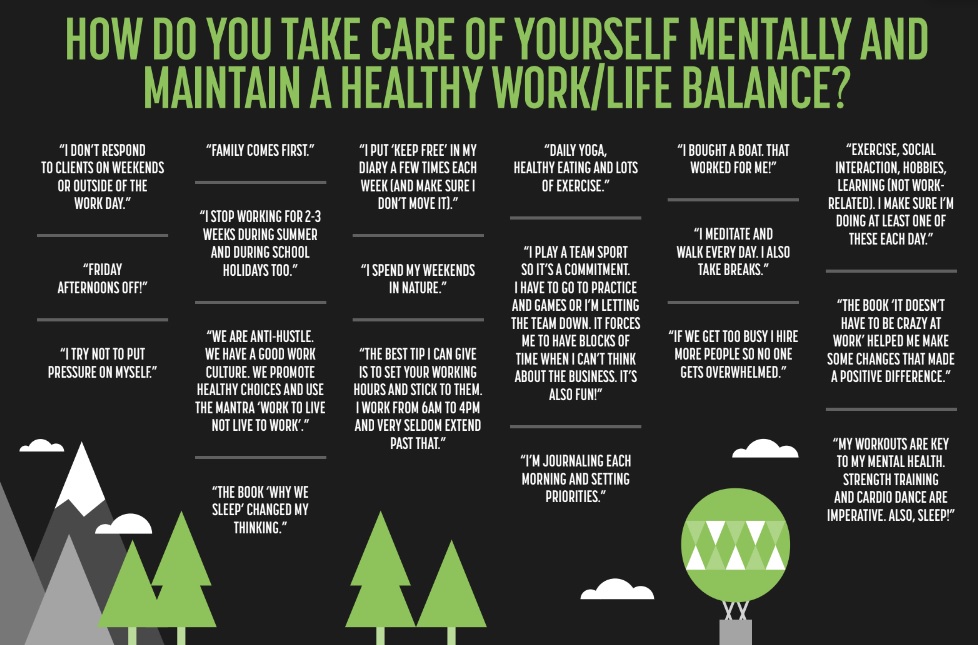
Read advice on mental health and wellbeing:
In another finding from the reports, confidence among UK agency owners at the start of this year dropped close to levels seen during the height of the COVID-19 restrictions.
Since 2012, the study has tracked how confident agency owners feel about the year ahead by giving a rating out of 100. Above 50, owners feel confident and below 50, they expect this year to be worse than last year.
The new report shows confidence in January 2023 was at 66, compared to 74 in 2022 which was the highest level since 2017.
In January 2021, during the COVID-19 pandemic, the score was 71 and in July 2020 it was 60.
As well as the issues around wellbeing described above, BenchPress said the fall in confidence is also driven by:
Growth: 71% of agencies under £1m and 79% of £1m+ grew in 2022, but growth wasn’t as strong as in previous years. Those that grew fee income by 26%+ dropped from 39% (under £1m) and 43% (£1m+) in 2021 to 26% (under £1m) and 27% (£1m+) in 2022.
Remuneration: Those earning over £50,000 per year dropped from 58% to 52%, while those earning more than £100,000 fell from 53% to 46%.
Profit: For agencies with under £1m turnover, average gross profit reduced to 36%, an 8% fall from the previous year. For agencies with £1m+ revenue, average gross profit has reduced to 40%, a 4% fall from 2021.
Despite the UK’s economic challenges, the report showed that having a purpose continues to be important for agencies.
It found that 24% of owners of agencies under £1m and 28% of £1m+ firms said building a business that has a positive impact on the world was their top priority.
[Online event for Bristol Creative Industries members on 19 May: Six steps to supercharge sustainability in your business]
[Read advice on business as a force for good and how to become a B Corp here]
The top ways agencies make a difference include:
The full BenchPress reports are jam-packed with lots more data plus advice on overcoming the key challenges and how to boost your agency. Download the reports here.
We are excited to announce our latest campaign launch for Spontex, the UK’s No1 Cleaning Tools brand – ‘Little Wins!’
Spontex asked us to create a digitally led campaign to promote sales across the Spontex range in stores.
The latest campaign is all about celebrating life’s little victories; where something as simple as a freshly cleaned oven, or a clean, sparkling floor can provide that little moment of satisfaction. It’s often the small things that offer the most joy!
The insight is brought to life through a series of short social films in which various small victories are celebrated by a quirky and eye-catching dancing hand.
To add further joy, the campaign features a promotion with daily ‘Little Wins’ up for grabs, with dozens of little daily prizes to deliver a little bit of joy to each day – just like Spontex products’ cleaning power does.
Throughout the promotion, shoppers will have the chance to win retail gift cards worth up to £100 every day by purchasing any Spontex product over the campaign period. We think these prizes provide nice little wins to help shoppers in the current climate!
For those Spontex shoppers who aren’t lucky enough to win a retail gift voucher, they will be given a 20% discount code to use on Spontex products online.
The competition runs from the 17th of April up until the 5th of June. So be sure to purchase any Spontex product and enter online with your receipt at http://spontex.co.uk/littlewins for a chance to win.
BrisTechTonic had the unique opportunity to sponsor the Walk for Winston’s Wish Black Tie Ball in March 2023, an event put on by family members to benefit the wonderful Winston’s Wish organisation.
10 years ago Olivia and Harvey lost their mum, and Russell his wife – Caroline.
For the past ten years in March, Olivia, Harvey, and Russell have planned a yearly walk in support of the organisation called Walk for Winston’s Wish. The family wanted to bring the neighbourhood together to recognise and celebrate Winston’s Wish while also wanting to collect some money for them. Winston’s Wish gave the family vital assistance after their loss.
A UK-based organisation called Winston’s Wish helps kids who have lost a loved one or are going through a similar situation. The nonprofit organisation was established in 1992 to support grieving children, teenagers, and their families.
Winston’s Wish is aware of how traumatising and challenging it may be for kids to lose a loved one. To assist kids and their families in overcoming their sorrow and accepting their loss, they provide a variety of programmes and support.
Bereavement support is one of the main services provided by Winston’s Wish. The nonprofit organisation has a group of specialised practitioners that work with kids and teenagers to better understand and cope with their sorrow. Individual counselling, group therapy, and family support are a few examples of this.
Winston’s Wish also provides families with practical assistance, such as suggestions on how to talk to kids about death, details on legal and financial issues, and instructions on how to organise a funeral or memorial ceremony.
In addition to these services, Winston’s Wish also undertakes a number of projects and programmes to help encourage good mourning practises and increase awareness of the needs of grieving kids. These include research on the effects of loss on children and young people, community outreach initiatives, and training for professionals who work with children.
Winston’s Wish understands that every child’s experience with sorrow is different, and they cater their support to each child’s and family’s specific needs. The organisation has a kid-centred approach, which means they prioritise putting the needs and desires of the child at the centre of their assistance.
In general, Winston’s Wish is an essential resource for kids and families mourning a loved one. Through the charity’s services and support, families and children can find a way to get through the tough process of grieving and move on with their lives.
To commemorate their fundraising for Winston’s Wish’s tenth anniversary, Olivia, Harvey, and Russell hosted a Black Tie event. Attendees had a great time dancing, seeing entertainment, and raising money at the event, which was a major success.
Olivia and her companion undertook an amazing journey from Amsterdam to London while running 10 marathons in 10 days as a way to mark the event. Their efforts demonstrated that anything is possible with tenacity and endurance and helped generate awareness and money for Winston’s Wish. Some of what they did is visible on their Instagram feed.
The wonderful venue Moor Park Golf Club put on a visually stunning show for the evening, and BrisTechTonic was happy to sponsor the event.
Through Olivia’s efforts, this event raises nearly £15,000, bringing the campaign’s overall fundraising total to £45,000 over a ten-year period.
A memorable evening was had at the Black Tie Ball. Delicious canapés were provided throughout the evening, and a live band entertained guests with a mix of timeless songs and modern favourites.
Additionally, some of the event’s organisers and Winston’s Wish representatives gave speeches during which they discussed the impact of their organisation and the value of helping kids who are grieving.
However, it wasn’t all serious; there was also a lot of joy, laughter, and dancing. The occasion provided attendees with a chance to mingle, commemorate the fundraising efforts’ tenth anniversary, and express their support for Winston’s Wish.
The legacy Olivia left behind during her 10-day trip from Amsterdam to London was one of the evening’s highlights. Her extraordinary adventure promoted Winston’s Wish, raised money for it, and demonstrated that anything is possible if you work hard and persist. Her trek will live on in the form of inspiration and motivation for others to donate to this vital cause.
The celebration of community, generosity, and the importance of giving back was fantastic.
By using the following link, https://justgiving.com/fundraising/10in10for10walk you can make a direct donation to Winston’s Wish and assist them in continuing their vital work.
At BrisTechTonic, we value giving back to the community and assisting worthwhile causes. We are honoured to have participated in this unique event and anticipate providing Winston’s Wish with further support in the future.
Jeremy Bourton, Armadillo’s Account Director, recently spoke to Little Black Book about building relationships, finding ways to connect and utilising your skills.
LBB: How did you first get involved in account management and what appealed to you about it?
Jeremy: I found my way into account management by accident. I didn’t really know what I wanted to do, but knew I wanted a fast-paced role that allowed me to have a creative input without being creative. That’s how I stumbled across the idea of working in client services. Once I looked into it more, I knew it was the right direction for me.
LBB: What is it about your personality, skills and experience that has made account management such a great fit?
Jeremy: Building relationships is key to the role. My ability to work with different people and make sure they all feel heard is what I think makes me successful. I like people and finding ways to connect, which is definitely useful in account management!
LBB: What piece of advice would you give to someone just starting their career in account management?
Jeremy: Ask questions. I think you need to question everything in order to fully understand it and help deliver the best work. Whether it’s the internal processes, the client’s brief, how it can be achieved technically… ask questions, listen and absorb. You’ll be working with experts in various disciplines, so learn from them.
LBB: Thinking back to some of your most challenging experiences you’ve had in your career, what do you think tends to lie at the heart of the more tense or difficult client-agency relationships?
Jeremy: Most issues come from not interrogating what it is you’re doing at the start. If you start a project without everyone being clear on what they’re looking to achieve, client-side and internally, then nobody will get what they want from it. And that will lead to a difficult conversation with the client sooner or later.
LBB: And what are the keys to building a productive and healthy relationship?
Jeremy: I don’t think you can build a healthy relationship without being honest and reliable. Clients would rather have a difficult conversation than have you try and tell them what you think they want to hear. If you’re open and honest, you’ll gain the respect of your clients as they believe you’ll deliver.
LBB: What’s your view on disagreement and emotion – is there a place for it and if not, why not? If so, why – and what does productive disagreement look like?
Jeremy: Of course. We’re trying to change consumers’ behaviour, so how can we do that without emotion? If that emotion leads to disagreement, it’s not a bad thing as long as there’s a positive outcome. Focusing on solutions is key, and remaining professional within the emotional side.
LBB: Historically, account management has been characterised as the mediator in an adversarial client and creative relationship – what do you make of that characterisation, is there any nugget of truth in that or is it wildly inaccurate?
Jeremy: Historically this may well have been the case, however I feel it’s changed. At Armadillo, our creatives, developers, and strategists are involved in conversations with clients. We ensure that there’s open dialogue between our wider team and client stakeholders so that relationships can be built everywhere, not just in client services.
LBB: These days, agencies do so much beyond traditional campaigns and as account management you’re pulling together creative, experience, data, e-commerce, social and more – and that complexity can often be mirrored on the client stakeholder side too? What’s the key to navigating (and helping the client navigate) that complexity?
Jeremy: The key to this is teamwork. As I’ve mentioned, there are experts in all these disciplines working within a business. If an account manager is trying to do all this themselves, they’re not utilising the skills around them. We work best while collaborating and all pushing in one direction, drawing on each other’s skills.
LBB: What recent projects are you proudest of and why? What was challenging about these projects from an account management perspective and how did you address those challenges? What was so satisfying about working on these projects?
Jeremy: Rather than one specific project, I am always proud of the way my team works together to get through a campaign.
Regardless of whether there are challenges, the most satisfying thing for me is being able to step back and recognise the effort we’ve all put in to achieving the end goal. As an account director I’m not the one writing the copy, bringing a concept to life in design or figuring out how to make it work in development, but seeing everyone work as a team to achieve something great is what makes me want to get up on a wet Monday morning to do my job.
Article originally published on Little Black Book on 03/04/23
Armadillo Press Release published 12/04/23
Armadillo has opened the doors of its brand-new office in The Distillery, Bristol. The bespoke office space was carefully designed with Armadillo’s hybrid model in mind, creating an environment for flexibility and meeting the key drivers of collaboration, culture, and care.
After two years of carefully researching, consulting, and planning, Armadillo has created a space that is designed to suit different ways of working as well as the needs of employees. Walls have been kept to a minimum to allow Armadillo to evolve their use of the space over time as they test, learn and optimise their approach – but as there’s always a need for a video call, there are a few walls to create light, bright meeting rooms.
The vibrant office incorporates an open plan kitchen that converts easily into a social, event space with a pool table, the expected desks set up ready for use, increased collaborative project spaces, different seating types and configurations, and a wellbeing/prayer room. Plus, a library wing provides a dedicated quiet area for head-down work with no interruptions.
As part of bringing teams back to the office, complimentary lunch is provided three days a week and a variety of social activities are planned to bring the team together and continue to foster creative collaboration.
James Ray, Armadillo’s CEO, said “Our aim with this new space was to provide the best of both worlds, where people always have the best environment for the best work when in the office on some days at home on others. We started with a blank sheet of paper and, following extensive research within the team, industry and beyond, have designed a space that will work for the needs of the business now and in future.”
Hannah Waters, Executive Creative Director added “We chose the striking building for its bold, elegant features. We’ve balanced the beautiful internal concrete feature walls with our range of cool greys and warm vibrant oranges to ensure that, even on the rainiest day or after a challenging commute, our employees can be met with a positive palette and welcoming furniture.”
A launch event will be held at the new offices in April. Employees and guests are invited to explore the new space and learn how Armadillo will use it to continue to deliver exceptional, cutting-edge work for its clients.
The leadership team at Armadillo worked with employees to develop a hybrid space and policy that best fit them. As well as external research among agency peers, one-to-one interviews were held with every employee at Armadillo and feedback was used to create a strategy that can evolve and develop as it’s tested and evaluated over time.
Sustainability plays a key part in the design of The Distillery building, with features including rooftop mounted solar panels, intelligent LED lighting, water saving technology and an important emphasis on creating a healthy environment.
To demonstrate this, it has achieved a BREEAM Excellent accreditation, and an EPC Grade A rating and a Platinum and Gold Certified Wire Score, each of which is a globally-recognised symbol of sustainable achievement.
You need to load content from reCAPTCHA to submit the form. Please note that doing so will share data with third-party providers.
More Information