We are delighted to announce the 14 young people from across the city who have been selected as the initial cohort for the Bristol Creative Industries Internship Programme, in partnership with Babbasa and 14 creative businesses from the BCI membership community.
Launched earlier this year, the programme is aimed at young people aged 18-24 from underrepresented backgrounds wanting to gain more insight and real experience in the creative industries.
Two of the biggest challenges facing the sector are a long-term skills shortage and a lack of workforce diversity. This programme has been designed specifically to tackle those issues.
The BCI-commissoned A Creative Force to Be Reckoned With report found that increasing diversity and inclusion is a significant priority for six in 10 (59%) creative firms in Bristol, but almost half (48%) said they want help finding diverse talent from underrepresented groups.
As part of the Bristol Creative Industries Internship Programme, many of the city’s most well-known creative companies have offered six-month full time paid placements to applicants in roles covering advertising, marketing, design, animation and digital.
Sara Foley, senior designer at Mr B & Friends, commented on her agency’s reason for participating in the programme:
“At Mr B & Friends, we’re on our own journey for better representation and inclusivity within our agency and the industry as a whole. Our DE&I team (in its fifth year) understand that there are barriers to getting into the creative industry for those who are in underrepresented groups.
“Whether that be lack of education, lack of opportunities or lack of awareness that this is a career path for them, we were looking to be able to provide an opportunity for young people and this internship programme has helped give us that.”
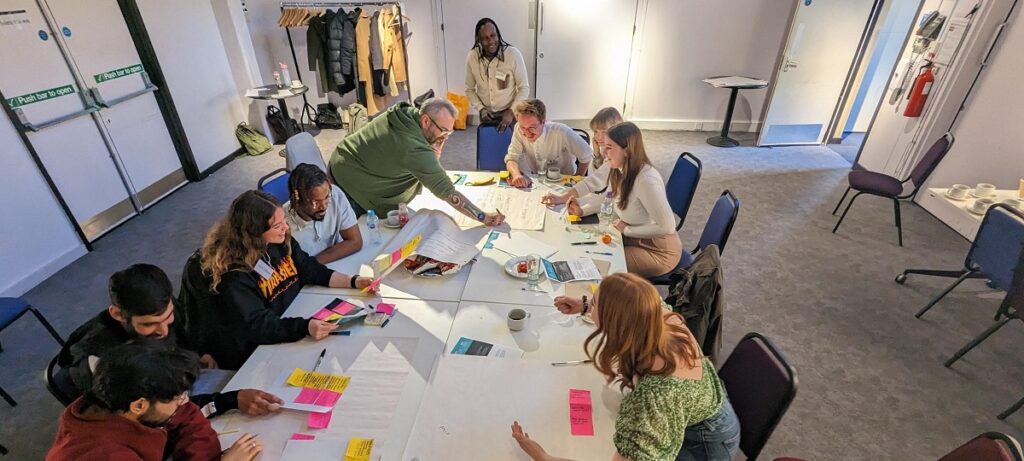
Over the past few months, applicants met participating agencies for an informal interview and meet & greet session at The Watershed, where they had the chance to chat directly with the participating agencies to learn more about the businesses and remit of the available roles.
Rob Pellow, executive technical Director at Armadillo, commented on the recruitment process:
“Meeting the potential interns and working with them in the workshop was an unbelievably eye-opening experience. Nothing had prepared me for the level of passion, curiosity, and dedication to finding work that energises them.”
The successful applicants will now work for six months, during which time they will undergo two placements at two different agencies, both lasting three months each.
The programme will provide a mix of professional skills training, creative skills training, inspirational talks, networking events, mentoring and opportunities for future employment.
Zoe Lynes, head of services at Babbasa, said:
“This is an amazing opportunity we are creating for young people across Bristol and our collaboration on this scheme has been a real passion piece for all of us here at Babbasa.
“This project has allowed us to foster a strong collaborative relationship with Bristol Creative Industries, aligning our mutual goals of raising up those young people who have been disadvantaged, to work together to build opportunity, excitement, and progression for those young people who need it most in Bristol.”
Chris Thurling, chair of Bristol Creative Industries, commented:
“We are delighted to welcome our first cohort for the internship programme. Just the recruitment process itself has been incredibly rewarding for all involved and has only reinforced the reasons as to why we set up this initiative.
“We are incredibly excited to see the new recruits take the next step in their journey and kick off their roles with some of the very best creative businesses not just in the city of Bristol, but in the UK.”
“We are three days in to our internship and I’ve been amazed at the impact our intern has had. A super smart, super tuned-in, super vibrant personality, she has been a breath of fresh air to the agency. Her youthful energy and her lack of limits has inspired our agency already. Imagine what she will do in week two!”
Matt Woodman, UX/UI designer, Atomic Smash:
“Our first placement, Mohd, has been an absolute pleasure to work with. He’s keen, curious and engaged to a level that I could only have imagined. We can see exactly why he’s been matched with our agency and are excited for the coming weeks working together.”
Phill Lane, head of brand and insight, ThirtyThree:
“As an agency that works with employers on recruitment marketing, culture, and DE&I comms, it’s vital that we have an employee base ourselves that represents the whole of society, and benefits from the diversity of thought and experience that that brings.
“For us, the Bristol Creative Industries Internship Programme is a tool to help address the fact that there are underrepresented groups who don’t have access to, of understanding of, the creative industries – and that, without a dedicated programme of outreach, education and access to opportunity, we’ll never change that.”
Lucy Rees, people and culture manager, Newicon:
“The creative industry has needed a disruption for quite some time, this internship is just that, with diversity comes innovation and I cannot wait to see the impact the interns will have in all of our business over the coming months.”
Paula Newport, director of people and culture, Aardman Animations:
You are currently viewing a placeholder content from YouTube. To access the actual content, click the button below. Please note that doing so will share data with third-party providers.
You are currently viewing a placeholder content from YouTube. To access the actual content, click the button below. Please note that doing so will share data with third-party providers.
Shani Hawthorne Williams, senior digital marketing strategist, Newicon:
You are currently viewing a placeholder content from YouTube. To access the actual content, click the button below. Please note that doing so will share data with third-party providers.
Discover how Something Familiar prioritises mental wellbeing in the workplace during Mental Health Awareness Week. From exciting activities like cold-water swimming and rock climbing to encouraging open conversations, they share their journey towards building a supportive and mentally healthy team.
How are you feeling? Really.
Wellbeing, and particularly mental wellbeing is something that’s come into focus since the pandemic. With people being much more aware of it, supported by things like Mental Health Awareness Week (this year May 15th to 21st), there are now far more conversations and articles about it than ever before. And most positively, there are lots of businesses putting energy into it.
We’re one of those businesses, and perhaps because Something Familiar was formed just before the pandemic, the wellbeing of everyone here has always been something we’ve tracked and worked on. It’s an ongoing focus for us, and we’ve consciously put lots of activities and measures into place to ensure that we can all maintain a healthy mental outlook.
In our previous post, Kris briefly talked about his interest in mental health, and his positive experience doing a mental health first aid course. In this post, we’ll take a look at some of the things we’ve been doing to help maintain our team’s mental wellbeing in the potentially stressful agency environment.
We’re fortunate in that the ‘young’ agency environment has always been a fairly relaxed one. So things that other businesses are introducing to help employees feel better about being in the office, are ideas that we’ve always embraced. Who hasn’t been in agency with a dog or three wandering about (ours is a Romanian rescue dog called Moon)? Been buzzed by someone on a skateboard? Or nodded along to the agency’s playlist?
More exciting than you think!
As great as those things are though, we’ve reached the stage where the approach needs to be considered and evaluated. Which admittedly, doesn’t sound like the most exciting thing in the world. But although it does demand initial focus, the benefits, the activities and the rewards of it all are certainly worth it.
We’re going to talk about some of the things we do, and how they all feed into the wellbeing of all of us here.
But before we do this, we’re sharing in case what we do inspires you to try similar things. This isn’t to highlight how amazing we are, but to show how fairly simple things work really well for us. The idea is just to start having conversations about mental wellbeing and help to ‘normalise’ it in the workplace.
So what do we actually do?
There are two main strands to our approach. The first is the activities we do (often, but not always together), where the wellbeing element is below the surface. It’s all about bonding, or challenging ourselves and just having/sharing experiences.
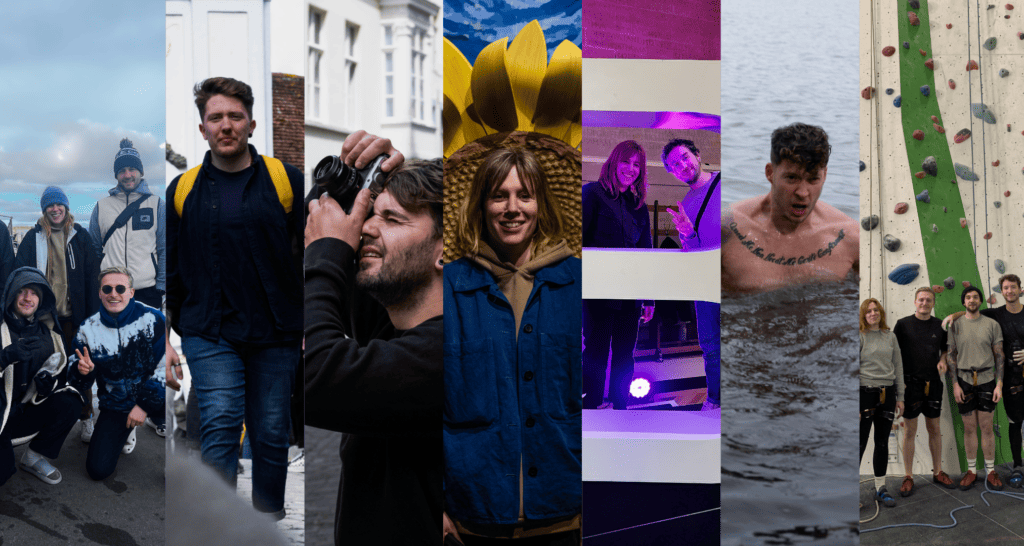
So we have cold-water swimming, rock climbing and a running club, but we also have a trip each year (Bruges last year), plenty of casual socials, training and in the summer months we have shorter working hours so everyone has more time to do these kinds of things.
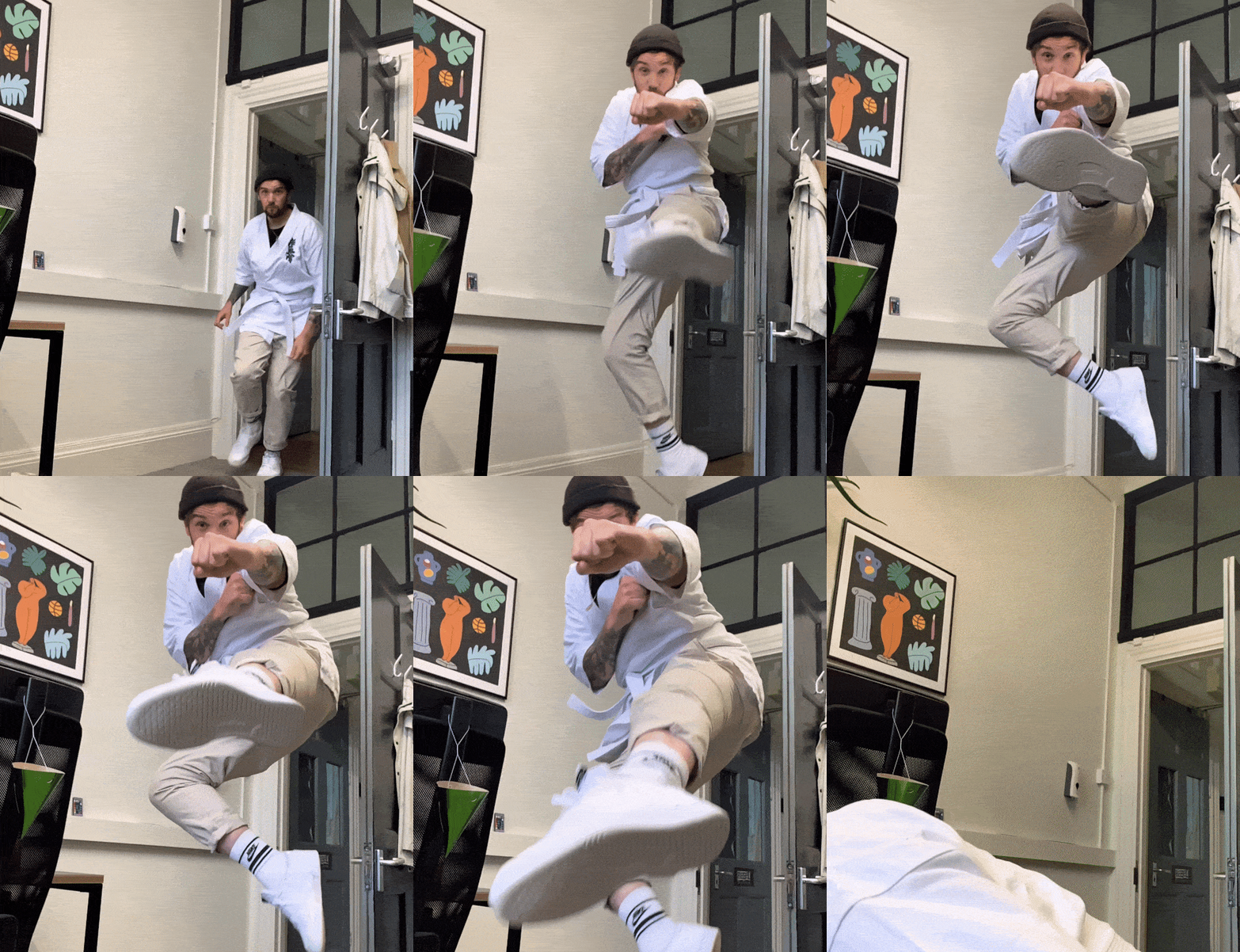
The whole team is encouraged to get out of its comfort zone so none of us feels in a rut. If someone loves hitting the half pipe on their BMX, or risking their vitals with Taekwondo, then we don’t want to get in their way. Literally or metaphorically. Why? Because that’s what makes them feel good.
Talking it out
The second strand is more formal (but not entirely, as you’ll see), but it wouldn’t work without the looser activities above. By ‘formal’, we simply mean that we’re addressing mental wellbeing directly. Everything here relies on people being comfortable enough to truthfully talk about how they’re feeling, and to open up to others. And that’s exactly why the activities we do are important – they build those bonds of friendship and trust that open the doors to the kind of conversations which could make somebody feel vulnerable in front of others.
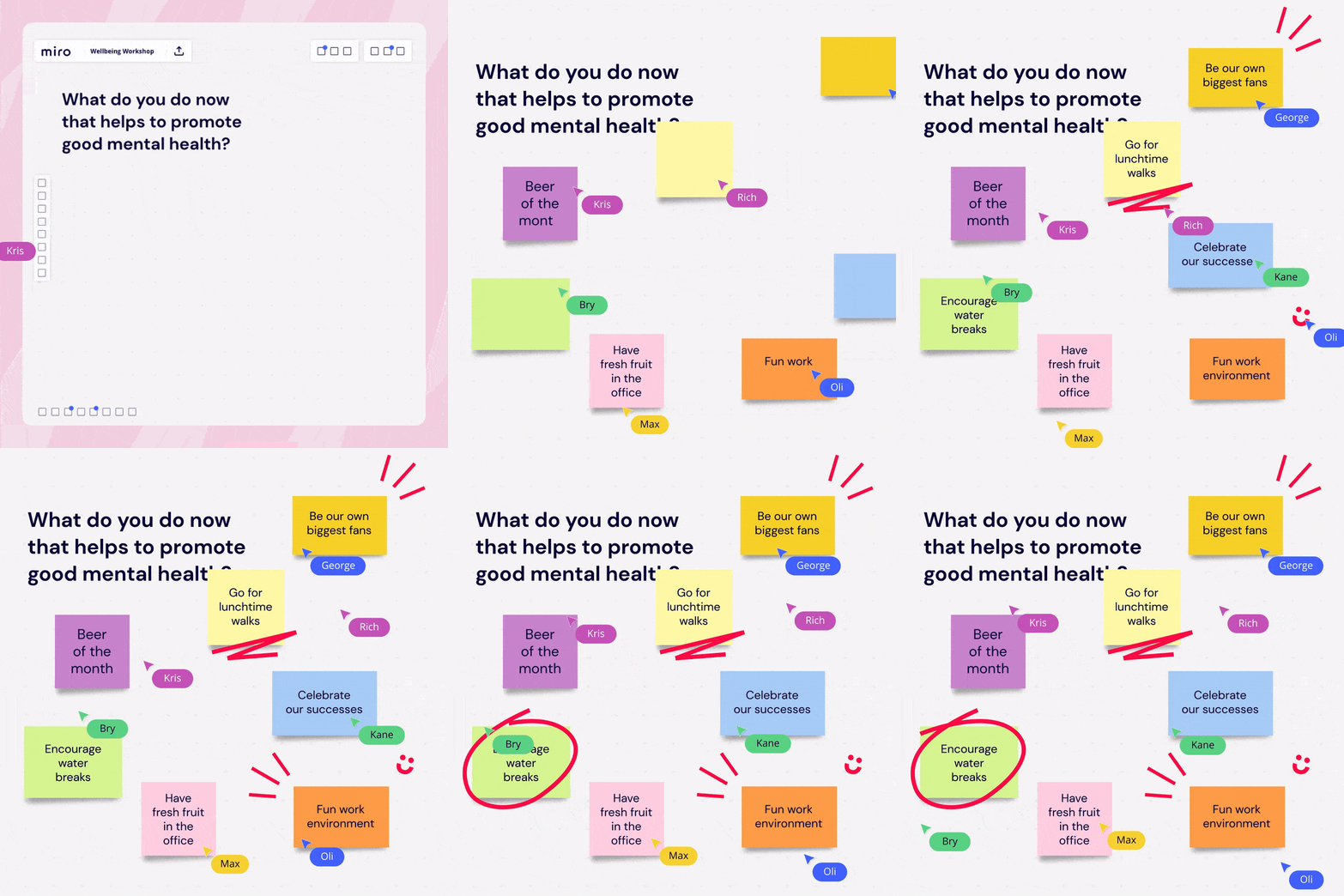
These take many forms, and have evolved over the time we’ve been working on this. For example, for a long time we’d been having a beer of the month – just a simple sit-down beer once a month to talk about the projects we’d been working on. It then became more focused, with ‘thank yous’, encouraging the team to talk about people who’d made the work possible. It then evolved further to include feedback and to actively reflect on projects; the good, the bad and yes, the ugly too. It can be awkward of course, especially at first, but now everyone realises why we’re doing it.
We also make it a priority to ask people how they’re feeling, but with the aim of actually finding out! If someone asks, we need to answer truthfully, and out of 10! If someone’s feeling low, or angry, we want to know so we can leave them alone, make them a cup of tea, or give them whatever support they need.
This kind of thing doesn’t work unless people are willing to tell the truth, and we have a culture here in which everyone feels comfortable enough to do that. We all understand that it’s not prying, it’s looking out for each other. That’s actually one of the best things that can come out of this higher level of awareness: recognising the signs in others (and yourself) and not being afraid to flag them up.
Getting started…
There’s no denying, it can be a leap to go from saying ‘good morning’ to someone to asking them how they feel, how they really feel, and it can’t be done overnight. But it’s important that we’re all on that journey. For anyone looking to start the process, we created a Wellbeing Workshop for Miro which will give you a framework to talk about wellbeing, and help you to put a plan of action together with the rest of your team. It’s a good first step, and ignoring the fact that we created it, it’s a great starting point if you’re looking to develop your business’ wellbeing plan.
Another great source of info on wellbeing is mind.org.uk, which gave us a lot of insight when we were building the workshop.
…and keeping going
One thing to note is that the things we need to remain happily mindful change over time, so our support should continually evolve. What worked last year may not be as effective this year. We’re always looking to bring in new ideas to keep those conversations going, whether they are silly social events like a charity-shop tracksuit-a-thon (which we’re seriously considering, see below), to different ways to share the mental tools we’ve all developed, such as our workshop.
And that could be where you come in. We’ve mentioned getting out of our comfort zones, and we’re looking for something new this summer. We’ve shortlisted some ideas, and are committed to doing the one that gets the most votes. So just take a second to head to LinkedIn and click on the one you think we should be doing. Whichever one we end up doing, the experience will benefit us… even if it isn’t at the time! If you have an idea you think we should be considering, then please let us know and we’ll add it to the poll.
B2B and corporate PR and communications specialists, AMBITIOUS PR is celebrating the second year of achieving 50% year-on-year revenue growth.
Now, the agency is setting its sights on £1.65million revenue in 2023, securing its position as one of the largest independent PR agencies in the South West.
The agency’s expansion over the last year came from new retained clients including Acorn Property Group, Albert Goodman, BGF, Lifetime, Neighbourly and Truespeed. Growth also came from the agency’s existing client base expanding their remit.
To drive forward further development, AMBITIOUS is investing in marketing technology to deepen the insight they can provide to clients through data and analysis.
The agency will also be launching a dedicated digital PR offering and an end-to-end content strategy, creation, and marketing service.
Based on client demand for international PR support, AMBITIOUS has joined the IPRN (International Public Relations Network) – the international network for independent agencies. This will provide clients with access to a global network of PR agencies as well as driving new business and international knowledge transfer.
In the last year, AMBITIOUS owners Lis Anderson and Sarah Woodhouse have promoted four team members and have now created four new positions which will represent a 22 per cent growth in headcount, taking the agency to a 22-strong team.
Sandra Hodgson has been promoted to Finance Director, Joe Wright to Strategy Lead, Katy Barney to ESGLead and Joanne Wilson to Office Manager.
AMBITIOUS is now hiring for an associate director, senior PR consultant, PR executive, and bookkeeper. Working with UWE Bristol and The Strive Internship Programme, the agency is also committed to a comprehensive internship programme to support entry level talent.
The agency, which has experienced no staff attrition in the past three years, has invested in a competitive benefits package designed in consultation with employees and created to be industry leading.
Lis Anderson, Founder & Director, AMBITIOUS said: “Our growth has been fuelled by investing back in the business – investing in our employees through personal coaching and development, through our competitive salary and benefits package, through new hires, new software and new technology to constantly develop and move our business forward.”
Sarah Woodhouse, Director, AMBITIOUS said “Many of our recent new business wins have come from large companies based in the South West or companies with a regional office here, procuring the national, regional and sector PR and communications support they need on their doorstep.”
AMBITIOUS focuses on b2b and corporate PR in core sectors including technology, ESG, property and placemaking, professional services, financial services, education and skills, healthcare, and the public sector.
Core services include strategic planning and communications, media relations, digital PR, press office management, thought leadership campaigns, issues and crisis management, stakeholder mapping and engagement, employer brand communications and media training. Content services include content strategy, creation, and marketing.
Female-founded, owned, and run, AMBITIOUS celebrated its first decade in business in 2022.
Interested in working for or with AMBITIOUS? Please email Sarah or Lis at [email protected]
Built in the community, focused on the future.
Spaceworks is a platform for makers, creators and businesses of all shapes and sizes. They have been on a mission to bring community driven work spaces to Bristol since 1985 and needed a rebrand and website to match.
Accountants, artists, engineers and more, Spaceworks has been housing, helping and supporting some of Bristol’s brightest brands. They know that when it comes to office rental, businesses need affordable spaces with the right support in place to help them grow.
The new identity by Rhombus nods to the past while looking forward, inspired by the diverse community of businesses who call Spaceworks their home.
The brand balances play with trust and accessibility, uniting makers, creators and businesses across Bristol.
The visual identity was built around the new logo, evolved from their geographical footprint in Bristol. The wider identity system uses more abstract evolutions of the logo to portray the businesses of all shapes and sizes that make up Spaceworks.
The colourway is an evolution of the green they launched with in 1985, as a nod to their rock-solid history. The typeface (aptly titledFounders Grotesk from Klim Type Foundry) is a sans serif with plenty of character, inspired by some of the buildings they have transformed over the years – grade 2, big hangars, small nooks and stained-glass windows.
Rhombus developed a verbal identity underpinned by three core pillars to express the brand: Supportive, Passionate and Dynamic. The output included a set of key messages to announce the new brand to Bristol and beyond, as well as writing tips to help the Spaceworks team communicate with consistency and flair.
In order to bring Spaceworks into the digital world, Rhombus developed a motion language that encapsulated the brand’s warmth, approachability and character, inspired by collaboration. Bounce. Grow. Support!
Spaceworks are the same today as they were when they started – committed to providing affordable, supportive spaces for diverse businesses in local communities: Easton, Barton Hill, St Phillips, Stokes Croft, St Jude’s and Bishopston.
Their new custom website is testament to this commitment, delivered in partnership withPapaya Studio – making it easier than ever to access workspaces and business support.
“Rhombus Studio created our new branding and website and we are delighted with the results. It was a thorough and carefully planned process and aside from creating some amazing visual assets, they took the time to understand our business and aspirations and created something that represents us very well.” – Spaceworks
To tackle the visible lack of diversity within the UK design industry, Kinneir Dufort’s EDE Programme offers an opportunity for three students from minority ethnic and heritage communities entering their third year of university to take part in a funded 8-week internship.
Supported by an industry-wide EDE Council, with distinguished council members of minoritised ethnic backgrounds from AstraZeneca, LettUs Grow, No7 Company, FluoretiQ, Unilever and Reckitt, the programme offers three students in their final year an immersive opportunity to learn and develop within an industry environment. The successful applicants will also take part in school outreach programmes to help increase awareness of the design sector to help boost diversity in future generations of designers.
Along with 8 weeks of hands-on experience, mentoring and advice, the individuals will receive a £2,000 sponsorship along with £1,000 travel and accommodation expenses. This opportunity is open to all universities in the UK.
The driving force behind the programme, Sunny Panesar, Head of Portfolio Management at KD, is driven by the lack of ethnic diversity in the product development industry, and the need for change. Sunny says: “Having often been the only person of colour in the room throughout my career, the lack of ethnic diversity is striking, if we’re truly going to design a better world, we need to reflect the people we’re designing for.
“I understand how important it is for ethnic minority students to have this opportunity, firstly to make them aware of this incredible industry as a career option and then to help them overcome complex systemic barriers holding them back when trying to break into industry. Our goal is to level-up and give minoritised ethnic students an equal playing field. We want to offer interns a high-quality experience which is immersive and potentially life-changing; they will learn and develop within an exciting and unique environment with external mentoring from industry experts.
“The last two years have been a resounding success for KD, we have taken on full-time employees from the scheme and have a seen a vast improvement in all areas of diversity throughout the team. This year, we’re excited to launch the programme again and encourage students from around the UK to watch our webinar and submit their applications.”
Kinneir Dufort believe that they, and the wider innovation, design and product development industry need to do more to mirror the diversity of who we are designing for within the UK, and beyond.
Learn more about the application criteria, how to apply and the deadline here. If you would still like to learn more and see if this programme is for you, you can watch our recorded live Q&A with our EDE Council.
I’m very pleased to announce that we have officially joined the ranks of B Corps (a B Corporation is purpose-driven and creates benefits for all stakeholders, not just shareholders).
Avid Torchbox watchers will have seen this coming. As far back as June 2022 when I was already confident that we’d gain accreditation having finished the Impact Assessment, I wrote about why it had taken us a while to get on board and how the assessment was improving us. The wait since June was partly due to the B Corp queue, partly to the verification process (when a B Lab representative works with you to evidence your claims), and partly because changing our Articles of Association to encode our intent ‘to have a material positive impact on society and the environment’ took longer than it should have.
The assessment process has been really useful and I’ve no doubt that it’ll continue to make us a better business over time. The framework isn’t perfect – there are things that surprised me, for example, while it assesses fair pay, it doesn’t assess the gender pay gap – but it is strongly rooted in the UN’s Sustainable Development Goals and certainly drives positive change in businesses, as it already has done in ours.
There has been some negative criticism of B Corp, notably the FT article from February this year which raised issues including a couple of big ones for me:
Nestlé subsidiary Nespresso getting “B Corp” status in May 2022
A loophole which allows certain organisations to concentrate on scoring highly in one pillar to achieve 80 points while largely ignoring the other pillars of better business that B Corp champion
Nestlé has a dubious record on human rights (I started boycotting Nestlé products as a student due to the baby milk scandal) and as the Fair World Project says, Nespresso’s single-use coffee is hardly a ‘force for good’.
I did feel like the B Impact Assessment was more focused on how you do business rather than what you do. You can get points for having a positive impact through your business purpose, but I don’t think you lose points if you have a negative impact. And, if you can still get to the magic 80 by doing well in other pillars, that explains some surprising B Corps. That said, you do have to commit to being a force for good, which was the “changing our Articles of Association to encode our intent to have a material positive impact on society and the environment’ bit that I mentioned earlier.
Apparently, things are gonna get better, particularly the single pillar loophole. According to Includability:
B Corp is planning changes in standards from next year, which will force B Corps to be more transparent about where they are around 10 specific topics – including fair wages, diversity and inclusion, human rights, action on climate change and risk standards – to resolve the issue around companies being able to rapidly meet the minimum points requirements in a single area.
We’re fans of Doughnut Economics, and as an employee-owned business, we’re excited that Kate Raworth believes that employee ownership can be a ‘powerful starting point’ to help redesign business. In the FT article, Erinch Sahan of the Doughnut Economics Action Lab says of B Corp:
“What they do really well is creating a community of business people passionate about sustainability,” adds Sahan. “When you tell everyone you’re now a B Corp . . . people expect that you really do prioritise people and planet. But that’s not necessarily the case.”
However, as we graduate as a B Corp, I think it’s important to focus on the bit before Erinch’s ‘but’. From the process we’ve been through, the B Corps I’ve met and the events I’ve been to, it feels like we are joining a club of business with energy and ambition to be a force for good. I thank B Lab for that and encourage them to continue in their mission to ‘not stop until all business is a force for good’.
A score of 80 qualifies a company for B Corp Certification (Nespresso scored 84.3). The median score for ordinary businesses who have done the assessment is 50.9. Torchbox achieved a B Corp score of 114.5. The focus is now on improving our score next time, so I want to end with a hat tip to a couple of friends who are giving us something to aim at, Wholegrain Digital who scored 122.1 (they were early adopters and have been assessed three times already, they’ve also made Best for the World lists four times) and our recruitment friends at Adlib in Bristol who recently re-certified with an incredible 130.3, nice one!
‘User experience’ is a term you may be familiar with. It’s a term that’s frequently used in the context of web design, and for many good reasons. A user’s first impression of your company can make or break their perception after they visit your website. The navigation of the website is another crucial component of the user experience. Learn more about the significance of navigation in web design and what to look for in a web design firm that prioritises strong navigation by reading on.
What is Navigation in Web Design?
The term “navigation” describes how a user navigates a website. It has buttons, menus, and links that users may utilise to access the site’s various pages and functions. The navigation of a website functions essentially as a map for users.
Why is Good Navigation So Important?
As you will see in the reasons listed below, navigation should be given priority in web design.
1. Improve the User Experience
The user experience is important when it comes to web design, as was already established. A professional web development company is aware that effective navigation enables people to quickly access the information they are looking for on a website. If a user can’t quickly and easily locate what they’re looking for on your website, they’ll probably leave and never come back. On the other hand, users are more likely to interact with the website and perhaps even make a purchase when they encounter smart, user-friendly navigation.
2. Boost SEO
The practise of improving a website to appear higher on search engine results pages (SERPs) is known as search engine optimisation (SEO). It should always come first when selecting a UK web development company. Since search engines use it to crawl and index the site’s pages, effective navigation is essential for SEO. The navigation of a website might make it difficult for search engines to comprehend the site’s structure when it is disorganised or unclear. The ranking of the website may suffer as a result.
3. Improve Accessibility
Accessibility should be taken into account while creating websites. When a website provides clear navigation, people with disabilities—like those who use screen readers to navigate the site—will find it easier to use. Always work with a web design company that is aware of how well-organised and labelled websites are simpler for screen readers to traverse.
4. Reduce Bounce Rate
The amount of visitors to your website that leave without interacting with it is referred to as the “bounce rate.” A high bounce rate frequently indicates that users are having problems accessing the website. Users can locate what they’re looking for more easily when the navigation is improved, which also boosts engagement and lowers the bounce rate.
5. Boost Conversions
The basic objective of a website is to turn visitors into paying clients. By making it simpler for visitors to carry out desired actions, such filling out a contact form or finishing the checkout process, effective navigation can play a significant role in this.
A successful website must have effective navigation since it affects a number of variables, including user experience, accessibility, and SEO. It’s crucial to pick a web design company that prioritises and sets a high value on effective navigation.
Why should I employ a web development company? Have you ever thought. Without an excellent website, your business simply cannot develop in the current digital era. It would be simple if all you required was a website, but what you actually need is a strong and effective online presence. However, many business owners are still ignorant of this fact today. Some people still give little thought to whether a website’s claims about its goals, its vision, and the services it provides are accurate. Fortunately, you are not one of them, and you have come to this page looking for information and solutions. You are probably wondering why working with a skilled web development company is the best way to achieve the desired outcome, which is an excellent website.
We are available to you to discuss the advantages of working with a web design and development company like WeAgile when creating a new website or redesigning an existing one.
Let’s start by responding to some often asked queries.
What does a web development agency do?
A web development business with expertise may build a website from the ground up. Professional programmers and web designers at WeAgile have a wealth of experience creating digital goods (such as websites, applications, e-commerce sites, and software) for a variety of sectors. In order to find the best solution for you, web designers and web developers work together. They construct frameworks and databases, come up with innovative concepts, and decide on a language for both front-end and back-end development. The task of a web designer is to create the user interface or user experience. The team at WeAgile is skilled in many areas, including testing, deploying, and maintaining digital products.
Why shouldn’t I just choose a web developer or a web designer who is a freelancer?
First off, WeAgile has a team of web developers, web designers, SEO experts, project managers, testers, and more. Since a single freelancer simply cannot have all of this knowledge, you will undoubtedly receive a product that is subpar. Not because they are not professionals, but simply because it is difficult for one person to be an authority in so many different fields.
Second, the WeAgile team will be able to continue offering you assistance and upkeep long after the website has launched. Many people are unaware that even after the website is launched, it will need to be updated frequently for a variety of reasons. For example, if your website is built in WordPress, there are frequent updates to the platform and plugins; if you want your website to rank well on Google, Google regularly updates its algorithm; etc. You need to stay on top of all of this, and more often than not, a freelancer won’t be able to support you long-term due to other commitments.
Thirdly, clients will obtain the best level of service possible because a web development agency sets a great value on both its reputation and its long-term goals. Because you won’t be able to leave a Google review or a Trustpilot review for an independent freelancer, work is frequently completed a little sloppier and, most likely, no one will ever find out if your website is not functioning as intended. It is not even an exaggeration to say that we work with the best freelancers in the world. They are each true experts in their respective fields, but when it comes to web design and development, it takes a team (designers, developers, project managers, SEO experts, testers) to produce a top-notch outcome.
Fourth, your website will be delivered quickly and efficiently, and it will be a well-rounded final product because many professionals will have had input in the end product, often coming up with innovative ideas that will greatly benefit your company’s digital presence. This assumes nothing completely unforeseeable happens (like a significant change in the scope of work). For instance, if a freelancer you are working with experiences a personal setback (such as illness or a vacation), your project will be completely abandoned.
Let’s add another “layer of safety” for choosing a web design agency over a freelancer if the list above hasn’t already persuaded you. An agency is always a legitimate firm with owners, directors, insurance, etc. They won’t suddenly vanish one day or stop returning calls while the project is still in process.
Can you build your website without the help of a web development agency?
Yes, there are platforms like Squarespace or Wix where you can try your best to build a straightforward and appealing website. No matter how much you know about designing and constructing websites, you will never be able to match the experience of a web development business.
Working with a web development company like WeAgile has a lot of benefits. Here is a succinct list of them:
You will be able to achieve more in a shorter period of time,
You will benefit from the latest technology edge,
Your web presence will be bespoke,
Your website loading speed will be superb,
You will have a strong competitive advantage,
Your web presence will be reliable, secure and sustainable,
Your web design will be impeccable,
Your website’s user experience will be on the spot,
The overall quality of the website will be much higher,
The website will be developed based on an effective web development strategy.
We hope we answered some of your questions and removed any doubts you might have had about choosing a web design and development agency. But if you still have any questions, please do reach out and we will get back to you in no time.
Launched in 2018, Studio Floc is the brainchild of our founder Florence Cassell. Armed with a loyal iMac and a vision to design for good, she started the journey that we’re now on as a growing (and currently fully female) team – supporting great people doing great things in the world through effective and beautiful design.
We’ve taken the time out of our regular routine to learn from her experience and be encouraged by a real life, real time example of a female business owner.
What inspired you to set up your own agency?
Hello everyone – Florence here! Great question – two key things come to mind. Firstly, my experience of starting out as a designer was a tough one. Most of the agencies I worked in created harsh and very isolating environments. I’m grateful because I did learn a lot in those early days but I believed it was possible to have an encouraging and honouring studio culture whilst still achieving excellence. This inspired me to start Studio Floc. My aim is to create a place where my team and I work hard and efficiently whilst also encouraging and supporting one another.
And then secondly, I’m passionate about playing my part in making the world a better place and love to use design as a tool to do that. Last year we had the privilege of rebranding Love Your Neighbour, an incredible charity who are committed to helping people overcome pressing social challenges by tackling the root causes of poverty through crisis support, debt advice, employment training and community care. We’ve been able to give them a visual language to communicate their message effectively in order to impact more lives. So good. I appreciate that we’re only one agency empowering a select handful of clients but imagine the world we’d live in if everyone played their part.
What has been your biggest challenge as a female founder?
When I was about to start Studio Floc back in 2018, only 16% of founders in the UK were female. I was surrounded by and learned from men. Don’t get me wrong, I learned a lot from those guys and many of which I still turn to for advice and are supportive in all I do. The presence of men has never been the issue, it has been the lack of women to encourage, trail-blaze and to be inspired by that has made the journey more difficult.
What has been your biggest learning point as a female founder?
I continue to lead the business that I feel called to run even though historically (and sometimes discouragingly) the odds aren’t stacked in my favour. Oh and the other thing is that Imposter Syndrome is a bitch. It has taken me a while but I’m still improving my ability to differentiate the helpful, guiding voice in my head from the unhelpful, self-doubting one. If you’ve got the tools there in front of you but need that extra push of confidence, just be bold and go for it.
I would highly recommend checking out Craig Groeschel’s book ‘Winning the war in your mind’ if this is something you struggle with.
Do you have any advice for women starting out in business?
Three key things – firstly, surround yourself with a support network of friends/mentors who will encourage you on the journey. Secondly, never stop learning. And thirdly, in my experience, more often than not, people respond to expertise delivered with confidence, not gender.
Driven by purpose, we use creativity to enable the makers, equip the innovators and empower the world-changers. We specialise in branding, print and digital design.
Have questions for our founder? Looking for help with branding, print or digital design work? Let’s chat! Get in touch at [email protected]
We’re delighted to share that Unfold have taken on organising the Smart Cookies meetup group, started by the wonderful Nic & Nat Alpi, previously of Cookies HQ.
Smart Cookies is a quarterly meetup group of over 1,000 entrepreneurs, involved in the Bristol creative and digital industries, passionate about design, development and marketing.
We want to continue the events in the same spirit and ethos as our predecessors, promoting collaboration between disciplines so we can devise better solutions for all aspects of the creative process.
Each meetup will feature either individual speakers or an expert panel, where discussion will centre around a set theme related to building and growing digital ventures.
Whether you’re a tech professional, an entrepreneur, freelancer or student, there will be something for you. It’s a great opportunity to meet new people, make connections and join a community of smart cookies.
Come along and be inspired or – if you’d like to share your own experiences – why not contact us about becoming a speaker?
You need to load content from reCAPTCHA to submit the form. Please note that doing so will share data with third-party providers.