
A Bristol energy company and a Dorset broadband provider out-read the entire FTSE 100
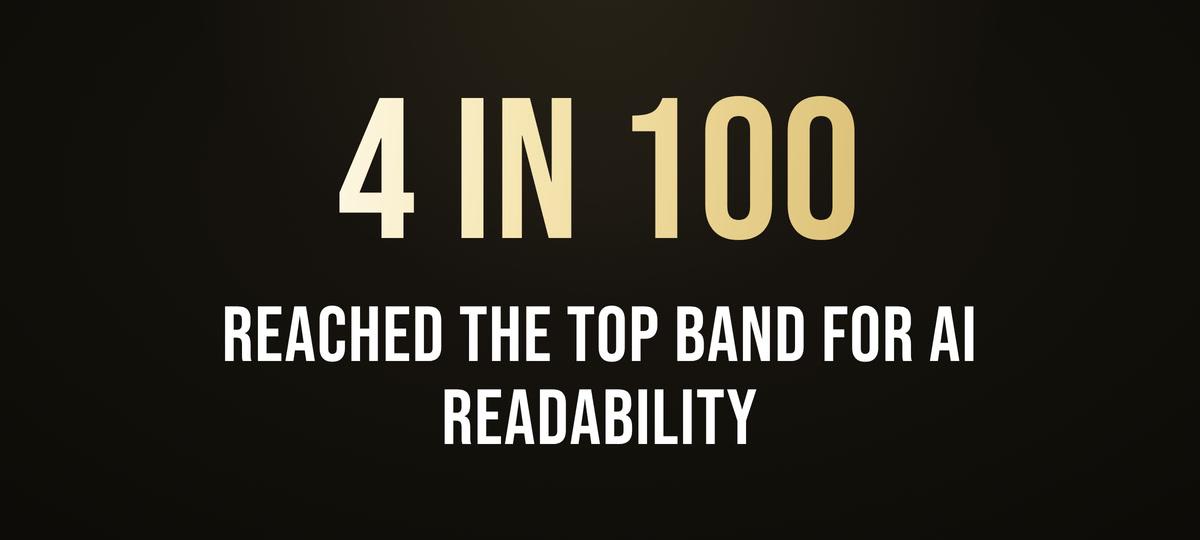
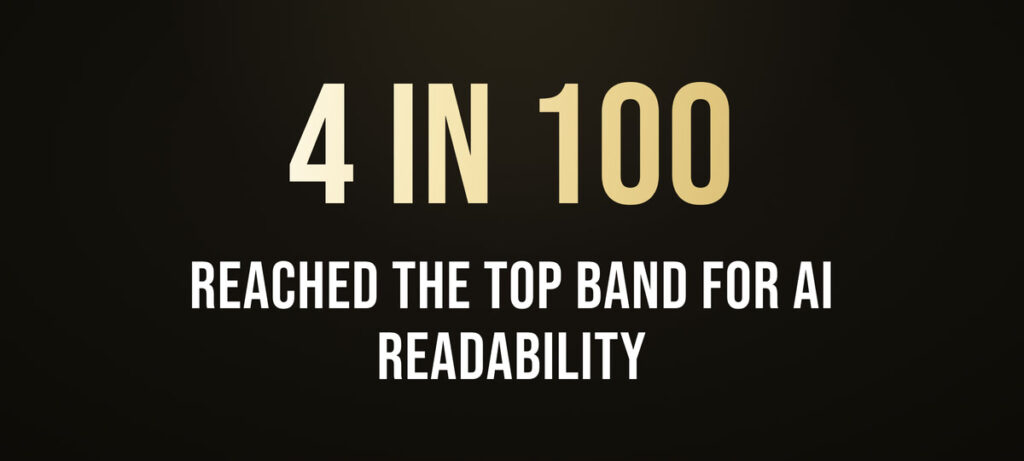
Four in a hundred. That is how many of the 2,174 companies a machine could read on 1 September 2026 scored 70 or better on how well an AI system can understand their website. Not one of them was a FTSE 100 company. Two of them are based in the South West.
Those figures are from the September run of the Crane Index™, the benchmark we publish every month across nineteen industries. It is a first-party measurement, free to quote, and anyone can re-run it on their own site in about a minute.
Every month we approach the leading organisations in each industry and score their websites out of 100 on the three things a machine has to do before it can recommend you to anybody. Can it reach and read the page. Can it act on what it finds there. Can it confirm, from the site itself, who the company is. The three combine into one composite score.
What this measures is legibility to software, not how a site looks or how much traffic it gets, and it matters now because of how people increasingly ask. Put a question to an assistant and you do not get ten blue links to choose between. You get two or three names. Being one of those names depends on whether a machine could read you well enough to be confident about what you do.
The September run approached 3,178 organisations. 2,174 returned enough for a machine to score at all. Across the nineteen industries the typical median was 44 out of 100. The strongest field was Technology and Software, at a median of 57. The weakest was Automotive, at 40.
OVO Energy is headquartered in Bristol. Wessex Internet is a full-fibre provider built for rural connections, based in Dorset and serving Dorset, Somerset, Wiltshire and Hampshire.
Both out-score every FTSE 100 constituent we were able to read. Of the FTSE 100, 79 were approached and 40 returned a page a machine could score. The strongest of those was GSK, at 64. None reached 70. The UK’s biggest online retailers tell the same story: 142 storefronts approached, 77 readable, none at 70, the field led by Office at 68, with Seasalt Cornwall fourth at 63.
The reason a rural broadband company can lead a national industry table is that this score responds to structure rather than budget. Nearly everything the Index measures is a decision about how information is arranged, and nearly none of it is expensive.
Does the site say plainly, in text rather than inside an image, who the company is, what it sells and where it operates. Is that identity written the same way everywhere it appears, so that a machine reading three sources arrives at one answer instead of three. Can the pages that matter be reached and read without running any JavaScript, given that plenty of the systems now reading the web do not run it. Does a page answer the question in its own heading in the first sentence, rather than four paragraphs down. Are the claims and credentials on the site linked to somewhere that verifies them.
None of that is a redesign. Most of it is a week of unglamorous work that no one will ever compliment you on.
Two things, pointing in different directions.
The first is about your own firm. Agencies and studios sell judgement, and judgement is exactly what a machine finds hardest to verify from a website. If your site is a beautiful showreel with the substance carried in images, video and PDFs, you have built something that reads brilliantly to a human being and thinly to everything else.
The second is about your clients, and it is the more interesting of the two. In eighteen of the nineteen industries we measure, even the leader scored below 80. The top of almost every table in the country is genuinely unoccupied. The work that moves it is information architecture, copy that answers before it flourishes, and consistency across everything a business publishes. That is not a new discipline anyone needs to hire for. It is what good creative and content people already do, pointed at a reader nobody briefed them on.
Any site can be run against the same three reads at thecraneconsultancy.com/crane-index-scan. It is free for three different sites a day and there is no account to create. The full tables, the method and the reports are at thecraneconsultancy.com/research, published under a Creative Commons licence so anyone can quote or republish them.
The score itself is the least useful part. What is worth your time is the list of specific things a machine could not work out about you, because that list is short, it is boring, and almost nobody has done it yet.
Every table is re-scored on the first of each month, and the movement becomes public record. For now, the top of almost all of them is unclaimed.
Nic Crane is founder of The Crane Consultancy and publisher of the Crane Index™, the monthly AI readability benchmark.

Senior-led paid media, technical SEO, and web analytics. Removing agency fluff and junior hand-offs by having senior practitioners handle strategy, code, and platform execution directly.
Bath Animation Studio Spud Gun Studios Wins Creative Tech Business of the Year and Lands EntreConf Small Business Nomination
A Bristol energy company and a Dorset broadband provider out-read the entire FTSE 100

Government appoints two freelance champions to advocate for freelancers in the creative industries
You need to load content from reCAPTCHA to submit the form. Please note that doing so will share data with third-party providers.
More Information