Originally posted to www.carnsight.com
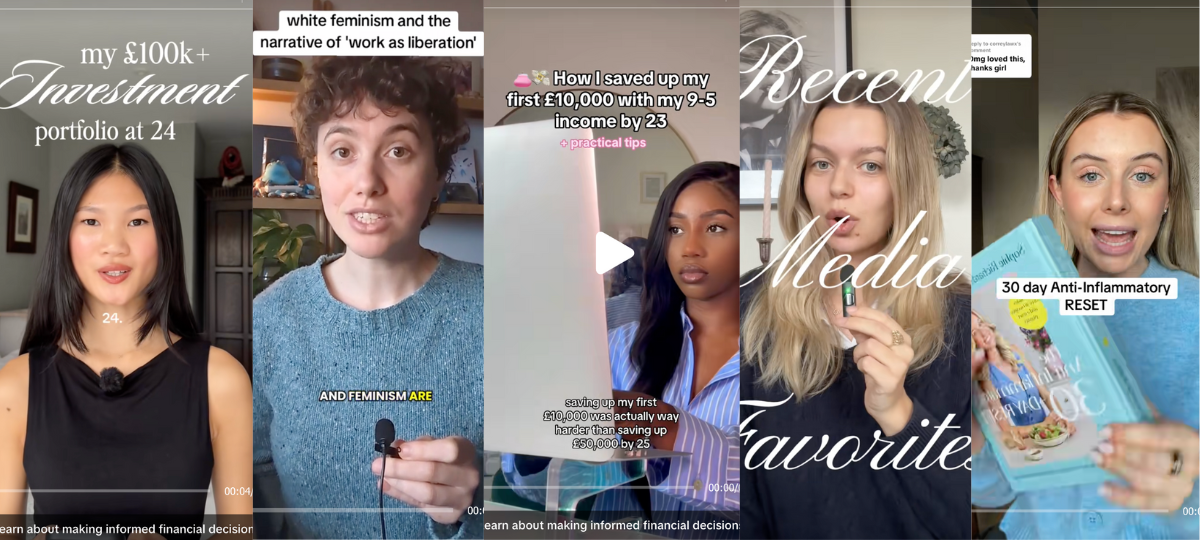
(Images include @miarosemcgrath @cultivatingboldspaces @kenniebukky @sumimrk @sophie.riichards)
Influencer marketing has dominated social media the past couple of years, but it reached new heights in 2025. Influencers held power in the online space, with audiences hanging on their every word. For brands, this was a goldmine, and influencer collaborations created natural advocates for their brand, raising awareness and having deeper connections with their audiences.
But what’s the top influencer trend in 2026? After so much hype, creators are needing to get more inventive with their content. When we can no longer rely on aesthetics, what should we now expect?
We’re seeing a slowdown in liking creators simply because of the aesthetic. Consumers are demanding more for their attention, and content that doesn’t deliver real value will get easily lost.
For 2026, users are wanting intellectual stimulation. We’re seeing the rise of knowledge-based content: think finance influencers, cooking pros, and fitness specialists. These categories aren’t new, but the way influencers create content around them is evolving. Before, posting luxury reels was enough, but now consumers want to actually know how they can achieve the same. With the rise of FinTok (TikToks related to personal finance and money management), there’s a push for complete beginners learning how to invest in stocks and budget accordingly. With GymTok and meal prepping, it’s not about watching good food behind made anymore, people want to learn the macros behind what they’re eating, and how this fits with their wider nutrition goals.
Whatever the category, influencers are realising they need to go more in-depth to still be adding value for their audience. Of course, you can’t share knowledge on a topic without full explainer videos, meaning we’re still going to be seeing long form content. And long-term influencer partnerships are beneficial here, as you have more time to build the connection with audiences and learn what they want to see more of (eg a weekly series explaining a topic). We’ll also still be seeing the same push for micro and nano influencers we saw in 2025, as these niche communities yield stronger engagement and brand loyalty.
With so much competition in the digital space, audiences will reward creators who really take the time to explain something. From now on, aesthetic doesn’t hold engagement, audiences want to know what’s in it for them.
This need for intellectualism has largely come from cultural shifts in 2025. Once ‘doomscrolling’ was coined, audiences were confronted with how much time they were spending across social media. The effects on mental health became much more openly talked about, and people became more aware of how harmful social media can be. This was also paired with the rising pressures for self-development – ‘winter arc’ first started trending in 2024, but came in full effect in 2025. The idea of spending all our free time on TikTok lost some appeal, and people wanted to consume social media in a more meaningful, productive way.
So ‘doomscrolling’ shifted to scrolling with purpose, which is where this demand for knowledge comes in. People don’t want to feel their time is wasted on social media, but that they’re learning something new. The Substack ‘Instead of Doomscrolling’ gained popularity, and it became a trend to share the media you had consumed for that week.
As with any trend, we have to remember: social media is not a reflection of real life. Sure, there’s authentic moments, but sometimes the online competition causes influencers to steal and distort the facts. Already, there’s been instances of creators plagiarising content, and passing off commentary as their own. It calls into question ‘performative intellectualism’, where the demand for intellectual content is outweighing the intellectual creators. Influencers are at risk of stealing content or giving insight into a topic they’re not particularly qualified to give, risking the trust with their audience.
And, the same as aesthetic content, this is competitive. Users are referring to the ‘Media I consumed’ trend as the knowledge Olympics, and already creators are being questioned if they’ve actually watched what they say they have. Expanding your knowledge is always a good thing (!), but claiming you’ve watched 18 TED Talks in the past week becomes far-fetched. If it’s seen as a performance, it won’t land with audiences.
Like with all trends, I think this is one that will eventually plateau. ‘Winter arc’ and ‘75 hard’ was a physical challenge for audiences, and whilst it was meant to be encouraging and spur motivation, it often left people feeling burnt out and socially withdrawn.
It won’t be long before people become mentally overwhelmed by the sheer amount of long-form intellectual content, and short clips of kids yodelling become the rage again.
But for now, we’re here for it, and ready for content that feels useful and productive. Off to go learn about the stock market…
Want to learn more? Have a look at projects vs partnerships in influencer marketing.

At Carnsight Communications we create strategies and campaigns to showcase our clients’ brilliant work through PR, content and social media. We help them get noticed by the right audience, at the right time. We specialise in creative agency PR.
You need to load content from reCAPTCHA to submit the form. Please note that doing so will share data with third-party providers.
More Information