
Briefs are the essential building blocks for any successful marketing campaign. Without these frameworks and KPIs, defining your growth parameters is impossible. But putting together an effective creative brief from these numbers alone can be challenging.
Do you know how to take a marketing brief and turn it into a creative brief? Do you know how to respond to the creative without being burdened outcomes?
It’s often said that creativity is a process of subtraction, not addition, and that the best creative processes are the ones that have minimal time between the initial idea and execution.
Developing a creative strategy from numbers and KPIs alone, is a tall order. It’s too easy to get stuck in the numbers, the time between idea and execution drags out and before you know it, the creative process becomes stagnant.
But there are some simple and effective frameworks that you can use to overlay onto marketing briefs and create incredible, people-centric creative briefs in the process.
An effective marketing brief should come from the business perspective. It needs to focus on organisational goals, like increasing brand awareness, sales or even social media following.
The marketing brief should be tactically led.
It needs to establish the overarching goals and objectives and desired outcome, timelines, deadlines and budgets. Details on the target audience are crucial, as well as channels and outlets, which are a slimmed down version of channel mapping.
It should also include any challenges or barriers you may have historically faced. This an often overlooked, but nevertheless crucial part of a marketing brief.
Together, this makes up the bones of a campaign structure. When responding to or developing a marketing brief, these numbers and information are crucial. But at this stage, this is a strategy, as outlined by the marketing team.
They aren’t the best pathway to a creative outcome.
So, when it comes to building out creative tactics, we need to take these numbers and spin them out in different ways.
The creative brief should be led by the mraketing strategy. But not entirely governed by it.
A creative brief needs to feature objectives, audiences, project aims, messaging and tone, budget and assets and deliverables.
But from this brief needs to come great creative assets.
But when you’re ideating those creative assets, doing so in the mindset of solely the marketing strategy, can be difficult. This can often be where businesses hit roadblocks.
Whether it’s responding to or creating excellent creative briefs, the challenge here is one of mindset and the most common thing you’ll see here is people getting caught up in the numbers and objectives of a marketing brief.
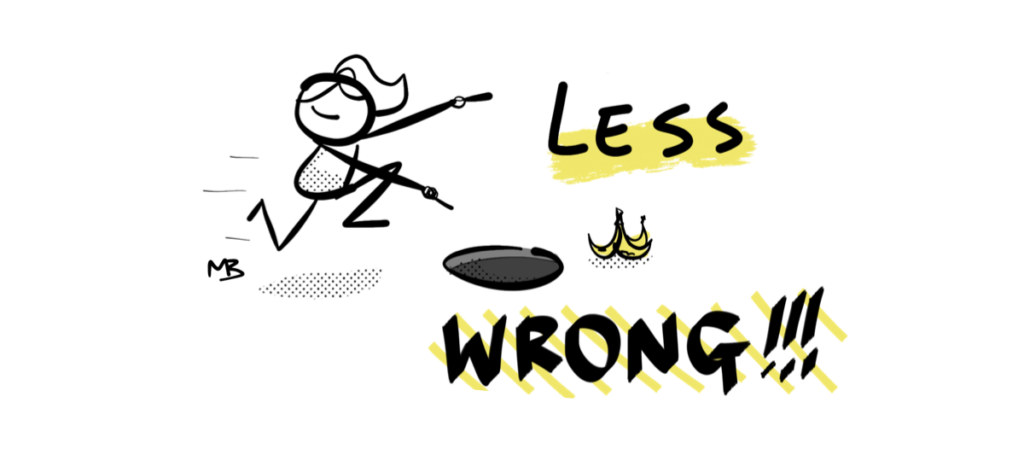
Great creative responses, don’t respond to the numbers and KPIS. They respond to the human challenges behind those numbers. Starting with the numbers and the outcomes oftentimes leads to stifling creative outcomes.
To be truly impactful, your creative process needs to be framed in the perspective and experience of the customer.
So, when working as a creative team, a really useful and effective way to get out of this mindset is to approach your creative briefs with the Get, Who, To, By method.
Developed by global advertising agency BBDO, the Get/Who/To/By (GWTB) model is an elegant approach to creative briefs.
The beauty of this model is that it allows you to succinctly translate a marketing brief into an actionable line. This clear, focused statement can act as a tremendous catalyst for creative thinking and actionable ideas.
This is how GWTB works:
Let’s look at how these would work in more detail.
You’ve received a marketing brief from a cloud software start-up. It wants to shake up the market and introduce its solutions to a category of mid-sized enterprises. The marketing brief will include tactical and strategic outlines, such as:
This is how you would overlay the GWTB method over this brief:
See how the GWTB method instantly humanises the challenge at hand?
Presenting the challenge as a fundamentally human one, rather than a set of KPIS, makes this process far easier to understand, contextualise and respond.
It’s turning numbers into personality. Taking the tactics, numbers and KPIs and placing a real-life human lens over the top of this can do wonders for your creative process. Rather than looking at numbers and deliverables and trying to derive and devise a series of actions in response, you’re presented with something much more tangible.
It doesn’t matter what sector or set-up you’re in; this tangibility helps.
BWTB can help you with briefs for cloud software, running shoes, recruitment and tomato ketchup… it’s completely agnostic and applicable to any brief.
It helps to break down creative barriers. It helps you better understand the target audience beyond just numbers and stretch targets. It helps you get under the skin of customers and understand their perspectives and their challenges.
That then gives you greater inspiration when ideating and developing concepts; in short, it helps you get creative projects off the ground.
Unpacking a marketing brief to deliver creative responses and solutions comes with its challenges. The biggest one, the mental roadblock. When presented with the challenge of increasing share of voice, inbound leads, and delivering a thought leadership programme, the mind can wander.
It can often wander to less helpful and more creatively stifling places.
Frame your creative approach in the human perspective, not in terms of marketing goals and objectives to be achieved. Do this, and you’ll soon find that the bumps and rolls of creative ideation become smoother and your capacity to nail a creative brief heightens.
GWTB, those four little letters can really help focus the mind creatively. By reframing the marketing challenges as real-life human challenges, you’ll be able to find more applicable and more creative solutions to your campaign strategy.
You’ll find your creative process flows a whole lot smoother too. These four little letters have the power to temporarily unburden you from the quantitative data of campaign goals and KPIs. But never losing sight of the overarching project objectives and strategy.
Next time you assemble your creative team, think about these four little letters.
Remember, creativity and data don’t have to be mutually exclusive. They can be used in harmony.
You’ve just got to come at it the right way.

AMBITIOUS is an award-winning PR agency specialising in corporate and b2b communications, we aim high, just like our clients.
You need to load content from reCAPTCHA to submit the form. Please note that doing so will share data with third-party providers.
More Information