Throughout November, North Somerset Council will host a series of in-person and online business & support workshops for organisations within the region’s creative industry.
The workshops are free to attend and will run in partnership with WofE CA Create Growth, Super Culture, and the hive and will offer attendees early stage and developing business support, advice on grant and funding applications, as well as an in-depth overview of the Create Growth Programme.
Dates and Booking
In-Person Workshops:
Online Workshops (via Teams):
The workshops have been specifically designed for the creative sector and are open to any North Somerset organisation within the following or related categories: Advertising & Marketing, Architecture, Arts & Culture, Craft, Createch, Design, Fashion, Gaming, Music, Publishing, TV and film.
While the workshops are free to attend, places will be limited so please book early to avoid disappointment.
If you have any questions, please contact [email protected]
“I didn’t enjoy butchering this magnificent creature, but you apparently need a wake-up call that even you should be able to understand.”
Grant Hadwin
Domicide is the act of destroying one’s own home. It can also be a tendency, carried out through the repetition of thousands of hidden actions, mostly out of sight and out of mind.
I’ve been wanting to write a post on this subject for a while, but have been holding back, waiting for a triggering moment. And last Wednesday that moment arrived when the Sycamore Gap came crashing into the cosy living room of our collective imagination.
The loss of a beautiful lone tree fuelled a predictable outcry. The media fuelled the outrage, baying for the punishment of some ‘degenerate youth’, before pivoting to turn with less outrage on a ‘crazy old man’, perhaps a ‘former lumberjack’.
What is it about one tree that causes us such outspoken agonies while the destruction of the wider world continues unabated with passive acceptance? Could this have something to do with the power of the totem, working as symbolic pressure valve to channel and dissipate our collective sense of grief and loss at the destruction of our home, releasing our outrage so we can return to business as usual?
When I heard the news, my first thought was not for the tree but for the person who had chopped it down. What could have been their motivation? For this must have been a carefully planned act, and so can’t be easily dismissed as some moment of ‘madness’. No, to me, this felt like a howl of pain, a wake-up call that I recognised immediately.
In 2007 I started a 7-year filmed investigation into the motivations of another ‘environmental terrorist’, who orchestrated another attack on an ancient tree in an apparently mindless ‘crime against nature’. But it was not that simple.
On the islands of Haida Gwaii, a remote archipelago off Canada’s Pacific coast, stood a giant and genetically unique Sitka Spruce, known to the indigenous Haida people as ‘K’iid K’iyass’. Owing to the unusual yellow pigmentation of its needles, outsiders called it ‘The Golden Spruce’.
There it stood on the banks of the Yakoun River for 250 years, protected from the enveloping tide of industrial logging in its own protected reserve, complete with tourist trail and signage. Until one night in January 1997, when a lone former logger and timber engineer called Grant Hadwin arrived under the cover of darkness to cut it down.
For the Haida, ‘The Golden Spruce’ was much more than an object of scientific curiosity, a beautiful ‘freak’ of nature. For them this was a mythical being, a boy transformed into a tree, a sacred elder that stood as a wonderous manifestation of the connectedness of all things- a kin-centric belief system.
And Grant Hadwin, himself an instrument of the system of industrial extraction, had come to destroy it in a self-proclaimed act of protest. What kind of madness was this?
This is an extract from the letter that Grant wrote to the authorities justifying his actions:
“Dear Sir or Madam,
I don’t care much for ‘freaks’ whether they teach in University classrooms, sit in corporate board rooms, perform in the circus or are put on display as examples of old growth forest.
I mean this action to be an expression of my rage and hatred towards university trained professionals and their supporters whose ideas, ethics, denials, part truths and attitudes appear to be responsible for most of the abominations done towards life on this planet made in the name of ‘progress’.
I didn’t enjoy butchering this magnificent creature, but you apparently need a wake-up call that even you should be able to understand.
It was challenging to leave this majestic plant in a temporary vertical position.
The next storm will cause this one thousand year old plant to fall into or near The Yakoun River. Please find enclosed some of the last known photographs of ‘The Golden Spruce’.
Yours truly,
Grant Hadwin.”
And this was my film interpretation of the aftermath of what had happened.
What insight might this story give us into the mind of the individual who took down our cherished Sycamore?
And what does this particular choice of totem, the lone tree left standing in a sea of devastation, tell us about the timeless forces of corruption at work on humanity, and about our separation from the land, our natural home?
The Golden Spruce came with its own ancient mythology, with a story that began with the murderous arrival of the Europeans in 1774. The British came bearing ‘gifts’ of blankets laced with smallpox, hoping to wipe the indigenous people from the face of their land. 70% of the Haida population died in the enveloping plague, with lone survivors retreating into the sanctuary of the forest. Among them were a village elder and his grandson. As they fled the village, the boy ignored his grandfather’s advice not to look back, and found himself rooted to the ground, a boy transforming into a tree.
And there K’iid K’iyass stood for 250 years, one tree preserved by the logging company as a living cultural artefact, while the rest of the ancient forest was cut down and hauled to the mill, first as masts for ships of war, and then to build the frames of aircraft that brought death from the skies.
And the Sycamore Gap bears the same legacy. A lone tree, left in a sea of devastation, the land wiped clean by the civilising forces of Rome as far as the wall of Hadrian, built to keep out the savages who still lived from the land and who resisted agriculture, taxation and wage slavery. The wall was there to keep the money economy of Rome safe and sound until the empire burned under Nero, incinerated by the flames of its own self-serving corruption and arrogance.
#Storytelling #Filmmaking #Authenticity #Purpose #Meaning #FilmsToBelieveIn #DocumentaryFilmmaking #FilmProductionBristol #BristolFilmmakers #DocumentaryFilmmakerBristol
Savvy art buyers get the chance to snap up bargain artworks and join in the fun as the RWA’s Secret Postcard Auction returns.
Following the huge success of the 2022 Secret Postcard Auction, the event will run online from 28 October to 9 November, with a physical display of the artworks on show at the RWA from 4-9 November.
An unmissable event in the RWA annual calendar, and a major fundraiser for us as an independent charity, the Secret Postcard Auction offers you the opportunity to make the winning bid on original artworks by famous, or soon-to-be-famous, artists!
As the name suggests, all the artworks are postcard size – albeit a large postcard, at approximately 14 x 19cm cm (5½” x 7½”). The postcards can be viewed, and bids can be placed on our 32 Auction site. It’s great fun and bidding can get fierce but there’s plenty of opportunity to grab a wonderful original work of art for as little as £40!
This year, as well as being online, you’ll have the opportunity to get a closer look at the postcards while they’re on display in the Youngwood Room at the RWA from 4 – 9 November.
Last year’s postcards included works by Sir Frank Bowling RA, Eileen Cooper RA, Maggie Hambling, David Remfry RA to name just a few. This year’s entries have started to roll in and we can already confirm contributions from Jeremy Deller, Anne Desmet RA, Simon Drew, Gilbert and George RA, Kurt Jackson RWA, Andrew Lanyon, Sir Richard Long RA RWA, Mali Morris RA, Cathie Pilkington RA and Bob & Roberta Smith RA, with many more to be revealed.
All of the contributing artists are named, but the identity of who did which artwork is anonymous until the auction has closed.
Bidding opens for the public on 28 October and will close at 10pm on 9 November 2023.
Since its re-opening last year, the RWA has welcomed more visitors to its building than at any time in its history and brought life-enhancing creativity to people who’ve never had that opportunity before, but we can only continue to do this with your help.
As an independent charity with less than 1% of costs covered from the public purse each year, we rely on our fundraising efforts to keep the doors open and run our outreach programme, engaging people in some of Bristol’s most under-represented communities. The money raised by the Secret Postcard Auction is a vital contributor to our finances. Last year we were blown away by the support, as donations reached over £70,000, while bidders still walked away with incredible bargains.
Keep an eye on the RWA website for details, and GOOD LUCK with your bidding!
secretpostcard.org.uk
The Southwest’s biggest Annual Open Exhibition returns for 170th year
The RWA (Royal West of England Academy) is delighted to announce the return of its renowned Annual Open Exhibition for the 170th year, running for an extended period, from 9 September 2023 to 14 January 2024.
This dynamic and varied exhibition features painting, drawing, printmaking, photography, sculpture, and mixed media submissions and is a showcase of some of the most exciting artists from across the country and beyond.
Amongst this year’s selection panel were invited artist Charmaine Watkins; President of the RWA Fiona Robinson; artist and Rabley Gallery director Meryl Ainslie, and Academicians Dallas Collins VPRWA, Lucy Austin RWA, Angel Lizon RWA and Karl Singporewala RWA. They assessed every artwork on its own merits, anonymously, before being able to bring down the 4000+ entries to just over 400. No mean task when the standard of work submitted was so high!
Alison Bevan, RWA Director, says: “This year above all others, we have been quite overwhelmed by the variety and standard of artworks submitted by every kind of artist, from long-established veterans to fresh new talent just finding its artistic voice. No matter what kind of art you enjoy, we can promise every visitor will find lots to love!”
The Annual Open reflects the RWA’s ongoing commitment to championing world-class art in the region and creating opportunities for new and emerging talent. It includes in excess of £10,000 in prize money, including the £5000 Academy Prize and a £4000 Other Art Prize.
All the original artwork on display is for sale not only in the galleries, but also online, with prices starting at less than you’d pay for a furniture-shop print. Buying art helps support both the artists and the RWA, which is a completely independent charity (1070163) delivering life-enhancing creative opportunities for young people and adults across Bristol.
Tickets to the Annual Open Exhibtion are £8.90 (concessions available), or for just £15 you can buy an RWA Art Pass, which allows unlimited access to all our ticketed exhibitions as many times as you like for a whole year. https://www.rwa.org.uk
We often get asked what is “managed web hosting”, and why should a client host their website with us. When we build a website we always ensure it is built to modern coding standards, the core code is quick and efficient and there is no bloat or unnecessary plugins or code blocks that the website doesn’t need.
To ensure clients websites are hosted in the right way we recommend clients use our managed web hosting service for a variety of reasons.
We say to clients let us worry about your website so you can focus on your business, with our years of experience we can take care of the technical jargon and leave clients to get on with generating business. One of our business aims is to form long term business relationships and we have succeeded on this year after year, many of our clients have been with us since we started back in 2008 and we continue to this day, we are trusted to host their important websites that generate leads, sales and interest day in day out, 24,7,365.
But I can get hosting for £4.99 a month!? Yes you can get your website hosted for less than an expensive coffee per month, but you will not have any support, you will not have any backups, no updates, basic security, the website will be shared with thousands of other customers and you won’t get our great customer service and all the extras that come with that.
If you would like to find out more about our managed web hosting service, our web design service or for anything else please do not hesitate to contact us.
Read the full article on our website https://www.eckhomedia.co.uk/what-is-managed-web-hosting/
There’s no escaping artificial intelligence (AI) right now. Whether it’s facial recognition, your smart speaker or the latest Instagram filter, everyone is using AI – even without realising it. It’s in your social media feed, powering your digital payments, and even helping your phone or laptop to autocorrect.
Whilst some of it may seem like the stuff of science fiction, this is just the beginning. AI is no longer a technology of the future, so what can we expect, what does it all mean and should we be excited or concerned about its potential?
In this paper, we’ll take a look at the impact of AI on the entertainment industry, including what we’ve seen so far. We’ll then explore the potential, the implications, and how businesses and professionals can respond to industry change.
We’ll also discuss the importance of brand identity and how a solid foundation of brand strategy can help you to stay authentic, create cut-through and capitalise on the trend to avoid being left behind.
In a recent global artificial intelligence study, PwC estimated that the total economic impact of artificial intelligence will be $15.7 trillion in the period to 2030, making it “the biggest commercial opportunity in today’s fast changing economy”. And when we consider how many areas of our lives it’s already permeated, you can see why.
AI is essential in many of our day-to-day tasks, enabling automation, personalisation and even fraud detection. Most people are familiar with Virtual Assistants or Chatbots online, and are using apps to monitor traffic or weather conditions almost daily.
But AI and its machine learning (ML) subset are nothing new. The concept has been around since the early twentieth century, with science fiction depicting artificially-intelligent robots and dystopian futures, from Fritz Lang’s Metropolis in 1927 to franchises like Star Wars, Star Trek and The Matrix.
By the 1950s, the idea of artificial intelligence was cemented in the minds of scientists, mathematicians and philosophers the world over and, thanks to the development of computers and machine learning algorithms, AI flourished in the 60s and 70s. This continued into the 21st century, with more funding and computer storage bringing us to the age of “big data”.
The human capacity to collect data is now far outperformed by artificial intelligence, which can process huge amounts. Applying AI in this way has been successful in a number of industries including banking, marketing and social media, and of course, entertainment.
2022 was the year when AI became truly accessible, with the democratisation of Generative AI tools enabling the general public to use these algorithms to create pretty much anything, from the pope in a puffer jacket to Donald Trump’s arrest.
The big hitters in the space right now include OpenAI’s Generative AI model, ChatGPT, and image generators such as Midjourney. These algorithms take existing data and use them to create entirely new content.
Other examples include ‘deepfake’ technology, which uses AI to make it appear as though someone did or said something that they actually didn’t, by replacing the likeness of one person for another in audio or video.
Whilst there are legitimate concerns about the current trajectory of AI, it’s not showing any signs of slowing down, with the potential to improve efficiency, reduce the risk of human error and drive profitability.
Since artificial intelligence first graced our screens, television and film have continued to portray the future, with each reimagining of AI more elaborate and fantastical than the next. But now, the things we once imagined are becoming our reality.
In 2023, AI is having a huge impact on everything from imagery and video to set design and theatre robotics. It’s being used in sport to support officiating and by streaming platforms to recommend shows, films or music. It’s even written a play which premiered online in February 2021.
So, what does AI in the entertainment industry look like right now?
Like many other sectors, AI has been making its mark in the entertainment space for a while, be it film, television, music, theatre or sport. The technology has already been applied in ways similar to other industries – such as content personalisation on streaming services like Netflix or Spotify – and it’s evolving all the time.
Both platforms use AI and machine learning to provide recommendations based on users’ preferences. Netflix even goes so far as to personalise thumbnails to entice users, by ranking hundreds of frames from movies and shows to decide which are most likely to encourage a click.
Spotify also took personalisation to a whole new level earlier this year, with the launch of its AI DJ feature. DJ is “a personalised AI guide that knows you and your music taste so well that it can choose what to play for you”, delivering a curated lineup alongside a hyper-realistic commentary.
Let’s take a look at how artificial intelligence is being used in other areas of the industry.
We’ve already touched on film and TV’s long relationship with artificial intelligence, so what’s changed in the last near century? The short answer: a lot. In addition to personalised viewing recommendations and AI-powered distribution from streaming services, the technology is also being used in a myriad of other ways.
AI-powered platforms and machine learning algorithms are being trained and applied to casting, improving the accuracy and efficiency of decision making. They can also be used to enhance visual effects and even analyse
data of existing scripts to generate new, original stories.
It’s not uncommon for shows and films to be using machine learning or AI in some way or another, but its application in VFX is probably the most recognisable. Recent examples include Lucasfilm’s The Mandalorian where actor Mark Hamill was de-aged to depict a younger version of his original Star Wars character, Luke Skywalker.
Another interesting development comes from Texas-based company StoryFit, who are leveraging AI technology to compile data on storytelling elements in scripts. The platform helps writers and studios understand and better connect with their audiences, providing insights on character relatability, plot inconsistencies or even which books should be adapted for film.
Perhaps one of the most incredible applications of AI in film is the use of Neural Radiance Fields or NeRFs. This new powerful and low-budget VFX tool can learn how light is reflected in a scene and produce a 3D model that looks like it was shot on the same set. Using just a few input images, AI can fill in any gaps not covered by the camera and estimate how that section might look, creating light and manipulating images in ways previously unimaginable.
As a traditionally human-centric art, theatre is perhaps an unexpected place to find the presence of artificial intelligence. But it is seeing development of AI technologies, from lighting robotics to set design and even playwriting.
Examples include the use of tools such as Midjourney for theatrical design, to create set designs in collaboration with AI, and plays written entirely by AI such as THEaiTRE: When a Robot Writes a Play or the Young Vic’s production of AI which featured the GPT-3 system on stage.
The COVID-19 pandemic forced the world of live theatre into the virtual and digital space, with creators streaming live or pre-recorded performances to audiences at home. It also saw live theatre enter the metaverse, where AI has been integral to development.
Virtual reality and online spaces allow theatre to maintain its live identity, whilst providing new and more interactive ways for audiences to experience the narrative. One example is YouTuber Rustic Mascara’s appropriation of the video game space for live performance back in July 2022.
In an attempt to fill the live-theatre void during the pandemic, actor Sam Crane live streamed the first ever full production of Hamlet inside the online world of Grand Theft Auto. You can learn more about this and the future of theatre in the metaverse in ‘The Future of Theatre’ Conference from The Stage.
Emerging technologies such as AI, big data, and IoT (Internet of Things) are becoming essential components of sport in recent years – and there are already a plethora of applications. One of the most prolific is the introduction of technologies such as VAR (video assistant referee), goal line technology and Hawkeye, designed to help support officiating and decision-making.
Other examples include the use of computer vision for tracking and analysing human motion. Machine learning algorithms can use data to evaluate skills and player potential, ranking them to help with scouting or recruitment.
AI can also be used to predict results or ball possession, and provide game analysis, spotting trends, tactics and flaws.
The music industry has already had its fair share of run-ins with AI, with mixed responses. We’ve highlighted the use of AI in streaming to personalise listening and improve user experience, but what about AI-generated music?
2023 has already seen AI make headlines in the music world, including a music generator that can turn any subject into a Drake-inspired record, or a new Oasis album that imagines how the band might have sounded if they’d stayed together.
But this new era of music making is not without controversy. When French DJ David Guetta used AI technology to add Eminem’s ‘voice’ to one of his songs, it sparked a debate about copyright and creators’ rights. Calls to ensure that artificial intelligence is used to support culture and artistry rather than replace it have been heard across the industry, something we’ll explore in the next section.
It’s clear that the industry is taking note and exploiting AI technology where the opportunity presents itself. But what’s the impact so far, is everyone excited about the potential of AI or are there concerns about its future?
The evolution and increasing popularity of artificial intelligence is controversial across all industries, with many recognising its benefits and potential, whilst simultaneously raising concerns about risk.
In April 2023, Avengers’ Director Joe Russo predicted that AI could be making movies within two years. This, coupled with reports that the first AI-generated feature film will begin production in May 2023 is enough to send filmmakers into a flat spin – our worst fears about robots taking over could be realised in an imminent dystopian reality.
For the film industry, one of the biggest advantages of using AI is its ability to save time and resources. It’s also being used to improve accuracy and efficiency, analysing huge amounts of data – such as actors’ past performances or social media activity – to predict who is likely to be successful in a particular role.
This data analysis can also be used to analyse scripts and create new, original stories, saving time for screenwriters and providing opportunities for creativity and storytelling. AI can also save time and money on VFX, making it easier and faster to add visual effects, using NeRF and other technologies.
Theatre has already reaped some of the benefits of artificial intelligence in its ability to connect with larger audiences onlines. But there are also positives to be drawn from the use of AI in other areas.
Set designers Jason Jamerson and Michael Schweikardt discussed how tools such as Midjourney can be used to improve the design process, arguing that if used in the right way, it might help the process of materialising an idea for production. They explain that they don’t want AI to design the set, but it can give them new, interesting concept overlays whilst allowing them to remain the designers.
In sport, as well as helping to improve the accuracy of officiating – making sports fairer and less subjective – AI can also produce personalised training or nutrition plans for professional athletes. Thanks to the development of wearable technology which provides information about the wear and tear on an athlete’s body, AI can even help improve health and fitness or prevent injury.
Computer analysis is also used to influence line-up decisions before and during games. By comprehending metrics such as motion, speed, serve placement, and even player posture, AI helps managers and coaches make better decisions for their players and teams.
But having already seen how AI can be leveraged to support and improve traditionally-human tasks, what other positives might come from implementing this technology across the industry?
Despite these wide-ranging positive impacts, there are understandably concerns about the risks associated with the increased use of artificial intelligence. The most obvious is of course, the potential for AI to replace human jobs.
As algorithms and AI tools become increasingly advanced, there is a risk that they could replace some roles that humans would have historically carried out. Ultimately, this could lead to job losses in the industry along with a fall in creativity, uniqueness and emotional depth that only humans can provide.
The Guardian reported earlier this year that creatives across the industry are taking action against AI, in a bid to protect their jobs and original work from automation. Photographers and designers are among the first to face a “genuine threat”, and Hollywood filmmakers are worried that advances in the technology will mean fewer jobs across the industry and pose “a real threat to writers down the road”.
Another challenge to AI technology came in the wake of deep-fake technology being used for so-called ‘revenge porn’, with devastating consequences. Understandably, this led to wide-spread criticism and calls for further regulation in future developments.
There are calls for more regulation in other areas too. Apple’s development of synthetic voices for audiobooks has caused controversy and concern among the voice actor community. Some are worried about damage to the livelihoods of lesser-known actors and have pushed for the technology to advance more ethically.
So, will we see homogenisation or a decline in the quality of entertainment or art? Author and screenwriter Marthese Fenech thinks the technology needs regulation and a cautious approach. She explains, “I do very much understand and empathise with the concerns of my fellow creatives and artists. I still harbour some reservations about the technology; none of us wants to be replaced by a machine, something without a soul or the ability to emote.
“Admittedly, I am often reluctant to adopt burgeoning technology – it took me years to transition from an analog camera to a digital one. As an author, screenwriter, editor, and teacher, I’ve met the growing pervasiveness of AI with resistance and hesitation.”
However, having seen some of Mark’s work, Marthese has shifted her perspective: “Mark’s ability to completely transform a project from something passable to something transcendent has altered my perspective. To see something that has lived in my imagination for two decades come to life so vividly defies description.”
There’s no denying the huge potential of artificial intelligence. Now, the entertainment industry has the chance to capitalise on the trend and do incredible things.
It’s time to start viewing AI as an opportunity, rather than a threat. So, how can creatives not only stay competitive but make the most of new technologies?
BIFA founders Raindance, explain that “by highlighting the value of human creativity, filmmakers can differentiate themselves from AI and justify their continued employment”. They also stress the importance of staying “competitive by continuous learning and adapting to new technologies”.
The combination of both AI and human ability has huge potential. By collaborating with AI experts or learning how to use the tools effectively, creatives can learn new skills and stay ahead of the curve. This is something Mark is very interested in, with plans to help businesses and brands use AI to their advantage.
Whilst AI is great at solving problems or processing large amounts of data, there are nuances and concepts that only humans can offer. Some tasks are difficult or even impossible for AI to complete, such as those requiring empathy, social skills or physical dexterity.
So how best to maintain humanity and protect originality? One way is to have a strong foundation – to know who you are and what you stand for. In other words, a brand strategy that really stands up.
As the entertainment industry becomes more saturated and AI tools are used to create content or marketing materials, it’s more important than ever to maintain originality and authenticity that can’t be replicated by machine learning. If you want to create cut-through in a competitive space, having a strong brand personality and a plan for how you’ll deliver your key messages are both vital.
Whatever your role and niche within the industry, every brand or business needs a unique and authentic voice, even if what you’re saying or selling is the same or similar to your competitors. As AI technology continues to develop, creating human connections with messages that really resonate will help give you the edge.
There are ample opportunities to use AI tools to help you learn more about your audience or find new ways to connect with them. But at some point, you’re going to need that human touch to make whatever you create uniquely yours.
When it comes to creativity, there’s always a need to protect what is sacred. But if leveraged in the right way, artificial intelligence could be – and indeed already is – hugely exciting and potentially beneficial for the entertainment industry and business owners that don’t have blockbuster budgets but need to reach their ideal clients.
By having a clear brand identity and a strategy to help you bring your message to your audience, you can remain authentic, stay relevant and make the most of any opportunities AI might throw your way.
I believe in bringing the joy of entertainment to as many people as possible and helping business’s both large and small achieve their dreams. With over 20 years’ experience in the creative space and a finger on the pulse of the latest technologies, I’m here to help.
(Note this article was researched and written by humans!)
In today’s rapidly changing world, diversity, equity, and inclusion (DEI) are not just buzzwords; they’re powerful pillars that drive success, enhance problem-solving and fuel innovation within organizations. Recognising the significance of DEI, creative technology agency Aer Studios enlisted the help of HeyFlow to build a stronger and more inclusive workplace that would support their existing workforce better and prepare them for a wider range of experiences as the team grows.
Central to Aer’s new strategy was the desire to foster comfortable conversations around reproductive health and its significant impact on the workplace. And the best way to do that was to create a more informed and open dialogue to pave the way for greater understanding and empathy among employees.
Enlisting the help of Hey Flow they designed a two-step approach. Firstly, a comprehensive companywide survey to gauge the current level of understanding and comfort levels related to reproductive health in the workplace, assess management’s knowledge of existing policies and identify areas for further education.
Based on the insights gained from the survey, HeyFlow then hosted a half-day workshop for the entire team at Aer Studios that focused on key points to bridge the knowledge gap, foster open conversations, and drive positive change.
The impact of the workshop was evident, with 93% of participants left feeling comfortable discussing all reproductive health topics covered during the session. More impressively, 36.2% of participants felt significantly more comfortable discussing these topics than before the workshop.
The workshop also generated seven employee-raised initiatives to create a more inclusive and supportive workplace culture that could be presented to management for consideration as their DEI strategy was being further developed.
“We knew that as part of our ongoing DEI charter, there needed to be a particular focus on gender equality. But if we were going to play a role in tackling the gender imbalance and systemic issues we face in the tech industries, we were going to need some help. Working with the brilliant team at HeyFlow has created a more open dialogue among the team and inspired new policies to better support women at all stages in their reproductive journeys. If you are looking for impactful and meaningful ways to further your DEI efforts, I would highly recommend HeyFlow”
Tom Harber, Managing Director, Aer Studios
Reproductive health doesn’t stop while you’re at work. And by their partnership with HeyFlow, Aer Studios have set a precedent of ensuring companies are building on inclusive foundations that work for their current workforce. If you’re interested in finding out more about HeyFlow and how they can help you understand your female* workforce better then get in touch at [email protected]
Redeemer City to City is an international non-profit organisation with a heart for urban renewal – seeking to recruit, train and resource leaders to start new churches and strengthen existing ones.
Studio Floc were invited to create the identity and event collateral for Redeemer’s ‘Hub Weekend’; a high-profile fundraising weekend based in New York City.
Campaign idea
Taking place at the 1 Hotel Brooklyn Bridge, the driving idea behind the event’s campaign was one of connection, with delegates travelling from all over the world to join for the weekend. Studio Floc used the idea of connecting people and creating paths to new places as the core concept. This was rolled out across an extensive design suite of event collateral which was used in the lead up and throughout the weekend.
Never ending connection
At the heart of the event’s design concept was a vast illustration, created in-house to capture the breadth and vitality of life in New York City, the home of Redeemer City to City. Subtle details in the cityscape worked to honour other global partner cities. The mural, formed from continuous line drawings, was then, paired with type and colour, used both in sections and as a whole piece across the event assets.
Colour and typography
Supporting the illustration-heavy campaign was a subtle, yet extensive typographic system that was driven by the elegant serif, Chronicle Text (Hoefler & Co). Alongside the typography, a stripped back colour palette of navy and alabaster were used as the foundation for every design.
At the event
As part of the event, Studio Floc recreated the core illustration and hand drew a 17ft x 9ft mural in the atrium of the 1 Hotel Brooklyn Bridge, as a visual centrepiece to the event. Other designed collateral at the event included; table numbers, name cards, place cards, menus, bespoke fabric napkins, tote bags, information booklets and cards, signage, wayfinding, video creation and much more.
The Hub Weekend was a great success in raising money for the continuation of Redeemer’s work in cities worldwide. Studio Floc are already working on the event design for the next Hub Weekend in 2024 and look forward to further collaboration with Redeemer City to City in the future.
“Studio Floc are my go-to designers for event collateral. They are creative, sensitive, timely, very fun to work with, and brilliant at bringing my often-incomplete vision to a finished, effective, beautifully designed product. I’ve already recommended them to others and will continue to do so.”
Susan Thorson
Manager, Communications
Redeemer City to City
It’s an urban myth that the modern attention span has shortened to less than that of a goldfish – let’s clear that up first*.
However, the fact that we’re living in a world of content, content, content coming at us from all angles is certainly not fake news. When there’s so much easy distraction out there, how do you hold someone’s attention?
This becomes an even greater challenge when that message is a bit complex, dense or tricky to understand. Here’s where traditional communication methods can fall short.
It’s time to deploy some interactivity ⚡️
Why, though? Well first up, here are some statistics to mull over…
☑️ Only 10% of people remember what they hear
☑️ This increases to 20% of people who remember what they read
☑️ But a whopping 80% of people remember what they see and do.**
That makes a pretty great case for communicators to give people something to both look at and take part in at the same time. The people we’re trying to reach are no longer passive onlookers. Instead, they become active participants, influencing and being influenced by the content they’re engaging with.
Let’s explore the awesome potential interactivity holds in fostering meaningful understanding…
Capturing attention & boosting comprehension
Humans are nosey creatures and we’re naturally drawn to interactive experiences. Engaging our natural curiosity and prompting us to explore and participate means that complex topics become instantly more approachable, relatable and enjoyable.
The Luna 9 studio often employs this what’s-coming-next, storytelling style technique for creating explainers. It’s often attached to a topic that’s either very detailed and tricky to grasp, or – let’s face it – kind of dry.
To combat this we have to put the power in the user’s hands and make them want to learn, instead of just hoping that they pick it up. Scrolling explainer pages are a light version of interactivity that enables hands-on exploration. You’re encouraged to keep going (and learning) to uncover the next cool thing – while still giving you the power to explore at your own pace.
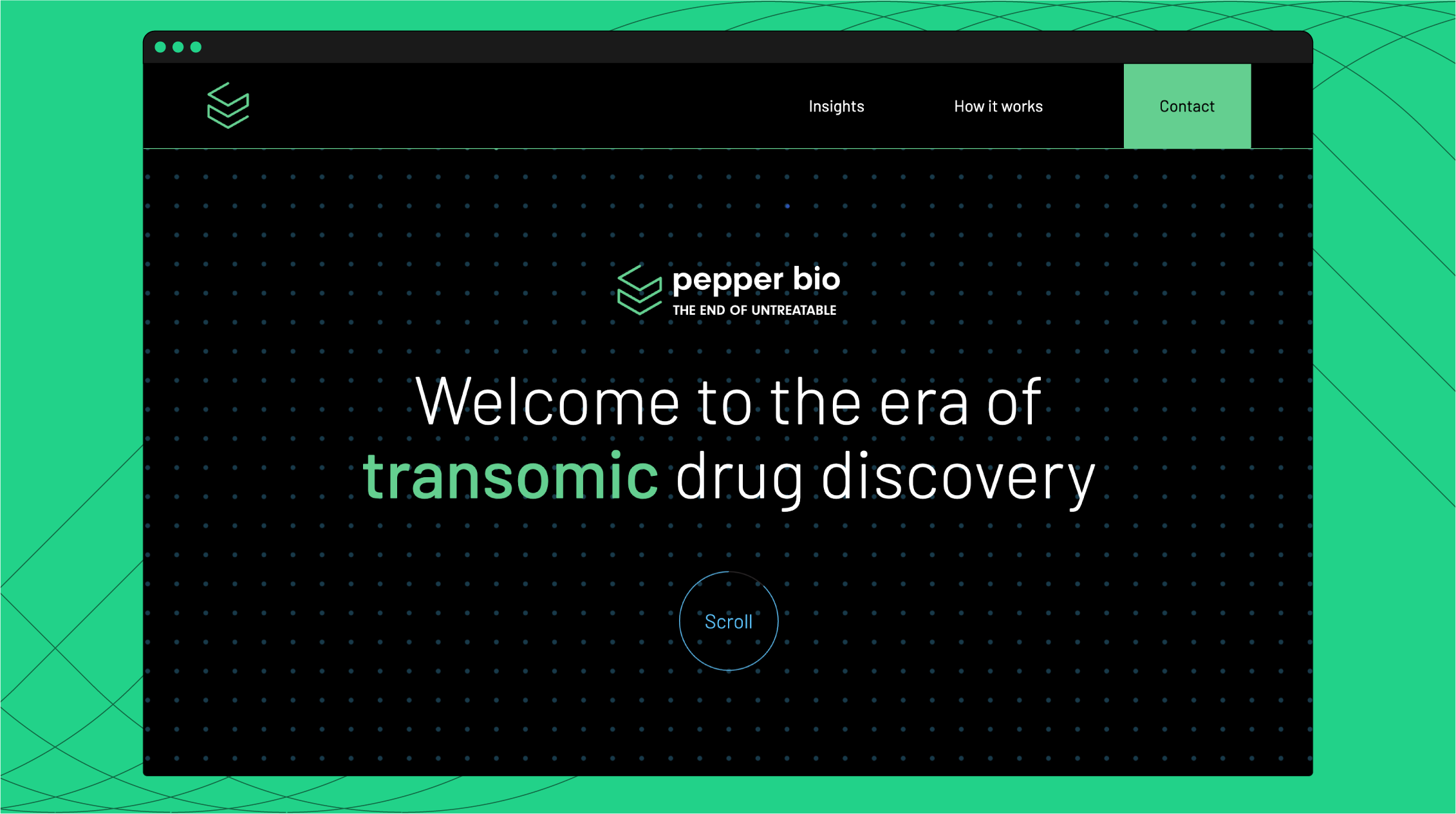
Check this out in action for the explainer page we created for Pepper Bio…
Personalised learning
True, it’s not school and there’s no exam (promise!), but everyone learns at their own pace and has different preferences when it comes to uncovering and digesting information.
Leaning into this fact with interactivity lets your audience embrace this individual nature and delivers your message with more accuracy.
It’s refreshing to be able decide what’s most relevant to you and choose what you read, click or watch – which enhances the retention of what you’re reading as it’s putting your needs front and centre. Everyone loves that!
We’ve used this tactic in interactive infographics and games for projects that have a vast amount of information to communicate, and the audience spans across lots of sectors and disciplines. Instead of shovelling absolutely all the info onto people, which is guaranteed to cause overwhelm, we structured the interactive journeys so that users can quickly recognise themselves in the opening screens.
From here they’re able to select their own paths, variables and options as they move through the graphics, so that they’re always in control. Fun!
This means they can track down tailored content that’s useful and most importantly – valuable – to them. Message delivered.
We employed this approach in creating the SME Net Zero challenge for BSI – check it out here.
Focusing all-important context
To avoid hitting snoozeville early, hard-to-understand topics are always going to need a little bit of context to convince your audience to stop and take note.
If you can’t relate stuff to real-world scenarios, then it’s usually asking too much of your audience to think in the abstract… Which means they’re unlikely to keep caring about your message. Bummer.
Interactivity can bridge this gap though, by providing examples and simulations that can really helps the people you’re trying to reach to join those dots between theory and practice.
We explored this element of interactivity with our Energy Landscape Map. We began with with a simple, visual grounding of the content, drawn as an easy-to-understand map for how everything works together as a network.
From here, the information is then layered on top, letting you whizz around at your leisure and uncover different levels of detail depending on what interests you, but all the while grounded with the knowledge of how it all interlinks back on the map.
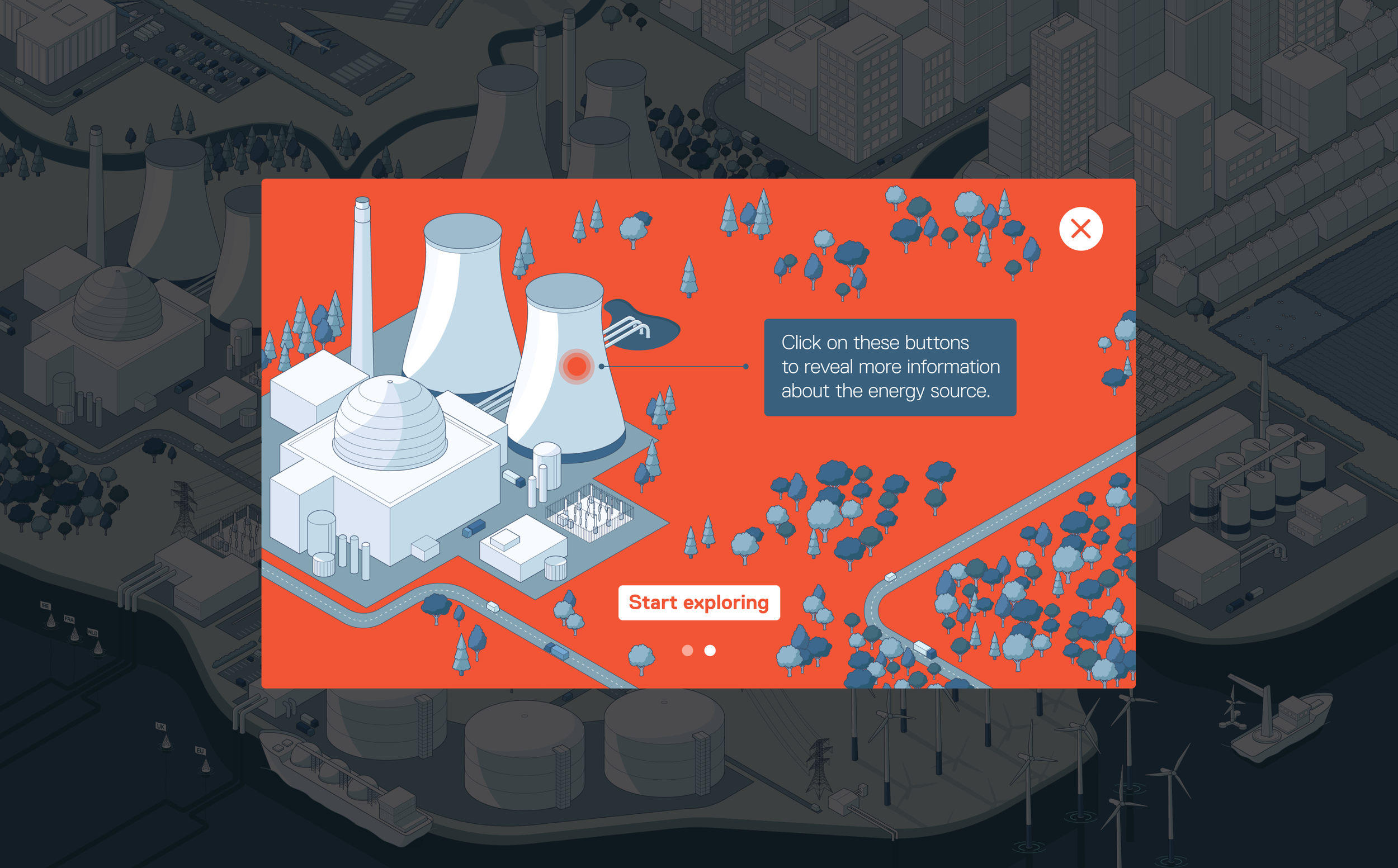
Check our our interactive Energy Landscape Map here…
So – what’s the all-round benefit of interactivity?
Simple! It boils down to the seeing and the doing. Combining the two with an element of storytelling can make even the most complex of subjects easier and enjoyable to explore.
Get in touch at [email protected] or sign up to our newsletter for news, updates and morsels of inspiration from the Luna 9 studio.
JonesMillbank, Bristol-based video production company, is now a Certified B Corp.
They join a growing community who are leading a global movement that makes business a force for good.
And Bristol is gaining pace, with over 70 companies from Ecologi to Triodos Bank, Too Good To Go, Psychopomp and Sawday’s inspiring change.
JonesMillbank have achieved a score of 94.7, but like all B Corps, certification is just the start of the journey.
“We’re incredibly proud to be a Certified B Corp, which recognises our ethos and all the work we’ve done to date. But we’re excited about how the certification will inspire us and our team to do more” said Russell Jones, Co-Founder at JonesMillbank.
“And there’s a huge opportunity for improvement. With the opening of our new TV and film studio, Nine Tree Studios, we’ll have more space and resources to support Bristol’s community, from internships to pro-bono hire, creative industry support, and event hosting.”
Nine Tree Studios will host this month’s Purpose in Practice event, run by Assembly, featuring Adam Millbank, Co-Founder of JonesMillbank, as guest speaker.
Of the B Corp Certification, Adam said “We’ve always aspired to leave a positive lasting impression on everyone we encounter. It’s been part of our culture throughout our journey. Being part of the B Corp community further amplifies this goal and will ensure the company will always balance its financial goals with true positive purpose”.
JonesMillbank commenced their B Corp journey in November 2019, and part of their certification recognises their support for impactful businesses, including over 50 education institutions and numerous charities and public sector organisations.
For more information and to start your own B Corp journey, visit www.bcorporation.net.
***
JonesMillbank are a full-service video production company.
They work in-house with a talented team of multi-disciplined creatives, telling authentic stories for a range of clients such as University of Bristol, IDLES, NHS England, The Royal Mint and Battersea.
jonesmillbank.com
01173706372
[email protected]
You need to load content from reCAPTCHA to submit the form. Please note that doing so will share data with third-party providers.
More Information