As part of ADLIB’s ‘True Diversity’ series, ADLIB had a chat with Seleeta Walker, who is widely recognised for her work in Diversity and Inclusion, where she has consistently championed progress and inspired change.
Her journey began with side-of-desk projects and has since grown into a dedicated career with meaningful impact. With experience spanning aviation, health and fitness, education, finance and IT, she combines lived insight with a strategic perspective. Named a 2024 CRN A List honouree.
Here, Seleeta shares why inclusion must move beyond awareness into consistent action, and how building truly inclusive workplaces today will shape better futures for the generations to come.
Seleeta Walker on Inclusive Futures: Creating Workplaces Worth Passing On:
This is a story that has been repeated many times, especially to those who know me, but we all have our individual journeys, and this is mine.
Once upon a time, I believed the world of work was simple: if you had a growth mindset, were consistent, determined, patient in your approach and grounded in a good heart, opportunities, doors and even financial abundance would be plentiful. In practice, as I pursued this ‘successful’ career in the aviation, health and fitness, education and finally finance and IT industries, I honed my instinctual awareness of the subtle dynamics at play.
Not so long ago, there was a moment when the world seemed to stop. An event so visible and so raw that it cut across borders and industries. People spanning cultures, identities, and perspectives were recognising the subtleties, the structural obstacles and unspoken disparities that had long shaped collective experiences.
It was momentous but also complicated. The greater the awareness, the greater the risk of further fracturing, and division rather than solidarity taking hold.
What struck me most was not a sense of resolution, but a sense of possibility. That if awareness could lead to action, and if action could be sustained, then change was not only necessary but achievable.
In the four years that followed, I invested time into side-of-desk projects supporting ethnically diverse employee engagement. It was unpaid, often unseen, and sometimes hard to explain to those who had not experienced personal challenges first hand. But it mattered. And I saw how even small, consistent actions could begin to shift how people felt in the workplace.
By 2024, this work became my official career path, but by then I had already learned that diversity and inclusion is a discipline, a set of everyday choices that shape whether people can not only enter the room but truly thrive once they are there.
That dedication also led to being honoured as a 2024 CRN A List honouree, recognising inclusive leaders shaping channel culture towards greater equity and opportunity.
So where are we now?
Years on from that global turning point, the challenge is keeping the momentum alive. Fatigue has set in, and priorities are shifting, leaving Diversity & Inclusion (D&I) always at risk of being reduced to a line in a strategy deck or a slide in an all-hands meeting.
For me, it is about more than representation. It is about whether people feel heard, respected, and supported to do their best work. True diversity is the foundation for stronger teams, better decisions, and more sustainable organisations. It is about moving beyond “fitting in” to building a culture where difference is seen as an asset. When I speak of diversity and inclusion, I mean everyone. Diversity includes every demographic, including the traditional white male. We should not ignore or exclude any group, because if we do, we risk becoming the very thing that once separated us in the first place.
I have seen what happens when this is done well. Teams become more innovative because they draw on a wider range of perspectives. Decision-making improves because blind spots are reduced. The culture feels healthier because people know they belong.
I have also seen the other side, the missed opportunities that happen when diversity is not prioritised. Talent walks out the door. Innovation slows. Organisations lose touch with the markets they serve. And it is not always dramatic; sometimes it is the slow erosion of trust or the quiet disengagement of people who no longer feel seen.
There is also another reality to face: those who remain uninspired, or who believe inclusion does not serve them. We cannot ignore this section of society. They may not connect personally to the value of D&I, but their presence and perspective shape the culture too. The challenge is not to persuade through force or rhetoric, but to create environments where even sceptics cannot deny the tangible benefits: better teamwork, fairer decision making, more resilient organisations. When inclusion becomes everyday practice, even those who do not champion it directly still live within its positive impact. And in time, some of the most sceptical can become unlikely allies, not through persuasion but through experiencing the benefits of a fairer, more collaborative environment for themselves.
To anchor inclusion sustainably, I focus on three actions:
True diversity is not a fairy tale with a happy ending. It is a practice, one that requires commitment, curiosity, and a willingness to keep learning. And when we get it right, the result is a workplace where people are valued for their ideas, their insight, and their impact.
We also must look ahead. Future generations have been exposed to a level of openness and global connection that was not the norm before. Many of them carry an instinctive inclusivity, a natural ability to accept difference without hesitation. We owe it to them to create working environments that reflect those ideals, so they can step into careers where inclusion is not an aspiration but an expectation. Their perspective is hopeful and unburdened, and it reminds us that inclusion is not only possible, but it can also be natural. Our responsibility is to ensure the momentum does not fade, so that what they inherit is a working world that lives up to the promise of their ideals.
That is what keeps me committed: if we keep listening, keep noticing, and keep acting, despite discomfort, the possibilities are far greater than the challenges. And the greatest truth of all is that inclusion, when practised with sincerity, creates more than just better workplaces, it creates better futures for everyone.
If you are a part of an initiative, brand or company that proactively champions diversity and would like to be featured as part of the “True Diversity” series please get in touch with Tony.
————————————————–
This blog previously appeared on the ADLIB Blog.
About ‘True Diversity’ by ADLIB:
Our series, True Diversity, is dedicated to featuring the people, organisations, and initiatives that truly understand why Diversity, Equity, and Inclusion (EDI) matter.
We spotlight who they are, what they do, and why their work is important. Through their stories, we explore how they’re driving meaningful change and how businesses and potential employers can get involved in building a more inclusive future.
As part of ADLIB‘s ‘True Diversity’ series, Tony had a chat with Lee Chambers, Founding Director at Male Allies UK, business psychologist, male allyship specialist and speaker.
This article is based on a transcript from that chat where Lee talks about why inclusion matters, how it helps build better workplaces, and why men need to be part of the conversation.
Tony: Starting with the need for diversity and inclusion. Why is it so important?
Lee: So from my perspective, and from a lot of the work that I’ve done, the importance of diversity and inclusion spans a variety of different areas. The first one for me is, in an increasingly individualistic world, the things that actually bring us together, especially across difference. Because as we become more individualistic, we actually start to fear difference more than embrace and celebrate it.
So things that actively work to bring different people together in a proactive and intentional way are increasingly important in an algorithmic world, which is trying to bring commonality together rather than difference. I think it’s vital for society that we’re able to create communities of difference rather than communities of commonality.
I think, secondly, it’s important because we still live in a world without modern meritocracy. Your outcomes are still massively determined by lots of things that you can’t necessarily control yourself, but that do potentially present either an awful lot of systemic barriers to overcome, or significantly less. And we all benefit when we collectively work together to reduce some of those barriers, because fundamentally it means that we can create better outcomes from the work that we do together.
There’s more opportunity to work with great people. Talent gets the ability to rise. People can get closer to their potential. People get the opportunity to perform, which is vital for sustainable businesses. And more than ever, people feel like they can belong, not necessarily their whole self, because many people don’t want to bring their whole self into the workplace, but they would like to bring their best, most effective self. And an inclusive culture allows that to happen.
It allows that embracing of difference which, whether we’re looking at commercial or societal outcomes, helps us mitigate risks earlier, see more potential opportunities, create more effective products and services, and just make better workplace cultures where people want to stay, continue to develop themselves, and continue to contribute. They see it as a net positive rather than something that takes away from them.
I think that’s vital because the next generation is more sensitive towards these things and is definitely looking for more purpose and more alignment in the very work that they do. So yes, it’s vital in a lot of different ways. When it’s done effectively, and in a structured and really considered way, it simply makes for better ecosystems that humans can exist within.
At the end of the day, as humans, we need those spaces to be able to grow and thrive. And it’s not always on us as individuals to create those spaces.
Tony: That’s a brilliant answer. Thank you. Absolutely agree with all of that. Can you share a little bit more about what you do at Males Allies UK?
Lee: Male Allies UK fundamentally exists to help men engage in inclusion. From our work, we’ve seen that when it comes to people-orientated projects in the workplace, whether that’s around well-being, inclusion, people engagement, or people development, there are a lot more women who get involved. In the bigger picture, that means men are missing out on the opportunity to be part of designing what these people structures will look like in the future. If they’re not present, they can’t be part of co-designing and co-creating them.
We’ve also seen over the years the impact on men’s health when they don’t take a more collective approach to navigating the world. The isolation, individualism, self-reliance, and self-sufficiency, sold as independence and freedom, actually come at a cost. No man is an island. If men can connect with people, it gives them the ability to feel more connected to the world, and also to themselves.
So we exist to engage men in inclusion, to support them in building the skills of allyship, and to be honest about the systemic barriers that still exist for all genders in the workplace. We specifically start from a binary perspective and move beyond that over time.
We do this through delivering masterclasses that are more informational, busting myths and misconceptions, identifying barriers from our research, and highlighting the benefits of inclusion. Too often, inclusion is framed only around when it goes wrong, microaggressions, discrimination, poor behaviours, bad cultures, rather than amplifying the benefits of getting it right and doing it well.
We also create spaces and consult on engagement, whether that’s events, men’s networks, male partner networks, male strands, or male pillars. We host what we call creative spaces, where men can share their perspectives on inclusion without judgment, contribute their honest views, and express sentiments they might feel suppressed from sharing elsewhere. There are boundaries of respect, but it removes the sense of “I can’t say anything.” This lets them explore their beliefs, and as we go through that process with curiosity, we often find the root of resistance is linked to their own personal challenges, economic pressures, divorce, mental health struggles, fertility issues, lack of friends, caring for parents, and more.
If men don’t feel they can share these experiences, it can cause frustration that other challenges get more attention or visibility. In these spaces, they can connect, support each other, and see they’re not alone, because again, no man is an island.
We also look at what organisations can do systemically to get more men collaborating together. Our big mission, beyond those safe spaces, is to get everyone in the room together. It’s vital to shine a light on our blind spots, recognise that men and women are not homogeneous groups, and that there are massive intersecting identities within both. There are also common challenges across genders, and many issues that impact women in the workplace have a tail, end effect on men that often goes unconsidered.
If we can work together to address the gender stereotypes and norms that restrict us, many of which are at the root of these challenges, we can start to create a world where we can be who we truly are, rather than who we’ve been told to be. This will make us less judgmental, more curious about each other, and more able to explore what’s possible, bringing our own authentic expression into the world.
Tony: In your opinion, what does good allyship look like?
Lee: Yeah, so the word “allyship”, when I first came across it nine years ago, I didn’t like the term. It felt very militaristic, like “good guys versus bad guys,” a rallying cry of “join us and let’s blow them up.” That didn’t mirror my perspective on what I wanted to achieve.
I’d been on a personal journey, building a tech company, getting ill, learning to walk again, stepping out to become a stay, at, home dad, and through that, I began seeing the world differently. I realised there were many things I hadn’t seen or noticed before, a lot of unfairness in the world.
Initially, I resisted the term, but then I learned its root comes from the Old French word alliere, meaning “to combine, to unite, to come together.” That clicked for me. Allyship is about that collaborative, collective coming together, partnering with people for change, and partnering through difference.
Good allyship is multifaceted. It starts with personal work: unpacking your own conditioning, educating yourself on other perspectives without placing emotional labour on others. Then there’s allyship “in the moment”: thinking about who’s not in the room, who is in the room but not being heard, who’s being interrupted or not credited. It’s having the courage to bring someone in, amplify their voice, ensure they get the credit they deserve, and being mindful of who is doing work that goes unrecognised.
There’s also the systemic aspect, examining policies to see if they create more or less opportunity, and looking at processes like meetings, networking, promotions, project allocation, recruitment, and more. We all have different levels of systemic power to make change, but everyone has some ability to make change.
I see allyship as a skill to build, not an ideology to believe. We’re often beginners when it comes to the lived experiences of others, but over time we gain benefits from building these skills. It requires willingness to learn, humility, courage to challenge, and curiosity about what we don’t yet know.
Good allyship also means knowing when to step forward to challenge and question, when to step to the side to partner on change and projects, and when to step back to allow others to take the platform and lead. That ability to move fluidly, stepping forward, aside, and back, is the essence of allyship. It’s easy to get stuck in one of those positions, but true allyship is an agile skill.
Tony: I love that meaning of allyship! And your point about stepping forward, stepping to the side, and stepping back is a great one. A lot of people, maybe through fear of getting it wrong, default to stepping back, and I’ve done that in the past. Then, once you do step forward, the tendency might be to do it all the time or too much. So that’s a really good awareness point , I’ve learned something just from hearing that. Thank you.
Tony: Can you give an example of what good allyship looks like?
Lee: In terms of good allyship, there are more great examples than we often appreciate. Sometimes those examples are small and easy to overlook, because we tend to think of allyship as lots of small, intentional, inclusive acts that build the skill set.
We don’t see allyship as making big sweeping statements, grand gestures, or one, off transformational changes. It’s about those micro, moments in the day, to, day. Yes, there’s a lot that could be improved, but even simple actions can be powerful, like seeing senior leaders openly say, “I’m going to pick my kids up” or “I’m taking time off with my children.” Especially for male senior leaders, that challenges stigma and models what I call “caregiving loudly.”
Other examples include men calling out sexist remarks in meetings and explaining why they’re problematic, or pulling women back into conversations when they’ve been interrupted, saying, “Hang on, you’ve just interrupted her, let her finish her point.”
Some of the most powerful examples of allyship, though, are the ones we don’t see, like changing policies or systems, or using institutional power to advocate for something you wouldn’t necessarily expect them to be passionate about. Those are moments when people put real skin in the game, because allyship can be uncomfortable.
If you’re going to build this skill set and take action, it’s going to feel risky at times. You might feel scared or unsure. In our research, fear is the biggest barrier to men stepping in. That’s understandable given the current climate, but fear can also be a signal to act. Today’s discomfort becomes tomorrow’s growth.
It’s important for men to see that allyship is a beneficial skill to build and to understand the potential personal benefits over time. That perspective can help turn discomfort into growth. While that might sound transactional or self, centered at first, we’ve seen that men who sustain their allyship journey often don’t know the benefits at the start, they discover them gradually, and that keeps them engaged.
Tony: Can you tell us more about the report you’ve been working on?
Lee: Our social impact work as a company includes working with boys in schools. We’re passionate about that, because many of them are not far from entering the workplace themselves, a workplace that’s increasingly volatile, dynamic, and, at times, really challenging.
It’s a very different environment compared to the education system. These young boys have grown up in a fascinating but complex world. They’ve had a digital, first existence; social media has been present in their lives from the day they were born. Many of them have never experienced living on a street where they know all the neighbours, people of different ages, cultures, and political affiliations, and sharing those everyday connections, like a garden party. They haven’t had that exposure to difference.
Instead, they’re often algorithmically pulled into echo chambers of people who think and act exactly like them, manipulated, shaped, moved around, and sold to, growing into future consumers. At the same time, they’re living in a world where masculinity is unclear. The way it used to be isn’t how it will be in the future, but there’s no clear definition of what it is now. Many young boys are searching for answers during that crucial adolescent period, trying to figure out who they are.
We wanted to understand what it’s like to be a boy between 12 and 15 in the UK today. So we spoke to over a thousand boys, asking their perspectives on education, the future, technology, masculinity, and femininity, just to understand how they see these things. Our upcoming report will bring their voices to life, sharing their views directly, in their own words.
Ultimately, they too will benefit from building the skills of allyship in a world of disinformation and moral outrage, where they’re often told they’re hard done by. And yes, economically, it will be difficult for many young men to achieve what their parents did, given the current economic cycle.
But I take a lot of hope from speaking to them. They’re insightful, and I think we often undervalue their perspectives. More than ever, it’s a challenging time for them, but if we can support them through it, they can help us understand the world they want to live in. That’s why we need to work together across generations, something we haven’t always been very good at.
Tony: That’s amazing, when does it go live?
Lee: It’s going live on the 30th of October. We’ve got a launch event at the House of Commons.
Tony: That’s awesome. Will it be available to the public?
Lee: Yes, there’ll be an accessible version available, which will be downloadable after the event.
Tony: How can businesses or potential employers get involved with Male Allies UK?
Lee: The best thing to do is connect with us on LinkedIn, where we share a lot of resources and perspectives. You can also visit our website, maleallies.co.uk, which has a range of resources.
Engage with us, because the most valuable thing we do is speak with people. We work across 13 different industries, so we see a wide range of perspectives, commonalities, and sector, specific challenges. Everything we do starts with a conversation.
We don’t gatekeep our lessons or knowledge, because we want companies to make this work relatable to them. The key is for us to connect and follow each other’s journeys. There might be a point where you’re looking to engage more men, or when allyship skills could benefit your culture, and at that point, we can partner and do something more formal.
Until then, it’s just good to be connected, to understand the work, and to know you’re not on the journey alone. This is meaningful work, and in these uncertain times, coming together is more important than ever.
Tony: Thank you so much, Lee. I’ve really enjoyed chatting to you and there are so many takeaways. Best of luck with everything and I look forward to reading the report when it’s live.
————————————————–
Male Allies UK is on a mission to normalise active allyship and cultivate gender equity within organisations and communities.
If you are a part of an initiative, brand or company that proactively champions diversity and would like to be featured as part of the “True Diversity” series please get in touch with Tony.
————————————————–
This blog previously appeared on the ADLIB Blog.
About ‘True Diversity’ by ADLIB:
Our series, True Diversity, is dedicated to featuring the people, organisations, and initiatives that truly understand why Diversity, Equity, and Inclusion (EDI) matter.
We spotlight who they are, what they do, and why their work is important. Through their stories, we explore how they’re driving meaningful change and how businesses and potential employers can get involved in building a more inclusive future.
As part of our True Diversity blog series, we sat down with Jane Ayaduray.
Jane has over 15 years’ success delivering people strategies that strengthen culture, leadership, and performance across complex global organisations, partnering with leaders to embed inclusive practices that foster sustainable business.
Here she shares powerful insights on what good D&I looks like in practice, the unique opportunity smaller companies have to embed it from the ground up, and the trends reshaping the landscape, from AI to intersectionality.
Let’s start with the need for Diversity and Inclusion, what’s your take – why is it so important?
It’s easy to connect with D&I through the lens of “the right thing to do”—after all, it’s often stories of injustice or exclusion that bring the topic into focus. But from a business perspective, D&I is a strategic essential in today’s competitive and fast-moving environment.
We know there’s a strong link between diversity and innovation. Research from HBR, BCG and McKinsey shows that more diverse leadership teams outperform on metrics like revenue growth, profitability, and new market expansion. The Royal Academy of Engineering even found that diverse teams generate more impactful intellectual property—measured through things like patent citations.
D&I also plays a powerful role in risk management. Time and again, examples across industries—vehicle design, product development, health and safety—demonstrate how more diverse and inclusive teams could have saved time, money, and in some tragic cases, even lives.
As we look to the future and think about how we want our organisations to grow and the kind of impact we want to have, we all want access to the best people. And talent is everywhere — it’s opportunity that’s unevenly distributed. By removing barriers both to and within the workplace, we increase the likelihood that our teams reflect the very best of what’s out there — not just the candidates who sound like us or went to the same university.
But diversity alone isn’t enough. If we want those perspectives to be heard, we have to build inclusive environments where people feel valued and safe to speak up. D&I done well isn’t a “nice to have”—it’s a business-critical capability.
What Does Good D&I Look Like?
One of the things I love most about working in the D&I space is how strong the practitioner community is. I think that’s partly because effective D&I work is so contextual—there’s no one-size-fits-all solution.
When working well, D&I efforts:
Ultimately, great D&I work is aligned with how an organisation grows and leads—with creativity, integrity, and sustainability.
We typically see D&I leads and teams in large organisations. Should smaller companies also be thinking about D&I?
Absolutely. In fact, smaller organisations often have more agility to weave D&I into their DNA early on.
There are more than 30,000 UK companies with 50–500 employees, many of them scaling quickly, navigating cultural shifts, and trying to attract and retain great people. And regardless of size, every organisation benefits from innovation, risk reduction, and stronger performance — all of which D&I supports.
Embedding inclusive practices early on doesn’t just help now — it future-proofs the business. It attracts people who want to co-create inclusive, purpose-led workplaces and helps prepare companies for shifts in legislation and societal expectations. Take the new UK requirement for menopause action plans (for companies with 250+ employees, from 2027) — even if you’re not legally required to act, it’s a signal of what a supportive workplace will soon be expected to look like.
I’ve recently started taking on advisory board work again with the specific goal of supporting small and scaling companies in building their D&I capability. A good advisory board — especially one with expertise in leadership, culture, and inclusion — can offer a smaller organisation:
D&I seems like a hot topic at the moment. How is D&I evolving?
A contact of mine recently said the term D&I is “triggering more people than a seagull stealing chips,” and honestly, I’ve never felt more seen! The 2025 landscape is fast-moving, a bit chaotic, and occasionally polarising. There’s been deep uncertainty —especially in the US — about what companies can or should do in this space, both practically and philosophically.
That said, I’m seeing more thoughtful conversations around the risks of pulling back. A report released in June explored exactly this and offered a timely reminder: stepping away from D&I has real consequences — on trust, talent, and long-term success.
Looking ahead, some of the key trends shaping D&I include:
This article originally appeared on the ADLIB Blog.
If you are a part of an initiative, brand or company that proactively champions diversity and would like to be featured as part of the “True Diversity” series please get in touch with Tony.
View True Diversity blog collection
Ready to unleash your creative talents but don’t know where to begin?
Gritty Talent is partnering with leading Bristol based Post Production houses to run a part-time 8 week FREE Post Production Skills Bootcamp. The course is aimed at residents of the Bristol, Bath & NE Somerset and South Gloucs areas, who are aged 19+ and wanting to break into Post Production.
You will be introduced to the fascinating world of Post Production through masterclasses in sound, vision and wrangling footage. Alongside formal shadowing opportunities in Post Production Facilities, you will also receive career development workshops and mentoring from the team at Gritty Talent. This bootcamp will fully prepare you to confidently apply for entry level Post Production roles within the TV/Creative Industries.
For full course details including eligibility and how to apply follow this link: https://www.grittytalent.tv/runners-skills-bootcamps
Funded by West of England Mayoral Combined Authority
Delivery partners: Gorilla, Gorilla Academy, Films@59, PictureShop, Doghouse Post Production, One Tribe TV
#skillsbootcamps #skillsforlife #Postproduction #TVRunners #creativeindustries
Written by Tony Allen this article has previously appeared on the ADLIB Blog.
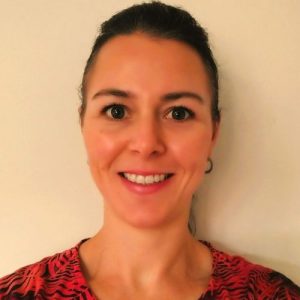
Meet Esther Champion, founder of Myrtos Consultancy, Myrtos believe that everyone should be given a fair chance to work, grow, and thrive, regardless of their past. Through workshops and educational initiatives, Esther challenges misconceptions surrounding individuals with criminal records, advocating for their employment opportunities.
Here she sheds light on the societal impact of inclusive hiring practices and the potential for positive change within communities and businesses alike.
There is so much we can learn from people who have different backgrounds from ourselves, or whose minds think differently. Imagine how boring life would be if we only socialised with, or spoke to, people who were the same as us. Diversity gives us the opportunity to grow, to learn, and to challenge our way of thinking, which can only be a good thing.
I run workshops for businesses and organisations on criminal justice to raise awareness of the system, how it works, and how it impacts those who have been or who are in it. I educate and empower businesses and organisations to be more confident when it comes to hiring and supporting people who have a criminal record in their workplace. I then connect them with organisations who can help them recruit people who have a criminal record, either directly from prison or from the community, saving that company recruitment costs.
I also run workshops to enable people to confront their bias and misconceptions when thinking about people who have a criminal record. I provide advice and support to enable businesses and organisations to update their recruitment policies, recruitment process, onboarding process, and explore how inclusive their workplace is.
Finally, I can support businesses if they have an employee who has entered into the criminal justice system, and empower them to navigate that situation.
My purpose and mission is to challenge and change people’s perceptions towards people who have been, or who are in, the criminal justice system, especially when it comes to their ability to work and the types of jobs they can do. There is a misconception that people who are in prison, or who have been in prison, are unmotivated, uneducated, and can only do low level jobs, but this isn’t true. Some are highly educated and have degrees, others didn’t complete formal education, but are still incredibly bright and would be an asset to any company. We need to remember that there are educational courses and work opportunities in prison, so people aren’t necessarily sat idle; they are learning, growing, and developing.
Employment is one of the biggest factors in reducing re-offending, yet only 17% of prison leavers manage to get a job within a year of release. Currently, the approximated social and economic cost of reoffending each year, dominated by unemployed people with a conviction is £18 billion, yet 90% of surveyed businesses who employ prison leavers have reported that they are motivated, trustworthy and have good attendance. I believe that there is a job in every company that would suit someone who has a criminal record because people who have committed a crime come from all walks of life.
Lastly, the majority of people who have a criminal record want to make positive changes to their lives. Giving them a job is one way of making this happen.
I think the consequences are that we get stuck in one way of thinking and are at risk of becoming narrow minded. We can lack creativity, be confined to a limited skill set and can stay stuck in one place, rather than grow. I’ve had to learn that doing something differently doesn’t make it wrong.
In terms of benefits, well there are many! Having a diverse workforce gives access to brilliant minds, brings creativity, and can increase your businesses reputation. Specific benefits to hiring people who have a criminal background are that you will have employees who are motivated, who are loyal, who are willing to learn, and who have numerous transferable skills.
You will have an opportunity to contribute to reducing reoffending and enabling communities to be safer as a result. Less money will be spent on sending people to prison for re-offending (it currently costs approximately £47,000 per prison place per year, not including health and education) and therefore more money could be available for the NHS, Education, mental health services, etc.
Employing people who have a criminal record provides them with a sense of purpose, an opportunity for them to contribute positively to society, and will address skills shortages.
I would encourage businesses to come on one of the workshops I run so that they can learn more about criminal justice, and hopefully be more open to hiring someone who has a criminal record. I’m always up for a chat, so people can contact me to discuss what misconceptions/fears they might have about hiring someone with a conviction, or what training might suit their business best. It’s important that employers have a policy on recruiting people who have a criminal conviction, and take some time to consider how inclusive their onboarding processes and workplaces really are.
I would also encourage those hiring others to really seek to understand people’s skills and talents before looking at their background, or simply focusing on their knowledge of previous work history. If you do need to know whether someone has a criminal record, are you willing to do this at interview or even at job offer, rather than at application stage?
You can find out more about Mrytos Consultancy and their work, here.
If you are a brand or company that proactively champions diversity and would like to be featured as part of the “True Diversity” series please get in touch with Tony.
View True Diversity blog collection
Written by Chris Naswari this article has previously appeared on the ADLIB Blog.
We speak with Yahye Siyad, founder of Inclusive Horizons, who has dedicated his career to improving digital accessibility.
Blind since birth, Yahye works with organisations like the Bank of England and TfL, helping them design more inclusive digital services.
Here he shares key insights on common accessibility challenges, simple but impactful improvements, and why true inclusion benefits everyone.
My name is Yahye. I work to improve digital accessibility and inclusion through my consultancy, Inclusive Horizons. I’ve been blind since birth, so am passionate about making digital services better for people who might otherwise be excluded. What this means is I help organisations with testing, creating reports, delivering training for designers, developers, and QA, and providing guidance and thought leadership. Through my freelance work and in my last role with CACI (formerly Cyber-Duck), I’ve worked with organisations such as the European Central Bank, Bank of England, and TfL and advised them on how to improve their practices to benefit as many people as possible.
Digital inclusion means the ability to fully participate in every aspect of society. In a digital era, without digital inclusion, so much of life becomes unavailable to you that you effectively feel locked up. So really, it’s about my ability as an individual to engage and participate in a society that is becoming more and more digital.
I promote digital inclusion by engaging with a wide range of organisations – from the education sector, to transport, to banking and beyond. I feel that by working as a consultant, I can make a broader impact than I could working as an employee of a single organisation, which is why I established Inclusive Horizons five years ago.
The main message I try to convey through my work is that while of course digital accessibility helps people with disabilities, it’s also almost always best practice for improving everyone’s usability. Contrary to most people’s assumptions, most accessibility issues aren’t just disadvantaging a small percentage of society but are impacting the way everyone experiences a product or website. Investing in inclusive design is investing in including everyone at every stage in their lives, not just a small subsection of society.
One of the main challenges I face is a lack of understanding about what digital accessibility means, and a lack of dedicated resources within organisations to implement it consistently. Most organisations don’t have an individual or department able to pull the strings and advocate internally, so even if there is a willingness to act and implement a strategy, there isn’t anyone who’s role is dedicated to accessibility who can put that into place. I’ve seen this even in huge organisations: there’s no single department that accessibility comes under. It’s kind of homeless and it’s uncertain who’s meant to implement those strategies – is it the UX team? Is it HR? Marketing? Development? So, the main challenges for me are a lack of understanding and direction, and a lack of resources to implement what is understood.
The main blockers are the underestimation of what accessibility is. What I mean by that is that organisations think “OK, we’ve got some understanding, we think it’s important, we’ve got the basics in place”, and take that to mean they’ve ‘solved’ accessibility. As a result, they see further improvements as an extra task to add to someone’s workload, something to outsource, or something to automate. It’s not seen as critical as something like security. I think a big part of the reason for this is a lack of legislation in the private sector to enforce accessibility, unlike in the public sector.
There are definitely a few improvements and tools that make my life a whole lot easier.
Thoughtful additions like “skip to content” buttons, high contrast options, and embedded options on websites to listen to an article rather than reading it with my screen reader can all be really handy.
Apart from these, basic accessibility considerations make navigating websites with a screen reader so much easier:
Tools I use a lot for websites that are really lacking in accessibility – where the buttons don’t work, the links don’t work or aren’t labelled correctly, the forms aren’t fillable using a screen reader – are The Microsoft Help Desk and “Be My Eyes” service. Through these, volunteers can help me navigate pages that it would be really difficult to get through otherwise.
I’ve been using a lot of voice-based AI tools to help me find information, rather than typing and using websites that might be inaccessible. Chat GPT and Co-Pilot save me having to root through difficult to navigate pages and articles, filtering through information to get to what I need. Google Assistant is great for finding nearby restaurants and businesses to access their contact information without trying to get around their websites.
Another useful feature is the ability to use the camera lens on these AI tools to describe my surroundings. It’s almost like having a conversation with a person who can see what I see and provide detailed descriptions. That feels extraordinary and has been really useful for me.
However, while these tools are great for these use-cases, there are still things AI can’t help with, like the persistent challenge of form-filling on websites.
Accessible Design Resources
Following the insightful recommendations from our Design For All participants, we’ve curated an extensive collection of tools, guides, articles, books, blogs, and videos. This resource is specifically designed to support accessibility and inclusion specialists at every stage of their journey.
View Accessible Design Resources
Written by Tony Allen this article has previously appeared on the ADLIB Blog.
Within this ‘True Diversity‘ blog feature we explore the world of neurodiversity with Devon Lowndes, a Neurodiversity Consultant and Founder & Director of Self Agency.
Self Agency is here to shine a light on neurodiversity and finally give everyone the tools to understand the challenges and enable organisations to evolve their cultures. People with dyslexia, dyscalculic, dyspraxia, ADHD, autism, OCD, Tourette syndrome, mental health illnesses and acquired neurodiversity (such as trauma) have a wealth of strengths to bring to our society. It’s time that they were recognised and valued.
The purpose of our initiative and series “True Diversity” is to feature, collate and showcase the breadth of initiatives and views that are all on a mission to work towards True Diversity and Inclusion.
Devon: It’s a big question. The first thing that comes to mind is that it’s the right thing to do! We can live our lives knowing that that we’re doing right by the other people that we spend time with. I also think it’s vital for growth.
Progression comes from doing things differently. Doing things the way they’ve always been done isn’t a reason enough to do them that way. I think that when we include more difference into spaces, into workforces, we are creating that diversity.
Neurodiversity, which is my area of expertise, certainly looks to protect individuals who have struggled enabling them to thrive, even if it’s just working on that surviving piece to begin with.
Again, I feel like supporting those people is the right thing to do ethically. It’s the right thing to do in terms of progression. It’s only when we’re including more diverse brains in both our thinking and in our work that things really progress through innovation. That’s what the world really needs at this time.
Devon: I am a neuro diversity consultant. My consultancy is called Self Agency, and our purpose is to move neurodivergent lives from surviving to thriving by enabling businesses to support that in order to see that growth within the business as well as in the individuals.
Our mission is to make neurodivergent people feel at home. Bristol is where I’m based. It’s the city I’ve felt most comfortable as a neurodivergent person, and it’s the city I champion. I think Bristol has the bones, the makings of a real home for neurodiversity.
We’re trying to get into as many Bristol organisations as possible to run workshops and training sessions on neurodiversity – introducing the topic and then realising that in company policies.
Devon: So I think in a lot of the cities in the UK there’s a history and a reality of cultural difference. In Bristol, the idea of difference is not just included but celebrated. In Bristol we celebrate independence, right? I don’t know another place in the UK where you walk through each of the smaller, individual areas and high streets, and it’s full of independent shops, independent restaurants. The city is full of startups and innovation too.
When we look at the industries here, we have the creative industry, the tech industry, there’s innovation in aerospace and so much great engineering. It really attracts high numbers of neuro divergent brains. To put it really simply, in Bristol it is celebrated to stand up and have difference in a way doesn’t exist in other places. You are accepted for that here.
Devon: So I’ll speak to this question on neurodiversity in particular. We have the let’s call them “naysayers of neurodiversity”, and we might read articles from them. Then we hear about the uptake in diagnosis, of the difficulty to find treatments, or behavioural modifications, the difficulty at school in children, and in the workforce as well.
I think what we are witnessing is an outcry for help from this movement of people who simply think differently to the way that you might expect them to. They’re often left to struggle, rather than being supported and valued.
Rather than being made to feel they belong, they’re being pushed to the point where it’s now become necessary for medical intervention. Speaking as one of those people myself, right, life is hard. That’s why I go to the doctor about having ADHD. I don’t go to the doctor about having ADHD because I think having ADHD is a problem, I think there are loads of ways to live and thrive. And to have my brain type is difficult with the world being the way it is at the moment. I think that’s what disability is, right? When you feel disabled by environments.
We do need to reach out for support in order to access the environment and the communities around us when it’s not particularly set up for a brain like ours. Often it’s that the setup we’re talking about is actually just the attitudes and opinions and the softer skills, as opposed to it being massive infrastructure or process changes.
The workplace exists in businesses, not the entire world, but people spend a lot of their lives in this setting so it is really important that we get things right in the workplace. If you can educate businesses to make those kinds of common sense changes, which aren’t such massive infrastructure changes, then it does just make everything much more inclusive for everybody.
It is in those softer skills, and we can often fall into the trap of thinking about communicating first, through events or campaigns or new initiatives, but before you can get to the communication you need to learn the language and understand what it means from a neurodiversity point of view. That understanding plays into supporting everyone’s brain in the workforce.
I think so many people with divergent brain types struggle to feel included and aren’t being treated equally. A lot of the time they’re not graced with the language to be able to communicate effectively about what they need, or they don’t have a psychologically safe enough workspace in order to be able to disclose what they need. If we understand people’s differences, we can communicate with our communities and teams about it and be more inclusive. With just an understanding, it removes the friction, and it allows people to feel that that belonging and value again.
So it was really quite a simple start, it’s learn the language, and then and then it naturally grows from there.
Devon: We’ve done a whole range of trainings, learning and development with businesses around neurodiversity. But what people are really engaging with right now is our lunch and learns. That’s us coming into the office for an hour and a half.
We give half an hour solely for Q&A. Having that longer Q&A session allows us to really speak to some of the niche situations that might be going on in that team or that company.
A focus of that session is around the language, the understanding of neurodiversity as a whole. We’re able to start something really special in the conversation among the attendees. And you can’t unknow what you know, once the cats out of the bag. It really starts those organisations on a journey around your diversity, and we see how beneficial it can be.
Thank you so much for sharing all of this with me today, Devon. Really appreciate it.
You can find out more about Self Agency and their work, here.
If you are a brand or company that proactively champions diversity and would like to be featured as part of the “True Diversity” series please get in touch with Tony.
View True Diversity blog collection
We talk a lot about leadership pipelines, talent retention, and gender equity at work. But one of the biggest moments of risk in a woman’s career isn’t when she hits a glass ceiling. It’s when she goes on maternity leave.
Despite decades of progress, research shows that up to 74,000 women in the UK lose their jobs each year due to pregnancy or maternity-related discrimination¹. Nearly half of mothers report negative experiences at work related to pregnancy, maternity leave or returning—and 1 in 5 leave their jobs as a result². And for those who do return? Over 80% say it negatively impacts their confidence, mental health or both³.
These numbers tell a clear story: we are underestimating the scale and complexity of the transition to motherhood. And we are under-resourcing women through it.
That’s where maternity coaching steps in—and why it’s far more than a “nice to have.”
Maternity coaching provides structured, professional support before, during, and after parental leave. It holds space for the emotional, identity, and logistical challenges of becoming a parent while managing a career.
Common coaching themes include:
Planning for leave and managing handovers
Navigating identity shifts and loss of confidence
Returning to work and re-establishing role clarity
Rebalancing domestic responsibilities
Reconnecting with ambition and long-term goals
But coaching isn’t just about performance—it’s also about wellbeing. And that brings us to something that still isn’t talked about enough: maternal mental health.
In my article for Maternal Mental Health Week, I reflected on how easily new mums downplay how they’re feeling.
The six-week postnatal check isn’t enough. Many mothers never say out loud that they’re not okay. Postnatal depression, anxiety, rage, or the long tail of sleep deprivation can linger well beyond maternity leave—and often bubble up again during the return to work.
That’s the missing link: Maternal mental health doesn’t stop when maternity leave ends. For many women, returning to work—often exhausted and unsure of themselves—is just as vulnerable a period. And yet, the expectation to “bounce back” is enormous.
Coaching can’t replace clinical care, but it plays a vital complementary role. It provides space to process the emotional load, build confidence, and plan realistically. And for many, it’s the first time they’ve been asked: “How are you really doing?”
As someone with ADHD, I know how difficult it is to manage the chaos of early motherhood. Executive dysfunction, mental load, and disrupted routines can overwhelm even the most high-functioning professionals. When structure disappears, so can confidence.
For neurodivergent mothers, maternity coaching provides scaffolding. It helps build systems, protect energy, and move forward with clarity—even when everything feels uncertain.
In coaching sessions, I often ask: “What would be the impact of not preparing before maternity leave or return?”
The answers are sobering:
Loss of identity
Lack of confidence
Conflict at work or home
Anxiety over visibility and career progression
The silent question: “Can I still be the ambitious person I was now that I’m also a parent?”
The coaching process brings clarity, strategy, and self-compassion. It helps new parents stay anchored to what matters most, even when the external world is shifting.
If you’re serious about retention, inclusion, and wellbeing, start here. Maternity coaching isn’t a “perk.” It’s a strategic, inclusive intervention that helps people return to work stronger, not smaller.
Support doesn’t have to mean fixing every problem. Sometimes it just means saying, “We see you. And we’re with you.”
Here’s a prompt I often use with clients: “What do you want life to look like in five years and what needs to happen now to make that future possible?”
It’s easy to live in the short term when you’re exhausted. But your long-term goals, values and ambitions deserve space too.
Pause. Reflect. And know that support is out there, coaching included.
A final note: I’ve been using the brilliant maternity coaching framework developed by Frances Cushway, a comprehensive, compassionate and practical model that supports every stage of the transition to working parenthood. It’s been a powerful tool in my work, especially when combined with an ADHD lens.
If you’re curious about how this framework can support neurodivergent parents—or want to learn more about the pilot I’m currently running, you can find more details here.
Footnotes
Pregnant Then Screwed & HR Magazine (2024): 74,000 women lose their jobs due to pregnancy/maternity discrimination annually
EHRC and TUC Research: 1 in 5 women leave their job due to pregnancy and maternity discrimination
Working Families Annual Report (2023): 84% of women face challenges returning to work; 30% receive no employer support
Written by Chris Naswari this article has previously appeared on the ADLIB Blog.
We speak with Heather Hepburn, Head of Accessibility at Skyscanner, where she’s spent the past five years embedding inclusive design across one of the world’s leading travel platforms.
In this conversation, she shares her journey into accessibility, practical ways to design more inclusively, and how the Champions of Accessibility Network is helping drive change across the industry.
Hey, I’m Heather Hepburn, Head of Accessibility at Skyscanner. For those of you who don’t know Skyscanner, we’re an online global travel brand. We find great flights, hotels, and cars for our travellers. We translate our services into 37 different languages. We have over 10 million travellers a month who use us.
I run the accessibility programme and I’ve been doing that for five years. Internally, my responsibilities include creating the accessibility strategy for the business, planning our work and roadmaps, raising awareness and understanding of accessibility and disability inclusion, running our champions network, and building accessibility into our processes. I also advocate for accessibility externally, working with our airline and online travel agent partners, and speaking at various events. I also co-run the Champions of Accessibility Network (CAN) with Gareth Ford Williams and Charlie Turrell.
When I started at Skyscanner, I joined as a content designer. During my interview process, I was asked to do a UX critique of the Skyscanner app, and that’s when I realized how inaccessible it was. I had some knowledge from my previous job at RBS, where we considered accessibility when designing our products, but not loads. I ended up writing a job description for myself to start an accessibility programme at Skyscanner, and that’s how it all started. I’ve learned an awful lot in the last five years!
It really does. One of the biggest things in accessibility is making your content easy to understand. The role of a content designer carries significant accessibility responsibilities. If you’re writing visible content, you should also write any hidden content for screen readers at the same time and in the same tone of voice, so inclusion has always been something I’ve had to consider. The content design team at Skyscanner is now heavily involved in accessibility as well and help keep the rest of the designers in check, which is great.
Super important – it is my work. Every project or conversation I have is about improving accessibility, mainly in our traveller-facing products like our websites and apps. I also speak to our brand marketing teams about making their output accessible. We’re a team of two in a large company, so we have to shout loudly and often. We talk at town halls, other teams’ meetings, and have one-to-one conversations with designers and developers all the time. These range from getting people on board with accessibility to reviewing work and helping make elements or features more accessible.
Skyscanner runs global induction sessions for new staff every two months, which now include an empathy lab where we simulate different disabilities and get participants to carry out simple tasks. Empathy labs can be controversial, as the best way to understand disability is by speaking to someone with lived experience, so we do caveat these sessions very strongly that they are just simulations. However, they are easy to set up and can be repeated, and they start great conversations to get people thinking differently. So many people say things like “I’d never considered how someone might use a phone if they can’t see” and those conversations and considerations are so important to making them think in an inclusive way. It’s a great start for our new staff to then go on to learn how to create accessible products for our travellers, or how to be more inclusive with the way they communicate internally.
Our efforts to promote inclusive design begins with training product and content designers and we’re always looking to improve on what training we provide.
In addition to our accessibility training courses, we run hands-on workshops, including screen reader workshops with Adi Latif, an accessibility consultant who uses a screen reader himself. We’re also striving to implement accessibility practices into design processes by default. User testing is important, and we try to get designers to talk to disabled users early and are also trying to promote more co-designing with disabled users.
We also do what we can to ensure accessibility is considered as early as possible in the concept and design process, so we try to make this as easy as possible for our designers. We’ve introduced an accessibility checklist, as well as a semi-automated accessibility annotations tool called Include, which is eBay’s open-source toolkit. On top of this, we have weekly drop-in sessions for designers to ask questions and review their work with us.
There are plenty of challenges to this. Designers have a lot to think about and so we need to make accessibility feel like something they want to do rather than extra work to get buy-in from them. And accessibility is difficult! There are so many elements to it, and while it’s easy to start making positive changes, it’s hard to consider everything and be very good at it. That’s why we’re always looking to upskill and make the improvements we can.
It’s very, very hard to make things perfect, but considering these three areas will help designers make something great. It’s so much easier to do things right from the start than to fix them later.
I heard Gareth Ford Williams and Charlie Turrell, both ex-BBC, were thinking about starting a champions network, so I got in touch and asked if I could help. We had a steering committee with big names in accessibility which was exciting – I was pinching myself about actually being there! After initial work with them to set the direction, Gareth, Charlie and I got CAN up and running.
It started a couple of years ago as a LinkedIn group. It’s a network for anyone involved in accessibility, with over 2000 members from various sectors, from accessibility specialists, to designers, to developers, and everyone in between. The idea of the group is that it’s a safe space for support and advice, with such a wealth of experience amongst our members to provide guidance. We run monthly online meetups and some face-to-face meetups on topics ranging from accessibility strategy or the European Accessibility Act to setting up your own accessibility champions networks or burnout in the industry.
It’s a very supportive, collaborative group which anyone can join. A great part of the online meetups are the breakout rooms at the end for people to connect – it’s a lovely way to network with others who care about accessibility. So that’s what we’re trying to do – get people together, share all the wins and the struggles, and learn from each other. It’s just such a positive group of people. We absolutely love running it and feel very honoured to do that.
Accessible Design Resources
Following the insightful recommendations from our Design For All participants, we’ve curated an extensive collection of tools, guides, articles, books, blogs, and videos. This resource is specifically designed to support accessibility and inclusion specialists at every stage of their journey.
View Accessible Design Resources
Written by Mike Harley this article has previously appeared on the ADLIB Blog.
As part of our True Diversity blog series, we spoke with Inclusive Futures, a not-for-profit organisation who empower students from underrepresented groups and disadvantaged backgrounds.
We discuss how diversity and inclusion drives stronger, more innovative workplaces and learn about their mission to build inclusive cultures.
Let’s start with the need for Diversity and Inclusion, what’s your take – why is it so important?
At Inclusive Futures, we believe that inclusion isn’t just a business strategy – it’s a fundamental force for positive change that ripples through every level of society.
Let’s start with the bigger picture. In our communities, inclusion breaks down barriers, creates opportunities, and ensures every voice matters. It builds a society where diversity isn’t just accepted but celebrated as a source of collective strength and wisdom.
For individuals, we see daily how inclusion transforms lives. When people feel truly valued and heard, they thrive. They bring their authentic selves to work, share their unique perspectives, and contribute to their full potential. This sense of belonging and psychological safety is fundamental to personal wellbeing and growth.
And yes, our research conclusively shows that inclusion powers business success. Organisations with inclusive cultures are:
Can you share a little bit more about what you do – what’s the purpose and mission of your initiative/ programme/ organisation?
We’re passionate about helping individuals, teams, and organisations increase their impact through inclusive leadership. Our approach focuses on creating cultures where diverse perspectives are actively sought, where every team member feels valued, and where contributions from all are welcomed.
In today’s world, employees are actively seeking organisations that demonstrate genuine commitment to inclusion. It’s become essential, not optional, for attracting and retaining top talent.
This is why we partner with organisations to develop inclusive leaders who can create these transformative environments and cultures. Through our work together, we can build a more equitable, innovative, and successful future for everyone.
We help transform organisations by putting inclusion, people, and culture first. Our passion lies in helping teams create environments where everyone feels valued and part of something bigger.
Our programmes deliver:
Through:
Our Difference: We bring energy, curiosity, and genuine partnership – not ‘business-as-usual’ solutions. Every engagement benefits both your organisation and the wider community.
What do you consider potential consequences of a lack of Diversity and Inclusion and what do you see as the main benefits of an inclusive workforce?
The consequences of overlooking diversity and inclusion reach far deeper than most organisations realise. When workplaces lack inclusive cultures, they don’t just miss out on talent – they systematically underperform. Teams become echo chambers, innovation stagnates, and valuable perspectives remain unheard. The human cost is equally significant: decreased morale, higher turnover, and a workforce that feels unable to bring their authentic selves to work. This ripples out into society, reinforcing barriers and limiting progress.
But the flip side tells a compelling story. Truly inclusive workplaces aren’t just better places to work – they’re demonstrably more successful. Our research shows they’re eight times more likely to achieve better business outcomes and six times more likely to innovate. They attract and retain top talent, foster environments where diverse perspectives drive better decision-making, and create spaces where everyone feels valued and heard.
The benefits cascade through every level: from enhanced individual wellbeing and motivation, to stronger team collaboration and market understanding, to positive community impact. When organisations embrace inclusion, they don’t just future-proof their business – they become catalysts for lasting social change.
In today’s world, inclusion isn’t just a nice-to-have – it’s the difference between thriving and surviving. The choice is clear: embrace inclusive practices and flourish, or maintain the status quo and risk being left behind.
How can businesses and potential employers get involved with your initiative/ programme/ organisation?
You can visit us at www.inclusivefutures.co.uk or email [email protected].
Or if anyone wants to talk to me directly about how Inclusive Futures can help develop a truly inclusive and transformative environment and culture, you can contact me directly: [email protected]
If you are a part of an initiative, brand or company that proactively champions diversity and would like to be featured as part of the “True Diversity” series please get in touch with Tony.
View True Diversity blog collection
You need to load content from reCAPTCHA to submit the form. Please note that doing so will share data with third-party providers.
More Information