Introducing Gather Round’s New Year Offer*
Are you a freelancer working from home craving some connection? Or are you a small creative business already at a co-working space but in need of a change? Become a member at Gather Round in Bristol or Bath before Feb 28th and you’ll get 30% off your membership for 3 x months. Interested? Get in touch with one of our community managers to book a tour.
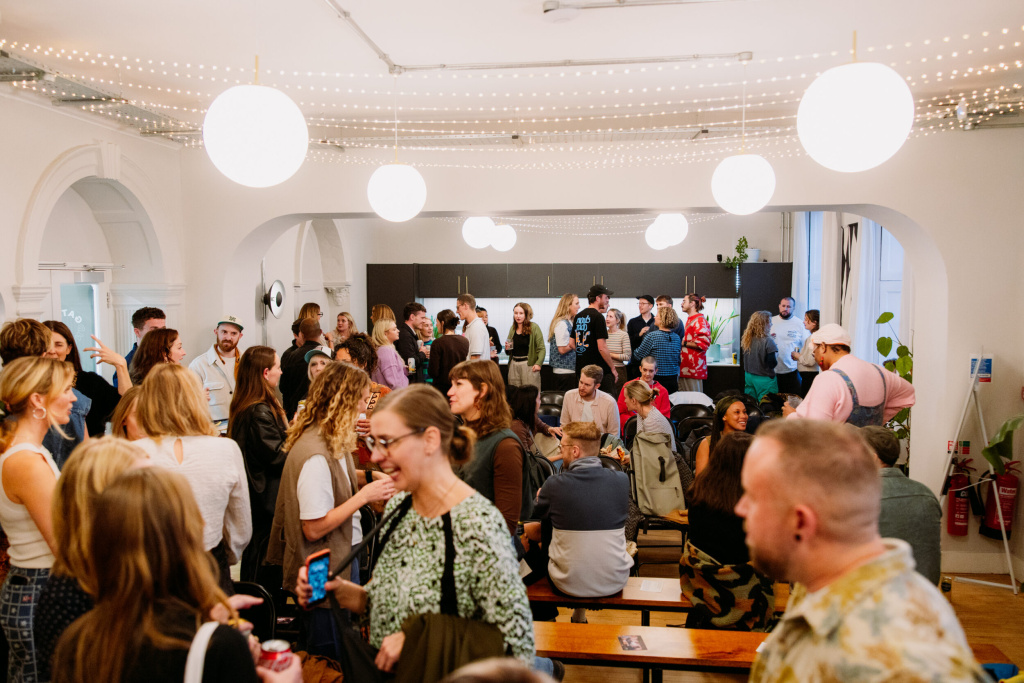
More than a co-working space, Gather Round is a thriving creative community. Our members are frequent collaborators – it’s what happens when you bring people in the same industry together. Creativity at Gather Round takes many forms, from designers, copywriters, and illustrators to developers, tech innovators, and even a cartographer. Together, they inspire, challenge, and support each other, making every day at Gather Round a spark for new ideas. It’s a place where connections turn into projects, and ideas turn into reality.
*Offer available until 28th February 2026.
‘We want you to see firsthand the positive impact a creative community can have, not just professionally but beyond work too.’
Jason Smith
Gather Round Co-Founder
Packed member events calendar
We’ll be continuing our monthly member events into 2026, including family breakfasts, campfire talks, group coaching, and yoga. This month, we’re also launching two new members only events: Community Sessions and Member Mics!
Community Sessions are relaxed, monthly get-togethers with other members in your space. Think drink-and-draws, board games, picnics, or maybe a trip to the pub. It’s a chance to get to know your fellow members and connect over some snacks and a few drinks (if you fancy). This month to kick it off we’re taking all our members to the pub, first round is on us!
Next week, we’ll be hosting our first ‘Member Mic’ event. Member Mic gives our members the chance to share what they’re working on with fellow creatives – showcasing wins, getting feedback on tricky projects, or help others with theirs in a relaxed, supportive session. It’s in moments like these when collaborations are born.
Our buzzing events are free for all members, included in all membership packages. Alongside the extra-curricular fun, members also enjoy a wide range of discounts with local independent partners such as Pizzucci, Bosco, Soul Spa, and British Blankets. It’s just one more way Gather Round sets itself apart from other coworking spaces.
Whether you’re a freelancer or a small creative business looking for an inspiring place to work, we offer a range of membership packages – including part-time and full-time options, fixed desks, and private studios. Get in touch with our community managers to book a tour. We’d love to meet you.
Terms and conditions apply to the 30% offer, see full details on this page.
- This offer is for new membership sign-ups and applicable on the following membership packages across all locations: Part-time Flexi, Full-time Flexi, Flexi Plus, and Resident. The offer does not apply to Virtual and Virtual Plus memberships.
- New Part-time Flexi, Full-time Flexi, Flexi Plus and Resident members need to sign up for a 3 month minimum term and they’ll receive 30% off their first 3 months. After the first three months, the contract will switch to a standard 30 day rolling contract at full price.
- For members starting mid-month, the first invoice will be charged pro-rata.
- Contracts have to be signed between the 10th January to 28th February 2026 and start dates specified between 12th January and 31st March accordingly.
- The offer is issued only once the contract is signed and deposit received.
- Flexi Plus and Resident members only: includes 4 x hours of free access to our Production Spaces each month as part of the offer. Please note that our production spaces are located in Brunswick Square, Bristol only. Bookings need to be made in advance via our Events Manager.
- This offer cannot be used retrospectively. The dates specified above apply.
- Gather Round Limited reserves the right to revoke the offer and/or to update the terms and conditions at any time. Final qualification for the offer is at the Community Manager’s discretion.
- This offer cannot be applied to previous memberships or contracts, is non-transferrable, has no cash value and cannot be redeemed for cash or combined with any other offer.
This article was written by Epoch’s Marketing Manager, Ricardo P Martins.
Getting that first job is hard.
Even harder in an industry like ours, filled with self-doubt, giant egos, cut-throat competition, and most recently, the threat of an AI revolution. In this industry, opportunities for new talent to get a foot in the door are few and far between.
At Epoch, we believe that opportunities should be giving to everyone, not just to a few privileged people from the “right” schools and/or “right” backgrounds. So, if we see talent, we want to help.
With that drive in our hearts, we created the Epoch Academy.
The Academy, as we fondly call it internally, is Epoch’s internship programme. It’s our way of giving back to our community, providing opportunities for the next generation, nurturing both the future superstars of the industry and those who haven’t yet had the opportunity (or luxury) to break into the creative workforce yet.
We do that by maintaining strong relationships with a handful of universities across the UK. These are universities that not only produce incredible talent every academic year, but also align with our values of putting people first and building meaningful bonds.
We start creating these bonds by sending a team out to each one of these universities to spend time with the students, getting to know them on a one-to-one basis, hearing their stories, their ambitions and learning about what drives them. The Epoch Academy Workshop, held in Bristol around springtime, is the cherry on top of this beautiful relationship. It’s a day of celebrating all the talent we found along the way and spending quality time with them creating, brainstorming, conceptualising, and most importantly, having loads of fun together.
The Workshop is also an opportunity for them to bond not only with us but also with other young creatives from different universities, backgrounds and walks of life.
It’s important to say that, as we can’t visit all universities across the country, we also take applications for the Epoch Workshop on our website. We make sure that at least 40% of workshop attendees come from these website applications.
The biggest bond of this journey, however, is created during the internship itself. By then, they know us. They’ve met us in their classrooms, connected with us on LinkedIn, and spent a whole day with us in Bristol. So, when they come through big grey door at 54 Queen Square on their first day, it feels like arriving at a friend’s house.
It’s warm. It’s familiar.
Not to toot our own horn, but many of them want to stay.
A few already have.
And those bonds? They are for life.
A solid content marketing strategy is the foundation for meaningful results and long-term success.
A content marketing strategy is a plan for creating and sharing content that appeals to your target audience and helps you achieve your business goals.
Whether you’re a start-up trying to make your mark or an established brand wanting to stay ahead, having a clear content marketing plan can be a game-changer. At AMBITIOUS, we’ve helped many businesses turn content into business growth by integrating it within the broader PR and digital marketing landscape.
This guide will walk business owners and marketers through the essential steps to create a content marketing strategy that drives growth and keeps your brand competitive.
We’ll cover everything from defining your goals and understanding your audience, to planning content types, mapping the buyer’s journey, setting SMART goals, and measuring results.
By the end, you’ll have a clear roadmap to build a strategy that delivers real business impact.
What makes a successful content marketing strategy?
A content marketing strategy is a blueprint. It outlines the groundwork for the types of content you will produce, the topics it will cover, and the formats and channels you’ll deliver in.
You could think of it as a game plan for winning over potential customers and keeping them coming back for more… and that wouldn’t be incorrect. When viewed in isolation, a content strategy absolutely supports sales.
But, for the most successful brands, content marketing and content strategy do so much more than support sales. A content strategy keeps your brand fresh and your insights timely and valuable.
In short, it helps you remain relevant in a fast-changing market.
Now that we’ve covered what makes a strategy successful, let’s look at the key components that go into building one.
What goes into a content strategy?
Building a content strategy involves several key components, each of which plays a crucial role in ensuring your efforts are effective and aligned with your business objectives.
Start with Why
To quote Simon Sinek, ‘Start with Why.’
Before you create a single piece of content, you need to understand why you’re doing the things you’re doing. Not just from a content perspective, but from an entire sales and operational perspective.
In his book,Start with Why, Sinek puts forward that the most successful brands put the why at the heart of everything they do. Taking a purpose-led approach allows you to approach subsequent strategies from a position of authenticity.
So rather than coming from a starting point of pure economics, put your mission and your vision at the heart of your content strategy.
Know your target audience inside out
You wouldn’t show up to a black-tie event in flip-flops… right?
Well the same principle applies to your content.
If you want to effect change and impact consumer decisions; you need to understand your audience, inside and out. Creating detailed buyer personas that go beyond basic demographics of age and geography can be incredibly valuable here.
What are their aspirations? What keeps them awake at night? What are the main pressures and challenges they’re facing?
Someone’s age, location, and job title isn’t going to give you great insight. By going beyond just demographics, you can establish what kind of content your audiences are engaging with the most.
With deeper, more detailed audience insights, you can create content that resonates with your audiences on a much more personal level.
You can then use existing audience insights and customer feedback to further refine your personas, curating your content to better address their needs.
Understanding the buyer’s journey
You have your mission, your vision and your customer profiles.
Next, it’s time to understand the buyer’s journey.
The buyer’s journey typically includes three stages: Awareness, Consideration and Decision.
In this sense, every business is different, and as such, strategies and tactics must adapt. Content strategy and content creation aren’t a one-size-fits-all approach.
An FMCG brand will have a much shorter customer journey compared to a business that makes diagnostic machines.
A few blogs and some social posts aren’t going to make a quick conversion if your customer’s buying journey is traditionally 12 to 18 months or more. In cases like this, it’s about creating content strategies that are heavy on touchpoints and reinforcing your brand through much longer periods of awareness and consideration.
On the flip side; shorter journeys with bigger audiences – like FMCG – get to decision stage making much faster, so require content to match this cadence. It’s much faster, much more fluid and in the moment.
Creating content is all about matching audience and intent; you need to make sure that you’re putting the right content, in the right places, at the right time.
Finding your voice
Your brand voice holds power, so use it wisely.
This is the real-world reflection of your mission, vision and brand values. Are you the wise mentor? The innovative disruptor? The friendly neighbour? Whatever your brand voice, consistency is key.
Also, people don’t just buy products; they buy into brands they can relate to. A strong brand identity, guided by clear brand guidelines, ensures consistency in both visual and tonal style across all content and marketing materials, strengthening brand recognition.
Maintaining a consistent brand voice across social media platforms is crucial for establishing and maintaining brand loyalty, which is key to amplifying your reach and engagement over time.
Channels and formats
With a brand voice established and a firm understanding of your audiences, you can answer the question: what kind of content shall we produce?
There’s a lot of format options to choose from, including:
- Blog posts
- Social media posts
- Videos
- Webinars
- Customer testimonials
- Podcasts
- Infographics
- Email newsletters
- Whitepapers
- E-books
You don’t need it all to succeed. The key is to select the types of content that are most likely to resonate with your target audience. This will then inform the most appropriate channels upon which to activate those assets.
Generally speaking, having your own on-site content like blogs and articles is a universal must.
Whether you’re selling MRI machines or barefoot shoes, having on-site content that pulls through into search engine results pages and AI search platforms is going to be a major part of your content strategy.
So owned content has to be a foundational pillar of any content strategy.
Shared and third party channels
Beyond your own channels, it’s about selecting the content types and channels that resonate with your target audience. If one of your prime audiences is NHS procurement teams, then you’re going to want to focus your efforts into channels like LinkedIn—with a mix of written thought leader content and video-led content marketing to catch their attention.
A fast-fashion brand would find more value in focusing on TikTok, with its in-built shopping API and fast-moving, trends-focused nature.
Important note: there’s a reason why we don’t classify social media platforms as ‘owned’. The reason being, that while the account itself is yours, you don’t own the channel itself. If TikTok or Instagram went under, then that channel is gone. Anything that is not 100% within your complete control, is classed as shared.
Video and direct-to-consumer content
There are two more universal must-haves: video and direct-to-consumer content.
Whatever platform or channel you’re activating – whether it’s YouTube, LinkedIn, or TikTok – video content is the primary focus. So you need to account for video production in your content marketing strategy.
Then there’s direct-to-consumer content. Or in simple terms, email marketing.
Personalisation in sales and marketing is booming. With the sheer number of brands competing for attention across every channel and platform, the space has never been louder and more competitive. It’s incredibly easy for consumers to simply become overcome with brand fatigue and when that happens, they just start switching off.
But if you can successfully leverage a direct line of contact via email marketing, that can be a powerful thing.
Now that you have a sense of the key elements, let’s explore how to activate your content across multiple channels and formats for maximum impact.
Multi-channel and multi-format
The most effective and impactful content strategies take place across multiple channels, in multiple formats. By choosing the right mix, you can ensure your content reaches and resonates with the people who matter most.
To make this as effective as possible, combine owned elements, like on-site blogs and articles and your email channels, with the right mix of shared channels for your audience for maximum reach and effectiveness.
Repurposing content
Look to ways you can repurpose content across different channels and formats.
Uou may want to conduct a piece of industry trends research. That piece of research becomes a designed whitepaper. That whitepaper can become a valuable sales asset, in both digital and print formats.
But it can be more.
It can then be broken apart, with news stories and releases created to generate earned media. Key elements of the whitepaper can then be created into shorter social assets, which can be activated across company and personal LinkedIn channels.
It can also be created into various blogs, summarising your findings and offering the whitepaper as a download. This gives you a lead magnet and a means of generating valuable consumer data.
You can activate these findings in your newsletters. You could even take it one step further and bring it into interactive formats like webinars, which can be especially effective for audience engagement. Those webinars could then be repurposed as further video content to be used on LinkedIn and even YouTube.
When taking this kind of integrated approach, the ultimate aim is to connect as many dots as possible.
When distributing your content, consider a broad mix of marketing channels from email marketing, social media accounts, video, digital and print design, even paid advertising like Google ads to create the greatest possible reach and impact.
With your content now planned and distributed, it’s essential to keep your strategy organised and on track.
Keeping on top of your content strategy
Roadmaps, schedules and calendars
A content strategy without a plan is like a road trip without a map. Chances are you’ll have fun, but you’ll most likely get lost.
This is where your marketing strategy and plan intersect with your content strategy. Through your marketing plans, create schedules and roadmaps, outlining campaigns, moments, and activations. Detail this with the outputs and assets you’ll need to create, with time-bound goals, to help keep you on track.
In the day-to-day, content calendars can keep everything on track and on schedule, particularly if you’re having to manage complex production schedules for video.
This will not only ensure consistency but also help you allocate resources, raise issues and delays effectively, and adapt to any required change. This helps ensure all team members and freelancers are on the same page, maintaining alignment and efficiency throughout the entire production and content creation process.
Set SMART Goals
You want to stay on track and you don’t want to bite off more than you can chew. To manage expectations, it’s crucial to set SMART goals. These are:
- Specific
- Measurable
- Achievable
- Relevant
- Time-bound
SMART goals help you to achieve a few things.
Firstly, they’re built on solid foundations of goals. For example, instead of saying, “We want more website traffic,” a SMART goal would be, “We aim to increase website traffic by 20% over the next six months by publishing two blog posts per week.”
This helps join all the dots and create content production processes with firmly established timelines and completion journeys. This clarity ensures everyone on your team knows what you’re aiming for and how to get there.
They also help you outline what’s achievable, given your organisation’s current production capacities and capabilities. For example, you may not be in a position to be able to produce your own video content, either through lack of capacity or capability.
So SMART goals can also help you identify areas where you need to bring in extra resources and skills in order to achieve these goals.
These goals act as your guiding star, helping you focus your efforts and measure the success of your content marketing efforts.
Establishing Key Performance Indicators (KPIs)
Key Performance Indicators (KPIs) are the metrics that help you measure the success of your content marketing strategy.
These are ultimately showing how well your overall strategy is performing, relative to your original strategic goals and aims.
For your website, look to metrics like:
- Page visits
- Time on page
- Bounce rates
While overall impressions can give you a picture of the general reach of your site, actual on-page data is going to be much more valuable when analysing your content.
Social media platforms offer a different set of metrics. Here you’ll be looking at:
- Views
- Engagement metrics such as likes, comments, shares, saves
But you’ll also need to monitor sentiment on social. 1,000 comments look like a good number on a report. But if 950 of those comments are negative in sentiment, then it’s far less positive than the numbers show.
The reason why we establish KPIs isn’t to dictate any success or failure further down the line, it’s more about identifying progress, tracking what’s working, and most importantly, what isn’t.
Content Audit and Analysis
Ongoing auditing and analysis help shape tactical, strategic, and creative decisions.
One of the biggest self-imposed flaws you can bring into your marketing strategy is to only review your activity once per year.
Ongoing auditing and analysis is a crucial step, not only in creating a content marketing strategy, but evolving it in real time.
Review your existing content to see what’s hitting the mark and what needs improvement. Determine which types of content are the most effective. Then, put plans in place to create more content which matches this.
You need to identify what isn’t working and establish why. If something doesn’t work once, try it again in a different way. But if something isn’t working over long periods of time, then continuation is likely not worth it.
By doing this, you can identify gaps in your content. Look for opportunities to repurpose content into new formats, maximise the value of your existing content, and remove anything that is low-value and surplus to requirement.
Rather than doing this once a year, do it with more focused regularity. More regular content audits provide valuable insights that inform your ongoing strategy.
With your strategy organised and performance measured, let’s look at how data can become your superpower.
Data as a super power
We know that optimising your content for better visibility in search is crucial to ensure it reaches a wider audience, improves your rankings, and ensures your content stands out in search results.
But competing for keywords, intent, and eyeballs is more than just a challenge in creative writing.
It’s about leveraging the right data and insights and using tools like Google Analytics, SurferSEO, and SEMRush to give you the edge.
The same applies to social media platforms. Proprietary analytics, or third-party tools such as Hootsuite, let you see what’s working in real time.
But don’t just collect data… act on it.
You need to be prepared to adjust your strategy based on these insights. The best content strategies are the ones that adapt.
With data as your guide, you can confidently plan and adapt your strategy for ongoing success.
Plan vs adapt
There’s no silver bullet for successful content. What makes a content strategy successful is two-fold.
Firstly, it’s about strategic planning, critical thinking, and creativity. You need to be able to hone in on audiences, demographics, messaging and narratives, and understand the buyer’s journey and how you can subtly influence it in your favour.
Great content strategy establishes these foundational elements, meaning you can have great creative outputs underpinned by strong data and insights. So before you’ve even drafted a word of copy, or shot a second of video content, you need to have this understanding.
But you also need to be able to react and adapt.
A framework is great. It gives you guardrails. But a dogmatic approach to your strategy could do more harm than good.
Things may not work as you predicted, attitudes change, behaviours adapt, trends come and go, and algorithms change the way content is delivered and consumed.
If all you’re doing is staying within the lines of your strategy, chances are you’re missing out.
Step-by-step Summary: how to create a content marketing strategy
- Define your goals
Set clear objectives that align with your business goals and guide your content creation efforts.
- Understand your audience and create personas
Develop detailed buyer personas and Ideal Customer Profiles (ICPs) by identifying demographics, pain points, motivations, and digital behaviours. Use audience research data to tailor your content.
- Research competitors
Analyse competitors’ content to gain insights into industry standards and identify opportunities for your own strategy.
- Audit existing content
Conduct a content audit to assess your current assets, identify gaps, and refresh high-performing pieces.
- Plan content types and channels
Use a content calendar to schedule topics, formats, and publication timelines. Select the right mix of content types and distribution channels for your audience.
- Map content to the buyer’s journey
Align your content with the three stages of the buyer’s journey: Awareness, Consideration, and Decision.
- Set SMART goals and KPIs
Establish Specific, Measurable, Achievable, Relevant, and Time-bound goals. Track Key Performance Indicators (KPIs) such as website traffic, engagement, leads, conversions, and ROI.
- Monitor and adjust based on performance
Regularly review performance data to identify what’s working and what needs improvement. Adjust your strategy as needed for ongoing success.
By following these steps, you can build a content marketing strategy that is structured, effective, and adaptable.
Final thoughts
Having a documented content marketing strategy is crucial to guide your efforts and ensure success.
Whether you’re looking to increase brand awareness, generate leads, improve your search ranking, surface in generative AI responses, or create personalised marketing content for your customers, a robust content marketing strategy underpins these goals and gives you the roadmap to achieving them.
But a winning content strategy isn’t just about creating more and more content. It’s about creating the right content, for the right people, and putting it in the right place at the right time.
At AMBITIOUS, we’ve seen firsthand how a content strategy can transform businesses. It’s not just about getting likes or shares; it’s about building relationships with your audience that last and deliver real results.
Get in touch to talk about how we can help you develop a strategy that’s as unique as you are.
BRAVA, the leading voice and audio training academy founded by award-winning voice actor, Melissa Thom, is delighted to announce that Dan Jones, former Head of Audiobook Production at Hachette UK, has joined the organisation as an audiobook coach and guest instructor.
With more than 20 years’ experience at a major UK publisher, Dan brings an exceptional depth of industry knowledge, technical expertise, and creative leadership to BRAVA’s coaching team. His background spans music engineering, audiobook production, studio design, and talent development, making him an invaluable addition to BRAVA’s roster of specialist coaches. BRAVA remains committed to ensuring that all its coaches have extensive experience in their field, and Dan embodies this standard.
Dan will work alongside BRAVA CEO and audiobook narrator, Melissa Thom, to deliver both personalised coaching and group masterclasses. Their first joint event, Audiobooks from a Publisher’s Perspective, will take place in Bristol on Friday, 20 March at their central partner studios, from 10am – 4pm. This in-person masterclass is designed for voice professionals seeking to deepen their understanding of the audiobook industry and elevate their technical and performance skills. Attendees will gain practical guidance on showreels, preparation, narration techniques, recording workflows, and securing work in a competitive and rapidly evolving sector.
Dan Jones said:
“I’ve spent my life immersed in audio, from experimenting with tape recorders as a kid, to building Hachette’s in-house audiobook studios, to overseeing the production of thousands of titles across every genre. I’m excited to share what I’ve learned with the BRAVA community and help voice professionals thrive in this industry I care so deeply about.”
Melissa Thom, CEO of BRAVA, added:
“Dan’s experience is unparalleled. His decades spent at the forefront of audio production, coupled with his passion for storytelling and technical mastery, make him an extraordinary asset to our students. We’re thrilled to welcome him to BRAVA.”
Dan’s career spans music engineering, audiobook production leadership, and more recently, consultancy work for audio and technology companies on strategies and training initiatives. His unique mix of technical expertise and narrative sensitivity positions him perfectly to support both emerging and established voice professionals through BRAVA’s specialised coaching programmes.
To find out more about BRAVA go to Advanced Audiobooks Masterclass or visit www.brava.uk.com
Here are 10 things you might not (but definitely should) know about Square Works…
1. Square Works is housed in a Grade II Listed Georgian townhouse
Square Works is tucked inside a beautifully preserved Georgian building on Berkeley Square – one of Clifton’s most iconic addresses. From the outside, it’s all Bristolian charm; inside, it’s a thoughtfully designed, modern workspace filled with art, natural light, and sleek interiors that blend heritage with contemporary flair.
2. It’s the only co-working space in Bristol with a private members’ club
Square Works is part of The Square Club, a private members’ club for creatives and professionals. This unique connection gives you access to exclusive events, industry talks, and a stylish bar and restaurant. Even better? You can order restaurant-quality food and have it delivered right to your desk.
3. You can work from a ‘Secret Garden’
Hidden behind The Square Club is a tranquil terrace that’s the perfect spot for a quiet call, an al fresco meeting, or just soaking up the sun with your laptop and a coffee in hand.
4. The events calendar is packed – and many are free for members
From creative breakfasts to pitch nights and Friday Pilates, Square Works hosts regular events to help members connect, grow, and get inspired. It’s networking without the awkwardness – and you never know who you’ll meet over coffee.
5. Members get 24/7 access — yes, even on Sundays
If you have an office or a Dedicated Desk at Square Works, you’re not limited to the standard 9 – 5. Whether you prefer early mornings or late nights, you gain access 24/7 so you can work when it suits you – even on weekends and Bank Holidays.
6. There’s a curated art collection
Art is part of the Square Works experience. You’ll find pieces from local and UK-based artists throughout the space – creating an inspiring, gallery-like atmosphere. Plus, head next door to The Square Club for the latest seasonal installations.
7. Memberships are built for flexibility
Whether you’re a freelancer, founder, or part of a growing team, Square Works has an option for you – from hot desking to private offices. You can scale up, scale down, or shift between spaces as your needs change, without being locked into a long-term lease.
8. Unlimited refreshments and weekly ‘Square Works Nibbles’
Members enjoy unlimited, high-quality coffee, tea, hot chocolate and more. But the real treat? Every Wednesday, the in-house chef surprises members with freshly made sweet or savoury bites. It’s the perfect midweek pick-me-up.
9. Dog-friendly work space
Square Works welcomes well-behaved dogs – because work is better with a furry friend nearby. It adds to the relaxed, homely atmosphere and means you don’t have to leave your pup behind when you’re working long hours.
10. It’s a true community – not just a desk
What sets Square Works apart is the atmosphere. Whether you’re chatting in the kitchen, attending an event, or collaborating on a project, you’re not just renting a desk – you’re joining a supportive, inspiring community of creatives, professionals, and entrepreneurs.
To book a tour of Bristol’s Best Workspace, get in touch with us today via:
E-mail: [email protected]
Phone: 0117 322 6635
Enquiry Form: Contact Us
Or, if you’re in the area, feel free to pop in and chat with our friendly team!
Where most mural artists begin
The mural industry is an exciting place, and many young artists dream of becoming full-time muralists and creatives. Through our time in the industry, we’ve seen just how strong that ambition is. But we’ve also noticed some major barriers that make it incredibly difficult for upcoming artists to progress.
One of the biggest issues is simple: access to walls. Without physical spaces to paint and gain real experience, artists struggle to build portfolios, prove their credibility, and move from small personal work into professional projects. This lack of opportunity also plays a wider role in the graffiti challenges we see across Bristol, and is a key reason why there are fewer emerging mural artists than there could be.
For businesses looking to hire mural artists, this lack of early opportunity often means fewer emerging professional mural artists to choose from.
The biggest barrier for new mural artists: access to walls
The start of a young mural artist’s journey is often unclear. How can you build a portfolio without access to space? Private clients and businesses want to see how you deliver, and want to know that you’re confident working at scale. Without clear experience to back you up, you’re often relying on trust, which can be inconsistent. As a result, many artists turn to the street, finding quiet walls to paint. This helps build practice and confidence, but it doesn’t always translate well on a professional portfolio.
It quickly becomes a loop for new artists. You can’t get projects because you don’t have experience, and you can’t get experience because you can’t get projects. It’s a frustrating place to be, and it takes real grit and effort to escape.
This barrier doesn’t just disappear when you get your first wall either. If you want to go bigger, and work on larger-scale murals, the opportunities become even slimmer. Access remains one of the biggest limits on progression.
There are some ways to break through this that we’ve seen. Some artists use grant funding to incentivise clients to work with them, and there are occasional graffiti festivals that you can pay to enter. But these opportunities take time and effort to find, are often competitive, and rarely offer a clear or consistent route forward.
Why being a great mural artist isn’t enough
We’ve realised that you don’t just need to be a good artist to make it into the mural world, you also need to become an entrepreneur. Throughout your journey you often end up needing sales skills, web development skills, marketing, negotiating, and even accounting just to stay afloat. It’s hard enough to be exceptional at your craft, let alone good enough across all of these other areas as well.
That’s why we’ve noticed that many of the artists who do break through aren’t always the most naturally gifted, but they work relentlessly and fully embrace the entrepreneurial side of the journey. Not every artist is willing to cold call, walk into businesses, pitch themselves, and face rejection again and again. You often begin this career for the love of art, and slowly find yourself becoming a struggling salesperson for your own work.
This doesn’t even touch on the level of competition within the industry. Another skill you quickly realise you need is the ability to stand out and find your own lane. That takes time, trial and error, resilience, and business strategy, all alongside trying to stay creatively motivated.
Our experience building Art Sync
We saw this barrier first-hand while building Art Sync. We knew we had the ability to deliver, but back then we had no portfolio. It took time to secure our first project, and even then, it wasn’t at the scale we originally wanted. But it got our foot in the door, and helped us to start building momentum.
We came into Art Sync with experience in business and sales, so we knew from day one that putting ourselves out there and facing rejection was unavoidable. That background gave us the confidence to approach conversations properly, build trust with clients, and establish a visible online presence from the start.
Most artists aren’t fortunate enough to have experience in these areas, so a lot of the journey becomes learning by doing. From what we’ve seen, one of the most effective ways to get that first experience is through your network. Who do you know with walls? Do you know any business owners? Would your family let you paint a mural? These small opportunities can help build early experience without relying on street work to represent your professional identity.
Creating real mural opportunities for artists in Bristol
We’re not just sharing this problem, we’re actively trying to solve it from the inside. By building strong relationships with businesses and institutions, we’re starting to unlock real wall space opportunities and create access where it didn’t exist before. Our latest partnership with UWE and New Wave is beginning to bring some exciting projects to life in early 2026.
We’ll be installing six murals for UWE across Bower Ashton, Frenchay Campus, and their new Kingfisher Court accommodation. Alongside the installations, we’ll be offering students the opportunity to shadow, assist, and take part in design workshops to begin developing real mural skills. The first project will be at Bower Ashton, where students will be involved in the full design process, from concept development through to helping paint the final winning design. This is just the first of several UWE projects that will include learning opportunities.
Alongside this, we’ve also received permission to paint at Skyline Park. We’ll be organising a spray day to give artists open access to a wall where they can experiment, practise, and gain real experience. The aim is to create a space for artists to learn by doing, connect with one another, and build confidence. We plan to offer this as a free experience, removing the financial barrier to entry.
Building a stronger mural ecosystem
This problem is real, and we genuinely want to help. Of course we care about supporting upcoming artists, but we also believe that by strengthening the mural ecosystem as a whole, we strengthen what we’re building too. Bringing new talent through keeps the industry moving, and keeps our own work evolving.
We’re excited to see where artists go when they’re given real opportunities, real walls, and real experience. If you’re an artist trying to find your way in this space, we see you, and we’re committed to doing what we can to make that path a little clearer to walk.
Whether you’re a business looking to hire mural artists, or an artist searching for real mural opportunities in Bristol, we want to play a part in making those connections happen.
If you’d like to hear about upcoming spray days, student projects, or future opportunities, you can follow our journey on Instagram.
The West of England is one of six priority regions to benefit from the government’s £150 million Creative Places Growth Fund. The West of England Mayoral Combined Authority will receive £25m of the funding to support the region’s creative industries.
For three years from April 2026, the funding will focus on four themes. The three priority sectors are screen, createch and music but other areas of the creative industries will be supported too.
Plans being discussed at the moment are as follows:
Internationalisation and creative exports
- International opportunities fund
- Trade missions
- Delegations
- Partnership development
Access to finance and investment
- Investment readiness support
- Equity enabling fund
- Debt finance
- Grants for commercialisation and resilience
- Regional production fund
- Scripted
- Unscripted
- Development
Tech adoption, innovation and new creative practice
- Access to regional facilities and expertise
- Funding to develop ideas
- Signposting to R&D and innovation support
- Future Co-Star Lab/creative clusters
Creative place-making
- Music Development Programme
- Large scale events
- West and South Wales Creative Corridor
- Screen development organisation/agency
- Capital Funding for workspace/studios
For full details watch this video:
You are currently viewing a placeholder content from YouTube. To access the actual content, click the button below. Please note that doing so will share data with third-party providers.
More Information
Have your say on how the Creative Places Growth Fund should be spent
West of England Mayoral Combined Authority is running several events so people from the creative industries across the region can share their views on the plan for the fund and other ideas. The events kicked off with UWE Bristol‘s Bristol and Bath Screen Summit.
Helen Godwin, mayor of the West of England, opened the event and said:
“The Creative Places Growth Fund is a real vote of confidence, and the West of England Combined Authority is putting on a series of sessions with different parts of the sector over the coming weeks and months to help shape how we invest.
“The team are really keen that it is an inclusive exercise, and that we hear from the people who are doing all the amazing work, so we know what we need to do and how we best spend the money.
“We do of course have some ideas. The fund will invest to drive growth, innovation and global competitiveness across our creative industries. We think that the funding should include targeted business growth programmes such as international trade and investment initiatives to expand our global reach.
“The fund can also provide creative businesses and freelancers with access to diverse types of finance and support for businesses to adopt new technologies and to innovate even further.
“Sector specific development could include the establishment of a new screen development body, a regional production fund and a music development programme.
“Alongside these initiatives, the fund can address skills gaps and deliver large scale events to boost regional profile and the visitor economy.
“The money should also upskill workers, and it also should be used to attract more private investment to boost production here.
“We believe that if we work together, we can strengthen the west’s position as a world leading creative hub, but it can only happen with you at the heart of it. We are here to support, to help, to steer where necessary, but it must come from within the sector. I’m so excited to work with you all.”
Events have taken place in Bristol, Bath and Weston-super-Mare.
There’s an upcoming online event for South Gloucestershire businesses on Tuesday 2 December at 3pm. You can register here.
You can also submit feedback about the fund here.
To stay updated on the Creative Places Growth Fund, sign up to the mailing list.
BRAVA (Bristol Academy of Voice Acting) is delighted to announce that it has received two Society of Voice Arts and Sciences (SOVAS) Award nominations.
Best Podcast Host
The nominations are for Outstanding Podcast – Best Producer/Host – for BRAVA Founder and CEO, Melissa Thom, for the High Notes podcast on the art and business of voice.
From Monoglian throat singing to vocal health, accents, gaming and more, High Notes uncovers the craft behind the business. Series 3 has just dropped and explores ‘Words at Work’, talking to some of the best minds about voice, speech and communication for business.
Best Audio Drama
BRAVA has also been nominated for Outstanding Audio Drama for Angels in Bristol, an original Film Noir script based in 1954 Bristol, written and directed by Elaine A. Clark, and produced by Melissa Thom.
Elaine wrote the script exclusively for BRAVA’s in-person Characters Masterclass, held in Bristol every summer. This annual event provides participants with the opportunity to be cast in and record a range of productions, from audiobooks, to audio dramas, video games and more.
Melissa Thom, Founder & CEO of BRAVA said:
“I could not be prouder of everyone at BRAVA involved in these nominations. It’s a real testimony to the talent of our voice clients. Here’s to storytelling, community, and the power of voice; to putting Bristol and the South West firmly on the global voice map; and, most importantly, to creating art for pleasure!”.
BRAVA’s High Notes podcast is hosted and produced by Melissa Thom, audio and video engineer Euan McAleece, and audio and video editor, David Macgregor.
The Angels in Bristol cast: Carla O’Shaughnessy, Tiffany Xin, Marilla Lamour, Tina Duffin, Gwen Henderson, Tyler Woodburn, Guy Pass, Daniel Watson, Amy Smith, Rebecca Kozlen, Tabitha Owens and Melissa Thom. The Producer was Melissa Thom and Assistant Producer, Tabitha Owens.
To work with BRAVA on voice, speech and communication in the workplace and beyond, drop us a line at [email protected] or visit our website at www.brava.uk.com
Bristol… we are coming to meet you! Help us shape the future media creatives for our region. We are looking to engage with TV, film, content media, games, animation and the photography industry on 26th November at the gorgeous St George’s Hall
✅ Discuss key challenges and opportunities in the creative sector
✅ Shape future talent pipelines and influence taught curriculum
✅ Strengthen collaboration between education and industry to drive
Enjoy breakfast and open discussion with representatives from Weston College, University Centre Weston and Business West LSIP team
If you’re an employer in the creative industries and would like to join us, sign up through here
https://www.weston.ac.uk/event/media-production-photography-games-and-animation-employer-advisory-board
If you you missed the October offer at Gather Round, fear not – this November, for BCI members only we’re extending the ‘First month free’ discount!
Our BCI offer is available across all Gather Round locations and all membership packages. Whether you’re curious about Part Time or Full Time Flexi memberships, or prefer a fixed desk with Flexi Plus, or if you are looking for a studio for your team, we’d love to show you around.
Our co-working spaces at Brunswick Square, Trinity Church and Cigar Factory each have their own unique energy – but it’s the community that truly makes them special. Collaborations between members happen daily, just by bringing creative minds together.
Created by creatives for creatives, Gather Round is more than a co-working space, it’s a growing network of like-minded professionals who go to work every day and sit, write, design, consult and hang out. Soaking up the energy, passion and positivity from the ideas and expertise of others.
For more info on the different options, book a tour – we’d love to meet you.
Terms & conditions:
- This offer is for new membership sign-ups and applicable on the following membership packages across all locations: Part-time Flexi, Full-time Flexi, Flexi Plus, Resident and Studio memberships. The first month free offer does not apply to Virtual and Virtual Plus memberships.
- New Part-time Flexi, Full-time Flexi, Flexi Plus and Resident members need to sign up for a 3 month minimum term and they’ll receive their first FULL month for free. After the 3 x months contract switches to the standard 30 x day rolling contract.
- New Studio members need to sign up for a 12 month minimum term and they’ll receive their first FULL month for free.
- For members starting mid month, the first invoice will be charged pro-rata.
- Contracts have to be signed between the 1st to 30th November 2025 and start dates specified between 1st November to the 31st December 2025.
- The offer is issued only once the contract is signed and deposit received.
- Flexi Plus, Resident and Studio Memberships only: includes 4 x hours of free access to our Production Spaces each month as part of the first month free offer. Please note that our production spaces are located in Brunswick Square, Bristol only. Bookings need to be made in advance via our Events Manager.
- This offer cannot be used retrospectively. The dates specified above apply.
- Gather Round Limited reserves the right to revoke the offer and/or to update the terms and conditions at any time. Final qualification for the offer is at the Community Manager’s discretion.
- This offer cannot be applied to previous memberships or contracts, is non-transferrable, has no cash value and cannot be redeemed for cash or combined with any other offer.