Until recently, the menopause was something that was not understood and not talked about in equal measure. But after several celebs spoke about their experiences, it became something of a hot topic, with many ‘experts’ appearing to offer help, like tips for a ‘menopause diet’.
We needed to cut through this noise when we created the Hartwell brand. This was different: its founder Natasha Hartwell was a nutritional therapist who based her work on science and evidence-based results, and made real-world, practical suggestions. This was a real expert who could actually help with the symptoms of menopause, and help people feel like themselves.
Hartwell’s approach was a fantastic differentiator and a great place to start, so we began the process of building the brand around this strong core idea.
As with any branding, whether we’re creating a brand or refreshing one, we need to understand what makes it unique, what makes it tick and what makes other people care.
We started a deep dive into Hartwell’s way of working, including how it does it, what it values and its ambitions. The answers to these big questions would help define the new brand’s values and personality, which would lead us towards how the brand should look and feel.
Hand in hand with that, we also carried out an audit of the busy world Hartwell would be entering, specifically focusing on the menopause diet market. What were existing competitors doing? And was any of it working? We discovered an ocean of word salad, bland imagery and ‘mumsiness’, with very few examples of brands who really knew how to communicate what they were doing.
We held a focus group for people going through menopause, to find out about their general experience and if they had tried menopause diets. It was clear that they felt unseen and unsupported, and were suffering emotionally as well as physically.
Our research showed us that to reach as many people as possible, Hartwell had to be very clear with its messaging, putting its unique science-based approach front and centre. But to connect emotionally, this clarity had to feel personal. As a result, we made the decision that the voice of Hartwell would be Natasha, so it would be all written in first person, and talking directly to the target audience – just as it would be in a one-to-one consultation.
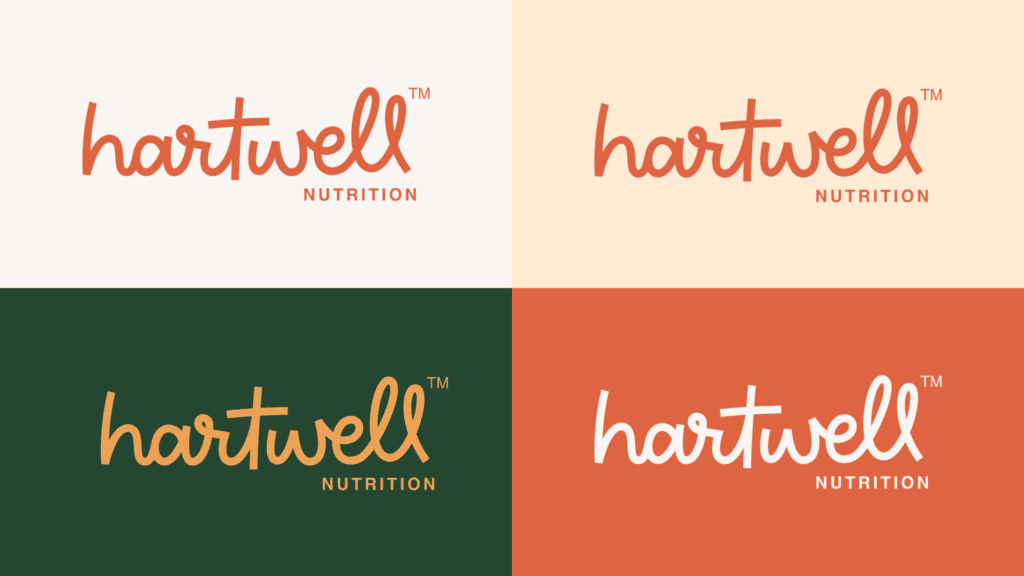
This connected perfectly with the decision to use Natasha’s surname as the name of the brand (her name, her voice) and also helped to complete the circle with the logo, which feels like a signature.
This hand-drawn logotype not only gives the brand a personal, human appeal, it also shows that Natasha is not afraid to sign her name to her work. The brand’s confident because its work is based on evidence – Natasha knows that she can genuinely help her clients.
We created a stacked version of the logo too, primarily to work with social media and smaller spaces, but also with one eye on the future, where ‘Eat well’, ‘Live well’ and other variations could be used.
The logo had been developed as part of a stylescape. These are visual explorations of a brand driven by a core thought, and include everything from brand palettes and imagery through to typefaces. They’re a great way to ensure everything is designed as a family, not in isolation, and to see the entire brand working together.
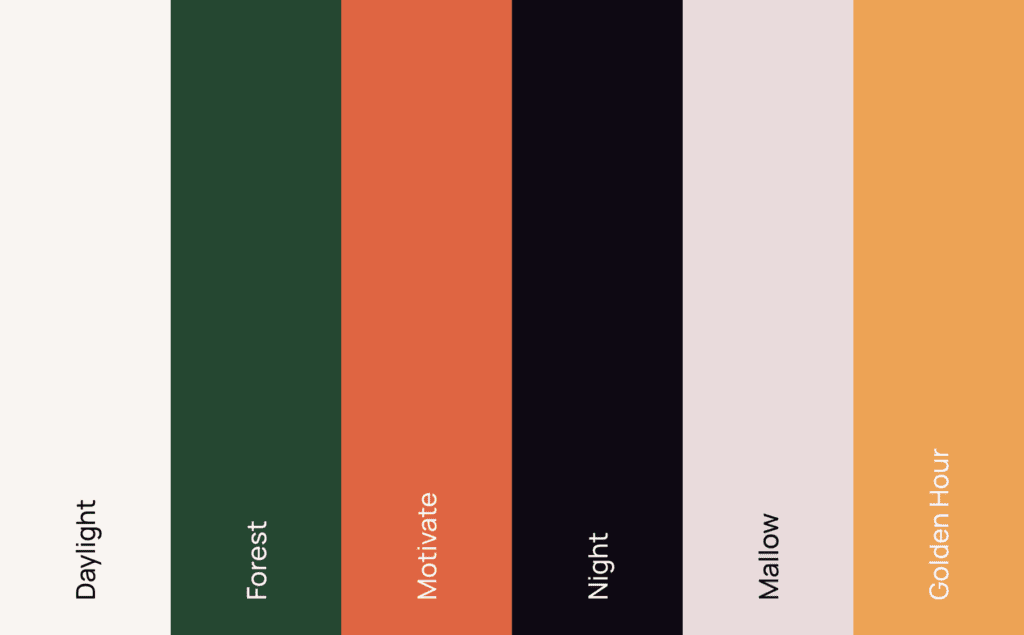
This particular stylescape was based on the idea of empowering clients, factual information, non-judgemental advice and friendly support. Those building blocks led us to a colour palette that was vibrant and earthy, warm and dignified. We purposefully kept away from a palette that was overtly feminine.
Brand imagery centred on collages which connected the way of life our audience wanted to get back to, with nature. The collage construction gave us the scope to tell infinite stories, while the connection to nature was a common theme throughout the work, coming both from Natasha’s understanding of nutrition, and people’s connection to cycles.
Finally, and developed from the hand-drawn logo, we introduced the squiggle. This graphical motif doesn’t have a defined form, and instead is unique each time it’s used, just like Hartwell’s clients and the advice Natasha gives them. The squiggle device can be used to frame text, create direction or simply bring some visual interest to a design, and helps to bring the whole visual identity together.
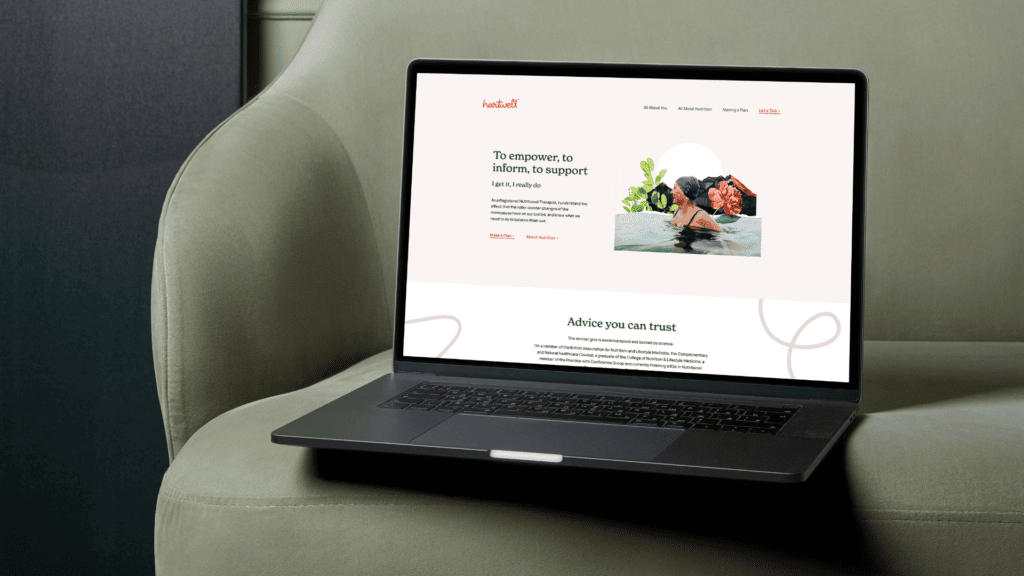
As part of the brand launch, we designed and wrote the Hartwell website. We initially mapped out a number of user journeys so we could design the perfect UX for the busy audience. Our goal was to show enough to prove Hartwell’s credentials, and then invite the audience to take the next step by getting in touch. Copy was therefore kept to a minimum, with the approach being to balance the warm, personal tone with the science that backed it up. This was helped by the brand fonts, the soft and warm New Spirit, paired with the strong and steady Elza Text.
The look of the site mirrored this balance, with a clean look punctuated with lifestyle/nature combination images that brought energy to every page. With minimal copy, the space in the design really helped to deliver a fresh experience, in contrast with nearly every one of Hartwell’s competitors.
The finished brand feels like a modern lifestyle/health brand (not a faddy menopause diet plan), which has the confidence to show what it can do, without having to tell its audience everything it can do.
Find out more about Hartwell Nutrition here
Clare Leczycki shares an update on the Bristol Creative Industries Internship Programme.
We are just over halfway through the pilot year of the Bristol Create Industries Internship Programme, a scheme set up and funded by Bristol Creative Industries and and a group of members. It gives young people from under-represented backgrounds a chance to explore the different roles in the creative industries.
The programme, delivered in partnership with Babbasa as part of the #OurCity2030 initiative, provides interns with placements at two different agencies over a six-month period.
It aims to:
Our interns switched placements this month and are now working in their second agency.
During this process, several opportunities came up and we off-boarded three of the interns early.
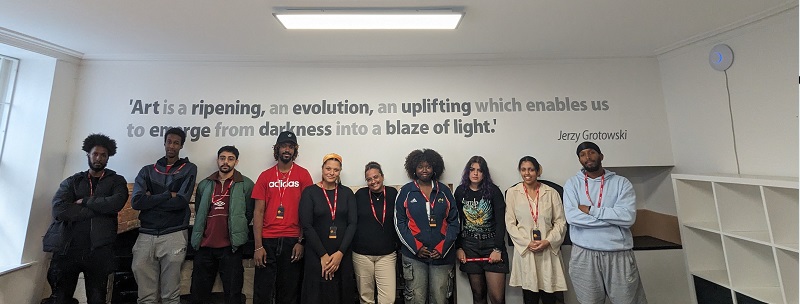
Seren Spooner was offered a job at Armadillo as a junior designer and decided to take the opportunity to move into full- time work.
“As a graphic designer, I was initially unsure about going into client service, but quickly found that I really enjoyed it. Agency structure has been a highlight for me and being openminded about all the different roles and opportunities available within an agency has been really interesting. It has allowed me to see where my experience and skills can fit with an organisation like Armadillo.
“I really wouldn’t be anywhere without this programme; it has made the transition out of university so incredibly easy. To have a variety of roles put in front of you is amazing, and even though I won’t be changing my agency and role in the second part of the programme, as I was offered a full-time position, to have the opportunity to switch and learn new skills at a new company makes such an impact.
“The support that you get from your peers throughout the programme is also so impactful, we have all been there for each other throughout this process which has been amazing.”
Mohd Wani decided to go back into education to do a masters in UX at one of the most prestigious universities in the UK:
“This programme has given me a new career path in an industry I never thought would be for me. By moving into UX design from graphic design, I can now see myself excelling more in this role than I ever could’ve imagined in graphic design.
“In four months on this programme working in UX, I can see more improvement in myself than in three years of training in graphic design.
“The work I have completed at Atomic Smash has helped me to secure a place at the Royal College of Art, which I will be starting later this year. But I have also been offered a full time by Atomic Smash when I finish my course, so I know my future is secure.
“The programme has taught me great networking skills, and different ways of talking to people. The skills sessions we do each week has also given me so many additional skills outside of my day-to-day job which are so valuable, and that is all thanks to this programme.
“The work I have done because of the programme and the skills that I now have, has helped me get rid of my past feelings of ‘I don’t belong here’, and now I know that I do.
“I would tell anyone thinking of joining the programme to just do it. It will give you so many different opportunities to find out what you are good at, what you are in to, and what your career path can be.”
Laurel Beckford is now working with Babbasa’s communications team:
”The BCI internship programme is one of the best out there for any individual looking to get their foot into the creative sector. The amount of support I have received is incredible and gives you so many opportunities to build up your skills.
“I was made aware of the programme through Babbasa and worked with them to help me with the process of getting in touch with BCI.
“Before I came on this programme, I didn’t know one thing about building a website, and now I can and have learnt so many skills.
“I have travelled to London with my agency, met clients face to face, and been involved in a photoshoot, which has been a real highlight.
“The BCI Internship programme can help anyone make their way into the creative sector and will give you the chance to do that.”
Whilst we are sad to be saying goodbye to some of the interns, we are incredibly excited to see opportunities created by the network and it’s brilliant to see the young people thrive and move onto the next stage of their career. We look forward to hearing more about how they are getting on in the coming months.
Other interns have also been offered jobs but have chosen to complete the internship programme, while some are exploring further training to hone their skills.
You can see the agencies currently involved in the progamme here.
The pilot programme will finish at the end of November. We will then review and reflect on the learnings from the interns and participating agencies to see how the scheme can be further developed and expanded. We are particularly excited to be working more closely with the team at Babbasa to develop our onboarding and training processes for the next round.
Conversations for the 2024 Bristol Creative Industries Internship Programme has begun. If you run a creative business in Bristol and are interested in hearing more about how to get involved, contact BCI membership manager Alli Nicholas on [email protected]
As only 1 of 3 SEND Centres for Excellence in the UK, Weston College’s dedicated team in the Faculty of Inclusive Practice are looking for businesses in Bristol and North Somerset to help build sustainable futures for young learners by helping with the transition from education to employment. We are looking to help businesses diversify teams and work together to give young adults with Special Education the chance to reach their full potential. Through a Supported Internship, young adults with additional needs have the opportunity in finding employment. Employers can be pivotal in changing life chances and offering opportunities for young people to achieve their aspirations. If your business can help a young people with SEND transition into work from higher or further education, we would like to hear from you. We can help you receive the right support to succeed in their education and as they move into adult life. The experienced team can help every employer with any concerns, challenges, or barriers you may face and offer guidance, knowledge and advice.
Last year, statistics were published by The British Association of Supported Employment (BASE) showing that only 5.1% of people with learning disabilities known to social services are in any form of paid work, but it is known that 65% of people with learning disabilities want to work. In 2022, there were approximately 133,000 EHCPs held by 16-25-year-olds which roughly estimated 4500 young adults, aged 16-25 with additional needs ready to work. One of the key ambitions of the current SEND reforms is to get more young people with Special Educational Needs & Disabilities into employment. They state:
“We know that with the right preparation and support, the overwhelming majority of young people with SEND are capable of sustained, paid employment. Throughout the consultation, we heard repeatedly that children, young people and their families want to be confident that their education is preparing them for work, and that the people working with them share those high ambitions. They want to know what options and pathways are available to them, and what support and adjustments can help them succeed”.
SEND IMPROVEMENT PLAN, DEPARTMENT FOR EDUCATION
L
Young people with additional needs are more likely to be unemployed or economically inactive than learners without extra requirements. They continue to face many barriers to entering the workplace, particularly for the first time. Weston College, amongst many other Further Education institutions, continually see young people with SEND leave education and struggle to enter the workforce. We want to build a strong talent pool around Bristol, North Somerset and beyond for businesses.
Breaking down the barriers into employment can be daunting, we understand but also hugely rewarding. We would love to work with business interested in learning more about how a Supported Internship can support not only a young person but really diversify any size and type of business. The Faculty of Inclusive Practice currently offer training workshops, employer forums and ongoing support to any employer keen to engage with our learners. We are interested in hearing from businesses could potentially offer a placement, or that want to learn more about getting started. We also want to build a thriving employer engagement group to shape how we engage our learners into industry.
We would love to hear from you, so please contact the team on [email protected] and get involved. Check out all our Employer Support options here
The idea of flexible working has been around for decades. Christel Kammerer, a German management consultant, proposed the idea of ‘flexiwork’ back in 1965 as she identified balancing childcare with work responsibilities as the reason for a lack of women in the workforce.
This concept didn’t seem to gain real or widespread traction until the Covid pandemic. I think we can all agree that this period introduced a monumental shift, both in the way we live and the way we work. Social distancing, face masks, and hand sanitiser all became common practice in a matter of months. But so did remote working and the introduction of more flexible working patterns.
Perpetual Guardian, a privately held company in New Zealand, were the first of their kind to successfully trial a 4-day work week in 2018, before Covid. So, this working example, paired with the introduction of widespread flexible working during the pandemic both had a huge role to play in the shift to 4-day weeks becoming more common.
We are really happy to announce that at Proctors, we are trialling the 4-day workweek for 3 months, having commenced on the 3rd of July. We understand the importance of listening to our team and supporting them wherever we can, and this represents an exciting milestone in our ongoing journey.
Corporate Social Responsibility (CSR) is incredibly important to us, and we understand that even though we are on our journey to be the best that we can be for our people, our planet, and our community, we still have more steps to take to get there. Implementing the 4-day workweek is one of the crucial steps we are taking towards fulfilling our commitment to these values.
If you’ve visited our CSR page, you’ll know that our mission statement is all about putting actions behind our words. We don’t just talk the talk; we always try to walk the walk. And as an agency, we’re driven by purpose, whether that means doing something as small as recycling our rubbish or as grand as hosting an annual student awards ceremony. If it can be done, we’ll strive to do it. This is why we’re implementing a 4-day workweek, because we want to further our positive changes and improve the business structure for our team.
So, what are we doing already, you may ask? Well, here’s a sample…
The office building itself was salvaged by us, reclaimed from an old printworks. We also added 90 solar panels to the roof, which to date have generated 159,758 kWh of energy.
We’re also the only building in the UK coated in CristalACTiV, a coating that reduces atmospheric pollution in the surrounding area.
We have 6 electric car charging points, automatic energy-saving light bulbs, increased insulation, a living wall, compost and recycling, a cycle to work scheme, and that’s just some of the environmental initiatives we undertake.
We also have a number of community-focused CSR initiatives, from the South West Design + Digital Student Awards to working with charities to donate our resources and help them raise awareness and money.
Which brings us back to our people-focused CSR: from providing an inclusive workspace and hosting the PrOscars, to offering mental health first aid to our employees and internships for creatives taking their first steps into the creative industry.
These are just a few examples, but now we are proud to add the 4-day workweek to the list of ways we are trying to improve our CSR journey.
But we haven’t just decided to implement this change for fun. We extensively researched the benefits and implications of this initiative to ensure this was going to be a success.
So, without further ado, here are some of the benefits of a 4-day workweek:
Improved work-life balance
You know that hobby you’re always putting off because you just don’t have the time? Or that volunteering scheme you were always interested in joining? Or even that extra time you’ve been meaning to carve out to spend with your loved ones?
With an extra day off work, this gives our employees the chance to make the most of their time, however they may wish to spend it.
Increased productivity
More than 95% of the companies in the 4-day workweek trial saw no decline, or even noticed an improvement in productivity, and nearly 15% said that this had improved “significantly”. This is due to the fact that happier, and more content employees are more focused on their jobs than those who are dissatisfied or unfulfilled.
With unhappy employees often being more distracted and, in some cases, distracting others, it makes sense that introducing a 4-day week would cut down on this and boost focus. In addition, employees are likely to have more energy with an additional day away from work, which adds to the improved productivity.
Reduced work stress
Going hand in hand with the above point, the overall mental health of our team members is incredibly important to us. Implementing a 4-day workweek may stand to improve this, with a reduced stress level regarding work due to the additional time off per week. We believe that being able to approach work with a clearer and more refreshed perspective is highly likely to show benefits in this area.
Lower emissions
Around 45% of workers in England and Wales drive to work. Cutting out even one day of commuting for people by introducing a 4-day workweek will build up to have a huge impact on commute-related carbon emissions. With fewer cars on the road, congestion will decrease, and there’ll be a reduced environmental impact. In addition, even though our office is remaining open 5 days a week, as fewer people will be in on certain days, the office-based emissions will also decrease.
But don’t just take our word for it. Let’s hear some Proctorians’ thoughts on the 4-day workweek.
Chris Harris, our People Partner
Why was the decision made to go ahead with the 4-day week in the first place?
The idea came from a discussion following a review of the feedback we received from our employee engagement survey. We were looking at what we could do that would have the biggest impact on our people.
At the time it was mentioned, I thought we would just do some research and then move on to the next idea. Following the research and looking at different ways we could make this work, the idea started to grow, and the Directors made the decision that a trial would be the next best step.
The key factors that we considered related to the impact we saw in other companies that have taken this approach and how it improved people’s wellbeing and productivity.
What are your thoughts on the new initiative?
I am excited to see what impact it has on how we approach our work. My thoughts are currently focused on making sure we allow people to think through any obstacles they may come across during this trial. Change is tough, and being available to help our people and teams navigate these obstacles will build our capabilities as a group and as individuals.
What do you hope to see from doing this?
I hope to see a group that realises its potential and starts to challenge our previous ways of thinking. Taking us forward and being contributors to how we operate as a group and business.
What do you plan to do on your extra day off work?
I am really looking forward to getting those boring chores done that mean I can have a full weekend with the family and not have to worry about it!
Ailsa Billington, Managing Director
Could you tell us more about the decision behind implementing the 4-day work week?
After conducting one of our regular company engagement surveys, it was clear to see that a good work-life balance was one of the key things members of the P+S team were looking for.
One of our core values is taking care of each other, so prioritising the well-being of our employees and making sure they are heard and supported is really important to us. The responses from the survey were the original catalyst into looking into and ultimately implementing the 4-day work week trial.
We also carried out a lot of research into how this approach has worked for other businesses, and the positive outcomes that resulted. We also gave people the option on a few different working patters to vote on, and the 4-day week was definitely the most popular outcome!
What would you like to see from this change?
We have an incredibly dedicated, talented, and hard-working team, and I believe that by embracing this change and continuing to nurture a positive work culture, it will provide rejuvenation and promote creativity and innovation across the business. I’m already hearing plans that people are making for their extra day off and I can’t wait to see what everyone gets up to!
Emily Hawkins, Junior Digital Designer
What are your thoughts regarding the 4 day week?
I’m so excited that we are trialling a 4-day working week! I think this new approach is very refreshing and progressive and shows how the company is adapting to prioritise a better work-life balance for employees. I think that having an extra day off each week will allow me to properly recharge and come back to work feeling more focused and motivated which will increase my productivity and creativity.
What do you plan to do with your extra day off work?
I’m hoping that I can use this time to focus on myself and pick up a hobby, perhaps a fitness class or something creative. I’m planning on trying out something different each week to see what I enjoy! I’d also love to learn a new skill, like photography or a foreign language, or to volunteer for a local organisation.
Spending more time outdoors is also really important to me and I’d love to use some of the extended weekends to explore more of the UK or even take some spontaneous short breaks abroad! I’m particularly looking forward to being able to travel back home and spend more quality time with my family and my dog.
I can’t wait to experience the positive impact that this change will have on everyone’s well-being and on the agency as a whole.
We’re incredibly excited about this announcement as it signifies real change and innovation within the company. Listening to our employees is so important to us, and making sure their suggestions are valued is something we take seriously.
As previously mentioned, this 4-day working week trial will initially run for 3 months so we can see how well it is received by the team and how effective it is at improving our work lives. During this period, we will review the changes and effects, and discuss the option of continuing with it in the long-term.
If you would like to find out more about our corporate social responsibility initiatives, check out our CSR page here.
Emmaus Bristol Wins Place on Noble Deeds Digital Marketing Programme
Emmaus Bristol, which helps people out of homelessness and poverty, has been declared this year’s winner of a place on the coveted ‘Noble Deeds’ programme. Supporting charities and not-for-profits in the South West to carry out their essential activities, Emmaus Bristol will receive an £18,000 package of digital marketing support over the course of six months through the programme.
Emmaus Bristol provides a home and support to up to thirty formerly homeless men and women (known as companions), who also receive training and work experience by helping to run the charity’s shops and its other social enterprises. Enabling them to build the confidence and skills they need to secure future employment.
Funding its vital work, the charity also has three shops across the city and its surrounds, selling pre-loved furniture, clothes and household items. Including its Stokes Croft base which also houses a large warehouse and yard for sorting goods to sell or recycle.
Started in North America twenty years-ago by its sister company, this is the second year Bristol-based digital performance marketing agency Noble Performs has run its Noble Deeds pro bono initiative. The programme, which commits to putting a percentage of annual turnover to dedicated CSR activities, has increased this year’s prize fund by over 30% on its 2022 launch amount.
Entry to become a Noble Deeds Programme recipient opens in May each year with the winning not-for-profit announced ahead of the programme start in September, which runs through to February.
Creating a high level of interest this year once again from the local charity sector, Emmaus Bristol was selected due to the long-term impact it has on the community when it comes to supporting people out of poverty and homelessness.
Lorenzo Campbell, Noble Performs and chair of UK Deeds committee explains; “We love what Emmaus is doing in terms of how it equips people with the skills and experiences they need to build life beyond being a companion. In turn, creating a continuous pathway for those facing homelessness and poverty to get back on their feet and create a way forward for themselves. The way Noble Deeds works itself is not dissimilar, our aim is to help charities maximise the impact of their work through digital channels during the six-month programme, while at the same time giving them the skills they need to continue doing so in the long term.
“There is so much potential here with Emmaus Bristol having several elements to what it does – however, knowing where to focus and what activities will have the maximum impact is not easy. That’s where we come in, helping the in-house marketing team to get that clarity and to build an effective digital marketing programme that will give them maximum return on their efforts.”
With numerous worthwhile entrants to this years’ programme, given the cost-of-living crisis and the increased numbers of families and individuals facing homelessness and financial hardship, Emmaus became a clear winner due to its work in this area.
Talking about how the programme will help Emmaus in its current objectives, Stacey McDevitt, Regional Communications Manager, said: “We are delighted to be working with the Noble team to look at how we can shape our digital marketing efforts further to boost donations and create new revenue streams. As well as our shops and upcycling operations, we also have our online sales team, house clearance service and two new eco-pods for tourists, all raising vital funds for the accommodation and support we offer to help people rebuild their lives.
“This all needs to be communicated to the right audiences by a small in-house team and we hope the Noble programme can help us improve the way we do this. Like many charities right now, being able to fund our activities and do everything we need to do can be a challenge. Being able to identify and reach the right people who might be able to support us through digital channels is an essential part of this. We’re looking forward to drawing on Noble’s expertise here so we can be really targeted and make sure our efforts create the maximum impact. There are so many people who need our help right now in such difficult times financially so the more we can do to support them the better.”
To find out more about Emmaus Bristol go to https://emmausbristol.org.uk, to find out more about Noble Performs go to https://nobleperforms.co.uk,
IN 2023, WE RECERTIFIED WITH A SCORE OF 130.3.
130.3 is an outstanding achievement and something we should all be very proud of.
In 2019, ADLIB was one of a small handful of recruitment businesses globally that certified as a B Corp, our starting point was a score of 82.8. Our belief is that the B Corp assessment provides a structure, with clear measurement, to set clear improvement targets. Our initial certification was simply the start of the journey.
We set out our intentions through the publication of our annual impact reports and set the bar high. This approach and transparency ensured we achieved the focus and accountability needed to make improvements and reach our goals.
This impact report reflects on our recertification, what we have achieved, and provides a glimpse into where we head next.
GOVERNANCE – In 2020 ADLIB converted to a 100% employee ownership model. True stakeholder capitalism. Our recertification score acknowledges this transparency, from an internal perspective with regards to the day-to-day financial management, quarterly updates and access to the entire P&L. External publication of impact reports on social and environmental performance and commitment to our code of conducts.
WORKERS – We’re a people business in every sense of the phrase. Since our initial certification we have invested heavily into our team through numerous initiatives to build a stakeholder model that is fit for the long term.
COMMUNITY – At the centre of any community is a shared belief in attitudes and interests in common. For ADLIB, community covers a lot of ground. We support regional ecosystems, provide insight and advocate for international communities that are fighting for equality. The team have built their own communities from the ground up, we’ve supported community based projects that improve people’s lives, and play an active role within the B Corp community.
ENVIRONMENT – As a B2B service provider we store an increasing amount of customer and candidate data. Given our learnings from within the Green Tech South West community, we are increasingly aware that the life cycle of storing, processing, and transmitting digital information is an area that we need to pay significant attention to.
CUSTOMERS – In 2021-22 we aimed to improve our customer score by 10 points via the MotherBoard Charter. After long discussion with B Lab it was concluded that Mums in Tech are not recognised as underserved. Furthermore, the initiative is a not for profit, charging charter signatories an administration fee only and therefore no points were awarded. Our response was threefold.
In today’s rapidly changing world, diversity, equity, and inclusion (DEI) are not just buzzwords; they’re powerful pillars that drive success, enhance problem-solving and fuel innovation within organizations. Recognising the significance of DEI, creative technology agency Aer Studios enlisted the help of HeyFlow to build a stronger and more inclusive workplace that would support their existing workforce better and prepare them for a wider range of experiences as the team grows.
Central to Aer’s new strategy was the desire to foster comfortable conversations around reproductive health and its significant impact on the workplace. And the best way to do that was to create a more informed and open dialogue to pave the way for greater understanding and empathy among employees.
Enlisting the help of Hey Flow they designed a two-step approach. Firstly, a comprehensive companywide survey to gauge the current level of understanding and comfort levels related to reproductive health in the workplace, assess management’s knowledge of existing policies and identify areas for further education.
Based on the insights gained from the survey, HeyFlow then hosted a half-day workshop for the entire team at Aer Studios that focused on key points to bridge the knowledge gap, foster open conversations, and drive positive change.
The impact of the workshop was evident, with 93% of participants left feeling comfortable discussing all reproductive health topics covered during the session. More impressively, 36.2% of participants felt significantly more comfortable discussing these topics than before the workshop.
The workshop also generated seven employee-raised initiatives to create a more inclusive and supportive workplace culture that could be presented to management for consideration as their DEI strategy was being further developed.
“We knew that as part of our ongoing DEI charter, there needed to be a particular focus on gender equality. But if we were going to play a role in tackling the gender imbalance and systemic issues we face in the tech industries, we were going to need some help. Working with the brilliant team at HeyFlow has created a more open dialogue among the team and inspired new policies to better support women at all stages in their reproductive journeys. If you are looking for impactful and meaningful ways to further your DEI efforts, I would highly recommend HeyFlow”
Tom Harber, Managing Director, Aer Studios
Reproductive health doesn’t stop while you’re at work. And by their partnership with HeyFlow, Aer Studios have set a precedent of ensuring companies are building on inclusive foundations that work for their current workforce. If you’re interested in finding out more about HeyFlow and how they can help you understand your female* workforce better then get in touch at [email protected]
We are delighted to now be officially certified as a B Corp business. Launch joins a growing movement of companies – over 7,000 worldwide – on a mission to make business a force for good.
The B Corp certification process involves benchmarking against a rigorous set of standards that represent modern, sustainable business practices. Companies must provide evidence and demonstrate they meet or exceed the standards in order to qualify – we are thrilled to be among them.
But becoming certified as a B Corp business isn’t a box-ticking exercise, it’s just the first step. This certification demonstrates our commitment to striving for better in all aspects of our business – from community and diversity, to our environmental impact. We are excited to identify ways we can improve, track these measures and create our first B Corp Impact reports to show progress.
Mike Sharp, Operations Director at Launch says of the certification: “We are really proud to have achieved B Corp status and join the amazing community of like-minded companies on a similar journey and striving for higher standards. We hope to continue building the happiest performance agency whilst addressing positive change for our communities and the environment.”
Learn more:
Learn more about B Corp on their website
Noble Performs Celebrates Five Years in Bristol
Digital marketing agency Noble Performs is celebrating five years in Bristol with a record year in business for its team, who have broken the £1million turnover barrier for the first time.
Established in 2018, Noble Performs was started in Bristol by US West Coast agency Noble Studios and Mr B & Friends, with one on-the-ground employee – current managing partner Kate Sikora. Tripling the size of the business during the pandemic, with significant client wins including premium footwear brand Rockfish, and Bristol’s beloved St George’s concert hall, Noble Performs is hoping to double the size of its 11-strong team during the next three years.
Built on the same ‘Be Better Every Day’ ethos as its US sister company, CSR has been at the core of Noble Performs since day one. During the last financial year, the business donated £12,000 of digital marketing support to local charity Heart of BS13 as part of its ‘Noble Deeds’ initiative. Recently launched, this year’s Deeds programme will receive a 30% increase in funds in line with Noble’s turnover increase, to support a local not-for-profit or registered charity with its digital marketing performance.
“I am so proud of all the team has achieved during the past five years and being able to give back to the local community and create more employment opportunities for others at the same time is incredibly rewarding, said Kate Sikora, managing partner, Noble Performs.
“Bristol has been the perfect home for us – it’s a thriving city with some great businesses and networks, but what underpins this is a real sense of community and collaboration and a genuine desire to do the right thing. This really resonates with our values and we’re excited to see what the next five years brings,” she added.
To celebrate its fifth anniversary, the UK team took a trip to the US earlier this month to visit sister company Noble Studios in Nevada. The celebrations will continue in September in the UK with the ‘Be Better Bash’ – a party for employees and their families, friends and associates of the business, and Noble Deeds recipients past and present.
Ahead of the festivities, Noble Performs will also host a Masterclass, where speakers will be invited to share a quickfire twenty minute ‘Five things’ session on a diversity of topics from AI to ESG.
More details on the Be Better Bash and Masterclass, including speakers and how to register attendance, will be announced in the coming weeks.
You need to load content from reCAPTCHA to submit the form. Please note that doing so will share data with third-party providers.
More Information