First published by PerformanceIN, November 2021.
By Hannah Waters.
Creative, being the use of imagination, and data, being fact and statistics, are typically seen as opposites. However, when combined, these opposites can create a more exciting and engaging user experience.
In the world we work in, creative is used to help users to complete tasks. Whether that is to aid their understanding of a message, its relevance, or to provide enjoyable ways of navigating content. And while there will always be a level of subjectivity over anything ‘creative’, this means it becomes more of a tool to be used as part of a solution, not the solution in isolation.
Likewise, data by itself is just a collection of information. You could just present all of that data to a user… but what would they do with it? You have to turn it into a story in order for it to be meaningful. The best way to make your story? Enter into a clear and mutually beneficial relationship with the user where both sides get a roughly even value exchange, they let you know them, and you serve them relent content.
Let’s look at an example of a sample brief:
You could use pure creative to design a social post or email to do this, but how would you know what to include? What makes it relevant? By using data gathered from other people who have been on this journey, or a similar one, we can start to understand:
Straight away you have some actionable insights that will inform the basic approaches you might take, but it wouldn’t stop there. The best creatives don’t work in absolutes and certainties. They are curious. They want to know more about how effective their work is. Introducing segmentation or multi-variant testing, and constantly iterating approaches to maximise engagement, helps refine the creative solution. Data is the only way to do this objectively.
It’s also important to consider that no brief exists in isolation; everything you learn from the execution of one can be applied to the next. Without a good collaboration between data analysts and creatives, you can’t ever be sure you’re telling the story in a way that resonates or has the desired impact.
There are much more complex examples of the two working together. It could be that you want to build affinity with users by celebrating their relationship with the brand, or something more functional, like helping users stay engaged with an app by looking at common pain points and how to overcome them. However, the process is the same and still requires there to be a clear objective, coupled with data and creative working together to bring the ideas and story to life.
Working in CRM means we are within an area that is rich in first-party permissioned data sets. It’s great to have a creative team that is obsessed with the numbers and a data team that is passionate about creative being rooted in real data. This means we can always be objective about our creative solutions, ensuring that they have a purpose far beyond looking ‘pretty’. We measure our campaigns in proven behavioural change as well as pounds and pence, and that’s only possible because of the alignment between data and creative.
In my experience, growth and success looks different for every digital agency owner – and this usually depends on where they are on their journey in business.
For some, success might be increasing headcount, opening new offices, working less and/or earning more. While for others who might be a little further down the track, their ultimate goal might be to exit the agency.
No matter what the goal is – when it comes to growing your agency one of the best first steps you can take is to understand your agency’s value.
Over the years, I’ve helped hundreds of agency owners analyse the value of their business in preparation for the next step. My Digital Agency Coach team and I use a handful of tactics and strategies to do this, including measuring the agency’s EBIT & profitability.
This segues us nicely into the purpose of this article – how to calculate your profitability & EBIT, why it’s important to do so and 2021 digital agency benchmarks to measure up against.
EBIT simply means Earnings Before Interest & Tax. EBIT is a method that is often used to find the profit generated by a digital agency (or any company for that matter). EBIT is synonymous with Operating Profit as it doesn’t consider things like tax and interest expenses.
For obvious reasons, your EBIT isn’t indicative of exactly how much profit you’re bringing home. However, it is a great indicator of the profitability potential of the business which is why it is such a great metric when it comes to measuring the value of your agency.
EBITDA is almost the same calculation as EBIT however, it also brings Depreciation and Amortization into the equation.
EBITDA is a more complex calculation that takes time and resource to produce, so it’s usually used to prepare your agency for sale. At Digital Agency Coach, we recommend keeping an eye on your EBIT as it is a much more manageable calculation that can be produced for regular reporting.
The short answer? No, EBIT and Net Profit are two different things. Your Net Income is what’s left of your Revenue once you subtract the total costs of doing business. This ‘total cost’ includes taxes, interest, depreciation and all your other expenses and deductions
While your EBIT can be a valuable tool for agency valuation, it’s also an important metric to keep an eye on to measure the success of your ongoing efforts.
In this recent Promo Republic webinar, I share industry secrets about what the high performing agencies are doing and what makes them better than the rest.
One of the key takeaways from the webinar is that high performing, successful and growing digital agencies have their finger on the pulse when it comes to their profitability and their EBIT.
Pre-pandemic, if your EBIT was greater than 20%, you were in a good position and would have been up there with fellow successful agency owners.
However since the pandemic began, (broadly speaking) digital agencies have become more profitable and have nudged the ‘Good EBIT’ score up to around 25%.
It’s important to note that while 25% is a good EBIT score, there’s still plenty of room for improvement – some high-performing agencies are boasting an EBIT between 35-44%!
Now you understand what EBIT is and what the benchmark looks like, how can you calculate the EBIT of your agency?
There are a couple of ways to calculate EBIT, and your accountant or finance team will be able to help you do so. But, in theory, you can just follow the formula below:
EBIT = Net Income – (Interest + Taxes)
Once you have your magic number, measure it against the diagram in this article and see where your agency’s EBIT ranks among the industry benchmarks.
If there’s some work to do (and remember, there’s always room for improvement) – start by reading this quick guide to profitability on purpose and address the six key steps to maximising your profitability.
Watch: Profit On Purpose (7min)
Of course, if you think you might benefit from a deeper level of support, Get In Touch with our team and chat about joining our Mastermind Groups or Coaching Programs to help you grow your digital agency and become a high performer.
If you manage a website that is extremely large or a site that contains content which is very regularly updated, it’s important to prioritise the pages you want Google to pay attention to. If Googlebot is just left to crawl and index the site as and when it pleases, it’s extremely likely that Google will attempt to crawl far too many pages at once – which can lead to a number of issues such as multiple parallel connections overwhelming your servers, or Google automatically prioritising unimportant pages whilst ignoring pages that are extremely valuable to you as a business.
As a result, pages within your site that could potentially rank really well in organic Google search results may instead be completely disregarded. For example, Google could easily choose to prioritise a standard About page which is purely informational and doesn’t directly drive conversions, in place of a core product page which has the potential to rank well at the top of Google whilst also directly driving multiple sales on a daily basis.
So… how can we control what Google crawls and indexes and how do we prioritise the pages that are important to your business?
‘Crawl Budget’ is the term used to describe the volume of resources and time that Google devotes to crawling an individual site. This crawl budget is determined by two main factors – your crawl capacity limit (the maximum number of simultaneous connections that Google can use to crawl a site AND the duration of the delay between fetches) and the crawl demand (how important Google deem a crawl of the site to be, depending on the size of the site, it’s popularity, how often it is updated and so on).
Your Crawl Capacity can vary depending on a number of factors, including:
Crawl Demand can also vary, depending on the following factors:
Notes: Site wide updates such as domain changes or site moves can also trigger an increase in crawl demand, as Google will detect that all of a site’s URLs have been updated and so will need to be reindexed.
So, now that we know what factors impact your crawl budget, how do we help ensure that we maximise your crawling efficiency, using this information? Luckily, Google has also provided a list of Best Practices for this sort of thing.
There are a number of tools and methods that you can use to tell Google which pages within your site are really important to you – those which you really need to rank within organic Google searches. These include:
So now that you understand more about Googlebot’s Crawl Budget and how best to manage it – as well as Google’s Best Practices – what’s next? Aside from the above, it’s also incredibly important to make sure that your pages load efficiently and that you regularly monitor your site crawling.
If you’re interested in how to best monitor your site’s crawling and indexing as well as the key steps Google recommend during this process, you’re in luck – part 2 of this blog, ‘Googlebot Site Crawling and Indexing – 5 Key Steps You Should Know’ is coming soon, so check back regularly for updates.
If you have any questions regarding this or would like experienced SEO professionals to take a look at your website on your behalf, the Technical SEO team here at Varn would love to hear from you. Simply drop us an email at [email protected]
Recently, 88% of people (McKinsey survey) said they believe more attention should be paid to reducing pollution, as consumers have become more engaged around sustainability topics since the start of Covid-19.
In light of the IPCC’s recent catastrophic findings, this comes as a relief. But once normal service resumes and we have more to do with our lunch breaks and evenings than doom scroll and research new hobbies, will the newfound interest in sustainability prevail?
Veganism, sustainable clothing, and renewable energy have made the transition from trends, to movements, to legitimate lifestyle choices over the past decade. But the antithesis to these choices – mass food waste and the overconsumption of meat; the rise of fast fashion and ever-changing trends; always-on gadgets and dwindling global resources – have hardly seen a decline.
However, it’s not just about spare time allowing us to reconsider our habits and seek out new, better ones. In fact for many, Covid-19 has been the busiest time of their lives whether it’s meant caring for loved ones, coping with higher demands at work, or juggling professional commitments with family while working from home. You might think that financial instability, either the stress of busyness or the lethargy of furlough, and the unpredictability of ever-changing restrictions would see us dropping such niceties as ethical concerns and sustainable consumption practices at the drop of an isolation alert. But in fact, that wasn’t the case.
So something much bigger must have changed perceptions. Something like witnessing how quickly communities, businesses, and society as a whole responded and adapted to a global pandemic. The centering of collective (not just individual) health and wellbeing as a priority. The abrupt end to travel and the need for fashion trends. All of these changes have, surely, altered our worldview and how we thought we could live – and contribute to our sustainability.
Though packages in the post and the discount aisle in Sainsbury’s make us happy, the instantly reduced need for new things and the inability to just pop to the supermarket without covering our faces and queueing for unknown stretches of time meant staying home and doing an Ocado order became the go-to. No need for a new outfit. No temptation to throw the 70% off sandwiches in your basket ‘for tomorrow’. Instead, every click to order was a full consideration: and one that has done the planet some good in the process.
At the start of 2021 – less than a year since global lockdowns began – 60% of the respondents to a global Accenture survey said they were making more sustainable and ethical choices since the start of the pandemic, and 90% of those were intending to continue to do so. Out of almost 9,000 people in 20 countries that means at least 5,300 people have, according to Accenture, ‘dramatically evolved’. In fact, 16% of respondents said they had ‘seized the opportunity to transform themselves for the better’ this year. What better statistic to end on?
When it comes to digital agencies, a high percentage of inbound leads come from prospects who are seeking a new partner after their current agency has let them down. As such, most of these ‘new’ clients are frustrated, let down and/or have had a poor experience with another agency that has underperformed and underdelivered.
The trouble with this is that as an agency owner, it can be easy to forget that your competitors do retain a ton of clients who are happy and content with their service, and as the competition, you only see and hear of the negative experiences.
And if you (and every other agency out there) only witness the bad experiences and negative sentiment, and you base your sales pitch off this, then you’re saying the exact same thing as everyone else…
So, in order to be successful in the pitch room, you need to be realistic about what clients *actually* want to be hearing from your sales pitch.

As a digital agency coach, I’ve worked with hundreds of digital marketing agencies and have witnessed thousands of pitches over the years, and when it comes to the pitch room, it seems most agencies seem to be saying the same thing.
Thanks to comments made by their competitions’ former clients, agency owners can have a warped and distorted view of what the market needs, wants and cares about when it comes to choosing a new agency partner.
If the only inbound leads we receive are from the 1% of our competitor’s clients who are dissatisfied, disgruntled and traumatised by their past agency experience — our view on the world might be a little warped and we can be tempted to think that we should differentiate our agency based on this anecdotal insight.
In reality, it’s likely the other 99% of our competitors’ clients, and any prospective clients for that matter, aren’t tainted by a negative agency experience and couldn’t care less whether you’re a “trusted advisor” or “an award-winning agency” — they just want someone who knows their product and their industry and can help them grow their business.
With this in mind, you can appreciate that building your pitch around the negativity you hear about other agencies, isn’t going to appeal to the masses, and certainly won’t make you stand out from the crowd — despite your best intentions.
Bombarding your prospects with all the same ‘differentiators’ as your competitors like “we believe in partners, not clients” or “we’re platform agnostic” will get you lost in the wash, and any clients you do land, are more likely to be the notorious red-flag, difficult-to-please ones.
So, how can you beat this?
In order to be more successful in the pitch room and win more clients, start by changing your perception of what a prospective client actually wants from an agency. By doing this, you’ll be able to offer up genuine, impactful reasons for a client to work with you, rather than the same old reasons they hear from every other agency in the pitch.
To do this, start by concentrating on specialising. Niche down your offering and tightly define your market positioning and target audience. By doing this first, you’ll understand who you are really talking to, what their broader pain points are, and how you can connect with them by detailing genuine, meaningful differences between you and your competitor.
Then, build on this foundation and follow Doug Hall’s advice to redesign your sales pitch.
Hall advises agencies to ensure their pitch does three things: 1) Demonstrates an overt business benefit to the client, 2) Includes dramatic differentiators between the competition and 3) Includes proof that they’re qualified and experienced enough to deliver on the promise. Hall’s research of over 8000 propositions discovered that the high performing agencies who pitched with this approach had an average win rate of around 53%.
*I recently put together an article detailing Doug Hall’s three-step method to improving your sales pitch and winning more clients. READ: Increase Your Win Rate By Up To 40% With Doug Hall’s Advice
At Digital Agency Coach, my team and I have helped hundreds of digital agencies achieve stratospheric growth within their business by changing the manner in which they source and convert their inbound leads.
As agency owners, anecdotal feedback from your competitors’ disgruntled clients will distort your view on what your clients actually want and need from you. Instead of pitching the genuine uniquity and benefit of what you have to offer, you align yourself with everyone else in the pitch room and try to sell exactly the same thing as all the others.
Now I’ve shared the secret, it’s time for you to avoid this common pitfall, change your view on your client’s pain points and start to grow your agency — one successful pitch at a time.
If you need support or guidance growing your agency and would like personalised, 1:1 help achieving your goals, please Get In Touch — my team of dedicated coaches and consultants would be delighted to help.
Digital is the status quo
We’re all doing our best to meet the ever-growing demand for organisations to ‘go digital’.
Whether we’re trying to reach more customers, more effectively market our products and services, minimise our carbon footprint or deliver more cost-effective business solutions, finding a digital – and in many ways more accessible – solution is pretty much today’s standard course of action.
The opportunities when we meet a new audience in a new space are obvious. But what about the pitfalls?
The potential for being misunderstood, taken out of context, or having your brand diluted across multiple platforms becomes more likely – especially when considering the speed at which online content is delivered.
And it’s for this reason that our brand identity becomes even more important.
What are brand guidelines?
Your brand guidelines are the rules which determine how your brand is presented to the world. It usually contains information about your brand name and how it’s used, your corporate logo, brand colours, fonts, tone of voice etc.
Your brand guidelines should clearly illustrate how your brand identity is portrayed and communicated to consumers, providing a reference point for employees and clients alike.
And we need them, because when your brand remains consistent, it remains recognisable.
Research has shown 86% of consumers say that authenticity is a key factor when deciding what brands they like and support. And when we think about it, it makes complete sense.
Imagine you nip into your local corner shop to buy a bottle of Coca Cola. Only, the label on the bottle looks strange. In fact, it’s not the typical Coca Cola red at all – it’s bright orange.
And, come to think of it, the font looks different too: It’s narrower than you remember. And not as cursive. Plus, the bottle’s neck is slightly longer. But the drink is still claiming to be authentic, traditional Coca Cola – what’s the likelihood this is a fake?
Maybe you risk it. Or maybe you pick the more familiar-looking bottle of Pepsi, instead.
According to PwC’s consumer insights survey, customers selected trust as their number one reason for choosing a retailer. And how can you expect customers to trust your brand if you don’t remain consistent?
The need for maintaining brand consistency across platforms is critical, because it promotes authenticity and trust. In fact, ensuring a consistent representation of your brand can increase revenue by as much as 33%.
With 80% of consumers agreeing that a signature colour increases brand association and recognition, the importance of sticking to your guidelines – is hard to overstate.
What about having a refresh?
There’s nothing wrong with intentionally refreshing your brand. In fact, updating your branding every few years ensures you stay modern, and reflects your company’s ability to evolve with the times.
But with any brand refresh, your guidelines need to be refreshed too.
Many organisations keep their brand guidelines in a PDF or printed format, meaning you’ll need to factor in time-consuming tasks: updating your documents, checking and proofing them, making amends, artworking them and having them signed off – all this on top of your rebranding process.
But there is a better way.
Digitising your brand guidelines allows for quick and resource-light updates to guidelines, that are quick to roll out and distribute to all relevant stakeholders.
Creating digital brand guidelines
A digital brand guideline ‘book’ can be accessed from anywhere, at any time, and on any device – without the trouble of having to locate a physical copy, or share a long-lost PDF that’s buried on your desktop. Simply share the link, and go.
At Proctors, we use Webflow to create and update our clients’ digital brand guidelines. Whether they’re used by your colleagues, your customers, media or external business partners, making your guidelines accessible on Webflow gives everyone clear direction on presenting your brand consistently.
Even better, with Webflow, elements such as your logos, fonts and colours can be downloaded by anyone you share the link with. So in today’s digital first world, your media partners or social media managers can remain responsive when it comes to pushing out branded content.
Plus, with digital-first increasingly the norm, companies who use motion graphics in their brand elements can demonstrate real, live examples in their digital brand guidelines book too – something which isn’t possible in other formats.
Even large organisations with lots of different sub-brands can benefit from Webflow’s flexibility. It’s a quick and efficient process to create and update your guidelines, whether you need to edit just one page or to build and deploy several branding ‘chapters’. Plus, any changes or updates can be highlighted on the landing page, so all employees are made aware of them.
With Webflow’s no-code format, any brand refresh updates can be easily executed by your marketing team, meaning you’ll save masses of time on updates. Not to mention avoiding the need to print – and that’s one big environmental benefit.
Scaling up with Webflow
If you want your brand to remain trusted in the digital era, you need to practice consistency.
With easily accessible guidelines, you’ll be able to ensure you’re presenting an authentic brand. So you can reach more customers, and more effectively market your businesses.
If you’d like to find out more about our digital brand guideline services, or any of the other services we offer, talk to us today at [email protected].
Last week, the Bristol team of TMW Unlimited moved into our new home, Origin Workspace in Berkeley Square. We’re very excited to have found somewhere in the heart of Bristol that allows us to fully embrace a culture of truly flexible working.
When we began our search, we were looking for a versatile working space that our team would be genuinely excited to visit and that was deliberately set up for the requirements of the modern working world. In Origin, we’ve found that and more.
Not only do we have everything we need in terms of formal and informal working areas, and the ability to host events; we also have the facilities to look after our employees’ wellbeing (such as a lovely gym) and fantastic social spaces (including two incredible roof terraces).

After surveying the company multiple times over the last 12 months, it became clear that most people don’t want to be in the office 5 days a week, nor do they want to always be at home – they’re were clearly seeking a hybrid solution. The specific amount of days people want to spend in the office differs from person to person, but almost everyone is looking for the flexibility and work-life balance that being able to work from home brings, and they also a wish to be part of a fun, vibrant agency.
Based on the evidence we’ve seen, the fears that some companies had about reduced productivity with people working from home are unfounded. Not only do our team members tell us they are able to get more done whilst also being able to handle the responsibilities of home, the proof is in the pudding. The business is thriving, we’re creating fantastic work and our clients are happy, and that’s without people being consistently in the office.
That’s why we’re implementing a system of working that’s based on trust. We have enough confidence in our team that we don’t feel the need to dictate or micromanage where they work. It’s up to individuals and teams to do what they feel is right for them. If it works for them, then it works for us too.
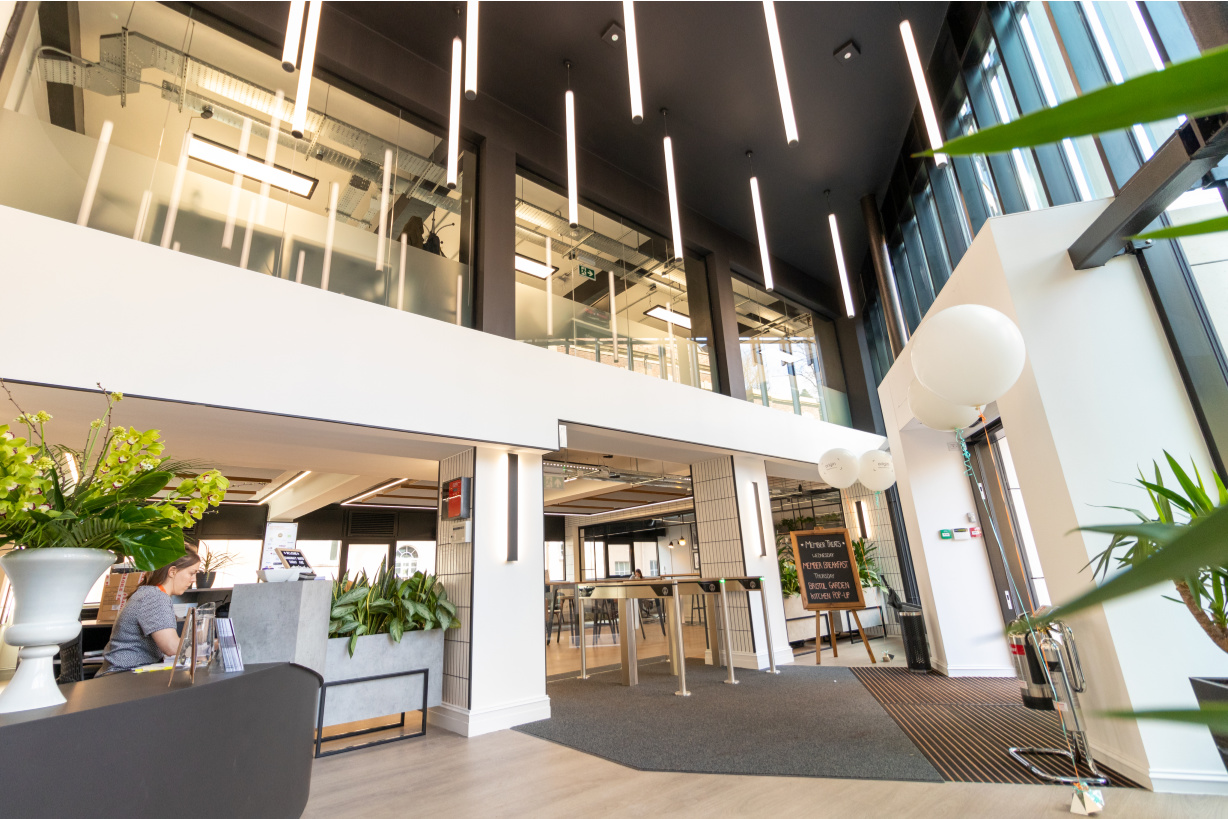
Another thing we’ve learned is that working from home has not only changed how often our people expect to be in the office, but also what the experience is like when they’re there.
This has created a stronger focus on maintaining and enhancing our culture and team spirit, and to give people the opportunity to form meaningful professional and social relationships with people within the agency. Many team members also highlighted how they wanted somewhere that could support their well-being, rather than act as a hindrance on it.
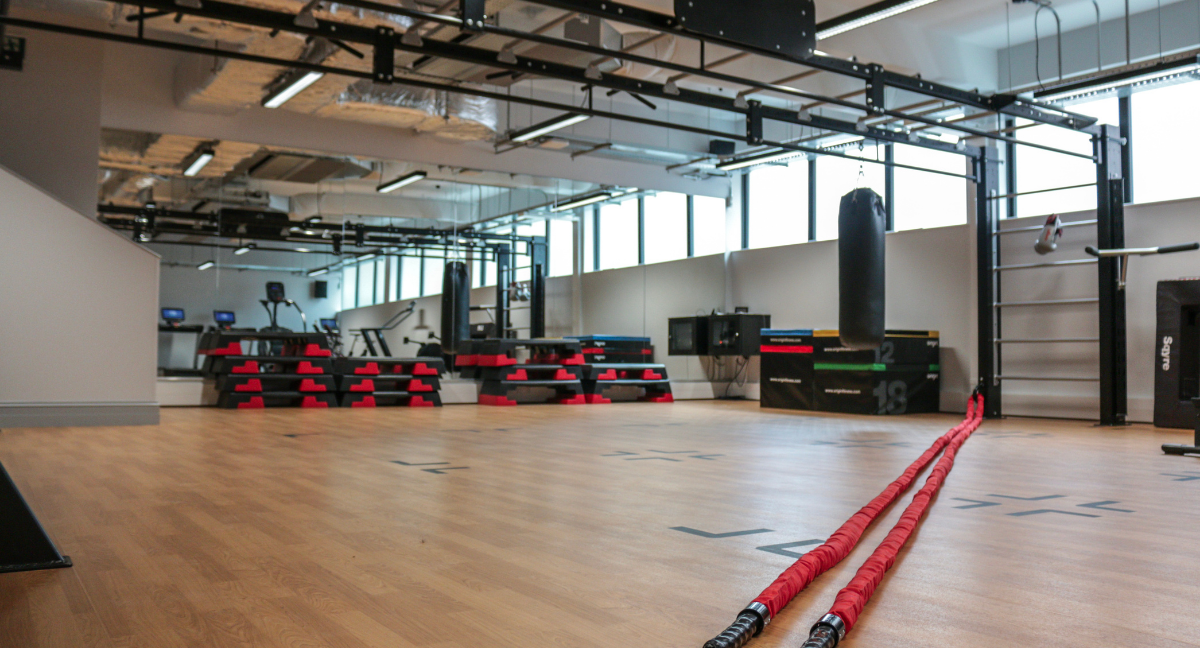
That’s why well-being and social spaces were at the forefront of our mind when we chose Origin. Having a place of work with a fully equipped gym and yoga studio, as a culture of wellness embedded into it means we can now look after our physical and mental health, whilst the location and rooftop terraces are perfect to help ensure TMW is a destination that our employees want to use and enjoy, not just a place where they are expected to turn up every day of the working week.
We’re all very excited about becoming part of an already thriving community in Origin, and what the future holds for TMW.
Written by Alex Burley, Managing Director, TMW Unlimited.
One recent study* found that companies who oriented their services and operations around customers, employees, and partners experienced 6.5 times the profit growth compared to those that didn’t.
Despite this evidence for the power of customer centricity, we know that far too many companies are under-investing in customer experience.
That’s because being customer-centric is easy to say, but hard to put into practice, and even harder to know if you’re on the right track!
As a User-Centred Design company, we’re on a mission to help organisations thrive through employing better customer-centric practices.
That’s why we’re inviting companies that run scaled services for customers to join a study that we’re conducting in collaboration with Google, into how companies orient around their customers.
In exchange for contributing to the study, they will receive a benchmark of their customer-centricity score against the rest of the market, plus some unique insights into how to put together a programme of low-cost improvements, free of charge. All we ask is that companies commit to completing a survey by mid-November.
The deadline is the end October, so sign up to become a contributor here https://www.cxpartners.co.uk/customer-centricity-model
We’d love YOU to be part of the study because companies that deploy good user experiences that meet human needs know that improvements in loyalty, revenue and market share follow.
We work every day with organisations to execute programmes that embed User-Centred design into their operations. This takes time and care, but the results are not only impactful in the short term, but set organisations up for sustainable success, and an ability to ride-out storms that may occur in the future.
We’re working with Google to solve this. Through this unique study and campaign that we’ve devised, we’re looking to support organisations in investing in the initiatives that will help them become more customer-centric – and thrive.
By participating in this study as a contributor, you will be joining Europe’s top 200 brands including Farfetch, Europcar, Toolstation, giffgaff and Burberry.
Please sign up here, and we look forward to working with you
https://www.cxpartners.co.uk/customer-centricity-model
*https://www.accenture.com/gb-en/insights/interactive/business-of-experience
Bristol-based digital design and development agency, Unfold celebrated success on 14th October 2021, taking home the title of “Best Digital Design” at The SPARKies 2021. This was awarded for the transformational work they completed for their clients Sherpr.
The SPARKies is one of the year’s most hotly anticipated tech awards ceremonies in the South West. Since Managing Director, Harry Cobbold won ‘FutureSPARK’ back in 2019, Unfold has been nominated for several other categories (including ‘Tech Leader of the Year’ this year). The ceremony was held at The Showroom on Bath Road and was joint hosted by the TechSpark team and comedian Stephen Bailey (who had everyone in stitches).
Sherpr came to Unfold with two problems;
Unfold built a custom web app, admin portal and marketing site for Sherpr in just 10 weeks. This completely transformed their business. As well as automating all of the time-intensive back office tasks, Unfold also created an editable CMS through which the Sherpr team could update and manage their products without constant developer support.
As well as immediate savings in overheads, Sherpr were also able to process far more clients with their new reliable and automated booking system.
Following the work Unfold completed for them, Sherpr achieved their first ever 6-figure month and hit an annual run-rate of £1.2m.
“From beginning to end, the team at Unfold have been great to work with. Communication has been easy and any changes we needed to make during the build process were welcomed and perfectly executed.” – Andy Watson, CEO of Sherpr
Read more in-depth info on exactly how Unfold helped Sherpr achieve this remarkable step-change in their full case study.
If you have a project or digital platform you’d like advice on, please don’t hesitate to get in touch with the Unfold team.
By Molly Rushton
This article first appeared was first featured by New Digital Age, August 2021
From starting my career in an agency, moving to in-house client-side, and then making the move back to being in an agency, I’ve learned a lot about the differences between the two environments. Both client-side work and agency work have a lot to offer, but as I’ve most recently made the switch from client-side work back into an agency setting, I wanted to cover the reasons why. Working in an agency is exciting, and if you’re anything like me then there’s a good chance you would benefit from the switch too. Here are five reasons why going from client-side to agency might be the right move for you.
You’re a keen learner
One of the main draws for me to move back to an agency was the learning opportunities and chances to develop that an agency setting provides. In an agency, you could be working across a number of clients or projects in a day, or you could spend the whole day focusing on a single one. The variety of clients and projects means you’re always learning new skills and approaches, and having new experiences within your role.
Being keen and willing to learn new things is absolutely vital when working for an agency. You need to be open and ready to face new kinds of challenges and learn along the way.
You’re ready for a challenge
New challenges are inevitable when working in an agency setting. With a variety of clients and different projects coming in all the time, you need to be ready for your role to be challenging on occasion.
If you’re looking to push your skills to new levels, refine what you do, and get even better at it, then an agency might be the place for you.
You thrive on critical feedback
When moving from client-side to agency, the truth is you do lose a bit of autonomy when it comes to decision-making. You’ll have to refine your decisions to combine what you think is the right choice with what the client is looking for. This means that even if you think something is fantastic creatively if the client doesn’t see it, then it will have to be adapted to find the right solution for them.
The positive of this is that you get lots of critical feedback on your work. And yes, this is a positive. Learning to take critical feedback and grow from it speeds up your abilities to create the best work possible. This means you can create something that really works for the client this time, and something even better next time. When you’ve got it right, it’s a real buzz, and when you’ve got notes on what you can improve on, you get a drive to do better and better.
I get far more critical and, most importantly, constructive feedback now working at an agency than I did when I was client-side. If you thrive on feedback and you’re ready and willing to improve then an agency setting is a good place to be.
You like variety
The variety of work that an agency provides is incredibly exciting to be a part of. You can be working on different projects all the time, keeping things fresh and interesting, ensuring you’ll never get bored. Working across different industries, with exposure to a large variety of markets will mean you’re always adapting, problem-solving and upskilling in your role. No two days are ever the same.
You enjoy being busy
The pace of an agency is perhaps the biggest thing to be aware of when switching from client-side to agency. It’s much faster. You have to be ready and enjoy being busy. There are often quick turnarounds on projects and the variety means you can never get complicit. But for that reason, it’s a benefit! Being busy is creatively fulfilling. And don’t worry, it’s not all work and no play. A cool thing about agency’s is they often come with lovely employee perks. At Armadillo, we have Summer Fridays where we leave early to enjoy some extra time in the sun once a month over the summer.
The switch to agency work has been a good one for me. It pushes me to be my best, provides me with plenty of creative challenges, and offers a great sense of fulfilment.
Are you ready for a change?
Then maybe an agency is the place to be.
You need to load content from reCAPTCHA to submit the form. Please note that doing so will share data with third-party providers.
More Information