BBC Digital Cities will be returning to Bristol for 2020, with a week-long series of events for the creative industries.
Starting on Saturday 25th January 2020, there will be a full and varied schedule across the week, offering insights and free digital skills training.
See the full schedule on the Digital Cities Bristol homepage.
Partners include BBC Writersroom, BBC Academy and BBC Young Reporter plus digital arts and creative conference, Hello Culture Remix, will be making its debut in the city.
Boomsatsuma will once again be opening up its doors for the “Ask Me Anything” event and Bristol Media’s “How to Get Your Dream Job” will be taking place at the BBC on Whiteladies Road. We the Curious will be running a number of special showings on the Thursday and The Watershed’s Pervasive Media Studio will be hosting a special lunchtime session on the Friday with the BBC’s Makerbox.
On Thursday 30th at The Watershed, there is a fantastic day of events packed full of opportunities for storytellers on all digital platforms – called Screen Futures; If you are looking for funding for your latest film venture, want to know more about writing for social media, animation or commissioning opportunities in audio, are a black film maker wanting to know about opportunities in the city or have a story to tell at TedX in Bristol, then this day is for you. Featuring amongst others Into Film, ScreenSkills, Cables & Camera’s, BBC Writersroom, BFINetwork, New Creatives, Bectu & TedX Bristol, there will be opportunities to find out about schemes, burseries, funding and commissioning opportunities, as well as recent arrivals to the city – Channel 4 who will be talking about their latest apprenticeships and trainee schemes.
Not to be missed out – tech and digital creators will be able to attend UWE’s Global Game Jam & Bristol City Council’s Hackathon over the two weekends, both returning again after successful events last year.
Follow #digicities and @BBCAcademy on Twitter for updates. This page and the Digital Cities homepage are updated regularly so keep checking back for the latest information.
For Information:
Booking open now.
Membership has remained strong with over 560 individuals and organisations from the South-West creative community. We’ve seen many of our members grow and flourish, plus several forming new partnerships and collaborations which we’re delighted to see. We’re excited to welcome new members in 2020 and to continue to grow membership.
Our events are an opportunity for members of the creative community to come together to meet their peers, network and learn from some of the most influential figures in industry.
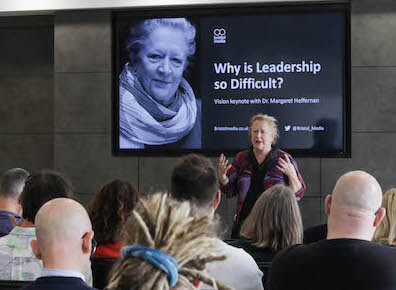 We’ve hosted a number of world class speakers as part of our Vision Keynote series: We’ve dreamed the impossibility of indifference with Pentagram’s Harry Pearce, got under the skin of why leadership is so difficult with the legendary leadership guru Margaret Heffernan, and discovered how to be joyful at work with Twitter’s EMEA Vice President Bruce Daisley (in partnership with our friends at BIMA).
In November we brought back our famous Portfolio Review Night, this time connecting 15 freelance animators, copywriters, designers, photographers, filmmakers and even a voice over artist, with 15 creative directors from member agencies. It was an exhilarating (and exhausting!) evening at Origin Workspace, with lots of business cards exchanged and a couple of potential contracts, too.
The members lunch remains a firm favourite in the calendar. This year we’ve hosted 9 member lunches where we’ve had the pleasure of meeting over 250 people from member organisations. New for 2019 was the introduction of 3-minute elevator pitches and it’s been brilliant to hear what our members are up to. The pitches have been as entertaining as they have been informative and watching those lightbulb moments when members realise they can collaborate with each other is incredibly rewarding!
 It’s important to us to facilitate growth and opportunities in the community, to inspire talented people to work here and encourage business growth. Our member organisations have posted over 670 job roles via South West Creative Jobs, from planners to developers, camera operators to designers, interns to directors, the jobs board remains the go-to site if you’re looking to advertise or secure a creative industry role.
Our workshops have proved to be another effective method to support and upskill local professionals. In January we kicked off with Blair Enns and his critically acclaimed workshop: ‘Mastering the Value Conversation’. An inspiring and practical session where we saw Blair share his expert pricing knowledge with 26 individuals from local businesses.
Throughout the rest of the year we’ve worked with some lovely businesses to hold training and workshops on a variety of subjects, including Copyright in Productions, CV & LinkedIn for Freelancers, how to Supercharge your Instagram, plus How to get the Big Idea with Patrick Collister. Watch out for more of these next year!
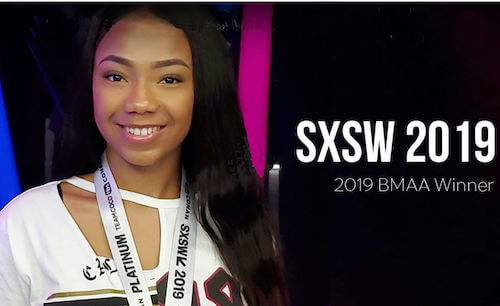 We took our second young person to Austin for SXSW as part of the Ben Martin Apprentice Award (BMAA). On returning, our BMAA winner Marissa Lewis-Peart, had the incredible opportunity of 15 paid work placements in local agencies, gaining a wealth of experience in various disciplines within the industry.
The competition to find our SXSW 2020 winner is underway with the successful candidate due to be announced very soon. In the summer of 2020, we plan to repeat the paid placements not only for the winner but also four of the runners up. If your firm would like to get involved, please contact [email protected]
We also bid farewell to our very own Content Apprentice, Izzy Bryant. Izzy has been a fantastic addition to the team, spearheading the Featured Member series where we’ve met some incredible businesses and individuals to find out more about what they do. One of our favourite moments from this series was a quote in response to the question ‘Describe Bristol in 3 words’, to which came the reply “Doing Things Differently”. We felt this perfectly summarised the local ecosystem and the uniquely collaborative nature we’re so proud of in Bristol.
Our City – our annual film competition in collaboration with the Mayor and local partners – has seen a record number of entries this year. As well as the cash prize of £1000, the young finalists have their film screened on Millennium Square, are offered industry work experience and a marketing workshop with Destination Bristol. The judges have been so impressed with the quality and creativity of the entries once again and are now finalising this year’s winner.
 We have continued to fly the flag for Bristol within both the Creative Industries Council cluster group and the Creative Industries Federation (CIF) UK Advisory Council. CIF and Creative England (CE) have announced a merger in Spring 2020, and have published a joint Creative Industries Manifesto, which our board director, Paul Appleby, was involved in drafting. This will combine the London-based lobbying power of CIF with the national coverage of England of CE.
Next year, we’re seeing in our 15th year and we’ve got lots in store for the creative community in Bristol, Bath and the region.
It’s been quite a year but there is so much to look forward to in 2020, including a very exciting announcement! Thank you so much to all our loyal members and partners who continue to support us to deliver the great work.
Wishing you a very Merry Christmas and a prosperous New Year, from all of us at Bristol Media.
You can stay up to date with news and announcements by signing up to our newsletter here.
Deliveroo’s advert got banned. Do you remember?
The answer for most people is ‘probably not’ – because although it was only two short weeks ago, the hubbub around the election has dominated the news and the story quickly got pushed off the BBC Most Read List (no doubt to Deliveroo’s relief).
It’s worth a read though, because it’s a useful reminder of the way the Advertising Standards Agency looks at the fundamental meaning of adverts, not just the bit in small white writing at the bottom.
Let’s look at the facts: Deliveroo ran an advert which featured a happy family gathered round one of its trademark delivery boxes. A woman dives into the box, foraging for takeaways. Out of the box came a smorgasbord of food from well-known restaurants: KFC, Wagamama, Pizza Express and Burger King.
Now, if you’ve ever used Deliveroo, you’ll spot the immediate problem here. You can’t order all of those things in one delivery. You would have to order each one separately, pay delivery charge on each and they might not all arrive at the same time. But that wasn’t the impression the advert gave, even if it did say ‘separate orders must be made for each restaurant’.
Viewers saw this and weren’t happy – the advert attracted 300 complaints to the ASA who upheld them. It said that the overall impression of the advert was fundamentally misleading about the nature of Deliveroo’s service.
Deliveroo offered to add further, more prominent clarification on top of the existing small print, but the ASA decided that wasn’t enough given the advert portrayed a situation which could never happen in real life using Deliveroo’s service.
Is this the death of small print? No. Clarification is still useful and my advice to clients is usually to include it where a nuance needs more explanation than is provided by the creative.
But what you can’t do is provide clarification which runs contrary to the overall narrative of an advert. It should explain, not contradict the fundamental meaning of your advert.
And although you might think “this is TV, things are different there”, actually the ASA can apply the same logic to social media posts or print advertising and often does. As a marketer, communicator and advertiser, this story is therefore a useful reminder of your responsibilities when it comes to advising clients and creating campaigns.
It’s also a useful reminder that innocent mistakes do happen, even in large advertising campaigns for big brands. I don’t believe Deliveroo had any intention of misleading the viewing public and I’m sure they’ll be thinking about the lessons learnt from this too.
On that note, I’ll leave the last word to their spokeswoman: “For the record, you can’t actually dive into your Deliveroo bag, however hungry you are.”
Annalisa Checchi is a media and technology lawyer at top 100 law firm Foot Anstey. You can get in touch with her via email: [email protected]
In this session, you will get an overview of some of the ‘golden rules’ of marketing, the evidence behind them, and why they’re not restrictive but launchpads for great creativity. It turns out that marketing isn’t always complicated, just hard.
The talk will be followed by a 30-minute Q&A so come prepared with your questions. Book here
The session takes place from 3 – 4.30pm on Tuesday 21st January at Zone, The Brewhouse, Bristol. Tickets are £20+VAT for Bristol Media members and £30+VAT for non-members.
Nick has spent the last 12 years helping brands navigate the choppy waters of creating effective marketing with a rigorous evidence-based approach. He’s won numerous awards including the coveted DMA Grand Prix, judges on several awards panels and has been published in leading journals such as Admap.
The Children’s Air Ambulance appoints YOURS. SINCERELY as retained communications agency in the South West
National charity The Children’s Air Ambulance has appointed Bristol communications agency YOURS. SINCERELY to boost the profile of its life saving work across the country, with an emphasis on the South West.
The Children’s Air Ambulance provides a high speed, helicopter transfer service for critically ill babies and children who are too sick to travel by road, and work with clinical partners at hospitals and specialist centres across the country. Bristol is the second biggest user nationally of the charity’s service with more than 100 potentially life saving missions flown in the region with Bristol’s NEST (Newborn Emergency Stabilisation and Transfer) and WATCh (West Acute Transport for Children) teams.
Dave Richards, Head of Communications at the Children’s Air Ambulance, said: “We’re delighted to be partnering with YOURS. SINCERELY as we maximise awareness of our unique lifesaving service. The agency brings valuable expertise, experience and understanding as we promote the vital work we do in keeping families together.”
YOURS. SINCERELY, a hybrid PR and marketing agency, will work alongside the in-house team at the Children’s Air Ambulance to raise public awareness of its charity status and highlight the essential work it does throughout the region. In particular, the agency will provide strategic consultancy and implement a proactive media engagement campaign.
YOURS. SINCERELY co-founder Amy Simpson said: “We are thrilled to announce our new partnership with the Children’s Air Ambulance and cannot wait to get started. The importance of the work they do cannot be stressed enough and we are looking forward to showcasing the skill and dedication of the team who work tirelessly to help sick children across the country.”
Founded in early 2019, YOURS. SINCERELY has signed a raft of new clients in just six months and is now predicted to hit the £250,000 mark by the end of the year, making it is one of the fastest growing communications agencies in Bristol. Co-founder Amy Simpson, who has previously worked at agencies such as Frank PR and MHP, was one of just fifteen senior professionals selected for PR Week’s prestigious Women in PR 2019 mentoring scheme.
About YOURS.SINCERELY
YOURS.SINCERELY is a hybrid PR and marketing agency which offers a bespoke combination of digital and communications expertise. The agency works with clients spanning a range of industries from fintech, financial services and retail to academia, film and TV and the charity sector. Blending traditional PR and communications with a detailed understanding of the digital landscape and wider marketing discipline, YOURS.SINCERELY offers a range of services from best-in-class content and performance marketing to PR activity and social media management.
For more information, visit www.yourssincerely.online or email [email protected]
The Institute of Osteopathy (iO) has launched its first national UK campaign ahead of the General Election on 12th December. It is the first campaign created by AgencyUK, since their appointment as iO’s agency of record.
The disruptive copy reads ‘We believed in freedom of movement. Discover your Osteopath. They provide a drug free, whole body approach. Working to create a healthier lifestyle for the many, not just the few’ and drives to the iO’s ‘Osteopath Finder’ to partner people with a local practitioner.
The campaign is the first step towards raising broader consumer awareness of the importance of ongoing health management as both a preventative step towards long term ill health and physical decline.
The ageing UK population is one of the biggest challenges facing the NHS, and ongoing health management is seen to be one of the most vital steps towards empowering the UK population to take active control of their health and lifestyle, reducing the burden on the UK health system.
The campaign is designed to cut through the noise and the ongoing party political broadcasts and social media echo chambers around the General Election. The advertising raises awareness and provides education around the UK’s challenging health sector, which has been heavily discussed by all political parties.
Katie Griffiths, head of marketing and communications, iO, said: “The iO is a non-political organisation with no political views. However, we are committed to raising the current levels of awareness about osteopaths and the contribution they make to improve the health of the public and support preventative healthcare; keeping people healthy and active for longer. This campaign by AgencyUK presents us an ideal opportunity to use political language to cut through and build an improved understanding of our healthcare profession amongst the UK population in a timely and relevant way.”
The campaign is being launched through all digital media channels.
Sammy Mansourpour, managing director, AgencyUK, said: “The strategy has always been to develop a national consumer campaign harnessing advertising, PR, and social media as well as direct marketing communications on behalf of the iO and their members. To be able to do this in a climate where the media rhetoric supports the aims of the iO, presents us with a creative opportunity to really disrupt the market.”
Marketing activities do not always include creativity. Many tasks are repetitive and mundane.
Over time, when you grow and so does your number of leads, doing these activities is most likely going to tire you.
So why not automate them?
If you can automate, then you can spend your precious time elsewhere. But what is the first step towards automation?
The first step is to identify all the activities in your routine that are repetitive.
77% of the Chief Marketing Officers (think: Corporate) say that the sole objective of marketing activities automation is to help grow the revenue and decrease your costs.
In this article, I have listed out 5 processes that are common to most of the online businesses and can be automated effortlessly. These are simple, but effective business development strategies. You can forget about lead generation, customer relations, organization, actual stats measurement and more.
It’s time to set and forget!
According to Litmus, the majority of companies produce somewhere between one to five emails at a time. So if most marketers send out multiple emails in a month, those weeks can add up fast.
What does this mean? Marketers spend way too much time on emails leaving less time for other important tasks.
This is where email automation comes in and helps save precious time and money that goes into thinking and typing emails.
How to leverage?
Most companies now have successfully automated their lead generation sequence to a point where they can generate leads on an unbelievable scale without devoting much time to the process.
Instead, they use their human resources in tasks that software or AI can’t perform just yet.
Even if you are just starting off, I would suggest you invest in a software that does not only automate lead generation but can also give you useful stats on lead behavioural patterns.
With growth, you will be spending more and more time
Zapier is an app that helps you integrate your client relations and sales.
How To leverage?
Client relationship management is quintessential in today’s age to keep all the leads warm. But it is a tedious process nonetheless.
Now, with Zapier you could integrate every sale with your email sequencing and with every sale, an email will be sent out with the message that best suits your requirements.
Marketing analytics is the backbone to formulate alternative strategies for any business. But with all the variables and data, it becomes a tedious and time consuming job.
Whether a business is succeeding or failing, it is always essential to take corrective measures to boost your success of mitigating your loss based on your actuals.
This is a crucial step in any marketing strategy. But why keep continuously checking the stats to stay updated?
How to leverage?
Having software like hubspot to take care of your marketing analytics lets you concentrate your attention on other pivotal activities while remaining careless about the actuals.
Do you spend way too much time sorting and keeping up with your email to never miss a vital mail? Most people do.
With ever alert tone (notification), I usually get distracted into thinking that I might have received an important mail from either a client or a prospect.
This hinders my workflow.
Sometimes when I am in the zone and onto something, a notification can disrupt my entire concentration.
How to leverage?
Not only that, I have a filter for my team, friends, different projects, leads and many more.
Welcome emails, thank you emails and even reminder emails can all be automated.
Statistics say that any lead or prospect is the most active and likely to respond to your messages within the first two days of interaction with you or your business.
Missing out on this is an opportunity cost lost.
How to leverage?
Whether you have a new subscriber or a sale, there is always room to upsell or even promote your brand for making a loyal fan base in the future.
An autoresponder sends out emails that would have otherwise taken much time and also there is no room for missing out on any lead.
If you are a big firm, with a lot of workload and tonnes of inbound data, you’re going to spend a lot of time managing the overlapping project.
For this reason, it’s important to leverage agile project management tools to automate and organize intensive management in a simple and easy manner.
Why? Because it’s a much better alternative than having to use your team’s valuable resources.
These tools are generally a one stop shop for all your marketing related needs. You do not have to purchase different tools or even hire people to handle one great task “Your complete marketing needs”.
Lastly, I would like to bring to your attention that content forms the basis of all automation. You would not want your prospects to feel like they are only dealing with a machine.
No one wants to sit and compile stats and information and then make sure they are presented clearly. This process can be automated and it should be as well.
Automated analytics, customer relations, and organization can help ensure that you don’t make an expensive mistake.
Have something else on your mind that can be automated? Don’t keep it to yourself. Let me know how you automated a marketing activity and how has it helped you?
Share and care. Comment below and let us know if you have any alternative options to the tools and guides in this article.
Charities are starting to innovate digitally. Innovation teams are spluttering into life, and some charities are building new digital products and services that will reach new audiences, create new potential income streams and increase their impact. But it’s slow, hard going. Why is this?
Do charities have the desire, the imagination? Do they have the vision at board level? Is risk-aversion the big blocker? Do funding models stymie innovation? Or do previous failed attempts mean they’re once burned, twice shy? Frankly, do they have the guts?
All of the above and more is probably the answer. But, here, I’ll focus on overcoming the barriers to charities adapting the type of modern, agile product development process that drives digital product innovation from the civil service to Silicon Valley.
Let’s kick this off with money. In charities, procurement teams and budget holders like to know what they’re buying. They like big specs, clear outcomes and fixed costs. They’re less keen on Minimum Viable Products (MVPs), iterative development, testing learning and pivoting – uncertainty. Unfortunately, that difficult stuff is at the heart of agile project development.
If you aren’t ready to totally change the way you procure, a starting point is to break projects into small, affordable chunks. Assuming you are working with an agency partner: start with an innovation workshop; if that works take an idea forward in a ‘design sprint’ (roughly £15k to £25k); iterate on it; run story mapping to build a roadmap. Make each stage a micro-tollgate like a mini government service standards assessment. This way projects actually get started so they can gather momentum, and they ‘fail fast’ if they aren’t worth pursuing.
An example of this in practice is MQ Mental Health who are building a new product to engage the public in mental health research. MQ leveraged the prototype we built with them in a design sprint – to attract funding to build an MVP. MQ have funded this whole product development one step at a time, using the quality outputs of each phase to help engage the funders of the next. This can be slow, but at least it’s moving.
Be creative with the process too. We recently ran a Design Sprint with Sue Ryder (who are building a new in-browser video service to provide bereavement counselling and support ) with a ‘money back guarantee ’ – if they weren’t completely satisfied with the design sprint, they wouldn’t pay a penny. This gave the procurement team the confidence to sign off the initial phases of the project, while both teams got stuck into it with extra enthusiasm.
Creating a product culture in the charity space is tough. There’s not much experience about, yet experience is a really valuable component. We believe that the critical piece of the puzzle, is an engaged, skilled, empowered, client-side product manager. A good product manager keeps development aligned to business objectives and holds delivery teams to account, whether internal or external (this is particularly important when working ‘agile-ly’.)
This may all sound challenging for most charities – accepting more risk, changing funding and procurement models, developing an effective product culture – so let’s make it simple.
Here is a formula that might help you kick start innovation in your organisation:
Finally, try to remember agile projects can (and do) fail. Particularly, if you don’t have the right processes, people and culture in place. And failure is scary in the charity sector; especially if it threatens your public image. Nevertheless, ‘fixed scope’ innovation is an oxymoron. Leaders need to be brave enough to be prepared to fail.
Well-run product development processes, as outlined above, fail early, which helps. Something that doesn’t help is annual budgets. Ben Holt said in his valedictory post about the Disruptive Innovation Lab at Cancer Research UK, “disruptive ideas need to impact strategy with an eye on the future, not the annual planning cycle” and that is something we should all try to keep in mind.
Innovation products need a new, flexible ‘as and when’ funding approach, one where funding is aligned to goals or outcomes, rather than ‘project scope’ and that is something the sector will have to keep working towards.
Torchbox run a free Charity Digital Innovation Series of breakfast events. Here you can see the details and video of their last one, for Heads and Directors of Digital – where the discussions were on this same topic of challenges and success of Digital Innovation. Keep up to date on all Torchbox events on Twitter.
This article first appeared in Charity Comms.
*This event is now SOLD OUT. Please add your name to the waitlist and we’ll confirm if a ticket becomes available*
Humans are innately illogical, and make unconscious decisions based largely on our emotions. Yet when confronted with a business or personal challenge, we have become obsessed with absolute logic, rationality, algorithms and data, and it’s threatening to stunt us: politically, socially and economically. What if there were an alternative to logic and rationality –a ‘psycho-logic’–that was far more pervasive and powerful than we realise, and when employed correctly, creates the kind of magic (or alchemy) most businesses or economists can only dream of?
Join us for a keynote with Rory Sutherland, the legendary Ogilvy Vice Chairman, the ‘Don Draper of the UK’, and one of our most acclaimed behavioural economists, who will share insights into his book ‘Alchemy – The Surprising Power of Ideas that don’t make Sense.’
Sutherland will use real case studies from his work and research with the world’s biggest brands and influencers, to reveal how we must learn to identify and understand the basics of ‘psycho-logic’, to get ahead in the modern world.
This keynote takes place between 12.30 – 14.00 on Tuesday 28th January at Foot Anstey, 2 Glass Wharf, Bristol BS2 0FR.
Tickets are 45+VAT for Bristol Media members (£60+VAT for non-members), a limited number are available to Bristol Media Freelance Members for £25+VAT.
Tickets include a buffet lunch and a copy of Rory’s book ‘Alchemy: The Surprising Power of Ideas that don’t make Sense’ to take away.
Rory is the Vice Chairman of Ogilvy, an attractively vague job title which has allowed him to co-found a behavioural science practice within the agency.
He works with a consulting practice of psychology graduates who look for ‘unseen opportunities’ in consumer behaviour – these are the very small contextual changes which can have enormous effects on the decisions people make. It is a hugely valuable activity – but, alas, not particularly lucrative. This is because clients generally do not have budgets for solving problems they have not noticed.
Before founding Ogilvy Change, Rory was a copywriter and creative director at Ogilvy for over 20 years, having joined as a graduate trainee in 1988. He has variously been President of the IPA, Chair of the Judges for the Direct Jury at Cannes, and has spoken at TED Global. He writes regular columns for the Spectator, Market Leader and Impact, and also occasional pieces for Wired. He is the author of two books: The Wiki Man, available on Amazon at prices between £1.96 and £2,345.54, depending on whether the algorithm is having a bad day, and Alchemy, The Surprising Power of Ideas that don’t make Sense, published in the UK and US in March 2019.
Check out more Bristol Media events on the What’s On pages
Sometimes I feel like I’m still a newbie and only left my part-time job in retail a few months ago, but the reality is I’ve actually been a Junior Content Producer Apprentice with Bristol Media and AMBITIOUS PR for over a year now!
Since the last time I checked in, things have really taken off. Social Media Week Bristol 2019 has come and gone (read about my life on the digital squad in my blog), I’ve met and featured 5 (soon to be 6) Bristol Media members, and have worked alongside both teams on some really exciting projects. Not to mention that I’ve also been busy at College experimenting with VR and learning about video production.
With my apprenticeship coming to an end and the new year about to begin, it’s the perfect time to reflect on my experience and think about the future. Here are three things I’ve learnt during my time as an apprentice…
Something I struggled with at the beginning of my apprenticeship (and still a bit now) is confidence in myself and my work. Some great advice a colleague gave me is to not doubt myself because of my age or absence in experience. Because when I walk into a meeting or event, no one knows those things, and I can use that to my advantage. What’s the worst that can happen if I approach someone to network at an event? Or offer my input during a collaborative meeting? I’ve realised that people are actually interested in hearing what I have to say and it’s really great to know that.
When I say communication, I mean ALL communications. Whether it be as simple as answering the office phone or communicating brand values, I’m sure my colleagues can vouch for me when I say that since I first started back in November 2018, my internal and external comms have significantly matured. I guess spending 2 days a week at a comms agency will do that to you…
Of course, my apprenticeship has proven challenging at times. I have been thrown into the deep end on a few occasions. Naturally, I like to stick to familiar tasks, things I know that I can do well, but when in a sink or swim position I can either wait for someone else to save me or jump right in. Ultimately I know that I’ll impress my team a lot more if I try and give it my best go. On one occasion I made a video for a client that I really wasn’t confident about doing, but once I’d got past the stress and panic it turned out great.
One year on, I know that I made the right decision choosing to go down the apprenticeship route with Cirencester College. I am super pleased to have finished my exams with a Distinction overall and a job offer from AMBITIOUS PR as Junior Content Executive!
You need to load content from reCAPTCHA to submit the form. Please note that doing so will share data with third-party providers.
More Information