As digital marketers, we have to constantly evolve and adapt to the world around us. And the past 18 months taught us how to respond to extreme changes to the digital landscape.
Looking ahead to 2022, we need to think about how to recover and thrive in this new private, customer-centric online world.
So, what are the key macro trends to focus on in 2022? Let’s take a look at the main topics that should be high on your agenda in the coming months (and beyond).
The last few months have been described as ‘The Great Resignation’, and marketing – both in-house and agency-side – has undoubtedly been impacted.
This isn’t exclusively a digital marketing challenge. Hospitality has been well written about in political contexts in the last few months.
In the most recent US Bureau of Labor Statistics report, the hospitality industry made up 157,000 of the 242,000 total resignations (these figures do not include redundancies or terminations).
And in the US, The Labor Department revealed that 4.3 million Americans left their jobs in August 2021, or around 2.9% of the national workforce, which is the highest number on record.
Here in the UK, the number of open jobs surpassed 1 million for the first time in August. In response to this, employers started to look inwards on this subject; what are we doing wrong? Why aren’t we able to find talent as easily as we were in previous years?
The pandemic allowed people to take a step back and re-evaluate their lives and what’s important to them. And the main reasons why employees are deciding to leave their jobs are down to poor working conditions, fears of catching Covid-19, and desires to shift to more purpose-driven roles.
However, while these numbers can make it look like the loss of talent is an insurmountable challenge, you need to look at these stats as an opportunity.
As is often the case, macro-economic trends create change, and we are forced to embrace them.
Firstly, you need to look at the people you have and think about what they are demanding from their job in 2021. Today, money is just a part of what will attract and retain talent, you need to be thinking about benefits, purpose, and flexibility.
Flexibility will be a key attraction in 2022. In a recent survey conducted by EY, 90% of respondents said they want flexibility in where and when they work post-Covid-19 and would even consider quitting if flexible working was not an option.
At Adapt, we’ve taken an approach of ‘extreme flexibility’. We want people to use the office and gather in the office in a way that makes them most productive and best able to serve our clients.
There are some big wins from agencies introducing this level of flexibility. Diversity and inclusion for example, as flexible working environments are particularly helpful for women, people with health concerns, carers, and the older generations.
Creating such a space will promote a more inclusive and diverse workspace that reflects modern society is a true attraction, especially for Millennials and Gen Z.
This year, we’ve seen Apple, Google, and other big tech players make major changes to how they handle the privacy of their users. The most obvious is Google’s announcement it will be removing third-party cookies from Chrome in 2023.
When we start changing fundamentals like this, it becomes a leap into the unknown, which in turn causes concern. What’s the substitute? What can I trust?
Trying to bring a whole industry along without knocking out what is delivering results and economic growth is undoubtedly challenging. Part of the challenge is the subjectivity of privacy, as privacy will look different for each person.
So, it will be difficult to develop a working consensus around privacy amongst all the parties. And we won’t arrive at a formal answer straight away because of language barriers, terms, and understanding of meaning.
To start, you need to take ownership of your data.
The ownership of your data and the organisation of that data will be critical. The way you organise your data will allow you to consider its lifetime value, media mix modelling, and also develop new views of attribution in the future.
Taking control of your first-party data will be a slow burner. And while we have time until third-party cookies are fully removed, we need to act now.
As these changes roll out people will need to see a change, feel a change, and understand the change. This might be fine for tech experts, but for the general population, we have a long way to go to educate. So, the sooner we adapt to a privacy-led digital world, the better.
Over the last few years, we’ve seen big tech companies increasingly adopt AI within advertising campaigns, by collecting huge amounts of first-party data and using that profile to deliver better advertising to individuals.
This has developed improvement in the performance of advertising, reduction in the administration of campaigns, and far better serving of the “right person, right place, right time” methodology.
The interesting debate is where do we go from here? AI is starting to impact our business through many different forms and we’re continuing to embrace it.
To ground ourselves in this, it’s best to look at what the search engines are doing. It gives us clues into the most powerful uses of AI in the understanding of content, and helps us understand how AI can be used in the creation of content.
This opportunity has never been greater than what it is now. The ability search engines have to discover and serve content has never been stronger.
Google has reached a critical point in understanding information through AI using MUM (Multitask Unified Model). To give you a feel for how powerful it is… it’s 1,000x more powerful than BERT.
All these new aspects ultimately serve Google’s purpose and aim to keep their users engaged for as long as possible.
The advancement in search engines understanding content better through AI creates some incredibly interesting opportunities for brands.
It poses the question… how can AI start influencing how we create content? Particularly in multi-market translation scenarios, AI can be hugely powerful in supporting us develop content.
Right now, at Adapt, we’re using neural machine translation to power SEO content creation for a global technology manufacturer.
This has been possible for common language pairs for a little while with a degree of accuracy, but we’ve recently used it to cover 11 languages in APAC with some more obscure language pairs to a high degree of success.
The scale, possibility, and efficiency of AI-powered content creation are absolutely staggering, even today. Even just this example goes to show how far machine translation has come.
Macro trends, from the need for talent and the sunsetting of third-party cookies to the takeover of AI, are fundamental factors you need to give your full attention to in 2022. And ignoring these three trends could be your downfall.
And while 2022 is a few months away, the time to respond to these trends is now. I’d urge you to be bold and take risks – you’ll see the benefit in the longer term.
What does the future of PR and marketing look like? Business leaders are planning ahead for 2022 in one of the most unique situations that people have faced. How do you prepare your business for life when dealing with a pandemic?
AMBITIOUS and Insider Media spoke to business leaders in the South West to find out what their approaches to PR and marketing will be in 2022. Which areas will be their focus? Where are they increasing their investment? And, where they’ll be choosing not to spend.
The answers show that business leaders in the South West are planning to invest: engaging with their core customers and visitors more than ever before. And not just their customers. Thanks to a skills shortage across many sectors, using online to source new recruits is alo where businesses will be investing. As a result, online activity is becoming more important than ever for PR and marketing activities.
Life really did move online during the last 12 months and while in-person events are starting to come back, digital has taken the lead on many aspects of businesses. As well as B2C companies, B2B businesses are seeing the value of social media and how to use it for success.
Mike Ribbeck, Insider Media Editor said: “As the purse strings tighten, business leaders look at expenditure and decide which are the most important functions to protect and which areas of the business are expendable.
“The reality is that, rather than bringing the world to a standstill, the pandemic has accelerated many of the trends that were reshaping the world that we all live and work in. The digital revolution has picked up pace and businesses from all sectors and different sizes have made the transition to operating virtually.
“All of that means that the need to get the message out about your business and the services it can offer has never been more important.
“And the channels of communication to potential clients and business partners have continued to multiply with social media playing an even more important role when it comes to marketing and PR.
“According to our survey, the majority of businesses have maintained the level of spending or even increased.
“One of the most interesting findings was where businesses will be concentrating theory efforts. The two main areas that stood out were content creation and social media.”
Our survey has found that there are six core areas where business leaders will be focusing their PR and marketing efforts, including content, PR and SEO. Results from our survey include:
Phil Smith, Managing Director, Business West, said: “In the past 18 months, South West businesses have wrestled with a unique and complex set of challenges as a result of Brexit and the pandemic.
“Whilst business impacts such as social distancing measures are temporary, labour shortages and inflationary pressures look set to continue (at least in the medium term) and could have a stymieing effect on our economic recovery.
“As the government looks to recoup some of the £300bn+ that it spent during the pandemic, SW businesses will no doubt be anxious about potential tax hikes and rate increases.”
It is encouraging that businesses recognise the huge part that PR and marketing play not only in boosting their brand and growing sales but generating awareness of new products and services too.
It is also evident that marketing has a vital role in attracting, engaging, and recruiting talent into the business (as well as helping to retain talent). Indeed, today’s job candidates discover and weigh up potential employers in the same way they find consumer goods, restaurants, and hotels. It is mission critical that marketing budgets reflect this digital shift.
The amount of online content consumed by the average person doubled to seven hours a day. Social media activity increased by 12.3 per cent with the average person spending nearly two and a half hours on social sites.
A clear, resounding message from the businesses we spoke to is that we are going through an accelerated pace of significant change.
The pandemic hit the fast forward button, transforming consumer perceptions, expectations, and behaviours almost overnight. There are no pause or rewind buttons – consumers and the world have moved on. This has profound implications for how we market ourselves. Failure to keep up with the pace of change could mean being left behind forever.
Download your copy of the white paper now.
Yeo Valley Organic, Britain’s largest organic dairy brand, is returning to TV with a new multi-million-pound advertising campaign by McCann Bristol which will celebrate the big difference everyone can have on the planet.
Over a decade ago Yeo Valley Organic made history by taking over an entire commercial break during a 2010 X-Factor live show, with its two-minute rapping farmer ads. Now the brand is going back on screen with a carefully crafted multimedia masterbrand campaign by McCann.
McCann Bristol won the work through a competitive pitch process, and it marks an exciting new era of growth for the organic dairy brand as it raises awareness of its regenerative organic farming credentials. Yeo Valley Organic believes that regenerative organic farming is key to mitigating the effects of climate change and the creative campaign, including over £3m media investment, will celebrate the big difference everyone can have on the planet by coming together to take part in small positive acts, as part of the ReGeneration.
The campaign will launch on TV next spring with further bursts and activity planned throughout 2022 including events, press, on-pack promotions and innovation.
Yeo Valley Managing Director Tom Wright said: “It’s an very exciting time for us as a business and we’re thrilled to have McCann as a creative partner to help us fulfil our ambitions. Due to climate change, what we eat, how we farm and how we live have never been more important, and we feel we have a role to play in helping the nation join the dots between organic and the planet. We want to inspire people to think about food systems, and how we can all collectively make a difference through small everyday acts, like choosing Yeo Valley Organic products. The message should be fun, positive and inclusive.”
Vince McSweeney, Chief Creative Officer at McCann Central, said: “We’re delighted to have been selected by Yeo Valley Organic to produce their first masterbrand campaign in a decade. As a champion of sustainable practices, we couldn’t be more excited to work with them on driving meaningful change. When we all come together to take part in small regenerative acts, we’re all part of the ReGeneration and can make a big positive impact.”
Sustainability is high on consumer agenda’s and new findings from the latest organic shopper research reveals that 79% of people say they are increasingly worried about the natural world and our impact on it. With the organic market experiencing the highest year-on-year growth in 15 years (at +12.6%) and 77% of people saying they want to make more sustainable choices in the products they buy, Yeo Valley Organic feels it’s the right time to launch a motivating consumer campaign.
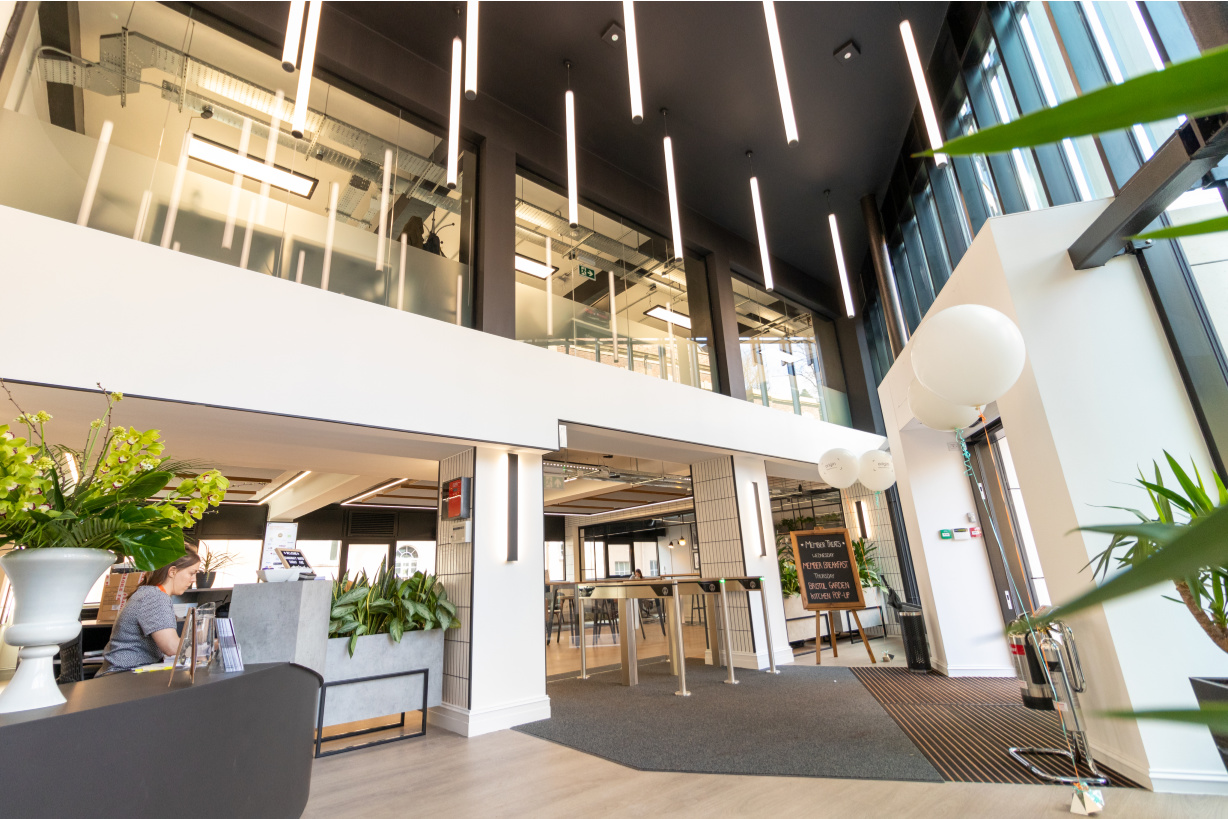
Last week, the Bristol team of TMW Unlimited moved into our new home, Origin Workspace in Berkeley Square. We’re very excited to have found somewhere in the heart of Bristol that allows us to fully embrace a culture of truly flexible working.
When we began our search, we were looking for a versatile working space that our team would be genuinely excited to visit and that was deliberately set up for the requirements of the modern working world. In Origin, we’ve found that and more.
Not only do we have everything we need in terms of formal and informal working areas, and the ability to host events; we also have the facilities to look after our employees’ wellbeing (such as a lovely gym) and fantastic social spaces (including two incredible roof terraces).

After surveying the company multiple times over the last 12 months, it became clear that most people don’t want to be in the office 5 days a week, nor do they want to always be at home – they’re were clearly seeking a hybrid solution. The specific amount of days people want to spend in the office differs from person to person, but almost everyone is looking for the flexibility and work-life balance that being able to work from home brings, and they also a wish to be part of a fun, vibrant agency.
Based on the evidence we’ve seen, the fears that some companies had about reduced productivity with people working from home are unfounded. Not only do our team members tell us they are able to get more done whilst also being able to handle the responsibilities of home, the proof is in the pudding. The business is thriving, we’re creating fantastic work and our clients are happy, and that’s without people being consistently in the office.
That’s why we’re implementing a system of working that’s based on trust. We have enough confidence in our team that we don’t feel the need to dictate or micromanage where they work. It’s up to individuals and teams to do what they feel is right for them. If it works for them, then it works for us too.
Another thing we’ve learned is that working from home has not only changed how often our people expect to be in the office, but also what the experience is like when they’re there.
This has created a stronger focus on maintaining and enhancing our culture and team spirit, and to give people the opportunity to form meaningful professional and social relationships with people within the agency. Many team members also highlighted how they wanted somewhere that could support their well-being, rather than act as a hindrance on it.
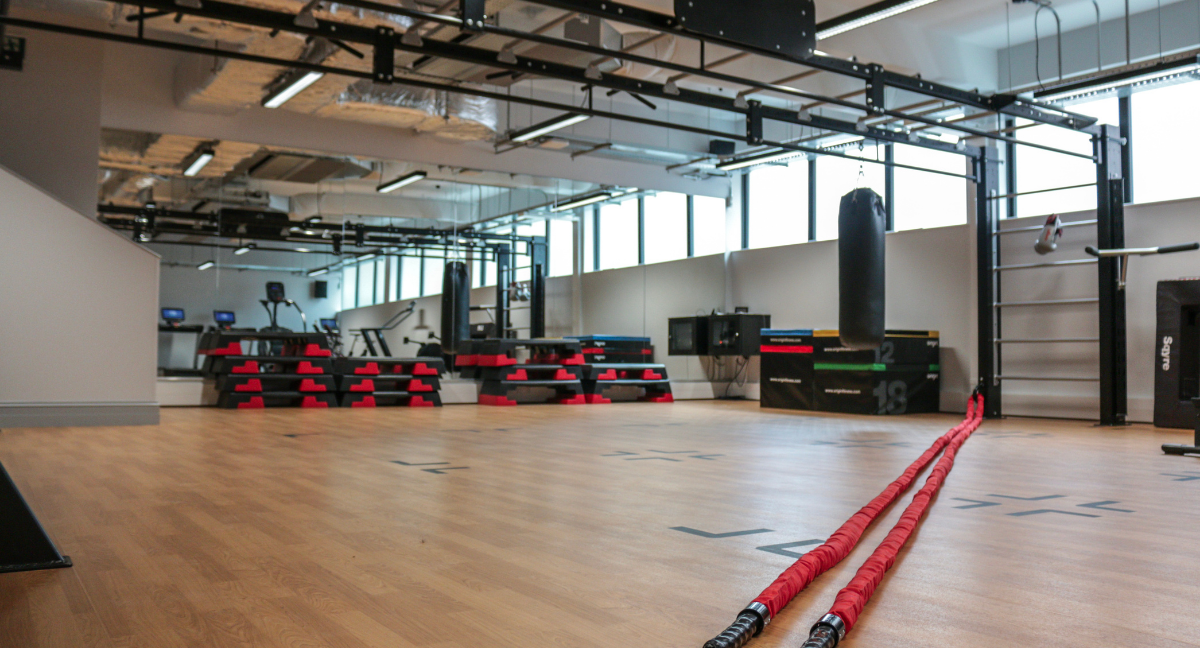
That’s why well-being and social spaces were at the forefront of our mind when we chose Origin. Having a place of work with a fully equipped gym and yoga studio, as a culture of wellness embedded into it means we can now look after our physical and mental health, whilst the location and rooftop terraces are perfect to help ensure TMW is a destination that our employees want to use and enjoy, not just a place where they are expected to turn up every day of the working week.
We’re all very excited about becoming part of an already thriving community in Origin, and what the future holds for TMW.
Written by Alex Burley, Managing Director, TMW Unlimited.
JMPUK take on their biggest kit campaign yet, working with the RFU and Umbro to launch the new season England Rugby Kit for both men and women.
We were delighted to embark on one of our largest projects yet, working alongside Marketing and Brand experience agency, CSM, to introduce England Rugby’s kit in an atmospheric “It’s Time” digital campaign.
As a creative content and communications agency working largely within the sporting sector, we have worked closely with the RFU, the EFL and other major sporting bodies and clubs on a range of video and photo campaigns.
More recently, we were delighted to begin a relationship with Umbro – one of the leading sports brands of today. After having previously worked with the well-known sporting brand on various stills campaigns for the Bristol Bears kit launch and a Umbro fan wear shoot, we were recommended by Umbro to CSM, a creative agency the brand work with on a range of their campaigns, to help deliver on the production side of things of the hugely-anticipated launch of the England Rugby kit.
As Callum, Senior Communications Manager at CMS explains:
“We were recommended by Umbro for JMP’s work on last year’s supporter lifestyle campaign. They have recognised the expertise that JMP have got. We had also worked with JMP on the launch of the Ospreys Umbro kit launch, and we really wanted to tie in the ‘It’s Time’ narrative.
“Having a production crew, videographers, and photographers who understood the campaign and were able to roll it out over a number of different campaign touchpoints was really beneficial. JMP had experience of shooting Umbro in the past through a number of supporter campaigns through England rugby, so it felt natural to continue that cycle with them.
The “It’s Time” campaign was created and scripted by the talented team over as CSM, with the crew at JMPUK onboard to help bring this to life via photography and video production.
“‘It’s Time’ focuses on the performance and preparation that athletes undergo leading up to a matchday. It really focuses on the final hours, minutes, and seconds before they go onto the field and perform for 80 minutes,” explains Callum.
“But lots of work has gone in behind the scenes through photographers, and videographers at JMP, everybody at Umbro, all of us at CSM, and I’m just hugely excited to see and see all the assets and the artwork around Twickenham Stadium, across social media, and on publications as well.”
The shoot was spread over two days, located at Twickenham Stadium. The aim? To capture video and photography content to promote the England Rugby Home Kit, the England Rugby Alternative Kit, and the England Rugby Training Kit, for both men and women. What’s pretty special was that a first for the professional era, the Red Roses’ team kit was bespoke to the women’s team.
The location provided a brilliant backdrop for the campaign stills and video, with the use of natural light and the industrial feel of the metal gates, creating a truly atmospheric visual.
The stills were led by the talented photography arm of the business – JMP Sport – with Rogan Thomson, Robbie Stephenson and Ryan Hiscott and Creative Director, Joe Meredith, playing a crucial role in delivering the launch campaign. You can check out the case study containing more detail on the photography shoot here.
When it came to the video campaign, we went for the same mood as the campaign stills, located at the concourse of Twickenham Stadium.
The video edits for the alternative and training kit was led by JMPUK’s Head of Post Production, Rob Latham, and edits by JMPUK’s newest recruit, Molly York – who, just two weeks into the new role, has truly wowed us with her talent and skill. Find out more about the video shoot here.
The shoot wasn’t without its challenges – Covid restrictions alongside player availability and kit confidentiality meant that we had to plan the shoot schedule down to the T to ensure smooth sailing.
Jason Fairclough, Marketing Director at Umbro UK explains,
“These shoots are very challenging at the best of times. It’s a very unusual time at the minute with all the COVID restrictions. Working with JMP last year on a few projects, they seemed to be able navigate their way around a lot of the issues thrown up by COVID.
“They did exactly the same with the latest RFU shoot. It’s an incredibly modular shoot, there are so many moving parts, so many people to consider, so many organisations to consider. You don’t just have the RFU to consider, you also have to consider the protocols from all the clubs that loan their players to the RFU.
“It can be a logistical nightmare. As a team, we seem to have managed to navigate our way through all of that. JMP have played an enormous part in that.”
In relation to kit, we shot on a gimble, shooting on the DJI Ronin 2, Sony fx9 and sigma art lens on camera 1 and the fx6 with a 200 m on the 2nd camera, utilising a longer lens to ensure we were able to abide by a two-metre distance between the crew and talent at all times – while still capturing the intimate detail of the kit, the players and it’s environment. Different stations for video, studio portraits and campaign stills were also organised.
Hats off to the heroic Callum Shephard at CSM for captaining the ship when it came to ensuring everyone was in the right place at the right time, which was essential given the small window of time we had.
Overall, we are incredibly proud of the final assets produced by the team, helping in the delivery of an impactful campaign to mark the launch of a stunning product. What, perhaps, makes it even more special is that in our 10th year of trading as an agency, we have produced one of our best projects yet – one in which the OG’s of the JMP team who have been with us since inception (Joe, Rogan, Dougie, Alex and Rob) all come together to produce something spectacular for one of the biggest players in the sporting sphere.
“It’s a high profile project, one we are all very excited to be involved in. It shows how far we’ve come as a business to even be considered to produce a campaign for Umbro / The RFU. It was really quite challenging circumstances at times, but the team we’ve got managed to turn everything around and create some incredible content. It’s been incredible.” – Joe Meredith, Managing Director at JMP UK
Check out the full case study with photos and video here.
Over the past few years, we’ve seen an increase in the number of brands demonstrating their social stance. And today, these brands are choosing to buy their media from a diverse range of creators and ethical sources.
However, businesses are under pressure to show they are a brand of integrity and fear their advertisements might feature next to other content that could be detrimental to their reputation.
Brand integrity is of the utmost importance. 54% of consumers said they would think negatively of a brand that runs ads alongside content designed by others whose morals don’t align with theirs.
You can see why brand safety is such a hot topic in marketing, and this is especially apparent in the programmatic world.
If you’re unsure of what brand safety includes, it essentially encompasses all the measures advertisers implement to protect their brand from the potential backlash they could face by running ads next to harmful content.
Over-blocking content can actually be doing more harm than good. A vast majority of businesses still adopt a cut-throat approach when it comes to protecting their brand’s reputation.
However, this overprotective approach has led to a great proportion of content being excluded, even when it’s safe and suitable for your brand. We’ve seen this happen in many negative keyword lists and blocklists.
Industry-standard blocklists contain a vast array of terms related to race, ethnicity, and sexual orientation. So, it’s clear to see that…
“Industry standard advertising practices [are] unfairly penalizing content creators within various groups, including the LGBTQ+, BIPOC, and API communities, as well as content relating to important aspects of the human experience, including social issues, mental health and wellness, and identity.”
[Taken from Channel Factory, Conscious Project, 2021]
In 2019, CHEQ’s ‘How Keyword Blacklists are Killing Reach and Monetization’ report looked at what type of content has been excluded from an industry-standard blacklist of 2000 keywords.
The report found that 57% of articles that were safe, were incorrectly flagged and blocked from serving ads. This was taking place because brands had been using overprotective negative keyword lists and blocklists.
These lists are incredibly harmful to creators and publishers, as they are unable to monetise their own content.
Other statistics the CHEQ study uncovered included:
Most companies do not update blocklists regularly, which is why a great deal of suitable content is deemed harmful.
Times are changing and have been changing quite drastically over the past few years. Our lists of negative keywords may have been necessary in 2017, but today they could be absolutely pointless.
Unfortunately, these outdated blocklists are harming marginalised communities across the globe, which is unfair, to say the least.
And this is a problem that needs urgent attention from our industry.
This overwhelming fear has led brands into the trap of unethical exclusion. What we mean by this is that brands and agencies are blocking all content related to marginalised groups and communities.
Therefore, content related to gender, sexual orientation, race, ethnicity, social issues, identity (to name a few) should be monetised.
Positioning yourself in the market as a diverse and inclusive business has never been more important. Today, 60% of consumers prefer to associate themselves with companies that actively show they are committed to creating an online experience that is inclusive for all.
Of course, it’s important to focus our attention on brand safety. But as an industry, we need to think of new ways to implement brand safety without excluding creators based on their sexual orientation, race, or ethnicity.
This new approach needs to be one that can monetise positive content, which will, in turn, benefit the wider society.
Your blocklists and negative keywords need to be tailored to your brand and checked frequently. Don’t just keep adding new words, remove the unnecessary ones.
It’s always worth checking over your brand safety processes. You can then remodel a new brand strategy that encourages inclusivity.
You should always search for and connect with brands and creators that share your values. Once you have added them to your whitelist, they can assist in the monetisation of positive and inclusive content.
Working with a third-party brand safety and brand suitability partner can help with your brand safety measures. These third-party partners usually opt for human input, which ensures content is categorised with diversity in mind.
As an industry, we need to get embrace the needed changes to brand safety measures to ensure we are not excluding words, phrases, or languages that could exclude minority groups.
All voices should be represented in your content, not just a select few. By monetising your content, you can create new and improved content, which highlights diverse and marginalised communities.
It’s time you move forward with your approaches to brand safety because when you do, you will be actively creating an online world that promotes positivity and inclusivity.
Aardman Animations is the latest brand to join the speaker line up at the Digital Gaggle conference, taking place at Bristol’s Watershed Cinema on Thursday 28th October.
Gavin Strange, Director & Designer at Aardman Animations, will kickstart the conference with his session titled ‘Trying To Get Ahead Before We Get A Headstone’.
In this GIF-filled talk, Gavin will share his tips for finding the time, inspiration and energy for creativity. He’ll also move around quite vigorously and gesticulate wildly the whole time. It’ll be loud, silly and hopefully energising.
Gavin joins an already stellar lineup with speakers from brands including LinkedIn and Caring in Bristol on the bill for the digital marketing event.
This is the 12th Digital Gaggle conference, organised by digital marketing agency Noisy Little Monkey and supported by t&s creative communications, Somerset Design, and Launch Online.
The purpose of the event is to provide professional marketers with the skills and inspiration they need to improve their digital marketing strategy; fueling them with the knowledge and creative fire to make sure that their online activity has an impact on the bottom line of their business.
Sessions at the next event will cover a variety of topics, including: content strategy, SEO, crisis comms, conversion rate optimisation and creativity. The content of the talks at Digital Gaggle are best suited for marketers working in B2B, Professional Services or eCommerce industries. But all are welcome!
The conference is being run both in-person and online and ticket prices vary depending on how you choose to experience the event.
For more information about the conference and talks, visit the link below.
https://www.digitalgaggle.co.uk/conference/digital-gaggle-october-2021/
JonesMillbank, Bristol-based video production company, have been appointed by VisitBritain/VisitEngland to their marketing production services framework.
The multi-supplier framework is made of 190 creatives across 8 lots spanning disciplines such as research, photography, editing, casting, styling, illustration and copywriting.
JonesMillbank are one of 15 suppliers appointed as video production professionals, requiring a proven experience of managing small to large scale video briefs that require a detailed level of planning, casting, producing and production.
The framework will be an enabler of VisitBritain/VisitEngland’s strategy to “make tourism one of the most successful and productive sectors for the UK economy.”
“Like many video production companies we’re passionate about travel and tourism, not just because it’s a privilege to travel with our work, but because of the real impact and influence our films can have on destinations and their audiences” said Russell Jones, Co-Founder at JonesMillbank.
“We already travel across the UK with our work – we’ve literally filmed in all four corners – and so to be appointed by VisitBritain/VisitEngland as one of a select few video production companies is a fantastic opportunity to show off what the UK has to offer to a global audience, particularly as a rebound following COVID-19.”
Running for an initial period of 1-4 years, the framework will be accessed by VisitBritain/VisitEngland staff and partners, and follows JonesMillbank’s work with VisitBristol and other independent travel brands.
***
JonesMillbank are a passionate full-service video production company
They work exclusively in-house with a talented team of multi-disciplined creatives, all the while telling authentic stories long before it was cool for a range of clients such as University of Bristol, Battersea, The Royal Mint and IDLES.
jonesmillbank.com
01173706372
[email protected]
The internet should be accessible for everyone. Sadly, this is not the case.
Globally, around 500,000 new websites are built every day. However, a huge 70% of all these websites do not meet the basic WCAG (Web Content Accessibility Guidelines).
Today, there are one billion disabled people around the world – 15% of the global population.
This means that a huge proportion of the world wide web is inaccessible to millions of users who have visual, hearing, motor and/or cognitive impairments.
When in the production stage, website designers and agencies might also have to start considering another growing demographic – the aging population.
Loss of sight, fine motor skills and cognitive function can all greatly impact how well the older generation can interact with a website.
It can be incredibly tempting to create websites with unique layouts, personalised fonts and flashy graphics, but doing so means excluding thousands of potential customers.
Taking ethics out of the equation, there are two major benefits to creating an accessible website.
First, creating an accessible website will shine a positive light on your brand’s identity and firmly position yourself as a trustworthy company.
From an economic standpoint, brands that take the time to create accessible websites are the ones that are profiting.
Take the U.S, for example. Around 54 million people are living with some form of disability according to the U.S. Census Bureau.
This community alone represents approximately $1 trillion in aggregate income, which translates into more than $220 billion in discretionary consumer spending power!
There’s a great deal of misconception around the difficulty of designing an accessible website.
With a few alterations, creating a disability-friendly website can be simple. Here are 6 tips for designing a website that’s accessible to all.
This is often overlooked by designers, but it’s so important to ask people with disabilities to try out your website. If you understand your users’ needs, you can design a functional website with minimal issues.
You should also include people with disabilities on your marketing team, as they will be able to tell you first-hand what hurdles they run into when navigating websites. With this information, you can eliminate these obstacles before it goes live.
Siteimprove is a great online tool that allows you to check the accessibility of your website.
At Adapt, we have used it to locate and rework website features that are deemed inaccessible. Websites are scored with an A, AA, or AAA ratings, with AAA being the highest score. Most digital marketers aspire to have an AA rating.
Using Serif fonts or your own branded fonts can cause a lot of problems for people with dyslexia or visual impairments.
You should try to use Sans Serif fonts where you can as these fonts are much clearer and stand out on most images and coloured backgrounds.
The size of the font is also incredibly important. You should opt for a minimum size of 16 pixels for a Serif font and 14 for a Sans Serif font for easy readability.
To check if your choice of font is meeting the mark, try downloading the WhatFont browser extension.
Most websites that include pictures will use alt tags.
Alt tags are the words you see when you hover your mouse over a picture. They are extremely helpful to those using screen readers.
These tags would be a great addition to your website as you can add detailed descriptions to all your pictures. However, when writing these descriptions, you need to keep them concise.
Adding subtitles to your videos is essential, as they are extremely helpful for people with hearing disabilities or those with ADHD.
Some online platforms like YouTube are programmed with software that adds subtitles automatically. However, if you are producing your own videos, it’s important to take the time to create subtitles.
You should also consider writing transcripts and captioning for your videos, which covers all bases.
On most websites, you’ll notice a great proportion of them use the “click here” button to help you navigate to other pages. While this seems like an effective navigation system, this short description makes life incredibly difficult for those using screen readers.
For those who may not have used screen readers before, these programs scan your website for links to help users with visual impairments navigate around your website.
Short, generalised navigation links are difficult for screen readers to process. So, your users may get stuck on one page of your website, which is not good!
Instead of opting for the standardised “click here” link button, it’s worth writing a descriptive link. This will allow the screen reader to process what you’ve written and will allow the user to understand the content of your pages with ease.
For example, it’s better to write “to learn more about our job opportunities, check out Adapt’s careers page”, instead of “to learn about our job opportunities, click here”.
To help your web links stand out for those with visual impairments, underline them and add colour contrast.
The size and range of your links are incredibly important. Ensure the font of the link is a larger size and has a wide range, as this will be helpful for those with mobility difficulties.
Many people are unable to use a keyboard or mouse to trawl through the web, and instead use speech recognition software, screen readers, head wands, adaptive keyboards and trackball mouses.
These inventions are a great resource to those with visual, hearing or mobility impairments, but they will not work if your website fails to support them.
To ensure your website is easy to navigate for all, program your website to be keyboard-friendly. Adding visual indicators on tabs allows users to know their location on each landing page.
If you have a page that has a lot of content, it’s best to divide it into smaller sections, and the easiest way to do this is to create jump lists.
Another design aspect you need to think about is video. For those of you who already have or are considering adding videos to your website, you need to ensure they don’t play automatically as this can make life difficult for your people using screen readers.
Everyone deserves an easy user experience, and right now we are not doing enough to ensure our websites are accessible.
Taking the steps towards reworking the design of your website can seem challenging at first. But by following these 6 easy steps, you’ll have an accessible website up and running in no time.
What is inclusive marketing?
Inclusive marketing happens when companies represent the diverse communities they’re serving. It’s simple, really. When you speak to all your target audience, you aren’t just “doing your bit,” you’re boosting your business. Extending your reach and more customers will buy. And your ROI? You better believe that’s going right up.
Not convinced?
Here are just a few stats that show why inclusive marketing deserves your attention:
Remember that all-important Millennial market? 77 per cent of them favour brands that are inclusive
The LGBTQIA market spends £6 billion a year and are willing to switch to more inclusive brands
Consumers from ethnically diverse communities in the UK have £300 billion a year to spend and rising.
Find out more about inclusive marketing on our blog
You need to load content from reCAPTCHA to submit the form. Please note that doing so will share data with third-party providers.
More Information