A new podcast series, Nothing, Something Nothing, has launched from Nine Tree Studios, Bristol.
The series explores how people approach creativity, are inspired, and develop their creative practice.
It’s about the creative moments you didn’t know you missed. It’s about the space between ideas, and the highs and lows that shape creative work.
It’s sector-agnostic with some high-calibre guests from the worlds of music, food, art, business and design.
Season 1’s guests include Lee Kiernan (Guitarist, IDLES), Calum Franklin (Restaurateur, Harrods), and Alex Rodrigues (Producer/Director, Channel 4).
And – as a Bristol Creative Industries exclusive – the podcast will also be dropping an episode with Mike Bailey (Actor/Teacher), known for his role as Sid in Skins.
New episodes drop every Wednesday on your favourite platform; visit www.nsnpodcast.com to listen and subscribe on Spotify, Apple Podcasts, and YouTube, as well as on social.
The podcast has launched from production company JonesMillbank and Nine Tree Studios, with recording currently taking place in Bristol.
***
JonesMillbank are a full-service production company based at Nine Tree Studios, their 10,000sq ft film studio.
Producing branded content, TV ads and social content their clients include local, global and household brands such as Dyson, Freixenet, DHL, Oxfam, Pukka and Vax.
jonesmillbank.com
01173706372
[email protected]
The primary goal of any filming day is the final polished video. But the true story of innovation, teamwork, and expertise often lies in what happens between the takes. This is the power of a well-executed Behind-the-Scenes (BTS) strategy.
BTS content delivers three key advantages:
– It showcases your people. BTS content captures the personalities and passion behind your brand. It’s about trust, collaboration, and the shared goal of creating something great.
– It builds audience trust by offering a transparent look at your process, showcasing the technical skill and planning involved.
– It fuels your marketing. A single filming day can provide a treasure trove of authentic photos and video clips to keep your social media channels buzzing for weeks.
Case study in action: Our recent shoot with Hot Robotics and the University of Bristol for their Cerberus robot project is a perfect example.
The accompanying BTS film (shared below) goes far beyond a simple “making-of.” It captures the reality of a complex shoot: setting up the master interview ‘studio’, coordinating drone on drone aerial sequences, fun with smoke pellets and, of course, the obligatory trip to Greggs! All the while maintaining a fantastic team dynamic.
This footage becomes an invaluable asset, demonstrating both technical capability and a strong collaborative culture.
You are currently viewing a placeholder content from YouTube. To access the actual content, click the button below. Please note that doing so will share data with third-party providers.
By ChatGPT
In November 2025, Epoch published its first flagship report titled ‘Understanding AI: A Deep Dive into Large Language Models‘. You can view the report and a recording of the webinar here. What follows is a summary of this report, written by ChatGPT using our CRAFT prompting framework. We hope it’s helpful.
Epoch’s latest flagship report breaks down the fast-moving world of Large Language Models (LLMs) and what they mean for marketers today. It’s a practical, human-centred guide that explains how these systems work, where they’re useful, where they’re risky, and how professionals can stay ahead as AI becomes woven into every part of our working lives.
1. What LLMs Actually Are
LLMs are essentially very advanced predictive text engines. They’re trained on huge amounts of online text, learning patterns between words so they can predict what should come next in a sentence. They don’t “think” — they calculate probabilities. And because they’re probabilistic, the same prompt may give slightly different answers each time.
They can also be fine-tuned through human feedback, and their behaviour is shaped by parameters (like temperature, token limits, and context windows) that control creativity, length, and style.
2. The Four Types of LLMs
The report outlines a simple two-axis framework (lightweight vs. heavyweight, general vs. domain-specific), giving us four categories:
Plus, there are task-specific LLMs designed for things like transcription, translation, and summarisation.
3. How Marketers Are Using AI Today
This isn’t theoretical — 88% of marketers already use AI daily. The biggest uses cluster into four areas:
To get the most out of an LLM, Epoch recommends the CRAFT method: Context, Role, Action, Format, Tone — a simple way to turn vague prompts into sharp, useful ones.
4. Concerns and Challenges
The report doesn’t shy away from the risks. Key issues include:
But it also stresses a crucial point: AI won’t replace humans — humans who use AI will replace humans who don’t.
5. How to Think About AI
Epoch explores a set of useful mental models — from “jagged intelligence” (AI is brilliant at some things and terrible at others) to “work slop” (the coming wave of low-effort AI content). These help us develop a more balanced, realistic perspective on what AI can and can’t do.
6. The Future of LLMs
LLMs are becoming more capable across four big areas:
They’ll also increasingly live in dedicated hardware — wearables that “see” and “hear” the world.
7. The Human Skills That Will Matter More
As AI takes on structured tasks, timeless human qualities become even more valuable:
In short: AI makes the human parts of our work more important, not less.
This article was written by Epoch’s Creative Director, Vix Hansard.
Every single day, the minute we step out of our house, we find ourselves swimming in a sea of visual cues. These cues can guide us, they can teach us, they can resonate with us or in some cases, they can shove us to the margins.
Take a hospital. You’re stressed, you’re scared, and the signs make no sense. Too small, poorly placed, or a muddle of colours. At best, it’s frustrating. At worst, it’s dangerous. Good design can soothe; bad design creates chaos.
Ever noticed raised metal bumps or concrete studs outside storefronts? They’re not decorative, they’re designed to stop homeless people from resting there. They are physical “no entry” sign for the most vulnerable. It’s hostile architecture and it’s basically telling us to f*@k off.
Visuals also reinforce bias. The press often show mugshots for black suspects and family photos for white ones. Before you even read the headline, the picture has framed your judgment. That’s not neutral design; it’s a loaded cue.
But visual design can also include, uplift, and connect.
In classrooms, images and symbols help diverse learners grasp complex ideas. In public transport hubs, clear, multilingual signs empower newcomers to navigate new cities with confidence and joy. A rainbow sticker on a café window is a clear invite to the LGBTQ+ community, saying ‘you’re welcome here’.
And long overdue, fashion is catching on. Inclusive mannequins are popping up in storefronts featuring prosthetic limbs, diverse skin tones, and more varied body shapes. Nike nailed it with their plus-size mannequins standing alongside their slender counterparts in their flagship London store. It’s not a gimmick. It’s visibility. It’s a ‘you matter too.’
Japan has a word for this kind of intentional, behaviour-shaping design:
Shikake (仕掛け), creativity that influences action and emotion without force. Like zigzagging pathways that naturally slow you down, or stairs that play music, SO MUCH more fun than the escalator. Playful, practical, effective.
In summary, we don’t just look at the world, we read it. Constantly. Every shape, symbol, colour, and structure around us is whispering (or shouting) something. The question is: What’s the message? Who gets to connect with it and who’s left out?
Design is power. It can open doors or build barriers. It can be a warm welcome or a cold shoulder. So, let’s design better stories and create visual cues that guide with clarity, include with heart, and resonate. Design speaks. Let’s make sure it says the right thing.
References:
Hostile Architecture by Ben Campkin and Ger Duijzings Designing Disorder: Experiments and Disruptions in the City by Pablo Sendra and Richard Sennett
Shikake: The Japanese Art of Shaping Behavior Through Design by Naohiro Matsumura EJI & Global Strategy Group (2021): Innocent Until Proven Guilty?
Signage and Wayfinding Design by Chris Calori & David Vanden-Eynden
Thanks to all the love and support from our amazing community, we have been named the 8th best workspace in the UK by the 2025 Tallys, and the highest ranked workspace in the South West.
All there is to say is thank you. To our members, our supporters, our incredible team, and to everyone who makes Square Works what it is.
When we started Square Works way back in 2019, we could never have imagined the amazing community we would build over the years – to be ranked so highly amongst many other incredible workspaces across the country is a privilege, and we couldn’t have done it without you.
To find out more about The Tallys and why Square Works has been ranked #8 in the UK, click the link below.
GenAI video has been causing quite a stir recently: whether it’s backlash over the tide of AI slop, something being decried as an AI fake (whether it is or not), or an agentic AI business formula that’s made ‘millions’ overnight. Oh, and the ‘ultimate’ prompt-writing masterclass? You’ll have seen all the ads…
But look a bit harder and there’s some really interesting work out there:
One thing is undeniable: AI is going to affect digital industries – the debate around the extent and exact timeline gets far more complicated.
With all that in mind, we wanted to use our yearly Xmas video as a test bed of GenAI, to see what it could do and, importantly, what it couldn’t. And we thought we’d bring you along for the ride…
It all started in August (don’t judge). We had just ironed out our company-wide AI training roadmap and we were updating our AI usage policy. As a creative agency, it felt like we were taking real leaps forward. But it also gave our creative studio a lot to think about. We each mulled over our own questions around authenticity and the future of creative production (the part of our job many of us love most of all).
So we got our heads together and talked about how we should be doing things. What we arrived on was that creative thinking, sketching, scribbling, chatting, tinkering, and FUN should all be ring fenced and given the time they deserve. That’s why we decided to collaborate on a brief so ambitious and outlandish it simply had to work.
It should no longer come as a surprise that typing a basic prompt into AI engines only leads to AI slop.
So, before we even touched a computer, we came up with a basic concept – the ultimate tongue-in-cheek pastiche of Christmas perfume ads – and then had a mass brain-storming session where we asked the whole company for their craziest ideas. And boy did they deliver!
In a short space of time, we had suggestions ranging from a simple Xmas magic box to rivers of gravy, something about a unicorn that didn’t quite make the final edit, and the perfect name – ‘Sléj’ (pronounced as ‘slay’, obviously).
Our copywriters pulled the ideas together into a script, using a knowledge of Christmas-related puns that took a lifetime (or previous life editing rather niche magazines) to develop.
This isn’t the place to be overly reliant on AI. Allowing people free reign to throw stuff at the page works well. Importantly, don’t shut down ideas too early. The most unlikely suggestions can get workshopped into something surprising and brilliant.
This could turn into a whole blog by itself. More than any other, this stage will determine the look of your film so the more references you can include the better.
It’s crucial to find references that you have rights to both use and pass to a third party – in this case, an AI model.
For this reason, we used Generative AI to generate our reference images, feeding the output images back into the AI multiple times and asking for tweaks and refinements.
This produced a combination of a storyboard and multiple accompanying style frames (high-quality images that give a good overall feel for what the video will look like once animated).
You’re aiming to find references for each part of the shot you want to generate, for example the setting, tone, pose, character and composition etc. You want the AI to have as much information as possible and limit how much it figures out by itself.
We quickly learnt that there isn’t one AI model to rule them all, with different options performing better for different tasks. We’d highly recommend experimentation here to find which works best for your requirements.
Using detailed prompts and the bank of reference images we had gathered for each shot, we generated our footage. Prompts were written in a similar way to how we’d add
notes on a storyboard, i.e. ‘camera push in’, ‘talent to walk across frame left to right’, ‘high-key lighting’ etc but they also included additional things that wouldn’t usually be directable without heavy VFX work, i.e. ‘swirling wind kicks up dust behind legs’.
The point here is to think like a filmmaker and art director, you need to be able to supply image references but, just as importantly, you need to be able to articulate what you want to see in the frame. Playing AI like a slot machine will lead to slop.
In the same way that you rarely edit footage together straight out of the camera, generative video will almost always benefit from some post work. Again, this is a place to add further human touches that a text box often doesn’t offer. This could be reframing, changing the colour, or in/out painting of items in the scene.
Editing and sound design is another area where, as far as we’re concerned, humans just can’t be beat (not yet). Editing – the process of deciding where to push and pull those beats and gaps – and sound design are very much a process of creating a feeling and mood.
As with traditional film making, have in mind what you want to see. Those hard-won post skills still have lots of value.
It would be remiss not to briefly discuss some of our thoughts behind the ethics of our experiment.
The ethics of AI are extremely complicated. As with most things, a simply binary choice may feel tempting, and at times compulsive, but this rarely does justice to the many nuances of a topic. There is so much for every individual and organisation to consider, and I’d argue the often-discussed environmental and job-replacement angles are just the beginning.
For further information I’d highly recommend:
For me, I think After Effect’s AI roto-brush sums up a lot of the debate:
https://www.youtube.com/watch?v=cXMTHe8z6Tw
So, how do I feel about the finished video? I think the team have done a great job of making a whimsical and audacious Xmas vid with just the right level of self-awareness. And with a level of production that, prior to GenAI, our budget simply wouldn’t have stretched to.
I also hope it’s as clear to you, as it is to me, that we couldn’t have come anywhere close to the result without the thought, skill, talent and humour that went into it from right across the agency.
And how do I feel about AI? It’s complicated…
Conducting a marketing audit for your business sounds daunting and stressful. And with so many different elements involved, concerns about getting it right can really pile on the pressure.
But it doesn’t have to be that way – an audit is a great way to remain proactive. Whether that’s by identifying new opportunities, pinpointing inefficiencies or providing clarity on where to focus your investments.
And what’s more, these aren’t reserved for any specific business type. Whether you’re a startup or a long-established enterprise, your business is sure to benefit either way.
In this guide, we’ll cover:
Essentially, we’ll break it down step-by-step so it’s less of big task and more of a big win!
You’ve probably seen plenty of articles claiming to reveal the secret formula for a successful marketing strategy. They sound convincing, but they often make things more confusing than they need to be. No wonder people are put off by the thought of analysing their marketing activities!
Put simply, a marketing audit is a comprehensive analysis of your business’s strategies and activities. Its main purpose is to identify what works, what doesn’t and where you can improve efforts to maximise your ROI.
It’s like a health check-up: you want to remain proactive rather than waiting for something to go wrong and then have to react in a more urgent and less thought-out manner.
A marketing audit is used to:
Now that we’ve established what a marketing audit is and what it’s for, it’s time to establish what goes into one.
Depending on how granular you want to go, and how comprehensive your current activities are, it can include hundreds of elements. However, to get started you only need to focus on the main areas.
This is your opportunity to look inwards and see if your activity is aligned with your overall business goals. This includes:
This is where you look to the wider marketing landscape and how it will affect your own activities. This includes:
Next, you analyse your quantifiable data to build a clearer picture of how your current marketing is performing. This includes:
And last, but by no means least, you look at how you execute your efforts and whether they are effective. This includes:
We always recommend conducting a marketing audit for your business at least once a year at a minimum, but bi-annually is even better.
However, there are some indicators that will tell you if you should be conducting one sooner than you thought.
A marketing audit will evaluate if your activity is effective and ensure all your decisions are backed by data.
If there is any sort of notable shift that could affect your strategy, it’s always worth doing an audit to make sure any new decisions will bring positive change or growth.
A mini audit may be enough
Depending on the reason for your audit, it may be that a mini audit is the best way to go. Instead of auditing your entire marketing ecosystem, you can just evaluate a specific area that may need changing or improving.
A marketing audit isn’t just a process for gathering data. If done correctly it will provide a whole host of benefits.
Clarity
One of the main benefits of conducting an audit is that it provides you with objective clarity.
It will show you what is working and what isn’t, and thus where you should focus your efforts next to maximise returns.
It can be easy to get caught up in your own marketing, and if you don’t take a step back to evaluate your own activity it’s easy to focus on the wrong things.
Internal alignment
An audit can be a great way to communicate your performance and activity to the wider business.
Whether that’s showing your board how your work is contributing to the overall company goals or ensuring that everyone in the marketing department is on the same page.
This open communication means everyone can understand your decisions and their reasoning, so you should face less resistance when pitching new approaches.
Improved ROI
By understanding which channels are effective, and which aren’t, you can identify exactly where to focus your budgets.
Getting improved results doesn’t always require additional spending. Sometimes it can be a case of concentrating what you already have on areas where you know it will pay off.
Improved customer understanding
Often, audits will uncover plenty of information about your customers. Whether this is their preferences, behaviours or pain points.
This new information will help steer your approach and create more targeted and effective strategies.
Risk mitigation
By conducting regular audits, you can identify and fix any potential issues before they become full-blown problems.
Whether that’s technical issues harming your search engine visibility, or branding that confuses your audience. By identifying this early you can nip it in the bud.
Future proofing
Conducting regular marketing audits will also provide you with a roadmap for continued growth and success.
It allows you to measure the tangible impact your work has on the business and prioritise next steps.
Just as the results of your audit will be completely unique to you, the way you conduct it will be too.
It all comes down to your current activity and your business priorities.
By regularly evaluating your marketing, you’ll have objective data to pull from which will inform your strategies in the clearest way possible.
So, whether you’re a start-up looking to pave the way in your market, or an enterprise looking to boost growth, this isa great place to start.
Ready to improve your marketing strategy? Why not get in touch with our specialist team to see how we can help.
It’s no secret that the recent US tariffs are having a major effect on the manufacturing industry.
With the additional financial pressure, many businesses will be looking for places to cut costs, and marketing is often the first to be scaled back.
We’d recommend a note of caution: marketing isn’t just a nice-to-have, and there are many cost-effective ways to ensure your manufacturing marketing boosts long-term growth, even in tough economic times.
In this guide we’ll cover:
It’s common to see businesses approach their marketing strategy as a more ‘ad hoc’ activity. In reality, this will be your roadmap when it comes to interacting with customers, growing your audience and ultimately increasing your sales.
When it comes to saving on costs, a clear strategy will help you map out exactly what you want to spend and where. If you don’t have an overarching plan and budget in place, you risk spending money on ineffective channels and losing track of how much you’re spending.
To put your plans into action, a good place to start is with your brand strategy. Once you have established exactly what your brand is, and who your audience is, you can move on to the wider marketing plan.
A good marketing plan will include:
With that established, you can move forward with confidence, knowing that all your marketing efforts will be underpinned by clear goals and a solid plan.
The manufacturing industry has traditionally relied on trade shows, print advertising, and relationship-based sales to reach customers and bring in more revenue.
While these methods still have their place, digital marketing is now an essential addition to any successful manufacturing marketing strategy in 2026.
Digital marketing can seem daunting as it encapsulates so much, but don’t feel like you need to tackle it all right away. Especially with smaller marketing teams, you need to be able to prioritise the best, most cost-effective approaches to start.
Organic SEO is the process of getting your website to appear higher up on search engines when potential customers search for terms relating to your business or industry.
Unlike paid search, organic SEO is a free marketing method that can generate more traffic to your site.
By creating content and pages that use optimised keywords, you’re telling the search engine algorithm what your content is about and the specific search terms it should rank for.
For example, if you were a packaging manufacturer and you wanted more people to find out about your shelf-ready packaging products, you would use ‘shelf-ready packaging’ as your main keyword.
This means dotting the term throughout the content on that product’s page, along with other related keywords, so you can tell the search engine that when someone looks for this service it should show your content.
The key to successful SEO is selecting keywords that have a high search volume (so plenty of people are looking for the term), and low competition (not many other businesses are ranking for it so you have a good chance of getting your page to the top!).
Google Analytics is a free platform created by Google that can show you all the data relating to your website and your website’s traffic.
It will give you information on:
And that’s just a few of the things it can do!
By looking at your website’s data you can form a much stronger marketing strategy that reaches the right people at the right time with the right content.
Social media marketing can be organic (no direct cost) or paid. The main difference here is when you put money behind your social media content, it will get put in front of tens, if not hundreds, of thousands more people.
However, organic social media marketing is still incredibly important and will help build a new audience, foster trust with your prospects, and help you become an authority in your industry.
The key with social media marketing is to find out where your typical customers spend their time. For example, B2B companies often find the majority of their audience operates on LinkedIn. Whereas a lot of B2C organisations may find their audience is more active on Meta (Facebook and Instagram).
By ensuring you’re active on the right channels, you’re increasing your chances of prospects seeing your business. You’re also saving time and resources that would be wasted on platforms which won’t give you a return.
The type of content you post really depends on your business, but some good places to start are:
And the number one rule of making the most out of your social media: stay consistent. Ideally you want to be posting at least five times per week, but if that’s too much to start with, try once every week and build up from there.
These are just a few elements of digital marketing that should make a big difference to your business with little to no budget (especially if you haven’t got these strategies in place already).
If you want to learn more, you can get in touch with us and we would be happy to help!
Email marketing is a great way of getting your message directly in front of people. Where social media can be a more general approach, email marketing is more direct and targeted.
The key to a successful email marketing campaign is to have strong audience segmentation. This means grouping all your contacts into specific areas i.e. you may have a group of decision makers, you may have a group of prospects in a specific industry, or you may have a group of contacts who have been on your website before.
The possibilities for audience segmentation are endless, especially if you have large contact lists, but you need to make sure each segment is built for a specific purpose.
For example, if you create an audience segment of people who have visited your website but didn’t make a purchase, these would be the perfect prospects to put in an email campaign with a special offer or discount. This is because they have shown intent in looking at your business and your services, but they didn’t convert.
You can also run email campaigns that are more generalised, like an email newsletter. This is a great way to remind your contacts of you and your business without being too sales driven. You can run these monthly or quarterly, and it means you can keep your audiences updated on any news, offers or new products you may have.
The cost implications of this form of marketing can vary. You can do it organically for free, but this will take more time and manual effort. The other option is using a specialised email marketing platform like Mailchimp or ActiveCampaign. This costs more but means you can keep all of your contacts and emails in one place, and automate your email sequences.
As mentioned previously, companies in the manufacturing industry often still rely on print materials and trade shows to attract new business.
But with the rise in digital marketing, standing out online can be a challenge. This is where video marketing can be incredibly valuable.
According to a 2025 Wyzowl report, 93% of marketers say video marketing has given them a good return on investment (ROI).
Video marketing can serve a range of purposes; from increasing brand awareness and engagement, through to boosting bottom-line sales. And there are plenty of video types to choose from! To name a few:
Video marketing can seem daunting, but once you have a plan for your content laid out, getting started is easy! In fact, it’s often the shorter videos that perform better online in terms of engagement.
Video marketing is a key player in standing out in your market and can be the big differentiator between you and your competitors.
Now that we’ve covered some of the main marketing strategies you can use for your manufacturing business, you may be wondering which one is the best.
The key here is to understand that this isn’t a tick box exercise. It isn’t about doing each activity once and expecting the results to pour in overnight. You need to be applying each strategy consistently and in tandem with one another.
Each point has a different purpose and benefit:
But the main takeaway is that there are plenty of ways to improve your marketing approach that don’t need to break the bank.
If you would like to find out more about how we can help you with your marketing strategy, get in touch with our experts and we’d be happy to help!
As Google evolves, more searches end without a click, with users finding answers directly on the results page. This shift leaves brands to compete for visibility on the Search Engine Results Page (SERP) in ways they’ve never faced before.
This guide will help you understand what zero-click searches are, why they’re a critical part of a search marketing strategy, and how to optimise for them effectively. With proven strategies and expert, up-to-date insights, you’ll be equipped to thrive in a zero-click SERP.
A zero-click search is a search query where the user finds the answer directly on the SERP without clicking on any links. This happens when Google or other search engines display information in enriched features.
A zero-click search occurs when search engines provide answers directly in the SERP, eliminating the need to click a link. Instead of traditional organic results, zero-click searches use features like:
For businesses, success is no longer just about clicks but securing visibility within these dominant SERP features.
Zero-click searches aren’t new, but their prevalence has grown exponentially as Google prioritises quick answers and leverages Generative AI to create a smoother, self-contained user experience.
Featured snippets, knowledge panels, and People Also Ask sections have long dominated the top search positions. However, the introduction of AI-powered features has amplified this trend dramatically:
User Behaviour Shift: Users are being trained to expect a synthesised, direct answer at the top of the SERP, accelerating the shift away from clicking on blue links.
Zero-click searches may feel like a roadblock to website traffic, but they also present an opportunity to build trust and authority with answers that serve users directly.
The new data confirms that for many informational queries, a massive traffic drop is the reality. The median external clicks per AI Mode session were found to be zero.
However, this click reduction is not uniform:
This means success is no longer defined by CTR, but by brand presence and influence within the AI-generated answer. Businesses featured in zero-click content often experience:
Adapting to zero-click search requires a fundamental shift to Answer Engine Optimisation (AEO). Your goal is to be the authoritative source that the AI chooses to synthesise.
1. Target Featured Snippets & AI Summaries
To increase your chances of appearing in both traditional snippets and AI-generated summaries:
2. Optimise for People Also Ask (PAA) Boxes
PAA boxes offer critical secondary visibility, and are a major input for AI answers.
3. Leverage Local SEO for Local Packs
For local businesses, appearing in Google’s Local Pack is essential. These results are less impacted by AI Summaries than informational queries.
4. Use Structured Data Markup (Schema)
Structured data (schema markup) helps search engines and AI models understand your content better, increasing the likelihood of being featured in rich results. Implement:
Zero-click searches aren’t a passing trend, they are the future default. Traditional SEO strategies focused solely on driving volume traffic no longer guarantee success.
The future of SEO will lean heavily on:
Yes, ranking for zero-click searches is essential. While you may not get a click on a definition, you gain:
The Key Takeaway: Zero-click is rewriting the rules of engagement. While it reduces organic traffic volume, it increases the value of the traffic that remains and makes brand building directly on the SERP the new competitive advantage. Adapting now is key to staying competitive.
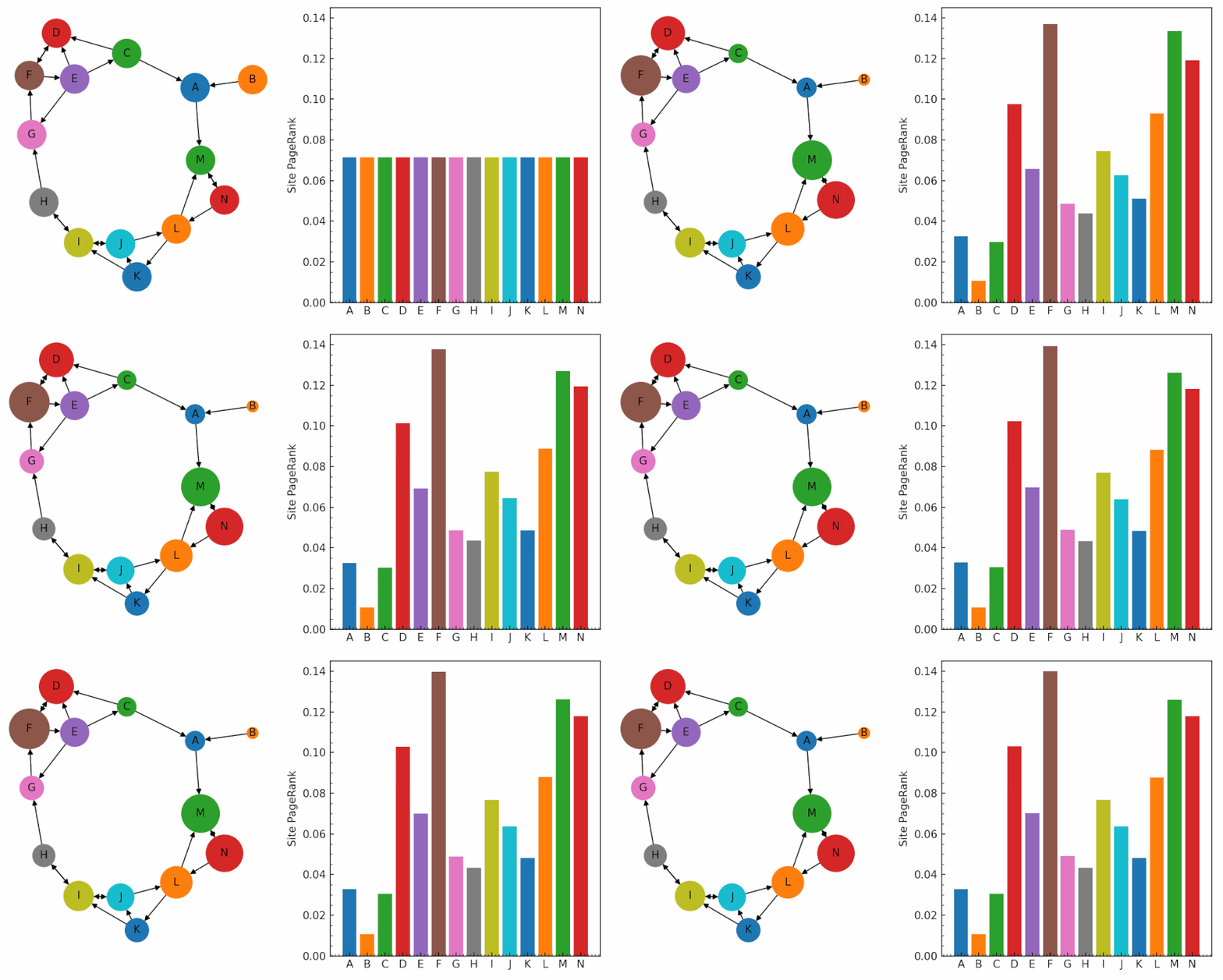
Link building has changed a lot over the years, and in many ways it has ‘grown up; in the past largely viewed as a way to spam low quality sites with a view of gaining high quality traffic, the term is now used to incorporate a wide range of tactics all with the aim of achieving coverage (and links) for websites.
There are some ‘white hat link building tactics’ and there are some ‘black hat link building tactics’, over time the white hat ones have become more impactful and they are the ones we will be looking at today. White hat tactics are ones that will never result in a manual action penalty in Google and are not against guidelines, black hat refers to several tactics (think buying loads of backlinks and spamming directories) that could get you deindexed due to policy violations.
If you are looking to learn about black hat link building, then I suggest checking out this guide from Linkbuilder.io which goes into plenty of detail. If not, then keep reading to learn more about link building and how to do it the right way.
Source: Wikipedia
In 2025, link building is firmly quality-first. Search engines prioritise links that show topical relevance, authority and user value, while ignoring low-quality ones. Digital PR has become a leading strategy, with brands using campaigns, studies and expert commentary to win high-authority placements. There is also a growing focus on earning links through assets like tools, guides and visuals. Measurement has shifted too, with marketers assessing not just referring domains but also the traffic and visibility links bring. The emphasis is now on sustainable, brand-aligned strategies.
Judging the value of the link has, much like the rest of SEO, evolved over time. For many, judging the value of a link begins and ends at Domain Authority. This metric was developed by the SEO company Moz as a way of judging how likely a website is to rank in search based on quality, quantity and relevance.
Whilst it is a great metric and in many instances driving links based purely on it can still generate links that move the needle, there are a number of other metrics useful when it comes to sorting a good link from a bad link.
Page Authority / URL Rating (PA/UR): strength of the specific page linking to you.
Relevance: how closely the linking site and page match your topic.
Traffic: estimated organic visits to the linking page or domain.
Anchor text: the wording used in the link and whether it is natural and relevant.
Co-occurring text: the text that appears around your anchor text to add context
Placement: whether the link sits in the body content, navigation, footer, or sidebar.
Follow vs. nofollow / sponsored: whether search engines will pass equity through the link.
Link diversity: whether the link comes from a unique domain or repeats an existing one.
Outbound link profile: how many other sites the page links to and their quality.
Indexation: whether the linking page is indexed in Google and can pass value.
Engagement signals: likelihood that users will actually click the link (context, visibility).
The Varn Score takes into account the above metrics in combination (with a big focus on relevance) and acts as a scoring system when we are conducting outreach and also looking to measure the results of our work. It’s also a very important first step to take before you dive into the actual link building tactical playbook.
Okay, we have the fundamentals of why links are important and the tools needed to judge good links from bad. Now lets dive into the actual link building tactics we use to earn coverage for all our lovely clients:
Digital PR campaigns
Digital PR is one of the most impactful link building tactics because it generates authoritative, editorial links from major publications. By creating newsworthy campaigns, original data studies, or expert commentary, you can secure links that not only improve rankings but also build brand visibility and trust. These links are hard for competitors to replicate, making them especially valuable. Read the full guide to digital PR here.
Update for 2025: Another important element to consider when conducting digital PR is AI citability; many news sites are opting to block AI crawlers from their site, so if you have coverage on these sites, they may not be as impactful when it comes to earning coverage in AI (which isn’t to say you shouldn’t pitch to them, just make sure you are not only pitching to them!).
Resource page link building
Authoritative sites often publish curated resource lists. By identifying a page that is missing your guide, tool, or explainer, you can pitch it as a valuable addition. Since these links are highly contextual and relevant, they often bring both SEO equity and referral traffic from users seeking practical resources.
Listicle link building
Listicles (“Top 10 X”, “Best of Y” types) are popular and shareable, making them fertile ground for link placements. You can pitch to be included in relevant listicles or build your own list-style asset that others cite and link back to you. These are also getting increasingly cited within AI.
Broken link building
This tactic works by helping site owners fix broken outbound links. Once you find a 404 link on a relevant site, you can suggest your own up-to-date content as a replacement. Because you are solving a problem for the webmaster, the pitch feels helpful and increases your chances of success.
Wikipedia / authoritative reference links
Contribute to Wikipedia (or authoritative reference sites) by adding citations to your content in places where it genuinely adds value. These links are nofollow in many cases, but they can generate exposure and serve as a seed for other sites to link to you
Skyscraper technique
The skyscraper approach involves creating a significantly better version of an existing piece of content that already has backlinks. Improvements could include fresher data, deeper analysis, better visuals, or a clearer structure. When you contact sites linking to the older resource, you can present your page as a stronger alternative. Our article on how to write content that gets links can be found here.
Link placements
This method involves working directly with bloggers or publishers to optimise their existing content in exchange for adding your link. Often this includes updating statistics, improving copy, or suggesting helpful resources that enhance their article. When done transparently with relevance in mind, it is a win-win that strengthens their page and earns you a contextual backlink.
Unlinked brand mentions
Websites often mention a brand without linking to its homepage or relevant resource. By tracking these mentions, you can request a link so readers can click through to the original source. Since the site already acknowledges your brand, the conversion rate on these outreach requests is usually high.
Reverse image search link building
If your visuals, charts, or infographics are used online without credit, you can identify these cases through reverse image search tools. A polite outreach message requesting attribution often results in a backlink to the original source. This tactic is particularly effective if you regularly produce shareable visual assets. Read more about this tactic and unlinked mentions here.
Guest posting
Publishing guest articles on other sites allows you to position yourself as an authority while earning a backlink. It is most effective on niche-relevant, high-quality blogs where your contribution adds real value. Overuse or mass guest posting can dilute results, so focus on select placements with strong editorial standards.
Local and community sponsorships
Sponsoring local events, charities, or community projects is a straightforward way to earn links from trusted sites. These backlinks may not carry high authority but they are excellent for local SEO signals and for building relationships with community stakeholders.
Directory and citation links
Foundational links from directories and citation platforms help establish legitimacy. They are especially important for local businesses to reinforce NAP (Name, Address, Phone) consistency across the web. While these links are low impact for rankings, they are useful for credibility and discovery.
We now have the tactics down, it’s time to get into the outreach process. Over time tools have greatly scaled the market when it comes to emailing and cold outreach, getting the right balance between personalisation and a wide enough pool of contacts is crucial. I have detailed a general process below and will call out specific elements where there are differences between the tactics (e.g prospecting for broken links is very different to prospecting for digital PR contacts).
Step 1: Define the goal
Decide what you want to achieve with your outreach: for example, securing backlinks for a new guide, reclaiming brand mentions, or getting included in a listicle.
Step 2: Identify target pages
Use tools (Ahrefs, Semrush, Google search operators, reverse image search) to find websites or pages that are relevant to your content and suitable for a link.
Step 3: Qualify and prioritise prospects
Evaluate the potential sites using metrics like domain authority, topical relevance, traffic, and outbound link quality. Prioritise the ones that offer the highest value. This is where the different tactics have their own nuances:
Digital PR: If you are pitching a story, find the right journalist contacts based on the content you are pitching.
Resource link building: Find the content online by using modifiers in Google (keyword inurl: resources keyword “statistics”). From this look for the relevant webmasters and start to gather contact details.
Guest posting: Find sites online that are open to guest content (search with modifiers containing guest blogs etc) and create a list of good quality websites (considering the link evaluation criteria we outlined earlier).
Step 4: Find contact details
Locate the most appropriate contact person (editor, webmaster, journalist, blogger) and capture their email address, LinkedIn, or submission form details.
Step 5: Prepare personalisation hooks
Read their content and note specific details you can mention — recent posts, broken links, outdated data, or places your resource adds value.
Step 6: Draft tailored outreach messages
Use short, clear, and polite emails that explain the benefit to them and their readers. Avoid generic templates; adapt your core script for each outreach type.
Step 7: Send the first email
Keep the subject line concise and the body focused on value. Include one call to action (add, update, include, or cite your resource).
Step 8: Follow up
If no reply after 3–5 days, send a polite nudge with a slightly different angle. Limit follow-ups to two or three in total to avoid spamming. As part of managing your outreach pipeline, it’s also essential to validate email addresses periodically to ensure your messages actually reach the intended recipients. High bounce rates can weaken your sender reputation and limit deliverability, which means even the best outreach strategy won’t perform if your contact list is outdated. Using a free email address verification tool helps maintain a clean prospect list and improves the overall success rate of your link building campaigns.
Step 9: Track responses and outcomes
Log replies, positive responses, rejections, and successful link placements. Use a spreadsheet or outreach tool (Pitchbox, BuzzStream, Hunter) to stay organised.
Step 10: Build relationships
When you secure a link, thank the contact. Stay connected by sharing their content, offering future help, or engaging with them on social platforms. This builds long-term value beyond a single link.
Step 11: Measure results
Review link metrics (referring domains, anchor text, page traffic) and track the overall impact on rankings and visibility. Use this data to refine future outreach.
When it comes to link targeting and forecasting, you can take industry standard benchmarks and look to extrapolate out link targets from there. Say for example you have 100 prospects, and a 20% open rate with your email outreach (which is a pretty good one to aim for when it comes to this cold outbound approach).
From that you have 20 responses, great. If you can convert 25% of them, you have 5 links, on the low end and if you can convert 50% that’s 10 on the higher end. So you know if you email 100 prospects every month, you can expect between 5-10 links a month on average. Of course if you spend more time personalising each email, there is every chance you can get those percentages higher, but it’s a good methodology to work from.
Another way to forecast results for resource pages and inbound link building can be done with a software tool like SEMRush. If you are conducting a skyscraper campaign, you know that a certain bit of content may get a certain number of links a month. If you can get ahead of that competitor content, you can start to get a gauge on the number of links that you can expect to acquire.
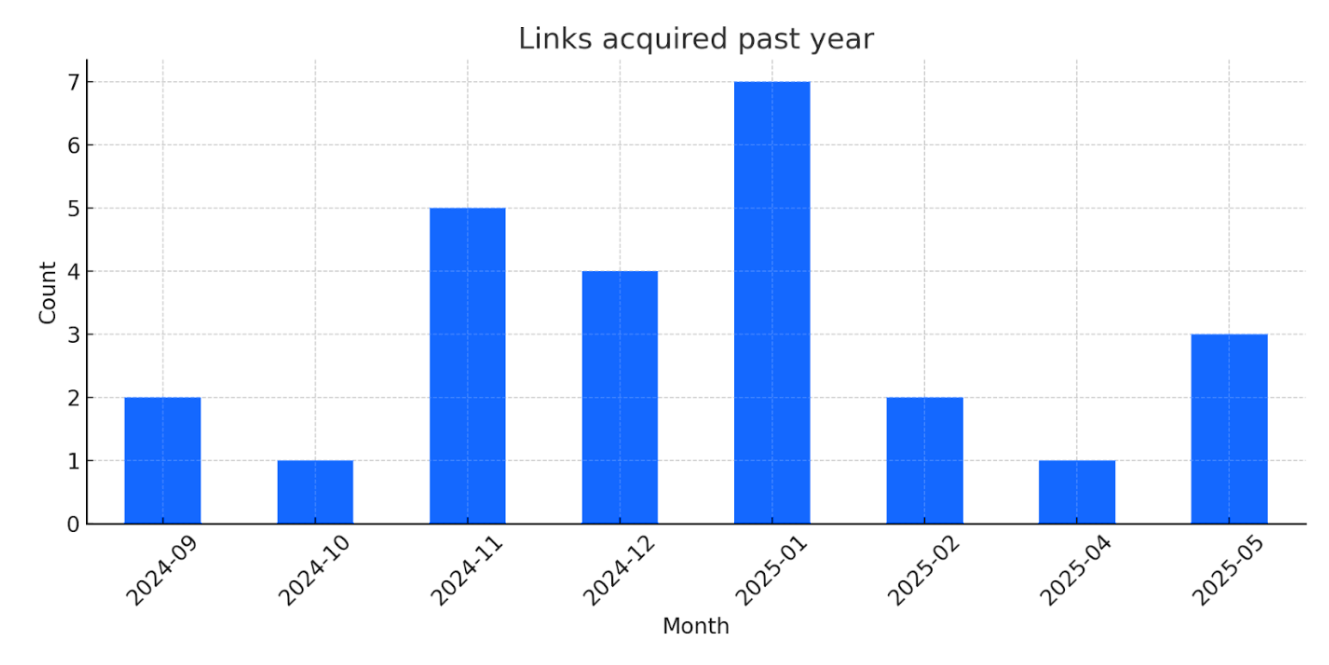
Link building can be a time consuming process, but with the right partner you can scale it and achieve some pretty remarkable results. If you want to learn more about our process and how to leverage agentic AI to get your campaigns driving the best results then get in touch with a member of the off-page SEO team today.
You need to load content from reCAPTCHA to submit the form. Please note that doing so will share data with third-party providers.
More Information