In the dynamic world of experiential design, the integration of neuroscience represents a unique opportunity where science and creativity can combine to help elevate immersive experiences.
To dive deeper into this fascinating subject, we sat down with Katherine Templar Lewis from Kinda Studios, a women-led neuroaesthetic studio and lab using neuroscience to prove the power of art on human connection and wellbeing. Working with brands, experience designers, platforms and institutions, Kinda turns neuroscience into felt experiences to deepen their impact on a range of interconnected health measures.
With a wealth of expertise in crafting immersive environments that resonate with audiences, Katherine offers her insights into how experiential designers can harness the power of neuroscience to enhance their design practices.
Katherine, can you give us a quick overview of what exactly Neuroaesthetics is?
Sure, so neuroscience is the study of the nervous system, including the brain, spinal cord, and peripheral nerves, and how they influence behaviour and cognitive processes. It explores the intricate workings of the brain’s neurons and neural circuits to understand how information is processed, emotions are generated, and actions are coordinated.
Neuroaesthetics, is a new branch of neuroscience that our work centres in, which studies how different elements affect our environment, be it light, sound, art, nature itself, impacts our brain and body.
It delves into the aesthetic underpinnings of emotion, thought and behaviour, providing insights that can inform various fields, including design. At Kinda Studios, we see neuroscience as a valuable tool for understanding human perception and emotion, allowing us to create immersive experiences that resonate deeply with our audience.
Can you give examples of how Neuroaesthetics influences your design decisions?
Neuroaesthetics serves as a toolbox for us at Kinda Studios, providing valuable mechanisms that we can leverage to enhance our design decisions. While neuroscience doesn’t hold all the answers, it offers insights that allow us to tap into the power of creative difference. For instance, we utilise colours and sounds in design that have an affect on our nervous systems, either positive or negative. Understanding how they can evoke specific emotions and drive behavioural responses allows us greater intention in our designs
By harnessing the power of art and sensory experiences, we create immersive environments that stir emotions and engage visitors on a deeper level. This approach not only elevates the overall design but also enables us to create social impact through values like environmental stewardship through experiential storytelling. Neuroscience empowers us to create meaningful experiences that resonate with people’s feelings and drive positive behaviour change.
How can neuroscience improve the overall quality of immersive experiences?
Its influence extends beyond sensory stimulation; it facilitates a deeper connection and understanding of our own selves within immersive experiences. By delving into our innate desire for coherence and connection, neuroscience enables us to craft experiences that resonate deeply with visitors. We recognise that while we experience spaces every day, often without conscious control, immersive experiences offer a unique opportunity to intentionally shape those encounters. We see ourselves as privileged to create spaces where visitors can transcend their everyday reality and be transported to other worlds, fostering a profound sense of connection and engagement with impacts that lingers long after the experience ends.
What advice would you give experiential designers wanting to incorporate neuroscience into their projects?
My advice would be to seize the opportunity to deepen your understanding and leverage this knowledge to elevate your creations. Fortunately, neuroaesthetics is now offering a wealth of resources to learn from and explore. In parallel, technological advancements are ushering in a new era where we can really harness and utilise scientific insights into experiences to deepen their impact. By leveraging this technology with neuroaesthetic knowledge and insights, you’ll be better equipped to deliver immersive experiences that resonate on a profound level.
Now more than ever is an appetite for transdisciplinary collaboration. The work we do is not just to translate but also to connect. Collaborating and exchanging ideas with both fellow designers and scientists can provide valuable perspectives and inspiration for your projects.
One resource that we often recommend is the book “Your Brain on Art: How the Arts Transform Us” by Ivy Ross and Susan Magsamen. In this book, Susan Magsamen delves into the fascinating intersection of neuroscience and art, exploring how artistic experiences can profoundly impact our brains and lives. It’s a captivating read that offers valuable insights into the power of creativity and its effects on the brain.
By immersing yourself in resources like this and actively engaging with the neuroaesthetics and studios like ours, you’ll be well-equipped to infuse your experiential designs with a deeper understanding of the human mind and emotion, ultimately creating more impactful and meaningful experiences for your audience.
What challenges have you faced using neuroscience within design? And how did you address these?
Incorporating neuroscience into design presents exciting opportunities for world-building and creating immersive experiences. However, we’ve encountered challenges when certain environments don’t align with neuroscience principles. For instance, hospitals and schools often prioritise functionality over emotional well-being, hindering our ability to create truly immersive experiences.
In hospitals, the focus on efficiency and sterile environments can be at odds with the nurturing and healing aspects that neuroscience suggests are beneficial. Similarly, schools face constraints due to limited space and the need to accommodate large numbers of people, making it difficult to implement neuroscience principles effectively.
External factors like noise pollution from motorways and heavy traffic pose challenges beyond our control. Despite these obstacles, we address them by adapting our designs to work within the constraints of the space. Neuroaesthetics research and studios like Kinda Studios are helping in transforming these spaces for greater positive impact.
We also have an in situ lab that uses neurophysiological equipment to test and explore the impact of different environments on our brain and body. The more that this work becomes a two way dialogue between science and art the further both fields can grow and the greater the positive impact we can create.
While challenges exist, they can help to fuel creativity and drive to find innovative ways to integrate neuroscience into design, even in less-than-ideal circumstances. By embracing these challenges, designers can continue to push the boundaries of immersive experiences and create meaningful connections with audiences.
What methods do you use to measure the impact of neuroscience within designs?
Yes, we use a variety of methods to measure the impact of neuroscience within our designs. This includes utilising advanced technologies such as brainwave monitoring (EEG), electrocardiography (ECG), and gamma wave analysis to gather quantitative data on neural and physiological responses to our experiences. Additionally, we rely on self-report measures to capture subjective feedback from participants, allowing us to understand their emotional and cognitive reactions.
What do you see as the future of neuroscience driven-design and how do you think it will affect the design/event industry?
The future of neuroscience and neuroaesthetic-driven design holds immense potential to revolutionise the design and event industry. As we continue to embrace science-informed design practices, we’ll see a shift towards creating experiences that are not only aesthetically pleasing but also deeply resonant on a cognitive and emotional level. Neuroscience insights will guide us in crafting environments that prioritise human well-being and connection, with an emphasis on integrating elements of nature to enhance mental and emotional health.
In the world of experiential design, where creating memorable and immersive experiences is paramount, the integration of artificial intelligence (AI) opens up new avenues for creativity and engagement. Experiential designers now have the power to leverage AI capabilities to enhance their projects, delivering even more personalised and captivating experiences for their audiences.
In this article, the team at Imagineerium explores five ways AI can be integrated into the design process to take the audience journey to a whole new level.
1/ Get Personal
One of the most significant advantages of using AI in experiential design is its ability to analyse vast amounts of data to help personalise the guest experience.
AI algorithms can gather user preferences, behaviour patterns and audience demographics in real-time, allowing you to tailor experiences to suit individual preferences. For example, AI sensors can track guest movements and interactions helping to discern individual preferences which can adjust various elements of the guest experience to suit the individual. This could be useful when distinguishing between different groups, such as families with young children or couples, as the experience might play out differently depending on the age groups of those involved.
A great example of this is the work by HYPERSYN, an award winning British company pioneering the phrase ‘phygital technology’. HYPERSYN is bringing new SmartV solutions to a variety of industries including retail. Its interactive window displays and holographic life-size avatars are coded to track movement and collect data based on who is walking past the storefront at any given time. The display or avatar then changes depending on the type of audience that is viewing the hologram.
Used in an experiential design setting, this could create truly immersive and personalised experiences for audiences, helping them feel even more connected to the narrative.
2/ User Interaction
‘Interactivity’ incorporated into live experiences is on the rise. Using AI powered technology, you can now create more responsive and interactive environments. AI algorithms are able to analyse user inputs, gestures and expressions, enabling the experience to evolve in real-time based on the audience’s reactions. This gives guests the opportunity to feel more in control, which all helps to foster a deeper sense of immersion.
We loved Meta’s brand activation at Cannes Lion Festival 2023 – they created a giant “message in a bottle” sculpture that was set up on the harbour. Attendees were met with a visualisation of messages of encouragement, creative catchphrases and inspiring ideas centred on Cannes Lions. They could add their own anonymous messages that appeared as a new chat bubble on the screen. As the messages “floated” to the top, they turned into soap bubbles that floated out of the bottle, capturing attention across the beach.
This is a perfect example of how interactivity can involve the audience and make them feel a part of the experience.
3/ Stay Ahead of the Curve
With AI’s ability to analyse large data sets, it also has the ability to forecast trends and market insights. This could be particularly useful to help stay ahead of the curve and get involved in certain trends before they rise to considerable popularity.
A good example of this is the work of Turkish-American artist, Refik Anadol. Refik is pioneering the use of AI within art, using it to create beautiful digital installations from different data sets. His work is primarily built around using machine learning, feeding data into a computer to create emotive and transcendental works of art. We’re sure he won’t be the last artist to use this method of creation and we predict an influx of digital art that will soon take over art galleries before we know it.
If you’d like to experience Refik’s artwork first-hand, he is hosting an exhibition in London open now until 7th April 2024.
Check out his work here: Unsupervised — Machine Hallucinations — MoMA – Refik Anadol
4/ Real-Time Feedback
AI-powered tools like ZiflowAI and Adobe Sensei offer invaluable real-time feedback and analysis throughout the design and implementation phases. This dynamic support not only facilitates improvements, but also uncovers opportunities to enhance the overall success of the experience.
Chatbots for example, provide real-time answers ensuring attendees spend less time searching for information and more time engaging with the experience. These can help to provide invaluable insights into their preferences, pain points and levels of engagement. By leveraging this data, you can gain actionable insights that shed light on areas for improvement in future projects and extract invaluable learnings from each experience.
5/ AI-Driven Audio
AI can now offer an even deeper sound experience at events with personalised and interactive audio. AI-driven audio can analyse attendee preferences, behaviour and demographics to deliver personalised content tailored to suit individual interests and preferences. This could include custom playlists, curated music selections or targeted audio advertisements based on user profiles.
A good example of this is Spotify, the leading music app has been using AI to create personalised music experiences for its users. Spotify uses AI to analyse user behaviour, preferences, and context, and delivers customised playlists, recommendations, and features that suit each user’s taste and mood.
One of the most popular examples of Spotify’s AI personalisation is its Discover Weekly playlists, a playlight that is updated every Monday with 30 songs that Spotify thinks the user will like.
Alternatively, AI-driven interactive audio experiences, such as immersive sound installations, augmented reality (AR) audio experiences, or interactive audio games, can engage attendees and create memorable and unique event experiences that help to foster a deeper connection with the audience.
In summary, the combination of using AI within experiential design is leading us into a whole new world of possibilities. By harnessing AI capabilities, we can elevate experiences to new heights, creating experiences that are not only immersive and engaging but also deeply personalised and responsive to the needs and preferences of the audience.
From real-time feedback and analysis to dynamic content personalisation, AI empowers us to push the boundaries of creativity and innovation, to deliver unforgettable experiences that leave a lasting impact.
Experiential design, the art of creating immersive and engaging environments is at the forefront of innovation as we step into the year 2024. In this dynamic and ever-evolving field, designers are pushing boundaries, utilising new technology and harnessing the extraordinary power of creativity to craft memorable experiences that wow audiences across various industries.
We put our heads together here at Imagineerium HQ to anticipate the experiential trends that we think will shape the experiential landscape in 2024…
Immersive Technologies
As technology continues to advance, immersive experiences are reaching new heights. Virtual Reality (VR) and Augmented Reality (AR) have become integral components of experiential design, transporting users to fantastical realms or enhancing their real-world surroundings. In 2024, we think there will be even more seamless integration of these technologies into physical spaces, without the need for bulky headsets and tether restrictions. Instead, spaces will be ‘hands free’ offering unparalleled levels of interaction and engagement.
Apple’s latest innovation, the Apple Vision Pro, is a great example of this. It seamlessly blends digital content within your physical space, and users only need to use their eyes, hands, and voice to activate different settings. This advancement not only enhances user experience but also opens up a myriad of possibilities across various industries, from entertainment and gaming to education, healthcare, and beyond.
Hyper- Personalisation
Experiential design is getting even more personalised catering to individual preferences for a tailored visitor experience. As data and facial recognition tech progresses, we expect experiences that can adapt and respond to each person’s unique needs and behaviours. Think of it as experiences that pick up on visitor reactions and give them personalised greetings.
Sustainability at its Core
Sustainability has consistently held a prime position in our approach to crafting experiential experiences. Our commitment extends from the utilisation of eco-friendly materials to the integration of energy-efficient technologies, reflecting our continuous efforts to enhance sustainability wherever possible. We anticipate the pledge to sustainable consciousness within event and experiential design will continue in 2024 and beyond.
Interactivity Redefines Engagement
The line between observer and participant continues to blur as experiences become more interactive with elements such as touch-sensitive surfaces, gesture controls, and motion controls. We think these will continue to evolve in 2024 helping to foster a deeper sense of participation, turning audiences into co-creators of the experiences.
Immersive Storytelling
In our perspective, the narrative shared with the audience forms the essence of any experience. Looking ahead to 2024, we anticipate a pronounced shift where storytelling becomes the focal point within the experiential design landscape. This shift is not just about recounting stories but actively crafting compelling narratives that foster deeper engagement with audiences. The emphasis lies in creating experiences that resonate, where the narrative is not just told but woven into the fabric of design, driving a more profound and lasting connection with the audience.
Authenticity
We are in the digital age, where everything is online and information is accessible at the touch of a button. The majority of people own a smartphone or tablet and our appetite for social connection has grown exponentially. However, the authenticity of the connections people are having online often seem questionable.
Due to this, people are wanting real world connections, and want to be part of an experience that leaves a lasting impression. This year, we anticipate a shift in focus towards authentic experiences, something that individuals can truly feel a part of, rather than simply consuming passively through a screen.
This could be done through interactive elements such as voice activations, 5D (meaning the experience is guided by all of your senses, touch, smell, sight and sound) or physical engagement. As technology continues to evolve, we envision a blend of digital and physical interactions that enhance the overall experience, providing opportunities for deeper connections and meaningful engagement.
This year is looking to be an exciting year where we’ll see new technologies being maximised in the experiential sector- watch this space!
In the ever-evolving landscape of experiential design, pop-up experiences have emerged as powerful tools for creating memorable and immersive encounters. From museums and art exhibits to retail spaces and theme parks, the versatility of pop-ups has captured the attention of various industries, making them a go-to strategy for launching new products, fostering collaborations, and fostering authentic human connection.
The Rise of Pop-Up Experiences
The roots of pop-up experiences trace back to the attractions industry, where temporary installations and seasonal offerings became integral to engaging audiences. Today, pop-ups have transcended their initial retail-focused reputation and expanded into a diverse array of sectors, including music, film, and start-ups. Their ability to offer a unique, time-limited experience has positioned them as a dynamic medium for creating a buzz and making a lasting impact.
The UK has witnessed a pop-up revolution, with the industry now valued at over £2.3 billion. What was once considered a fleeting trend has grown into a formidable business strategy. Beyond its initial association with retail, the pop-up has become a strategic powerhouse for those seeking to launch products, form collaborations, and strategically curate brand narratives for specific purposes.
In this guide, Natasha Mortimer, Managing Creative Director of Imagineerium, shares her insights on perfecting the art of the immersive pop-up experience. Natasha’s extensive experience in the field makes her a valuable source of knowledge for experiential designers looking to navigate the complexities of crafting impactful and memorable immersive pop-ups.
Crafting the Guest Experience
Determining the guest experience is the most important aspect of planning an immersive pop-up as it will impact what elements you bring into the experience. This can include things like, how much participation you’ll need from visitors, whether the pop up is something they can walk within or admire from afar, or whether the experience includes many interactive elements that helps the narrative to unfold.
The guest experience should always start with the very beginning, think pre-event. This could start with an email campaign, personalised invite or social media campaign. You then need to think how you want your guests to feel when they first arrive. This is when your visitor will first come across (or stumble upon in some cases) the experience. What is going to catch their attention and make an impact straight away? The second part is how does the visitor then interact or react with the pop up – do they have to follow a certain path, are there puzzles or questions they need to answer before moving into the next part? All of these questions help to establish the fundamental journey each visitor will go on. Lastly, how does the visitor leave the pop-up, what is going to make them remember the experience, and want to either do it again or tell their friends and family.
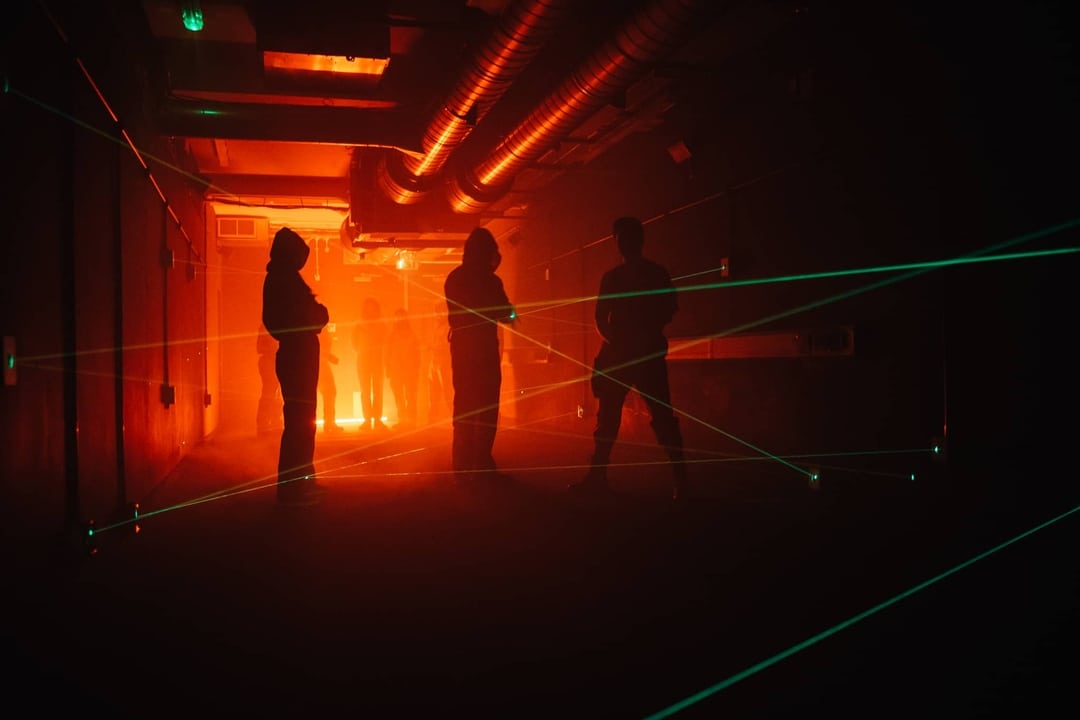
We designed ‘Money Heist: The Experience’ which took inspiration from the global hit Netflix show. We wanted to create a temporary experience that would have a big impact, therefore, building the concept around a strong guest journey was key.
Participants weren’t just visitors, they became active contributors to the unfolding narrative. Visitors were ‘taken hostage’ and given tasks to complete to help them escape with all the gold. This narrative was guided through immersive theatre and live gaming techniques, where live actors were used to interact with visitors throughout the experience. There were four different escape rooms, one in a security office, in a workshop, in an antiques office and one in an art repair lab. Visitors were split up into smaller groups so that they only completed one escape room each. There were hidden clues, and items each team had to find to move onto the next part of the experience. In another room players needed to hide from a security guard whilst trying to find dynamite.
We went to great lengths to craft an immersive journey that mirrored the suspense and intrigue of the iconic series. Every detail, every nook and cranny, was designed to create an atmosphere of mystery and excitement. One of our key design principles was to ensure that the exit into the next space was not immediately obvious. We wanted to ensure the transitions to and from spaces were either smooth or harsh depending on how we wanted the audience to feel. We made sure each room had its own unique aesthetic to make the audience feel as though they had made their way through various chapters in the narrative.
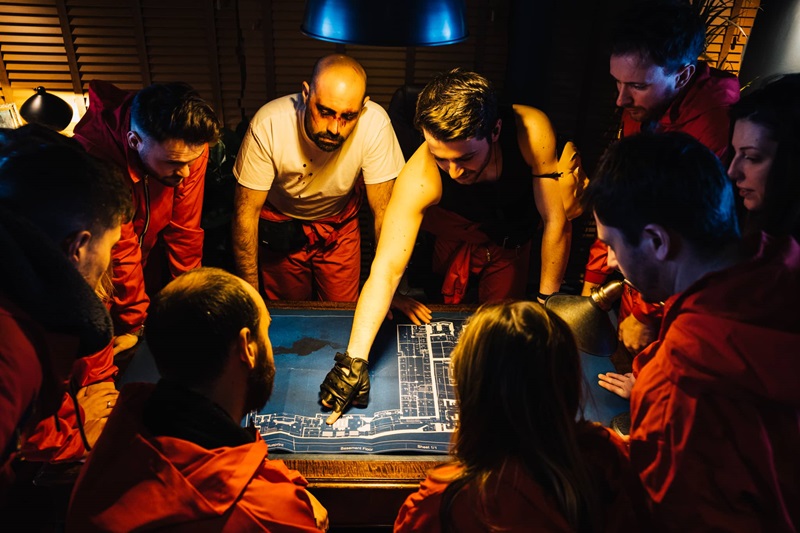
To achieve this, we took into account the different room sizes and used a combination of lighting settings, decor and textures. Throughout the experience, we kept visitors on their toes, mirroring the suspense that is portrayed in the show. Some spaces featured multiple doors, leading to a sense of uncertainty and decision-making reminiscent of the heist scenarios. Others were secret doors that were cleverly concealed, resembling hidden bookcases or seamlessly integrated into the walls, offering an element of surprise.
Aligning Business & Creative Goals
A successful pop-up is more than just eye-catching aesthetics, it’s a strategic fusion of creativity and interaction. Each pop-up needs to reflect the brand’s essence while resonating with the intended audience.
The seamless integration of creative elements with strategic business goals is what sets exceptional ventures apart. A pop-up that succeeds not only captures attention but also strategically aligns itself with the overarching goals of the brand.
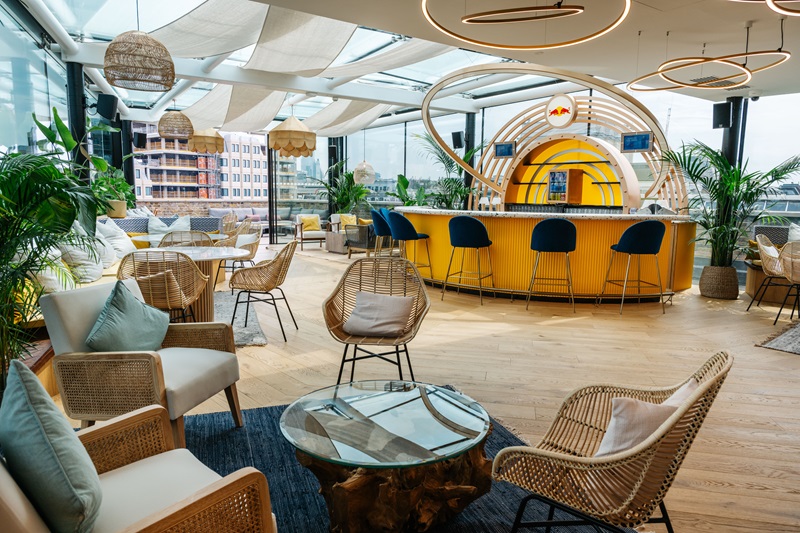
We designed and installed the ‘Sun Bar’ at Red Bull HQ in Covent Garden. This rooftop bar was a true reflection of the brand’s spirit, cool, fresh, modern and forward thinking.
The ‘Sun Bar’ encompassed the playful energy associated with the brand and was built to serve as a workspace, host VIP events and somewhere staff members could go for drinks after work hours.
For the design, we took full advantage of the generous 270 degree panoramic view of London’s skyline, and accentuated it through our choice of design. Throughout the build we stuck to Red Bull brand colours, using bold blue and yellow accents, and teamed this colourway with sleek furniture and lots of luscious indoor plants which gave the whole space a modern and fresh feel.
We also brought in elements of the Red Bull logo in the form of a sun around the main bar. Its bright yellow semi circular shape, copper arcs and feature halo ring light make it the focal point of the room.
Red Bull were very clear in their brief that they wanted to ensure their brand aesthetic really shone through so that it would feel like an extension of the office, but with a more premium feel. Getting to know the brand well and understanding their needs, really helped us ensure we stuck to the brief and brought their vision to life.
Strategic Location
At the heart of a pop-up lies its ability to attract and engage a target audience. Selecting a location with high foot traffic is a strategic move that ensures a broader reach and heightened visibility. Whether nestled in a bustling city centre or at a popular event venue, being in the path of potential visitors increases the chances of spontaneous engagement and discovery.
Understanding the environment you are working with and adapting it to fit the message is vital. It’s important to read the space you’re going to use and see how you can use it to your advantage, whether it’s indoors or outdoors, an enclosed space or somewhere with square footage. The size, shape, location of your space will all have an impact on the experience you are trying to create.
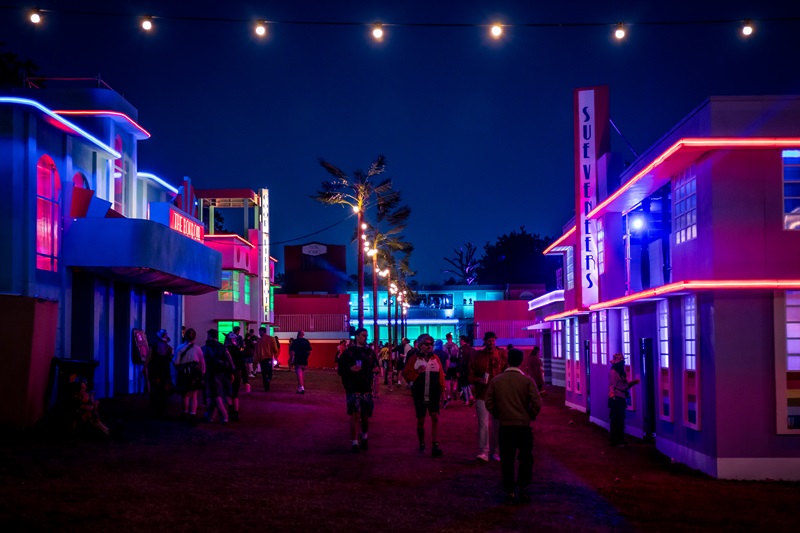
A good example of this is the pop-up ‘mini city’ we created for El Dorado festival inspired by the art-deco style of Miami Vice. The experience included 8 building facades (6 venues, a bar, toilets and an arena stage) The venues included: Motel Dorado (arena stage), Blue Tit Salon, Good Life Hotel, The Diner, The Boudoir and the LGBTQIA+ venue, Sue Veneers.
The ‘mini city’ was in the heart of El Dorado leading on from the main food court which was hard to miss, giving festival goers a chance to explore the space.
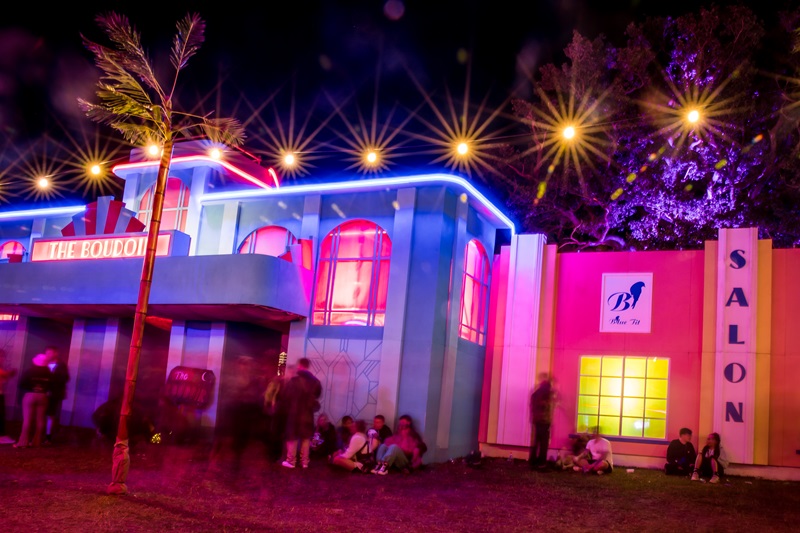
We built each of the venues meticulously so that each would fit into a coherent landscape, designed not just as standalone structures but as interconnected elements within a larger immersive environment. Each of the street facades were built situated back and forth from the main street, this helped to create the illusion of a real street of buildings.
Each building was carefully crafted to encourage festival-goers to step up and wander in and around each structure, unlocking layers of experiences within the small city we had created. Palm trees lined the centre pathways, with each angle and viewpoint meticulously designed so that the experience continued, never breaking the illusion to ensure full escapism.
The ‘mini city’ served as a bridge, seamlessly connecting the pop-up venues with the main festival site. This architectural set-up wasn’t just a collection of structures, but a dynamic space that facilitated a seamless visitor journey for attendees, enhancing the overall festival experience.
We designed both entrances to the street so that they were visually appealing, grabbing the attention of festival goers as they passed by. To achieve this we used bright pastel colours and neon lights and had performers on various platforms and balconies.
The pathways and interconnected spaces within ‘Vice City’’ were purposefully designed to guide visitors through a curated journey, fostering a sense of exploration.
Interactivity
Interactivity is a key element in creating successful pop-up experiences as it enhances user engagement by providing a more dynamic and participatory experience.
Interactivity can be created through integrating VR/AR, gamification, touch screens and 5D experiences. Whether solving puzzles, making choices, or experiencing multisensory stimuli, interactivity transforms the pop-up into a communal adventure where every participant becomes an integral part of the unfolding tale. This engagement not only captivates but ensures that the pop-up experience lingers in the visitors memory, leaving a lasting connection between the audience and the narrative they helped bring to life.
Ultimately, the mastery of pop-up experiences lies in the ability to transform a moment into a lasting impression. By mixing creativity with business, experiential designers can elevate pop-ups from temporary novelties to influential touchpoints that shape brand perception and foster meaningful connections with the audience.
To find out more about Imagineerium’s work, check out their website: www.imagineerium.co.uk
You need to load content from reCAPTCHA to submit the form. Please note that doing so will share data with third-party providers.
More Information