It’s not news that Mark Zuckerberg isn’t a natural communicator.
I was having lunch, watching an interview with Joanna Stern, formerly of the Wall Street Journal, and within minutes I was wincing. He was making a dog’s dinner of it. Twenty years running one of the most scrutinised companies on earth, and he sounded like a new hire fumbling through his first big meeting.
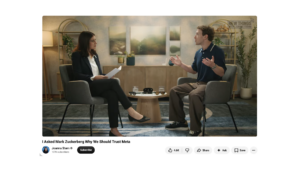
I counted five habits working against him. Here are two that matter most.
01 – He says a lot of nothing
I watched the interview over two lunches. I can’t remember a single example he used. They’re vague, generic, cotton wool. Nothing to grip.
I get it. He’s in a legal corner, and every word is lawyered. But that’s exactly why he needs a well-built story. A good story lets you be careful and still be memorable. Fuzzy examples frustrate the room.

02 -He never lets it breathe
Stern opens with “Is AI gonna kill us?” Zuckerberg replies with “well… um… I mean… look I mean.” He jumps feet first into every gap. Two seconds of silence would have said so much more.
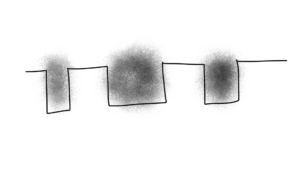
I’m baffled. He had home advantage. His launch, his studio, journalists queuing for maybe 40 minutes each. Hard stop. They’re on the clock. He isn’t. He played like the side chasing the game.
From the coaching room
I recently coached the CFO of a global tech company on exactly this. We studied Jensen Huang answering a question without really answering it, and talked about how the audience still left satisfied. I sketched it as a stone skimming across water: wide and shallow, three or four ideas in ninety seconds, then stop. Not avoiding the question. Being intentional.
A week later the CFO told me she could see a journalist’s questions coming a mile off. She was owning her 40 minutes.
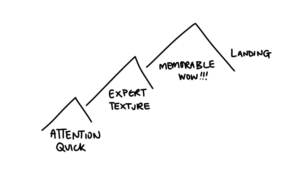
What I’d tell Zuck
Count to three. Let them finish. Smile and tell a story.
You know roughly the five things you’ll be asked. Have five stories ready, in short, medium and long versions. Real people, real moments, specific details. All approved by legal. Tell them with passion. That’s what gets remembered.
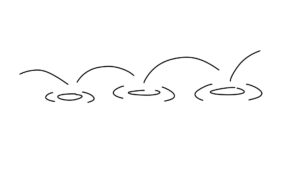
Speaking with intentional pauses isn’t a sign of weakness. Being vague is.
We’ve all been there. The tough question lands, and you hear yourself still talking thirty seconds later, looking for somewhere to stop. Next time, reach for a story.

Executive communication coach helping business leaders use speaking to drive growth. My 5 Steps of Intentional Communication turns every stage, meeting, or keynote into a business opportunity.
You need to load content from reCAPTCHA to submit the form. Please note that doing so will share data with third-party providers.
More Information