Copy-editing and linguistic validation: how much is enough?
One of the most common questions in multilingual content isn’t whether to review; it’s how far that review should go.
Should you fix obvious errors and move on? Or should you reshape the text until it truly works for the target audience?
This is where the distinction between light and heavy copy-editing becomes useful. But on its own, it doesn’t tell the whole story. In practice, what clients are often really asking for is linguistic validation.
This article explains how light and heavy copy-editing differ in practice, where linguistic validation fits in and why focusing on the validation outcome can make it easier to choose the right level of revision.
At a basic level, the difference comes down to depth of intervention. But that depth shouldn’t be decided in isolation. It follows from the brief we work through or develop with the client: what the content is for, who it is for, how visible it will be and how much risk they can tolerate.
In some cases, the brief also shapes the upstream workflow, including engine choice, because not all content should be generated and reviewed in the same way.
We’ll now explain the differences and give content examples:
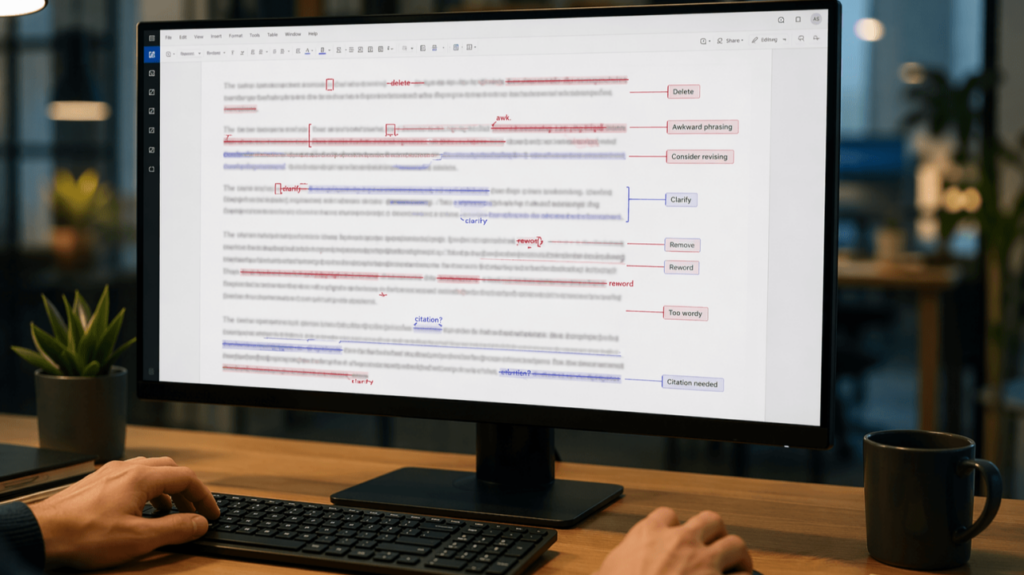
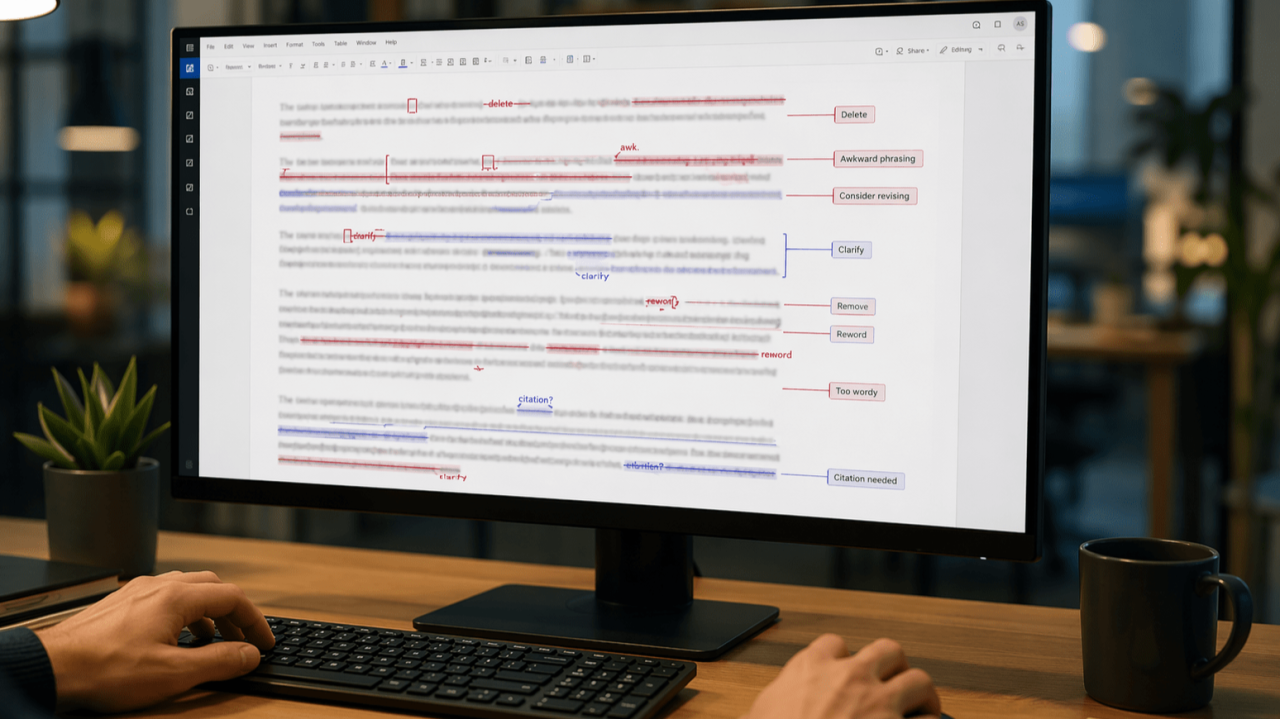
Light copy-editing focuses on surface quality:
The goal is simple: make the content clear and usable for its intended audience or use case. This is often sufficient for:
But it comes with a trade-off: the text may be correct without necessarily being effective, especially if it is intended for public or search-visible use. In this regard, it’s important to be aware of how Google treats poor machine-translated content if publishing it online.
Note: You might also have heard terms like copy polish and proofreading. For clarity: copy polishing involves very light edits, while proofreading is the final check with only minimal changes.
Heavy copy-editing goes further:
The goal here is different: → Make the content work for its audience. This is typically required for:
At this level, the editor is no longer just correcting — they are interpreting and shaping the message.
As explored in our article on the parallels with vibe coding, this level of intervention can erase much of the speed gained from machine-generated source text translation.
This is where the concept of linguistic validation becomes useful. Rather than treating it as a separate step, it is more helpful to see it as the result of the editing process.
In other words, the difference between light and heavy editing is not just the amount of effort involved. It is the level of linguistic validation you end up with.
The key decision is not simply whether to choose light or heavy editing. It is how much confidence you need in the final content.
For some content, “good enough” really is enough. That might apply to a software manual for internal reference, where the reader understands that the text may contain issues but it’s only intended as a working aid.
For others, anything short of full validation introduces risk – whether that’s brand inconsistency, misinterpretation or loss of impact.
This is particularly relevant in AI-supported workflows, where:
In these cases, the depth of editing determines whether the result is merely acceptable or genuinely fit for purpose.
Instead of treating editing as a binary choice, it helps to think in terms of validation thresholds:
By shifting the focus from editing level to validation outcome, it becomes easier to align the workflow with the brief, the budget and the expected result. You may even find that a copy polish or proofread is all you need. Let’s have a chat and see how we can help you with your next project.

Helping businesses communicate, engage and grow across languages. We adapt our translation workflows to each project to help your message connect with audiences worldwide.
You need to load content from reCAPTCHA to submit the form. Please note that doing so will share data with third-party providers.
More Information