Motion guidelines for your brand – what are they and are they worth it?
We all know motion graphics are a highly effective form of communication and at P+S we’ve been shouting about this for a while. But handled badly, video content can end up muddling your brand and confusing your customers. Luckily, there’s a simple trick to getting it right: motion graphics guidelines.
We’ll get to them in a minute but first, let’s do a quick refresher on why video is something you should really embrace for your business.
Video continues to be one of the fastest growing methods of communication. And with 96% of people turning to video to learn more about a product or a service it’s pretty hard not to agree that it should be part of your business strategy.
Not sure of the benefits? Here’s your at-a-glance guide:
Well, all the above sounds great, right? However, even though the benefits of motion graphics are well established, decision makers will still often turn down video projects. Let’s look at why.
A recent report found that 19% of people lack the time, 10% of people don’t know where to start and 24% of people feel video is too expensive.
This is understandable. Creating a video can be a lengthy process. (Have you ever looked over the shoulder of an animator doing their thing? It’s a snore fest.) And you know, time equals money. Truly great creative comes at a cost but, at the time of writing, AI tools haven’t evolved to a place where they can churn out stunning, effective and on-brand motion graphics at the click of a button. Probably next week though, amiright?
As for knowing where to start, this becomes a big issue without real guidance in place onhow to communicate your brand. A lack of clear vision around your motion output ultimately creates a lack of consistency and can reduce your brand integrity. Think about it… creating unique, different interpretations of your brand for every video is like starting from scratch every time. You wouldn’t ask 10 different designers to create social posts without brand guidelines, one of them will probably select comic sans and word art to work up their masterpiece!
OK, so those are some pretty hefty considerations. What’s the solution? We gave this away at the top, but you guessed it! Brand motion guidelines. Up until now, they’ve been something of an afterthought, the final page in a brand guidelines PDF that talks about using 1080p and brand compliant subtitles, but it’s so much more than that now.
Motion is embedded across every touchpoint of your brand
It’s everywhere from logo animations to transitions, text animations, graphic language, social templates and even in the minute detail of how UI bits animate. If you want to create a wide array of video assets, guidelines form the robust design system that streamlines the whole process and ensures a strong brand presence.
To keep track, you need guidelines that:
As our collective attention span gets shorter, it’s vital that your visual communication looks and feels instantly recognisable, even in a few seconds. Think about how you feel when you see an Apple ad or your favourite football team walking on to the pitch: you may not know what’s about to happen but your brain will link together past experiences with that brand/team by association, informing how you feel and how excited you are for what comes next.
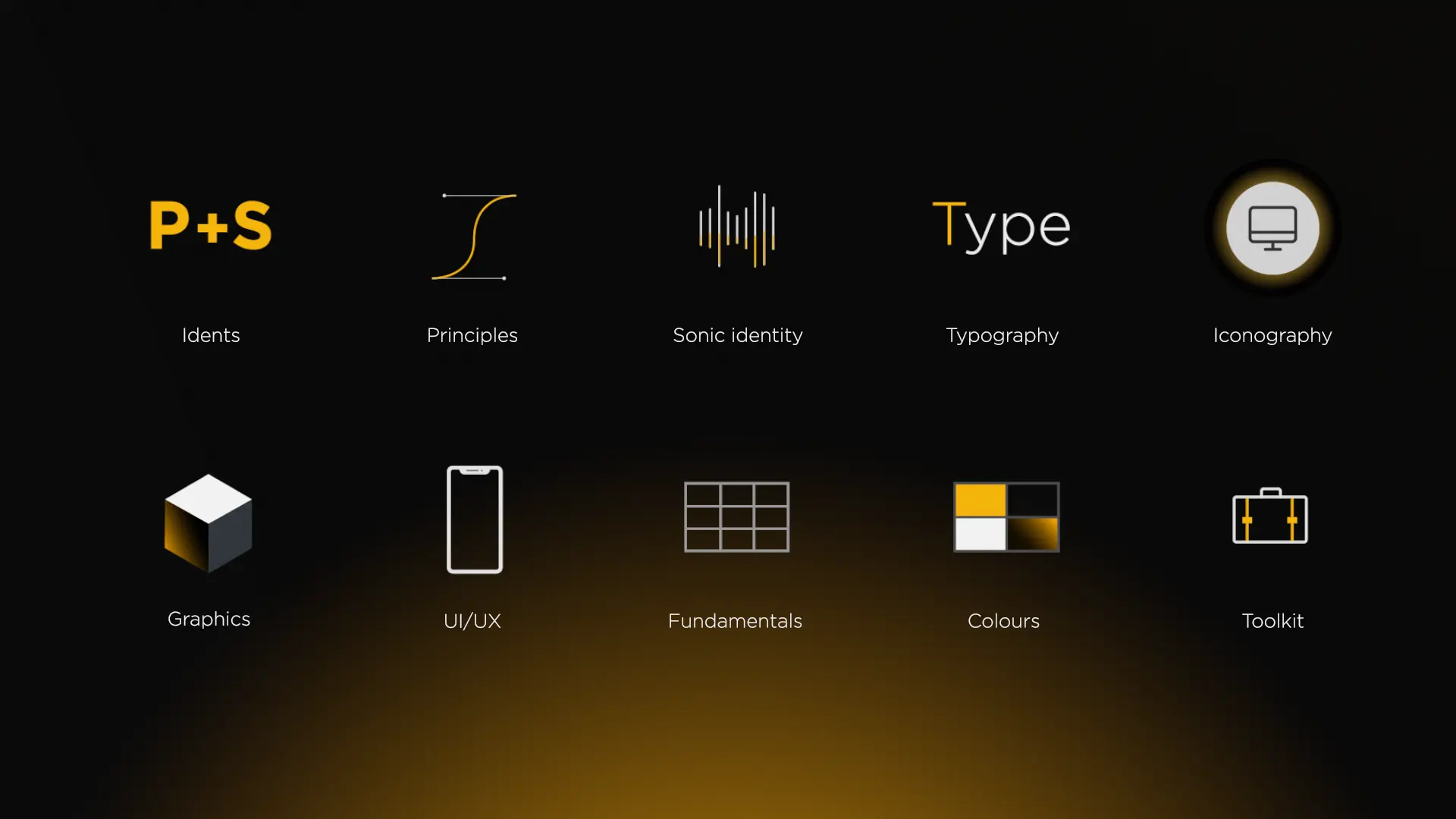
Motion guidelines are essentially a kit of parts, and they shift depending on your brand and what you want to achieve. But as a rough guide those parts include:
Once guidelines have been worked up and agreed, you can roll them out to private or public-facing online digital guidelines which display all the best practice for each element, along with updatable templates (that we call ‘video toolkits’) for designers to use – having one source of truth for all things motion. And we’ve created a little animated explainer that breaks down what a P+S video toolkit is.
The EAA is reshaping expectations for how digital content including video is produced and delivered. While compliance is a legal requirement across the EU, it’s also fast becoming a marker of brand credibility and modern practice worldwide.
Ensuring your video content is accessible (with captions, audio descriptions, and inclusive design) not only future-proofs your output but demonstrates a genuine commitment to reaching, and respecting, all audiences. In a global market that values inclusion, accessibility isn’t just about regulation, it’s about reputation.
One of the best ways to improve your compliance is through your motion guidelines. By having one central store of rules, templates and toolkits you can make sure future content will always be in line with EAA requirements.
If you fancy finding out more about how video could work for your brand, or need some help putting together your own guidelines, then drop us a line at [email protected].

From tackling your marketing painpoints to delivering global brand strategies, Proctor + Stevenson is the B2B marketing specialist that says YES to your commercial challenges.
You need to load content from reCAPTCHA to submit the form. Please note that doing so will share data with third-party providers.
More Information