Autumn Budget 2025: A guide for creative businesses
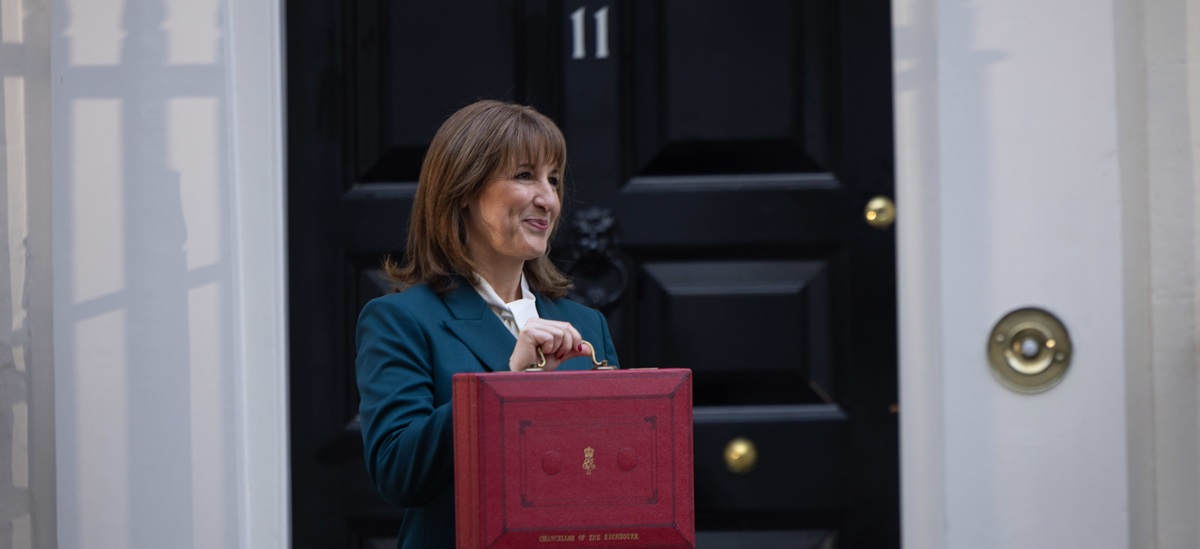
Chancellor Rachel Reeves delivered the much anticipated 2025 Budget on 26 November.
Making announcements that included £26 billion of tax rises, Reeves said she was “asking everyone to make a contribution”, although she wanted to “ensure the wealthiest contribute the most”.
Following months of speculation over what the speech would include, Budget day itself was a chaotic one as key details were revealed before the chancellor spoke in Parliament due to the Office of Budget Responsibility accidentally publishing their economic and fiscal forecast early.
Read below for the measures of interest to creative businesses and comment on this LinkedIn post with your views on the Budget.
The mentions of the creative industries in the Budget speech and the full Budget document were:
The Budget confirmed the allocation of £150 million Creative Places Growth Fund for six priority regions including the West of England. Each region is being provided with £25 million to support the creative industries.
Find details for the plan for the funding in the West of England and how you can contribute to the discussion around how the money should be spent here.
In the 2024 Spring Budget, the government announced that eligible film studios in England will receive a 40% reduction on their gross business rates bills until 2034. The 2025 Budget said this relief will continue at the current level.
Discussing the new National Wealth Fund, the Budget said it has £27.8 billion in “public capital available to invest in a range of capital-intensive projects, businesses and assets” which “will support the delivery of the wider modern industrial strategy, including in defence, life sciences, and creative industries”.
The British Business Bank (BBB) has published its five-year strategic plan for its increased financial capacity of £25.6 billion. It includes support for “promising businesses” in the government’s modern industrial strategy eight priority sectors (IS-8) to scale.
Creative industries is one of the priority sectors as outlined in the creative industries sector plan.
The BBB will also deliver 85,000 new Start Up Loans, commit £150m to Community Development Finance Institutions to support underserved groups, increase regional investment and support the development of regional science and innovation clusters and new regional angel networks.
As previous announced government investment in R&D will grow to £22.6 billion by 2029-30. UK Research and Innovation (UKRI) will direct £9 billion over four years to IS-8 sectors, including £4.5 billion for innovative UK companies in those sectors.
Firstly, Innovate UK will launch a new £130 million Growth Catalyst programme, offering grants and tailored support to frontier companies that have already attracted investment. UKRI’s £500 million R&D Missions Accelerator programme will launch challenges to drive economic benefit from the UK’s cultural assets and to cut construction costs for public infrastructure by 10%.
Arts and cultural businesses will be interested in the announcement that mayors in England will be given new powers to introduce a visitor levy on overnight visitor accommodation in their area. It will fund further investment in growth locally, including the visitor economy. The government is consulting on the levy.
Helen Godwin, mayor of the West of England, said:
“Residents and visitors alike know how special our part of the world is, from our people to our culture to our nature. Tourism is now worth a record £2.7 billion to the West’s economy, which is a key industry for our new Growth Strategy over the coming decade.
“These new powers are a real vote of confidence in our region taking more control of our future. Proceeds from an overnight visitor levy, that people from across the West are used to paying on holiday ourselves, have the potential to support and enhance the sector’s businesses and workers – including with better transport options.”
The government will provide £5 million to state-funded secondary schools in England in 2026-27 to increase book supplies.
The following are announcements not specific to the creative industries but are of interest to businesses and freelancers in the sector.
The freezing of income tax and National Insurance personal thresholds, which was due to end in 2028, will be extended to 2031. This will bring more people into higher tax brackets over time.
The ordinary and upper rates of tax on dividend income will increase by 2 percentage points from April 2026. The dividend additional rate will not change.
The tax rate on savings and rental income will also increase by 2 percentage points across all bands from April 2027.
From 1 April 2026, the National Living Wage for over-21s will increase by 4.1% to £12.71 per hour, the National Minimum Wage for 18-20 year olds will increase by 8.5% to £10.85 per hour and the rate for 16-17 year olds and apprentices will increase by 6.0% to £8.00 per hour.
The accommodation offset will increase by 4.1% to £11.10 per day.
The 5p cut in fuel duty on petrol and diesel will be extended until September 2026. It will then gradually return to March 2022 levels by March 2027.
A 3p per mile charge for electric car drivers will apply from April 2028.
Plug-in hybrid vehicles will be charged 1.5p per-mile.
Capital gains tax relief on business sales made to employee ownership trusts will be cut from 100% to 50%.
National Insurance will be charged on salary-sacrifice pension contributions above an annual £2,000 threshold from April 2029.
The new tax will apply to properties worth more than £2 million. It will be £2,500 for properties worth £2m to £2.5m and up to £7,500 for homes worth £5m.
Training for apprentices under-25 will be made free for small and medium-sized businesses.
Funding of £820 million will provide a guaranteed six-month paid work placement for every eligible 18-to 21 year old who has been on Universal Credit and looking for work for 18 months.
There will be permanently lower tax rates for over 750,000 retail, hospitality and leisure (RHL) properities. The RHL multipliers will be 5p below their national equivalents, making the small business RHL multiplier 38.2p and the standard RHL multiplier 43p in 2026-27.
It will be funded by a new higher rate on properties with a rateable value of £500,000 and above. The government said this includes the warehouses used by online giants such as Amazon.
From 1 April 2026, business rates bills in England will be updated to reflect changes in property values since the last revaluation in 2023. The government said half of ratepayers will see no bill increases, including 23% seeing their bills go down. For those seeing bill increases there will be a support package worth £4.3 billion over the next three years.
The VCT and EIS company investment limit will be increased to £10 million, and £20 million for Knowledge Intensive Companies (KICs). It will also increase the lifetime company investment limit to £24 million, and £40 million for KICs.
EMI will be expanded, with the company share option limit increasing from £3m to £6m, the employee limit increasing from 250 to 500, the lifecycle limit increasing from 10 to 15 years and the gross asset tests increasing to £120 million.
The government has launched a consultation to gather views and evidence on tax policy support for investment in high-growth UK companies.
From 6 April 2027, the annual ISA cash limit will be cut from £20,000 to £12,000. The aim is to encourage more people to invest in stocks and shares ISAs
Savers over the age of 65 will continue to be able to save up to £20,000 in a cash ISA each year.
Top image by Simon Dawson / No 10 Downing Street

Bristol Creative Industries is the membership network that supports the region's creative sector to learn, grow and connect, driven by the common belief that we can achieve more collectively than alone.
You need to load content from reCAPTCHA to submit the form. Please note that doing so will share data with third-party providers.
More Information