
Digital is the status quo
We’re all doing our best to meet the ever-growing demand for organisations to ‘go digital’.
Whether we’re trying to reach more customers, more effectively market our products and services, minimise our carbon footprint or deliver more cost-effective business solutions, finding a digital – and in many ways more accessible – solution is pretty much today’s standard course of action.
The opportunities when we meet a new audience in a new space are obvious. But what about the pitfalls?
The potential for being misunderstood, taken out of context, or having your brand diluted across multiple platforms becomes more likely – especially when considering the speed at which online content is delivered.
And it’s for this reason that our brand identity becomes even more important.
What are brand guidelines?
Your brand guidelines are the rules which determine how your brand is presented to the world. It usually contains information about your brand name and how it’s used, your corporate logo, brand colours, fonts, tone of voice etc.
Your brand guidelines should clearly illustrate how your brand identity is portrayed and communicated to consumers, providing a reference point for employees and clients alike.
And we need them, because when your brand remains consistent, it remains recognisable.
Research has shown 86% of consumers say that authenticity is a key factor when deciding what brands they like and support. And when we think about it, it makes complete sense.
Imagine you nip into your local corner shop to buy a bottle of Coca Cola. Only, the label on the bottle looks strange. In fact, it’s not the typical Coca Cola red at all – it’s bright orange.
And, come to think of it, the font looks different too: It’s narrower than you remember. And not as cursive. Plus, the bottle’s neck is slightly longer. But the drink is still claiming to be authentic, traditional Coca Cola – what’s the likelihood this is a fake?
Maybe you risk it. Or maybe you pick the more familiar-looking bottle of Pepsi, instead.
According to PwC’s consumer insights survey, customers selected trust as their number one reason for choosing a retailer. And how can you expect customers to trust your brand if you don’t remain consistent?
The need for maintaining brand consistency across platforms is critical, because it promotes authenticity and trust. In fact, ensuring a consistent representation of your brand can increase revenue by as much as 33%.
With 80% of consumers agreeing that a signature colour increases brand association and recognition, the importance of sticking to your guidelines – is hard to overstate.
What about having a refresh?
There’s nothing wrong with intentionally refreshing your brand. In fact, updating your branding every few years ensures you stay modern, and reflects your company’s ability to evolve with the times.
But with any brand refresh, your guidelines need to be refreshed too.
Many organisations keep their brand guidelines in a PDF or printed format, meaning you’ll need to factor in time-consuming tasks: updating your documents, checking and proofing them, making amends, artworking them and having them signed off – all this on top of your rebranding process.
But there is a better way.
Digitising your brand guidelines allows for quick and resource-light updates to guidelines, that are quick to roll out and distribute to all relevant stakeholders.
Creating digital brand guidelines
A digital brand guideline ‘book’ can be accessed from anywhere, at any time, and on any device – without the trouble of having to locate a physical copy, or share a long-lost PDF that’s buried on your desktop. Simply share the link, and go.
At Proctors, we use Webflow to create and update our clients’ digital brand guidelines. Whether they’re used by your colleagues, your customers, media or external business partners, making your guidelines accessible on Webflow gives everyone clear direction on presenting your brand consistently.
Even better, with Webflow, elements such as your logos, fonts and colours can be downloaded by anyone you share the link with. So in today’s digital first world, your media partners or social media managers can remain responsive when it comes to pushing out branded content.
Plus, with digital-first increasingly the norm, companies who use motion graphics in their brand elements can demonstrate real, live examples in their digital brand guidelines book too – something which isn’t possible in other formats.
Even large organisations with lots of different sub-brands can benefit from Webflow’s flexibility. It’s a quick and efficient process to create and update your guidelines, whether you need to edit just one page or to build and deploy several branding ‘chapters’. Plus, any changes or updates can be highlighted on the landing page, so all employees are made aware of them.
With Webflow’s no-code format, any brand refresh updates can be easily executed by your marketing team, meaning you’ll save masses of time on updates. Not to mention avoiding the need to print – and that’s one big environmental benefit.
Scaling up with Webflow
If you want your brand to remain trusted in the digital era, you need to practice consistency.
With easily accessible guidelines, you’ll be able to ensure you’re presenting an authentic brand. So you can reach more customers, and more effectively market your businesses.
If you’d like to find out more about our digital brand guideline services, or any of the other services we offer, talk to us today at [email protected].
Last week, the Bristol team of TMW Unlimited moved into our new home, Origin Workspace in Berkeley Square. We’re very excited to have found somewhere in the heart of Bristol that allows us to fully embrace a culture of truly flexible working.
When we began our search, we were looking for a versatile working space that our team would be genuinely excited to visit and that was deliberately set up for the requirements of the modern working world. In Origin, we’ve found that and more.
Not only do we have everything we need in terms of formal and informal working areas, and the ability to host events; we also have the facilities to look after our employees’ wellbeing (such as a lovely gym) and fantastic social spaces (including two incredible roof terraces).

After surveying the company multiple times over the last 12 months, it became clear that most people don’t want to be in the office 5 days a week, nor do they want to always be at home – they’re were clearly seeking a hybrid solution. The specific amount of days people want to spend in the office differs from person to person, but almost everyone is looking for the flexibility and work-life balance that being able to work from home brings, and they also a wish to be part of a fun, vibrant agency.
Based on the evidence we’ve seen, the fears that some companies had about reduced productivity with people working from home are unfounded. Not only do our team members tell us they are able to get more done whilst also being able to handle the responsibilities of home, the proof is in the pudding. The business is thriving, we’re creating fantastic work and our clients are happy, and that’s without people being consistently in the office.
That’s why we’re implementing a system of working that’s based on trust. We have enough confidence in our team that we don’t feel the need to dictate or micromanage where they work. It’s up to individuals and teams to do what they feel is right for them. If it works for them, then it works for us too.
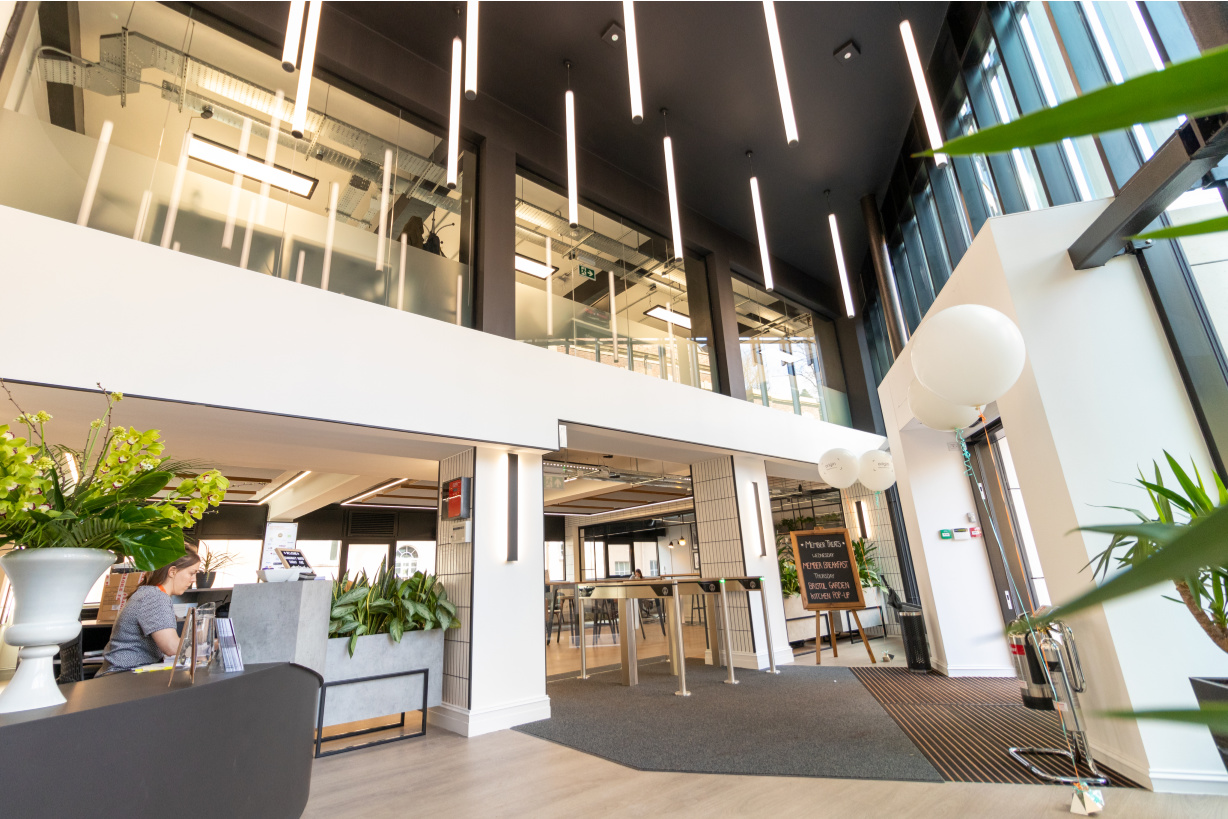
Another thing we’ve learned is that working from home has not only changed how often our people expect to be in the office, but also what the experience is like when they’re there.
This has created a stronger focus on maintaining and enhancing our culture and team spirit, and to give people the opportunity to form meaningful professional and social relationships with people within the agency. Many team members also highlighted how they wanted somewhere that could support their well-being, rather than act as a hindrance on it.
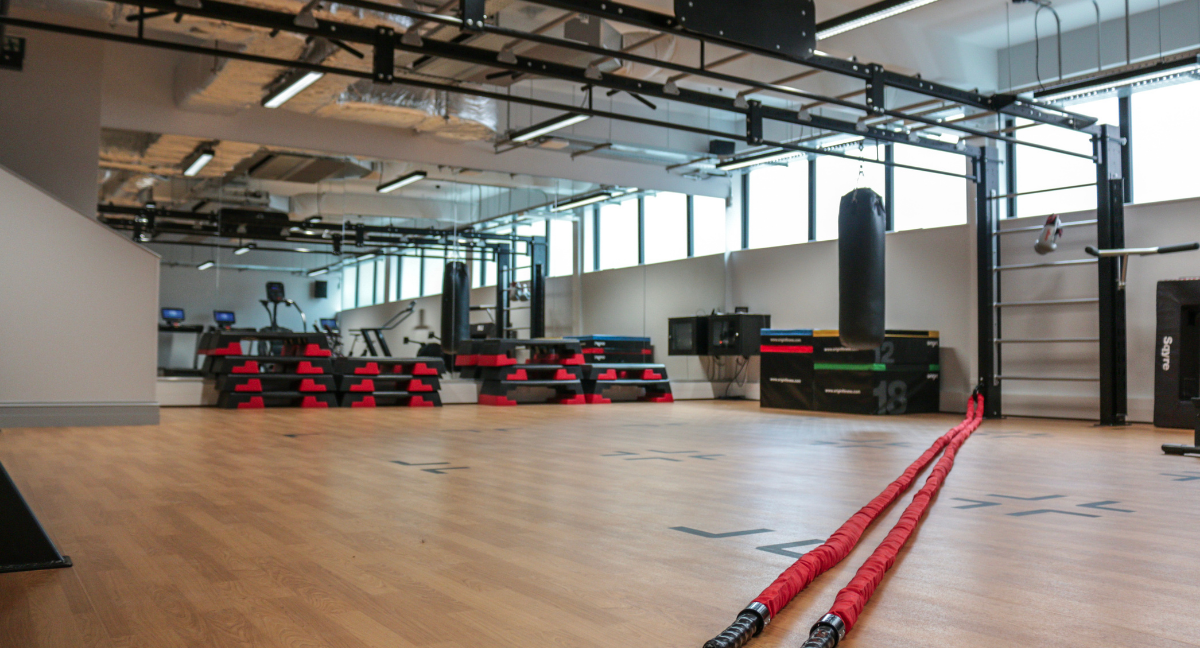
That’s why well-being and social spaces were at the forefront of our mind when we chose Origin. Having a place of work with a fully equipped gym and yoga studio, as a culture of wellness embedded into it means we can now look after our physical and mental health, whilst the location and rooftop terraces are perfect to help ensure TMW is a destination that our employees want to use and enjoy, not just a place where they are expected to turn up every day of the working week.
We’re all very excited about becoming part of an already thriving community in Origin, and what the future holds for TMW.
Written by Alex Burley, Managing Director, TMW Unlimited.
One recent study* found that companies who oriented their services and operations around customers, employees, and partners experienced 6.5 times the profit growth compared to those that didn’t.
Despite this evidence for the power of customer centricity, we know that far too many companies are under-investing in customer experience.
That’s because being customer-centric is easy to say, but hard to put into practice, and even harder to know if you’re on the right track!
As a User-Centred Design company, we’re on a mission to help organisations thrive through employing better customer-centric practices.
That’s why we’re inviting companies that run scaled services for customers to join a study that we’re conducting in collaboration with Google, into how companies orient around their customers.
In exchange for contributing to the study, they will receive a benchmark of their customer-centricity score against the rest of the market, plus some unique insights into how to put together a programme of low-cost improvements, free of charge. All we ask is that companies commit to completing a survey by mid-November.
The deadline is the end October, so sign up to become a contributor here https://www.cxpartners.co.uk/customer-centricity-model
We’d love YOU to be part of the study because companies that deploy good user experiences that meet human needs know that improvements in loyalty, revenue and market share follow.
We work every day with organisations to execute programmes that embed User-Centred design into their operations. This takes time and care, but the results are not only impactful in the short term, but set organisations up for sustainable success, and an ability to ride-out storms that may occur in the future.
We’re working with Google to solve this. Through this unique study and campaign that we’ve devised, we’re looking to support organisations in investing in the initiatives that will help them become more customer-centric – and thrive.
By participating in this study as a contributor, you will be joining Europe’s top 200 brands including Farfetch, Europcar, Toolstation, giffgaff and Burberry.
Please sign up here, and we look forward to working with you
https://www.cxpartners.co.uk/customer-centricity-model
*https://www.accenture.com/gb-en/insights/interactive/business-of-experience
Bristol-based digital design and development agency, Unfold celebrated success on 14th October 2021, taking home the title of “Best Digital Design” at The SPARKies 2021. This was awarded for the transformational work they completed for their clients Sherpr.
The SPARKies is one of the year’s most hotly anticipated tech awards ceremonies in the South West. Since Managing Director, Harry Cobbold won ‘FutureSPARK’ back in 2019, Unfold has been nominated for several other categories (including ‘Tech Leader of the Year’ this year). The ceremony was held at The Showroom on Bath Road and was joint hosted by the TechSpark team and comedian Stephen Bailey (who had everyone in stitches).
Sherpr came to Unfold with two problems;
Unfold built a custom web app, admin portal and marketing site for Sherpr in just 10 weeks. This completely transformed their business. As well as automating all of the time-intensive back office tasks, Unfold also created an editable CMS through which the Sherpr team could update and manage their products without constant developer support.
As well as immediate savings in overheads, Sherpr were also able to process far more clients with their new reliable and automated booking system.
Following the work Unfold completed for them, Sherpr achieved their first ever 6-figure month and hit an annual run-rate of £1.2m.
“From beginning to end, the team at Unfold have been great to work with. Communication has been easy and any changes we needed to make during the build process were welcomed and perfectly executed.” – Andy Watson, CEO of Sherpr
Read more in-depth info on exactly how Unfold helped Sherpr achieve this remarkable step-change in their full case study.
If you have a project or digital platform you’d like advice on, please don’t hesitate to get in touch with the Unfold team.
By Molly Rushton
This article first appeared was first featured by New Digital Age, August 2021
From starting my career in an agency, moving to in-house client-side, and then making the move back to being in an agency, I’ve learned a lot about the differences between the two environments. Both client-side work and agency work have a lot to offer, but as I’ve most recently made the switch from client-side work back into an agency setting, I wanted to cover the reasons why. Working in an agency is exciting, and if you’re anything like me then there’s a good chance you would benefit from the switch too. Here are five reasons why going from client-side to agency might be the right move for you.
You’re a keen learner
One of the main draws for me to move back to an agency was the learning opportunities and chances to develop that an agency setting provides. In an agency, you could be working across a number of clients or projects in a day, or you could spend the whole day focusing on a single one. The variety of clients and projects means you’re always learning new skills and approaches, and having new experiences within your role.
Being keen and willing to learn new things is absolutely vital when working for an agency. You need to be open and ready to face new kinds of challenges and learn along the way.
You’re ready for a challenge
New challenges are inevitable when working in an agency setting. With a variety of clients and different projects coming in all the time, you need to be ready for your role to be challenging on occasion.
If you’re looking to push your skills to new levels, refine what you do, and get even better at it, then an agency might be the place for you.
You thrive on critical feedback
When moving from client-side to agency, the truth is you do lose a bit of autonomy when it comes to decision-making. You’ll have to refine your decisions to combine what you think is the right choice with what the client is looking for. This means that even if you think something is fantastic creatively if the client doesn’t see it, then it will have to be adapted to find the right solution for them.
The positive of this is that you get lots of critical feedback on your work. And yes, this is a positive. Learning to take critical feedback and grow from it speeds up your abilities to create the best work possible. This means you can create something that really works for the client this time, and something even better next time. When you’ve got it right, it’s a real buzz, and when you’ve got notes on what you can improve on, you get a drive to do better and better.
I get far more critical and, most importantly, constructive feedback now working at an agency than I did when I was client-side. If you thrive on feedback and you’re ready and willing to improve then an agency setting is a good place to be.
You like variety
The variety of work that an agency provides is incredibly exciting to be a part of. You can be working on different projects all the time, keeping things fresh and interesting, ensuring you’ll never get bored. Working across different industries, with exposure to a large variety of markets will mean you’re always adapting, problem-solving and upskilling in your role. No two days are ever the same.
You enjoy being busy
The pace of an agency is perhaps the biggest thing to be aware of when switching from client-side to agency. It’s much faster. You have to be ready and enjoy being busy. There are often quick turnarounds on projects and the variety means you can never get complicit. But for that reason, it’s a benefit! Being busy is creatively fulfilling. And don’t worry, it’s not all work and no play. A cool thing about agency’s is they often come with lovely employee perks. At Armadillo, we have Summer Fridays where we leave early to enjoy some extra time in the sun once a month over the summer.
The switch to agency work has been a good one for me. It pushes me to be my best, provides me with plenty of creative challenges, and offers a great sense of fulfilment.
Are you ready for a change?
Then maybe an agency is the place to be.
Over the past few years, we’ve seen an increase in the number of brands demonstrating their social stance. And today, these brands are choosing to buy their media from a diverse range of creators and ethical sources.
However, businesses are under pressure to show they are a brand of integrity and fear their advertisements might feature next to other content that could be detrimental to their reputation.
Brand integrity is of the utmost importance. 54% of consumers said they would think negatively of a brand that runs ads alongside content designed by others whose morals don’t align with theirs.
You can see why brand safety is such a hot topic in marketing, and this is especially apparent in the programmatic world.
If you’re unsure of what brand safety includes, it essentially encompasses all the measures advertisers implement to protect their brand from the potential backlash they could face by running ads next to harmful content.
Over-blocking content can actually be doing more harm than good. A vast majority of businesses still adopt a cut-throat approach when it comes to protecting their brand’s reputation.
However, this overprotective approach has led to a great proportion of content being excluded, even when it’s safe and suitable for your brand. We’ve seen this happen in many negative keyword lists and blocklists.
Industry-standard blocklists contain a vast array of terms related to race, ethnicity, and sexual orientation. So, it’s clear to see that…
“Industry standard advertising practices [are] unfairly penalizing content creators within various groups, including the LGBTQ+, BIPOC, and API communities, as well as content relating to important aspects of the human experience, including social issues, mental health and wellness, and identity.”
[Taken from Channel Factory, Conscious Project, 2021]
In 2019, CHEQ’s ‘How Keyword Blacklists are Killing Reach and Monetization’ report looked at what type of content has been excluded from an industry-standard blacklist of 2000 keywords.
The report found that 57% of articles that were safe, were incorrectly flagged and blocked from serving ads. This was taking place because brands had been using overprotective negative keyword lists and blocklists.
These lists are incredibly harmful to creators and publishers, as they are unable to monetise their own content.
Other statistics the CHEQ study uncovered included:
Most companies do not update blocklists regularly, which is why a great deal of suitable content is deemed harmful.
Times are changing and have been changing quite drastically over the past few years. Our lists of negative keywords may have been necessary in 2017, but today they could be absolutely pointless.
Unfortunately, these outdated blocklists are harming marginalised communities across the globe, which is unfair, to say the least.
And this is a problem that needs urgent attention from our industry.
This overwhelming fear has led brands into the trap of unethical exclusion. What we mean by this is that brands and agencies are blocking all content related to marginalised groups and communities.
Therefore, content related to gender, sexual orientation, race, ethnicity, social issues, identity (to name a few) should be monetised.
Positioning yourself in the market as a diverse and inclusive business has never been more important. Today, 60% of consumers prefer to associate themselves with companies that actively show they are committed to creating an online experience that is inclusive for all.
Of course, it’s important to focus our attention on brand safety. But as an industry, we need to think of new ways to implement brand safety without excluding creators based on their sexual orientation, race, or ethnicity.
This new approach needs to be one that can monetise positive content, which will, in turn, benefit the wider society.
Your blocklists and negative keywords need to be tailored to your brand and checked frequently. Don’t just keep adding new words, remove the unnecessary ones.
It’s always worth checking over your brand safety processes. You can then remodel a new brand strategy that encourages inclusivity.
You should always search for and connect with brands and creators that share your values. Once you have added them to your whitelist, they can assist in the monetisation of positive and inclusive content.
Working with a third-party brand safety and brand suitability partner can help with your brand safety measures. These third-party partners usually opt for human input, which ensures content is categorised with diversity in mind.
As an industry, we need to get embrace the needed changes to brand safety measures to ensure we are not excluding words, phrases, or languages that could exclude minority groups.
All voices should be represented in your content, not just a select few. By monetising your content, you can create new and improved content, which highlights diverse and marginalised communities.
It’s time you move forward with your approaches to brand safety because when you do, you will be actively creating an online world that promotes positivity and inclusivity.
JonesMillbank, Bristol-based video production company, have been appointed by VisitBritain/VisitEngland to their marketing production services framework.
The multi-supplier framework is made of 190 creatives across 8 lots spanning disciplines such as research, photography, editing, casting, styling, illustration and copywriting.
JonesMillbank are one of 15 suppliers appointed as video production professionals, requiring a proven experience of managing small to large scale video briefs that require a detailed level of planning, casting, producing and production.
The framework will be an enabler of VisitBritain/VisitEngland’s strategy to “make tourism one of the most successful and productive sectors for the UK economy.”
“Like many video production companies we’re passionate about travel and tourism, not just because it’s a privilege to travel with our work, but because of the real impact and influence our films can have on destinations and their audiences” said Russell Jones, Co-Founder at JonesMillbank.
“We already travel across the UK with our work – we’ve literally filmed in all four corners – and so to be appointed by VisitBritain/VisitEngland as one of a select few video production companies is a fantastic opportunity to show off what the UK has to offer to a global audience, particularly as a rebound following COVID-19.”
Running for an initial period of 1-4 years, the framework will be accessed by VisitBritain/VisitEngland staff and partners, and follows JonesMillbank’s work with VisitBristol and other independent travel brands.
***
JonesMillbank are a passionate full-service video production company
They work exclusively in-house with a talented team of multi-disciplined creatives, all the while telling authentic stories long before it was cool for a range of clients such as University of Bristol, Battersea, The Royal Mint and IDLES.
jonesmillbank.com
01173706372
[email protected]
ADLIB certified as a B Corp in September 2019. As we approach our 2nd anniversary, it has become abundantly clear that certifying is the start of the journey. A starting point from which to measure, guide and improve.
As a B Corp Ambassador, and the person that introduces B Corp to each of ADLIB’s new starters, I’m continually reminded of the complexity and breadth by which a business and its stakeholder group are measured. There isn’t a light switch you flick on and become a B Corp, it’s a living and breathing thing which fundamentally comes down to considering each and every stakeholder that comes into contact with your business and the planet we live on. If that care is authentic, the rest will fall into place through good practice, impact measurement and using business as a force for good.
We’re immensely proud of being one of the first recruitment businesses to achieve B Corp certification. From conversations with several CEOs / MDs of well-respected digital and technology recruitment firms over the past 12 months, we should be seeing more certifications imminently, a very positive move for the industry.
Becoming a B Corp has also positively progressed our client proposition, we’re fortunate to work with an ever-growing portfolio of purpose driven organisations, with which we share underlying beliefs in personal and life values. We’re also proud to have turned away clients from the defence and gambling sectors.
It’s our belief that B Corp should become a normal part of every company’s everyday business. We know that an inclusive workplace brings engagement, and creating an environment of involvement, respect, and collaboration ultimately drives more business value. This has proven itself beyond words for ADLIB as we stand here today readying for recertification in 2022.
This article was originally published on the ADLIB Blog.
The workplace is rapidly changing, but workplace practices, norms, infrastructure and management is struggling to catch up. Digital transformation is estimated to be worth over $400 bn in 2021 and is projected to continue to grow by 25% year-on-year.
This rapid change has left businesses in disarray. Is their digital infrastructure prepared? Which employees are struggling to work digitally? Whose remit does this transformation fall under – the CHRO’s, the CIO’s, or the CEO’s?
Enter Actual Experience.
Luckily for all of us, the Actual Experience (AE) team saw this digital mega trend approaching a decade ago. Having built their business on 10 years’ worth of academic research, they’ve engineered a comprehensive patented algorithm which, minute-by-minute, captures and analyses the real-world, human perception of digital applications and services.
In other words, they help businesses ensure that the digital tools, systems and platforms they’ve invested millions in are actually making work easier for employees, and providing a better experience for their customers.
Currently, many businesses use tools such as employee and customer surveys to find out the answers to those questions. But there’s a problem: employee and customer surveys are subjective and are often inaccurate or inconclusive. But when used in conjunction with Actual Experience’s algorithm, it is possible to glean objective, actionable insights from survey data.
ActualExperience’s Human Experience score provides businesses with an objective analysis showing which specific employees are struggling, and with which specific aspects of their digital infrastructure, so they can focus their time and resources on these issues – and keep up with the ever-shifting digital curve.
So, following on from a successful Account-Based Marketing (ABM) campaign and digital brochure, AE were keen to put their money where their mouth is, and upgrade their own digital offering to reflect their progressive business.
The AE team approached us to upgrade their website from Hubspot to Webflow: a no-code flexible website solution that doesn’t require complicated set-ups.
Our first step was for Actual Experience to take us through a thorough wish list. Here, we put together a full feature list, created high-fidelity wireframes and new digital design styles using their updated brand guidelines.
This process meant that when we transitioned the website over to Webflow, both parties had a very clear picture of what it would look like and how it would function. So we could push for tight deadlines in line with AE’s objectives without having to go back and forth to check small details at every stage.
One of the highlights of the website is the design-led navigation that adapts seamlessly to different screen sizes including phone, tablet and various desktop sizes. This was quick and easy to build with Webflow’s online visual editor. This platform is the perfect application for creating visually stunning, easy to use designs that don’t require massive amounts of coding, which AE in this instance, didn’t.
The navigation is not only designed to draw the user in, but allows different audiences to access different content that suits them. For instance, a HR professional will seek different information to IT professionals.
In the end, we created a future-proofed, design-led website under a demanding timescale, migrating 200+ content types seamlessly from Hubspot to Webflow. Check out the full AE case study here, along with the all-important, client feedback.
To find out more about Webflow, and our other digital design services, get in touch with us today at [email protected].
Having recently binge-watched the Netflix series ‘Drive to Survive’, Formula 1: Drive to Survive (Season 3) | Official Trailer | Netflix – YouTube I can’t help but compare some of the similarities between the industry, and game, that is F1 and the seemingly very different world of SEO.
The competition in F1 is tough, there are no prizes for coming over the finish line last, there are only points if you place in the top 10 and only 3 places on the podium. It’s a zero-sum game with obvious ‘winners’ and ‘losers’.
In our SEO world, I liken your website and Search Marketing to one of those F1 teams.
There are only 10 spaces on page 1 of a Google search and you need to be there if you want to be in the rankings race.
So what should you focus on to make sure you rank no. 1 on Google ahead of your competition?
Here are a four, (and very loose 😉) Formula 1 analogies to help explain how to make sure your competition is not pipping you to the finish line:
In Formula 1, the car and it’s engine are key to winning. A superior car like Mercedes is consistently performing ahead of the competition. So, we need to make sure your engine is tip top, and able to compete with the competitor’s engine.
In this instance, your content creation, superior thought leadership, content outreach and backlinks are the ‘engine’ for your business SEO efforts, driving the marketing activity and creating winning engaging content. However, this does take a lot of time and effort and so it is vital to make sure you have a clear plan to optimise what your team spends their time on.
Formula 1 teams spend as much time and money on their aerodynamics as they do their engine. Do you spend as much time on technical SEO as you do content creation? If not, you should. These marginal gains from coding optimisation and competitor analysis to analysing page speed, schema and your analytics can be the difference between ranking at the top of Google or not. However good your content/engine is, if the technical SEO is not constantly improving, you’ll have a crash at the most unexpected moment
The reality is that if Mercedes were racing against a Mini they wouldn’t need to spend as much time and money on their car. It’s the same with SEO and whilst I’m not trying to say don’t do SEO, please make sure you stop and actually research and understand what your competitors are doing online. Your race ahead, may not be as hard as you expect.
F1 teams spend huge efforts trying to understand all the finer points of what the competition is up to. So make sure you spend time to understand why your competitor is ahead of you in a search. What’s giving them the edge? Do you really need a brand new car or will a small smart tweak do the job? Make sure you spend time not just creating the offsite content that you need to, but look at the finer technical details of your site, and tweak and change if needed to get some quick wins.
For me, Lewis Hamilton is an outstanding driver, but arguably, because of the team behind it and the Mercedes car, they would still win a lot of races with one of the ‘less experienced’ drivers from other teams. Equally, a great driver can’t win a race in a slower car.
So as far as Search Marketing is concerned, if your strategy and digital marketing team have a poor sense of technical SEO knowledge and understanding, you may never succeed. Make sure you have the Lewis Hamilton of search marketing managers or seek support and guidance from those that can help. We are increasingly supporting our clients with Search Marketing Mentoring so their team can win. Could your business benefit from SEO Mentoring? (varn.co.uk)
Whatever you do, like a F1 team, you must make sure it is cost effective, constantly evolving and the time/investment spent can actually drive a good return on investment.
It’s very common to rip up the current marketing strategy and start again, but as we have seen with many clients and their websites, maybe you need to keep what you’re already doing and focus on the changes which will make it simply perform better.
If we can help you take your SEO engine apart have a good look under the bonnet of you and your competition’s search marketing, then do get in touch with the team at Varn.
You need to load content from reCAPTCHA to submit the form. Please note that doing so will share data with third-party providers.
More Information