
The zero-click era has transformed consumer behaviour. As AI engines become the new interface for discovery, brands need to do more than just consider keywords and rankings. You need to be cited, trusted, and recommended by the machines themselves.
Our Helpful Guide to AI Visibility is designed to help you to move beyond the noise of AI hype and provides some practical tips and checklists that we use at Varn to build measurable visibility for brands, in the generative age.
Discovery itself is shifting. Users are moving from searching for links to asking for answers, and they’re searching everywhere: if your brand isn’t in the AI’s answer, you don’t exist in that part of the journey. That makes reputation and authority the new SEO: AI systems treat the entire web as a proxy for trust, so visibility is now as much a brand and PR priority as a technical one. Winning that trust means activating what we call the “authority loop” (making sure your internal expertise is consistently mirrored and reinforced across the wider digital ecosystem until it becomes a verified fact for AI systems, rather than just a claim on your own website). And because the AI knowledge base is being built right now, there’s a real first-mover advantage on offer: the brands that secure their place as the source of truth today will be the hardest to displace tomorrow.
AI authority roadmap template: A structured way to move from reactive SEO activity to a prioritised, impact-led authority strategy, starting with an audit across technical clarity, content understanding and external validation, then splitting actions into quick wins and longer-term strategic moves.
AI citation gap analysis guide: A four-step methodology for finding out where competitors are being mentioned, cited and trusted by AI platforms more than you are, so you can turn those gaps into a prioritised action plan.
How to write AI-ready content: Practical guidance on structuring content so it’s built to be lifted into an AI answer as well as read by a person, from question-led headers and concise summaries to external citations and clear author credentials.
7 Day AI visibility action plan: A day-by-day plan for building and publishing a data-led asset, turning your key pages into answer-ready content with schema and FAQs, tracking engagement, and promoting the work to press and on LinkedIn.
The Helpful Guide to AI Visibility walks through the business case, the AI authority roadmap template, the citation gap analysis method, guidance on writing AI-ready content, and the full 7-day action plan in detail.
The way people search online has fundamentally shifted. The rise of Google’s AI Overviews, ChatGPT, and Claude means users no longer just receive a list of blue links and websites to visit; they are given synthesised, direct answers.
The data shows this shift is not a future trend, but happening right now. The vast majority (83%) of Google searches with an AI Overview now end without a click. To survive and thrive, brands must be cited directly within the AI’s summary text.
That’s why digital PR has graduated from a tactical link-building exercise to an absolute strategic necessity. Don’t just take our word for it though. Google Search trends data shows searches for ‘Digital PR’ hit an all time high in February 2026, showing if you are not getting involved, it is likely your competitors are.
As search-behaviour transitions, a new methodology has emerged: Generative Engine Optimisation (GEO).
GEO is the practice of optimising your online footprint so that AI models cite, reference, and mention your brand in conversational answers.
SEO vs. GEO: While traditional SEO focuses on keywords, technical site structure, and ranking high on search engine result pages, GEO focuses on context, brand sentiment, and becoming an integral part of the data pool that an AI pulls from.
GEO does not replace SEO; it builds directly on top of it. A technically sound website remains the foundational requirement, but AI engines require an additional layer: a compelling reason to trust your brand’s data.
Digital PR secures the authoritative media coverage and data-led citations required to ensure AI models credit your brand in the text users actually read. And those that do this well are set to succeed, as traffic coming from generative AI search referrals converts at an impressive 14.2%, compared to just 2.8% for traditional Google organic search.
Digital PR builds that reality, deliberately and at scale.
Future-proofing a brand means thinking beyond Google. Your audience is searching everywhere; from Bing and YouTube to Reddit and ChatGPT; and the rules are different in every market.
At Varn, we don’t treat digital PR and technical SEO as separate disciplines. Our data team finds insights that the PR team can turn into narratives that generate coverage. The technical SEO team ensures this content is indexable and discoverable, ensuring holistic success for clients.
The brands recommended by AI didn’t get there by accident. They built authority, consistently and intentionally, over time. They earned coverage in the right places. They became part of the knowledge that AI draws from.
If you’re not doing that work now, your competitors are. And in the new search landscape, the brand that gets recommended first is the one that wins — often before the user even thinks to look elsewhere.
Want to know where your brand stands in the age of AI search? Get in touch with the Varn team today to explore our AI Visibility Framework and start building the authority that the next generation of search demands.
Most businesses aren’t short on data. Between dashboards, tracking tools, and campaign reports, most teams have more numbers than they know what to do with, and that volume gets mistaken for insight. The real problem usually isn’t a lack of data. It’s whether that data can actually be trusted, understood, and acted on.
At Varn, we built a five-step Data Journey to help businesses move from data chaos to genuine commercial clarity. Here’s what each step involves.
Step 1: Audit & align
Before any new tracking or reporting goes live, we check the integrity of what’s already there. This means auditing the existing setup, identifying gaps, and making sure what’s being measured actually maps to the commercial questions the business needs answered. Skip this step, and every report built afterwards carries the same flaws forward.
Step 2: Get set
Once the audit’s complete, we build bespoke tracking infrastructure: tailored GA4 and Google Tag Manager configurations, and where needed, Server-Side Tracking and BigQuery integration to recover data that standard setups miss. For one client, this closed a conversion tracking gap from 29.41% down to just 4.5%.
Step 3: Focused reporting
More charts don’t mean more clarity, past a certain point, they mean less of it. This step replaces overcrowded dashboards with clear, story-driven reports built around the specific KPIs a business needs, pulling scattered data sources into one place. One client’s reporting went from a 28-page dashboard down to 8, without losing a single insight that mattered.
Step 4: Data-informed decisions
Good data only matters once it changes what a business does next. This step turns ongoing analysis, spotting trends, anomalies, and the stories behind the numbers, into proactive recommendations, rather than a monthly summary of what already happened.
Step 5: Empowering teams
The final step isn’t about the data itself, it’s about the people using it. Through interactive workshops, drop-in support, and technical upskilling, we help teams build the confidence to read, question, and act on their own data, so good reporting doesn’t stay locked to one specialist.
Watch the video below for a walkthrough of the full five-step journey with Senior Data Analytics Manager Katie New.
If your business is data rich but insight poor, get in touch with our data and analytics team to talk through where your own data journey might start.
Search marketing is no longer about optimising for individual channels (and it hasn’t been for many, many years!), it’s more about ensuring your marketing mix is across all of the channels, effectively, where your potential customers are browsing.
TikTok isn’t likely to be the only solution to your marketing needs, but it’s certainly something to consider as part of your wider marketing efforts. If you’re not on TikTok already, or if you’re not optimising for it, your competitors could be taking that share of the market away from you.
In this article, we’ll cover the fundamentals of SEO for TikTok, as well as some of the hidden benefits such as cross-channel visibility.
In simple terms, TikTok is a short-form video platform driven by an incredibly sophisticated, interest-based algorithm. Rather than relying purely on who a user follows, TikTok serves content based on direct user behaviour and explicit interests.
While it built its reputation on viral dance crazes, it has matured into a worldwide app for entertainment, education, and product discovery – the latter being hugely important for most marketers.

TikTok SEO is the process of optimising your video content so that it ranks at the top of search results when users type specific queries into the platform’s search bar, effectively trying to cater for TikTok’s SEO algorithm.
By optimising for users searching on TikTok, you capture high-intent users who are actively looking for solutions, inspiration, or products – rather than those who are just passively scrolling through their main feed.
Not every business is right for using TikTok, it depends on the demographics of your typical audience. However, the demographic data has shifted over the last few years, and the narrative that “TikTok is just for kids” is now pretty outdated.
The global average user age on TikTok has climbed to 26.5 years old – in fact, over 38% of TikTok’s entire audience is now over the age of 30.
Furthermore, data shows that nearly 49% of consumers use TikTok as a “search engine”, to find real-time recommendations, reviews, and ideas. If your audience is there and you aren’t, you are effectively handing visibility to your competitors without putting up a fight.
Traditional search engines like Google, for example, heavily index TikTok content depending on the intent behind the search query. If the query is more informational, like asking a question or looking for inspiration, Google is more likely to show a video result. So, optimising for TikTok is not an isolated strategy; it can feed into your broader digital marketing mix.
When users search for experiential phrases, tutorial queries, or trend-heavy topics on Google, the traditional Search Engine Results Pages (SERPs) often display dedicated video carousels featuring TikTok (and Youtube, Instagram and other social media platforms) clips. By optimising your videos for TikTok, you can also be opening a backdoor to Google’s front page.
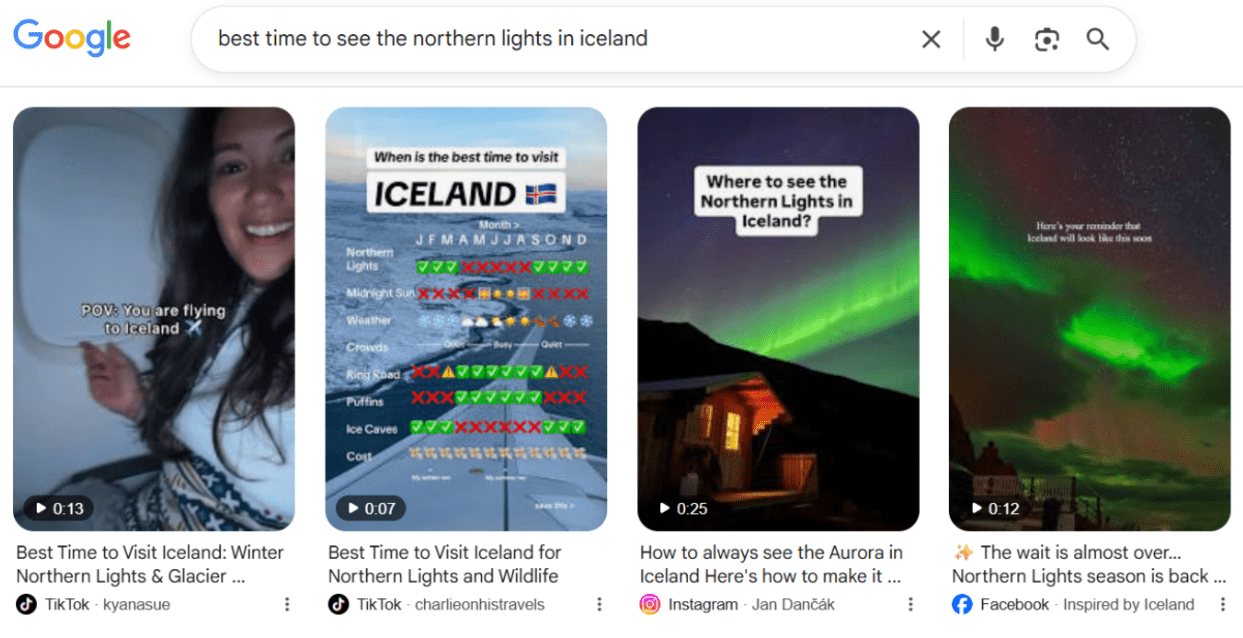
TikTok SEO doesn’t bypass traditional SEO – it amplifies it. If searches in your niche often serve videos in the SERPs, then TikTok is almost certainly something you should be getting involved with, to capture as much of that SERP as is possible. If you don’t, your competitors will.
People turn to TikTok because they want immediate, visual, and human-verified answers. Traditional search engines excel at deep research and documentation, whereas TikTok thrives on idea generation and inspiration. Whether someone is searching for a “minimalist home office setup,” “easy 15-minute dinners,” or “honest skincare reviews,” they want to see the reality from someone actually doing it, rather than reading a 2,000-word blog.
Google vs TikTok
The two platforms serve entirely distinct phases of consumer search intent and really aren’t comparable at all. They are totally different ways of searching, but generally speaking:
In most cases, TikTok is exceptional at creating demand and inspiring, while Google is exceptional at capturing it and converting.
To rank your videos, you must understand how the platform reads and classifies your content. TikTok’s algorithm relies heavily on specific data inputs to determine relevance, as well as engagement metrics to ensure it’s serving quality content to watchers.
Use of Metadata
Understanding the Content
TikTok’s algorithm analyses your videos across four core components to determine exactly what your content is about, and therefore what search terms would be most suitable for it:
Engagement Metrics
Relevance gets your video into the search pool, but performance dictates how high it ranks. TikTok relies heavily on engagement metrics for ranking performance: likes, comments, shares, saves, and most importantly: completion rates. If viewers routinely drop off in the first two seconds, the algorithm flags the content as low quality. Focus on powerful hooks to keep viewers watching until the very end.
Personalising to the User
The algorithm constantly matches optimised and similar content with historical user behaviour. If a consumer routinely searches for and interacts with videos on a certain topic, TikTok will deliberately serve them optimised videos from that niche – even if the videos are published by a new or a relatively unknown account.
You cannot optimise without data. Finding the right keywords on TikTok requires a slightly different approach than traditional keyword research, focusing more on casual, conversational phrases – but the methods of data collection are very similar to keyword research for traditional SEO:
Use of all of the above can help you to better understand the ways in which people search on TikTok, and therefore the types of phrasing you should be using when creating (and optimising) your video content on the platform.
Achieving sustainable organic traffic on the platform, and consistently ranking highly in search results requires consistency and strict adherence to best practices.
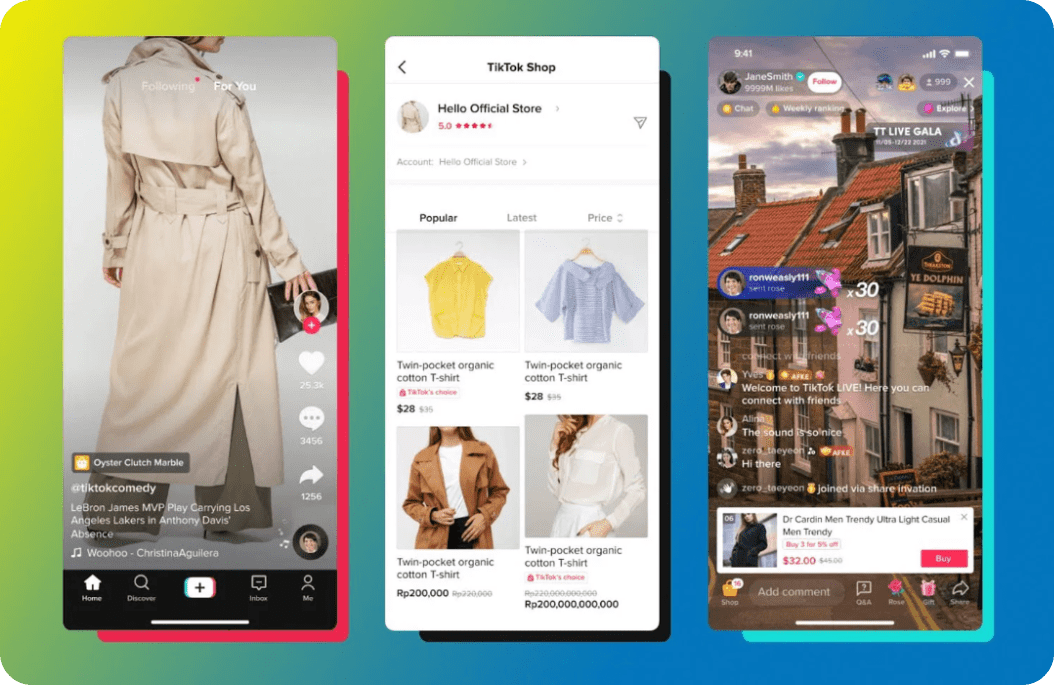
If you are an e-commerce brand, TikTok Shop can be a great additional revenue driver. It allows brands to showcase and sell products directly within the app, creating an incredibly frictionless path from discovery to purchase.
TikTok Shop can be an entire blog post in itself, so we’ll keep it light here – but optimising your videos for search while linking directly to your TikTok Shop products creates a seamless experience from discovery to conversion. A user searches for a solution, finds your optimised video, and checks out entirely within the app without ever having to navigate away to an external browser. If you’re an ecommerce brand and you’re not using TikTok Shop, it would be wise to investigate it.
The short answer is yes, provided your target demographic aligns with the platform’s maturing user base. For B2C brands, lifestyle services, e-commerce, and modern B2B businesses looking to build real brand authority, it can be an exceptionally powerful channel.
However, a successful TikTok SEO strategy requires realistic expectations and commitment:
TikTok is not a low-budget, quick-win project. It requires dedicated (quality!) video investment, creative resources, and a long-term approach to content production.
It is not a replacement for your core marketing. It serves as a vital part of a holistic, multi-channel search strategy.
At Varn, we specialise in helping businesses navigate the complexities of search strategy, data analysis, and online visibility across the multitude of ways that people search nowadays. Whether you want to refine your traditional SEO approach, or build a ‘search everywhere’ strategy across multiple channels, we can help you turn search data into tangible business growth. Get in touch with the team at Varn today to discuss how we can elevate your overall search marketing strategy.
The traditional e-commerce model relies on a simple assumption: to buy something, a human must visit a website, browse a catalogue, and click through a checkout flow. Today, that architecture is fragmenting. Digital commerce is splitting into two distinct landscapes: the traditional world of human clicks, and the new world of autonomous AI agents. In this video, Varn Search & Innovation director Andy Mollison explores the mechanics of Agentic Shopping — a seismic shift in consumer behaviour defined by reliance on AI platforms like ChatGPT, Gemini, or custom shopping bots to research, filter, and execute purchases on their behalf.
When an AI agent shops, the consumer journey happens entirely behind the scenes. The agent queries the web, verifies real-time stock, compares pricing tiers, and evaluates reviews to construct a single, optimised recommendation for the user.
If an e-commerce site is optimised exclusively for human eyes, relying heavily on visual design over machine-readable data, it becomes functionally invisible to these crawlers. The brand gets filtered out of the selection pool before a human ever knows it existed.
This isn’t a distant projection. Data from a survey of 2,000 consumers highlights how quickly behaviour is changing, with 44% of shoppers state they are open to letting an AI agent manage their entire end-to-end shopping workflow. Buyers are increasingly bypassing the traditional process of opening multiple browser tabs and manually vetting search engine links.
Transitioning a store from human-centric optimization to agent-ready infrastructure requires addressing three core operational layers:
Large Language Models (LLMs) require highly structured data to comprehend an inventory catalog. If product specifications, real-time pricing, and stock levels aren’t explicitly formatted for machine ingestion, an LLM cannot dynamically recommend them.
For a website to speak natively with an AI assistant, it must implement standardized technical protocols. This is where the modern technical language of the internet comes into play:
Model Context Protocol (MCP): Learn how this standard connects AI models to secure data sources in our deep dive, What is WebMCP?
Universal Commerce Protocol (UCP): Discover how this open-source standard streamlines retail data exchange by reading our complete guide on the UCP Protocol.
Standard checkout sequences are intentionally designed with friction to validate human identity—think CAPTCHAs, pop-up offers, and complex multi-step identity fields. Preparing for agentic commerce means establishing secure, low-friction programmatic endpoints so authorized shopping bots can complete a transaction instantly without hitting software blocks.
Gated content has long been a reliable form of lead generation for decades. But as AI search platforms and Large Language Models (LLMs) like Gemini and ChatGPT start to become the primary way that users discover information, the gated content strategy is starting to find weak links.
Despite the rise of AI search, gated content still serves a few critical business functions, particularly in B2B:
For many B2B businesses, this has been one of the primary methods for building a sales pipeline for decades.
However, there is a new player at the table, with vast year on year growth, and total disregard for gated content: the AI search engine.
With the growth of users getting their information from AI search platforms such as ChatGPT or Gemini, it would be foolish if your business relies on gated content, to ignore it.
The conflict here is simple: AI models cannot “fill out” your forms by default.
When an LLM or an AI-driven search engine provides an answer for a user, it gives information based on what it knows and what it’s read online.
If your best insights; the unique data and the value in the downloadable asset that proves your expertise; are locked inside a PDF behind a gate, the AI simply won’t see it, and won’t ‘know’ that you’re an expert on that topic.
This means that for certain subjects, your brand simply might not be in the conversation, when it really should be.
Why this matters for your brand:
You don’t have to open up every bit of content on your site. Instead, there are lots of sensible options – a couple of which are worth looking into straight away.
Not every piece of content deserves a gate. While some content might be extremely high value for lead generation, other content might be more suited to driving awareness.
With the rise of AI search, it may be worth ‘opening up’ a high percentage of your content in order to benefit from the awareness in LLMs, and nurturing the customer through other marketing channels thereafter.
If you must keep an asset gated, you can still give LLMs a basic understanding of your insights via the landing page.
There isn’t going to be a one size fits all approach to gated content and AI search, and that’s where data, user research, and understanding your customers is going to be most valuable for putting together an AI strategy that works.
The short answer is yes, but it’s no longer a ‘set and forget’ strategy – you’ll need to be learning into other marketing activities and embracing AI search in order to not get left behind.
In 2026, user behaviour has shifted significantly. Statistics suggest that 73% of B2B buyers now actively avoid gated content, preferring to self-educate through ungated resources before ever speaking to a salesperson.
In a world of instant AI answers, a form can feel like a frustrating barrier and a reason to move on to finding the information elsewhere.
Gated content is far from “old hat,” but the expectation levels for quality content is higher than ever. If you ask for someone to provide their information to download content in 2026, that asset has to be truly exceptional.
Navigating the balance between gated content and AI search is a tricky one, and it depends on the type of content you’re currently gating and the value in terms of lead generation in comparison to AI visibility.
It requires a data-driven strategy that considers how AI perceives your site. At Varn, we can help you audit your current assets, implement “AI-friendly” landing pages, and decide which gates to keep and which to open to maximise your brand’s reach in the age of AI search.
Does your current gated content strategy feel like it belongs in 2016? Let’s talk about bringing it into the future.
It’s exciting! SEO had been a bit ‘stale’ for a number of years with not much having changed and Google being so dominant. As an industry, we’re so used to change and innovation, that while it hadn’t become boring, it had become a bit predictable.
So, it’s nice to have something new to build towards. Being curious and wanting to figure out why things work is what makes good SEOs, so this is a great time in the industry for curious SEOs to shine through.
That being said, while AI search is the new shiny thing for most people, it doesn’t change a huge amount in terms of best practices and strategic guidance. The same rules apply in terms of creating great experiences for your users – if you’re not doing that, you were already behind, it’s just been amplified by AI search now.
With the way AI collects information and presents it to users, and all of the ways there are to search for information nowadays, we’re finding ourselves using the phrase ‘Search Everywhere’ much more often.
Whether that be on Google, TikTok or ChatGPT, the same rules apply: making your brand as visible as possible as a true authority, at the right part of the journey. Search is now about owning the entire discovery journey, not just the Google part of it.
I think the biggest search myth at the moment is that there’s a one-size-fits-all approach to AI search. There’s not!
There’s no getting away from the fact that good marketing is still (and always has been) good marketing. There’s no cheat sheet, there’s no quick win to being successful, you have to earn it.
While there are some basics to follow to make sure you’re being included in AI search, actually being successful requires hard work and good strategy.
The team at Varn are such data experts that we’re so well positioned to make the most of this changing market. With such expertise is analysing big datasets, now more than ever, this skillset is so valuable.
I love being challenged and working with a driven and determined team, so being able to work with such like-minded ‘ideas’ people makes it such an exciting team to lead.
It’s so rare to find a team that cares so much about the ‘why’ as well as the ‘how’; we’re so intrigued by the change in the industry, and that’s exactly what clients need in this chaotic and everchanging market.
Measuring your performance in AI search is fundamentally very different to measuring performance in SEO, so there’s definitely some considerations to be made there.
While, yes, you are probably going to see less clicks to your website (especially for informational queries), the benefit is that users are going to land on your website further down the funnel, more well educated and ready to buy.
So, it’s really important that you’re measuring your market share (and sentiment) at that awareness stage to know how well positioned your brand is when your customers are doing that entry-level research.
We do this with our AI Visibility Framework and with AI tracking in general, to better understand the topics where our clients are performing, and where they need to do better. By breaking it down into topics we can help to identify opportunities and minimise threat from competitors.
Getting the AI search journey right means capitalising on those topics where users are already invested and already educated, and are much further down the sales funnel, and that’s ultimately a massive win for your conversion metrics.
Different industries and different target audiences have totally different footprints when it comes to the ways they search and the platforms they use. It’s all about being seen in the right place at the right time, and that’s where we can help.
It might not be that you need to create video content for every service or product for example, but there will likely be a part of your audience where being present on TikTok or YouTube is really important towards making a conversion.
At Varn, we’re so well positioned as data experts to understand exactly where you need to be visible in order to gain market dominance – and that’s going to be really important in this ‘Search Everywhere’ world – to have that insight about truly where your users are searching, and how and why, will really benefit creating the best marketing strategy for your business going forwards.
I think if you’re looking at how you invest in your search marketing budget, your key areas are going to be influencing the things that you can control.
For example, you can control the messaging on your own website, the content that you put out and the words that you write. You need to know what you should be writing about, though, and therefore you need a good content strategy behind you. That’s nothing new and has been a backbone of good search marketing for many years.
However, what’s gone under the radar for a while and probably not been prioritised enough by most businesses in terms of search marketing, is Digital PR and off-page marketing.
Now that we have AI search effectively regurgitating the information it reads online, you need to make sure your online off-site presence is better than ever. This means ensuring your product or brand is positively placed in all of the crucial places that your customers could be researching. It’s not just customers researching now, it’s AI platforms gathering that data and using it for answers when a would-be customer is doing their research in an AI search engine.
You can control this, and with our data and digital PR teams, we can help to support you to understand where your presence is poor – and, how to fix it.
The way users are interacting with AI search in particular means that we’re frequently seeing users visit a website with so much more knowledge than they ever had previously. They are so much more well educated with all of the research they can do before even visiting a website.
This means the user journey has changed; no longer will users necessarily read all of the information on your website, they might already know it. As such, it’s more likely than ever before that the ‘awareness stage’ content on your site might just not be part of the journey anymore – from a tracking perspective anyway. But, this doesn’t mean that information wasn’t hugely valuable for informing a customer before they even visited your site..!
Additionally, we’re seeing a mix-up of traffic sources too. “Zero click” is absolutely a thing, whereby users are getting so much information from AI search that they simply don’t need to visit a website to answer their questions anymore. Again, this doesn’t mean that organic search isn’t hugely valuable for your user journey!
Get used to reporting on overall website performance (conversions, revenue), rather than attributing to specific traffic sources. Organic search is going to be down on traffic if you’re comparing it to pre-AI search, that’s just a fact. All of your marketing needs to be working together towards the same goals, so “don’t judge a book by its cover”, and start getting more granular with your reporting.
You can use visibility metrics to understand how well you’re performing in AI search, to know if you’re truly being seen in the right places, before the user decides on which product or which service to choose. We use API scrapers to pull in this data for our clients, allowing us to expose where opportunities can be found, and also just to monitor if our clients are under threat for any specific topics.
If we don’t innovate, we’ll get left behind, and so it’s such a crucial time in the industry for us to demonstrate our expertise.
As such, we’ve already made great work on numerous AI Visibility Framework projects for various clients. We’ve learned a lot already to be able to refine our process to be even more insightful and rewarding for clients. If you’re looking to truly understand where your brand is visible in AI search, and where it’s not, then this is a product that can really unearth some great findings.
We’ve also on the road to creating an Agentic Search Usability Audit to test how well websites perform with agentic AI users in mind – something that we see being adopted by several AI platforms in the not too distant future – ensuring your website can allow an AI to take a proper user journey all the way through to making a purchase or making a booking is going to be huge for e-commerce sites in particular, so we see this as being quite a priority for us to get right.
We’re also seeing a lot of clients with data issues, in particular following cookie consent changes. If your data isn’t accurate, measuring success becomes impossible. This has led to us investing in Server Side Tracking and Big Query products – reliable tracking of data is so crucial in today’s ‘search everywhere’ world, we can’t make assumptions and get away with it.We’re constantly keeping an eye on what’s developing in the world of AI search, and have our own Innovation team shaping the future of what’s considered gold-standard in terms of AI audits. If you have any ideas of data or audits you’d like to see us look into, please do get in touch.
Do get in touch with Andy at [email protected] if you have any questions about helping you show up exactly where your audience is looking and if you are ready to future-proof your search strategy you can also contact our expert team.
We are delighted to announce a major expansion with the launch of Varn and Varn Health in London. This strategic move integrates an expert content team uniting deep technical search and data expertise, with world-class specialist content, strategy and account management capabilities.
As the landscape of search shifts, driven by AI Overviews, complex algorithms, and Google’s increasing demand for E-E-A-T (Experience, Expertise, Authoritativeness, and Trustworthiness) brands can no longer view content and technical SEO as separate silos. The launch of Varn and Varn Health London is a unified solution combining our reputation as “search & data innovators” with a London based team, renowned for producing impactful and engaging content.
“2025 has been a year of real momentum for our agency, as we help our clients navigate a very fast moving SEO and search AI visibility space. Investing in our new expert London team, we are accelerating our momentum and raising the standard of what clients can expect from a specialist search consultancy. Our standout achievement has been onboarding 40 brand new clients, whilst delivering brilliant results for our existing partners with an outstanding retention rate of 94%. Looking ahead to 2026, we are ambitiously focused on being the market leader in AI search, SEO, and data. Expanding with the launch of our new Varn London team is a critical part of that vision.”
Rob Wilde, Managing Director at Varn and Varn Health
For our specialist Varn Health team, this expansion of expertise addresses a specific market need: the ability to produce compliant, expert medical content that also performs technically in search engines. It strengthens our capability to deliver search led healthcare content across websites, campaigns and digital channels, from patient and HCP engagement to conversion focused and AI search ready content that supports performance today and future proofs visibility tomorrow.
Find out about our new Content Marketing services
Formerly Head of Content and Business Director at Wallace Health, we have appointed Stephanie Mackay-Stokes as Strategy Director. Steph has previously led multiple complex content and digital programmes for global businesses. Her team’s experience spans large-scale website transformations, multi-channel content strategy and search-led digital marketing initiatives.
“Joining the Varn and Varn Health team allows us to expand our expertise and get our high-quality, informative and engaging content in front of our clients’ target audiences with a ‘search everywhere’ approach. Clients often struggle to get their creative content to rank and, increasingly, to get it cited on new AI search platforms. Or their SEO content is generic, lacks authority, original thinking and a brand voice to drive meaningful engagement and action. By aligning the team’s content heritage with Varn’s technical innovation, data specialism and AI visibility expertise, we are perfectly positioned to solve that challenge and drive commercial growth for ambitious brands.”
Stephanie Mackay-Stokes, Strategy Director of Varn and Varn Health
“For our healthcare and pharmaceutical clients, this strategic expansion is a significant development. We know that in a regulated environment, trust and accuracy are non-negotiable, yet to compete for visibility in the age of AI search, that content must also be technically structured and optimised. With Varn and Varn Health London, we are bringing ‘compliant creativity’ and ‘technical excellence’ under one roof. It means we can now offer a seamless service where deep medical writing expertise is powered by our data-led SEO and search strategies. This ensures our clients aren’t just publishing content, but are building genuine authority and trusted content that not only ranks and informs, but also engages, converts and drives patient outcomes.”
Tom Vaughton, CEO of Varn and Varn Health
Our Varn and Varn Health London team are now operational, working in close collaboration with the team HQ in Bradford-on-Avon.
If you need content that attracts the right audience and delivers measurable growth, find out how our content marketing team can help.
Find out about our new Content Marketing services
As Google evolves, more searches end without a click, with users finding answers directly on the results page. This shift leaves brands to compete for visibility on the Search Engine Results Page (SERP) in ways they’ve never faced before.
This guide will help you understand what zero-click searches are, why they’re a critical part of a search marketing strategy, and how to optimise for them effectively. With proven strategies and expert, up-to-date insights, you’ll be equipped to thrive in a zero-click SERP.
A zero-click search is a search query where the user finds the answer directly on the SERP without clicking on any links. This happens when Google or other search engines display information in enriched features.
A zero-click search occurs when search engines provide answers directly in the SERP, eliminating the need to click a link. Instead of traditional organic results, zero-click searches use features like:
For businesses, success is no longer just about clicks but securing visibility within these dominant SERP features.
Zero-click searches aren’t new, but their prevalence has grown exponentially as Google prioritises quick answers and leverages Generative AI to create a smoother, self-contained user experience.
Featured snippets, knowledge panels, and People Also Ask sections have long dominated the top search positions. However, the introduction of AI-powered features has amplified this trend dramatically:
User Behaviour Shift: Users are being trained to expect a synthesised, direct answer at the top of the SERP, accelerating the shift away from clicking on blue links.
Zero-click searches may feel like a roadblock to website traffic, but they also present an opportunity to build trust and authority with answers that serve users directly.
The new data confirms that for many informational queries, a massive traffic drop is the reality. The median external clicks per AI Mode session were found to be zero.
However, this click reduction is not uniform:
This means success is no longer defined by CTR, but by brand presence and influence within the AI-generated answer. Businesses featured in zero-click content often experience:
Adapting to zero-click search requires a fundamental shift to Answer Engine Optimisation (AEO). Your goal is to be the authoritative source that the AI chooses to synthesise.
1. Target Featured Snippets & AI Summaries
To increase your chances of appearing in both traditional snippets and AI-generated summaries:
2. Optimise for People Also Ask (PAA) Boxes
PAA boxes offer critical secondary visibility, and are a major input for AI answers.
3. Leverage Local SEO for Local Packs
For local businesses, appearing in Google’s Local Pack is essential. These results are less impacted by AI Summaries than informational queries.
4. Use Structured Data Markup (Schema)
Structured data (schema markup) helps search engines and AI models understand your content better, increasing the likelihood of being featured in rich results. Implement:
Zero-click searches aren’t a passing trend, they are the future default. Traditional SEO strategies focused solely on driving volume traffic no longer guarantee success.
The future of SEO will lean heavily on:
Yes, ranking for zero-click searches is essential. While you may not get a click on a definition, you gain:
The Key Takeaway: Zero-click is rewriting the rules of engagement. While it reduces organic traffic volume, it increases the value of the traffic that remains and makes brand building directly on the SERP the new competitive advantage. Adapting now is key to staying competitive.
Link building has changed a lot over the years, and in many ways it has ‘grown up; in the past largely viewed as a way to spam low quality sites with a view of gaining high quality traffic, the term is now used to incorporate a wide range of tactics all with the aim of achieving coverage (and links) for websites.
There are some ‘white hat link building tactics’ and there are some ‘black hat link building tactics’, over time the white hat ones have become more impactful and they are the ones we will be looking at today. White hat tactics are ones that will never result in a manual action penalty in Google and are not against guidelines, black hat refers to several tactics (think buying loads of backlinks and spamming directories) that could get you deindexed due to policy violations.
If you are looking to learn about black hat link building, then I suggest checking out this guide from Linkbuilder.io which goes into plenty of detail. If not, then keep reading to learn more about link building and how to do it the right way.
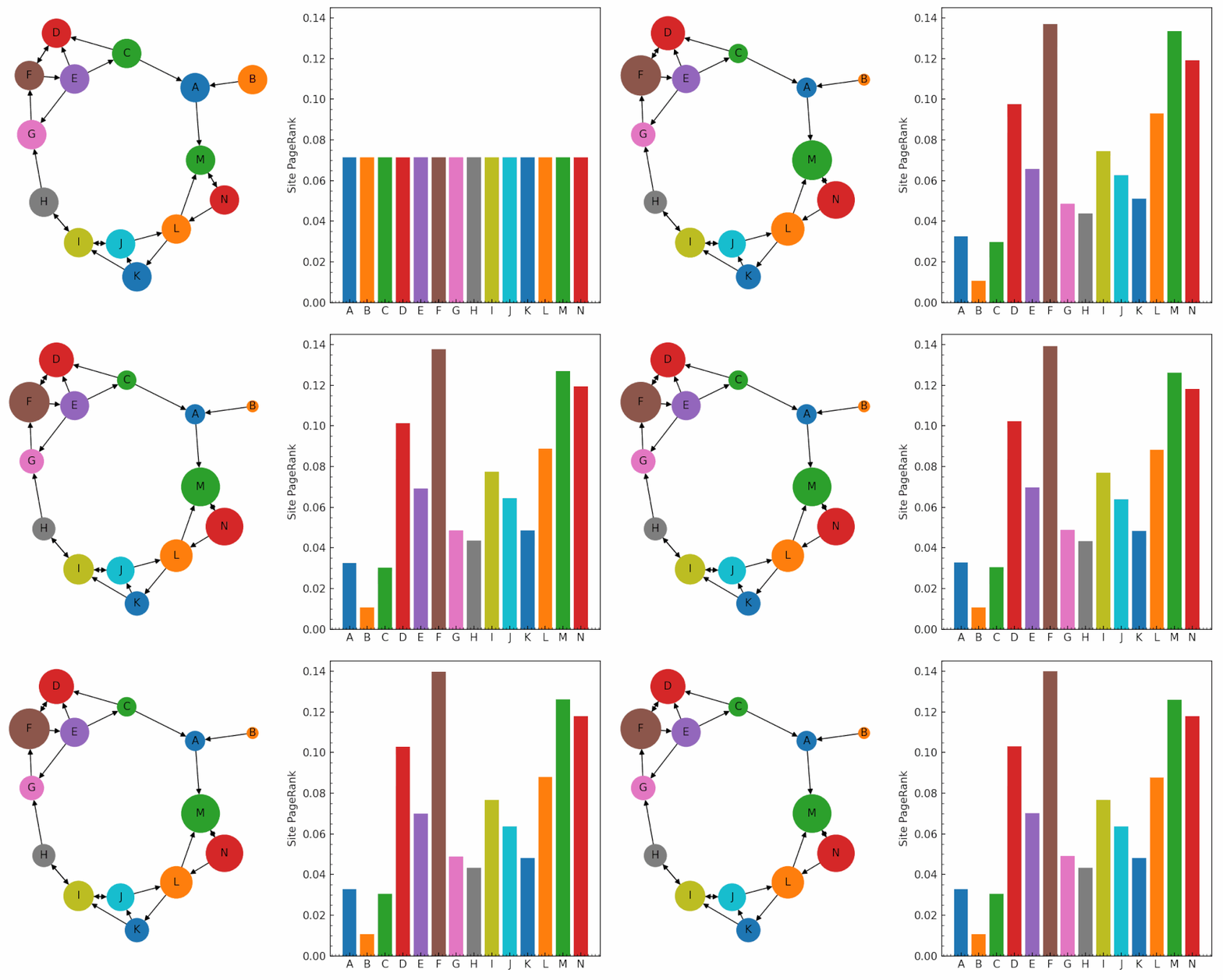
Source: Wikipedia
In 2025, link building is firmly quality-first. Search engines prioritise links that show topical relevance, authority and user value, while ignoring low-quality ones. Digital PR has become a leading strategy, with brands using campaigns, studies and expert commentary to win high-authority placements. There is also a growing focus on earning links through assets like tools, guides and visuals. Measurement has shifted too, with marketers assessing not just referring domains but also the traffic and visibility links bring. The emphasis is now on sustainable, brand-aligned strategies.
Judging the value of the link has, much like the rest of SEO, evolved over time. For many, judging the value of a link begins and ends at Domain Authority. This metric was developed by the SEO company Moz as a way of judging how likely a website is to rank in search based on quality, quantity and relevance.
Whilst it is a great metric and in many instances driving links based purely on it can still generate links that move the needle, there are a number of other metrics useful when it comes to sorting a good link from a bad link.
Page Authority / URL Rating (PA/UR): strength of the specific page linking to you.
Relevance: how closely the linking site and page match your topic.
Traffic: estimated organic visits to the linking page or domain.
Anchor text: the wording used in the link and whether it is natural and relevant.
Co-occurring text: the text that appears around your anchor text to add context
Placement: whether the link sits in the body content, navigation, footer, or sidebar.
Follow vs. nofollow / sponsored: whether search engines will pass equity through the link.
Link diversity: whether the link comes from a unique domain or repeats an existing one.
Outbound link profile: how many other sites the page links to and their quality.
Indexation: whether the linking page is indexed in Google and can pass value.
Engagement signals: likelihood that users will actually click the link (context, visibility).
The Varn Score takes into account the above metrics in combination (with a big focus on relevance) and acts as a scoring system when we are conducting outreach and also looking to measure the results of our work. It’s also a very important first step to take before you dive into the actual link building tactical playbook.
Okay, we have the fundamentals of why links are important and the tools needed to judge good links from bad. Now lets dive into the actual link building tactics we use to earn coverage for all our lovely clients:
Digital PR campaigns
Digital PR is one of the most impactful link building tactics because it generates authoritative, editorial links from major publications. By creating newsworthy campaigns, original data studies, or expert commentary, you can secure links that not only improve rankings but also build brand visibility and trust. These links are hard for competitors to replicate, making them especially valuable. Read the full guide to digital PR here.
Update for 2025: Another important element to consider when conducting digital PR is AI citability; many news sites are opting to block AI crawlers from their site, so if you have coverage on these sites, they may not be as impactful when it comes to earning coverage in AI (which isn’t to say you shouldn’t pitch to them, just make sure you are not only pitching to them!).
Resource page link building
Authoritative sites often publish curated resource lists. By identifying a page that is missing your guide, tool, or explainer, you can pitch it as a valuable addition. Since these links are highly contextual and relevant, they often bring both SEO equity and referral traffic from users seeking practical resources.
Listicle link building
Listicles (“Top 10 X”, “Best of Y” types) are popular and shareable, making them fertile ground for link placements. You can pitch to be included in relevant listicles or build your own list-style asset that others cite and link back to you. These are also getting increasingly cited within AI.
Broken link building
This tactic works by helping site owners fix broken outbound links. Once you find a 404 link on a relevant site, you can suggest your own up-to-date content as a replacement. Because you are solving a problem for the webmaster, the pitch feels helpful and increases your chances of success.
Wikipedia / authoritative reference links
Contribute to Wikipedia (or authoritative reference sites) by adding citations to your content in places where it genuinely adds value. These links are nofollow in many cases, but they can generate exposure and serve as a seed for other sites to link to you
Skyscraper technique
The skyscraper approach involves creating a significantly better version of an existing piece of content that already has backlinks. Improvements could include fresher data, deeper analysis, better visuals, or a clearer structure. When you contact sites linking to the older resource, you can present your page as a stronger alternative. Our article on how to write content that gets links can be found here.
Link placements
This method involves working directly with bloggers or publishers to optimise their existing content in exchange for adding your link. Often this includes updating statistics, improving copy, or suggesting helpful resources that enhance their article. When done transparently with relevance in mind, it is a win-win that strengthens their page and earns you a contextual backlink.
Unlinked brand mentions
Websites often mention a brand without linking to its homepage or relevant resource. By tracking these mentions, you can request a link so readers can click through to the original source. Since the site already acknowledges your brand, the conversion rate on these outreach requests is usually high.
Reverse image search link building
If your visuals, charts, or infographics are used online without credit, you can identify these cases through reverse image search tools. A polite outreach message requesting attribution often results in a backlink to the original source. This tactic is particularly effective if you regularly produce shareable visual assets. Read more about this tactic and unlinked mentions here.
Guest posting
Publishing guest articles on other sites allows you to position yourself as an authority while earning a backlink. It is most effective on niche-relevant, high-quality blogs where your contribution adds real value. Overuse or mass guest posting can dilute results, so focus on select placements with strong editorial standards.
Local and community sponsorships
Sponsoring local events, charities, or community projects is a straightforward way to earn links from trusted sites. These backlinks may not carry high authority but they are excellent for local SEO signals and for building relationships with community stakeholders.
Directory and citation links
Foundational links from directories and citation platforms help establish legitimacy. They are especially important for local businesses to reinforce NAP (Name, Address, Phone) consistency across the web. While these links are low impact for rankings, they are useful for credibility and discovery.
We now have the tactics down, it’s time to get into the outreach process. Over time tools have greatly scaled the market when it comes to emailing and cold outreach, getting the right balance between personalisation and a wide enough pool of contacts is crucial. I have detailed a general process below and will call out specific elements where there are differences between the tactics (e.g prospecting for broken links is very different to prospecting for digital PR contacts).
Step 1: Define the goal
Decide what you want to achieve with your outreach: for example, securing backlinks for a new guide, reclaiming brand mentions, or getting included in a listicle.
Step 2: Identify target pages
Use tools (Ahrefs, Semrush, Google search operators, reverse image search) to find websites or pages that are relevant to your content and suitable for a link.
Step 3: Qualify and prioritise prospects
Evaluate the potential sites using metrics like domain authority, topical relevance, traffic, and outbound link quality. Prioritise the ones that offer the highest value. This is where the different tactics have their own nuances:
Digital PR: If you are pitching a story, find the right journalist contacts based on the content you are pitching.
Resource link building: Find the content online by using modifiers in Google (keyword inurl: resources keyword “statistics”). From this look for the relevant webmasters and start to gather contact details.
Guest posting: Find sites online that are open to guest content (search with modifiers containing guest blogs etc) and create a list of good quality websites (considering the link evaluation criteria we outlined earlier).
Step 4: Find contact details
Locate the most appropriate contact person (editor, webmaster, journalist, blogger) and capture their email address, LinkedIn, or submission form details.
Step 5: Prepare personalisation hooks
Read their content and note specific details you can mention — recent posts, broken links, outdated data, or places your resource adds value.
Step 6: Draft tailored outreach messages
Use short, clear, and polite emails that explain the benefit to them and their readers. Avoid generic templates; adapt your core script for each outreach type.
Step 7: Send the first email
Keep the subject line concise and the body focused on value. Include one call to action (add, update, include, or cite your resource).
Step 8: Follow up
If no reply after 3–5 days, send a polite nudge with a slightly different angle. Limit follow-ups to two or three in total to avoid spamming. As part of managing your outreach pipeline, it’s also essential to validate email addresses periodically to ensure your messages actually reach the intended recipients. High bounce rates can weaken your sender reputation and limit deliverability, which means even the best outreach strategy won’t perform if your contact list is outdated. Using a free email address verification tool helps maintain a clean prospect list and improves the overall success rate of your link building campaigns.
Step 9: Track responses and outcomes
Log replies, positive responses, rejections, and successful link placements. Use a spreadsheet or outreach tool (Pitchbox, BuzzStream, Hunter) to stay organised.
Step 10: Build relationships
When you secure a link, thank the contact. Stay connected by sharing their content, offering future help, or engaging with them on social platforms. This builds long-term value beyond a single link.
Step 11: Measure results
Review link metrics (referring domains, anchor text, page traffic) and track the overall impact on rankings and visibility. Use this data to refine future outreach.
When it comes to link targeting and forecasting, you can take industry standard benchmarks and look to extrapolate out link targets from there. Say for example you have 100 prospects, and a 20% open rate with your email outreach (which is a pretty good one to aim for when it comes to this cold outbound approach).
From that you have 20 responses, great. If you can convert 25% of them, you have 5 links, on the low end and if you can convert 50% that’s 10 on the higher end. So you know if you email 100 prospects every month, you can expect between 5-10 links a month on average. Of course if you spend more time personalising each email, there is every chance you can get those percentages higher, but it’s a good methodology to work from.
Another way to forecast results for resource pages and inbound link building can be done with a software tool like SEMRush. If you are conducting a skyscraper campaign, you know that a certain bit of content may get a certain number of links a month. If you can get ahead of that competitor content, you can start to get a gauge on the number of links that you can expect to acquire.
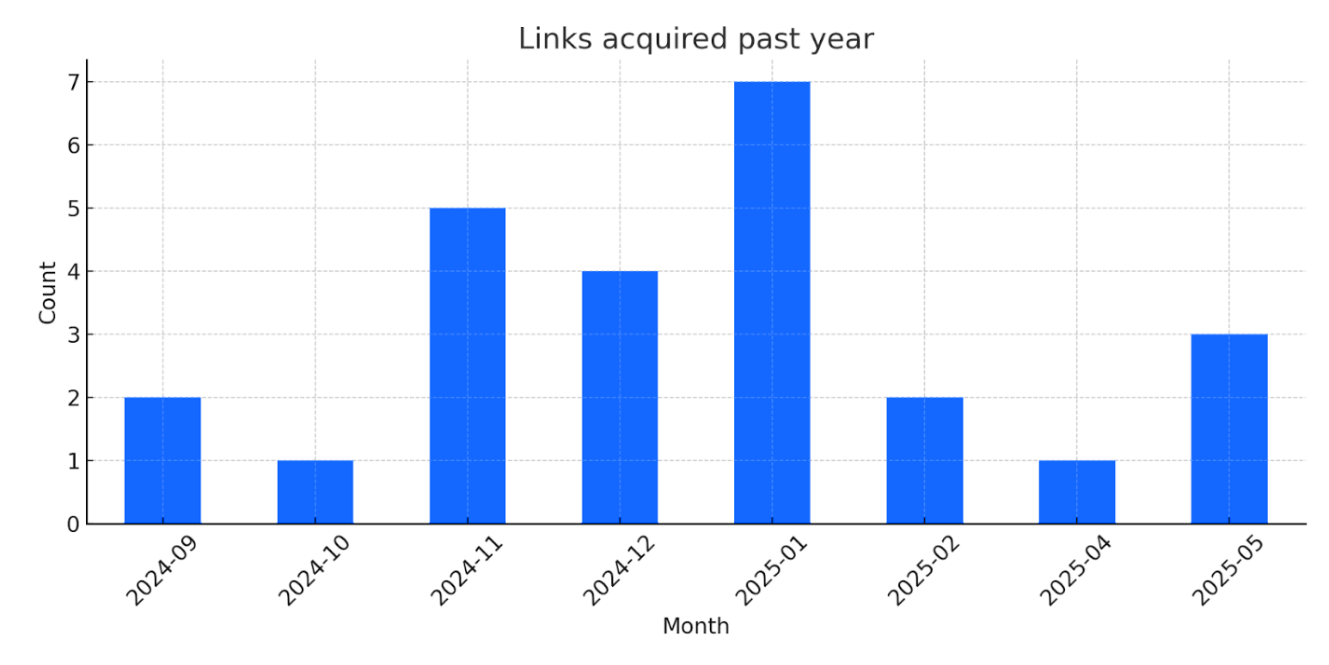
Link building can be a time consuming process, but with the right partner you can scale it and achieve some pretty remarkable results. If you want to learn more about our process and how to leverage agentic AI to get your campaigns driving the best results then get in touch with a member of the off-page SEO team today.
You need to load content from reCAPTCHA to submit the form. Please note that doing so will share data with third-party providers.
More Information