
Immersive Ideas Founder Sarah Morris explores how ‘immersive’ emerged as a practice and methodology, not just a passing trend, but a cultural shift shaped by decades of experimentation.
The word immersive is now everywhere in the live experience industry. It appears across theatre, exhibitions, themed entertainment, festivals, brand activations, and cultural events. Yet its widespread use often obscures the fact that immersive is not a new idea, nor a shallow one. It is a term with a long, contested, and deeply theatrical history, and much much more than just a buzz word.
Immersive did not begin as a marketing label. It emerged through artistic experimentation, theoretical debate, and a growing dissatisfaction with distance between audiences and performance. While many disciplines have contributed to immersive practice, it was actually theatre that crystallised immersive as a cultural movement, articulated its values, and pushed it into the mainstream consciousness.
This article traces the history of immersive practice across theatre and live experience, arguing that immersive is not defined by technology or format, but by a convergence of artistic integrity, world building, audience journey and agency, story, performance, and theatrical design.
Immersion existed long before immersive had a name.
Before immersive became a recognised practice, performance was already concerned with how audiences enter a world rather than simply observe it. Classical theatre traditions were built around proximity, ritual, and shared focus. Greek tragedy used architecture, chorus, rhythm, and repetition to draw audiences into a collective emotional state. Medieval mystery plays moved through streets and civic spaces, embedding story into daily life and collapsing the distance between performance and reality.
Theatre scholar Dr Emma Cole notes that immersion has “intrigued humanity since antiquity,” pointing to the long standing human fascination with belief, illusion, and participation.
The impulse behind immersive work, the desire to step inside a story, to feel present within it, predates any contemporary terminology.
What emerges here is immersive as a practice not a label, it relies on trust, belief, and the willingness of audiences to enter into a world together. These principles sit at the heart of even the most mainstream immersive work today.
Although immersive thinking exists across many disciplines, it was theatre that transformed immersion from a design technique into a cultural force.
Experimental practitioners rejected the safety of the proscenium and began designing worlds audiences had to enter physically and psychologically. Immersion in theatre was never about comfort. It was about proximity, vulnerability, and consequence.
This is why immersive theatre became a movement, rather than simply a style. It was accompanied by critical writing, artistic intent, and cultural debate. Theatre gave immersion its intellectual backbone.
Alongside theatrical experimentation, theme parks and attractions had been developing immersive environments for decades. Dark rides, walkthrough attractions, and themed lands relied on coherent world building, scenic design, sound, smell, pacing, and audience flow to sustain belief.
Attractions understood something fundamental early on. Immersion depends on consistency. Worlds must operate according to internal logic. Set building, sightlines, operational choreography, and performance all reinforce narrative integrity.
What distinguishes attractions is scale, repeatability, and operational discipline and in contrast what distinguishes theatre is intent, intimacy, and liveness.
The most powerful immersive experiences today draw from both traditions, blending theatrical meaning with the spatial intelligence of attractions design.
The term immersive theatre enters academic discourse in the early 2000s as scholars attempt to name practices that resisted existing categories such as site specific, promenade, or participatory theatre, and naturally around a decade later, marketing terminology.
Dr Gareth White defines immersion as a perceptual and psychological state shaped by spatial orientation and attention.
Dr Josephine Machon emphasises embodiment and audience journey.
Language evolves because practice evolves. Immersive is not a perfect word, but it is a useful one. It sets expectations. It signals intent. It allows different disciplines to speak to one another.
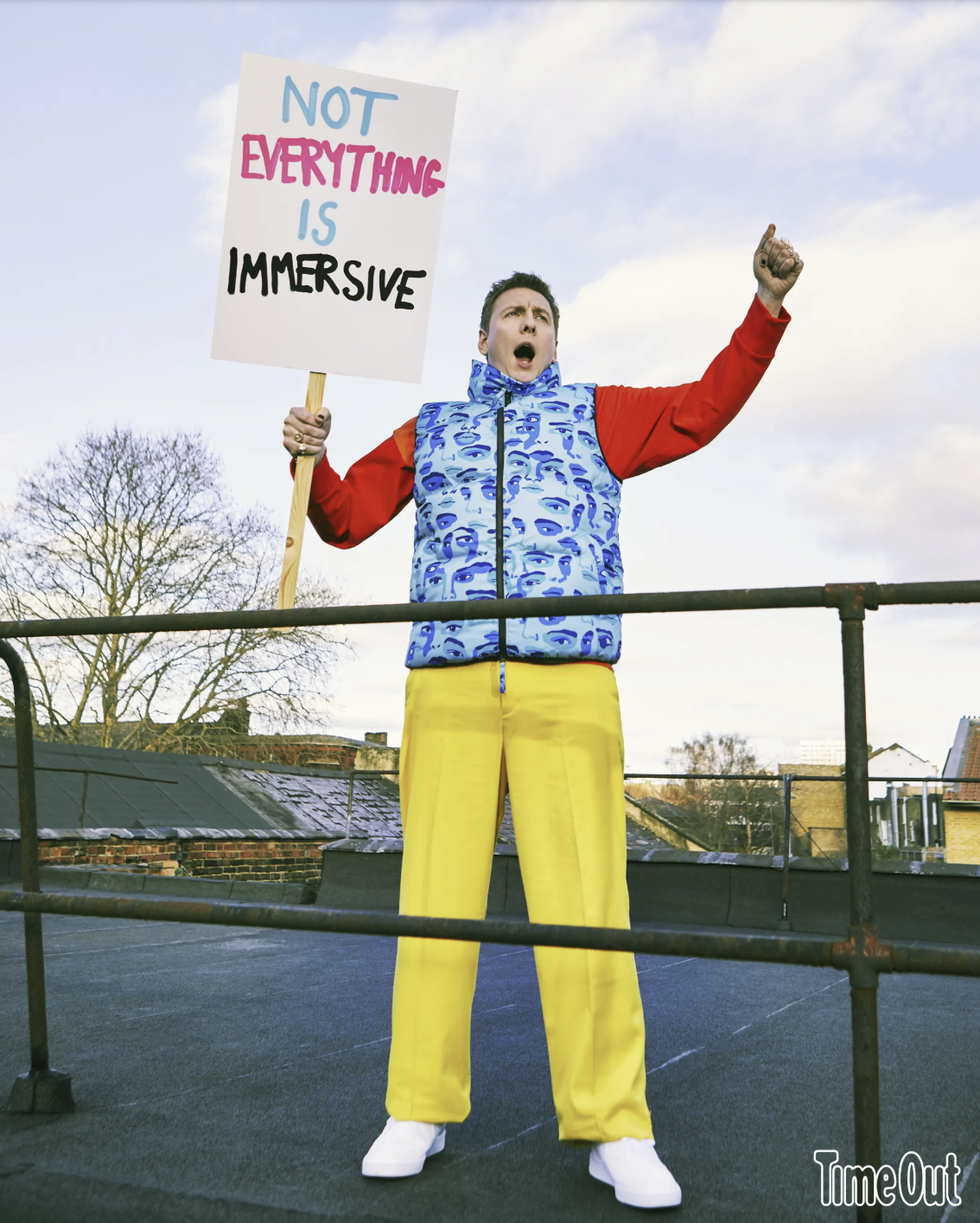
To quote Joe Lycett, “not everything is immersive” But that does not invalidate the term. Language evolves alongside practice. Immersion exists on a spectrum, the word will continue to stretch as the work itself stretches.
Anger at the word immersive often masks discomfort with its popularity. But popularity does not negate legitimacy. It confirms cultural relevance. Don’t call something immersive just to sell tickets, but don’t be trapped by terminology either.
As Cambridge Dictionary quotes “IMMERSIVE – seeming to surround the audience, player, etc. so that they feel completely involved in something”
Language in the arts shifts as practice shifts, and as work needs to be communicated, words spread when they are needed.
For many audiences, immersive theatre became culturally legible through the work of Punchdrunk. Their productions introduced large scale environments, fragmented narratives, and audiences who moved freely through performance worlds rather than sitting passively in front of them. Theatre became the vehicle that carried Immersive into the mainstream.
Punchdrunk did not invent immersive theatre. They would be the first to acknowledge that. In fact, they now more often describe their work as site-responsive rather than immersive. What they did do was translate experimental practice into a form that captured public imagination at scale.
Immersive became something audiences could recognise, seek out, and pay for. Theatre made immersive visible.
Alongside this sat a rich ecosystem of UK companies making immersive, interactive, and participatory work throughout the 2000s, long before immersive became a mainstream label. You Me Bum Bum Train, Shunt, Les Enfants Terribles, Secret Cinema, Coney, DifferenceEngine, CoLab Theatre, Apocalypse Events, dreamthinkspeak, Blast Theory, Uninvited Guests, Third Angel, Improbable, Rotozaza, Invisible Circus, Lab Collective, Dank Parish, and many others were already experimenting with audience agency, world building, participation, and non theatrical space, this is also where a lot of the current practitioner (including myself) who have gone on to make more commercial experiences cut their teeth.
This list is far from exhaustive. It exists as a reminder that immersive practice is not new. It is rooted in decades of experimentation, often happening in warehouses, abandoned buildings, churches, shops, offices, basements, and outdoor sites, almost never on a traditional stage. These pioneers laid the groundwork for everything that followed.
In contrast to those early days, immersive experiences now operates at scale. Ticketing platforms have reported sharp rises in demand, with Eventbrite recording an 83 percent increase in searches for immersive experiences year on year, and DesignMyNight reporting an 88 percent rise in interest. The global immersive entertainment market has been valued at £98 billion – The Independent, pointing to sustained public appetite rather than fleeting novelty.
With that growth comes friction. The word immersive is now used widely, sometimes loosely, and sometimes badly. Misuse can be damaging, not because the term itself lacks meaning, but because poor delivery erodes audience trust and undervalues the craft behind the work.
The much publicised failed Wonka experience is a useful example. It was marketed as immersive because that was the intention. Tickets sold for a reason. Audiences wanted to believe in the promise. The failure was not the ambition, nor the terminology, but the absence of expertise, structure, and understanding needed to deliver immersive in practice.
The risk to the industry is not that immersive is used too broadly. Projection mapped digital art in a gallery space has every right to call itself immersive. So do theatre, live events, attractions, and hybrid digital worlds. The real risk is the wrong people making the work without the skills, experience, or long term practice required to support it.
Immersive is not the problem. Inexpert delivery is, or the work being created without intent as a money grab, but this shouldn’t tarnish the industry or the word immersive.
And The Stage rightly observed that “the term immersive has been maligned and misinterpreted but it is still the word under which some of the most exciting theatre is being made.”
Immersive went mainstream because people wanted it. The responsibility now is to make it well.
Immersive is not a genre. It is a methodology.
At its core, immersive practice brings together artistic integrity, world building, audience journey, story, performance, theatrical design, and craft-led making. Sometimes this is supported by advanced technology, sometimes it is entirely analogue. When these elements align with intention, immersion is not applied, it emerges.
What has changed in recent years is scale, support, and reach. Immersive is no longer operating at the margins. It is now underpinned by formal funding streams and strategic investment, including national initiatives such as Immersive Arts UK, alongside long established public funders like Arts Council Engand. This has enabled artists and companies to develop original IP, experiment, tour, build sustainably, and take creative risks that would previously have been inaccessible.
At the same time, rapid advances in technology have expanded what immersive can be. Spatial audio, real time engines, mixed reality, projection mapping, responsive environments, and networked digital platforms have allowed immersive work to exist beyond physical sites, opening up digital and hybrid spaces that are participatory, persistent, and globally connected. Audiences can now step into worlds that live online, overlap with physical environments, or evolve over time, often at a fraction of the cost of traditional large scale builds.
Alongside funding and technology sits a growing professional ecosystem. Communities such as The Immersive Experience Network and World Experience Organisation have helped formalise knowledge sharing, advocacy, skills development, and international collaboration. This matters as it creates clearer career pathways, supports freelancers and small studios, and continues to generate new roles across design, production, performance, fabrication, engineering, and digital development.
The question is not whether a term is used imperfectly, but whether the work behind it is intentional, crafted, and coherent, when it does it remains a meaningful way to describe work rooted in world building, audience journey, and lived experience rather than novelty alone. We may never all agree on the terminology, but the trajectory is clear: immersive is a practice and what it describes is real, growing, and here to stay.
This is not a phase. It is a movement.
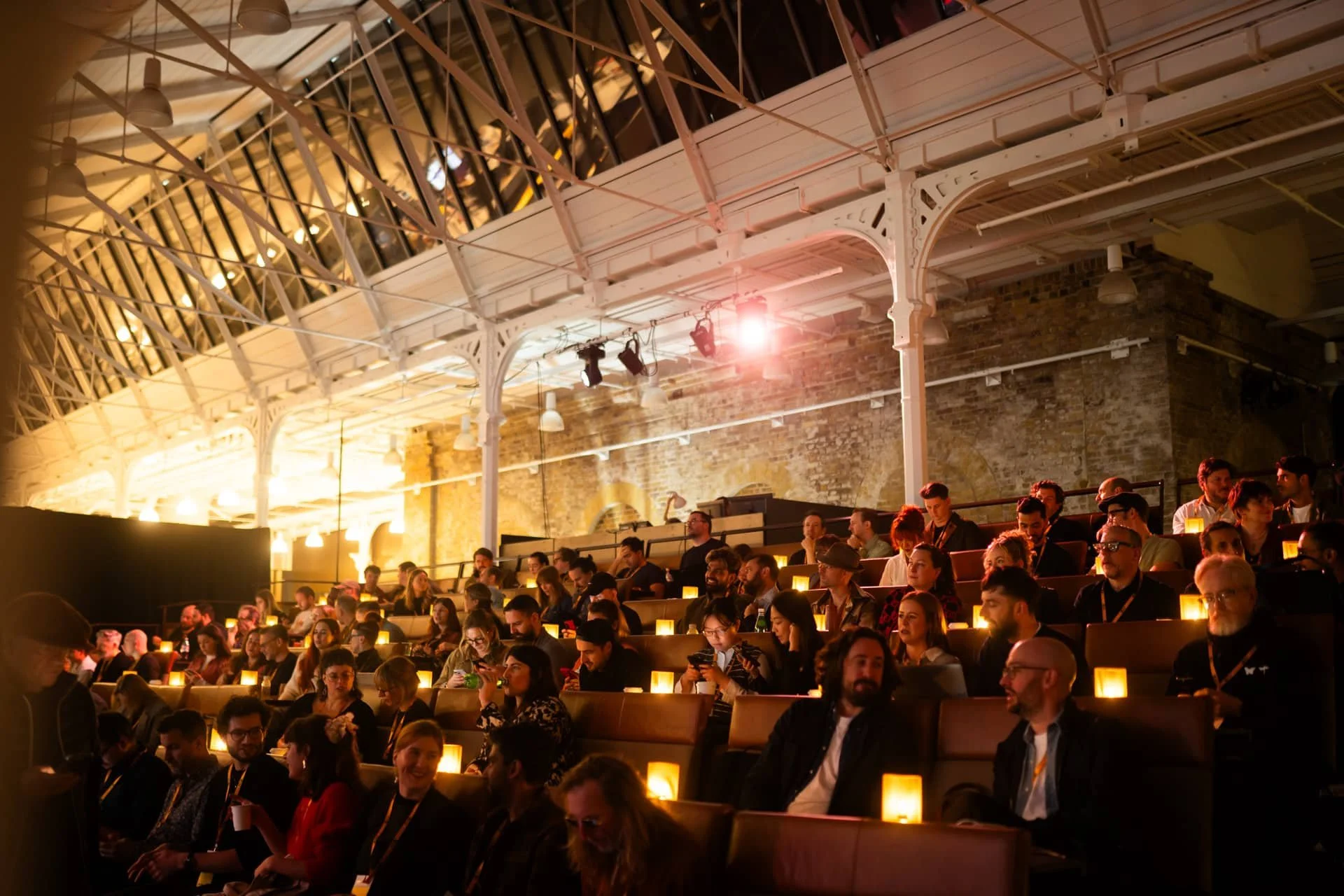
Immersive Experience Network: IEN Summit 2024
Immersive Ideas Ltd is not a name we arrived at casually. We own it because we have spent over a decade living and breathing the work that defines it, in it’s simplest form putting audiences inside experiences, not just in front of them.
Our practice has been built through making immersive work across theatre, live events, festivals, attractions, brands, and experiential environments, long before the term became widely used. Through this we have learned what immersive actually demands when real people are present, moving through space, making choices, trusting the world around them, and responding in real time.
Our skills come from doing the work. From testing audience behaviour, designing and building spaces that have to hold together under pressure, and making creative decisions that balance emotion, logistics, safety, scale, budget, and meaning.
We understand immersive because we have built it, broken it, refined it, and built it again, often in the strangest of spaces, often under tight constraints of budget, time, and circumstance.
Our past experience has given us a strong instinct for emotional logic, clear audience journey, and the subtle mechanics of trust. We know what audiences want, what clients and collaborators need, and how to design experiences that feel generous, coherent, and alive. This kind of thinking only comes from long term, hands on immersive practice.
We use the word immersive with care because it accurately describes the work we specialise in – If a project is not immersive in nature, in some form or another, it is probably not the right fit for us, and that clarity is deliberate and honest.
If you want to work with people who understand where immersive practice comes from and where it can go next, we would genuinely love to talk.
You can explore more writing on immersive practice, world building, and immersive experience design on our website, or get in touch to discuss a project, collaboration, or commission.
Immersive is not about pulling audiences in. It is about building worlds, spaces, attractions, and live experiences that earn belief, establish trust, and reward curiosity.
When we say at Immersive Ideas Ltd “we make reality sweat” we really do mean it!
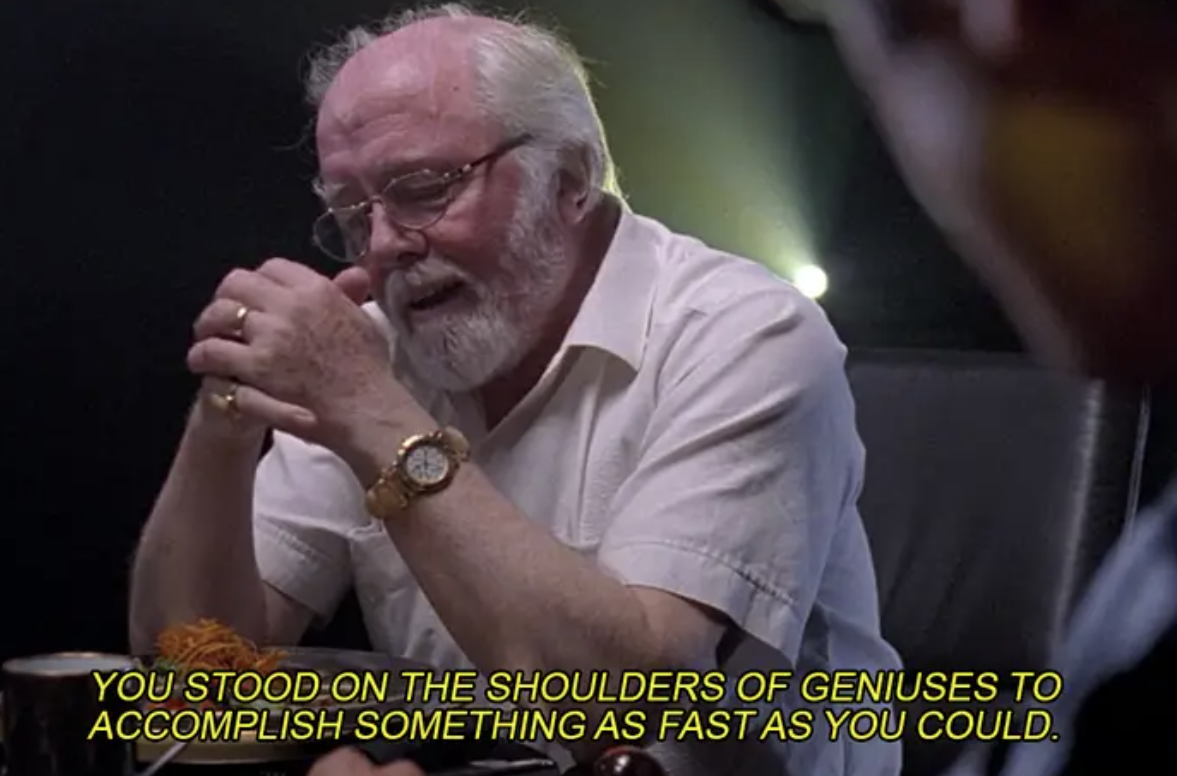
Jurassic Park is often cited for its technical innovation or iconic moments, but its real influence runs deeper. Long before immersive experiences became the buzz word we know today, the film demonstrated how to build a world audiences could fully step into, understand, and believe in. For creatives, designers, and producers, Jurassic Park functions as a near perfect case study in experience architecture.

One of the film’s greatest strengths is how clearly it establishes its internal logic. Before the dinosaurs appear, the audience is oriented.
We are shown how the park operates, how guests move through it, what is automated, what is controlled, and where the boundaries lie.
This mirrors best practice in immersive experiences. Audiences need orientation before participation. Clear rules do not limit immersion, they enable it. When people understand how a world works, they relax into it. When those rules later fail, the impact is emotional rather than confusing.
Jurassic Park earns its chaos because it first earns its structure.
The arrival sequence, the branding, the orientation film, the guided tour vehicles. This is onboarding in its purest form. The park reassures its guests that they are safe, looked after, and part of a carefully designed experience.
Experience design relies on the same mechanism. Audiences need to know what kind of experience they are entering, how they are expected to behave, and what level of risk or participation is involved. Without this, surprise becomes anxiety rather than engagement.
Jurassic Park understands that trust must be built before it can be broken.
A common misconception in immersive work is that closeness equals immersion. Jurassic Park proves the opposite. The audience is rarely placed in direct danger. Instead, tension is created through perspective. Watching from inside the car, behind glass, under the fence.
The film controls audience position with precision. This is exactly how immersive experiences maintain emotional intensity without overwhelming participants. Immersion is about relationship to events, not physical distance from them.
The science in Jurassic Park is famously flawed, yet the film remains emotionally convincing. That is because its characters behave like people and its consequences feel earned.
Immersive experiences do not need realism. They need emotional logic. Audiences will accept extraordinary premises if the world responds to them honestly and consistently.
At its heart, Jurassic Park is a cautionary tale about creation without accountability. The ability to build something spectacular does not absolve the creator of responsibility for its impact.
This is a vital lesson for immersive practitioners. Immersion amplifies emotion, vulnerability, and trust. With that comes a duty of care. Designing worlds is not just a creative act, it is an ethical one.
Universal
Jurassic Park matters because it is not just a blueprint for brilliant world building, it is also a quietly terrifying dystopia for the future of live experiences and attractions if we get complacent.
Strip away the dinosaurs and you are left with something uncomfortably familiar. A premium attraction driven by scale, automation, branding, efficiency, and spectacle. Guests are processed, reassured, and managed. Human complexity is treated as an inconvenience. Risk is assumed to be solvable by systems. Sound familiar? If not, spend five minutes in a badly designed immersive experience where no one quite knows what is allowed, where the exit is, or who is actually in charge.
Jurassic Park shows us what happens when experience design prioritises control over care, throughput over trust, and innovation over responsibility. It is the logical end point of the thinking that bigger, faster, smarter, more immersive is always better. The joke, of course, is that this is exactly how people get eaten by raptors.
For immersive creators, this is the real takeaway. World building is not neutral. Immersion magnifies everything, emotion, fear, delight, confusion, vulnerability. The more convincing the world, the greater the responsibility of the people who build it. Consent, clarity, pacing, agency, and safe failure are not nice extras. They are the difference between magic and meltdown.
This is where thoughtful immersive design matters. Not just how impressive something looks, but how it behaves under pressure. What happens when things go wrong. How audiences are supported, not managed. How trust is earned, not assumed.
At Bristol based Immersive Ideas Experience Agency, this is exactly where we focus our work. We design experiences that respect audiences, honour story, and understand the emotional mechanics of participation. We build worlds that feel alive because they are coherent, human, and accountable. Not theme parks with better tech, but experiences with purpose, care, and consequence baked in from the start.
Jurassic Park endures because it understood something the industry still occasionally forgets. Just because you can build it, does not mean you should build it that way.
And if the future of live experiences ever starts to feel a bit too much like a glossy orientation film promising everything is completely safe, while the fences quietly hum in the background, that is probably the moment to pause, step back, and rethink the design.
Every autumn, the air shifts. Shadows stretch, lights glow earlier, and people start hungering for something beyond routine. They want meaning, magic, and connection…a story they can step into.
That’s why seasonal immersive events aren’t just popular; they’re unstoppable. Each year, they grow bigger, bolder, more ambitious, because they speak to something universal, our need to feel part of something shared, fleeting, and extraordinary.
And the truth is, the spaces that haven’t embraced that yet are already behind.
This isn’t about pumpkins and fairy lights. It’s about transformation and turning your existing space into a living, breathing story that people can feel in their bones.
The public appetite for immersive experiences has exploded. Seasonal events are selling out months in advance, driving new audiences, and dominating social feeds. People aren’t just attending, they’re participating. They’re hungry for connection, emotion, and atmosphere and they’re willing to travel and spend for it.
And here’s the thing: the places that already have character, story, or natural atmosphere, the ones sitting dark for half the year, are the ones that often might be the perfect venue.
Seasonal immersive programming can turn a quiet month into a sell-out. It can reframe how a space is seen, pull in new audiences, and create stories that live far beyond the season itself and build brand new audiences.
So the question isn’t should you do a seasonal immersive event. It’s why aren’t you already doing one?
Immersive design is no longer just for purpose-built attractions. It’s the future of how people experience the world around them. Every space has the potential to hold story.
Seasonal events give you a perfect excuse to unlock that, to reveal another layer of your space and make people fall in love with it all over again.
It’s not about building something new. It’s about seeing what you already have differently.
The right lighting design can make the familiar feel mythic. A single scent cue can shift memory. A piece of sound can transport a visitor before they even realise what’s happening.
This is where transformation starts, not with scale, but with imagination.
Emotion is built in.
Halloween and Christmas already carry universal feelings: fear, joy, nostalgia, hope. Immersive storytelling amplifies them.
They drive visibility. They’re PR gold, visual content magnets, and community anchors.
They make financial sense, one strong seasonal programme can sustain engagement through your quieter months.
These events are not side projects, they are cultural touchpoints, powerful, repeatable frameworks that keep audiences coming back year after year.
They create loyalty, seasonal traditions make people return.
“We do this every year” is the strongest possible brand statement there is.
Right now, the market is wide open. Audiences are ready. The appetite is proven. Technology and design tools are accessible. The question is who will seize the moment. and who will let it pass?
Spaces that act now will set the benchmark. Those that wait will be catching up.
Seasonal immersive events are no longer a luxury; they’re the smartest creative and commercial move you can make.
The best seasonal immersive events don’t rely on gimmicks or budget. They rely on intention.
They have a clear emotional journey.
They use their environment as part of the story.
They surprise people, not just entertain them.
They end on a note that lingers.
Audiences don’t remember everything they saw. They remember how it made them feel.
And that feeling, if designed well it can shape how they see your space forever!
At Immersive Ideas, we don’t do cookie-cutter Christmas lights or predictable Halloween thrills. We design experiences that transform space into story. Our work blends psychology, design, and emotion to create worlds that connect deeply, memorable, meaningful, and made for your audience.
Wondering if your space has potential? This is the moment to unlock it.
Even if you’re only exploring what might be possible, let’s start the conversation and see where it leads?
Worried about timeframe? Budget? Don’t be. Already this year our clients are testing the waters, preparing the ground work now for going big next year.
Let’s have a chat, reach out at [email protected]
Together, we can shape the kind of seasonal experience people will still be talking about long after the lights go down!
One of the most common mistakes we see in immersive experience design is this: all spectacle, no soul. The lights are dazzling, the environment is beautiful, the tech is impressive. But something’s missing.
That something is story.
At Immersive Ideas, we believe narrative is the beating heart of a powerful experience. Whether it’s a theatrical show, a brand activation, a festival space, or an interactive exhibition, people need to know:
Why am I here? What is this world? What am I supposed to do with it?
Without those answers, even the most stunning environments can fall flat.

In traditional theatre, the story is front and centre. In immersive work, the story often surrounds you instead. But that doesn’t mean it should disappear. In fact, it becomes even more important, because the audience is no longer just watching, they’re in it.
A strong narrative:
Grounds people in the world you’ve created
Helps them understand their role or perspective
Guides behaviour and encourages meaningful interaction
Creates emotional connection and long-term impact
And here’s the key part: even if your audience never fully sees or understands the story, you and your creative team still need to know it inside out.
The internal logic of the world, the backstory, the rules, all of it matters. It acts as an invisible backbone. When everyone designing, performing, or producing knows why things are the way they are, the experience becomes richer, more coherent, more alive.
Audiences might not be able to articulate the story, but they’ll feel it. They’ll sense that this world makes sense. They’ll trust it. They’ll lean in.
In experiential marketing, the term immersive gets used a lot. But too often, what’s actually being built is just a visually impressive space or activation, cool, yes, but sometimes a lil shallow. A brand might commission an activation with high production values and creative flair, super photogenic, but if there’s no narrative underpinning it, audiences walk away remembering the look, not the feeling.
Immersion isn’t just about aesthetics, it’s about emotional logic. If a guest walks into your space and doesn’t understand why they’re there, or what they’re part of, the moment doesn’t land. It becomes a photo op instead of an experience.
Narrative in this context doesn’t mean writing a script. It means understanding the purpose, perspective, and emotional arc of the guest. It means layering in meaning and intention. A well-designed brand experience should tell a story through its structure, its pacing, its language, its atmosphere. It should feel like stepping into a world that has depth, even if that depth is only hinted at.
When narrative is an afterthought, audiences feel unanchored. They start asking questions that pull them out of the moment.
Am I allowed to touch this? Should I be doing something? Is this just for looking? Who am I meant to be?
This creates hesitation, not curiosity. Confusion, not wonder. It turns a space that should feel magical into one that feels awkward or unfinished.
We’ve worked on experiences that were visually stunning but emotionally hollow… until we added just a few layers of story. Suddenly, everything clicked. Audiences relaxed, interacted, cared. Because they understood their purpose in the space.
It’s tempting to lead with the big ideas, the set piece, the wow moment, the cool tech. But those should always serve the story, not the other way round. We always ask our clients the same three questions at the start of a project:
Why are people here?
What world are they in?
What do we want them to feel when they leave?
Those answers shape everything else. From the layout of the space to the way performers interact, from sound design to signage.
Whether you’re producing a theatre piece or a branded experience, story creates meaning and meaning is what makes people remember.
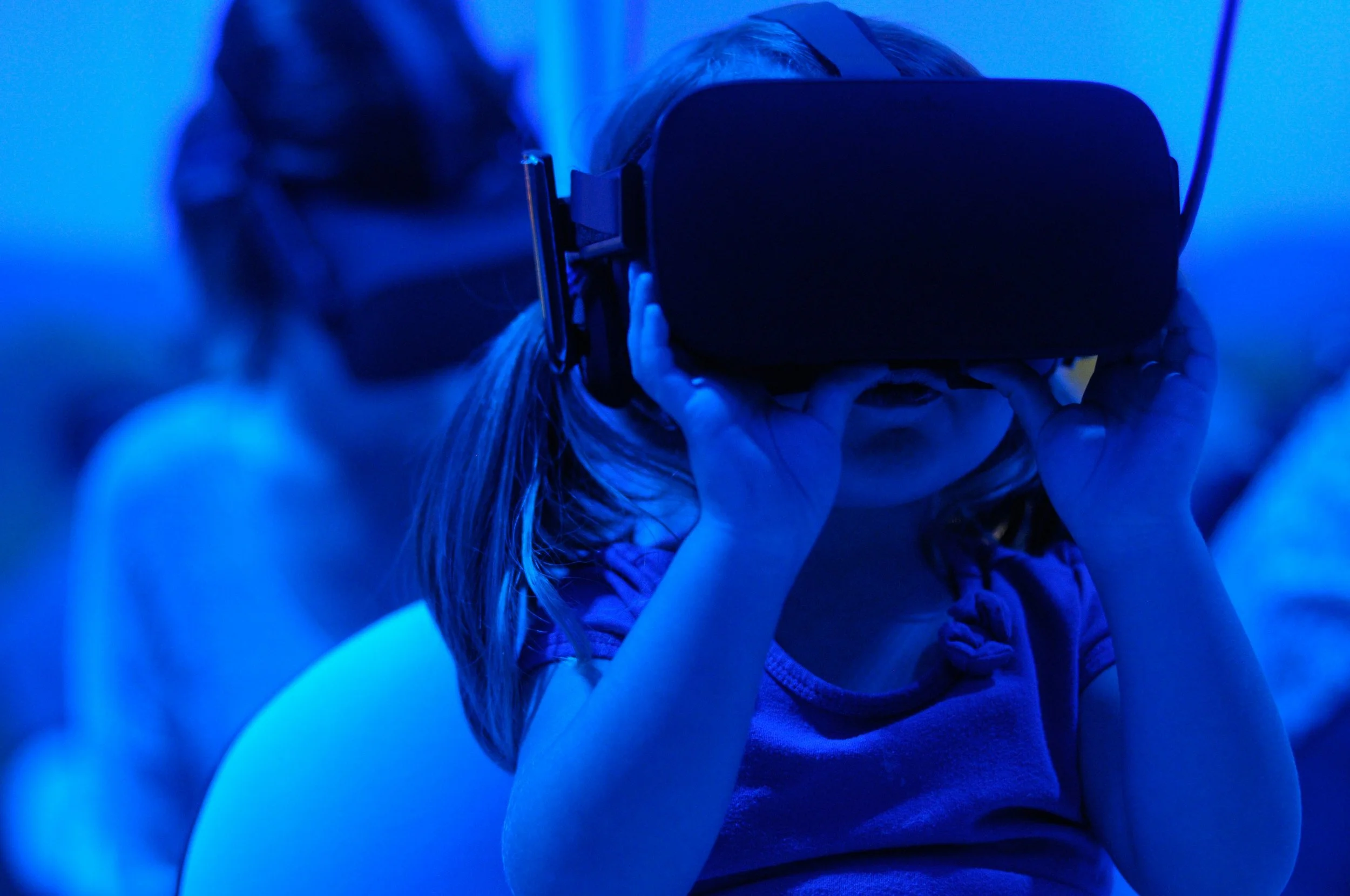
A well-crafted narrative doesn’t just support an immersive experience. It is the experience. It’s the glue that holds it all together. It turns audiences into participants, spaces into worlds, and moments into memories.
If you’re building an experience and want to get the story right from the start, let’s talk. We’ll help you craft a world that feels real, purposeful, and impossible to forget, whether you’re making a new experience, launching a product, or creating a space your audience will genuinely connect with.
Sarah Morris – Immersive Ideas Ltd
You need to load content from reCAPTCHA to submit the form. Please note that doing so will share data with third-party providers.
More Information