
Whether you’re a new start-up or the proud owner of a family-run bakery, the digital world can feel like a jungle of jargon and ever-shifting goalposts. But do not worry, my digital adventurers! Today, we’re embarking on an excursion to unravel the mysteries of SEO, minus the patronising tech language.
The wonderful world of Search Engine Optimisation (SEO) is all about making your website stand out in the eyes of search engines. Consider it as cleaning up your internet presence so that Google, like the most popular kid at school, can’t help but notice you.
Starting with keywords, those sneaky little things that people enter into search engines while looking for something, you need to know which ones will get you a nudge and a wink from Google. Then there’s on-page optimisation, which entails making your titles and meta descriptions both informative and appealing.
Next, don’t forget about backlinks, which are similar to online street cred; the more trustworthy sites link to yours, the more Google believes you’re the best. Last but not least, your site’s user experience must be slicker than a charmer’s chat-up lines, with mobile-friendliness, quick loading speeds, and material as fascinating as a natter at the pub.
For individuals looking to learn the fundamentals of SEO, check out Mastering SEO Fundamentals for Newbies. It’s similar to your trusted map to buried treasure, but in this case, the treasure is massive amounts of web traffic.
SEO isn’t something you do once and then forget about. Google wants to keep us on our toes with its continuous upgrades. And, like fashion trends, if you don’t keep up, you’ll rapidly appear as out of date as socks and sandals.
This year, Google has been busy tweaking the machinery with algorithm improvements, putting an even more focus on the quality of your content and the experience you provide to your users.
What’s the latest in the 2021 SEO scene? You have Google’s Page Experience Update, which focuses on topics like loading speed and mobile friendliness. And don’t underestimate the growing relevance of local SEO. With more people looking for neighbourhood delicacies, it’s a no-brainer to improve your local listings.
Curious about this year’s shake-up? Have a gander at the Beginner’s Guide to 2021 SEO Changes.
Change is the only constant, they say, and Google’s recent upgrades are as consistent as rain on a British summer’s day. Navigating these shifts does not require casting a magic spell; rather, it requires maintaining a steady hand on the tiller and adjusting your sails.
For example, Google now prefers websites that offer an excellent user experience (UX). This implies that your website’s usability, mobile appearance, and loading speed are more important than ever.
If you’re feeling a little lost, check out the link to Navigating Through Google’s Recent SEO Updates – it’s your go-to compass in the ever-changing world of SEO.
Think of your website like a store. You wouldn’t have a confusing layout or useless service in a physical store, and the same is true for an online storefront. SEO finesse begins with simplicity, such as crystal-clear navigation, a plethora of persuasive and instructive content, and some clever keywords scattered throughout like fairy dust.
From there, you may go into details like as image optimisation (ensuring that images aren’t so enormous that they slow down your site) and ensuring that each page has a specific function.
If you’re itchin’ to start enhancing your digital habitat, snag some pearls of wisdom from Enhancing Your Website’s SEO: The Basics.
Even the most daring adventurers require a guide while exploring new territory. And in the wilds of SEO, it pays to have a reliable ally who knows every nook and cranny of the terrain.
BrisTechTonic is not your typical SEO agency. We’ll take you under our wing and decipher the enigmatic hieroglyphs of Google’s algorithms with sophisticated knowledge and a pleasant wink. Our desire is to help your company advance in the search rankings with a plan designed specifically for you.
Eager to get the gears turning on your website’s SEO potential? Look no further than unlocking your future success with Unlocking SEO Potential for Beginners.
So, if you’re ready to unfurl the sails on your SEO voyage, why not book in for a discovery call? We’ll chat about your needs and plot a course for your online triumph. Until then, keep your wits about you and your SEO sharp!
Welcome to the digital labyrinth, where SEO mysteries are more complicated than Spaghetti Junction on a Friday afternoon. But do not be afraid! We’re here to light the way for your online adventure, much like a trusted flashlight in the depths of Wookey Hole.
Imagine SEO as the High Street of the digital world. It’s where you set up your shop (a.k.a. your website) to get the most footfall. Only, in this bustling metropolis, footfall is driven by the all-seeing eyes of search engines. Now, let’s Discover the essentials of SEO with our beginner’s guide and turn browsers into buyers!
Before you start building your digital empire, you should learn the fundamentals of SEO for your new firm. Here is the groundwork:
Keywords: These are the ‘Open for Business’ signs that catch your attention. These are the terms your prospective clients are feverishly putting into Google.
Content: The king, queen, and the entire royal procession. Quality content not only engages your target audience, but it also pleases Google.
Meta Tags: No, not a new superhero team, but important text snippets that inform search engines about the content of each page of your cyber castle.
Backlinks: These are your high-street recommendations. The more credible the source, the higher your street cred in the digital hood.
SEO is similar to a superb Bristol brew in that the appropriate ingredients must steep together to produce the ideal cup of tea. So, let us jumpstart your digital success with this simple SEO guide and propel your brand from startup to superstar.
On-page SEO is about making your store as attractive as possible from the start. This entails having a clear indication (your title tag), an appealing display (your photos and formatting), and an attractive pitch. It’s where you can learn about SEO: A beginner’s tutorial for those looking to impress passersby.
Off-page SEO is the equivalent of positive gossip; it’s how you get people talking about your business in the outside world. Earning backlinks from credible sites is like the local newsagent saying, “That’s a fine establishment!” It’s an important step towards unlocking the secrets of SEO for your growing business.
As any wise explorer knows, a map is essential. Let’s plot the course to Navigate the world of SEO: A starter kit for small businesses, marking the key destinations and avoiding the peckish trolls lurking beneath the bridges.
If your company is the large fish in a small pond, local SEO guarantees you don’t slip away. It’s about claiming your area on ‘Google My Business,’ and ensuring that when locals search ‘near me,’ your shop appears as a beacon on their digital map.
Consider technical SEO to be your tech team working in the background. They’re responsible for guaranteeing that your site’s rigging does not collapse during the performance. From loading times to mobile responsiveness, the unsung hero keeps the show running smoothly. By paying attention here, you will ensure that you start your SEO journey with our thorough beginner’s guide.
When you combine creativity and statistics, you have the recipe for online enchantment. It’s time to make your mark online with practical SEO ideas for new businesses and create a website that Harry Potter would be proud of.
Once your potions are bubbling beautifully, you should test their potency. Tools such as Google Analytics allow you to see how your audience interacts with your material. This knowledge allows you to fine-tune your spells for optimal effectiveness.
Remember that in the world of SEO, patience is more than a virtue; it is a requirement. Results may not be immediate, but with a persistent technique, you will see your online riches grow.
Ready to make your digital aspirations a reality? Embrace these simple SEO methods for new businesses and watch your brand ascend the ranks of Google’s enormous library.
For those willing to learn the intricacies of SEO and move their organisation forward, the adventure is only beginning. Remember, you don’t have to go through this digital journey alone. If you want to learn more about SEO for your growing business, schedule a discovery call. Together, we’ll devise a customised plan to make the Google gods smile upon your website.
Greetings from the mysterious world of search engine optimisation (SEO), where achieving online presence might resemble trying to find a needle in a digital haystack. But do not worry! With the help of my beginner-friendly SEO copywriting ideas, your website will rise in the search results faster than you can say “Google it.”
If you believe that SEO is merely a fancy Silicon Valley acronym, let’s take a closer look. Search engine optimisation, or SEO, is the process of making your website as appealing to search engines (such as Google, Bing, and Yahoo) as well as to actual customers who are actually looking for your services. In this sense, copywriting refers to crafting content for your website that not only educates visitors but also persuades them and helps it rank well. Putting the two together? You’ve just turned into a copywriting pro at SEO.
You must first familiarise yourself with keywords. Your potential clients are typing these little jewels into search engines. Keywords are the road map to your wealth of material, regardless of whether your audience is searching for SEO experts or the greatest vegan restaurant in Bristol (hint, hint). However, it goes beyond simply packing them across your website like candy. The secret to drawing both humans and Google bots to your writing is to skillfully include them into your text.
Do some study on keywords before you go out. Determine the terms and expressions that best describe your company’s offerings and the queries of your target market. To choose your perfect keywords, use resources such as Google Keyword Planner or ask yours truly on a discovery call.
Your writing should sound human (which it should), but it should also have the technical polish that attracts the attention of search engines. This entails producing interesting, pertinent, and educational content that seamlessly integrates your keywords. Don’t fill your text with keywords; this isn’t 2005.
Consider the structure of your website as the backbone that holds everything together. Not only do headings and subheadings (H1s, H2s, H3s, oh my!) help readers easily scan your content, but they also serve as indicators to search engines regarding the order in which your information is presented. Your headline gig is your main heading; it should be attention-grabbing and contain your core keyword.
Make thoughtful use of headers to help readers and search engines navigate your material. Every heading ought to be pertinent and contain keywords without being repetitive. The secret is to get search bots and readers both to stay on your page for the duration of the presentation.
Let’s use some linking strategies to take your company to new heights next. Similar to your website’s hidden passageways and trapdoors, internal and external links direct users to helpful material and demonstrate to search engines that you are a well-respected authority in your industry.
Maintaining visitor engagement and building authority are two benefits of a strong linking strategy. In order to maintain readers’ interest for longer, provide internal links throughout your text and link to reliable websites (hey, credibility!).
Stale bread? No thanks. The content of your website is no different. Maintain it current, unique, and new. Both search engines and people enjoy fresh content. Thus, you can maintain a healthy and strong rating by periodically updating your blog or sprinkling case studies across it.
Similar to your favourite soap opera, regular publishing will keep viewers interested. To make sure you’re always offering up the tastiest, most delicious digital material, create a content schedule.
Nobody wants to converse into a void on a digital device. You’re having a conversation rather than just crawling into the void when you use SEO copywriting. Thus, become an expert in SEO-friendly copywriting by making sure your material is readable, valuable to your audience, and scannable. Bold writing, bullet points, and brief paragraphs can draw attention to your pearls of wisdom.
Now that you have the map, it’s time to set off on your journey to reach Search Mountain’s summit. When creating a blog article highlighting the best Bristolian jewels or a ‘About’ page that extols your virtues, keep in mind to carefully consider the keywords you use and the structure you develop. If you are in need of a specialist to guide the way and unlock the infinite possibilities of your website, a discovery call is just a click away. Forward and upward to the highest point in sight!
Welcome to the not-so-mysterious world of search engine optimisation, where your site’s visibility determines whether it is the needle or the haystack in the huge online landscape. To make sense of it all, small business owners and inexperienced webmasters may feel as though they must possess the skills of an enigma codebreaker. But do not worry! I’m here to guide you through the confusing world of SEO audits and make sense of the technical SEO language.
Determining how well your website is optimised for search engines is the essence of an SEO audit. Think of it like a MOT for your car: it checks a variety of components to make sure everything is in working order and maximises the likelihood that Google and its friends will find your website.
Technical SEO: This refers to the specific backend aspects of SEO, such as website security, mobile friendliness, and speed (HTTPS is your friend in this situation).
On-page SEO: Content reigns supreme here. To make sure the material is as appetising as a Sunday roast for the Google crawlers, we’re talking about keywords, meta tags, and appropriate header usage.
Off-page SEO: Although they are less visible, off-page elements like social media signals and backlinks can offer your website the credibility it needs to be among the cool kids in search engine rankings.
By doing this assessment, you can get a detailed breakdown of what you’re doing well and what needs some extra work. The final objective? To improve the SEO score of your website and move up the search results page.
Your website’s credit rating for search engines is comparable to your SEO score. It’s a ranking that indicates how optimised your website is out of 100. The better your site is optimised and the more probable it is that you will appear on Google’s first page—the promised land—the higher your score.
It’s important to keep in mind that this score is merely a general indication offered by SEO tools to help you with your optimisation efforts; it is not an official Google grade. Better visibility and a respectable score go hand in hand, so what is our recommendation? Consider your score and adjust as necessary!
Are you prepared for a basic introduction to SEO success? Let’s get started. The SEO audit is the first thing to do. You may find a lot of tools to help you with this, ranging from more in-depth solutions that can get to the specifics of your website’s SEO health to freemium options like Google’s own Search Console.
After receiving your audit, it’s time to put those suggestions into practice. Make sure your website loads quickly, fix any broken links, and make sure it looks great on mobile devices. Not sure where to begin? BrisTechTonic can help in situations when a little expert elbow grease might be exactly what’s needed.
Now, armed with an SEO audit, let’s discuss essential tips for improving your SEO score. Focus on the following:
Keywords: Use appropriate terms to draw in the right kind of traffic. Not a word that would baffle your grandmother!
High-quality content: Provide content that responds to the inquiries of your users. Visitors are encouraged to stay longer on websites with helpful and engaging content, which lowers the dreaded bounce rate.
Meta descriptions: These brief summaries have the power to entice visitors to visit your website. Consider them the chat-up lines for your website; make them succinct and pertinent.
Backlinks: The foundation of off-page SEO are backlinks. Search engines will view your website as more reliable and trustworthy the more respectable websites that link to it.
Each of these elements forms part of a holistic strategy to start climbing search engine rankings today. Remember, it’s a marathon, not a sprint – SEO benefits build up over time.
I hope that this has been a lovely, relaxing kayak in the shallow end of SEO for those of you who are just starting started. But I can guide you through the depths of this ocean that exists out there. Let’s schedule a discovery call to discuss how SEO may help you realise the full potential of your website. Together, we’ll make sure your website is running smoothly and prepared to win the race for visibility. With BrisTechTonic by your side at every turn, the road to SEO mastery begins here. Thus, why do you delay?
Have you ever had the impression that you’re pursuing your online rivals’ triumphs like you’re playing a virtual game of cat and mouse? It’s time to give up chasing and take charge of the group. Knowing how your competitors operate in the complex world of SEO can help you propel your company to the top. Together, we can simplify rival keyword research and set you up for success.
In a nutshell, competition keyword analysis is SEO done like Sherlock Holmes. It’s the skill of figuring out the keywords your rivals rank for and how they use them to drive traffic. Putting on your detective cap, you may utilise expert SEO strategy to uncover your competitors’ secrets and utilise the information to guide and improve your own SEO efforts.
Imagine having complete awareness of your adversaries’ whereabouts and their forthcoming moves. That would be powerful knowledge, right? In terms of SEO, having this knowledge enables you to:
You must first ascertain your opponent’s identity before you can assess. Consider your digital adversaries as well; they may not even be on your radar now. Think beyond traditional competitors. Look for companies that are listed for the terms you are interested in on the search engine results page (SERP).
Many SEO tools are available that take care of the research for you. Use them to find the top search engines for your keywords and examine their profiles.
An easy Google search will yield a wealth of information. Look up your main keywords and take notice of who comes up most often. These are your principal opponents.
The real game is about to start. It’s time to examine your rivals’ keyword strategies in detail. Recall that knowing the context in which keywords are being used is just as important as just locating them. Here’s how to do it:
Take note of the kind of content that your rivals create. Do they use product pages, blogs, or case studies to focus on particular keywords? How does the quality compare? What’s more, how can you improve upon it?
Examine the headers, meta descriptions, and title tags. They contain a wealth of keyword data. Take note of the prominence, frequency, and seamless integration of keywords on their website.
To determine the relative value of a certain keyword, it is essential to run a backlink analysis and find out which keywords are generating the most links.
With newfound insights, it’s time to inject some zest into your SEO strategy.
Equipped with a keyword list, create content that outperforms those of your rivals in terms of engagement, insight, and overall quality. Make Google think you’re better than your competitors.
Through competition keyword analysis, you can elevate your online presence by finding keyword chances that your rivals have overlooked. Make original content for these keywords to take the lead in the market.
Create a strong backlink strategy by focusing on the same superior websites that link to your competitors, or discover new ones to increase your reach.
SEO requires ongoing care, unlike a slow cooker that can be “set and forget”d. Maintain a close watch on the actions of your rivals and often analyse their strategies, adjusting your own as necessary.
Success in SEO doesn’t come overnight. It’s a continual process of improvement and adaptation. Use Master the Art of Competitor Analysis for Superior SEO Strategy to ensure you’re always one step ahead.
SEO can seem like an insurmountable mountain to climb, but with savvy competitor keyword analysis, you’ve got the best gear to reach the peak. Remember, your objective is not just to match your rivals – it’s to surpass them.
Don’t let complexity deter you; when done correctly, rival keyword research may be a very useful tool in your SEO toolbox. Are You Prepared to Change Your SEO Approach with Competitor Keyword Mastery and Get an Advantage in SEO with Insights into Competitor Keyword Strategies? It’s time to take action!
Even though I’ve provided you with the treasure map, occasionally you still need an experienced guide to show you the route. Fear not—I’m here to help you through the SEO jungle if you find it intimidating to navigate on your own. How about scheduling a discovery call at https://www.bristechtonic.co.uk/discovery-call? Together, we can begin mapping out your path to SEO dominance.
SEO is more than merely optimising the text on a page for search engines. It is important to design the overall user experience, including the visual components. This experience depends heavily on images, which, when properly optimised, can significantly boost your site’s SEO performance.
Each part of SEO’s multifaceted approach is crucial to the overall success of a website’s exposure. Images among these aspects are frequently disregarded as merely cosmetic features. But nothing could be further from the reality than this notion. When used correctly, images are crucial to SEO.
Humans are naturally visual beings. Studies show that text is processed by the human brain 60,000 times slower than visuals. This implies that the photos you use on your website can leave an immediate impact on visitors, often even before they start reading. Utilising captivating, pertinent photos can hold the attention of your audience, ensuring they stay on your site longer, lowering bounce rates, and letting search engines know that your material is valuable.
Without any pictures, try reading a thorough article about the old Roman buildings. Sounds difficult, huh? Images give context, aid in the visualisation of complicated concepts, and increase the accessibility and digestibility of knowledge. Users may spend more time on your website as a result of their improved comprehension, which will help your SEO.
Although text is necessary, large passages of it can become boring to readers. Images provide a respite, which improves the taste and enjoyment of the information. User experience is important, but search engines also favour websites with rich, varied information for their users.
Engaging visuals are more likely to be shared on social media sites, especially infographics or original graphics. Increased social sharing can result in increased visitors, better brand recognition, and perhaps even more backlinks, all of which are good things for SEO.
Users can access your website through entirely other channels thanks to image searches like those on Google Images. By making photos SEO-friendly, you can attract visitors who may be looking for visual information that is directly relevant to your niche and open up a new channel for organic traffic.
The significance of visuals is amplified by the growing prevalence of mobile browsing. Large amounts of text might be overwhelming on smaller screens. Images help to break this up, making the surfing experience for mobile users more pleasurable and less intimidating. Images are essential to mobile SEO since search engines use mobile friendliness as a ranking factor.
In the digital sphere, images are a captivating form of communication. However, if not optimised properly, their potential can be wasted, resulting in longer loading times and lost SEO prospects. Let’s examine the numerous strategies you may employ to fully leverage the potential of photos for the SEO of your website.
If you want to understand how to learn SEO, images are an important factor to take into account. Selecting the best image for your text is crucial before moving on to technological optimisations.
While stock photos are convenient, original images, whether they’re photographs, illustrations, or graphics, resonate more with audiences. They add a unique touch to your content and can increase trust and credibility.
Make sure the image complements and closely ties to your content. An unnecessary graphic can perplex readers and distract them from the point you’re attempting to make.
Once you have the right images, the next step is to ensure they are technically optimised for web use.
Different image formats are used for various purposes:
File sizes can be decreased without a noticeable loss of quality using programmes like Compressor.io or TinyPNG. Keep in mind that faster loading times result in reduced file sizes, which is essential for both user experience and SEO.
Making sure that photos appear correctly on devices of all sizes is essential in a world that is constantly moving towards mobile. You can instruct browsers to display various pictures dependent on the device’s screen size by using HTML properties like’srcset’.
Alt text and titles aren’t just afterthoughts; they play a significant role in image SEO.
A text description of a picture is known as alt text, or “alternative text.” It should be succinct while still being descriptive enough to convey the meaning and goal of the image. It helps search engines and users who are blind understand the image.
Alt text has two purposes: it improves accessibility and increases SEO. Screen readers will read out the alt text, which captures the spirit of the image, for people who are blind or visually handicapped. Because search engines cannot “see” images the way humans can, the alt text also gives search engines context. The relevancy of your material in search results can be enhanced by an image that is well-described.
Should your alt text contain keywords? While it might be advantageous, it ought to be carried out naturally. Keyword stuffing can lead to poor user experience and may even be penalised by search engines.
The title attribute offers additional information and is often displayed as a tooltip when a user hovers over an image. While not as crucial as alt text for SEO, it can enhance user experience.
In the information-rich digital age, it is crucial to present content in a logical and understandable way. Structured data and detailed outcomes now. These words may sound like high-tech jargon, yet they are crucial to contemporary SEO and user experience.
A defined framework for categorising the content on a webpage is called structured data. Webmasters can give search engines detailed information about the content, its context, and its relationships by employing structured data. In essence, it functions as a “cheat sheet” for search engines regarding what is on a page.
Structured data comes in a variety of formats, but the following are the most used ones:
Search engines attempt to comprehend the context of the material when they crawl a website. This procedure is aided by structured data because it provides clear hints as to a page’s intent. For instance, structured data can tell a search engine whether the word “Avatar” on a page relates to the James Cameron movie, a user’s online profile image, or a philosophical idea.
When search engines are equipped with the additional insights provided by structured data, they can create enhanced search listings, known as ‘rich results’ (previously referred to as ‘rich snippets’).
Image SEO optimisation is a complex procedure that involves more than just resizing. You may improve both the user experience and search engine rankings for your website by comprehending and putting into practise a variety of optimisation tactics.
User testing is analogous to asking your friends to try out a product you’ve produced, to put it simply. Consider creating a toy or game and wanting to determine whether it is enjoyable and simple to play. Similar user testing is done for websites and apps. People who didn’t build it check it out and report back on what works and what doesn’t. This makes it better and simpler for everyone to utilise websites and apps. London-based digital consultancy WeAgile will conduct user testing on your new website or app if you are one of our very fortunate and satisfied customers. Why not reach out to us right away to learn more? But now – onto User Testing.
To make user testing feasible and effective, you’ll need to take a number of actions. Here is a brief explanation of each of the steps; we will go into greater detail on some of them in the blog.
This could be a brand-new website, app, or other digital product created to address a particular user demand. The testing procedure is built upon this phase. Simply put, there won’t be anything to test without the product (even if it’s an MVP).
Based on your objectives, pick the testing approach that is best for you. (Read more about down below). Depending on the insights you want to gain, this may involve usability testing, A/B testing, or even eye-tracking experiments. Each approach presents a distinct viewpoint on user engagement and pleasure.
Find the people that most closely resemble your target market. You can be confident that the feedback you receive correctly represents the experiences and preferences of your real users by selecting participants who are representative of them. Trust us when we say it. Below, we go into further depth regarding several locations where you might discover your test subjects.
Select a suitable area to carry out the experiments. If you’re conducting online testing, this could be a controlled environment, a real-world scenario, or a remote environment. The setting ought to reflect the way users would naturally engage with your digital work. Most likely, the people who take part in your test will test your website or app from home, on their own schedule. Just always tell them when they have to turn in their results, so keep reading.
Find out how long it will take each participant to finish the test. By evaluating how long customers generally spend navigating through your digital product, you can make sure that the testing period is reasonable and doesn’t pressure participants.
Give the chosen participants access to your digital product and the essential instructions. Sharing a website or app’s link may be necessary for this. Consistent outcomes across participants are ensured by clear criteria.
Gather and assess the information and comments gathered during the testing process. This entails assessing user interactions, watching how they behave, and taking into account their input. To learn how consumers interact with your new app or website, look for patterns, insights, and pain areas.
Given that we discussed a variety of testing techniques in the preceding section, you may be asking how to do user testing for your product. There are various methods for conducting user testing because every product, prototype, and feature is unique — just like every firm. We’ll examine the three most popular ways WeAgile, a web design and development company in London, has had tremendous success with. There are various approaches that may be utilised for user testing.
In A/B testing, you split up your test subjects into groups (which could be two or more) and have them try out several iterations of your product to determine which they prefer. This enables you to determine whether version delivers your clients a better user experience and makes them happy. A/B testing involves exposing your clients (or test subjects) to various versions of your product. It’s comparable like testing various ice cream flavours to determine which one they prefer. You get to observe what actually excites your customers rather than assuming based on what you know about them. Even if you are confident in your knowledge of your clients, A/B testing may still surprise you and reveal something intriguing. There is a reason why huge companies (like Facebook) do A/B testing regularly.
It does sound a lot like user testing, don’t you think? It is not, however, the same. Before getting into the specifics, let’s first examine the distinction. The entire range of client interactions with your website or app is captured during user testing. This may include — from when they first come into contact with the object until when they cease using it, their thoughts, feelings, likes, dislikes, reactions, and behaviours related to the item. On the other hand, usability testing focuses on how and to what extent a client uses your product to accomplish a certain goal. Even if it helps to make the user experience as a whole, this isn’t the whole journey.
Giving a product, prototype, or feature to actual customers (or your test subjects) allows you to gauge how user-friendly it is. Usability is the ability of a product to be useful and simple to use. You can determine how naturally your actual users find your product, prototype, or feature by conducting usability testing.
Beta testing happens in the last stages of developing your website or app. It occurs when you present your finished product to your clients and target market and allow them to closely examine how it will look when it is ready for release. Prior to entering the market, this testing phase serves as the final customer approval.
When should beta testing be used? It’s ideal when you’re almost done creating your product and want to get one more opinion before releasing it to the public. This step gives you the chance to make any last-minute adjustments to the user experience, making sure it’s excellent for your clients. Other user tests throughout the design process ought to have been conducted before beginning the beta testing phase. This is so that only the most significant and final product upgrades are subjected to beta testing. By getting client feedback beforehand, you’ll probably only need small changes—if any—during beta testing. By using this tactical approach, you can be confident that your product is polished and prepared to shine.
A variety of measurements used in user testing are used to assess the usability and efficiency of your website or app. These metrics offer insights for improvement by quantifying user interactions, engagement, and satisfaction. Here are some metrics from user testing that you can find helpful for your website or app. Keep in mind, though, that not all of these will apply to your digital project because every website and app is different (in its own way). These metrics offer insightful data on how people interact with your websites and apps, assisting in the development of improvements and optimisations that will result in a flawless and pleasurable user experience.
Task Success Rate: this measures the percentage of tasks users successfully complete during testing, indicating how well your design supports their goals.
Time on Task: the time users spend on specific tasks. This could indicate how intuitive and efficient your design is.
Error Rate: this metric calculates the frequency of user errors during tasks, shedding light on confusing or challenging aspects of your product.
Click-Through Rate (CTR): for links or buttons, CTR measures user interaction by showing how often they click on these elements.
Bounce Rate: for websites, this measures the percentage of visitors who leave after viewing only one page, indicating a lack of engagement.
Navigation Flow: it maps users’ journey through your website or app, revealing any confusing pathways or friction points.
Satisfaction Ratings: these are often obtained through post-test surveys; these ratings provide insights into users’ overall satisfaction with the experience. You could also do short (or in-depth) interviews with the test participants if the time and resources allow.
Net Promoter Score (NPS): this measures users’ likelihood to recommend your website or app to others (be it their friends, family or promotion on social media channels). This reflects their overall satisfaction – the more satisfied they are, the more they will promote it – as simple as that.
Conversion Rate: for e-commerce sites, this measures the proportion of visitors who complete desired actions, such as making a purchase.
Scroll Depth: tracks how far users scroll down a page, showing if important content is being missed.
Time to Complete Tasks: it is what it says on the tin. This quantifies the time users/test participants need to finish tasks, revealing potential obstacles or ease of use.
User testing works like a detective, swiftly identifying the precise issue so that your team doesn’t spend time and resources on the wrong thing. It involves making a quick investment in the appropriate cause. Your product, feature, or prototype may be simple to use for your team and designers, but it could not be for your actual customers. User testing reveals areas in which your product might be more appropriate for your target market. It highlights the areas where people might become perplexed or irritated. Since user testing takes place prior to the release of your product, you can utilise this information to keep making improvements until you’ve created a user experience (UX) that you’re truly proud of.
To get insightful feedback on your digital products, you must enlist consumers to test them. If you’ve decided to attempt to do it on your own, here’s how and where to do it.
Your Network: Start by reaching out to friends, family, and colleagues who fit your target user profile. They can provide initial insights and help you refine your testing process.
Social Media: Post a call for participants on your social media accounts or in relevant groups. Explain what you’re looking for and the perks of participating (e.g. an Amazon voucher or a free subscription to your app once it launches). Platforms like Meta, LinkedIn, and X can be effective.
Online Communities: Participate in forums, discussion boards, or online communities related to your product’s niche. Engage with users, build rapport, and then invite them to test your product.
User Testing Platforms: Websites like UserTesting.com, Userlytics, and TryMata allow you to recruit users based on specific demographics. These platforms handle the recruitment process for you – easy but not always cheap. There are a couple of more you can have a look at – Helio.app (formerly Verifyapp.com), UXTweak.com.
Email Subscribers: If you have an email list, send out an invitation to your subscribers. They’re likely already interested in your product and might be willing to participate.
In-Person Events: Attend relevant meetups, conferences, or workshops. Engage with attendees and invite those who align with your target audience to participate in testing.
Universities: If applicable, approach universities and colleges to recruit students who match your user profile. Many students are open to participating in user testing.
Local Communities: Utilise local bulletin boards, community centres, or coffee shops to post recruitment flyers. This can help you find participants within your area.
Referrals: Ask your current participants if they know someone else who might be interested in testing your product. Referrals often lead to engaged participants.
Paid Advertisements: Consider running targeted online ads to reach your desired user demographic. Platforms like Facebook Ads and Google Ads can help you reach a wider audience.
User testing enables us to improve, innovate, and create digital solutions that genuinely resonate with our audience with every click, scroll, and interaction. By embracing the art and science of user testing, we not only produce useful products but also experiences that have a lasting impression on users and the digital world. Let us at WeAgile join you on this exploration as we work to improve customer satisfaction, elevate our design, and push the envelope of what is conceivable for websites and mobile applications.
Sometimes merely using words or static visuals to describe something is insufficient. Making a wireframe is the next stage once a concept for your company’s mobile app or website has taken shape. To guarantee that consumers have a flawless browsing experience, it nevertheless occasionally occurs on paper or via a dedicated tool. Interactive mockups known as prototypes are used to test the aesthetic and user experience of websites and mobile applications.
Designers and developers can demonstrate how they want something to look and function via interactive prototypes. They may test the interactions they want to use, which will aid developers in knowing what to design. Like a how-to manual for getting everything just right!
For both websites and mobile apps, an interactive prototype provides insights about user interaction at several levels. By allowing users to evaluate design usability and feasibility before to the start of the development phase, these prototypes help eliminate unforeseen problems that may arise during project execution. It acts as a sneak peek or presentation of the final look, navigation, drop-downs, and filtering capabilities of a digital product. Because of its robustness, users may thoroughly examine the system’s features, functionality, and usability in a single package. It is similar to taking a “test-drive” before buying “the car” (i.e., creating a digital product).
There are currently a lot of different options to choose from, despite the fact that it has long been a preferred pick for UX/UI design teams. Figma is used by almost four million people. It is excellent for project management, building website pages, making app prototypes, and brainstorming and mind maps. To see if it works for your needs, you can start with the free version.
Instead than being a single tool, InVision is more a collection of tools. Three tools and collaborative places are included in one membership. The first is Freehand, which is used for collaborative wireframing in real time. After that, you proceed to Studio to design screens and create interactive prototypes. Studio features a function that allows you to turn comment suggestions into tasks that can be completed. When everything is finished, use Inspect to collaborate with developers and give off designs.
This is an excellent tool for collaborating between designers and developers. After finishing your project on Webflow, you can download the HTML, CSS, and Javascript code (without really having to code anything). It will resemble something a developer would create exactly! Give your developer this code so you won’t have to worry about the front-end details any more.
Sketch provides a sizeable selection of prototyping tools. You may bring your ideas to life in ways that enhance the projects you’re working on by using tools like scrolling artboards, fixed elements, and overlays.
According to user feedback, Miro’s prototyping tool streamlines the prototyping process, making it efficient, flexible, and collaborative. Additionally handily, Miro provides wireframe and prototype templates. Over 60 million people presently use Miro, so there must be some value there. Check it out for yourself without a doubt!
Our team of designers, developers, and marketers at WeAgile, a digital agency based in the UK, has extensive experience in app development, website development, and digital marketing. Reach out to us right away and let’s start to work on your brand-new, exciting digital project or campaign!
It has never been more crucial to keep ahead of the curve with the constantly changing world of search engines. Google’s highlighted snippets are one such leading edge in the SEO industry. These bite-sized chunks of information are prominently shown in search results, meeting the demand of users for timely, pertinent information.
Given the great visibility and authority of featured snippets, it is understandable why both companies and bloggers are striving for attention. Let’s examine some best practises for content optimisation before delving into the nuances of Google’s highlighted snippets.
Many search results have a box at the top with a succinct response or summary, especially those that ask a question. The infamous “featured snippet” appears in this box. Instead of requiring consumers to read through the results and go through to a website, as is the case with standard organic search results, the snippet seeks to give them an immediate and conclusive response to their query.
The digital world has experienced significant changes over time, with search engines fine-tuning their algorithms to provide the most accurate results. An important factor in this evolution has been Google’s highlighted snippets.
Before Google introduced this feature, customers had to trawl through numerous links to find the information they needed. This conventional search strategy wasn’t always user-friendly, especially for people looking for prompt responses to simple queries. Google introduced highlighted snippets because there was an apparent need for an effective, direct-response strategy.
There are various benefits to being first in Google’s search results, including:
Increased visibility: When a user searches, snippets are shown prominently and frequently receive the majority of their attention.
Boosted authority: Getting a snippet slot can increase the credibility of your brand. It’s similar to getting Google’s approval that your material is trustworthy and relevant.
Increased click-through rates: Featured snippets can greatly increase the click-through rates for your site, resulting in an increase in organic traffic.
There are three primary types of featured snippets:
Paragraph type: These offer concise answers in text format. They are ideal for direct questions, such as ‘what is a featured snippet?’
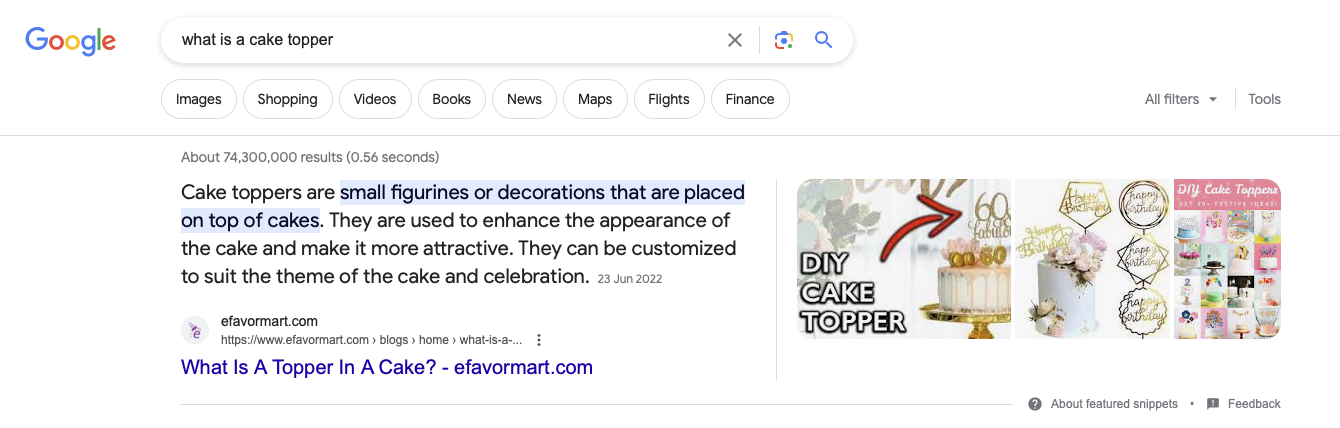
List type: Ideal for how-to guides, ‘top X’ lists, or recipes. They present content in either a bulleted or numbered list.
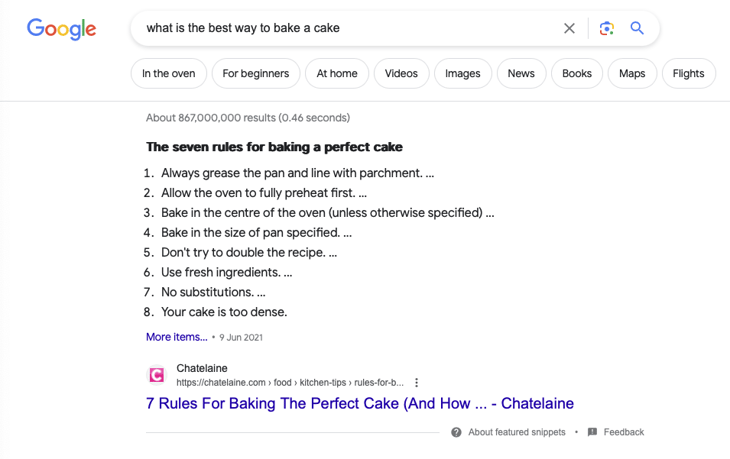
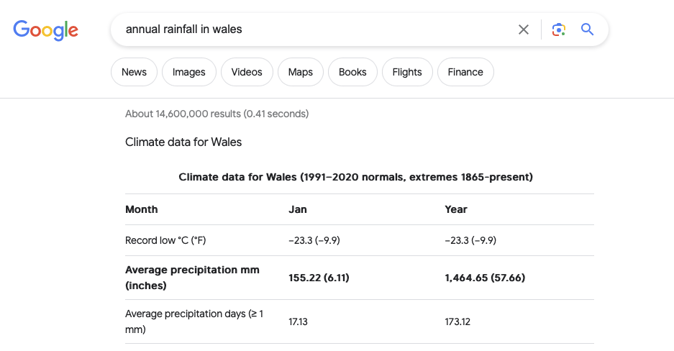
Table type: Perfect for presenting data, these display information in a structured table layout.
To optimise your content for Google’s featured snippets, it’s crucial to implement a few tried-and-tested strategies. These are:
Start by identifying the queries that your audience is posing. Here, tools like SEMrush or Answer The Public can be really helpful. Understanding the questions that people in your area are asking can help you organise your content such that it offers clear solutions.
Understanding your audience—not just what questions they are asking—is crucial to accomplishing this effectively. Create in-depth personalities for your target audience. What are their concerns, inquiries, or enquires? Your content may become more snippet worthy if you customise it for these personalities.
Start your content optimisation by adding a headline that asks, “What is [keyword]?” This gives Google a clear indication of the content’s potential relevancy for a highlighted snippet. Usually, you should place this heading just after your introduction, making sure that it melds in with the rest of the text.
Google gives authoritative and reliable content priority. Concentrate on writing well-researched, original content that benefits readers directly. While a wide range of topics must be covered, depth is necessary for snippet optimisation. Don’t create information that only scratches the surface. Investigate the subtleties of a subject when speaking about it. Comprehensive how-to articles or in-depth how-to instructions can stand out and are frequently highlighted in snippets.
Additionally, it may be worthwhile to concentrate on disseminating knowledge about less-discussed sub-topics in your industry. These specialised articles frequently have less competition and are suitable for featured snippets.
Make use of the ‘[Keyword] is…’ phrase structure to optimise featured snippets. This pattern, which can be seen in many successful featured snippets, helps Google identify content that is pertinent. Using this approach as your introduction can improve your snippet possibilities.
Many people ask questions in a conversational tone as smart speakers and voice-activated assistants gain popularity. By framing your responses in a natural, conversational style, you can make sure that your material can accommodate this trend.
Make sure your material concisely summarises the subject in two to three phrases. Clarity is key here:
Aim to replicate the format of the featured snippet that currently appears for your query on the search engine results page (SERP). Include a related paragraph or two of text in your article if the sample is in paragraph form, for instance. If it’s a list, though, be sure your content matches that.
Brand names may exclude your work from being included in snippets. Snippets drive voice search, thus information must be comprehensible to everyone. To increase your likelihood of being included, swap out brand-specific phrases for generic ones.
First-person language can be difficult, just like brand names can be, especially when taking voice search functionality into account. For clarity and general relevance, second-person language is preferable.
In general, pages with higher rankings are more likely to get a featured snippet. Focus your strategy on keywords where your page already has a top-five position.
While the basics provide a solid foundation, exploring more advanced tactics can further enhance your chances of snagging that snippet spot.
For featured snippets, Google’s transition to semantic search—understanding user intent rather than just keywords—has major ramifications. To address this, you ought to:
Describe the “why” and “how”: Beyond the “what,” make sure your material explains the context of the inquiry and offers thorough answers.
Internal linking: Internal links that are pertinent can assist Google comprehend the scope and depth of your content by demonstrating how completely you cover each topic.
A type of microdata known as schema markup gives search engines a better understanding of the context of your content. Including this allows you to:
Enhance SERP presentation: Schema can make your material look better and more appealing for a snippet by enhancing how it is displayed in SERPs.
Clarify the type of content: To ensure that Google displays your content correctly, indicate whether it is a product review, how-to manual, recipe, event, or another type of content.
According to observations, Google extracts heading tag data periodically for featured snippets.
The world of SEO is no stranger to myths and misconceptions, and featured snippets have certainly attracted their fair share. Some common myths are:
Although it’s true that many featured snippets come from pages with high rankings, this is not an exclusive group. Google’s main focus is finding the most accurate and succinct response to a question. It has a chance if your content, even if it comes from a page with a lower rating.
Many people worry that because snippets give straightforward responses, users won’t click through. In reality, though, featured snippets frequently boost brand authority and visibility, resulting in better click-through rates all around.
Despite their popularity, lists, tables, and Q&A forms aren’t the only content categories that are featured. Step-by-step instructions and other types of material that successfully respond to user queries may have snippet value.
While obtaining a featured snippet spot might improve your site’s exposure and authority, it’s equally crucial to take a comprehensive approach to your SEO strategy. It can be detrimental to focus only on the snippet position without taking other important SEO factors into account. Instead, keep your attention continually on the more general objective of giving your users value and enhancing their overall user experience.
The use of highlighted snippets is anticipated to increase as voice search usage grows and AI-powered digital assistants become more pervasive in our daily lives. For instance, well-known gadgets like Google Home and Amazon Alexa frequently use information from featured snippets to respond to voice searches.
The format of snippets is expected to change along with technology. In the not-too-distant future, we might start to see more interactive snippets or those including multimedia components.
Although appearing in Google’s highlighted snippets is an admirable accomplishment, it’s critical to see it as a part of an all-encompassing SEO and content strategy. Need assistance with this? For any of your SEO needs, get in touch with Bristechtonic SEO immediately.
Since technology has changed the face of web design over the past ten years, conventional design elements are no longer relevant. The newest digital design trends for websites are what users expect to see when they visit a website since they want to see the newest features.
Since roughly 2010, smartphones have been the de facto mobile standard, with current estimates placing the ownership of smartphones at 86.11 percent of the global population. By 2023, smartphones will account for more than half of all web traffic worldwide. As a result, web design must be optimised for mobile use, which may be done by using one of the innumerable plugins available for WordPress and other content management systems (CMS). Website owners can also contact a reputed London design firm, which will integrate mobile optimisation as standard.
Web users don’t want to wait around to use slow platforms because they are used to quick digital offerings. A website or page should load in 3 seconds or fewer because, on average, users leave websites after 1-2 seconds. Website owners should perform a little “spring cleaning” each month to make sure everything is functioning properly. Once more, this is something that a reputable London digital design agency will handle.
Chatbots have been gaining traction over the last few years, and 2023 shows no signs of slowing them down. With machine learning (ML) and artificial intelligence (AI) becoming more intuitive, chatbots will become an industry expectation for dealing with personalised experiences and basic customer queries. You’ll find many chatbot plugins on web builders, but using one of these may make your website feel mundane. Therefore, you should have a team of experts from a London digital agency create a unique looking chatbot from scratch.
Although virtual reality (VR) is not a novel technological advancement, it has grown increasingly accessible and accepted by the general public, particularly in web design. You can take a virtual tour of a house before booking your stay if you’ve used Airbnb or another accommodation booking site in the past several years. This is one of the more straightforward VR website examples, but more use cases will start to appear in 2023.
Web users want to feel engaged when visiting websites in 2023, which is why there are more interactive elements than ever before. For example, if you use a simple cryptocurrency portfolio tracker, you’ll most likely find profit calculators, conversion tools, liquidity analytics and a host of other useful tools. As well as useful tools, you can explore elements of interactive marketing including contests, calculators, fun quizzes, and surveys. If you outsource your marketing, these are all elements a digital creative agency London can add to a website.
This article only scratches the surface when it comes to 2023 digital web design trends, but it’s safe to say that it’s all focused on improving user experiences and tailoring platforms around mobile usage. If website owners entrust an experienced digital agency London, all of these trending features will be integrated uniquely.
You need to load content from reCAPTCHA to submit the form. Please note that doing so will share data with third-party providers.
More Information