
Sector overview
The UK is home to a wide range of businesses, from a booming start-up scene, to established SMEs, an ever-evolving spectrum of specialist marketing agencies, and large blue-chip corporates. Whilst lots of businesses are choosing to grow their marketing resource in-house, marketing agencies play an essential role to organisations which call upon them for specialist consultancy, and to handle their heavy-lifting.
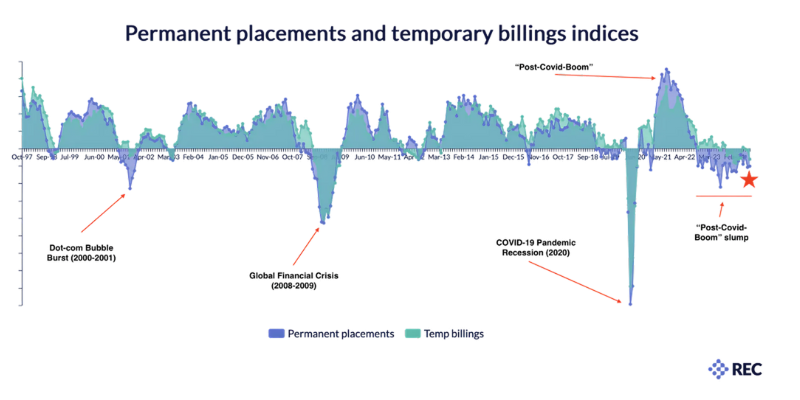
Many businesses regard Marketing as being fundamental to their success as they evolve and react to changing audience behaviours, especially in a challenging economy. However, it has undoubtedly been another challenging year for the recruitment industry, as illustrated in this graph by REC and annotated by The Savage Academy.
Source: the Savage Recruitment Academy
This is a graph showing recruitment billings over the past few decades and it’s a direct reflection of the job market.
We can see the various crashes and recessions, followed by booms and slumps, but the slumps don’t tend to last more than a few months… until more recently. The “Post-Covid-Boom” peaked beyond any other. It was the busiest time in my career to date – Oh to be back there! But the slump that has followed has lasted two years. Previous trends suggest the job market is due to return to normality. Personally, I cannot wait!
Talent Overview
Performance Marketing & Performance Content:
Demand for digital marketing skills, in particular Performance Marketing has continued to rise, with generalist marketing roles usually requiring good digital expertise too.
 Meta and TikTok are prolific among B2C marketing job specs where social media is a core channel, and we’ve seen more performance content roles coming our way than ever. Job specs for performance content roles vary a fair bit, but trending skills include videography and CapCut.
Chief Growth Officer & Growth Marketer:
In 2024 we saw a rise in “growth” focussed roles both agency side and in-house. Many agencies opted for Chief Growth Officer (CGO) or Chief Client roles with a nuanced mix of business development, strategic client services and marketing/agency proposition development.
Demand for in-house Growth Marketers has increased too. Scale-ups and brands launching new products or growing in new markets have been seeking candidates with both strategy development and the ability to be hands on – usually requiring a test-learn-optimise approach to drive sales or generate leads through performance marketing channels.
Fractional Leadership:
Fractonal roles have become a more frequent consideration as businesses seek strategic guidance at a Board level, on a part-time or flexible basis where a big permanent salary isn’t an option. We’ve seen a rise in strategic, senior appointments as a whole, and many candidates opting to take their many years of c-suite experience to market in a fractional capacity. 
We’ve developed our Fractional Leadership offering and launched our “Fractional Leaders” Content Series so that businesses can find out more.
Remote-first vs Hybrid:
Whilst remote-first jobs have the greatest pick of talent due to the large geographical pools available to them, we have noticed an increasing number of candidates choosing hybrid working over fully remote.
Remote-first is definitely here to stay and many of our clients do it brilliantly, maintaining every part of their culture, whilst enjoying sustainable growth during tough economic conditions. However, we are also hearing from job seekers wanting to spend a bit more time in an office environment, learning and collaborating with peers in-person, with 2-3 days in the office being the most common. Core hours and flexible working patterns make for a more inclusive environment. And it’s still very true that next-to-nobody wants 5 days in the office!
Salaries & Benefits:
Compared to 2023, which saw some of the highest rises in salaries of recent times, salaries over the last year appear to have begun levelling out. However, competition for the best talent still remains fierce and candidates are considering the entire package, financial and non-financial, your brand, your purpose, how inclusive you are.
This year, the ADLIB team has spent a lot of time and effort researching, surveying, and gathering insights around the range of benefits and flexibility that matters most. We’ve developed guides and processes to help clients benchmark themselves, and stand out as an employer of choice.
Purpose, Inclusion & Belonging:
Candidates remain picky with many of them opting only to apply for businesses that are purpose-driven, who walk the walk when it comes to their values. If you’re a B Corp, it’s about your score, your impact report – your commitment to a journey of improvement, not just the badge.
 Inclusivity and belonging are as important as ever if you want to attract the best, diverse talent, and rightfully so. Businesses are having to work harder to demonstrate this in their employer brand.
Over the last two years we’ve developed a suite of resources and can offer consultancy in these areas. We’ve also given our True Diversity initiative a refresh and launched our EDI Directory which has already generated some great referrals for some of the featured organisations.
Passive Candidates vs Actively-looking:
Because of the tough market and perceived risks that it brings, fewer candidates who are in roles are actively looking on job boards and LinkedIn, so the dynamic of talent pools has shifted. Of course, there are many talented people who are actively looking, but we’re also hearing lots of candidates telling us that they’re reluctant to apply for a role on LinkedIn with 200+ applications as they never hear back.
Our ‘Co-branded’ solutions leverage ADLIB’s brand, network and communities, and we’re explicit about the organisation we’re partnering with. It’s a curated approach with lots of add-ons which we can pull together in a bespoke way. There are no additional costs or up-front fees, and with a 100% success rate over the last two years, it’s the perfect solution for clients that want to stand out as an employer of choice.
Conclusion
Despite it being a tough two years for the marketing sector and recruitment in general, we’ve delivered some of our best work, and lots of it. We’ve won more new clients than ever before, whilst continuing to invest in our purpose. We’ve evolved our proposition and service offering for clients, generating case studies we’re very proud of. And we’ve helped more businesses position themselves as an employer of choice, engaging passive talent who aren’t looking in the “usual places”.
I am excited to see what 2025 brings for the Marketing sector! If you’re an employer or a jobseeker, and you’d like to work with us, please get in touch.
An estimated 20,000 women left the tech industry in the first half of 2023. With caring responsibilities being one of the leading reasons why women leave, non-profit initiative HeyFlow and reproductive health inclusion experts HeyFlow “The Reality of Mums in Tech”: a state-of-the-nation research project to gain a deeper understanding of the lived experiences of working mothers in UK Tech.
The initial findings of the report uncover alarming statistics about the lack of support for working mothers in the tech industry and urge immediate action to prevent further losses. These losses can be attributed to poor communication during maternity leave, lack of training for managers, and structural barriers within organizations that hinder working mothers from advancing.
Sophie Creese, Founder of MotherBoard commented on the results:
“Our report’s initial findings highlight that while efforts to retain women in tech are improving, the progress is not sufficient to see gender gaps close.
If we want to see a breakthrough for gender balance within tech and ensure more women are in senior positions, organisations must pick apart and scrutinise how they can do better in supporting mothers.”
This report was powered by HeyFlow, the female reproductive health inclusion business that helps remove the disadvantage many women face at work. Their co-founder Nick Dean further addresses that the report is just one aspect that may be causing barriers for women in tech:
“Some of our findings are alarming, yet not surprising. Lack of parental inclusion is a known barrier to many women’s progression within the tech industry and it is one of the main reasons why we see capable women being forced to exit the workforce. Alongside our wider research across all industries, we hope this report will inspire change and address not only the impact of motherhood and pregnancy, but also other impacting factors such as menopause and menstrual health.”
The report is part of an ongoing study, and MotherBoard invites more mothers working in UK tech to share their experiences. These contributions will help inform future initiatives, including the City of London’s ‘Women Pivoting to Digital Taskforce,’ where MotherBoard’s founder, Sophie Creese, is a subject matter expert.
You can download the report over on MotherBoard’s website: https://motherboardmovement.co.uk/community/reality-of-mums-in-tech-results
The survey remains open here: https://forms.office.com/e/r3kJ007tTb
50% of women leave the tech industry before age 35. Let’s change that.
MotherBoard is a Business Charter, Community, and Event Series driving tangible change for mums working in the tech industry. We are on a mission to transform the industry to be more inclusive of women & mothers by tackling stigmas and supporting employers who want to create real change. Powered by ADLIB.
Ending disadvantage for women in the workplace.
Through insight, learning and action for female* reproductive health inclusion in the workplace, HeyFlow empowers businesses to create change and build a truly inclusive company and break the taboo from menstruation to menopause.
The purpose of ADLIB’s “True Diversity” Content Series is to feature, collate and showcase the breadth of initiatives that are all on a mission to work towards True Diversity and Inclusion – to capture and share what these initiatives are all about, who they are, what they do, why it matters and how businesses can get involved.
There are many angles to consider and a wealth of EDI expertise available, if you know where to look. That is the challenge we wanted to address.
EDI Directory
If you’re an employer wanting to find support and expertise to build truly inclusive teams, our new EDI Directory is here to signpost you to a range of initiatives that you can reach out to.
We’re here to talk to you about any of them and introduce you to those you feel best fit your EDI objectives. No referral fees, we’ll put you in touch directly.
“Whilst our team is trained in the fundamentals of EDI and we have invested in our own EDI initiatives such as MotherBoard and HeyFlow, we are aware that there are many protected characteristics and intersectionality to consider when it comes to building truly inclusive teams. It’s important to work with true experts in these areas.” – Tony Allen
Get Involved
If you’re an EDI Consultant or part of an initiative in this space, we’d love to include you in our EDI Directory and feature you in our True Diversity series. If you’re a business seeking EDI expertise, you can find it in ADLIB’s EDI Directory.
Contact us for free referrals or reach out directly through the directory
Contact Tony Allen at [email protected], or fill in this form for your initiative to be considered.
The Founder of Bristol-based MotherBoard, Sophie Creese has joined the Women Pivoting to Digital Taskforce and will work with the City of London Corporation to help mid-career women pivot to digital roles. The aim is to address the underrepresentation of women working in digital careers by providing women with vital skills in order future-proof the digital workforce.
The Women Pivoting to Digital Taskforce brings together business, government, third sector, and industry groups to bring more attention to and action around supporting women from non-technical backgrounds to career change into technology roles. 29th April marked the commencement of the Taskforce.
Taskforce members are comprised of 65 different subject matter experts from across the UK regions with an interest in digital and diversity, responsible for delivering the Workstream outputs.
“In the UK, half of women leave the tech sector by age 35, often due to inflexible working conditions that exclude mothers. I’m excited to join the Women Pivoting to Digital Taskforce, dedicated to increasing female representation in tech through career switching. MotherBoard brings a vital perspective, highlighting the need for practical solutions to ensure women with already established careers in other industries are offered the support needed to thrive in tech roles.” Sophie Creese, Founder of MotherBoard
About Sophie Creese (she/her)
Founder of MotherBoard
Sophie Creese is the Founder of mission-led organisations MotherBoard & HeyFlow, which are driving positive change for gender equity at work.
MotherBoard is a not-for-profit Business Charter & Community that is tackling the 50% of women who leave the tech industry by age 35, predominantly due to motherhood.
Beyond MotherBoard, Sophie co-founded HeyFlow earlier this year, a mission-led insights & consultancy start-up that helps employers understand their female workforce better to improve retention.
About The Women Pivoting to Digital Taskforce
https://www.cityoflondon.gov.uk/supporting-businesses/business-support-and-advice/women-pivoting-to-digital/women-pivoting-to-digital-steering-board
About MotherBoard
MotherBoard is a Business Charter, Community, and Event Series driving tangible change for mums working in the tech industry. We are on a mission to transform the industry to be more inclusive of women & mothers by tackling stigmas and supporting employers who want to create real change. Powered by ADLIB (https://www.adlib-recruitment.co.uk/)
// 50% of women leave the tech industry before age 35. Let’s change that.
Why mums?
Although MotherBoard is specifically tackling the issue of motherhood inclusion within the tech industry, a lot of what we are fighting for are problems that create gender inequity across the board.
With 82% of women becoming mothers in their lifetime, if we want a more gender-fair industry then motherhood (and the penalty that currently comes with it) needs to be at the heart of every inclusion strategy.
Without removing the barriers mothers face, we will continue to see more women leaving the industry, which leads to fewer women in senior roles, which in turn leads to fewer women entering the industry due to a lack of visible role models.
We also fight for parents in general.
To achieve true gender equity, the idea of a mother being the presumed primary caregiver needs to be broken down and there needs to be greater flexibility for all parents to look after their children – regardless of gender.
Why Tech?
With only 27% of the tech workforce being women, tech is one of the most gender-imbalanced industries within the UK. It’s a known issue, with many employers wanting to create more gender-diverse teams but ending up fishing from the same limited pool.
Our goal is to help businesses not only create environments that are more supportive of women in the current workforce but also equip them with the tools to shift a much-needed change for future generations.
CONTACTS
Jardine Miles: Marketing Manager, MotherBoard, email: [email protected]
Sophie Creese: Founder, MotherBoard, email: [email protected]
Based on ADLIB internal data and knowledge, here is a UK-wide sector talent and skills overview for the Marketing & Digital employment market.
The UK is home to a wide range of businesses, from a booming start-up scene, to established SMEs, an ever-evolving spectrum of specialist marketing agencies, and large blue-chip corporates. Whilst lots of businesses are choosing to grow their marketing resource in-house, marketing agencies play an essential role to organisations which call upon them for specialist consultancy, and to handle their heavy-lifting.
Many businesses regard Marketing as being fundamental to their success as they evolve and react to changing audience behaviours. The number of marketing vacancies in the UK fell by 41.8% in the first half of 2023 compared to 2022. Although that’s a big drop, there was a 40% rise in the number of marketing vacancies the year prior, so overall 2023 finished in a slightly better place than in 2021.
From conversations with ADLIB’s client base, agency and client side, the consensus is that the market is steadying. 2024 remains a tough market for some, but with new budgets around the corner, there is an optimistic outlook.
Demand for digital marketing skills continues to rise with most generalist marketing candidates having good digital expertise too. Ai is appearing on a range of job specs, from SEO Executives to Communications Managers, and Tik Tok is prolific among B2C marketing job specs where social media is a core channel. Trending tools include the likes of Braze, Salesforce Marketing Cloud and Canva.
Talent gaps are filled with candidates relocating to the key marketing hubs such as Brimingham, Bristol & Bath, Cardiff, Leeds, London, Manchester, and the M4 corridor, drawn to what these locations have to offer. With a vibrant scene that attracts students and graduates, there are talented juniors ready to step into their new Marketing careers.
There are also lots of great DfE-funded bootcamps available to a range of individuals including unemployed people, career changers and those looking to upskill. These are available across a range of locations, with the aim of upskilling talent who wouldn’t ordinarily have access to the training often required to enter a career in Marketing.
No matter the sector you’re in, be that Retail, eCommerce, FMCG, Professional Services, Financial Services, Manufacturing, Tech, Sustainability, Social Impact, or Charity, there is huge competition for talent. Although remote and flexible working has enabled businesses to attract talent from a wider geographical pool of candidates, there is also a greater number of opportunities available to candidates, often with inflated, London-weighted salaries being offered, even to those outside of the London area.
Compared to 2022, which was very much a candidate’s market with some of the highest rises in salaries of recent times, salaries have on the whole begun to level out. However, competition for the best talent still remains fierce.
Candidates remain picky with many of them opting only to apply for businesses that are purpose-driven, and offer an inclusive culture. Businesses are having to work harder to make their employer brand stand out.
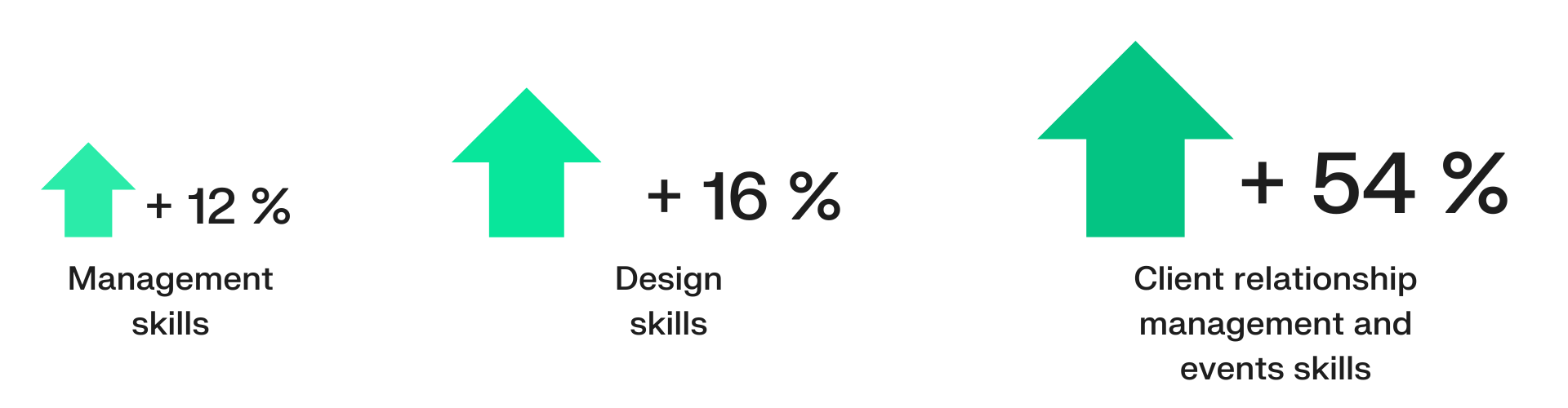
According to APSCo business development, client relationship management and events skills are currently highly sought after, with a 54% uplift in demand for these skills when compared to last year. This is indicative of agency hiring which has remained a cornerstone of ADLIB’s placements for 2023.
These roles have overtaken digital expertise, which has dropped to the second largest segment, although this change could be driven by the increase in expectations for general marketers to have some form of digital abilities.
In contrast, the areas that have had the smallest uplift year on year are management and design, up 16% and 12% respectively.
By region, it’s no surprise that London remains dominant with 59% of the vacancies nationwide. The South East the second largest region, constituting 9.54%.
Remote-first roles seem here to stay too, with 6.1% of vacancies being location neutral, where people are no longer required to be based from the office full-time. This represents a 6x increase on pre-pandemic figures when around 1% of jobs were location neutral.

Cannes Lions 2023 winners demonstrated that creativity can help make brands more inclusive. In Kantar’s The State of DEI 2023: What Marketers need to do to close the inclusion gaps, it was reported that advertisers are feeling more confident in inclusive representation related to women, race and ethnic groups, and in some cases, disabilities too.
This is echoed in Kantar’s Media Reactions study, which suggests over 6 in 10 marketers are confident about their organisations’ advertising avoiding stereotypes, including gender balanced content or inclusive and diverse representation, and notably confidence in producing racially balanced content has increased by 12 percentage points. However, that confidence is slashed in half when it comes to LGBTQ+ inclusive representation.
The Global DEI Census Report by the World Federation of Advertisers provides some key insights to what’s happening internally within organisations in the Marketing industry:

1 in 7 people say they would leave the industry on the basis of lack of diversity, equity and inclusion, which increases to 1 in 6 for women and LGBTQ+, 1 in 5 for ethnic minorities, and 1 in 4 for respondents with a disability.
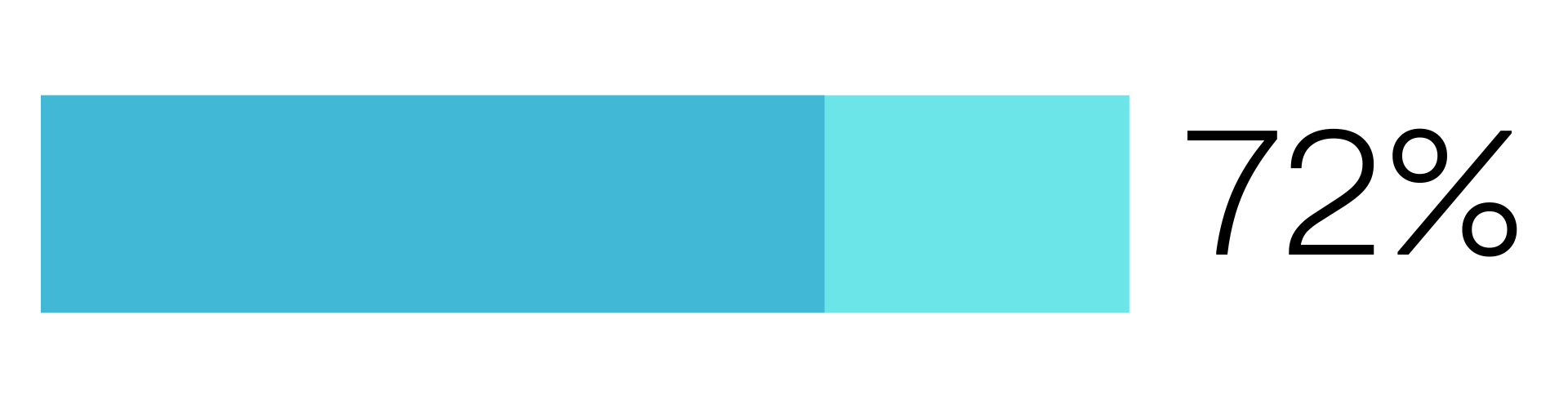
72% of respondents said their company is actively taking steps to be more diverse and inclusive.

1 in 2 said things have improved in the past two years, but 3 in 10 said that things were the same.
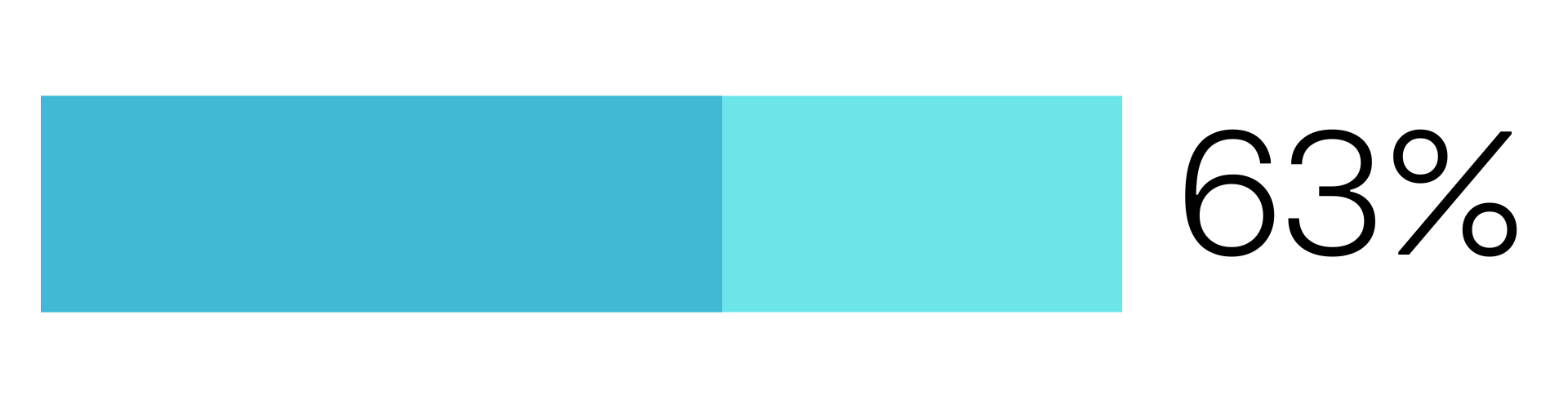
According to the census, we haven’t moved the needle on inclusion. The Global DEI Census Inclusion Index score is 63% which is -1 ppts change compared with 2021.
The most common forms of discrimination being age, gender and family status:
Women, LGBTQ+, ethnic minority and disabled respondents still have worse experiences than their counterparts:
The Agency Collective and Hallam produced their second report about how representative agencies are of the UK population, which concluded that:
Minority ethnic groups are underrepresented
All minority ethnic groups, particularly the Asian demographic are underrepresented in the workforce and even more so in management positions.
Leadership teams are still dominated by men
There are more women than men in the workforce, however not enough women are making it onto the leadership teams.
LGBTQ+ representation is positive
Minority ethnic groups underrepresented
Inclusivity
Not enough agencies are making reasonable adjustments for employees who are neurodiverse or have a disability. There is a lot to be done when it comes to agencies making reasonable adjustments to aid inclusivity in this area.
TikTok
It’s no surprise that the majority of B2C marketing roles which include social media as a core channel, ask for knowledge and experience in TikTok specifically.
Ai
Whether you like it or not, Ai is revolutionising the marketing field. From automation to personalisation. You’ve even got the option to use Ai to help you write a post on LinkedIn. According to the 2023 State of Marketing AI Report by the Marketing Artificial Intelligence Institute:
We’ve seen Ai popping up in job descriptions for a range of roles including SEO Managers, Content Creators, Digital Analysts and Marketing Communications roles.
Automation, CX and Insights
According to Unlimited Group’s CMO Barometer 2023 90% of participants stated that they were using automation tools to improve their return on investment – data science, analytics, CRM, digital platforms and martech are most commonly named among techniques. The race to wholesale digital enablement is ongoing, with the C-suite of marketing pooling most of their focus and resources into tech.
B2B vs B2C, In-house vs Agency, single-channel specialist vs generalist:
As with last year, many of the marketing roles today require strong content and copywriting skills. There is still high demand for digital acquisition skills such as SEO, PPC, CRO, and Performance marketing in general.
SMEs tend to be fond of candidates who have a broad range of skills including creative tools like Canva, InDesign and Photoshop.
B2B businesses are utilising the lead generation skills of marketers through email and automation, content marketing and CRM, particularly within the SaaS world. HubSpot, Salesforce Marketing Cloud and Braze are common tools included in B2B marketing job descriptions.
We’ve seen a steady volume of “Growth Marketer” opportunities within the Tech start-up / scale-up space. Although the 2023 economic climate was tough for many Tech businesses which may rely on funding, the hands-on nature of a Growth Marketer combined with the ability to test, learn and develop a medium-to-long term strategy means this has remained a key skill set in the start-up/scale-up world.
The Agency market has remained steady with salaries remaining high as businesses compete with one another to hire the best talent. We’ve seen a rise in the number of B Corp certified agencies. The UK B Corp community is growing faster than ever. There are now over 1,500 B Corps in the UK, with over 85,000 employees. which is hugely positive for the sector and people and planet too!
Agencies that haven’t already done so, are going the extra mile to differentiate themselves in a noisy market with revamped careers pages, EVP documents, and a greater emphasis on their social impact, non-financial benefits package, and employee wellbeing.
Whether you’re a hiring manager, business owner, or a candidate looking for their next career opportunity, there is a steadying market out there with some sectors finding it hard and others seemingly unaffected. With that comes stiff competition so it is important that you stand out and for all the right reasons, with inclusion being a core part of your EVP. Choosing a recruitment partner that is embedded in your sector, shares your values, and understands the importance of EDI will give you a massive advantage both from a hiring perspective and from a job-seeking perspective.
We’re excited to see what 2024 brings for the Marketing Recruitment sector! If you’re an employer or a jobseeker, and you’d like to work with us, get in touch.
Understanding Digital Marketing salaries is pivotal for job seekers and employers alike. In this comprehensive guide, we delve into the average salaries for Digital Marketing roles in the South West, shedding light on crucial factors influencing pay scales and considerations beyond just the numbers.
The following is based on information collated through working in this industry day in, day out, client briefs taken and placements made by ADLIB in the South West. We stress the importance of context when making salary comparisons based on job title. In many cases, there is a significant variance between the bottom end and top end of salaries paid.
If you choose to make a comparison, consideration should be paid beyond job title. For example, take into account the business proposition, any client base, specialist knowledge, time of establishment and management responsibilities. All of which will influence salary.
While salary is a key factor, it’s not the only consideration. To attract the best talent, employers should also focus on:
This guide provides salary bandings for various sector roles and their respective job titles, including:
By considering not only salary but also the holistic work environment, employers can attract and retain top-tier talent. Use this guide as a resource to navigate the intricacies of Digital Marketing salaries in the dynamic South West market.
Understanding agency salaries is pivotal for job seekers and employers alike. In this comprehensive guide, we delve into the average salaries for agency roles in the South West, shedding light on crucial factors influencing pay scales and considerations beyond just the numbers.
At ADLIB, we’re always keeping close to market trends and how things can fluctuate between organisations. Here, we aim to provide an overall range of salaries based on the spectrum of roles within the South West agency world. Factors that can influence one’s salary: the size of business and team, their location, the size and number of accounts you may be working on, management responsibilities, the industry sector, and specific marketing skills, will all have an impact.
While salary is a key factor, it’s not the only consideration. To attract the best talent, employers should also focus on:
This guide provides salary bandings for various Agency sector roles and their respective job titles, including:
By considering not only salary but also the holistic work environment, employers can attract and retain top-tier talent. Use this guide as a resource to navigate the intricacies of agency salaries in the dynamic South West market.
Explore current job opportunities or get in touch with one of our expert Marketing & Agency consultants.
The Tech Talent Charter (TTC) and MotherBoard Charter have joined forces to address the motherhood penalty in the tech industry with the launch of a new resource guide aimed at helping businesses to create more inclusive workplaces.
A recent study by TTC found that nearly 40% of women in tech agree that caring commitments influenced their decision to leave their job. This emphasises the damage the motherhood penalty has on the tech industry’s ability to retain female talent. It also highlights the urgent need for businesses to offer meaningful flexible working options if they want to improve diversity in the workforce.
As they return to the office after the holidays, working parents are juggling full-time caring commitments whilst schools and wraparound care are closed, whilst trying to settle children into new school routines. This guide is a powerful tool for businesses to support working mothers, fathers and caregivers off the back of this demanding period.
Despite being one of the most innovative sectors, the tech industry continues to struggle with retaining female talent. A staggering 50% of women leave the tech sector by age 35, correlating with childbearing years. Addressing the complexities of motherhood is crucial for fostering a more inclusive and gender-balanced environment in tech.
The new resource calls on businesses to take ten key steps to tackle the motherhood penalty including flexible working arrangements and supporting women’s career development. By investing in these actions, businesses will create an environment that supports working mothers and helps to retain valuable talent in the UK tech industry.
“The tech industry is at a crossroad”, says Karen Blake, Co-CEO of TTC. “Our research shows the scale at which women leave tech at critical junctures in their lives, often due to the challenges of balancing motherhood and caring responsibilities with career demands. This exodus is a loss for these talented individuals and a significant setback for the industry and UK PLC. That’s why the work of the Tech Talent Charter and the MotherBoard Charter is so important. By tackling the motherhood penalty and creating a more inclusive workplace, we can help to ensure that the tech industry is a place where everyone can thrive. We all have a role in creating a more inclusive tech industry. Employers can start by rethinking their flexible working policies, investing in career development for women, publishing parental leave policies and creating a more empathetic workplace culture. Individuals can also take action by advocating for change in their workplaces and supporting organisations working to make the tech industry more inclusive.”
Sophie Creese, Founder of the MotherBoard Charter, says: “There is a proven link between women leaving their jobs and motherhood. This is especially prominent in male-dominated industries, with tech specifically having one of the poorest attrition rates of all industries in the UK. While there’s a prevailing notion that elevating women to senior roles can address this issue, the stark reality is that without addressing the root cause — the alarming 50% of women that are leaving tech by age 35 — meaningful change remains elusive. Retaining women, by going beyond the basics of maternity leave, is essential to changing the future landscape of the industry. That’s why I am thrilled to be launching this guide with the Tech Talent Charter so that leaders can start to open the dialogue of how they can go beyond policy by taking tangible actions for a more equitable and inclusive future.”
To access the guide, visit https://openplaybook.techtalentcharter.co.uk/parents
About Tech Talent Charter
The Tech Talent Charter (TTC) is a government-supported, industry-led membership group that brings together 700+ Signatory organisations and equips them with the networks and resources to drive their diversity and inclusion efforts. Our broad base of Signatories includes companies and industries of all sizes, non-profit organisations, charities, leading UK educators, and government departments. TTC is preparing to release its highly-anticipated Diversity in Tech report on February 28th. The report will offer fresh insights on diversity in tech, including the latest statistics on women in tech, ethnic diversity, neurodiversity, disability, and social mobility in tech.
For more information, visit techtalentcharter.co.uk or contact [email protected].
About MotherBoard
MotherBoard is a Business Charter, Community, and Event Series driving tangible change for mums working in the tech industry. We are on a mission to transform the industry to be more inclusive of mothers by tackling stigmas and supporting employers who want to create real change.
For more information, visit motherboardmovement.co.uk or contact [email protected].
MotherBoard, a Bristol-based organisation, has been working towards retaining women in the tech industry since its launch in 2021. The direct link between motherhood and high attrition rates is evident in the fact that 50% of women leave the tech industry before the age of 35. MotherBoard’s mission is to change that.
In their latest annual impact report, MotherBoard revealed that the 29 signatories of their Charter have made significant progress in supporting women and mothers in their organisations. On average, these signatories have improved the gender balance within their tech teams by 10% from 2022.
The MotherBoard Movement has been gaining momentum over the last year and has more than doubled its community reach through events, content, and conferences. Sophie Creese, the Founder of MotherBoard, won the Lead 5050 award for ‘Contribution to Gender Diversity’ for the work she does with MotherBoard.
“This year has been pivotal for MotherBoard. We’ve spoken at some of the UK’s leading tech events, worked on government-led projects to highlight the importance of motherhood and its link to the skill gap in tech, doubled our community, and revolutionized our operations to encourage tech companies of all sizes to join our mission,” said Sophie Creese, Founder of MotherBoard.
“Although mother inclusion is now firmly on the agenda for most companies, the work is far from done. We must continue to progress and work collectively to create real, tangible change for women and mothers working in tech.
Real change takes time and none of this would have been possible without the continued support of our signatories, sponsors, partners, community, and the MotherBoard team. Therefore, I would like to express my gratitude to all of them,” added Sophie Creese.
MotherBoard is committed to creating a more inclusive tech industry, and their efforts are paying off. With their continued dedication and support, we can hope to see a more diverse and inclusive tech industry in the future.
About The MotherBoard Impact Report
The MotherBoard Impact Report is an annual collation of the work completed by the MotherBoard Movement & MotherBoard Charter signatories in driving tangible change for mums and women working in the tech industry.
You can access the full report via their website: https://motherboardmovement.co.uk/community/motherboard-impact-report-2023
About Sophie Creese (she/her)
Founder of MotherBoard
Sophie Creese is the Founder of mission-led organisations MotherBoard & HeyFlow, which are driving positive change for gender equity at work.
MotherBoard is a not-for-profit Business Charter & Community that is tackling the 50% of women who leave the tech industry by age 35, predominantly due to motherhood.
Beyond MotherBoard, Sophie co-founded HeyFlow earlier this year, a mission-led insights & consultancy start-up that helps employers understand their female workforce better to improve retention. (https://heyflow.co.uk/)
About MotherBoard
MotherBoard is a Business Charter, Community, and Event Series driving tangible change for mums working in the tech industry. We are on a mission to transform the industry to be more inclusive of women & mothers by tackling stigmas and supporting employers who want to create real change.
Powered by ADLIB (https://www.adlib-recruitment.co.uk/), sponsored by Not On The High Street (https://www.notonthehighstreet.com/).
// 50% of women leave the tech industry before age 35. Let’s change that.
Introducing our annual Design – People, Work & Engagement Survey, a concise yet comprehensive exploration designed to provide a snapshot of working in Design and User Experience roles across the United Kingdom. This survey allows us to inform employers about the evolving needs, priorities, and aspirations of those shaping the Design landscape.
Whilst we have a lot of internal data at ADLIB, we’re always looking to strengthen this and develop a better understanding of the people and communities we work with. Along with our experience, surveys like this help us to inform employers of what’s important to people and create better environments and offerings too.
We plan to run this survey annually each year. Alongside our internal data this survey will help us publish a report that offers a snapshot of the people, working practices and priorities of those in the Design sector and how this is changing. We’ll make this available on the ADLIB blog.
We’ve tried to keep it short but insightful.
People working in permanent roles (including full-time & part-time) in Design and User Experience in the United Kingdom at any level. The job title’s featured in the survey reflect the most common roles and job titles we recruit for, so it’s worth noting that not all roles across the sector are featured.
Around 5 minutes.
The questions are in 3 main sections;
The personal information we ask for here is to help us better understand and share insight on the diversity within the sector. All these questions are optional and please only answer what you’re comfortable with, there is a ‘Prefer not to say’ option. We’ve also included boxes to self identify or describe (we couldn’t change the text to ‘Self describe’ in the form creator, so these say ‘Other’).
We take data privacy very seriously and are fully GDPR compliant. Entering your email at the end of the survey is entirely optional and this information will be securely stored. Your email address will only be used to contact you to share the results of the survey and to let you know of future surveys we’re conducting should you choose these options at the end.
You need to load content from reCAPTCHA to submit the form. Please note that doing so will share data with third-party providers.
More Information