
This article has previously appeared on the ADLIB Blog.
In this Women In Design feature, we caught up with Vee Rogacheva, Head of Product Design at Go.Compare which is part of Future Plc.
Vee emphasizes the importance of empathy, accessibility, and diversity in her work. She also highlights the unique contributions women bring to design, the need for mentorship, and the importance of owning your career to unlock opportunities for growth and success.
Could you please introduce yourself as well as your background?
Hi, I’m Vee Rogacheva, and I’m the Head of Product Design at Go.Compare which is part of Future Plc. I lead a team focused on building experiences that help millions of people across the UK save money.
Go.Compare is a regulated business and the design team is responsible for helping users achieve their financial goals. Our solutions are informed by deep understanding of users, grounded in research, and from the synergy between cross-functional teams and experts.

Before joining Go.Compare, I worked in the Education Technology sector, where I gained valuable insights into creating impactful experiences for users from different parts of the world. Prior to that, I was a user-centered design consultant, working with clients such as The Samaritans, Drinkaware, and Guide Dogs. These experiences helped me develop a deep appreciation for designing with empathy and purpose, focusing on accessibility and the diverse needs of different user groups.
At Go.Compare, I’m passionate about creating solutions that have a real impact on people’s lives, while nurturing a team culture that values creativity, inclusivity, and continuous learning.
In your opinion, what unique perspectives or contributions do you think women bring to the design industry?
As women we often have to challenge stereotypes and bring diversity into design thinking itself. By being in leadership positions, we can also influence the way products are shaped—ensuring that design is not just for a single type of user, but for a wide array of individuals with different backgrounds, needs, and expectations. This results in products that resonate more deeply with a broader audience, fostering inclusivity.

Women are also in a unique position as they, willingly or not, serve as role models for other women in any industry and design is no different. That means that female designers are often expected to not only perform at the highest level but also represent and pave the way for others. This dual role can bring added pressure and can be very tiring, no wonder so many women quit.
I’m passionate about unlocking opportunities in design for other women, which is why I got involved in co-organizing Ladies that UX Bristol, a community that supports women and under-represented genders on their design journey. We get together once a month and it’s a great opportunity to network and learn.
In an attempt to capture some of the Wisdom you’ve gained as a woman in the design sector so far, what is the 1 thing that you’d like to pass on to your peers as well as the future generation of talent within your sector?
I can’t emphasise enough the importance of owning your career. It’s crucial to proactively seek out opportunities for growth. A great example of is the story of my team member, Monica. She previously worked in another team here at Future and reached out to me, expressing her interest in design and her desire to transition from marketing to a UX role. Her initiative not only showcased her passion but also opened the door for her to explore new possibilities in her career. She has been a great addition to the team, bringing in all those skills she already had and quickly gaining new ones as she is now taking on bigger and bigger projects.
If anyone reading this is thinking about reaching out, I can’t promise you a job but I’ll always find time for people looking to break into design or wanting to become better designers. It’s essential to reach out, seek advice, and gather insights from those who can help you navigate your journey. Connecting with peers and mentors helps build your confidence and unlocks valuable opportunities to craft a fulfilling career in design.
If you’re inspired by the stories and wisdom shared in our ‘Women In Design’ series and would like to contribute your own experiences, we’d love to hear from you. Creatives at all levels, please email us and your story could be the next we feature.
This article has previously appeared on the ADLIB Blog.
We caught up with Samantha Merrett, Senior Accessibility Specialist at the Ministry of Justice (MoJ).
She shares her journey into accessibility, the role inclusion plays in her work, and how small design changes can make a big impact. Samantha also offers practical advice for designers looking to create more accessible experiences and highlights key resources to stay ahead in inclusive design.
The purpose of the series ‘Design For All’ is to demonstrate the importance of inclusivity in design and share knowledge on how to create more inclusive and accessible design experiences.
Hi there, my name is Samantha Merrett, and I am a Senior Accessibility Specialist working at the Ministry of Justice (MoJ). I have been at the MoJ for nearly a year now and I have worked in the Civil Service for more than 8 years.
Before joining the team at the MoJ, I was Accessibility Lead at the Food Standards Agency and GOV.UK Managing Editor at the Ministry of Defence (MoD). Whilst working at the MoD, I managed a small team of editors editing and publishing content on GOV.UK. The introduction of the Public Sector Bodies Accessibility Regulations (PSBAR) in 2018 required us to upskill quickly to understand how to ensure our content was accessible.
However, there was one specific moment that made me realise that accessibility was the career for me! I spent time working on the Armed Forces Pension forms to try and make them more user-friendly and accessible. We ran focus groups with users to understand the problem areas and then worked to fix the issues. We then presented the improved forms back to the focus group and the attendees was so thankful that they could now independently claim for their pension.
It was that moment for me that made me realise how important accessibility is. I might have only helped one person in that room but that was enough for me! What we do matters and it can have a profound impact on the users that we serve.
For me accessibility and inclusion go hand in hand, if we make things more accessible, they should be more inclusive for all. In my current role, we encourage all colleagues to consider accessibility from the start, whether you work in design creating digital products or write emails and documents, accessibility should be front and centre.
Adding accessibility in at the beginning makes it much easier to ensure the final product or design is accessible. Addressing accessibility early in the design process is more cost-effective than retrofitting a product later.
Designing for accessibility can lead to innovative solutions that benefit all users. For example, adding captions to videos benefits not only those with hearing impairments but also for users in noisy environments.
Fundamentally, accessible design can enhance usability for everyone not just those with disabilities. This promotes equal access and prevents exclusion.
Promoting inclusive design is a core aspect of my work. I strive to ensure that the information and tools I provide are accessible to everyone. This involves using clear and concise language, offering alternative text for images and ensuring all interactive elements are keyboard accessible. I also never stop learning; I continuously keep up to date with standards and best practices to provide the most relevant and effective support to my colleagues.
One of the main challenges I face is designing visually engaging content whilst making it accessible. I like to ensure that complex topics are explained in an understandable way. Infographics and visuals are often avoided when it comes to accessibility, but this overlooks the benefit they can provide for those who are visual learners or neurodivergent. If graphics are designed using the appropriate colour contrast, accessible font types and use clear and consistent layouts they should be accessible to users. Of course, to make the content accessible you must also provide an appropriate, equivalent text version of the content so users can read through the text if they prefer.
First, you need to understand your users. Take the time to learn about the different ways people with disabilities interact with digital products. This might include using screen readers, keyboard navigation or using voice commands. Talk to people with access needs about their experiences, specifically in the area that you are working in. It is important to truly understand your users and acknowledge that not everyone’s experience is the same. We are all individuals with our own needs and preferences, and we all deserve to have these needs considered.
 Never stop learning and make sure you invest time and energy into your own self-development. Continuous learning helps you to stay up to date with the latest news, technologies and best practices making them more effective in your role. Accessibility is an ever-evolving topic, and it can sometimes feel difficult to keep on top of all the latest trends. If you can prioritise your own development, you not only advance your career but also help to contribute to the overall success and adaptability of your team and organisation.
There are so many amazing resources that I could share but these are a couple that I refer to time and time again.
Accessible Design Resources
Following the insightful recommendations from our Design For All participants, we’ve curated an extensive collection of tools, guides, articles, books, blogs, and videos. This resource is specifically designed to support accessibility and inclusion specialists at every stage of their journey.
View Accessible Design Resources
Join MotherBoard in partnership with Bristol based law firm Burges Salmon for an exclusive event designed to support early-stage female-founded start-ups. This session will provide invaluable insights from industry experts on key areas that can help your business thrive, avoid common pitfalls, and set a strong foundation for growth.
What to Expect
This event will feature expert-led interactive breakout sessions. Topics include:
✅ Employment & Incentives – Building the right team and structuring incentives for success.
✅ IP & Brand – Protecting your ideas and strengthening your brand.
✅ Fundraising – What you need to know for raising investment.
✅ Culture & Growth – Scaling your business while building an authentic culture.
✅ Tech & Data – building your tech stack, contracting with software providers and navigating the data protection legislation.
After the breakout sessions, enjoy networking over drinks and nibbles, where you’ll have the opportunity to connect with other female founders at a similar stage and quiz the Burges Salmon team on any legal questions. This is a chance to share experiences, gain new perspectives, and build your support network in a welcoming and collaborative space.
Who the event is for
Female founders at idea, pre-seed or seed stage.
The details
📍 Location: Burges Salmon, One Glass Wharf, Bristol, BS2 0ZX
📅 Date & Time: 11th March 5-7pm
🎟️ RSVP via the meetup link
Spaces are limited, secure your spot today!
Any personal data collected before or during the event will be shared between the joint hosts, MotherBoard and Burges Salmon LLP, for the purposes of pre- and post-event administration and communications with you. Each organisations’ privacy policies may be viewed here: MotherBoard and Burges Salmon.Manage Cookies
This article has previously appeared on the ADLIB Blog.
I’m a brand identity designer and founder of Design Bench Studio, a creative practice based in South London. My background is in graphic design. I currently focus on working with local communities, tech-for-good entrepreneurs, and social change businesses.
We help clients define their voice and visual identity and work with the them at the very start of their ventures or business ideas. The “bench” in the studio name reflects the horizontal and open design approach, which has helped us build meaningful partnerships and create work that is purpose-first. Our studio values are designed to mirror the values of the people we work with.
Anyone working in design will have unique contributions to bring into our industry. It would be hard to define this according to gender alone without looking into cultural norms, access to education and resources. As in many industries where there is still a gender pay gap we will need to address a few issues before we can quantify fair contributions.
In terms of perspective, women will certainly have their lived experience lens to add to the industry, and this will be the same for people who identify as women and non-binary people. From my experience with working with all-women teams in design I have seen a more intentional focus on inclusivity and empathy across creative outputs as well as in the ways of working and workplace culture. I have felt more supported and influenced to grow mindfully in all-female teams.
It’s also worth asking—what unique perspectives do men bring? That’s not a question I hear answered a lot by men in design.
Start before you feel ready. Waiting for the “perfect” moment can hold you back, and the truth is, you’ll learn more by doing—even if it’s messy. Mistakes are inevitable, but they’re also where the best lessons happen. You’ll grow more from an imperfect starting point, as long as you adapt and learn along the way, correcting and owning your mistakes. A little embarrassment goes a long way.
The biggest challenge has been tackling my own self-doubt and limiting beliefs—questions like, “Do I deserve to be here?” or “Have I done enough to prove my worth?”. This is, in part, the female experience overall in the work environment, I feel.
I have (somewhat) overcome this with support form a coach and by learning to ask for what I really want from a workplace. Building confidence is hard and I believe we all need some external help and support from mentors and peers to face those challenges.
Role models are hugely important – they show us what’s possible and that success can take many forms. Seeing women lead authentically in the creative industry has been so inspiring and was a big reason for starting the ffsc.club. The club is structured around soft networking events and story-sharing for women in the creative industries.
Role models can help us draw strength from their stories in order to carve out your own path.
Ana is the founder behind Female Founders Sharing Circle, an open-source directory and initiative designed for knowledge exchange between female founders in the creative industries and beyond.
Their next ‘soft networking’ event is scheduled for 20th of March in the CIC space at the Bussey Building, Peckham for a 7PM start.
Check out the event and community here.
If you’re inspired by the stories and wisdom shared in our ‘Women In Design’ series and would like to contribute your own experiences, we’d love to hear from you. Creatives at all levels, please email us and your story could be the next we feature.
This article has previously appeared on the ADLIB Blog.
This article delves into the significance of accessible design, highlighting insights from accessibility specialists and the impact of the upcoming European Accessibility Act.
Accessible design is key in ensuring that websites, services, products and places are inclusive of everyone. But understanding of, and investment into, accessibility and inclusion is not where it needs to be. A 2024 AbilityNet survey found that 19% of respondents considered digital accessibility was a low priority in their organisations, with none of the respondents answering that it was a very high priority. A study by WebAIM found notable increases in accessibility issues across the top 1 million home pages in 2024 – a major problem given around 135 million users across Europe are living with a permanent disability.
Inconsistent senior buy-in, limited budgets, and an uncertain market have been barriers to significant advances in digital accessibility. Considerable improvements are needed across the board to ensure that services, products, places and the web are designed to work for everyone.
si
The European Accessibility Act, which businesses operating in Europe will need to comply with by June, should lead to some improvements in this area in 2025. Additionally, while businesses are sometimes failing to prioritise accessibility, more professionals appear to understand accessibility basics, and despite a slow job market, accessible design skills appear to be in increasing demand. More change is needed, but there are positive signs of improvement going forward.
In 2024, we spoke to individuals working to make the design landscape more inclusive. Through our Design for All interview series, we have heard from accessibility specialists working on products, websites, apps, wayfinding strategies, and written content. These specialists have shared lived experiences of disability and neurodiversity, insights on designing inclusively, and useful resources for anyone looking to improve the accessibility of their designs.
We’d like to express our thanks to all of our contributors this year; Oliver Quinlan, Tom Pinks, Emily Yates, Henny Swan, Cameron Farwell, Rodrigo Sanchez, and Katy Cooper. Here are some of the valuable insights from our contributors.
“Listen, learn, ensure involvement is well-considered and useful (rather than tokenistic) and pay people for their time and expertise. It’s the simplest four-step process that will completely transform how you design but, more importantly, the perspective from which you see the world around you.”
“While guidelines are great, even accessibility guidelines are based on what works for the majority within the disabled community, and they might not account for the full diversity of needs. Designing for the edge cases can lead to solutions that not only benefit the people who need them the most but also improve the experience for everyone.
Take voice interfaces, for example. They were originally designed for people who couldn’t see, but now they’re part of everyday life. The same goes for keyboards and closed captions—designed for specific needs but now used by many people in various contexts. So again, it’s about designing for those edge cases because that’s where you find some fantastic design solutions that positively affect everybody.”
“As a general strategy for accessibility, I’ve always taken a 3-pronged approach with a focus on compliance, culture, and education.
I think of it a bit like the fire triangle they teach you in Science class, where you have oxygen, heat and fuel as the 3 sides, and when you remove one the fire goes out.
In the accessibility triangle, if education is removed, people don’t know how to do accessibility. If culture is removed, people don’t think accessibility is important. And, if compliance is removed, there’s no way to measure whether or not accessibility is being done to the correct standard. Culture is always going to be the hardest to change. Compliance and education are much easier, and in the process you can start to change the culture.”
“Something is better than nothing. If an organisation isn’t as willing to invest in accessibility as much as it ideally should, it’s worth noting that bringing in some elements of accessibility is better than none. Lots of beneficial things can be achieved with fairly low effort and, over time, these small gains will begin to add up. It also makes the potential task of further improvements less daunting when there you aren’t starting from zero.”
The specialists we spoke with have also been kind enough to share recommendations to help make your designs more accessible. We have collected these into a comprehensive Accessible Design Resources List of tools, guides, articles, books, blogs, and videos tailored for specialists at every level – here are our top 3:
We will be continuing the series over this year and can’t wait to share more insights from experts over 2025. If you’re interested in taking part, please contact me at [email protected].
This article has previously appeared on the ADLIB Blog.
Here’s our conversation with Samantha Merrett, Senior Accessibility Specialist at the Ministry of Justice (MoJ).
She shares her journey into accessibility, the role inclusion plays in her work, and how small design changes can make a big impact. Samantha also offers practical advice for designers looking to create more accessible experiences and highlights key resources to stay ahead in inclusive design.
Hi there, my name is Samantha Merrett, and I am a Senior Accessibility Specialist working at the Ministry of Justice (MoJ). I have been at the MoJ for nearly a year now and I have worked in the Civil Service for more than 8 years.
Before joining the team at the MoJ, I was Accessibility Lead at the Food Standards Agency and GOV.UK Managing Editor at the Ministry of Defence (MoD). Whilst working at the MoD, I managed a small team of editors editing and publishing content on GOV.UK. The introduction of the Public Sector Bodies Accessibility Regulations (PSBAR) in 2018 required us to upskill quickly to understand how to ensure our content was accessible.
However, there was one specific moment that made me realise that accessibility was the career for me! I spent time working on the Armed Forces Pension forms to try and make them more user-friendly and accessible. We ran focus groups with users to understand the problem areas and then worked to fix the issues. We then presented the improved forms back to the focus group and the attendees was so thankful that they could now independently claim for their pension.
It was that moment for me that made me realise how important accessibility is. I might have only helped one person in that room but that was enough for me! What we do matters and it can have a profound impact on the users that we serve.
For me accessibility and inclusion go hand in hand, if we make things more accessible, they should be more inclusive for all. In my current role, we encourage all colleagues to consider accessibility from the start, whether you work in design creating digital products or write emails and documents, accessibility should be front and centre.
Adding accessibility in at the beginning makes it much easier to ensure the final product or design is accessible. Addressing accessibility early in the design process is more cost-effective than retrofitting a product later.
Designing for accessibility can lead to innovative solutions that benefit all users. For example, adding captions to videos benefits not only those with hearing impairments but also for users in noisy environments.
Fundamentally, accessible design can enhance usability for everyone not just those with disabilities. This promotes equal access and prevents exclusion.
Promoting inclusive design is a core aspect of my work. I strive to ensure that the information and tools I provide are accessible to everyone. This involves using clear and concise language, offering alternative text for images and ensuring all interactive elements are keyboard accessible. I also never stop learning; I continuously keep up to date with standards and best practices to provide the most relevant and effective support to my colleagues.
One of the main challenges I face is designing visually engaging content whilst making it accessible. I like to ensure that complex topics are explained in an understandable way. Infographics and visuals are often avoided when it comes to accessibility, but this overlooks the benefit they can provide for those who are visual learners or neurodivergent. If graphics are designed using the appropriate colour contrast, accessible font types and use clear and consistent layouts they should be accessible to users. Of course, to make the content accessible you must also provide an appropriate, equivalent text version of the content so users can read through the text if they prefer.
First, you need to understand your users. Take the time to learn about the different ways people with disabilities interact with digital products. This might include using screen readers, keyboard navigation or using voice commands. Talk to people with access needs about their experiences, specifically in the area that you are working in. It is important to truly understand your users and acknowledge that not everyone’s experience is the same. We are all individuals with our own needs and preferences, and we all deserve to have these needs considered.
Never stop learning and make sure you invest time and energy into your own self-development. Continuous learning helps you to stay up to date with the latest news, technologies and best practices making them more effective in your role. Accessibility is an ever-evolving topic, and it can sometimes feel difficult to keep on top of all the latest trends. If you can prioritise your own development, you not only advance your career but also help to contribute to the overall success and adaptability of your team and organisation.
There are so many amazing resources that I could share but these are a couple that I refer to time and time again.
Accessible Design Resources
Following the insightful recommendations from our Design For All participants, we’ve curated an extensive collection of tools, guides, articles, books, blogs, and videos. This resource is specifically designed to support accessibility and inclusion specialists at every stage of their journey.
View Accessible Design Resources
This article has previously appeared on the ADLIB Blog.
Understanding Agency salaries in the South West is pivotal for job seekers and employers alike in 2025. This guide provides essential insights into the factors influencing pay scales and highlights the importance of considering additional benefits beyond salary to attract top talent.
For a detailed breakdown of digital marketing salaries in the South West, view our comprehensive salary guide or get in touch for a chat.
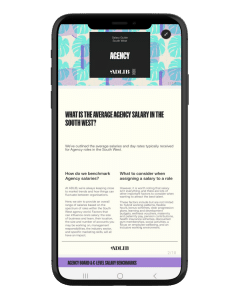
At ADLIB, we’re always keeping close to market trends and how things can fluctuate between organisations. Here, we aim to provide an overall range of salaries based on the spectrum of roles within the South West agency world. Factors that can influence one’s salary: the size of business and team, their location, the size and number of accounts you may be working on, management responsibilities, the industry sector, and specific marketing skills, will all have an impact.
If you choose to make a comparison, consideration should be paid beyond job title. It is worth noting that salary isn’t everything, and there are lots of other important factors to consider.
To attract the best talent, employers should also focus on:
This guide provides salary bandings for various sector roles and their respective job titles, including:
To attract and retain top-tier talent in the South West, consider the complete package: competitive salaries, hybrid working patterns, and a supportive, inclusive work environment.
Written by Tony Allen, Head of Marketing, Digital & eCommerce recruitment at ADLIB.
– Senior Appointments & Strategic Growth | Agency & In-house Marketing.
This article has previously appeared on the ADLIB Blog.
Understanding Digital Marketing salaries is pivotal for job seekers and employers alike. This ADLIB Digital Marketing salary guide provides essential insights into the factors influencing pay scales and highlights the importance of considering additional benefits beyond salary to attract top talent.
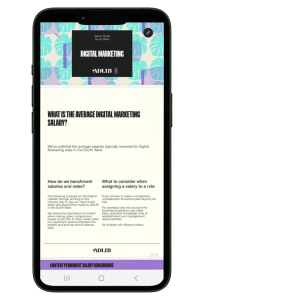
The following is based on information collated through working in this industry day in, day out, client briefs taken and placements made by ADLIB in the South West. We stress the importance of context when making salary comparisons based on job title. In many cases, there is a significant variance between the bottom end and top end of salaries paid.
This guide provides salary bandings for various sector roles and their respective job titles, including:
If you choose to make a comparison, consideration should be paid beyond job title. For example, take into account the business proposition, any client base, specialist knowledge, time of establishment and management responsibilities. All of which will influence salary.
While salary is a key factor, it’s not the only consideration. To attract the best talent, employers should also focus on:
To attract and retain top-tier talent, consider the complete package: competitive salaries and a supportive, inclusive work environment.
Written by Tony Allen, Head of Marketing, Digital & eCommerce recruitment at ADLIB.
– Senior Appointments & Strategic Growth | Agency & In-house Marketing.
This article has previously appeared on the ADLIB Blog.
As part of the ‘Women in Design’ blog, we spoke with Kirsty Grafton, founder of Graft Creative.
Kirsty discusses balancing family life with running her own business, her passion for meaningful design, and the challenges she’s overcome as a female designer.
I’m Kirsty Grafton, I’ve been working for myself as Graft Creative for the last three years. Before working for myself, I worked at design agencies around Sheffield and Leeds for a decade, and also as an in-house designer for a university for a couple of years.
I initially wanted a career in design because it seemed like a perfect balance of creativity and logic. At school, my favourite subjects were always maths and art – it might seem like an unlikely combination, but I love how design uses creativity to solve problems and create clarity.
I’m a married mum of one, enjoying the challenge of balancing family life with running my business, as well as fitting in as much travel and socialising as possible!
Since going freelance a few years ago I have gradually specialised more and more in working for the charity sector. Typically, I work with medium-sized charities that have limited design capacity in-house. Particularly, I love working collaboratively on their campaign designs, brand development, and bringing to life often quite hefty documents like impact reports. I love working with organisations with heart, making positive change in the world.
I think every woman is a unique being and brings her own experience and knowledge to the table. Some of the most inspiring women I’ve worked with have the attitude of getting cracking with work, being proactive and always pushing things forward. I also really respect any person who is straight-talking but without an ounce of ego or bravado. Someone who can empathise with everyone’s perspective, acting as a true team player by giving everyone in the room a platform to speak.
Your style, preferences and opinions are as valid as anyone else’s. Just because your designs don’t fit into the ‘cool’ box, aren’t the latest ‘trend’, or look a certain way, doesn’t mean they should be discounted. It’s important to stay inspired by external influences, but also to be true to yourself. Keep pushing what you’re doing and trust your gut and opinions.
I found the transition to being a parent in the design industry a particular challenge. I really loved my previous agency role, particularly how sociable it was, but I just couldn’t see how the two worlds of parenting and agency life could comfortably co-exist.
Agency life often means being very responsive to clients’ needs, meaning that work can often land at the last minute, or jobs can take longer than planned. At the agency, my role was full-time – and I was concerned that if I returned part-time to the agency then I might miss out on the meatier projects because of being less responsive. I wanted to ensure I still got to work on creative, rewarding jobs, but respecting my boundaries and parenting balance.
Unfortunately, agencies were not designed to work alongside flexible working when I needed it, and I hope that this is now starting to change with the flexible working bill coming into place.
I would say to anyone in a similar position – remember that you don’t have to stick with the same setup forever. You can go back to work part-time, and then increase your days as your children grow or your situation develops. Don’t worry that your work-life decisions will define you forever. In reality, the period of having a young child or children is relatively short compared to your long working life.
However! Having said that… I think stepping out on my own was one of the best decisions I’ve ever made. I am naturally risk-averse so wouldn’t have made that step unless circumstances forced my hand, but I love the feeling of working with the clients I want to, planning my own time, and being in control of my own business and output.
I’m sure the quote ‘If you can’t see it, you can’t be it’ has been brought up in this series before?! I think having women at all levels in the design industry is important for the next generation of designers to feel it is the right industry for them and that they can make valuable and meaningful contributions.
It’s a shame that over my experience in the design industry, I’ve not worked directly with many women who’ve progressed past management to leadership positions.
Personally, I don’t envision management as being part of my future, but I still think I would have benefitted from being around more women at the entry-level of my career. Agencies would benefit from having more women steering the ship, signalling to young women who are just starting out in the design industry that they will be taken seriously and can aspire to the senior levels in the future.
Sign up to the Women in Design newsletter
If you’re inspired by the stories and wisdom shared in our ‘Women In Design’ series and would like to contribute your own experiences, we’d love to hear from you. Creatives at all levels, please email us and your story could be the next we feature.
This article has previously appeared on the ADLIB Blog.
In this chat with Sara Telahoun, we discuss Climate Reframe and the pressing need for Diversity and Inclusion in the climate sector, where ethnic minorities make up just 4.8% of the UK workforce. Climate Reframe, launched in 2019, aims to change this by amplifying the voices of diverse environmental advocates, providing media training, and dismantling systemic barriers within the movement.
This blog explores Climate Reframe’s mission to amplify diverse voices in the climate movement and drive equity, inclusion, and systemic change within the environmental sector.
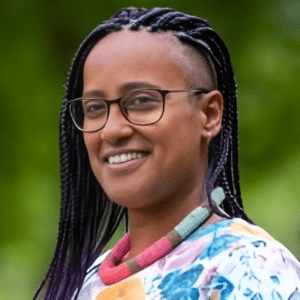
Let’s start with the need for Diversity and Inclusion, what’s your take – why is it so important?
We wouldn’t be where we are today if it wasn’t for diverse perspectives and voices. Not only does having diverse voices foster innovation, promote justice, improve organisational performance, and strengthen social cohesion, but it also creates safe spaces for people to truly be themselves and feel supported. It enhances creativity and problem-solving. It also helps address systemic inequalities, ensuring fairer access to opportunities. In workplaces and movements like climate advocacy, inclusion ensures that all voices, especially those from marginalised groups, are heard, leading to more just and effective outcomes.

This is especially needed in the environmental sector in the UK, which is the second least ethnically diverse sector, with employees identifying as ethnic minorities representing only 4.8% of the workforce in 2021. There is much work to be done to amplify the voices of Indigenous global majority climate advocates, activists, and experts who have been excluded from the media and wider public conversation for a long time.
Can you share a little bit more about what you do? What’s the purpose and mission of your initiative/programme/organisation?
The climate and environment movement is predominantly white, and its lack of diversity hampers climate action. To help redress this imbalance, Climate Reframe was launched in 2019 as a list of 100 UK-based environmental and climate justice activists, experts, and advocates from racialised minority backgrounds. The list was intended to make it easier for the media and those working in the climate and environment movement to find climate experts from diverse backgrounds. Since its launch, many Reframers have benefitted from more local, national, and international media exposure, and Reframe itself has provided media training opportunities and support for its members.

Climate Reframe’s ongoing work is important in dismantling the bias and institutional racism that has resulted in a climate movement that is skewed and imbalanced. We are committed to working with allies and collaborators to challenge media and funding opportunities that continue to go mainly to male- and white-led organisations.
Climate Reframe is about challenging and changing this reality, but it is also about so much more. Climate Reframe is committed to supporting the climate and environment movement in its transformation towards greater justice, equity, diversity, and inclusion (JEDI). Climate Reframe models a more intersectional, intergenerational, and equity-focused movement.
What do you consider are the potential consequences of a lack of Diversity and Inclusion and what do you see as the main benefits of an inclusive workforce?
Climate change is one of the most complex and important issues affecting the world. We need diverse voices and perspectives to bring healthy challenges and ideas to the table, along with varied expertise. We already know that global majority populations are on the front lines of climate impact, experiencing the worst of extreme weather changes. We must centre Indigenous communities, who have been stewards of vast ecosystems, resisting extractivism and educating the global community on the climate crisis. We also know that having singular perspectives will mean marginalised communities are further distanced from the climate movement, and we need communities from all walks of life to understand and feel empowered to create change.
We believe that BIPOC communities are not only on the front lines of the impacts of the climate crisis; they are also leading with the solutions and analyses that are critically needed for a just future.
How can businesses and potential employers get involved with your initiative/ programme/ organisation?
Use, share and distribute the Climate Reframe directory when looking for speakers or experts on climate and sustainability issues.
Get in touch with us directly via our website to discuss opportunities and potential collaborations.
Follow @Climatereframe on social media to stay updated with our community activity, updates, and events.
Subscribe to our weekly newsletter—the #ReframeRoundUp.
If you are a part of an initiative, brand or company that proactively champions diversity and would like to be featured as part of the “True Diversity” series please get in touch with Tony.
View True Diversity blog collection
You need to load content from reCAPTCHA to submit the form. Please note that doing so will share data with third-party providers.
More Information