
Written by Tony Allen this article has previously appeared on the ADLIB Blog.
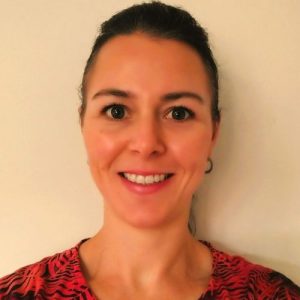
Meet Esther Champion, founder of Myrtos Consultancy, Myrtos believe that everyone should be given a fair chance to work, grow, and thrive, regardless of their past. Through workshops and educational initiatives, Esther challenges misconceptions surrounding individuals with criminal records, advocating for their employment opportunities.
Here she sheds light on the societal impact of inclusive hiring practices and the potential for positive change within communities and businesses alike.
There is so much we can learn from people who have different backgrounds from ourselves, or whose minds think differently. Imagine how boring life would be if we only socialised with, or spoke to, people who were the same as us. Diversity gives us the opportunity to grow, to learn, and to challenge our way of thinking, which can only be a good thing.
I run workshops for businesses and organisations on criminal justice to raise awareness of the system, how it works, and how it impacts those who have been or who are in it. I educate and empower businesses and organisations to be more confident when it comes to hiring and supporting people who have a criminal record in their workplace. I then connect them with organisations who can help them recruit people who have a criminal record, either directly from prison or from the community, saving that company recruitment costs.
I also run workshops to enable people to confront their bias and misconceptions when thinking about people who have a criminal record. I provide advice and support to enable businesses and organisations to update their recruitment policies, recruitment process, onboarding process, and explore how inclusive their workplace is.
Finally, I can support businesses if they have an employee who has entered into the criminal justice system, and empower them to navigate that situation.
My purpose and mission is to challenge and change people’s perceptions towards people who have been, or who are in, the criminal justice system, especially when it comes to their ability to work and the types of jobs they can do. There is a misconception that people who are in prison, or who have been in prison, are unmotivated, uneducated, and can only do low level jobs, but this isn’t true. Some are highly educated and have degrees, others didn’t complete formal education, but are still incredibly bright and would be an asset to any company. We need to remember that there are educational courses and work opportunities in prison, so people aren’t necessarily sat idle; they are learning, growing, and developing.
Employment is one of the biggest factors in reducing re-offending, yet only 17% of prison leavers manage to get a job within a year of release. Currently, the approximated social and economic cost of reoffending each year, dominated by unemployed people with a conviction is £18 billion, yet 90% of surveyed businesses who employ prison leavers have reported that they are motivated, trustworthy and have good attendance. I believe that there is a job in every company that would suit someone who has a criminal record because people who have committed a crime come from all walks of life.
Lastly, the majority of people who have a criminal record want to make positive changes to their lives. Giving them a job is one way of making this happen.
I think the consequences are that we get stuck in one way of thinking and are at risk of becoming narrow minded. We can lack creativity, be confined to a limited skill set and can stay stuck in one place, rather than grow. I’ve had to learn that doing something differently doesn’t make it wrong.
In terms of benefits, well there are many! Having a diverse workforce gives access to brilliant minds, brings creativity, and can increase your businesses reputation. Specific benefits to hiring people who have a criminal background are that you will have employees who are motivated, who are loyal, who are willing to learn, and who have numerous transferable skills.
You will have an opportunity to contribute to reducing reoffending and enabling communities to be safer as a result. Less money will be spent on sending people to prison for re-offending (it currently costs approximately £47,000 per prison place per year, not including health and education) and therefore more money could be available for the NHS, Education, mental health services, etc.
Employing people who have a criminal record provides them with a sense of purpose, an opportunity for them to contribute positively to society, and will address skills shortages.
I would encourage businesses to come on one of the workshops I run so that they can learn more about criminal justice, and hopefully be more open to hiring someone who has a criminal record. I’m always up for a chat, so people can contact me to discuss what misconceptions/fears they might have about hiring someone with a conviction, or what training might suit their business best. It’s important that employers have a policy on recruiting people who have a criminal conviction, and take some time to consider how inclusive their onboarding processes and workplaces really are.
I would also encourage those hiring others to really seek to understand people’s skills and talents before looking at their background, or simply focusing on their knowledge of previous work history. If you do need to know whether someone has a criminal record, are you willing to do this at interview or even at job offer, rather than at application stage?
You can find out more about Mrytos Consultancy and their work, here.
If you are a brand or company that proactively champions diversity and would like to be featured as part of the “True Diversity” series please get in touch with Tony.
View True Diversity blog collection
Written by Chris Naswari this article has previously appeared on the ADLIB Blog.
In this blog, we talk with Tim Fendley, Creative Director and CEO of Applied Information Group, a wayfinding consultancy dedicated to helping people navigate complex spaces with ease. Tim shares the story behind Applied’s innovative approach, their global impact through wayfinding solutions, and the challenges of scaling a purpose-driven business.
The purpose of our ‘Design For Good’ content series is to shine a light on how creative innovation can be a driver for positive change. We feature those that are making it happen, those with grand potential. Businesses and individuals that are shaking up their sector and finding ways to do things better, for social or environmental good.
Hi, I’m Tim Fendley, Creative Director and CEO of Applied Information Group. Applied is a specialist wayfinding consultancy. We design systems that help people move around places easier. While it may seem simple, it’s a surprisingly complex challenge requiring a very specific set of skills. We’re an established global business with a team of 45 and we are excited to be growing our team.
You could say we have two superpowers. Firstly, we use neuroscience to understand people: their motivations and preferences and how they find their way. Secondly, we have an ability to scale systems, across multiple locations, campuses and even countries. Sounds a bit mundane, but it’s incredibly effective.
I designed Bristol Legible City while at Applied’s forerunner: MetaDesign (we had the name before Zuckerberg!). This project perfectly matched my love of information design, cities and orienteering.
The first thing we did after starting Applied was to come up with the idea for a ‘Legible’ London. We highlighted the confusion millions of people find when they come out of tube stations. We could see how limiting this lack of knowledge was when experiencing a place for the first time. We thought this is a problem we can solve. It took five years of lobbying, promoting and designing to come up with a citywide solution. It went through prototyping and piloting and proved its impact at every stage.
We’ve now applied this approach across over twenty cities around the world, benefiting cities such as Brighton, Glasgow, Seattle and Madrid. We’ve helped people get around large campuses, such as Princeton University, the MET, the National Gallery London, the National Gallery of Art in Washington DC, Google and NASA. We’ve also implemented solutions that better connect regional transport systems for networks in Vancouver and Toronto. We’re currently working on the transit system in the San Francisco Bay Area. All these projects benefit from our two superpowers!
For Applied, ‘designing for good’ is pretty fundamental. We believe that the best design prioritises the public’s perspective, improving lives whilst meeting the objectives of the organisations that invest in our services. Wayfinding encourages more people to walk and wheel, benefiting health, retail sales and community cohesion. Our work also supports increased use of buses and trains, giving people the freedom to explore their surroundings.
B Corp’s objectives and values align very closely with what is important to Applied. B Corp provides a structure, a way to assess how you are doing and to look at some aspects of your business where you are strong and some where you need some work. It really helps to have a way to measure these ‘softer’ aspects, that are actually more important than they are credited.
For Legible London, we knew that ‘designing for good’ was the right thing to do, that it would be effective. We had an unbending belief and drive to overcome the city’s complex and natural bureaucracy. It took a lot of investment from Applied at the time. We backed our own ideas with our own money. Most of the time we were told it was not possible, and we kept asking why not. We found that the barriers were only psychological, and as soon as we generated momentum, we gathered a cohort of support. Legible London now spans over 25 boroughs in London and is seen as the definition of modern city wayfinding.
We are now focusing on expanding our digital solutions. With a growing team and enhanced capabilities, we are developing innovative products. The market is evolving from simpler, often imperfect digital solutions to more sophisticated ones with clear purpose. As our clients become increasingly discerning, Applied is well-positioned to deliver even more effective outcomes.
Our latest initiative is to re-design how walking, wheeling and cycling information is delivered throughout the UK.
Applied has gone through several stages in its growth. For the last few years we were hovering at just over 30 people in size, mostly in the UK and the US. A seemingly invisible barrier we could not break. We looked hard at ourselves and realised that it was not sales or new business opportunities that held us back. It was infrastructure. As soon as we won more work, we did not have the structure and systems to handle it whilst seeking future projects. We needed to listen to our own advice and build systems and roles that would allow the business to flourish.
We brought in experts, set-up systems, and started to behave like a company of 120 people, not 12. Central to this transformation was empowering our large team of senior leaders. We consistently hire astonishingly talented people, and it’s vital we give them the space to grow. It is also a lot easier to grow a team when you have a clear sense of purpose, if you all know why you are coming into work every day, and why you sometimes must park your own story to make sure the bigger story is successful.
My role is evolving from decision maker to coach and supporter, while also returning to being a creative ideas generator – dreaming up the next barmy scheme. Our senior team is now running the business, and we are thriving and growing.
Designing for good is simply a good idea.
Written by Chris Naswari this article has previously appeared on the ADLIB Blog.
We speak with Yahye Siyad, founder of Inclusive Horizons, who has dedicated his career to improving digital accessibility.
Blind since birth, Yahye works with organisations like the Bank of England and TfL, helping them design more inclusive digital services.
Here he shares key insights on common accessibility challenges, simple but impactful improvements, and why true inclusion benefits everyone.
My name is Yahye. I work to improve digital accessibility and inclusion through my consultancy, Inclusive Horizons. I’ve been blind since birth, so am passionate about making digital services better for people who might otherwise be excluded. What this means is I help organisations with testing, creating reports, delivering training for designers, developers, and QA, and providing guidance and thought leadership. Through my freelance work and in my last role with CACI (formerly Cyber-Duck), I’ve worked with organisations such as the European Central Bank, Bank of England, and TfL and advised them on how to improve their practices to benefit as many people as possible.
Digital inclusion means the ability to fully participate in every aspect of society. In a digital era, without digital inclusion, so much of life becomes unavailable to you that you effectively feel locked up. So really, it’s about my ability as an individual to engage and participate in a society that is becoming more and more digital.
I promote digital inclusion by engaging with a wide range of organisations – from the education sector, to transport, to banking and beyond. I feel that by working as a consultant, I can make a broader impact than I could working as an employee of a single organisation, which is why I established Inclusive Horizons five years ago.
The main message I try to convey through my work is that while of course digital accessibility helps people with disabilities, it’s also almost always best practice for improving everyone’s usability. Contrary to most people’s assumptions, most accessibility issues aren’t just disadvantaging a small percentage of society but are impacting the way everyone experiences a product or website. Investing in inclusive design is investing in including everyone at every stage in their lives, not just a small subsection of society.
One of the main challenges I face is a lack of understanding about what digital accessibility means, and a lack of dedicated resources within organisations to implement it consistently. Most organisations don’t have an individual or department able to pull the strings and advocate internally, so even if there is a willingness to act and implement a strategy, there isn’t anyone who’s role is dedicated to accessibility who can put that into place. I’ve seen this even in huge organisations: there’s no single department that accessibility comes under. It’s kind of homeless and it’s uncertain who’s meant to implement those strategies – is it the UX team? Is it HR? Marketing? Development? So, the main challenges for me are a lack of understanding and direction, and a lack of resources to implement what is understood.
The main blockers are the underestimation of what accessibility is. What I mean by that is that organisations think “OK, we’ve got some understanding, we think it’s important, we’ve got the basics in place”, and take that to mean they’ve ‘solved’ accessibility. As a result, they see further improvements as an extra task to add to someone’s workload, something to outsource, or something to automate. It’s not seen as critical as something like security. I think a big part of the reason for this is a lack of legislation in the private sector to enforce accessibility, unlike in the public sector.
There are definitely a few improvements and tools that make my life a whole lot easier.
Thoughtful additions like “skip to content” buttons, high contrast options, and embedded options on websites to listen to an article rather than reading it with my screen reader can all be really handy.
Apart from these, basic accessibility considerations make navigating websites with a screen reader so much easier:
Tools I use a lot for websites that are really lacking in accessibility – where the buttons don’t work, the links don’t work or aren’t labelled correctly, the forms aren’t fillable using a screen reader – are The Microsoft Help Desk and “Be My Eyes” service. Through these, volunteers can help me navigate pages that it would be really difficult to get through otherwise.
I’ve been using a lot of voice-based AI tools to help me find information, rather than typing and using websites that might be inaccessible. Chat GPT and Co-Pilot save me having to root through difficult to navigate pages and articles, filtering through information to get to what I need. Google Assistant is great for finding nearby restaurants and businesses to access their contact information without trying to get around their websites.
Another useful feature is the ability to use the camera lens on these AI tools to describe my surroundings. It’s almost like having a conversation with a person who can see what I see and provide detailed descriptions. That feels extraordinary and has been really useful for me.
However, while these tools are great for these use-cases, there are still things AI can’t help with, like the persistent challenge of form-filling on websites.
Accessible Design Resources
Following the insightful recommendations from our Design For All participants, we’ve curated an extensive collection of tools, guides, articles, books, blogs, and videos. This resource is specifically designed to support accessibility and inclusion specialists at every stage of their journey.
View Accessible Design Resources
Written by Tony Allen this article has previously appeared on the ADLIB Blog.
Within this ‘True Diversity‘ blog feature we explore the world of neurodiversity with Devon Lowndes, a Neurodiversity Consultant and Founder & Director of Self Agency.
Self Agency is here to shine a light on neurodiversity and finally give everyone the tools to understand the challenges and enable organisations to evolve their cultures. People with dyslexia, dyscalculic, dyspraxia, ADHD, autism, OCD, Tourette syndrome, mental health illnesses and acquired neurodiversity (such as trauma) have a wealth of strengths to bring to our society. It’s time that they were recognised and valued.
The purpose of our initiative and series “True Diversity” is to feature, collate and showcase the breadth of initiatives and views that are all on a mission to work towards True Diversity and Inclusion.
Devon: It’s a big question. The first thing that comes to mind is that it’s the right thing to do! We can live our lives knowing that that we’re doing right by the other people that we spend time with. I also think it’s vital for growth.
Progression comes from doing things differently. Doing things the way they’ve always been done isn’t a reason enough to do them that way. I think that when we include more difference into spaces, into workforces, we are creating that diversity.
Neurodiversity, which is my area of expertise, certainly looks to protect individuals who have struggled enabling them to thrive, even if it’s just working on that surviving piece to begin with.
Again, I feel like supporting those people is the right thing to do ethically. It’s the right thing to do in terms of progression. It’s only when we’re including more diverse brains in both our thinking and in our work that things really progress through innovation. That’s what the world really needs at this time.
Devon: I am a neuro diversity consultant. My consultancy is called Self Agency, and our purpose is to move neurodivergent lives from surviving to thriving by enabling businesses to support that in order to see that growth within the business as well as in the individuals.
Our mission is to make neurodivergent people feel at home. Bristol is where I’m based. It’s the city I’ve felt most comfortable as a neurodivergent person, and it’s the city I champion. I think Bristol has the bones, the makings of a real home for neurodiversity.
We’re trying to get into as many Bristol organisations as possible to run workshops and training sessions on neurodiversity – introducing the topic and then realising that in company policies.
Devon: So I think in a lot of the cities in the UK there’s a history and a reality of cultural difference. In Bristol, the idea of difference is not just included but celebrated. In Bristol we celebrate independence, right? I don’t know another place in the UK where you walk through each of the smaller, individual areas and high streets, and it’s full of independent shops, independent restaurants. The city is full of startups and innovation too.
When we look at the industries here, we have the creative industry, the tech industry, there’s innovation in aerospace and so much great engineering. It really attracts high numbers of neuro divergent brains. To put it really simply, in Bristol it is celebrated to stand up and have difference in a way doesn’t exist in other places. You are accepted for that here.
Devon: So I’ll speak to this question on neurodiversity in particular. We have the let’s call them “naysayers of neurodiversity”, and we might read articles from them. Then we hear about the uptake in diagnosis, of the difficulty to find treatments, or behavioural modifications, the difficulty at school in children, and in the workforce as well.
I think what we are witnessing is an outcry for help from this movement of people who simply think differently to the way that you might expect them to. They’re often left to struggle, rather than being supported and valued.
Rather than being made to feel they belong, they’re being pushed to the point where it’s now become necessary for medical intervention. Speaking as one of those people myself, right, life is hard. That’s why I go to the doctor about having ADHD. I don’t go to the doctor about having ADHD because I think having ADHD is a problem, I think there are loads of ways to live and thrive. And to have my brain type is difficult with the world being the way it is at the moment. I think that’s what disability is, right? When you feel disabled by environments.
We do need to reach out for support in order to access the environment and the communities around us when it’s not particularly set up for a brain like ours. Often it’s that the setup we’re talking about is actually just the attitudes and opinions and the softer skills, as opposed to it being massive infrastructure or process changes.
The workplace exists in businesses, not the entire world, but people spend a lot of their lives in this setting so it is really important that we get things right in the workplace. If you can educate businesses to make those kinds of common sense changes, which aren’t such massive infrastructure changes, then it does just make everything much more inclusive for everybody.
It is in those softer skills, and we can often fall into the trap of thinking about communicating first, through events or campaigns or new initiatives, but before you can get to the communication you need to learn the language and understand what it means from a neurodiversity point of view. That understanding plays into supporting everyone’s brain in the workforce.
I think so many people with divergent brain types struggle to feel included and aren’t being treated equally. A lot of the time they’re not graced with the language to be able to communicate effectively about what they need, or they don’t have a psychologically safe enough workspace in order to be able to disclose what they need. If we understand people’s differences, we can communicate with our communities and teams about it and be more inclusive. With just an understanding, it removes the friction, and it allows people to feel that that belonging and value again.
So it was really quite a simple start, it’s learn the language, and then and then it naturally grows from there.
Devon: We’ve done a whole range of trainings, learning and development with businesses around neurodiversity. But what people are really engaging with right now is our lunch and learns. That’s us coming into the office for an hour and a half.
We give half an hour solely for Q&A. Having that longer Q&A session allows us to really speak to some of the niche situations that might be going on in that team or that company.
A focus of that session is around the language, the understanding of neurodiversity as a whole. We’re able to start something really special in the conversation among the attendees. And you can’t unknow what you know, once the cats out of the bag. It really starts those organisations on a journey around your diversity, and we see how beneficial it can be.
Thank you so much for sharing all of this with me today, Devon. Really appreciate it.
You can find out more about Self Agency and their work, here.
If you are a brand or company that proactively champions diversity and would like to be featured as part of the “True Diversity” series please get in touch with Tony.
View True Diversity blog collection
Written by Theo Locke, this article has previously appeared on the ADLIB Blog.
We spoke with Alistair Paul, Director at Bright, a creative event production company specialising in employee engagement. With a focus on people and planet, Bright is now a certified B Corp, using events as a force for good.
Here, he shares their journey to certification, how the B Corp framework aligns with their values, and what it means for their team, clients, and the wider industry.
Bright is an event production & management company with a specialisation in internal and employee engagement events. We think differently about events, developing creative and insight-driven event solutions that tick all the boxes; on brand, on time and on budget. You can find out more about our approach on Bright’s website.
I found out about B Corp after seeing some other companies getting accredited, and so out of curiosity looked into what it was all about. Once I did, it was a no-brainer as the B Corp principles aligned with our values as a business and the ways we were already working.
For me it’s less that being a B Corp has changed what we do at Bright, but more it gives us the stamp of legitimacy to find other likeminded organisations and keep us on the right track. It also give our clients the confidence that they are working with a company that understands the impact events can have both on people and the planet.
The process was great, and to be honest I wish it had been around when Bright was set up because it really is a template for how businesses should be run if they want to build with purpose.
Being able to take it bit by bit rather than all in one go allowed us to work through our accreditation while also managing client projects, but I can’t stress the importance of having an internal champion. Someone who will take the lead and make sure it all gets done – for us that was the amazing Beth Simmons and I’m so grateful!
Internally, it’s something to unite with a clear vision and structure so that the team can be proud of where they work.
Before our B Corp journey we were already members of isla and Corporate Charity Partners for Caring in Bristol so we were already thinking about our impact socially & environmentally. The main internal change however is that being a B Corp means that we’re committed to measuring and reporting on this impact, so that we can continue to improve as we grow.
Externally, it allows us to advocate for a fairer and more sustainable events industry, and hopefully find and attract like minded partners at every part of the event production process from suppliers and venues to clients themselves.
Written by Chris Naswari this article has previously appeared on the ADLIB Blog.
We speak with Heather Hepburn, Head of Accessibility at Skyscanner, where she’s spent the past five years embedding inclusive design across one of the world’s leading travel platforms.
In this conversation, she shares her journey into accessibility, practical ways to design more inclusively, and how the Champions of Accessibility Network is helping drive change across the industry.
Hey, I’m Heather Hepburn, Head of Accessibility at Skyscanner. For those of you who don’t know Skyscanner, we’re an online global travel brand. We find great flights, hotels, and cars for our travellers. We translate our services into 37 different languages. We have over 10 million travellers a month who use us.
I run the accessibility programme and I’ve been doing that for five years. Internally, my responsibilities include creating the accessibility strategy for the business, planning our work and roadmaps, raising awareness and understanding of accessibility and disability inclusion, running our champions network, and building accessibility into our processes. I also advocate for accessibility externally, working with our airline and online travel agent partners, and speaking at various events. I also co-run the Champions of Accessibility Network (CAN) with Gareth Ford Williams and Charlie Turrell.
When I started at Skyscanner, I joined as a content designer. During my interview process, I was asked to do a UX critique of the Skyscanner app, and that’s when I realized how inaccessible it was. I had some knowledge from my previous job at RBS, where we considered accessibility when designing our products, but not loads. I ended up writing a job description for myself to start an accessibility programme at Skyscanner, and that’s how it all started. I’ve learned an awful lot in the last five years!
It really does. One of the biggest things in accessibility is making your content easy to understand. The role of a content designer carries significant accessibility responsibilities. If you’re writing visible content, you should also write any hidden content for screen readers at the same time and in the same tone of voice, so inclusion has always been something I’ve had to consider. The content design team at Skyscanner is now heavily involved in accessibility as well and help keep the rest of the designers in check, which is great.
Super important – it is my work. Every project or conversation I have is about improving accessibility, mainly in our traveller-facing products like our websites and apps. I also speak to our brand marketing teams about making their output accessible. We’re a team of two in a large company, so we have to shout loudly and often. We talk at town halls, other teams’ meetings, and have one-to-one conversations with designers and developers all the time. These range from getting people on board with accessibility to reviewing work and helping make elements or features more accessible.
Skyscanner runs global induction sessions for new staff every two months, which now include an empathy lab where we simulate different disabilities and get participants to carry out simple tasks. Empathy labs can be controversial, as the best way to understand disability is by speaking to someone with lived experience, so we do caveat these sessions very strongly that they are just simulations. However, they are easy to set up and can be repeated, and they start great conversations to get people thinking differently. So many people say things like “I’d never considered how someone might use a phone if they can’t see” and those conversations and considerations are so important to making them think in an inclusive way. It’s a great start for our new staff to then go on to learn how to create accessible products for our travellers, or how to be more inclusive with the way they communicate internally.
Our efforts to promote inclusive design begins with training product and content designers and we’re always looking to improve on what training we provide.
In addition to our accessibility training courses, we run hands-on workshops, including screen reader workshops with Adi Latif, an accessibility consultant who uses a screen reader himself. We’re also striving to implement accessibility practices into design processes by default. User testing is important, and we try to get designers to talk to disabled users early and are also trying to promote more co-designing with disabled users.
We also do what we can to ensure accessibility is considered as early as possible in the concept and design process, so we try to make this as easy as possible for our designers. We’ve introduced an accessibility checklist, as well as a semi-automated accessibility annotations tool called Include, which is eBay’s open-source toolkit. On top of this, we have weekly drop-in sessions for designers to ask questions and review their work with us.
There are plenty of challenges to this. Designers have a lot to think about and so we need to make accessibility feel like something they want to do rather than extra work to get buy-in from them. And accessibility is difficult! There are so many elements to it, and while it’s easy to start making positive changes, it’s hard to consider everything and be very good at it. That’s why we’re always looking to upskill and make the improvements we can.
It’s very, very hard to make things perfect, but considering these three areas will help designers make something great. It’s so much easier to do things right from the start than to fix them later.
I heard Gareth Ford Williams and Charlie Turrell, both ex-BBC, were thinking about starting a champions network, so I got in touch and asked if I could help. We had a steering committee with big names in accessibility which was exciting – I was pinching myself about actually being there! After initial work with them to set the direction, Gareth, Charlie and I got CAN up and running.
It started a couple of years ago as a LinkedIn group. It’s a network for anyone involved in accessibility, with over 2000 members from various sectors, from accessibility specialists, to designers, to developers, and everyone in between. The idea of the group is that it’s a safe space for support and advice, with such a wealth of experience amongst our members to provide guidance. We run monthly online meetups and some face-to-face meetups on topics ranging from accessibility strategy or the European Accessibility Act to setting up your own accessibility champions networks or burnout in the industry.
It’s a very supportive, collaborative group which anyone can join. A great part of the online meetups are the breakout rooms at the end for people to connect – it’s a lovely way to network with others who care about accessibility. So that’s what we’re trying to do – get people together, share all the wins and the struggles, and learn from each other. It’s just such a positive group of people. We absolutely love running it and feel very honoured to do that.
Accessible Design Resources
Following the insightful recommendations from our Design For All participants, we’ve curated an extensive collection of tools, guides, articles, books, blogs, and videos. This resource is specifically designed to support accessibility and inclusion specialists at every stage of their journey.
View Accessible Design Resources
Written by Mike Harley this article has previously appeared on the ADLIB Blog.
As part of our True Diversity blog series, we spoke with Inclusive Futures, a not-for-profit organisation who empower students from underrepresented groups and disadvantaged backgrounds.
We discuss how diversity and inclusion drives stronger, more innovative workplaces and learn about their mission to build inclusive cultures.
Let’s start with the need for Diversity and Inclusion, what’s your take – why is it so important?
At Inclusive Futures, we believe that inclusion isn’t just a business strategy – it’s a fundamental force for positive change that ripples through every level of society.
Let’s start with the bigger picture. In our communities, inclusion breaks down barriers, creates opportunities, and ensures every voice matters. It builds a society where diversity isn’t just accepted but celebrated as a source of collective strength and wisdom.
For individuals, we see daily how inclusion transforms lives. When people feel truly valued and heard, they thrive. They bring their authentic selves to work, share their unique perspectives, and contribute to their full potential. This sense of belonging and psychological safety is fundamental to personal wellbeing and growth.
And yes, our research conclusively shows that inclusion powers business success. Organisations with inclusive cultures are:
Can you share a little bit more about what you do – what’s the purpose and mission of your initiative/ programme/ organisation?
We’re passionate about helping individuals, teams, and organisations increase their impact through inclusive leadership. Our approach focuses on creating cultures where diverse perspectives are actively sought, where every team member feels valued, and where contributions from all are welcomed.
In today’s world, employees are actively seeking organisations that demonstrate genuine commitment to inclusion. It’s become essential, not optional, for attracting and retaining top talent.
This is why we partner with organisations to develop inclusive leaders who can create these transformative environments and cultures. Through our work together, we can build a more equitable, innovative, and successful future for everyone.
We help transform organisations by putting inclusion, people, and culture first. Our passion lies in helping teams create environments where everyone feels valued and part of something bigger.
Our programmes deliver:
Through:
Our Difference: We bring energy, curiosity, and genuine partnership – not ‘business-as-usual’ solutions. Every engagement benefits both your organisation and the wider community.
What do you consider potential consequences of a lack of Diversity and Inclusion and what do you see as the main benefits of an inclusive workforce?
The consequences of overlooking diversity and inclusion reach far deeper than most organisations realise. When workplaces lack inclusive cultures, they don’t just miss out on talent – they systematically underperform. Teams become echo chambers, innovation stagnates, and valuable perspectives remain unheard. The human cost is equally significant: decreased morale, higher turnover, and a workforce that feels unable to bring their authentic selves to work. This ripples out into society, reinforcing barriers and limiting progress.
But the flip side tells a compelling story. Truly inclusive workplaces aren’t just better places to work – they’re demonstrably more successful. Our research shows they’re eight times more likely to achieve better business outcomes and six times more likely to innovate. They attract and retain top talent, foster environments where diverse perspectives drive better decision-making, and create spaces where everyone feels valued and heard.
The benefits cascade through every level: from enhanced individual wellbeing and motivation, to stronger team collaboration and market understanding, to positive community impact. When organisations embrace inclusion, they don’t just future-proof their business – they become catalysts for lasting social change.
In today’s world, inclusion isn’t just a nice-to-have – it’s the difference between thriving and surviving. The choice is clear: embrace inclusive practices and flourish, or maintain the status quo and risk being left behind.
How can businesses and potential employers get involved with your initiative/ programme/ organisation?
You can visit us at www.inclusivefutures.co.uk or email [email protected].
Or if anyone wants to talk to me directly about how Inclusive Futures can help develop a truly inclusive and transformative environment and culture, you can contact me directly: [email protected]
If you are a part of an initiative, brand or company that proactively champions diversity and would like to be featured as part of the “True Diversity” series please get in touch with Tony.
View True Diversity blog collection
Written by Chris Naswari this article has previously appeared on the ADLIB Blog.
In this article, we chat with Matt Thomas, Design and User Experience Manager at Motability Operations. With over a decade at the organisation, Matt shares how he and his team are embedding inclusive design across a range of internal and B2B products, supporting over 800,000 people with limited mobility.
From weekly “Accessibility Surgeries” to department-wide learning, Matt gives a practical look into what it really takes to make accessibility a core part of how a business designs, builds and delivers.
My name is Matt Thomas, and I’m the Design and User Experience Manager at Motability Operations. We work in the Commercial Operations division. I lead a team which is responsible for design across a range of products, including our B2B commerce platform which sells vehicles to dealerships across the UK, and all the supporting products and services which our colleagues use that help make this happen.
I’ve been at Motability Operations for 11 years. Early on, I worked in internal communications and marketing before moving into design. Reflecting on my career, whether at MO or previous companies, I’ve always been focused on improving experiences, whether with software or physical services. I guess I’m just one of those people who believes there’s always a better way of doing things and I’m keen to explore new ideas.
Motability’s main customers are people with limited mobility or disabilities, and everything we do ultimately aims to improve the experience for them – it’s great to work in a role in such a purpose-driven environment. My team specifically work on products which are used by car dealers in the motor trade, and our colleagues we work with each day. Quite a broad range of users and needs!
It’s really important. We work for a company who help over 800,000 people access independent mobility. As a leader in the design and product space, inclusion must be core to what we do, and part of that is bringing other people on that journey to show them the value of inclusion as well. It’s also simply the right thing to do.
We design for accessibility as a core principle, not just for customers but internally for our colleagues too. It’s about embedding accessibility across the board into how we design and work.
I think of it on three levels: individual, team, and departmental.
At the individual level, I expect designers to be comfortable and confident with accessibility. I set that expectation and support them through providing one-on-one coaching, learning through others in the team, and other resources so they can embed that learning within their product teams. I want them to get excited by accessibility, and encourage them to bring interesting new accessibility things they to share with the rest of the team.
At the team level, we hold an “Accessibility Surgery” every week — a dedicated session with specific actions focused on accessibility. This can involve exploring new tools or resources, tackling a particular problem that someone from the product team is facing, or discussions around how to embed accessibility into a new feature or product. We also look at how the designers can work more closely with their colleagues in each of their product teams to help build their knowledge and transfer their accessibility knowledge to other disciplines.
At the departmental level, we share accessibility learnings during town halls and product days, which are days dedicated to working with all the product teams across the department. We’ve also hosted talks about inclusive design at internal tech conferences too, helping spread knowledge across the wider company. It’s really important not to just keep our learnings within the team, but to take those learnings and push them across the whole department and broader organisation.
One of the challenges is that while our team has chosen to go deep into understanding accessibility, other teams and disciplines haven’t always reached the same depth. When we suggest the changes needed to meet accessibility standards, it can sometimes seem like a lot of extra effort if they haven’t already got the knowledge in place. Sometimes that means it takes longer for teams to implement those changes, which might lead to accessibility being perceived as slowing down delivery and make it harder to get teams to make accessibility changes in future.
Again, thinking at those three levels:
· Individual: Dive in and learn all you can. There are so many resources online now that make it easy to learn a lot quickly. Early on in your inclusive design journey, looking for gaps where you can make a difference with small changes is great. Finding smaller, quick wins add up over time, and help you dive in and understand those things further.
· Team: Set up a recurring accessibility meeting like an Accessibility Surgery. There was a point where I just had one designer in my team, and I put it in the calendar at that stage, so we had that time, even if it was just an hour a week, dedicated to accessibility. Now, years on with a bigger team, it’s still in the calendar every week and makes sure we’re always thinking about how to design inclusively, makes sure we’re building knowledge and solving problems. Dedicating time weekly builds momentum and knowledge over time so I’d definitely recommend this.
· Department: Share your wins. If you make accessibility improvements to a feature or product, do a bit of a write-up to show the before and after, what difference it makes, and share these with managers or in broader meetings. People won’t know it’s happening unless you tell them about it, so it’s really important to show people the improvements you’re making to build that attention and understanding of accessibility.
Also, don’t wait to be asked. Start doing, start sharing — even small actions matter.
· Craig Abbott’s blog — particularly his guidance on the European Accessibility Act given that’s coming into effect so soon.
· Mobile app testing resources — like Andrew Hickory’s guidance on mobile app testing and an accessibility handbook by a Dutch company called Appt.org. Doing accessibility right on mobile can be really tricky, and a lot of issues that come up in our Accessibility Surgeries are on the mobile side of things, so it’s great to have
· Accessibility card deck because everyone loves card decks! This is a visually engaging resource that’s being improved over time, and is really easy to dip into and get to grips with accessibility.
· WCAG in Plain English – This is our new favourite accessible thing to share! Really nicely broken down and easy to understand and consume. It’s made it really easy to collaborate closer with our content and engineering colleagues around accessibility, too!
Accessibility is hard and there’s no quick fix. It’s not a case of just getting a list of things you need to do to make a website accessible and implementing them in one go – it’s regular, ongoing work. Even if you build a fancy design system with accessibility built in, that’s just to the level of the components. You still need to do accessibility testing once you put those jigsaw pieces together. A design system like this isn’t a replacement for an accessibility focussed mindset.
It’s a long and enduring commitment, but it’s the right thing to do, and there’s a great community out there to support you. It’s tough, but it’s worth it.
Accessible Design Resources
Following the insightful recommendations from our Design For All participants, we’ve curated an extensive collection of tools, guides, articles, books, blogs, and videos. This resource is specifically designed to support accessibility and inclusion specialists at every stage of their journey.
View Accessible Design Resources
Written by Theo Locke, this article has previously appeared on the ADLIB Blog.
Here’s our chat with ORCA, a purpose-driven challenger brand agency based in Bristol, known for helping brands unlock meaningful impact through creativity.
ORCA discusses their journey to B Corp certification, what sets them apart, and how they’re using design to drive positive change for people, planet, and purpose.
The purpose of our series “Balancing Profit and Purpose” is to feature fellow businesses on that mission, to hopefully inspire many more to join the movement.
We are ORCA, a purpose-driven challenger brand agency based in Bristol. As brand specialists, we focus on three core services: brand strategy, brand identity and brand activation. Our overarching goal is to drive meaningful impact through creativity.
We work exclusively with purpose-led and challenger brands, those who are driven to do things differently, challenge the norm and stand out in their industries. We believe that every brand has the potential to be a force for good, and we love partnering with the next generation of leaders to bring ambitious ideas to life.
What sets ORCA apart from other agencies is our challenger mindset. It is not just something we say; it is a mentality that runs through every part of our business. From the clients we work with, to the collaborators we partner with, to the team in our studio. This mindset fuels our approach to every project, no matter the scale. It pushes us to ask better questions, dig deeper and deliver work that genuinely moves the needle.
Our entire ethos at ORCA revolves around people, planet and purpose, so we were already aligned with many of the core principles of the B Corp movement. In that sense, it felt like a natural next step. It would have been hard to justify not becoming a B Corp. We were also hugely inspired by the businesses in Bristol and beyond that were already part of the B Corp community. Seeing the positive impact they were making, and how they were holding themselves to a higher standard, really resonated with us. It just made sense for ORCA to be part of that.
For us, this certification is more than just a badge. It is a powerful statement of intent and a clear demonstration of our commitment to using business as a force for good. It brings a sense of accountability to everything we do and connects us to a wider network of like-minded organisations pushing for real change.
Anyone who has been through the journey will agree that becoming a certified B Corp is a challenging and time-consuming process. It requires you to thoroughly scrutinise your business and the way you work. While the process was demanding and at times arduous, it was also incredibly rewarding.
We were fortunate to already be on the right trajectory before we began. Many of the practices and processes we had in place were already aligned with B Corp values, which gave us a strong foundation. Even so, going through the certification encouraged us to dig even deeper and further refine how we operate. Receiving our B Corp accreditation was an incredible moment for the whole team and stands as one of our proudest achievements at ORCA. Since then, the support and generosity we have received from the B Corp community has been amazing.
As we’ve mentioned, working with purpose-driven brands that are pushing boundaries towards a better future is one of the key ways being a B Corp shapes our client relationships. This also ties into our environmental considerations, ensuring we collaborate with clients who strive to operate as ethically and sustainably as they can.
For example, we worked pro bono with The MAZI Project, a Bristol-based charity dedicated to providing nutritious meals to disadvantaged young people. We delivered a complete visual identity
overhaul to position them as a leading voice in food equality and social justice. This partnership really highlights how design can drive tangible, positive change.
But ultimately, for us at ORCA, being a B Corp is just as much about looking after our people. We value individuality, personal growth and building a vibrant, supportive culture. As a brand agency, we are only as strong as our team. Supporting and nurturing that talent is essential. We work hard to create an environment where our team can grow both personally and professionally because we believe happy people create the best creative work.
Written by Theo Locke, this article has previously appeared on the ADLIB Blog.
Meet Edd Bowsher, Director at The Nest Media, a full-service paid media agency delivering high-quality campaigns across all channels—from TV to Paid Social, Radio to Search—designed to drive both short-term results and long-term impact.
Here, Edd shares The Nest’s journey to becoming a B Corp, why they pursued certification, and what it means for their clients, team, and community.
The Nest is a full service paid media agency, planning & buying paid media across all channels – from TV to Radio, Posters to Print, Paid Social to Paid Search – and everything in between.
We offer all the paid media services you’d find at a big network agency, delivered with the love, care and attention of a smaller, boutique agency – from strategic planning, inventive activation and robust, holistic campaign measurement.
We focus on delivering high quality paid media campaigns that deliver business results in the short-term and have meaningful impact in the long term.
When we started The Nest back in 2021, working from our bedrooms, we always knew we wanted to do things the ‘right way’ and the B Corp Impact Assessment framework was an invaluable tool in helping us do exactly that, ensuring that we stay true to that proposition and continue to grow and develop the agency in the right way.
The framework has given us some very helpful guidance around how we work with our client partners, how we engage with our team & our community, and ensure our steps towards building a sustainable company and industry are meaningful.
We were accredited in July 2024 and one of the slightly unexpected consequences of becoming accredited is the amazing community it’s opened up for us. B-Corp events are always great – shout out for Bristol’s Purposefest – and meeting fellow B-Corpers is always great, and we have an increasing volume of incoming enquiries from B-Corp businesses looking to work with likeminded folk.
We were helped through the accreditation by South West B-Corp legend Andy Hawkins of businessonpurpose.uk. Andy takes a cohort of purpose led businesses through the accreditation process from start to finish.
There’s no doubt that the process is a fairly arduous and rigorous one (as it should be!) and being part of that cohort was invaluable in making sense of the process, taking advantage of that peer-to-peer support, organising ourselves and ultimately pushing us over the verification finish line.
Our commitment is to be the best company we can possibly be, means being the best Paid Media partners we can possibly be, ensuring we do right by our clients. This involves meticulous planning and buying of paid media, focusing on quality inventory, holistic measurement, and effectiveness. Our goal is to make a significant and meaningful impact on our clients’ businesses every day.
We are also dedicated to being the best employer we can be. This means providing our team with everything they need to be happy and effective in their work; gold-standard well-funded training, shared financial success, finding the right balance between work and fun and generally fostering a respectful working environment.
As a company based in Bristol, our connection to the local community is incredibly important. We are proud of our involvement in local initiatives, including volunteering with local charities and donating over £3,000 to Help Bristol’s Homeless, a charity close to the team’s hearts.
We are also very conscious of the environmental impact of our activities and partnering with the best suppliers to minimise our impact is crucial. From using Green Exchanges and Recycled paper for our media choices to calculating and offsetting all the carbon produced through our activities, we are committed to reducing and offsetting our carbon footprint annually.
You need to load content from reCAPTCHA to submit the form. Please note that doing so will share data with third-party providers.
More Information