
Should you be optimising for TikTok? TikTok SEO tips & strategy
Search marketing is no longer about optimising for individual channels (and it hasn’t been for many, many years!), it’s more about ensuring your marketing mix is across all of the channels, effectively, where your potential customers are browsing.
TikTok isn’t likely to be the only solution to your marketing needs, but it’s certainly something to consider as part of your wider marketing efforts. If you’re not on TikTok already, or if you’re not optimising for it, your competitors could be taking that share of the market away from you.
In this article, we’ll cover the fundamentals of SEO for TikTok, as well as some of the hidden benefits such as cross-channel visibility.
In simple terms, TikTok is a short-form video platform driven by an incredibly sophisticated, interest-based algorithm. Rather than relying purely on who a user follows, TikTok serves content based on direct user behaviour and explicit interests.
While it built its reputation on viral dance crazes, it has matured into a worldwide app for entertainment, education, and product discovery – the latter being hugely important for most marketers.

TikTok SEO is the process of optimising your video content so that it ranks at the top of search results when users type specific queries into the platform’s search bar, effectively trying to cater for TikTok’s SEO algorithm.
By optimising for users searching on TikTok, you capture high-intent users who are actively looking for solutions, inspiration, or products – rather than those who are just passively scrolling through their main feed.
Not every business is right for using TikTok, it depends on the demographics of your typical audience. However, the demographic data has shifted over the last few years, and the narrative that “TikTok is just for kids” is now pretty outdated.
The global average user age on TikTok has climbed to 26.5 years old – in fact, over 38% of TikTok’s entire audience is now over the age of 30.
Furthermore, data shows that nearly 49% of consumers use TikTok as a “search engine”, to find real-time recommendations, reviews, and ideas. If your audience is there and you aren’t, you are effectively handing visibility to your competitors without putting up a fight.
Traditional search engines like Google, for example, heavily index TikTok content depending on the intent behind the search query. If the query is more informational, like asking a question or looking for inspiration, Google is more likely to show a video result. So, optimising for TikTok is not an isolated strategy; it can feed into your broader digital marketing mix.
When users search for experiential phrases, tutorial queries, or trend-heavy topics on Google, the traditional Search Engine Results Pages (SERPs) often display dedicated video carousels featuring TikTok (and Youtube, Instagram and other social media platforms) clips. By optimising your videos for TikTok, you can also be opening a backdoor to Google’s front page.
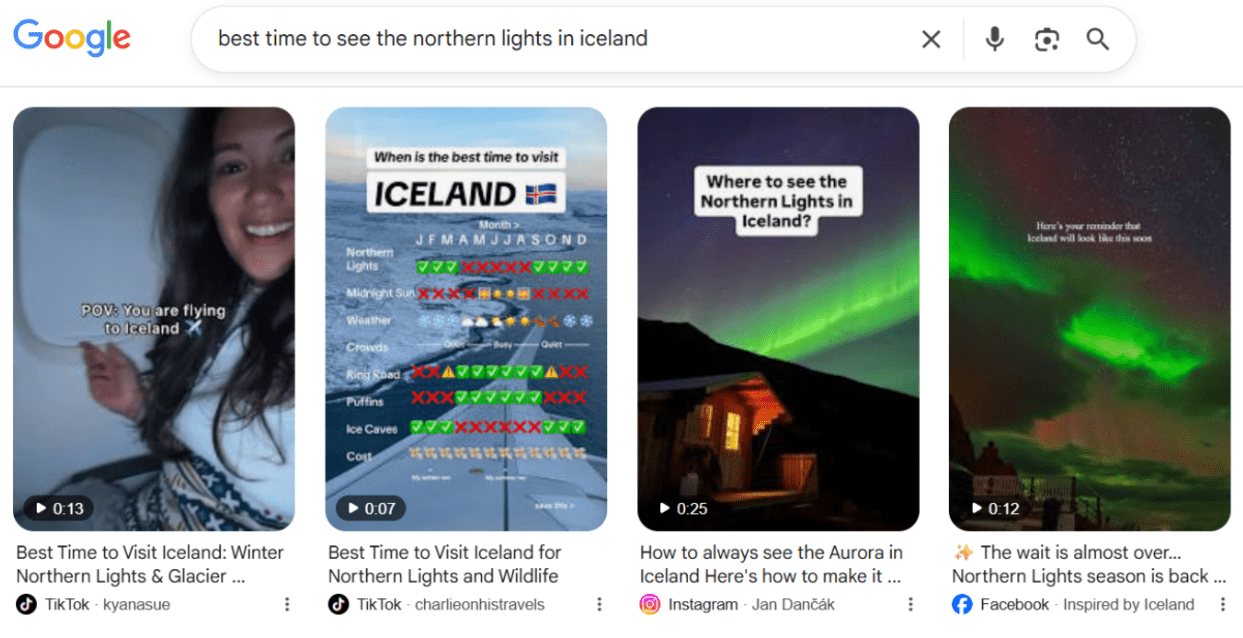
TikTok SEO doesn’t bypass traditional SEO – it amplifies it. If searches in your niche often serve videos in the SERPs, then TikTok is almost certainly something you should be getting involved with, to capture as much of that SERP as is possible. If you don’t, your competitors will.
People turn to TikTok because they want immediate, visual, and human-verified answers. Traditional search engines excel at deep research and documentation, whereas TikTok thrives on idea generation and inspiration. Whether someone is searching for a “minimalist home office setup,” “easy 15-minute dinners,” or “honest skincare reviews,” they want to see the reality from someone actually doing it, rather than reading a 2,000-word blog.
Google vs TikTok
The two platforms serve entirely distinct phases of consumer search intent and really aren’t comparable at all. They are totally different ways of searching, but generally speaking:
In most cases, TikTok is exceptional at creating demand and inspiring, while Google is exceptional at capturing it and converting.
To rank your videos, you must understand how the platform reads and classifies your content. TikTok’s algorithm relies heavily on specific data inputs to determine relevance, as well as engagement metrics to ensure it’s serving quality content to watchers.
Use of Metadata
Understanding the Content
TikTok’s algorithm analyses your videos across four core components to determine exactly what your content is about, and therefore what search terms would be most suitable for it:
Engagement Metrics
Relevance gets your video into the search pool, but performance dictates how high it ranks. TikTok relies heavily on engagement metrics for ranking performance: likes, comments, shares, saves, and most importantly: completion rates. If viewers routinely drop off in the first two seconds, the algorithm flags the content as low quality. Focus on powerful hooks to keep viewers watching until the very end.
Personalising to the User
The algorithm constantly matches optimised and similar content with historical user behaviour. If a consumer routinely searches for and interacts with videos on a certain topic, TikTok will deliberately serve them optimised videos from that niche – even if the videos are published by a new or a relatively unknown account.
You cannot optimise without data. Finding the right keywords on TikTok requires a slightly different approach than traditional keyword research, focusing more on casual, conversational phrases – but the methods of data collection are very similar to keyword research for traditional SEO:
Use of all of the above can help you to better understand the ways in which people search on TikTok, and therefore the types of phrasing you should be using when creating (and optimising) your video content on the platform.
Achieving sustainable organic traffic on the platform, and consistently ranking highly in search results requires consistency and strict adherence to best practices.
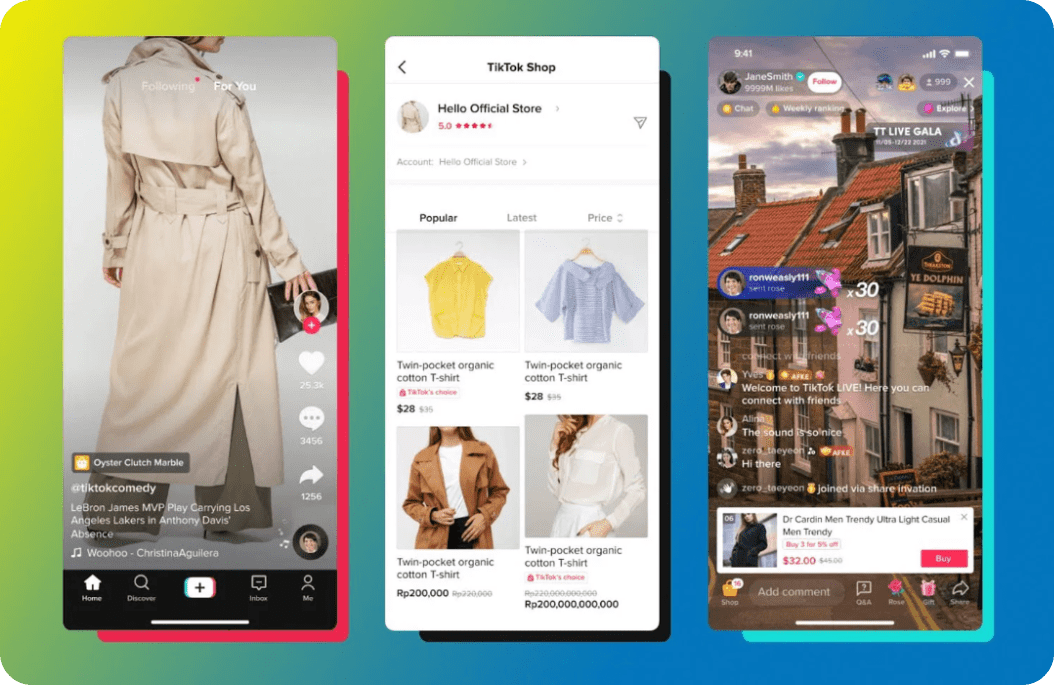
If you are an e-commerce brand, TikTok Shop can be a great additional revenue driver. It allows brands to showcase and sell products directly within the app, creating an incredibly frictionless path from discovery to purchase.
TikTok Shop can be an entire blog post in itself, so we’ll keep it light here – but optimising your videos for search while linking directly to your TikTok Shop products creates a seamless experience from discovery to conversion. A user searches for a solution, finds your optimised video, and checks out entirely within the app without ever having to navigate away to an external browser. If you’re an ecommerce brand and you’re not using TikTok Shop, it would be wise to investigate it.
The short answer is yes, provided your target demographic aligns with the platform’s maturing user base. For B2C brands, lifestyle services, e-commerce, and modern B2B businesses looking to build real brand authority, it can be an exceptionally powerful channel.
However, a successful TikTok SEO strategy requires realistic expectations and commitment:
TikTok is not a low-budget, quick-win project. It requires dedicated (quality!) video investment, creative resources, and a long-term approach to content production.
It is not a replacement for your core marketing. It serves as a vital part of a holistic, multi-channel search strategy.
At Varn, we specialise in helping businesses navigate the complexities of search strategy, data analysis, and online visibility across the multitude of ways that people search nowadays. Whether you want to refine your traditional SEO approach, or build a ‘search everywhere’ strategy across multiple channels, we can help you turn search data into tangible business growth. Get in touch with the team at Varn today to discuss how we can elevate your overall search marketing strategy.

Varn is an expert specialist SEO search marketing agency. Technical SEO * GEO + AI Visibility * Data Analytics * Digital PR * Content Marketing
You need to load content from reCAPTCHA to submit the form. Please note that doing so will share data with third-party providers.
More Information